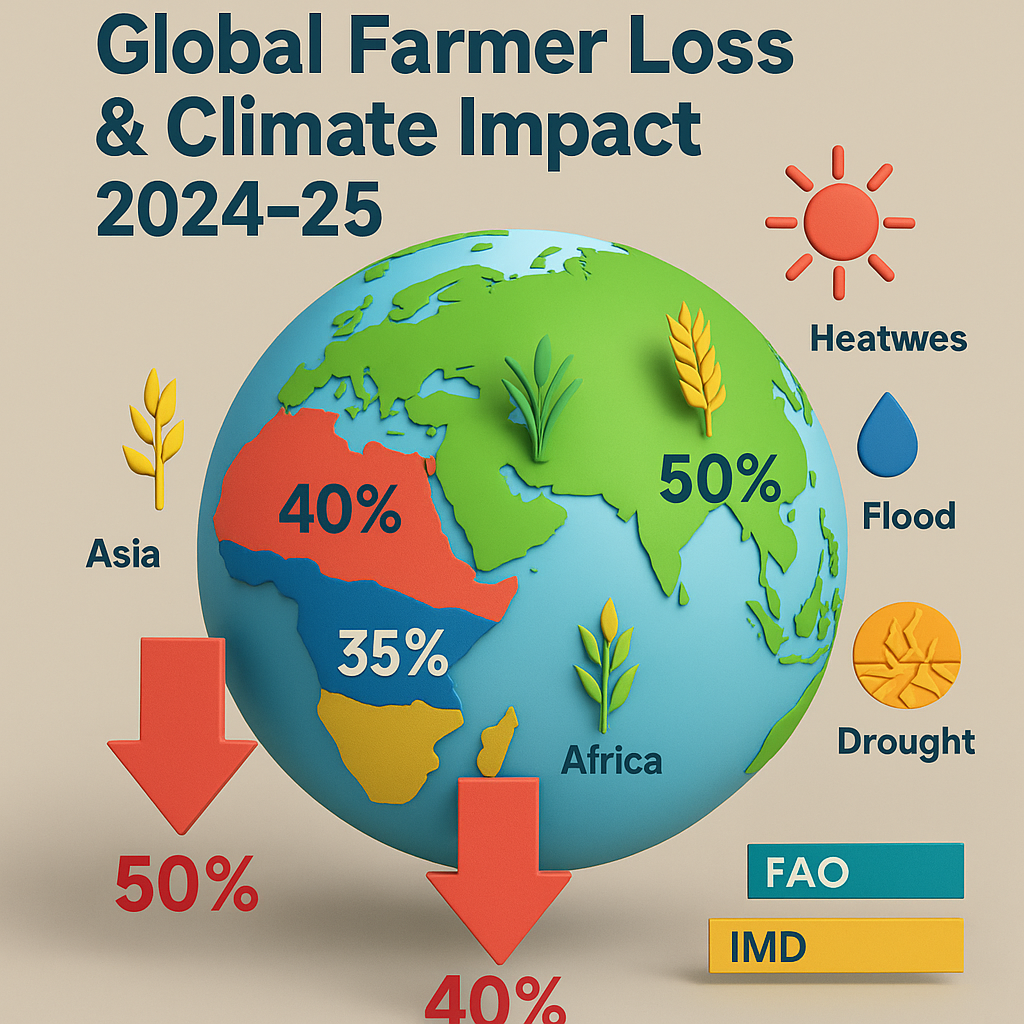
The latest global climate-risk assessment compiled by multiple agriculture authorities — including FAO, IMD, USDA and national weather agencies — indicates that 2024–25 has become one of the most damaging periods for farmers worldwide, with extreme heat, unexpected floods, prolonged droughts and rising input costs causing widespread crop losses, income decline and food-system stress.
1) Asia: Heatwaves, Dry Spells, and Groundwater Collapse
Asia 2024–25 me sabse zyada impact wala region raha.
Authorities report:
- North India, Pakistan & Bangladesh me winter dryness + heat spikes ne wheat aur mustard belts ko affect kiya.
- Southeast Asia me El Niño ke effect ne paddy sowing delay ki.
- China ke northern grain belts me groundwater depletion ne irrigation demand double kar diya.
Agriculture ministries ki field assessments ke mutabik, farmer income me 10–35% tak decline record hua.
2) Africa: Drought–Flood Cycle Destroying Crops
Africa me climate pattern unstable ho gaya hai:
- East Africa me prolonged drought ne maize & sorghum yield ko damage kiya.
- West Africa me sudden flooding ne groundnut, cassava aur millet fields ko wash-out kar diya.
- Southern Africa me input cost inflation + dry spells ne small farmers ko heavy loss me dala.
FAO’s Africa desk ne warn kiya ke repeated climate shocks long-term food security ko risk me daal rahe hain.
3) Europe: Low Prices + Climate Pressure = Double Crisis
Europe me dual impact:
- Commodity prices crash
- Frequent storms & cold spells
Many European regions me sugar beet, wheat, barley aur oilseed growers cost-recovery tak nahi pahunch paye.
Agriculture departments ke data ke mutabik,
machinery auctions, delayed repayments aur planting reductions badh rahe hain.
4) North & South America: Wildfires + Drought + Market Volatility
- US me heatwaves + wildfire smoke ne corn & soybean belts ko disturb kiya.
- Brazil & Argentina me drought-driven yield stress ne global soybean supply ko tighten kiya.
- Export demand fluctuations ki wajah se farmers ko unstable price returns mil rahe hain.
US agriculture bodies warn kar rahe hain ki long-term climate volatility production planning ko disturb karegi.
5) Australia: Water Scarcity & Heat Spikes Continue
Australia me heatwaves + low water storage:
- Wheat aur barley belts me flowering-stage heat stress
- Livestock grazing lands me fodder shortage
- Irrigation cost record level par
National agencies recommend drought-resilient seeds & rotational grazing.
MARKET IMPACT
Global climate events ki wajah se:
- Wheat volatility
- Rice procurement pressure
- Oilseed output fluctuations
- Sugar supply tighten
- Maize demand-side instability
Commodity markets 2025 me uncertain ban rahe hain.
FARMER INCOME IMPACT (Global Snapshot)
RegionLoss RangeAsia10–35%Africa15–40%Europe20–50%Americas8–30%Australia12–28%
KEY RISKS
- Rising heatwave frequency
- Increasing flood severity
- Soil degradation & water crisis
- Input cost inflation
- Weak market returns NEXT STEPS
- Drought-resistant seeds
- Early-warning digital systems
- Crop-insurance expansion
- Micro-irrigation
- Market stabilization
- Farmer financial safety nets
Source Verified – Authority
- FAO – Global climate & agriculture disaster assessment
- IMD – Seasonal climate outlook
- USDA – Crop condition & supply indicators
- National Agriculture Ministries – Field loss reports
- State Agriculture Departments – Region-wise assessments
- Market Boards / APMC – Commodity trend data
✍️Farming Writers Team
Love Farming Love Farmers