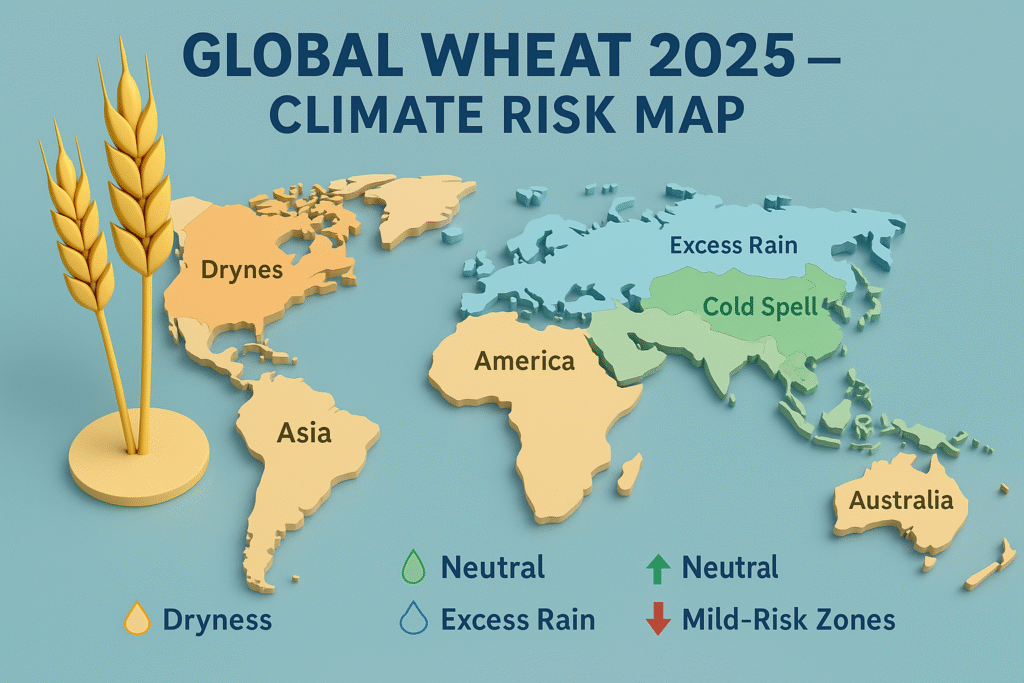
• Global Wheat Outlook Faces Climate Uncertainty; Agencies Warn of Tight Margins for Farmers

    Global Wheat

    Global agricultural agencies monitoring crop conditions have warned that 2025 wheat production may face uncertainty, as several major producing regions report fluctuating temperatures, moisture stress and higher input costs. Early seasonal assessments indicate pressure on both output and farmer profitability.

    Asia: Uneven winter conditions impacting sowing progress

    North India, Pakistan and parts of Central Asia me winter sowing mostly stable rahi,
    lekin kuch regions me early dryness aur temperature swings se moisture stress dekha gaya.

    Agriculture departments ka early estimate:
    timely sowing achchi rahi, par yield weather-dependent hogi.

    Europe: Excessive rain & cold spells raise crop-management challenges

    Western Europe ke kai regions me heavy rain ne field access slow kiya.

    Eastern Europe me cold spells ne growth tempo ko affect kiya.

    Officials ka kehna hai:
    “Wheat crop ko stable conditions chahiye, warna output pressure aa sakta hai.”

    North America: Temperature shifts affecting early-season projections

    US Great Plains me temperature fluctuations record kiye gaye.

    Moisture deficit kuch zones me concern create kar raha hai.

    USDA-type trend monitoring ke mutabik:
    “Crop condition weather stabilization par depend karega.”

    Australia: Low soil moisture remains a structural risk

    Australia ke kai wheat-producing zones me water storage levels lower-than-normal condition me hain.

    Agencies drought-resilient practices recommend kar rahi hain.

    Market Insight:

    Global traders cautious hai kyunki input cost (fertilizer, diesel, labour) high hai.

    Agar 2025 me normal conditions nahi rahe,
    toh global wheat prices me mild-to-moderate volatility expected.

    Ending / Outlook:

    Agencies ek saath ye signal de rahi hain ki
    2025 wheat output ka result climate stability par depend karega.
    Farmers ko advised kiya ja raha hai ki
    moisture management, seed variety selection aur risk-insurance coverage ko priority dein.

    Sources Verified

    • Global Agriculture Monitoring Agencies – Seasonal wheat outlook
    • National Agriculture Departments – Sowing progress updates
    • FAO Crop Monitoring Units – Climate-linked risk indicators
    • USDA-style Condition Trackers – Weather variability assessment
    • Regional Weather Authorities – Temperature & moisture bulletins

    ✍️Farming Writers Team
    Love farming Love Farmers

    Read A Next Post 👇
    https://farmingwriters.com/global-climate-extremes-intensify-farmer-losses-across-continents-fao-imd-issue-risk-signals/

  • India’s Wheat Production to Rise in 2025 Farmers Expect Higher Market Prices

    Wheat Production

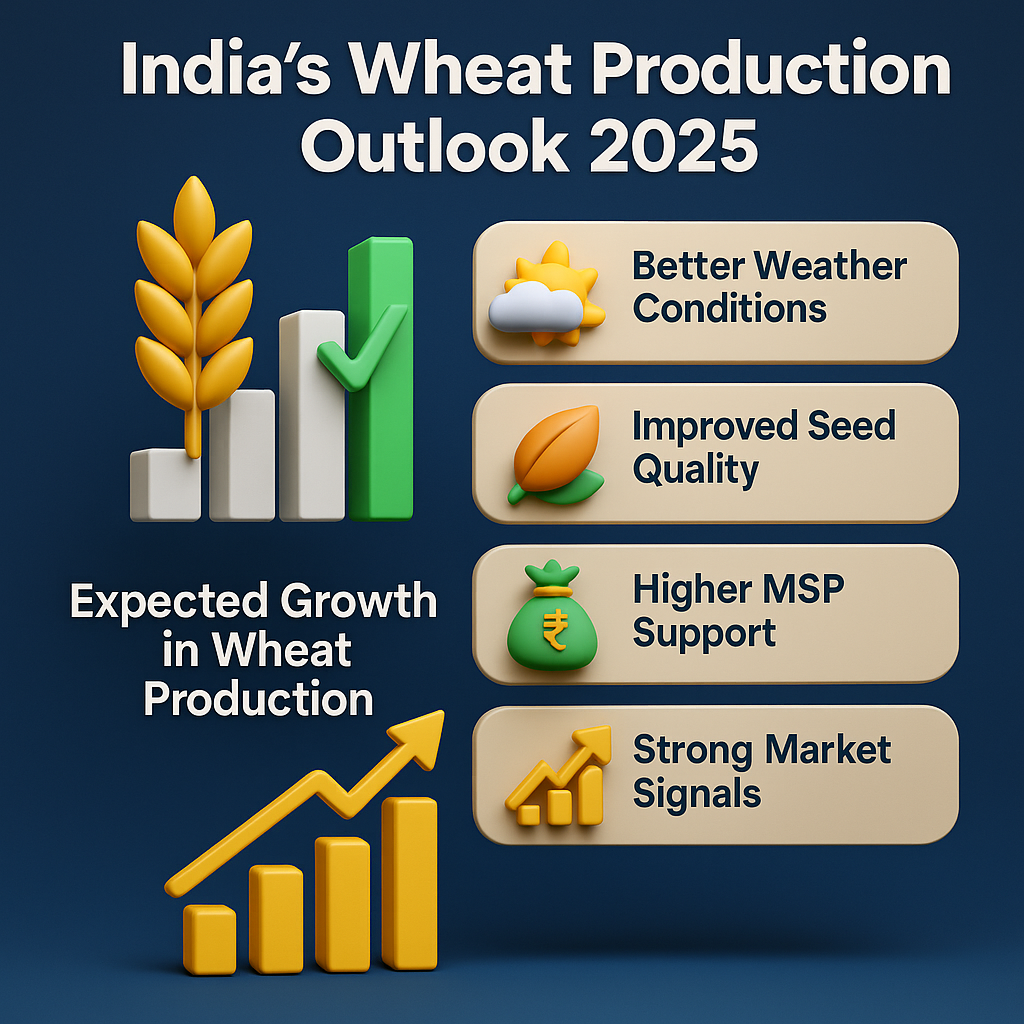
    India’s wheat sector is preparing for one of its strongest years as early field assessments from multiple farming regions indicate improved crop health for the 2024–25 season. According to preliminary observations from agricultural officers, wheat sowing has been completed earlier than last year in major states like Punjab, Haryana, Uttar Pradesh, and Rajasthan, giving farmers a better crop window and more stable growing conditions.

    Experts say that the combination of favourable winter temperatures, more moisture in the soil, and improved seed varieties is creating an ideal environment for higher yields. Farmers who had suffered from unexpected heatwaves in the previous years are now cautiously optimistic, noting that this season feels more balanced and predictable.

    Agronomists also highlight that the adoption of heat-resistant and early-maturing seed varieties has increased significantly. These varieties help protect the crop from late-season temperature spikes, a challenge that has repeatedly affected wheat grains during March in the past decade. Many farmers have shifted to high-yield seeds recommended by state agricultural universities, contributing to the overall production outlook.

    The Indian Meteorological Department has projected stable winter temperatures and low chances of extreme weather events for the coming months. This is especially important because wheat is highly sensitive during the grain-filling stage. Stable night temperatures and controlled day-time heat help maintain grain weight, leading to higher quality and improved market value.

    Meanwhile, market indicators are showing early signs of stronger prices. Traders in major mandis report active buying interest due to projected demand from flour mills and exporters. With global wheat supplies tightening in some regions due to weather-related losses, India’s wheat export prospects appear more promising this year.

    The government’s Minimum Support Price (MSP) for wheat has also been revised upward, which is boosting farmer confidence. Many believe that the combination of a supportive MSP and stronger open-market demand will create a profitable environment during the procurement season.

    Despite the positive outlook, agricultural economists caution that the final production figures will depend on February–March temperature patterns. A sudden rise in heat or unseasonal rainfall could still affect the final yield. Farmers, however, are taking preventive steps such as timely irrigation, crop monitoring, and controlled fertilizer application to reduce risks.

    As of now, India’s wheat landscape reflects a renewed sense of hope. If conditions remain favourable, the country may see a significant boost in production, benefiting both domestic markets and export opportunities.

    ✍️Farming writers Team

    Love farming Love farmers