Assam Cocoa Farming: A Complete Global Guide to Climate, Cultivation, Yield & Profit
When you walk through the humid morning fields of Assam, where the mist hangs low and the soft soil seems to breathe beneath your feet, it becomes immediately clear why cocoa a crop born in deep tropical rainforests — feels almost at home here. Cocoa farming in Assam is not just an agricultural experiment; it is a quiet evolution that reflects how global crops can align themselves with the rhythm of a unique landscape. The state’s warm air, rhythmic monsoon rains, shaded plantations, and naturally moist soil make cocoa one of the most promising long-term plantation crops for the region, especially as global chocolate demand continues to rise.
Farmers who have touched a fresh cocoa pod or broken open its soft white pulp will tell you that cocoa is not merely a crop — it is an ecosystem in itself. Its success depends on micro-climates, soil feel, shade balance, and patient observation. Assam’s agricultural history is rich with tea, bamboo, rubber, banana, and areca nut, and cocoa finds its place comfortably alongside these crops. What makes cocoa special is its “silent profit model”: low labor, long life, stable global demand, and a natural fit with intercropping systems.
This guide brings a world-level understanding of cocoa cultivation to Assam — blending global scientific principles with the lived farming experience of North-East India.
Understanding Assam’s Climate for Cocoa
There are only a few places in India where cocoa can thrive naturally without heavy artificial intervention, and Assam remains one of them. The state’s climate resembles the equatorial rainforest belt that cocoa evolved in.
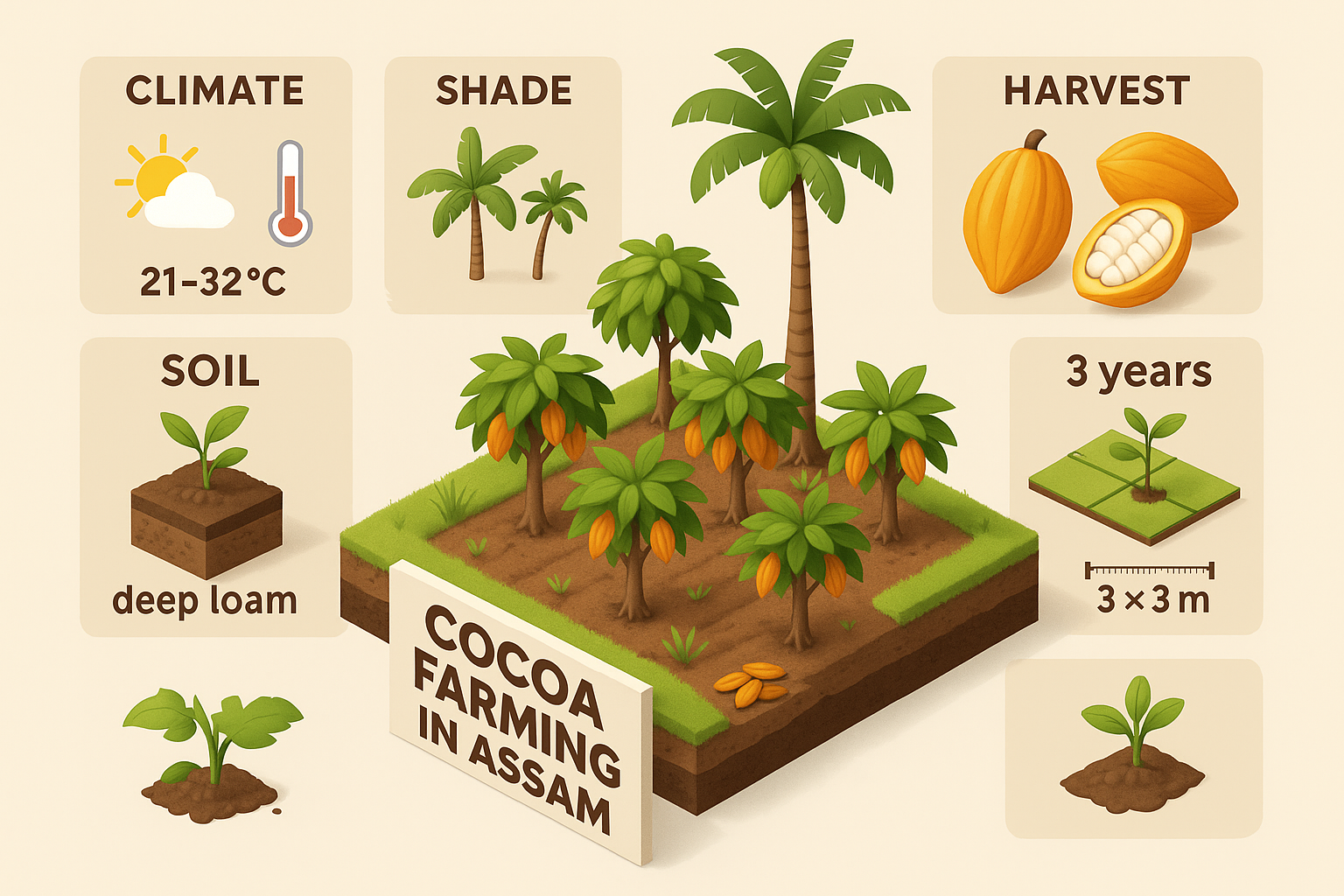
The temperature profile tells the whole story: days hovering between 24–32°C, nights ranging from 18–22°C. The humidity remains high enough to keep the cocoa leaves open and active, while the monsoon season offers steady rainfall spread instead of sharp bursts. This gentle, predictable moisture is critical.
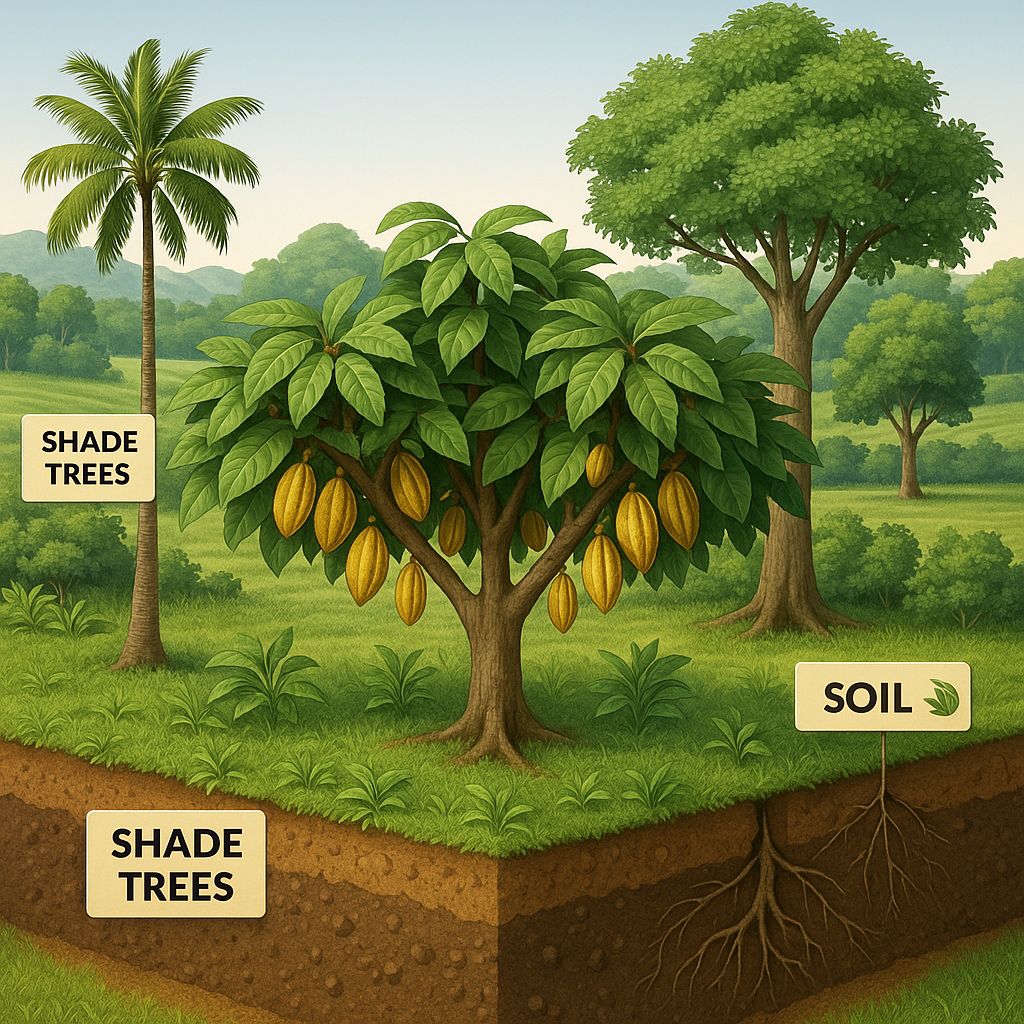
The filtered sunlight in Assam plays another major role. Cocoa hates harsh direct sun; the leaves burn easily. But Assam’s natural plantation canopy — particularly from areca nut, coconut, rubber, bamboo, and banana — creates a soft, speckled light environment where cocoa feels naturally protected.
The soft, medium-heavy loamy soil of Assam, especially along the Brahmaputra valley, acts like a slow-release moisture system. It drains gently, holds nutrients, and supports deep root development.
In simple terms:
Assam gives cocoa the climate of its ancestors.
And cocoa gives Assam a new economic crop with global reach.
Soil Requirements: The Foundation of Healthy Cocoa
Assam’s soil texture plays a quiet but powerful role in cocoa farming. When a farmer digs a pit and scoops the earth, the slight crumble between the fingers tells whether cocoa will thrive there.
Ideal soil conditions for cocoa in Assam include:
Loamy to alluvial soil
pH between 5.5–7.0
Good moisture retention
Non-waterlogged profile
High organic content
Clay-heavy soil can work if amended with sand and compost. Sandy soil works better when enriched with organic matter. Farmers in Assam commonly use cow dung, leaf litter, and farmyard manure to improve soil organic carbon.
Soil health directly affects pod formation. Without rich soil, cocoa pods may form but remain lighter, thinner, and lower in bean content.
Shade Management: Assam’s Natural Advantage
Shade is not optional in cocoa; it is essential. In Assam, this requirement becomes an advantage because the region naturally supports a multi-layered canopy system.
The best shade trees used in Assam include:
Areca nut
Coconut
Rubber
Banana
Gliricidia
Silver oak
Early-stage cocoa needs heavier shade — about 60%. By year three, 30–40% shade is ideal as the canopy matures.
Banana plants are particularly popular because they grow fast, provide uniform shade, and maintain soil moisture while generating an extra income stream.
Planting Season and Field Preparation
The perfect planting time for cocoa in Assam aligns with early monsoon when the soil is warm, moist, and biologically active.
Best Planting Window:
May to July
Farmers prepare pits of 2 ft × 2 ft × 2 ft, add compost, neem cake, and topsoil, and allow them to settle for two weeks. This resting period creates a balanced nutrient zone where young cocoa roots can expand without stress.
Spacing:
3 m × 3 m spacing is standard
Allows 450–500 plants per acre
Assam’s natural soil moisture helps young cocoa settle quickly without high irrigation demand.
Irrigation Needs in Assam
Assam’s rainfall pattern means cocoa does not require heavy manual irrigation. However, two seasons require attention:
Dry winter months
Short summer dry spells
Light irrigation every 10–15 days during dry periods is sufficient. Drip irrigation ensures consistent moisture without waterlogging. Cocoa roots are extremely sensitive to stagnant water, so drainage channels are essential.
Pest & Disease Management
Cocoa farming globally deals with:
Mealybugs
Aphids
Stem borers
Root-rot fungi
Assam’s high humidity can sometimes favor fungal growth, but natural biological agents in the soil often keep populations under control.
Farmers apply:
Neem oil
Fermented buttermilk sprays
Trichoderma in soil
Mild soap solution
This keeps the crop organically safe and reduces chemical dependency.
Harvesting and Post-Harvest Processing
Cocoa begins producing pods in the third year and reaches stable yield by the fifth year. In Assam, the color and texture of pods vary from bright yellow to orange.
When a farmer presses the surface of a mature pod, it feels firm but slightly responsive — that is the ideal harvest stage.
Post-harvest steps include:
Fermentation:
Cocoa beans are fermented in wooden boxes for 5–6 days with regular turning.
Drying:
Sun drying for 5–7 days until beans reach 7% moisture.
These two steps determine flavor, aroma, and market price.
Yield Expectations and Profitability
Cocoa yield in Assam depends on climate management, shade balance, and soil fertility.
Average Yield in Assam
600–1000 kg dry beans per acre
Market Rates
₹180 – ₹260 per kg (India domestic)
3–4 USD per kg (international trend)
Estimated Net Profit per Acre
Yield (kg)Rate (₹/kg)Gross Income (₹)Net Profit (₹)600 kg1801,08,00060,000–70,000800 kg2201,76,0001,00,000+1000 kg2502,50,0001,60,000+
Cocoa’s real profit lies in its low maintenance and long lifespan, making it one of Assam’s most stable plantation crops.
Global Relevance of Assam Cocoa
The world chocolate industry is expanding rapidly, and climate change is shrinking traditional cocoa belts like Ghana and Ivory Coast. This creates new opportunities for tropical regions like North-East India.
Assam has:
Stable rainfall
High humidity
Shade-friendly multi-crop systems
Organic matter-rich soils
This aligns perfectly with global cocoa cultivation requirements.
International buyers have already started exploring cocoa from North-East India due to its unique aroma profile.
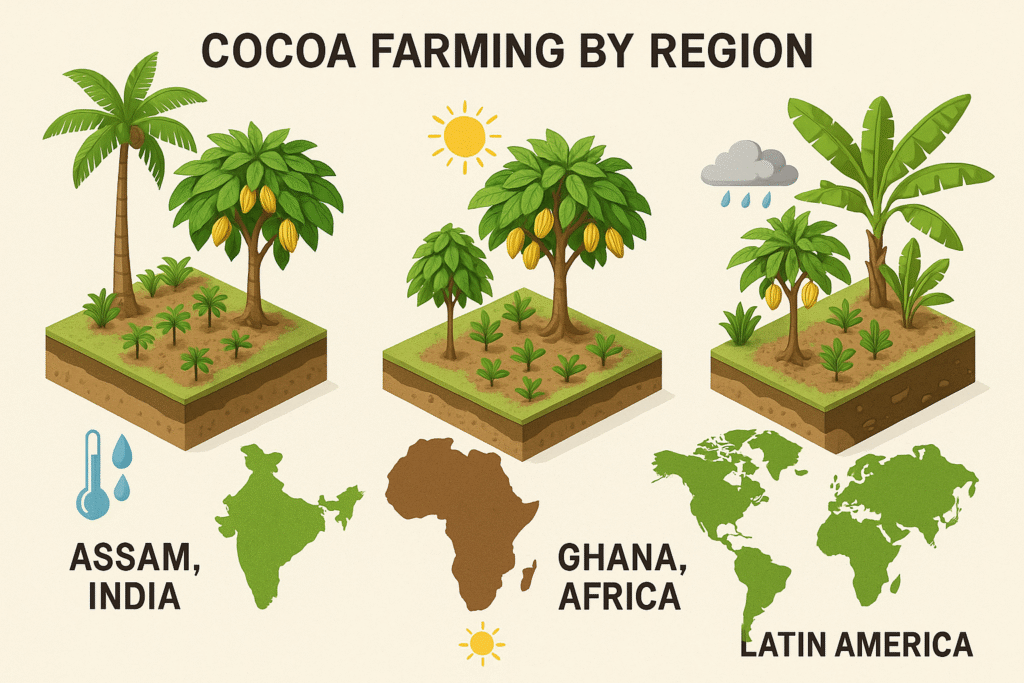
Table: Assam vs. Global Cocoa Regions
FeatureAssam, IndiaGhana / Ivory CoastLatin AmericaClimateHumid SubtropicalTropical RainforestTropical RainforestRainfallHigh, uniformHighHighShade requirementModerate, naturalArtificial neededNaturalSoil typeAlluvial-loamyRed lateriteVolcanicFarm sizeSmall-mediumMedium-largeLarge estatesOrganic potentialVery highModerateHighGlobal demand fitExcellentExcellentExcellent
FAQs about Cocoa Farming in Assam
- Is cocoa suitable for Assam’s climate?
Yes, Assam’s humidity, temperature range, and rainfall pattern match cocoa’s natural habitat. - How many years does cocoa take to start yielding?
First pods appear in the third year, and commercial yield begins from the fifth year. - Can cocoa be grown with other crops in Assam?
Absolutely. Areca nut, banana, coconut, and rubber are the best companion crops. - How much water does cocoa need in Assam?
Minimal irrigation — mostly during winter and dry spells. - Is cocoa farming profitable in Assam?
Yes. With low labor and rising global chocolate demand, cocoa offers stable long-term profit. - Does Assam cocoa have a market?
Yes. Domestic processors, Kerala buyers, and international organic bean buyers source from NE India. - What is the biggest challenge in Assam cocoa?
Shade management and root drainage during heavy monsoon. Conclusion
Cocoa farming in Assam stands at the intersection of tradition and global opportunity. The state’s landscape naturally complements cocoa’s physiology — the humidity, filtered sunlight, monsoon-fed soil, and shaded plantation structure all create an environment where cocoa does not just survive but thrives with quiet confidence. As chocolate demand continues to expand, Assam has a chance to contribute to the global market while providing farmers with a sustainable, profitable, long-term plantation crop.
Cocoa is not a fast-money crop, but it is a steady, dependable, climate-aligned investment — one that could reshape the agricultural future of North-East India.
✍️Farming Writers Team
Love farming Love Farmers
Leave a ReplyShare your thoughts: We’d love to hear your farming ideas or experiences!