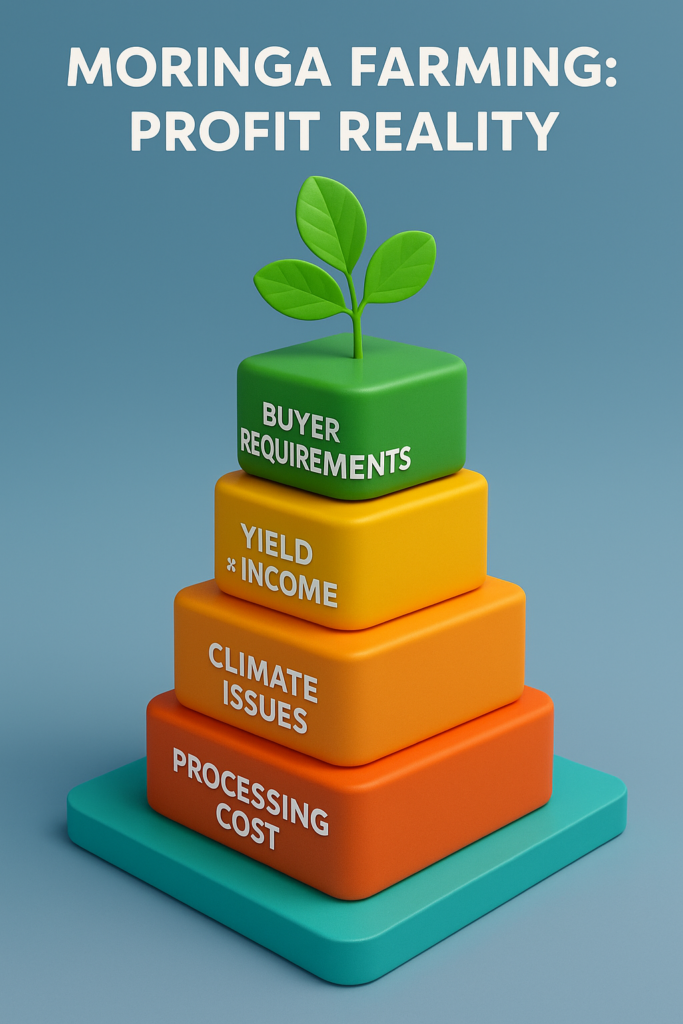
• Moringa Farming Profit Reality Why many farmers fail after good yield

    Moringa Farming Profit

    Many farmers enter moringa farming after seeing one simple claim repeated everywhere: “high demand, miracle tree, export profit.” What they don’t see is how many moringa growers end up with good harvests but no serious buyers, or worse, bulk buyers who push prices so low that drying and transport cost more than the sale value.

    The first loss usually doesn’t happen in the field. It happens after harvest, when farmers realise that moringa is not sold as “leaf” or “pod” in the way vegetables are sold. It is sold as quality-controlled material, and most first-time growers do not meet that standard.

    A common mistake is assuming that yield equals income. Moringa can grow aggressively, even on poor land. Leaves come fast, pods form easily, and trees look healthy. That visual success hides the real question buyers ask: consistency, moisture control, contamination level, and processing discipline. Farmers who don’t plan for these from day one usually lose money even with high biomass.

    Another wrong belief is that moringa leaf powder is easy money. In reality, most powder gets rejected due to colour loss, microbial count, improper drying temperature, or mixing of old and new leaves. Buyers don’t care how much you harvested. They care whether your powder matches lab parameters. One rejected batch can wipe out months of effort.

    Climate suitability matters, but not in the textbook way. Moringa survives heat and drought, yes. But survival does not equal market quality. In very humid regions, leaf drying becomes a major problem. High humidity increases fungal risk and darkens leaf colour, which reduces export value sharply. Farmers in such areas often underestimate drying infrastructure cost and end up selling fresh leaves locally at vegetable prices, not medicinal prices.

    Soil fertility is another misunderstood area. Moringa grows even in poor soil, which makes people think fertilisation doesn’t matter. But nutrient imbalance directly affects leaf thickness, colour, and nutrient density. Buyers test for protein content and mineral profile. Leaves grown under nutrient stress may pass visually but fail nutritionally.

    Harvest timing is where many losses quietly occur. Cutting too late reduces softness and increases fibre. Cutting too early reduces yield and increases processing cost. Most online guides skip this nuance. In real trade, harvest cycles are planned backward from buyer delivery schedules, not forward from planting date.

    Processing is where moringa farming becomes either profitable or pointless. Sun-drying without temperature control causes nutrient degradation. Over-drying causes brittleness and colour loss. Under-drying causes mold. Manual sorting is labour-heavy but mandatory for export grade. Farmers who don’t calculate this labour cost beforehand often realise too late that margins are thinner than expected.

    Market reality is harsh but clear. Local markets buy moringa fresh at low prices. Domestic supplement manufacturers buy only from consistent suppliers. Export buyers demand certification, batch traceability, and stable volumes. There is a big gap between “global demand exists” and “your product qualifies for it.”

    Many farmers also ignore price volatility. When moringa becomes popular in a region, oversupply follows quickly. Prices crash, especially for fresh leaves. Powder prices remain stable only for certified quality. Those without processing capability suffer the most during these cycles.

    This crop is not for everyone. Farmers without drying infrastructure, labour management capacity, or buyer linkage should avoid moringa despite the hype. It works best for those who think like processors, not just growers.

    Moringa farming succeeds when approached as a quality manufacturing system, not a leafy crop. Those who treat it casually often exit quietly after one or two seasons.

    TOP 10 FAQ – REAL QUESTIONS FARMERS ASK AFTER LOSSES

    Is moringa farming really profitable for small farmers?
    Only if processing and buyer linkage are planned before planting. Without that, profits are usually low.

    Why do buyers reject moringa leaf powder?
    Most rejections happen due to moisture, colour degradation, or microbial contamination.

    Is fresh moringa leaf selling sustainable?
    Only for local vegetable markets. It does not generate medicinal-grade margins.

    Does moringa grow in all climates equally?
    It grows everywhere, but quality differs sharply with humidity and soil balance.

    Is organic moringa easier to sell?
    Organic helps, but certification and consistency matter more than labels.

    How often should moringa be harvested for best quality?
    Harvest timing must match buyer quality standards, not just plant growth speed.

    What is the biggest hidden cost in moringa farming?
    Labour during sorting, drying, and quality control.

    Can moringa pods be more profitable than leaves?
    Only in specific fresh markets. Export demand is stronger for leaf products.

    Is moringa a good crop for beginners?
    Not unless they understand processing and quality management.

    When should a farmer avoid moringa completely?
    When there is no drying facility, no buyer contract, and no quality testing access.

    ✍️Farming Writers Team
    Love farming Love Farmers

    Read A Next Post 👇

    https://farmingwriters.com/goat-farming-profit-risks-and-market-reality/
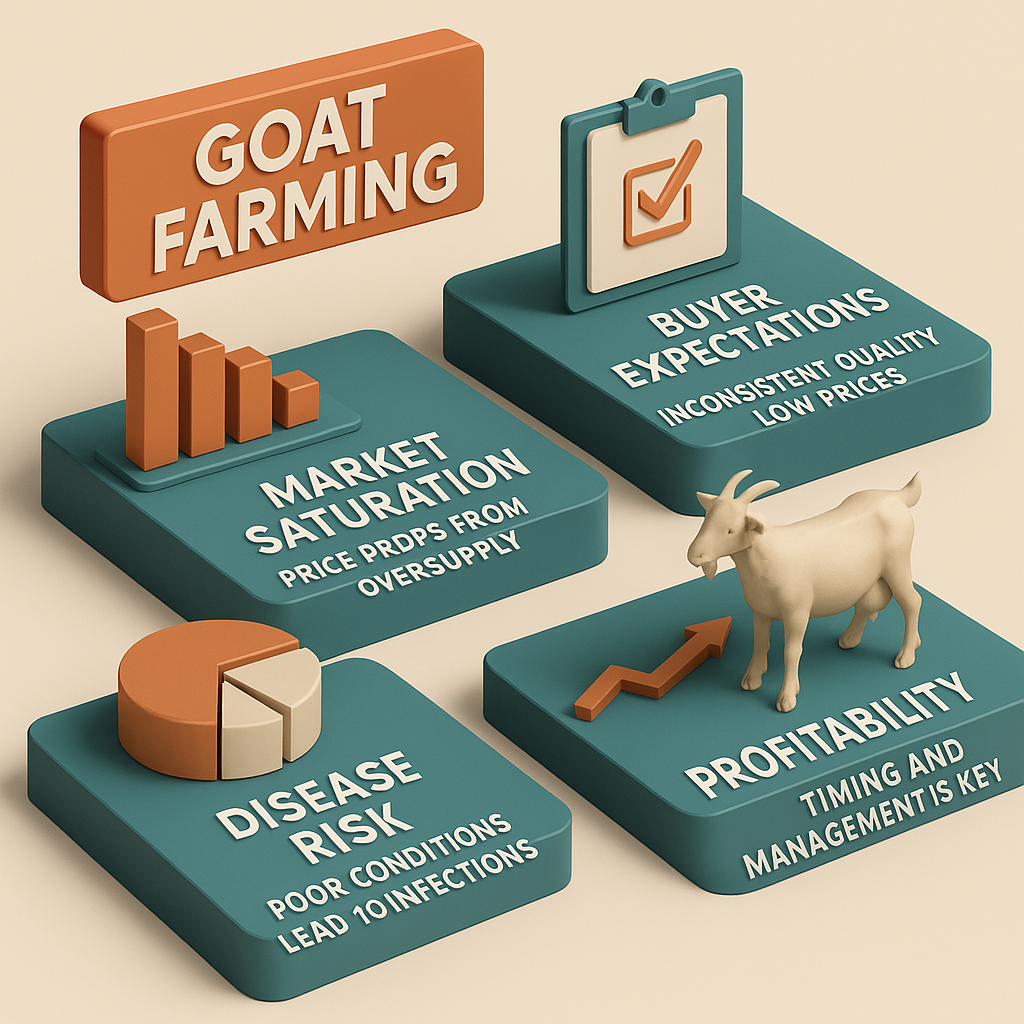
  • Why Many Goat Farms Fail and What Actually Works in Real Markets

    Goat Farms Fail

    Most people who enter goat farming do it because they saw someone on YouTube claiming that goats reproduce fast and need very little feed. This belief alone is the biggest reason thousands of small farmers lose money each year. A goat farm rarely fails due to disease or feed scarcity; it fails because the farmer misunderstood what the buyer values and how the market punishes one wrong step.

    Goat farming looks simple from the outside. But the moment animals reach sale age, farmers discover that goats are not sold on weight alone they are sold on body condition, breed reputation, age accuracy, and how well the animal was raised. A goat that gained weight fast on high-grain diets may look impressive but often gets rejected by professional buyers who know the difference between natural growth and artificial fattening. The beginner doesn’t realize this until the truck arrives and offers half the expected price.

    Another common mistake is assuming that goats thrive anywhere. They survive, yes, but survival has nothing to do with profitability. Goats raised under poor ventilation, wet floors, or inconsistent feed may stay alive but grow slowly, reproduce irregularly, and attract diseases at the exact time you hoped to sell them. Many farmers blame bad luck when the real issue is that goats only look low-maintenance; they are extremely sensitive to micro-changes in hygiene and space.

    There is also a hidden challenge that few people talk about: community market saturation. In many regions, too many farmers enter goat farming at the same time. They all plan to sell during festival seasons expecting premium rates. But markets hate predictable supply peaks. Prices crash when trucks arrive full. A farmer who waited a full year suddenly discovers that a neighbor selling “just to empty shed space” reduces everyone’s price. Market timing, not production, decides most goat-farm profits.

    A reality most beginners ignore is that goats do not gain weight uniformly. Even in the best-managed farms, twenty to thirty percent of goats remain slow growers. These animals consume nearly the same feed but produce much lower returns. Without culling discipline, a farm silently loses money. Successful goat farmers operate like managers, not caretakers they remove low performers early instead of sentimental keeping.

    The environment where goats are raised impacts their sale quality more than genetics. A buyer can instantly recognize goats raised in cramped, dark sheds because these animals develop weak legs and poor rumen function. Even if the weight looks acceptable, buyers refuse to pay premium. This is why open paddock systems and browsing areas outperform full stall-fed systems in long-term sustainability, even though stall-feeding looks easier in the beginning.

    Disease risks are another area where new farmers underestimate loss. Most goat farms do not collapse from big epidemics; they collapse from repeated small infections that never get managed properly — diarrhea in kids, pneumonia during weather shifts, parasitic load during monsoon, or foot rot in humid flooring. These are not dramatic events, but they slowly drain profit. A goat that survives disease rarely achieves market weight on time. Delay means feeding more days, and feeding more days erases the profit margin.

    One of the hardest realities is understanding that goat breeding is not automatically profitable. Breeding mistakes cause long-term financial damage. If the male used for breeding is even slightly inferior, the entire next generation reflects that weakness. Farmers then assume they have poor luck or weak feed, when the problem started a year earlier with the wrong buck. Professional goat farms treat buck selection as seriously as dairy farms treat bull genetics.

    Another overlooked fact is buyer psychology. Buyers want goats that look alert, walk confidently, have clean eyes, shiny coats, firm rumen fill, and correct conformation. Farmers often focus only on weight because weight is easy to measure. But buyers evaluate freshness, energy, bone development, frame length, and uniformity. A single weak goat in a group reduces the perceived value of the entire batch.

    Feed economics also destroy many small farms. A common assumption is that goats eat leaves, grass, and kitchen waste, so feed cost is low. But for commercial growth, goats need a predictable diet with fiber balance and mineral mix. If the farmer can’t maintain consistency, goats start losing rumen efficiency. Recovery takes weeks, not days. These weeks often coincide with the planned sale period, causing further delay.

    The most misunderstood concept in goat farming is scale. A farm of five to ten goats will almost always lose money unless feed is free and land is abundant. Profit begins only when numbers cross a certain threshold because fixed costs — shed, water, medical care, buck maintenance — spread out across more animals. Many farmers think starting small is safer, but in goat farming, starting too small can guarantee loss.

    The market for goat meat is strong worldwide Africa, Asia, Middle East, Europe’s ethnic markets, and diaspora communities in the US and UK maintain steady demand. But price per kilogram fluctuates constantly. Farmers who depend entirely on local brokers rarely understand why prices shift. Brokers do not always explain that price drops are caused by disease outbreaks, festival timing changes, long-distance supply arrivals, or sudden oversupply from neighboring districts.

    Another major reason farms fail is the assumption that goats reproduce twice a year. While possible under ideal management, most farms experience longer intervals. Nutrition, stress, buck-to-doe ratio, and seasonality affect breeding cycles. Beginners plan unrealistic cash flow expectations, leading to disappointment when reproduction does not match online claims.

    The farms that succeed long-term follow three principles: harsh selection, strict hygiene, and market-driven selling. They avoid emotional attachment to animals, monitor health indicators daily, and sell when prices peak instead of waiting for the “perfect” weight. Their profit does not come from having goats; it comes from understanding timing, genetics and operational discipline.

    FAQ

    Farmers often ask whether goat farming is profitable, and profitability depends entirely on market timing and disease control rather than herd size alone. Many want to know why buyers offer low prices, and the main reason is inconsistent body condition, not weight. A frequent doubt concerns reproduction expectations, and goats rarely reproduce as quickly as online claims unless nutrition and stress conditions are ideal. People ask if stall-feeding is sufficient, and it only works when mineral balance and fiber quality are maintained consistently. Another concern is disease resistance, but goats raised in damp or dark sheds remain highly vulnerable regardless of breed. Farmers ask about breed superiority, and no breed performs well in poor management conditions. A common fear is sudden mortality, which usually results from delayed detection of small infections. Beginners ask about starting with a very small herd, but tiny herds rarely cover fixed costs. Many want to know when to sell, and selling early at stable prices often outperforms waiting for maximum weight. Another repeated question is whether goats can be fed household waste, but inconsistent diets damage rumen function and delay growth.

    ✍️Farming Writers Team
    Love farming Love Farmers

    Read A Next Post 👇

    https://farmingwriters.com/vegetable-farming/

  • Assam Cocoa Farming Complete Guide Climate, Cultivation, Yield & Global Profit

    Assam Cocoa Farming

    Assam Cocoa Farming: A Complete Global Guide to Climate, Cultivation, Yield & Profit

    When you walk through the humid morning fields of Assam, where the mist hangs low and the soft soil seems to breathe beneath your feet, it becomes immediately clear why cocoa  a crop born in deep tropical rainforests — feels almost at home here. Cocoa farming in Assam is not just an agricultural experiment; it is a quiet evolution that reflects how global crops can align themselves with the rhythm of a unique landscape. The state’s warm air, rhythmic monsoon rains, shaded plantations, and naturally moist soil make cocoa one of the most promising long-term plantation crops for the region, especially as global chocolate demand continues to rise.

    Farmers who have touched a fresh cocoa pod or broken open its soft white pulp will tell you that cocoa is not merely a crop — it is an ecosystem in itself. Its success depends on micro-climates, soil feel, shade balance, and patient observation. Assam’s agricultural history is rich with tea, bamboo, rubber, banana, and areca nut, and cocoa finds its place comfortably alongside these crops. What makes cocoa special is its “silent profit model”: low labor, long life, stable global demand, and a natural fit with intercropping systems.

    This guide brings a world-level understanding of cocoa cultivation to Assam — blending global scientific principles with the lived farming experience of North-East India.

    Understanding Assam’s Climate for Cocoa

    There are only a few places in India where cocoa can thrive naturally without heavy artificial intervention, and Assam remains one of them. The state’s climate resembles the equatorial rainforest belt that cocoa evolved in.

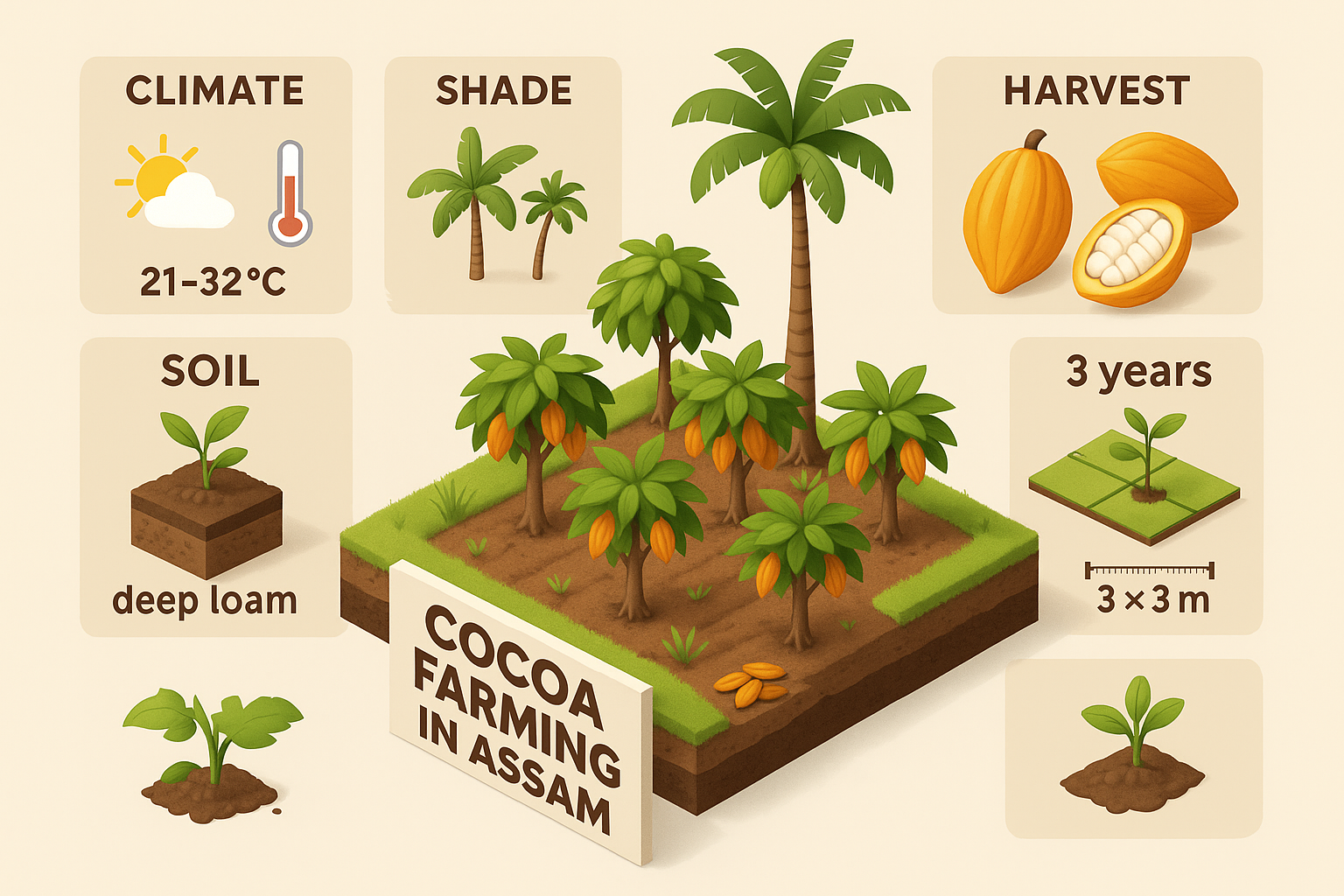
    The temperature profile tells the whole story: days hovering between 24–32°C, nights ranging from 18–22°C. The humidity remains high enough to keep the cocoa leaves open and active, while the monsoon season offers steady rainfall spread instead of sharp bursts. This gentle, predictable moisture is critical.

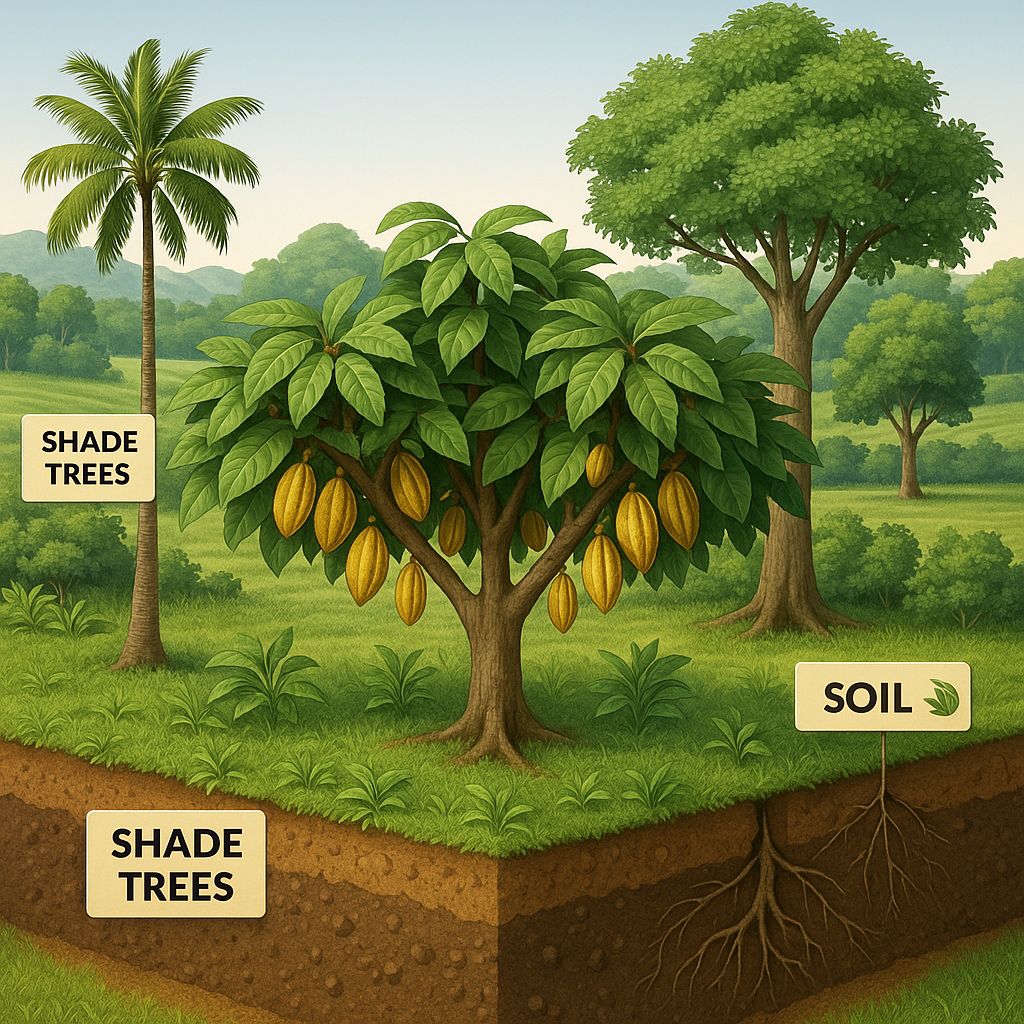
    The filtered sunlight in Assam plays another major role. Cocoa hates harsh direct sun; the leaves burn easily. But Assam’s natural plantation canopy — particularly from areca nut, coconut, rubber, bamboo, and banana — creates a soft, speckled light environment where cocoa feels naturally protected.

    The soft, medium-heavy loamy soil of Assam, especially along the Brahmaputra valley, acts like a slow-release moisture system. It drains gently, holds nutrients, and supports deep root development.

    Cocoa Farming

    In simple terms:

    Assam gives cocoa the climate of its ancestors.

    And cocoa gives Assam a new economic crop with global reach.

    Soil Requirements: The Foundation of Healthy Cocoa

    Assam’s soil texture plays a quiet but powerful role in cocoa farming. When a farmer digs a pit and scoops the earth, the slight crumble between the fingers tells whether cocoa will thrive there.

    Ideal soil conditions for cocoa in Assam include:

    Loamy to alluvial soil

    pH between 5.5–7.0

    Good moisture retention

    Non-waterlogged profile

    High organic content

    Clay-heavy soil can work if amended with sand and compost. Sandy soil works better when enriched with organic matter. Farmers in Assam commonly use cow dung, leaf litter, and farmyard manure to improve soil organic carbon.

    Soil health directly affects pod formation. Without rich soil, cocoa pods may form but remain lighter, thinner, and lower in bean content.

    Shade Management: Assam’s Natural Advantage

    Shade is not optional in cocoa; it is essential. In Assam, this requirement becomes an advantage because the region naturally supports a multi-layered canopy system.

    The best shade trees used in Assam include:

    Areca nut

    Coconut

    Rubber

    Banana

    Gliricidia

    Silver oak

    Early-stage cocoa needs heavier shade — about 60%. By year three, 30–40% shade is ideal as the canopy matures.

    Banana plants are particularly popular because they grow fast, provide uniform shade, and maintain soil moisture while generating an extra income stream.

    Planting Season and Field Preparation

    The perfect planting time for cocoa in Assam aligns with early monsoon when the soil is warm, moist, and biologically active.

    Best Planting Window:
    May to July

    Farmers prepare pits of 2 ft × 2 ft × 2 ft, add compost, neem cake, and topsoil, and allow them to settle for two weeks. This resting period creates a balanced nutrient zone where young cocoa roots can expand without stress.

    Spacing:

    3 m × 3 m spacing is standard

    Allows 450–500 plants per acre

    Assam’s natural soil moisture helps young cocoa settle quickly without high irrigation demand.

    Irrigation Needs in Assam

    Assam’s rainfall pattern means cocoa does not require heavy manual irrigation. However, two seasons require attention:

    Dry winter months

    Short summer dry spells

    Light irrigation every 10–15 days during dry periods is sufficient. Drip irrigation ensures consistent moisture without waterlogging. Cocoa roots are extremely sensitive to stagnant water, so drainage channels are essential.

    Pest & Disease Management

    Cocoa farming globally deals with:

    Mealybugs

    Aphids

    Stem borers

    Root-rot fungi

    Assam’s high humidity can sometimes favor fungal growth, but natural biological agents in the soil often keep populations under control.

    Farmers apply:

    Neem oil

    Fermented buttermilk sprays

    Trichoderma in soil

    Mild soap solution

    This keeps the crop organically safe and reduces chemical dependency.

    Harvesting and Post-Harvest Processing

    Cocoa begins producing pods in the third year and reaches stable yield by the fifth year. In Assam, the color and texture of pods vary from bright yellow to orange.

    When a farmer presses the surface of a mature pod, it feels firm but slightly responsive — that is the ideal harvest stage.

    World  Cocoa Farming

    Post-harvest steps include:

    Fermentation:
    Cocoa beans are fermented in wooden boxes for 5–6 days with regular turning.

    Drying:
    Sun drying for 5–7 days until beans reach 7% moisture.

    These two steps determine flavor, aroma, and market price.

    Yield Expectations and Profitability

    Cocoa yield in Assam depends on climate management, shade balance, and soil fertility.

    Average Yield in Assam

    600–1000 kg dry beans per acre

    Market Rates

    ₹180 – ₹260 per kg (India domestic)

    3–4 USD per kg (international trend)

    Estimated Net Profit per Acre

    Yield (kg)Rate (₹/kg)Gross Income (₹)Net Profit (₹)600 kg1801,08,00060,000–70,000800 kg2201,76,0001,00,000+1000 kg2502,50,0001,60,000+

    Cocoa’s real profit lies in its low maintenance and long lifespan, making it one of Assam’s most stable plantation crops.

    Global Relevance of Assam Cocoa

    The world chocolate industry is expanding rapidly, and climate change is shrinking traditional cocoa belts like Ghana and Ivory Coast. This creates new opportunities for tropical regions like North-East India.

    Assam has:

    Stable rainfall

    High humidity

    Shade-friendly multi-crop systems

    Organic matter-rich soils

    This aligns perfectly with global cocoa cultivation requirements.

    International buyers have already started exploring cocoa from North-East India due to its unique aroma profile.

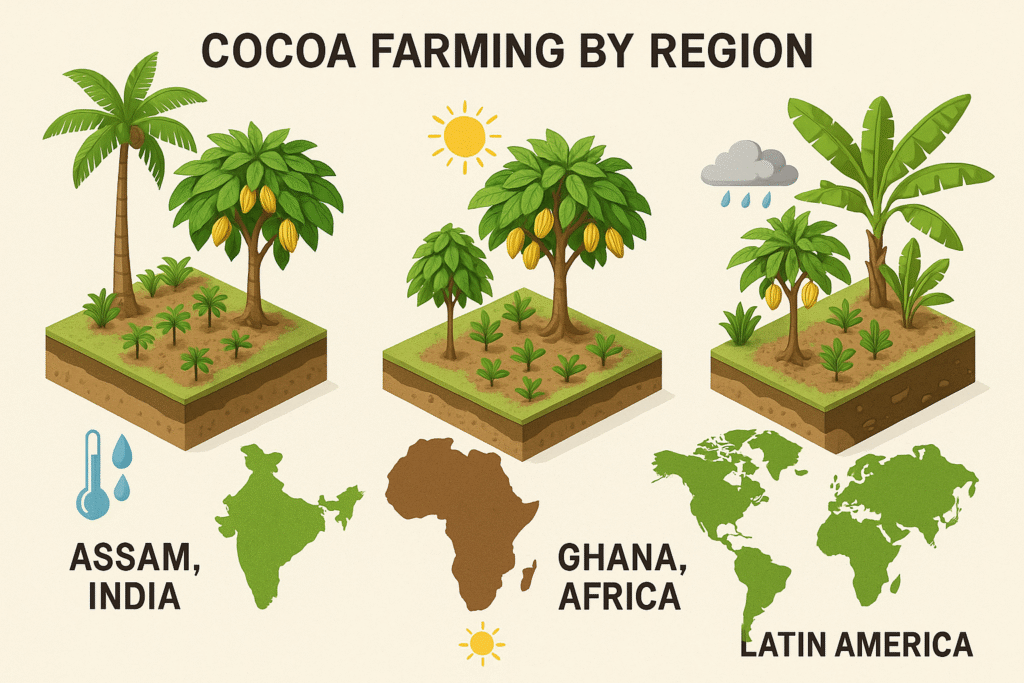
    Table: Assam vs. Global Cocoa Regions

    FeatureAssam, IndiaGhana / Ivory CoastLatin AmericaClimateHumid SubtropicalTropical RainforestTropical RainforestRainfallHigh, uniformHighHighShade requirementModerate, naturalArtificial neededNaturalSoil typeAlluvial-loamyRed lateriteVolcanicFarm sizeSmall-mediumMedium-largeLarge estatesOrganic potentialVery highModerateHighGlobal demand fitExcellentExcellentExcellent

    FAQs about Cocoa Farming in Assam

    1. Is cocoa suitable for Assam’s climate?
      Yes, Assam’s humidity, temperature range, and rainfall pattern match cocoa’s natural habitat.
    2. How many years does cocoa take to start yielding?
      First pods appear in the third year, and commercial yield begins from the fifth year.
    3. Can cocoa be grown with other crops in Assam?
      Absolutely. Areca nut, banana, coconut, and rubber are the best companion crops.
    4. How much water does cocoa need in Assam?
      Minimal irrigation — mostly during winter and dry spells.
    5. Is cocoa farming profitable in Assam?
      Yes. With low labor and rising global chocolate demand, cocoa offers stable long-term profit.
    6. Does Assam cocoa have a market?
      Yes. Domestic processors, Kerala buyers, and international organic bean buyers source from NE India.
    7. What is the biggest challenge in Assam cocoa?
      Shade management and root drainage during heavy monsoon.                Conclusion

    Cocoa farming in Assam stands at the intersection of tradition and global opportunity. The state’s landscape naturally complements cocoa’s physiology — the humidity, filtered sunlight, monsoon-fed soil, and shaded plantation structure all create an environment where cocoa does not just survive but thrives with quiet confidence. As chocolate demand continues to expand, Assam has a chance to contribute to the global market while providing farmers with a sustainable, profitable, long-term plantation crop.

    Cocoa is not a fast-money crop, but it is a steady, dependable, climate-aligned investment — one that could reshape the agricultural future of North-East India.

    ✍️Farming Writers Team

    Love farming Love Farmers

  • One Acre Stevia Farming: Complete Global Sweetener Farming Business Guide

    One Acre Stevia Farming


    1. Introduction: Why Stevia Is One of the Most Profitable One-Acre Crops?

    Stevia (Stevia rebaudiana) is a zero-calorie natural sweetener crop that is replacing chemical sugar worldwide.
    Stevia ka global market 2024 me $770 million cross kar chuka hai, aur 2030 tak $1.6 billion hone ka prediction hai.

    Demand boom ka reason:

    Diabetes patients worldwide

    Health-conscious lifestyle

    Zero-calorie beverages

    Organic sweetener market

    Chemical sugar restrictions in Europe & USA


    Ek acre Stevia farming se ₹8 lakh to ₹15 lakh yearly tak earning possible hai — aur yeh market continuously grow ho raha hai.

    Ye crop:

    Fast growing
    100% organic possible
    Export friendly
    Low water requirement
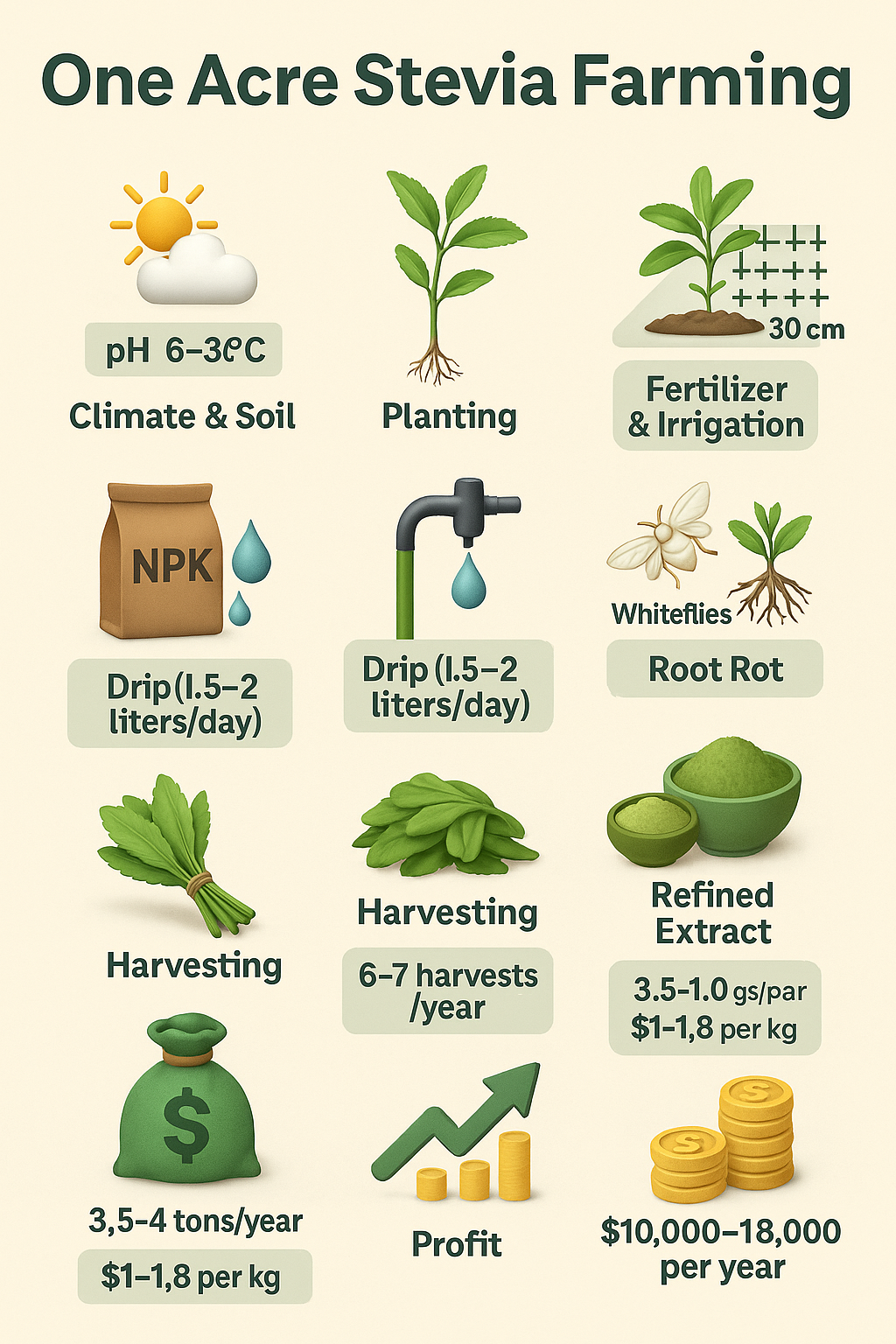
    6–7 harvests per year

    Youth ke liye ek agri-startup goldmine.


    2. Climate Requirement (World Regions for Stevia Farming)

    Stevia tropical–subtropical climate ka plant hai.

    Temperature

    Ideal: 20–30°C

    Survives: 10–38°C


    Rainfall

    700–1500 mm

    But controlled irrigation is best


    Sunlight

    6–7 hours direct

    Shaded regions me leaf quality kam ho jati hai


    Best Global Regions

    Region Countries

    Asia Tropical India, Thailand, Vietnam
    South America Brazil, Paraguay
    Africa Kenya, Tanzania, Ethiopia
    Europe (Controlled) Italy, Spain, Greece
    Middle East UAE (Greenhouse), Oman, Qatar


    3. Soil Requirements (Exact Scientific Details)

    Stevia grows best in:

    pH: 6.5–7.5

    Soil: Light sandy-loam

    Organic matter: High

    Waterlogging: Not tolerated


    Ideal Soil Mix (Per Acre)

    50% Loam

    30% Sand

    20% Organic compost


    Stevia does not like heavy clay soils.


    4. One Acre Stevia Plantation Layout (Exact Measurements)

    Spacing:

    Row-to-row: 45 cm

    Plant-to-plant: 30 cm


    Plant Population (1 Acre):

    60,000 – 70,000 plants/acres

    Haan bhai, yeh bahut high-density crop hota hai.


    5. Seed Rate & Nursery Details

    Stevia seeds poor germination rate rakhte hain.

    Better option = Stem cuttings / Tissue culture plants

    A) Seed Rate

    1 acre ke liye seeds: 1.5–2 kg

    Germination rate: 15–20%


    Isliye seed se farming risky hoti hai.

    B) Stem Cutting Method

    1 acre ke liye: 60,000 cuttings

    30–35 days nursery phase

    Rooting hormone use: IBA 1000 ppm


    C) Tissue Culture Plants

    Best survival

    High yield

    Disease-free


    6. Land Preparation for 1 Acre

    Step-by-Step

    1. Deep ploughing


    2. Add 8–10 tons organic compost


    3. Make raised beds (width 2.5 ft, height 1 ft)


    4. Install drip irrigation (mandatory)


    5. Mulching with dry leaves / black mulch


    7. Irrigation Requirement (Exact Water Schedule)

    Stevia shallow root crop hai, isliye frequent light irrigation chahiye.

    Summer

    30–40 minutes drip daily


    Winter

    15–20 minutes every 2 days


    Rainy

    Stop irrigation

    Avoid standing water


    Water Requirement Per Day

    1.5–2 liters per plant


    8. Fertilizer Schedule (Month-wise Professional Chart)

    Stevia requires high nitrogen.

    Basal Dose (Before Plantation):

    40 kg N

    20 kg P

    20 kg K


    Monthly Fertilizer Plan (1 Acre):

    Month Fertilizer Dose

    Month 1 NPK 19:19:19 8 kg
    Month 2 Urea 10 kg
    Month 3 NPK 12:32:16 8 kg
    Month 4 Potash 13:00:45 6 kg
    Month 5 Magnesium sulphate 4 kg
    Monthly Vermicompost 300 kg


    Foliar Sprays

    Boron: 0.2%

    Zinc: 0.5%

    Amino acids: 1%


    9. Pest & Disease Control (Safe Pesticides)

    Pests

    Whiteflies → Neem Oil 3%
    Aphids → Imidacloprid
    Leaf miners → Spinosad
    Caterpillars → Emamectin

    Diseases

    Root rot → Trichoderma in soil
    Leaf spot → Mancozeb
    Powdery mildew → Wettable sulphur


    10. Harvesting Timeline (Yearly Full Cycle)

    First Harvest

    90–100 days after transplanting


    Subsequent Harvest

    Every 45–50 days


    Total Harvests

    6–7 cycles per year

    Harvest Quality Parameter

    Leaf moisture < 10%

    Stevioside content > 10%


    11. Drying Process (Most Important)

    Stevioside (sweetness compound) remains high only if leaves are dried at:

    Temperature: 40–50°C

    Drying time: 8–10 hours


    Sun drying NOT recommended for export grade.


    12. Processing (Value Addition → 4X PROFIT)

    You can process leaves into:

    1. Dried leaf powder


    2. Green stevia powder


    3. Refined stevia extract


    4. Liquid stevia sweetener


    Companies buy dried leaves OR extracts.


    13. Yield Per Acre

    Fresh Leaves:

    10–12 tons/year


    Dry Leaves:

    3.5–4 tons/year


    14. Selling Price (Global Markets)

    Item Price

    Raw dried leaves ₹80–₹150/kg
    Powder ₹400–₹600/kg
    Extract ₹1200–₹2500/kg
    Liquid sweetener ₹1500–₹3000/L


    Top buyers:

    USA, Germany, Japan, Australia

    Food processing companies

    Beverage makers

    Pharmaceutical companies


    15. Profit Calculation (1 Acre)

    Revenue (Raw Leaves):

    4,000 kg × ₹120 = ₹4,80,000

    If processing is done:
    Profit becomes ₹12–15 lakh per acre per year

    Net Profit:

    ₹8–₹15 lakh/year


    16. Government Subsidies & Loan

    India

    NHB Medicinal plant subsidy (35–50%)

    AYUSH Ministry support

    NABARD Loan

    PMFBY crop insurance


    USA

    USDA Natural sweetener grant

    Small-scale horticulture loan


    EU

    Organic certification subsidy

    EU Agri Fund (CAP)


    17. Export Guide (Stevia for International Buyers)

    Documents:

    1. IEC code


    2. FSSAI


    3. Phytosanitary certificate


    4. Invoice + packing list


    5. Certificate of origin


    Top importing nations:

    USA

    Japan

    Germany

    UK

    South Korea

    Singapore


    18. Marketing Strategy (Global + Local)

    Local Selling

    Organic shops

    Ayurvedic stores

    Bakeries

    Diabetes clinics

    Health stores


    Online

    Amazon

    Flipkart

    Etsy

    Instagram shop


    Export

    Bulk buyers

    Ingredient manufacturers

    Beverage companies


    19. Conclusion

    Stevia is a future-proof, high-income, low-risk farming business.
    One-acre stevia farming can reliably give ₹8–15 lakh yearly, plus worldwide export opportunities.

    It is the perfect crop for modern youth to start a global natural sweetener business.


    FAQ 1: Is Stevia profitable in one acre?

    Yes. Stevia is one of the most profitable medicinal crops in the world.
    A well-managed one-acre Stevia farm produces:

    3.5–4 tons dried leaves per year

    Average global price: $1.0 – $1.8 per kg

    If processed into powder/extract: $5 – $25 per kg


    Annual profit per acre: $10,000 – $18,000
    (Processing + value addition = income up to $25,000+)


    2: How many plants are required for one acre Stevia farming?

    One acre needs:

    60,000 – 70,000 Stevia plants

    Spacing: 45 cm × 30 cm

    Planting method: stem cuttings or tissue-culture plants only


    High-density plantation = maximum leaf biomass + highest revenue.


    3: What is the global selling price of Stevia leaves and extract?

    World market average prices:

    Product Global Price (USD)

    Dried Stevia leaves $1 – $1.8 per kg
    Stevia powder $6 – $10 per kg
    Stevia extract $12 – $25 per kg
    Liquid Stevia $20 – $40 per liter


    Export quality extract sells at even higher rates.


    4: How much water does Stevia need per day?

    Stevia is a low-water crop.

    Daily requirement per plant:

    1.5–2 liters/day in summer

    1 liter/day in winter

    Rainy season → minimal irrigation


    Drip irrigation ensures highest Stevioside content.


    5: How many harvests per year in Stevia farming?

    Stevia gives one of the highest yearly harvesting cycles:

    First harvest: 90–100 days

    After that: every 45–50 days

    Total: 6–7 harvests per year


    This frequent harvesting makes Stevia extremely profitable.


    6: What is the complete value-added chain for Stevia?

    Stevia value addition increases earnings 2x to 5x.

    Full chain:

    1. Dried leaves


    2. Fine powder

    Read A Next Post 👇

    https://farmingwriters.com/one-acre-kiwi-farming-complete-profit-guide/

    ✍️Farming Writers

    Love Farming Love Farmers