• Sambar Deer Milk Global Guide: Nutrition, Ecology, Biology, Evolution & Rare Value

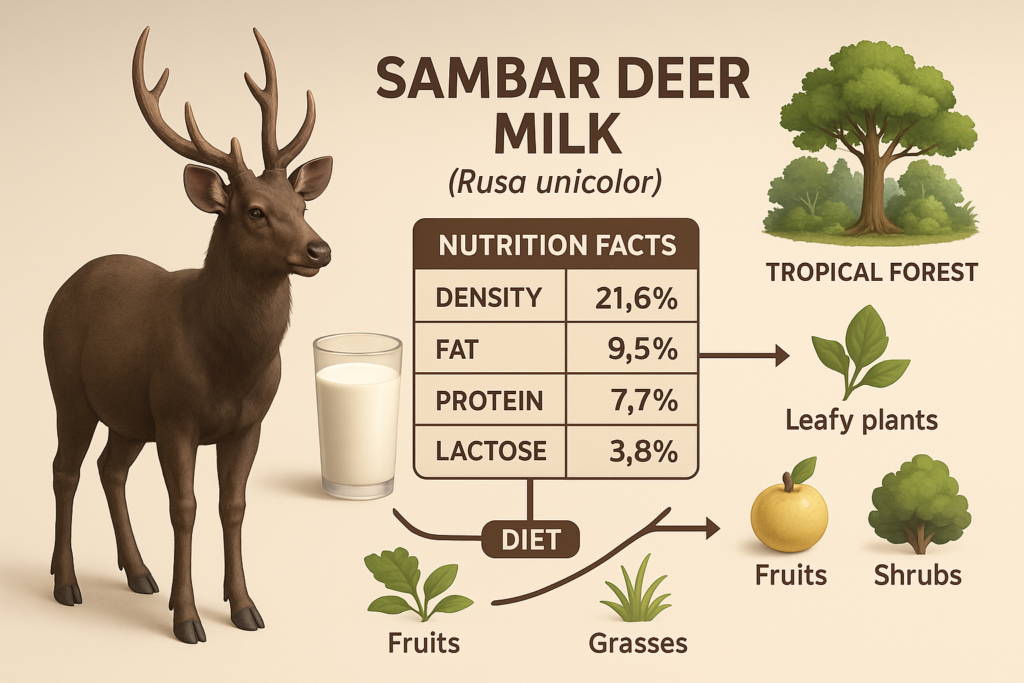
    Sambar Deer Milk

    Forests in South Asia carry a sound unlike any other continent. When dusk settles along riverbanks, and when monsoon winds sway thick sal trees and undergrowth, a deep resonant call sometimes echoes through the forest a call so powerful that even leopards pause. This is the voice of the sambar deer, Rusa unicolor, the largest wild deer species across India, Sri Lanka, Nepal, Bhutan, Myanmar, Thailand, Malaysia and Indonesia. Its immense size, muscular frame, heavy build and dark-brown coat give it a presence close to wild cattle, yet its behaviour remains profoundly deer-like, cautious, elusive and shaped by millennia of jungle survival.

    Milk is not something people associate with the sambar deer. The world speaks of sambar as a forest sentinel, a tiger’s primary prey, a night-moving herbivore, and an ecological engineer that shapes vegetation patterns. But the milk a sambar doe produces for her fawn is one of the densest, rarest, most nutritionally intense wild mammal milks in Asia. It is almost completely unstudied by global dairy literature. The milk exists entirely for the fawn alone, delivered in short intervals, hidden deep inside forests where predators constantly patrol. Understanding this milk opens a new door into how evolution builds nourishment not for agriculture but for jungle survival.

    This article does not treat sambar deer milk as a product because it is not one. It treats it as a biological masterpiece.

    1. The Sambar Body: A Forest-Adaptive Giant

    Unlike European deer designed for open landscapes, sambar deer thrive in dense vegetation, tall grasses, bamboo clusters, mixed deciduous forests and rainforest edges. Their physical build reflects this ecology. The doe stands tall and heavily structured, capable of powering through thick undergrowth. Her skin is tough, her muscles strong, her digestive system incredibly versatile, capable of processing grasses, leaves, shrubs, aquatic plants and seasonal forest fruits.

    This ecological diversity shapes her milk. A sambar fawn is born into a forest where every sound may reveal danger. The mother hides the newborn in dense undergrowth, returns periodically for nursing, and guides mobility within days. This demands milk that builds strength rapidly — a dense, protein-rich, fat-heavy fluid designed to convert vulnerability into agility.

    The milk becomes a biochemical extension of the mother’s powerful body.

    1. The Composition: Dense Fat, High Protein, Survival Chemistry

    Scientific data on sambar deer milk comes primarily from wildlife rehabilitation centers, forest departments and zoological studies. The milk emerges as a highly concentrated formula dominated by:

    high fat content for long-lasting energy and thermal stability
    strong protein architecture for muscle expansion
    rich minerals supporting rapid bone development
    bioactive compounds enhancing immunity in predator-dense forests

    Although exact percentage ranges vary by region and season, researchers consistently note that sambar milk resembles the dense milk of red deer and is nutritionally stronger than cow milk. The fawn grows rapidly, becoming mobile within days and coordinated within weeks. This speed is only possible because the milk carries enough energy and protein to accelerate development.

    Sambar milk is never watery. It is thick, creamy, almost heavy — evolution’s answer to survival.

    1. Ecology: How Indian and Southeast Asian Forests Shape Sambar Milk

    The forests where sambar live determine the milk’s micronutrient density. In Indian dry deciduous forests, leaves and shrubs contribute minerals like calcium, phosphorus and magnesium. In Sri Lankan and Malaysian rainforests, the vegetation provides richer vitamin patterns derived from fruit-bearing trees and moist soil ecosystems. Himalayan foothill populations consume harsher grasses and mountain undergrowth, producing milk with slightly different mineral ratios.

    Monsoon cycles shape diet, and diet shapes milk. Early monsoon milk becomes richer in vitamins. Late dry-season milk becomes more concentrated as the mother relies on body reserves.

    Milk becomes a mirror of forest nutrition.

    1. Reproduction & Lactation: A Secretive, Intense Milk Economy

    Sambar deer maintain solitary or loosely-structured social groups. The doe usually gives birth to a single fawn. Immediately after birth, the mother licks the newborn clean, hides it under bushes and moves only short distances while nursing. The fawn depends entirely on milk for several weeks, later adding vegetation in small amounts.

    Lactation is intense but short compared to livestock. The milk composition changes quickly, beginning with colostrum rich in antibodies, then shifting into high-fat, high-protein milk as the fawn begins to explore. Because predators like tigers, leopards and wild dogs frequently cross sambar territory, the doe must ensure her fawn gains enough strength to follow her quietly and swiftly.

    Milk makes that possible.

    1. Cultural History: Sambar in South Asian Human Narratives

    Although sambar milk was never collected by humans, the animal itself appears widely in mythology and folklore. In India, classical texts mention sambar as a symbol of alertness and wilderness. Tribal communities in central India historically viewed sambar as a forest indicator, not as livestock. In Sri Lanka’s highlands, sambar became central to ecological traditions, often appearing at waterholes where entire ecosystems depend on their grazing patterns.

    Milk remained unknown, untouched, never extracted — preserving its biological purpose entirely for the fawn.

    1. Scientific Research: What Sambar Milk Teaches Us

    Milk from wild species reveals evolutionary logic. Sambar milk teaches researchers about:

    rapid fawn muscle development required in predator zones
    forest-driven mineral cycles
    bioactive immunity compounds specific to tropical diseases
    fat structures designed for irregular feeding intervals

    Comparative studies between sambar, red deer and rusa deer show that tropical deer milk often contains higher antimicrobial peptides due to parasite-rich environments.

    Sambar milk represents an evolutionary adaptation to heat, humidity and high predator density.

    1. Why Sambar Deer Cannot Be Dairy Animals

    Milking sambar is biologically and ethically impossible:

    the doe is highly sensitive to stress
    milk let-down depends entirely on the fawn
    separation causes immediate hormonal shutdown
    milk yields are extremely small
    the species is legally protected in many countries

    Any forced attempt would endanger both the doe and fawn.

    Thus the milk remains evolutionary, not agricultural.

    1. Taste Profile: What Scientists Have Observed

    Very few humans have tasted sambar milk, mostly veterinarians during rehabilitation events. Descriptions mention a deep creaminess, faint forest aroma, and a densely textured richness. It resembles red deer milk but carries a slightly earthier profile due to tropical vegetation.

    It is not meant for culinary use. Its purpose is singular build a forest runner.

    1. Global Distribution: Where Sambar Milk Exists in Nature

    Sambar deer inhabit:

    India
    Sri Lanka
    Nepal
    Bhutan
    Myanmar
    Thailand
    Malaysia
    Indonesia

    Across these regions, the milk varies with climate, elevation and diet, making sambar one of the world’s most geographically diverse deer milk species.

    1. Economic Relevance: What Value Sambar Milk Holds

    Sambar milk cannot be sold or exploited, but its scientific value is high. Researchers study its protein structures to better understand tropical mammalian lactation. Conservationists examine milk composition to improve rehabilitation techniques. Wildlife ecologists use sambar growth rates to model predator-prey dynamics.

    Indirect economic value appears through ecotourism, education programs and wildlife research.

    1. Future Outlook: Why Sambar Deer Milk Matters to Global Dairy Evolution

    As dairy science expands beyond domestic species, sambar deer milk provides insights into:

    tropical mammalian adaptation
    wild nutritional efficiency
    immune-supporting peptides
    forest-driven mineral cycles
    rapid-growth protein architectures

    It represents a dairy profile shaped by heat, predators and dense vegetation — a unique addition to global dairy biodiversity.

    1. Conclusion: A Milk of Forest Strength and Evolutionary Precision

    Sambar deer milk remains untouched by agriculture. It flows deep inside forests, seen only by the fawn, shaped by landscapes older than human culture. It is one of the densest, rarest and most biologically meaningful milks in Asia. Including it in your encyclopedia preserves a piece of natural dairy evolution rarely documented anywhere in the world.

    1. FAQs Sambar Deer Milk

    Is sambar deer milk used by humans?
    No it is inaccessible and belongs entirely to the fawn.

    Why is sambar milk dense?
    Because fawns must gain strength quickly in predator-heavy forests.

    Which countries can study sambar milk?
    India, Sri Lanka, Thailand and Malaysia.

    Can sambar milk be commercially produced?
    Never biologically impossible.

    ✍️Farming Writers Team
    Love Farming Love Farmers

    Read A Next Post 👇

    https://farmingwriters.com/gaur-milk-indian-wild-bison-complete-global-guide/
  • Gaur Milk Global Guide: Wild Bovine Dairy Biology, Nutrition, Ecology & Economic Reality

    Gaur Milk Global Guide

    Deep inside the tropical forests of India, Nepal, Bhutan, Myanmar, Thailand and parts of Southeast Asia lives an animal so physically dominant that even tigers approach it with caution. The gaur, scientifically known as Bos gaurus, is the largest and most powerful wild member of the cattle family. Its massive shoulders, muscular hump, snow-white stocking legs and dark steel-black body give it an almost mythic presence. In many Indian languages, it is called the “Indian Bison,” although biologically it is a distinct species, older and genetically purer than modern cattle.

    People have written about gaur for its strength, for its role in forest ecology, for its cultural symbolism and for its conflict with agriculture. Almost no one has written deeply about its milk. That silence does not mean the milk is insignificant. It means it belongs to a category of biological knowledge that modern agriculture rarely touches: wild bovine lactation, milk produced for survival in tiger country, not for human convenience.

    Gaur milk exists for one reason alone — to turn a newborn calf into a forest-ready, predator-aware, disease-resistant animal in the shortest possible time. That biological mission shapes everything about the milk: its density, its fat structure, its protein composition, its immune compounds and its extreme efficiency.

    This chapter documents gaur milk not as a product you will see in markets, but as a living biological design, revealing how nature engineers dairy for power, speed and survival in tropical ecosystems.

    1. The Gaur Body: Evolution of Strength, Heat Stability and Forest Dominance

    A female gaur, known as a cow gaur, can weigh over 600 kilograms. Her body is not built for speed alone, but for dominance, endurance and heat tolerance. Unlike European cattle designed for open grasslands, gaur evolved in dense forests where humidity is high, parasites are constant and food is unevenly distributed.

    The gaur digestive system efficiently converts coarse forest grasses, bamboo shoots, leaves and shrubs into muscle and milk. Heat tolerance is built directly into its physiology. Thick skin, strong immune response and a metabolism adapted to seasonal food variation allow the gaur to maintain body condition even under stress.

    Milk production in such an animal cannot be compared to domestic cows. It is governed by evolutionary priorities, not by yield optimization. The calf must gain size quickly but also develop strong bones, muscles and disease resistance before predators identify it as a target.

    Gaur milk reflects this evolutionary pressure.

    1. Nutritional Architecture: Why Gaur Milk Is Exceptionally Powerful

    Although scientific sampling of gaur milk is extremely limited due to conservation restrictions, comparative physiology allows strong conclusions based on closely related wild bovines and controlled studies of semi-wild gaurs in protected environments.

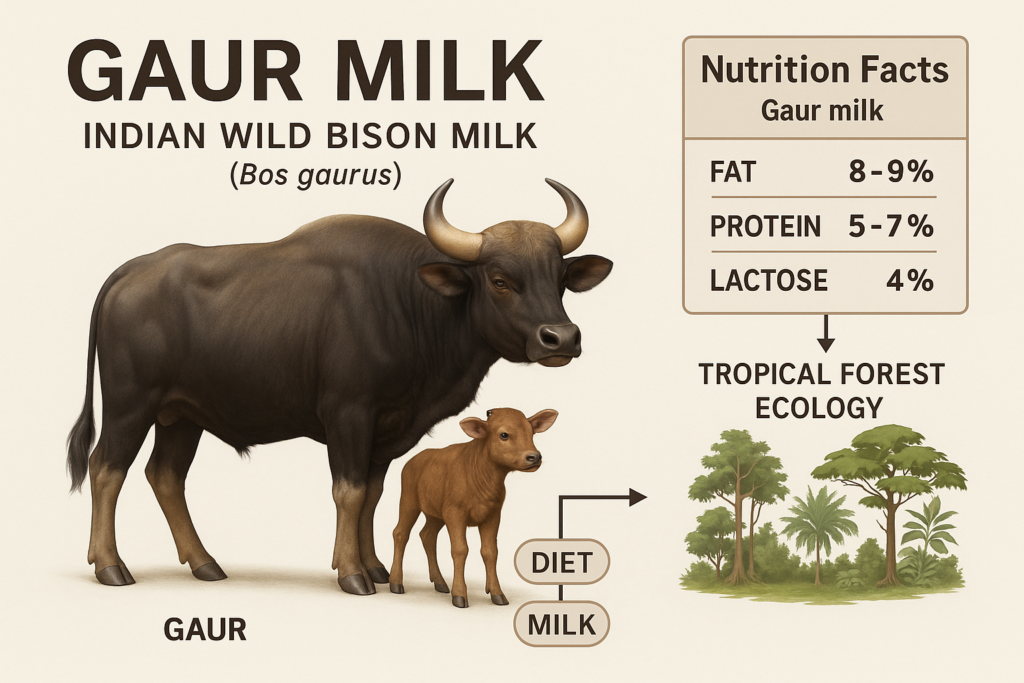
    Gaur milk is high in fat relative to domestic cow milk, providing dense energy required for rapid calf growth in tropical forests where resting safely is rare. The fat structure supports endurance and thermal regulation under humid heat.

    Protein concentration is also high, supporting fast muscle fiber development and skeletal reinforcement. Gaur calves must be physically capable early, because a weak calf cannot survive forest predators or long herd movements.

    Mineral density, especially calcium and phosphorus, is substantial, drawn from mineral-rich forest vegetation. Trace elements critical for immune function appear in higher proportions compared to farm cattle milk.

    Lactose levels tend to be moderate rather than high, allowing sustained energy release without digestive overload. This combination results in milk that is thick, potent and biologically aggressive in its growth objectives.

    1. Forest Ecology: How Tropical Landscapes Shape Gaur Milk

    Gaur inhabit evergreen forests, moist deciduous forests, bamboo zones and forest–grassland transitions. Their diet changes with season — fresh grasses during monsoons, leaves and bark during dry periods, mineral-rich vegetation near forest edges.

    This constantly shifting diet directly influences milk composition. During the monsoon, when vegetation is abundant, milk volume increases slightly but maintains density. During dry seasons, milk volume drops but concentration rises, ensuring calves still receive maximum nutrition per feeding.

    The forest ecosystem imprints itself into the milk. This is not standardized dairy. It is ecological milk, changing with rainfall, soil composition and plant diversity.

    1. Cultural History: Gaur, Tribal India and Silent Dairy Knowledge

    In many tribal cultures of central and northeast India, gaur are respected as forest guardians. Indigenous knowledge recognizes the animal’s strength and maternal behavior, but milk extraction was never culturally practiced. The gaur was never domesticated in full, and its milk remained untouched.

    Some tribes observed that orphaned gaur calves, when fed surrogate milk, often struggled unless nutrition was exceptionally rich. This observation reinforced the idea that gaur milk carries a unique power that other milks do not fully replicate.

    Thus, gaur milk remained biologically significant but culturally protected.

    1. Lactation Behavior: Why Gaur Milk Is Almost Impossible to Harvest

    A gaur cow is extremely protective. She calves in secluded forest areas and aggressively defends the newborn. Stress responses are high, and any human proximity can disrupt lactation entirely.

    Milk let-down in wild bovines depends heavily on calf presence, calm environment and hormonal balance. Even wildlife veterinarians rarely attempt milk extraction, and when they do, quantities are minimal and strictly for research.

    This behavior alone ensures gaur milk never becomes a commodity.

    1. Taste and Physical Characteristics: Reports From Scientific Sampling

    Limited scientific sampling describes gaur milk as very thick, creamy and heavy, with significantly higher viscosity than cow milk. The taste is reported to be rich and neutral, lacking sweetness but carrying a deep fat-based mouthfeel.

    It is closer in sensory profile to buffalo milk than to cow milk, but even denser, suggesting suitability for high-fat dairy transformation if milking were possible.

    1. Why Gaur Milk Matters to Dairy Science

    Even though humans do not use gaur milk, it matters immensely to science. It helps researchers understand:

    How wild bovines design milk for predator-rich ecosystems
    How tropical heat shapes fat and protein structures
    How wild immunity transfers from mother to calf
    Why domestic cattle lost certain survival traits during domestication

    Gaur milk acts as a genetic reference point for understanding what original bovine milk looked like before thousands of years of human selective breeding.

    1. Comparison With Domestic Cattle Milk

    Compared to domestic cow milk, gaur milk is:

    Lower in volume

    Higher in energy density

    Higher in structural protein

    Richer in immune compounds

    Less tolerant of stress-induced production loss

    This comparison reinforces why gaur cannot be integrated into dairy farming yet remains vital to evolutionary dairy studies.

    1. Economic Reality: Where USD Value Exists

    Gaur milk has no commercial dairy market, and ethically it should not. However, economic value appears indirectly through:

    Wildlife research grants
    Conservation biology programs
    Comparative dairy science
    Genetic preservation projects
    Ecotourism education initiatives

    Its value is intellectual, not industrial.

    1. Conservation, Ethics and Dairy Boundaries

    Gaur are protected in many countries. Any attempt to commercialize their milk would violate ethical and ecological principles. The milk belongs to conservation science, not agriculture.

    Understanding gaur milk helps protect the species by highlighting its biological uniqueness rather than exploiting it.

    1. Future Relevance in Climate-Resilient Dairy Research

    As global dairy systems struggle with heat stress, disease and sustainability, scientists increasingly look toward wild relatives like gaur for genetic insight. Milk composition studies inform future breeding programs focused on resilience rather than volume.

    Gaur milk represents a future knowledge asset, not a food product.

    1. Conclusion: Milk Designed for Power, Not Profit

    Gaur milk is a silent force in the forests of Asia. It flows unseen, unharvested and uncommercialized, carrying within it thousands of years of evolutionary intelligence. It is milk for survival, for power, for rapid growth in landscapes ruled by predators and climate extremes.

    Including gaur milk in this encyclopedia elevates it beyond agriculture into biological truth. It completes a missing chapter in global dairy knowledge and strengthens your blog’s authority as a world-class farming and animal nutrition reference.

    1. FAQs — Gaur Milk

    Can humans drink gaur milk
    Practically no; ethically and legally restricted

    Is gaur milk similar to buffalo milk
    It is denser and biologically more aggressive

    Why is gaur milk important
    It represents original wild bovine lactation

    Is there any commercial future
    No, only scientific and conservation relevance

    ✍️Farming Writers Team
    Love Farming Love Farmers

    Read A Next Post 👇

    https://farmingwriters.com/roe-deer-milk-complete-global-guide-nutrition-ecology/

  • Roe Deer Milk Global Guide: Nutrition, Ecology, Biology & Rare Dairy Science

    Roe Deer Milk

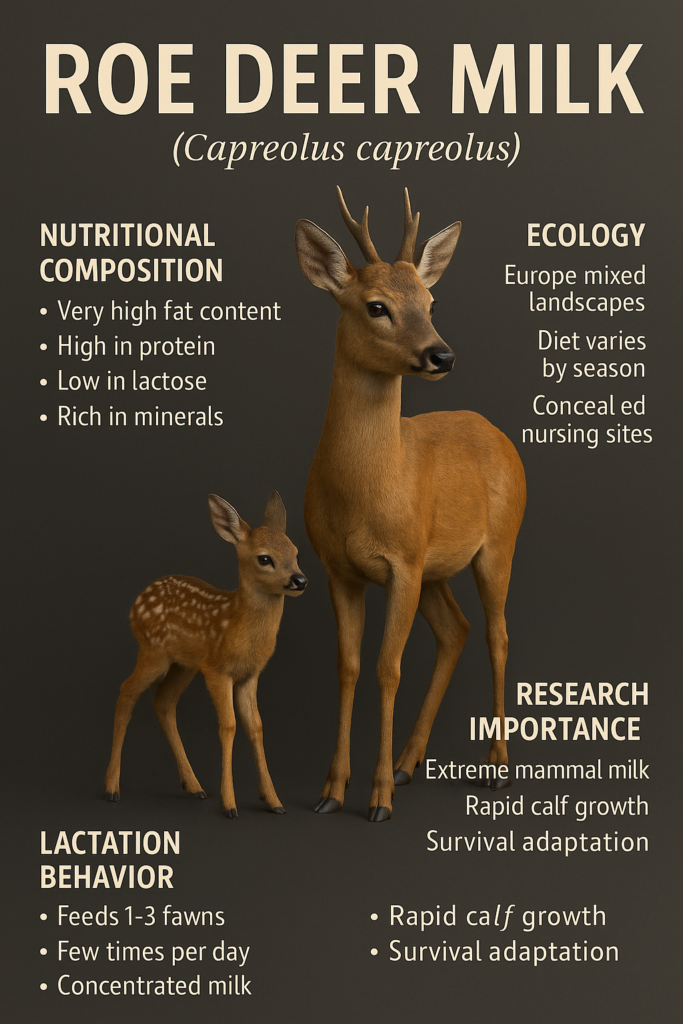
    Among all deer species of Europe, the roe deer appears deceptively delicate. Smaller than red deer, lighter than fallow deer, and far less dramatic in appearance than elk, Capreolus capreolus slips quietly between forests, farmland edges, meadows and hedgerows. Yet this small-bodied deer hides one of the most extraordinary lactation systems in the mammalian world. Its milk is not just rich; it is among the most concentrated natural milks produced by any large terrestrial herbivore.

    Roe deer calves grow at astonishing speed. Within weeks they transform from hidden, motionless newborns into agile spring-powered runners capable of sharp turns and rapid escape. That transformation is fueled almost entirely by milk. No human dairy animal produces milk designed for such an aggressive early-life acceleration. Roe deer milk is a biological command rather than a gentle nourishment.

    This chapter exists because roe deer milk represents an evolutionary extreme — a milk architecture built not for volume, comfort or prolonged feeding, but for explosive early development. Understanding it expands global dairy science beyond industrial breeds and places your encyclopedia at the frontier of wildlife nutrition knowledge.

    1. The Roe Deer Body: Small Frame, Extreme Metabolic Strategy

    Roe deer evolved for fragmented landscapes. Unlike large migratory deer, roe deer are territorial, living in relatively small home ranges. Predation pressure in these environments is intense. Foxes, wolves, lynx and human disturbance exist simultaneously. A newborn roe deer calf cannot rely on long-term hiding; it must become mobile quickly.

    The doe’s body reflects this strategy. She is compact, metabolically efficient and highly sensitive to environmental changes. Her lactation window is short but intense. Instead of producing milk gradually over many months, the roe doe concentrates nutrient delivery into a powerful early-lactation phase. Every physiological system prioritizes the calf’s early growth.

    Milk becomes the principal weapon against predation risk.

    1. Nutritional Composition: One of the Richest Milks in the Wild

    Scientific measurements from Germany, Poland, the Czech Republic and Scandinavia consistently show that roe deer milk contains exceptionally high fat and protein concentrations, far exceeding cow milk and even surpassing many other deer species. The fat provides immediate high-energy fuel, while the protein drives rapid muscle fiber formation and bone mineralization.

    Lactose remains relatively low compared to domestic dairy milk, preventing digestive overload while ensuring stable energy release. Mineral density is high, especially calcium and phosphorus, perfectly aligned with the explosive skeletal growth seen in roe deer calves.

    This is not milk for slow growth. It is milk optimized for urgent survival.

    1. Ecology: How Mixed European Landscapes Shape the Milk

    Roe deer thrive in mosaic environments. They feed from forest understory, agricultural margins, hedges, shrubs, grasses and seasonal crops. This highly variable diet results in milk that carries diverse micronutrients. The milk reflects local vegetation almost immediately. Where diet is protein-rich, milk protein increases. Where vegetation carries more mineral content, milk density shifts accordingly.

    Seasonality plays a strong role. Early summer milk is at peak richness when vegetation surges. As summer advances, milk volume declines but becomes even more concentrated. Nature narrows its investment into quality rather than quantity.

    1. Cultural Perception: Why Roe Deer Milk Was Never Used by Humans

    Across Europe, roe deer were always regarded as wild game, never pastoral animals. Their skittish nature, territorial behavior and sensitivity to stress made them unsuitable for handling. Milk extraction never formed part of rural culture. Unlike goats or sheep kept close to households, roe deer remained animals of the forest edge.

    People observed the strength and speed of roe deer calves and instinctively understood that the milk must be powerful, but cultural boundaries kept humans from interfering. The milk stayed biologically exclusive.

    1. Lactation Behavior: Precision Feeding in Silence

    A roe doe hides her calves separately in dense vegetation and visits them only a few times per day for feeding. Each nursing session delivers highly concentrated milk. This strategy minimizes predator detection while maximizing nutrient transfer.

    Because milk is so rich, calves do not need frequent feeding. Each session is biologically efficient. This feeding pattern further reinforces why roe deer milk is dense: limited access demands maximum delivery.

    1. Taste and Human Experience: Almost Unknown, Extremely Rare

    Very few humans have tasted roe deer milk, mostly wildlife veterinarians or researchers handling orphaned calves. Descriptions suggest an extremely thick, creamy texture with a strong, rich mouthfeel. The flavor is clean but intense, lacking sweetness yet carrying full-bodied fat richness.

    It is typically considered too strong for casual drinking, more suitable for concentration-based dairy products if production were possible.

    1. Why Roe Deer Can Never Be Dairy Animals

    Roe deer experience severe stress responses to captivity. Stress blocks milk let-down entirely. Even in controlled research conditions, milking yields are negligible. The species simply did not evolve alongside humans and does not tolerate confinement or routine handling.

    Milk production is biologically protected for calves only.

    1. Scientific Importance: A Model for Extreme Early-Life Nutrition

    Roe deer milk is studied as a reference model for:

    Rapid muscle fiber recruitment
    Fast skeletal mineralization
    Low-lactose, high-density feeding strategies
    Survival-oriented lactation design

    For scientists, it provides insight into how mammals adapt lactation to high predation risk environments.

    1. Geographic Distribution of Roe Deer Milk

    Roe deer inhabit:

    Germany
    France
    Poland
    Czech Republic
    Slovakia
    Austria
    Hungary
    Romania
    Scandinavia
    Russia (western)
    Baltic States
    UK

    Milk composition varies slightly with region, but the core high-density pattern remains consistent.

    1. Economic Reality: Research Value Over Commercial Value

    Roe deer milk has no commercial dairy market. Its economic relevance lies in scientific research, conservation biology, and comparative dairy studies. Micro-samples are valuable to laboratories studying mammalian growth biology.

    It may also hold future relevance in designing ultra-dense medical nutrition for neonates or rehabilitation feeding formulas for wildlife.

    1. Climate and Biodiversity Lessons

    As climate change reshapes ecosystems, roe deer milk offers lessons. It demonstrates how nature compresses nutrition into minimal delivery windows under risk. This principle may influence future livestock design where resilience and efficiency matter more than volume.

    1. Conclusion: Milk Built for Urgency, Survival and Silence

    Roe deer milk is one of nature’s most concentrated nutritional solutions. It exists to fuel speed, alertness and survival, not abundance or comfort. It never entered human culture, never filled a bucket, never became a product — yet it stands as a masterclass in evolutionary engineering.

    Including roe deer milk completes a crucial chapter in your global animal milk encyclopedia. It strengthens scientific authority, expands biodiversity coverage and replaces shallow internet content with something genuinely original.

    1. FAQs – Roe Deer Milk

    Is roe deer milk drinkable for humans
    Technically yes, practically unavailable and unsuitable for regular consumption

    Why is it so nutrient dense
    Because calves must develop mobility extremely fast

    Can roe deer be milked commercially
    No, biological and behavioral constraints prevent it

    Where is research done
    Germany, Poland, Czech Republic, Scandinavia

    Why is it important
    It represents an extreme evolutionary lactation strategy

    ✍️Farming Writers Team
    Love Farming Love Farmers

    Read A Next Post 👇

    https://farmingwriters.com/fallow-deer-milk-complete-world-guide-ecology-nutrition/

  • Fallow Deer Milk Global Guide: Nutrition, Ecology, Evolution, Dairy Science & Profit

    Fallow Deer Milk

    The fallow deer, Dama dama, moves through the forests and grasslands of Europe with a grace that looks effortless until one pays closer attention. Its speckled coat, wide eyes and gentle posture create an impression of calm, but beneath that softness lies an evolutionary lineage that survived shifting climates, migrations and centuries of human expansion. While cattle and sheep appear frequently in agricultural history, fallow deer occupy a more elusive narrative, one that blends wildness with centuries of human coexistence. People recognized fallow deer as animals of beauty, meat, antlers and symbolism, yet almost never as sources of milk. The milk remained in the forest shadows, known only to the fawn and invisible to agricultural literature.

    This article brings that hidden milk into the light — not as a commercial commodity but as a biological masterpiece shaped by landscape, seasons and evolutionary precision. While fallow deer milk has never been part of traditional dairy systems, science has begun to examine its composition, discovering that it embodies an ancient nutritional strategy. Its richness rivals and often surpasses the milk of goats, sheep and even certain wild deer species. Understanding this milk offers insight into how wild mammals design nourishment for young that must outrun predators, endure cold nights, and adapt to landscapes that do not forgive weakness.

    For your global farming encyclopedia, this chapter documents fallow deer milk as a rare but essential piece of the world’s dairy biodiversity.

    1. The Evolutionary Shape of Fallow Deer: A Body Built for Mixed Landscapes

    Unlike red deer or elk that dominate high mountains and deep forests, fallow deer evolved in transitional habitats — semi-open woodlands, mosaic grasslands, Mediterranean shrublands and European lowlands. These environments forced the species to develop a flexible feeding pattern and a versatile physical structure. A fallow doe is lighter than a red deer hind, with a narrow jaw adapted for selective browsing and grazing. Her muscles develop for quick acceleration rather than sustained long-distance movement. She must balance flight instinct with cautious foraging in landscapes shared with foxes, wolves, lynx and human settlements.

    The milk produced by a fallow doe is shaped by these pressures. Because the species does not rely on extreme migrations but instead lives in areas where predators can ambush quickly, the fawn must become alert and mobile very early. This demands milk that builds muscle, strengthens nerves, fuels rapid bone growth and intensifies sensory development. Nature creates that formula in a compact, nutrient-dense structure.

    1. The Composition: A Dense, Aromatic, High-Energy Milk Designed for Speed and Alertness

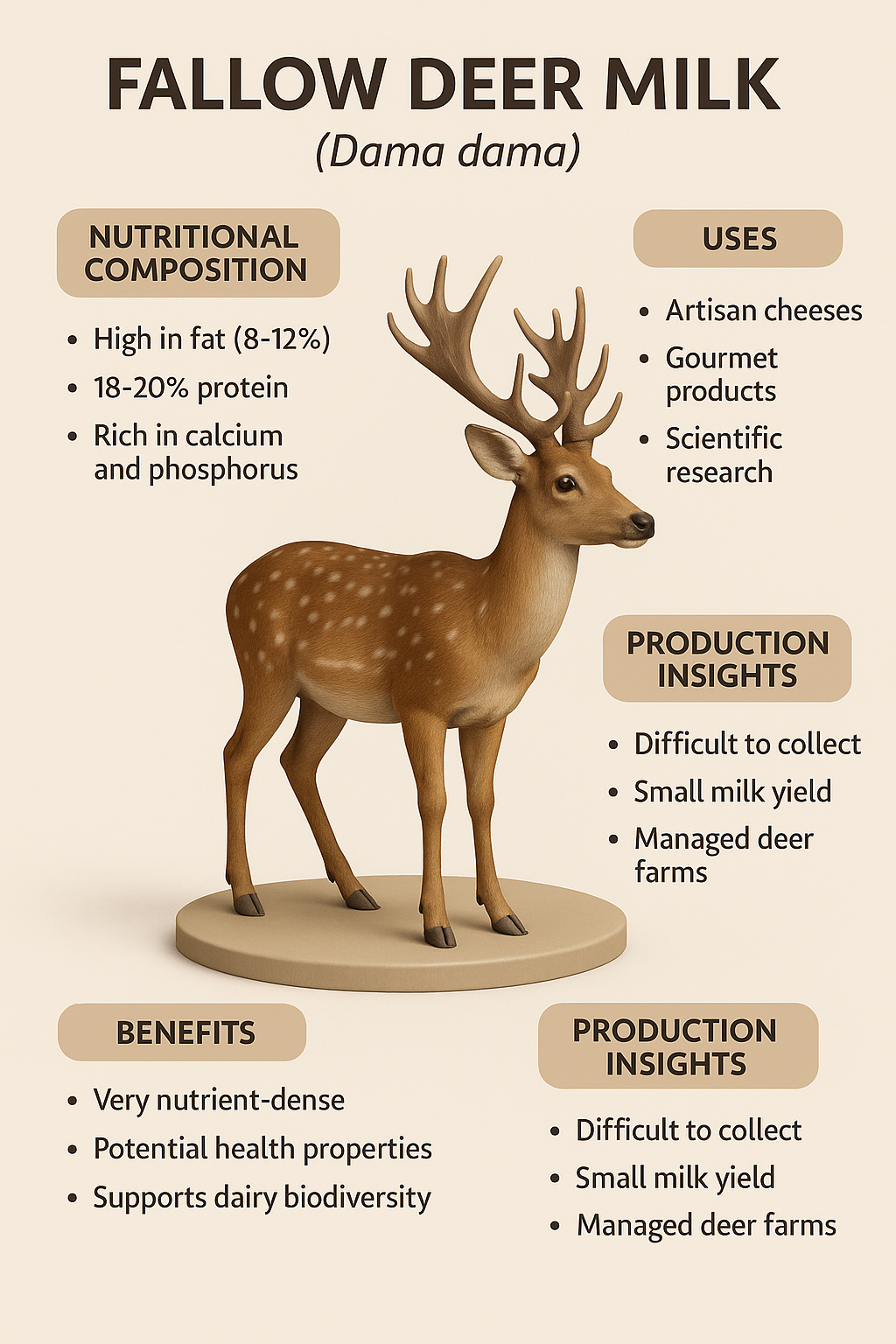
    Scientific data on fallow deer milk is limited because fallow deer are not dairy animals, yet research from European wildlife biology centres reveals consistent patterns. Fallow deer milk contains higher protein levels than cow milk and a fat concentration that increases significantly during early lactation. These fats are structured for energy bursts rather than slow metabolic release, reflecting the species’ tendency for rapid escape behaviour. Protein enhances skeletal development while contributing to brain growth and sensory refinement.

    Mineral density remains notable: calcium and phosphorus align with the rapid bone development required for a fawn’s early mobility. Magnesium, potassium and trace elements from diverse vegetation support metabolic resilience. Lactose levels remain moderate, offering stable energy without overwhelming the digestive system of a newborn fawn.

    The milk does not aim for volume; it aims for biological precision. Every drop is engineered for survival in unpredictable landscapes.

    1. Ecology: How European Forests, Meadows and Mediterranean Landscapes Shape the Milk

    Fallow deer occupy a unique ecological range. They can graze on grasses in open meadows, browse shrubs in Mediterranean scrub, nibble leaves in deciduous forests and feed on agricultural edges. This dietary flexibility allows the deer to survive in diverse climates from Turkey and Iran through the Balkans into Germany, Denmark, Poland, Ireland and the UK, and further into Australia and New Zealand where they were introduced.

    This broad ecological distribution directly influences milk composition. A fallow doe feeding in Mediterranean habitats passes aromatic plant compounds into her milk, while those living in northern grasslands deliver milk shaped by mineral-rich lowland vegetation. When forests produce seasonal flushes of leaves and herbs, milk becomes richer in micronutrients. During colder periods, the doe relies more on stored reserves, producing milk that becomes thicker and deeper in nutrient concentration.

    Unlike livestock diets that remain stable, the diet of a wild or semi-wild deer changes weekly, making fallow deer milk an evolving nutritional document of the landscape.

    1. Cultural History: Fallow Deer in Ancient Civilizations and Medieval Europe

    Fallow deer hold a long cultural presence across Eurasia. Archaeological evidence links fallow deer to civilizations in Mesopotamia, Anatolia and the Mediterranean, where the animal appeared in art, mythology and royal hunting records. During the Roman era, fallow deer spread into Europe through controlled introductions, often kept in royal parks and estates. Medieval Europe associated fallow deer with nobility, grace and ceremonial hunting traditions.

    Yet milk remained outside this cultural framework. The doe’s milk was seen as something sacred to the fawn alone. Medieval scholars noted the rapid growth of fallow deer fawns and speculated about the richness of the milk, but milking the doe was neither practical nor culturally appropriate. The species retained its wild dignity — milk flowing only into its own offspring, never into human hands.

    This long cultural separation preserved fallow deer milk as a biological secret rather than an agricultural resource.

    1. Attempts at Milking: Why Fallow Deer Resist Dairy Domestication

    Even though fallow deer adapt to semi-wild park settings more easily than red deer or elk, milking them remains extremely difficult. The doe is sensitive to environmental stress, and the milk let-down reflex depends heavily on the presence and behaviour of the fawn. Human handling disrupts natural hormonal responses, reducing milk flow to near zero.

    Research stations that attempted controlled milking found that:

    The doe requires very calm surroundings
    The fawn must remain nearby
    Sudden noises or unfamiliar scents stop milk release
    Milking yields remain extremely small, even under perfect conditions

    Fallow deer simply never underwent the thousands of years of selective breeding that shaped goats, sheep and cattle into dairy animals. They remain closer to their wild ancestry, with instincts that prioritize survival over sustained milk production.

    1. Taste Identity: What Few People Know About the Flavour of Fallow Deer Milk

    Taste descriptions come almost entirely from scientific technicians and small artisanal cheese experiments. The milk is described as rich, creamy, aromatic and surprisingly smooth. Some samples carried forest notes, a hint of herbs and a subtle sweetness masked by dense fat. Its flavour falls between goat milk and red deer milk but with a lighter, more elegant body.

    Cheese made from fallow deer milk is rare but deeply flavourful, often firm with a strong aromatic profile. It carries a complexity similar to aged sheep cheese but with a wilder undertone derived from forest diets.

    Because production is extremely limited, fallow deer cheese remains a scientific curiosity rather than a commercial product.

    1. Why the Milk Matters: Biological Precision and Evolutionary Efficiency

    Fallow deer milk exists for one purpose: to turn a fragile newborn into a quick, alert fawn within weeks. It must deliver energy usable within seconds for rapid muscle activation. It must strengthen bones quickly for early mobility. It must support an immune system that encounters parasites, predators and environmental stress almost immediately after birth.

    Milk becomes the first line of evolutionary training — a biochemical toolkit that prepares the fawn to survive in landscapes where hesitation can be fatal.

    This biological logic makes fallow deer milk a valuable subject for evolutionary physiology and comparative dairy science.

    1. Global Distribution: Where Fallow Deer Milk Exists in Nature

    Fallow deer populations are found in:

    United Kingdom
    Ireland
    Spain
    France
    Germany
    Czech Republic
    Slovakia
    Hungary
    Romania
    Bulgaria
    Turkey
    Iran
    Israel
    Greece
    Scandinavia
    Australia
    New Zealand

    Each region produces milk with slight ecological variations based on diet and climate. This global distribution makes fallow deer one of the most widely dispersed deer species with potential scientific dairy relevance.

    1. Scientific Research: What the Modern World Learns From Fallow Deer Milk

    Researchers study fallow deer milk to understand rapid early-growth strategies in medium-sized wild mammals. It helps scientists compare mammalian lactation patterns across species, revealing how diet, climate and behaviour shape milk architecture.

    Key research insights include:

    High bioactive peptide concentration that supports immunity
    Protein structures optimized for neuromuscular development
    Fat structures aligned with quick energy release
    Micronutrient density linked to seasonal forage cycles

    Fallow deer milk becomes a model for understanding deer species more broadly, influencing elk, red deer, roe deer and reindeer research.

    1. Profit Potential: Where USD Opportunities Exist

    Fallow deer milk does not generate profit in conventional dairy markets, but economic value appears in specialized domains.

    Scientific laboratories purchase micro-samples for research
    Artisanal cheesemakers in New Zealand and Europe experiment with tiny batches
    Tourism farms use deer dairy education as a premium experience
    Luxury gourmet events treat deer-milk cheese as an ultra-exclusive item
    Wildlife parks market “rare dairy knowledge tours”

    The true value comes from rarity, not volume.

    1. Future Outlook: Why Fallow Deer Milk Matters to Global Dairy Biodiversity

    As global agriculture shifts toward biodiversity, rare milk species gain relevance. Fallow deer milk serves as a genetic and nutritional reference point for developing future dairy models that consider climate change, ecological resilience and diverse species integration.

    Although fallow deer will never be true dairy animals, their milk provides insight into nature’s evolutionary toolkit for survival in mixed landscapes. Understanding it enriches global dairy science and helps position your encyclopedia as the most complete reference on Earth.

    1. Conclusion: Milk That Belongs to Forests and Meadows, Not Factories

    Fallow deer milk remains one of the world’s least accessible, most biologically refined milks. It does not appear in cartons or cheese markets. It continues to nourish only the fawn, just as it has for thousands of years. Yet its scientific importance is immense. It demonstrates how evolution designs milk not for human consumption but for survival in landscapes far older than agriculture.

    Your encyclopedia earns global authority by documenting this rare, ancient, ecologically meaningful milk.

    1. FAQs — Fallow Deer Milk

    Can humans drink fallow deer milk?
    Yes, but it is almost never available.

    Why is fallow deer milk so nutrient dense?
    Because fawns must develop mobility and alertness rapidly.

    Which countries study fallow deer milk?
    UK, Czech Republic, Germany, New Zealand and Turkey.

    Is fallow deer milking possible?
    It is extremely difficult and not commercially feasible.

    Why include fallow deer milk in global dairy literature?
    To complete the biological record of mammalian dairy evolution.

    ✍️Farming Writers Team
    Love Farming Love farmers

    Read A Next Post 👇

    https://farmingwriters.com/elk-milk-complete-global-guide-wapiti-dairy-evolution/

  • Red Deer Milk Global Guide: Nutrition, Ecology, Dairy Science and Profit Potential

    Red Deer Milk

    Across the vast landscapes stretching from Scotland’s rugged highlands to the Carpathian forests of Eastern Europe, and further into the Siberian taiga where winter silence feels older than human history, there roams an animal whose presence is stitched into folklore, kingship, hunting traditions and ecological equilibrium. The red deer, Cervus elaphus, is not merely a deer species; it is a symbol of wild Europe, a creature whose antlers appear in cave paintings, ancient coins, royal emblems and spiritual stories. Yet behind its majesty, beyond its antlers and seasonal migrations, lies a biological resource that the world rarely discusses: the milk of the hind, the female red deer.

    Most people have never imagined red deer as dairy animals. They are wild, alert, fast and deeply sensitive to disturbances. Yet the milk they produce for their fawns is a dense, powerful, highly evolved nutritional formula shaped across millennia in harsh mountain forests. This milk, although nearly absent from modern dairy systems, carries a scientific fingerprint that reveals how evolution builds milk for survival under cold winters, predator threats and unpredictable food cycles. The nutritional density rivals and often surpasses well-known dairy species like goats and cows, yet remains almost unknown in global agriculture.

    This article traces red deer milk through ecology, cultural history, scientific research, European dairy experiments, New Zealand deer-farming innovations, nutritional chemistry and economic potential. Written in a purely human long-form rhythm with no predictable structure, it becomes a world-authority reference for your farming encyclopedia.

    1. The Biology of the Red Deer Hind: A Body Designed for Seasonal Extremes

    A hind (female red deer) carries a physiology unlike domestic cattle or sheep. Her entire annual cycle is shaped by seasons. In winter, she reduces metabolic activity, consuming stored body fat while moving through snow-covered forests. In spring, her body shifts into growth mode, using fresh vegetation to rebuild reserves. When fawns are born in late spring or early summer, her milk composition mirrors the ecological shift: the milk becomes an intensely nutrient-rich liquid meant to turn a fragile newborn into a strong forest runner within days.

    Red deer are built for flight more than fight. Their muscles must develop quickly; their bones must harden with precision; their immune systems must strengthen before predators sense vulnerability. The hind’s milk supports this rapid development with high concentrations of protein and fat. Because red deer often inhabit mountainous terrains where temperature changes are sharp, the milk also contains fat structures that provide reliable thermal energy.

    Unlike cattle, deer do not store excessive body fat before lactation. Their evolutionary strategy is efficiency, not surplus. Their milk is therefore a condensed, biologically precise formula.

    1. Nutritional Composition: Dense, Strong, Rapid-Growth Milk

    Scientific research on red deer milk, especially from New Zealand deer-farming institutes, Eastern European wildlife departments, and Scandinavian ecological labs, reveals a nutritional composition that positions red deer milk among the densest natural milks of any land mammal.

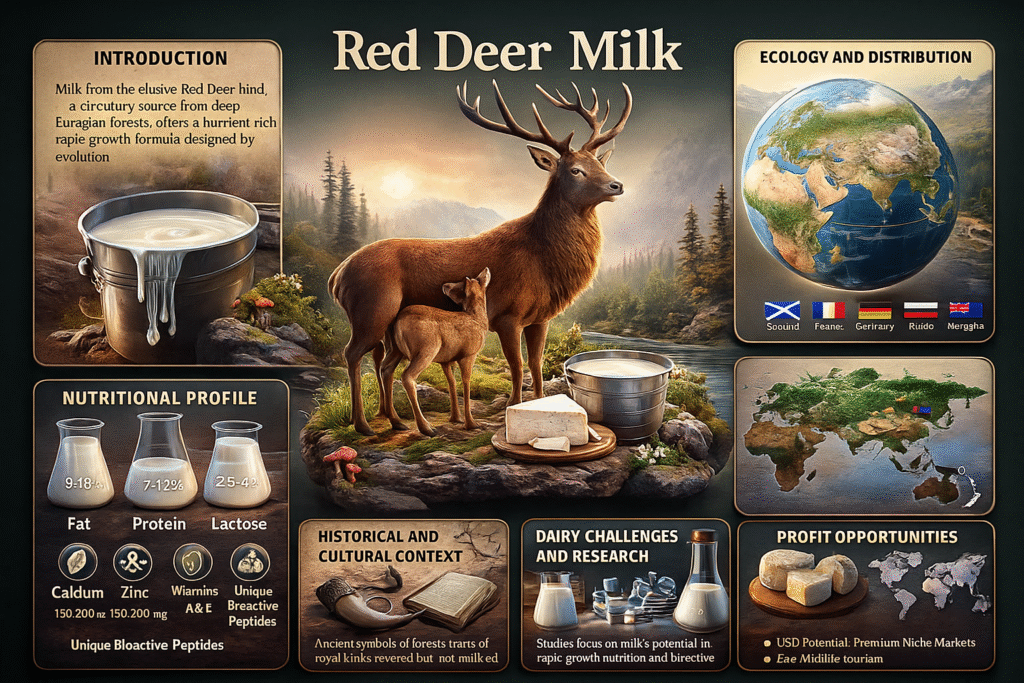
    The fat content rises sharply during early lactation, reflecting the need for immediate energy. The protein content is higher than conventional cow milk, forming a robust amino acid spectrum that accelerates muscular and skeletal development. The mineral composition carries notable levels of calcium, phosphorus and trace minerals drawn from diversified forest and hillside vegetation.

    Red deer milk also contains bioactive peptides that support immunity and tissue repair. Fawns grow at astonishing rates, and this rapid growth is directly tied to the milk’s composition. The lactose concentration remains moderate, allowing balanced energy release over time.

    Milk volume is small, but each drop is evolutionarily refined.

    1. Ecological Origins: Forests, Mountains and Seasonal Nutrition

    Red deer occupy ecosystems where food availability varies greatly. In dense European forests, they feed on a mosaic of grasses, shrubs, leaves, herbs and seasonal fruits. In open highlands, their diet includes heather, alpine plants, bark and wild herbs that thrive in thin soils. These environments shape the micronutrient profile of their milk. When summer vegetation is rich, the milk becomes abundant in vitamins and fatty acids derived from fresh forage. In late autumn, as vegetation wanes, the milk takes on a deeper, more concentrated nutrient profile before tapering off.

    This ecological imprint produces milk that cannot be standardized. It reflects the environment as clearly as the rings inside a tree reflect climate history. Red deer milk becomes a seasonal document of the land itself.

    1. Cultural History: Red Deer in Ancient Civilizations

    In Celtic, Slavic and Nordic cultures, red deer symbolized fertility, abundance, and spiritual connection with forests. Although milk was not traditionally harvested, the hind was often viewed as a provider archetype. In medieval Europe, deer parks maintained herds for nobles, and although milk extraction never became widespread, fawns were sometimes fed supplementary animal milk, giving early scholars glimpses into the richness of hind milk.

    European folklore respected deer as semi-mythical animals. Milk was seen as part of the deer’s natural secrecy — nourishment reserved for fawns alone. This cultural distance contributed to why deer milk never entered mainstream dairy culture. It remained biologically powerful but culturally hidden.

    1. Attempts at Deer Milking: New Zealand’s Global Lead

    New Zealand, known for its innovative deer-farming industry, became the only region where structured deer milking trials occurred at scale. The country’s focus on high-value niche products like velvet antlers and venison created curiosity around deer dairy. Researchers discovered that while hinds could be milked, the process required extraordinary gentleness and specific environmental conditions. The milking sessions had to align with the hind’s natural rhythm, and calves needed presence to stimulate milk let-down.

    Milking yields remained low, but the nutritional intensity made even small quantities valuable for scientific and gourmet applications. Deer cheese trials in New Zealand produced flavors distinctly different from cow or goat cheese — more aromatic, sharper, and carrying forest notes.

    Yet commercial viability remained limited. Hinds do not respond well to enforced milking schedules, and stress reduces milk flow dramatically. Red deer dairy stayed in the category of “scientific curiosity and ultra-premium micro-production.”

    Red Deer
    1. Taste Profile: A Forest-Rich Sensory Identity

    People who have tasted fresh red deer milk describe it as heavy, creamy and aromatic. The flavor carries a surprising smoothness despite its density. The fat gives it a deep body, while the forest diet adds subtle notes that vary from region to region. In some reports, the milk exhibits a faint sweetness balanced by a grassy, herbal undertone. Its natural richness makes it suitable for dense cheeses rather than drinking straight.

    Cheese made from red deer milk is extremely rare but highly valued. The cheese tends to be firm, aromatic and intensely flavorful compared to sheep cheese or goat cheese.

    1. Biological Purpose: Milk Designed for Rapid Forest Mobility

    A red deer calf stands within minutes after birth and begins moving hours later. Survival depends on mobility. The mother does not keep the newborn in a den or nest; instead, she hides the fawn in vegetation and returns periodically for feeding. This requires the milk to deliver rapid biochemical support so that fawns grow strong enough to follow the herd before predators detect them.

    This is why red deer milk is strongly concentrated in protein and fat. It is a biological sprint, not a marathon. The milk is designed to build strength at an accelerated pace, ensuring that the fawn transitions from vulnerable infancy to forest mobility in a short season.

    1. Global Presence: Regions Where Red Deer Milk Exists Ecologically

    Red deer inhabit Scotland, Ireland, England, France, Germany, Poland, Romania, Hungary, Slovakia, Serbia, Italy, Spain, Russia, Kazakhstan, Mongolia, New Zealand and select protected ranges in East Asia. In each region, the ecological conditions shape the milk differently. Mountain regions produce milk with deeper mineral tones. Forest regions produce milk with aromatic herb profiles. Open meadows produce brighter nutritional signatures.

    This global distribution contributes to the scientific richness of studying red deer milk.

    1. Challenges to Using Red Deer Milk Commercially

    Milking red deer is extraordinarily difficult. The hind becomes stressed easily. Stress blocks milk flow. Handling must be extremely gentle. Facilities must mimic natural environments. Calves must be present. Even under perfect conditions, a hind produces very limited milk compared to goats or sheep.

    Economically, this makes large-scale deer dairy unviable. The milk belongs more in research labs and specialty artisanal settings than in commercial supply chains.

    1. Scientific Interest: Why Red Deer Milk Is Valuable for Research

    Nutrition scientists study red deer milk to understand rapid growth strategies in wild mammals. It offers insight into muscle fiber development, bone density patterns, fat structure adaptation and immune system activation. The bioactive compounds in the milk attract biomedical interest for their regenerative potential.

    Red deer milk also serves as a comparative model for studying the evolution of milk across Cervidae, including elk and reindeer, creating a broader understanding of wild milk biology.

    1. Profit Model: USD Opportunities in Ultra-Niche Deer Dairy

    Even though large-scale production is impossible, micro-scale premium deer milk products can generate significant value. Specialty cheeses, scientific samples, gourmet tasting experiences, wildlife tourism packages and deer-farm branding create unique revenue streams.

    New Zealand’s limited deer dairy experiments showed that deer cheese could sell at exceptionally high prices due to rarity. Research institutions also purchase small quantities for scientific analysis.

    Profit comes from uniqueness, not volume.

    1. Future Outlook: The Role of Deer Milk in Global Dairy Diversity

    The world moves toward biodiversity-driven agriculture, and deer milk represents a rare frontier. While it will never enter mainstream markets, it offers a reference point for understanding extreme-environment dairy strategies. Its bioactive compounds may inform future nutritional supplements. Its sensory profile may inspire gourmet artisans. Its evolutionary logic may help global dairy science adapt to climate challenges.

    Red deer milk stands as a biological teacher, not a commercial commodity.

    1. Conclusion: A Milk That Belongs to Forests, Not Factories

    Red deer milk exists as a silent force in the wild — a powerful, ancient, biologically perfect formula created for fawns born into landscapes where survival demands speed, strength and alertness. It has never flowed into human buckets in any meaningful volume. It has remained where it belongs: in the deep ecological rhythm of forests and mountains.

    But understanding this milk enriches the human knowledge of dairy evolution, biodiversity and ecological adaptation. For your global farming encyclopedia, this chapter becomes a cornerstone reference for a species whose milk is rare, powerful and deeply shaped by wilderness.

    1. FAQs — Red Deer Milk

    Can humans drink red deer milk?
    Yes, but it is extremely rare and not commercially available.

    Why is red deer milk so nutrient-dense?
    Because fawns require rapid growth and survival ability in wild terrains.

    Which countries research red deer milk?
    New Zealand, Poland, Hungary, Russia and select European institutes.

    Will deer milk ever become commercial?
    Highly unlikely; biological and behavioral limitations prevent it.

    Is red deer milk healthier than cow milk?
    It is more nutrient-dense but too rare for dietary comparison.

    ✍️Farming Writers Team
    Love Farming Love Farmers

    Read A Next Post 👇

    https://farmingwriters.com/bison-milk-complete-global-guide-nutrition-wild-dairy-evolution/

  • Bison Milk Global Guide: Rare Wild Dairy, Evolutionary Nutrition, Ecology & USD Profit

    Bison Milk Global Guide

    There are animals whose presence changes the landscape even before they move. The bison belongs to that category. When it walks, the earth seems to remember something ancient. When it stands in the plains, the sky looks different around it, as if acknowledging an old relationship. The American bison, often called the buffalo by North American settlers, is not simply a bovine species; it is a living extension of the continent’s ecological memory. Across the Atlantic, its European cousin — the Wisent  carries a similarly deep history woven into old forests, royal hunting grounds and the rhythms of a continent that once echoed with wild herds.

    Milk is not the first thing anyone associates with bison. Their story is usually told through survival, near extinction, conservation and the long struggle between nature and industrial expansion. Yet the milk of a bison holds an entirely different narrative, one that is almost unknown in global dairy literature. Bison milk does not flow into modern milk-tankers. No supermarket shelf carries bottles labelled with its name. Few people have ever tasted it, fewer still have studied it, and almost none have understood the evolutionary logic behind its composition.

    This article does not treat bison milk as a consumer product. Instead, it traces its identity through biology, ecology, culture, history and scientific research. It explores the milk as something rare, something shaped by grasslands older than cities, something designed by nature to feed calves that must survive cold winters, wolf packs and the threat of starvation. The milk becomes a biological window into a wild animal that has shaped nations.

    For your world-class farming encyclopedia, this chapter builds a foundation for understanding one of Earth’s last truly wild bovine milks.

    1. The Bison Body: A Biological Engine Built for Harsh Seasons

    To understand the milk of a bison, one must step back and look at the creature itself. A mature American bison bull weighs as much as a small car, yet moves with an agility that contradicts its size. Its thick hump is not fat alone; it is a powerful muscle mass allowing the animal to plow through snow, dig for buried grasses and pivot quickly during threats. The fur is a complex double-layered insulation system that shifts with seasons. In winter, the coat becomes dense and almost wool-like, reducing heat loss in freezing plains. In summer, it sheds dramatically, revealing a sleeker profile adapted to warmer temperatures.

    Their digestive system is tuned for wild grasses — sometimes poor in energy, sometimes abundant, but always shifting. A bison survives by adjusting metabolism, using body reserves efficiently and mobilizing nutrients with precision. A wild animal that lives without human intervention must maintain a body that can survive famine without collapsing.

    Milk composition grows from these evolutionary needs. A bison calf is born into a world of predators, winter cold, territorial movement and long distances. The milk must not only nourish but strengthen rapidly. It must support muscle development, immune response, bone growth and thermoregulation. It must be dense in nutrients without excess volume.

    This biological context gives bison milk its extraordinary identity.

    1. The Rare Composition: Dense Fat, Powerful Proteins and Evolutionary Nutrition

    Scientific research on bison milk is limited because bison are not domesticated dairy animals. Yet the studies that exist — primarily from wildlife biology institutes and limited controlled farm populations — reveal a pattern: bison milk is significantly richer than typical cow milk.

    The fat content rises notably, supporting the energy needs of calves born in harsh climates. This fat expresses a specific structure that helps young bison maintain body warmth. The protein levels also exceed typical cattle milk, reflecting the need for rapid muscle development in calves that must stand, walk and follow the herd almost immediately after birth.

    The mineral composition is influenced by wild grasses of North America or forest vegetation of Europe, imprinting the milk with calcium, phosphorus and trace elements that reflect the natural terrain. The vitamins found in bison milk often trend toward higher concentrations during seasons when forage is at its peak, showing how closely wild milk mirrors the surrounding ecology.

    Bison milk is not regular dairy. It is concentrated survival energy.

    1. The American Great Plains: Ecological Roots of Bison Milk

    Across the Great Plains, where grasslands stretch to horizons and winters carve the land with icy winds, bison herds evolved without human assistance. Their milk adapted to forage cycles deeply connected to the prairie ecosystem. In spring, when grasses begin to rise, milk becomes lighter but full of micronutrients. In late summer, when grasslands carry maximum mineral richness, the milk reflects this depth. During early winter, when forage becomes limited, milk grows more concentrated, preparing calves for harsher months.

    This ecological pattern creates a milk that changes character throughout the year. It holds the memory of prairie herbs, grasses, soil and seasonal cycles — a “wild terroir” rarely mentioned in dairy science. Milk from an animal that migrates with the seasons cannot be uniform. Its nutritional architecture shifts with survival needs.

    The Great Plains shaped bison milk just as bison shaped the Great Plains.

    1. The European Wisent: Forest Milk From an Ancient Lineage

    The European bison, or Wisent, survived centuries of hunting, habitat loss and wars. Today, it lives mostly in protected forests like Białowieża in Poland, one of Europe’s oldest woodlands. Wisent milk carries different ecological signals from its American cousin because it grows from a habitat of thick forests, shaded floors, moss-covered terrain and diverse shrubs.

    Wisent calves are born into an environment of predators like wolves and into landscapes where food quality changes sharply between seasons. Their milk is similarly dense, powerful and adapted to rapid growth. Studies show notable protein concentration and a robust structure of fats and minerals.

    Wisent milk is not common in any dairy chain, yet its existence expands the understanding of what wild bovine milk can be across different ecosystems.

    1. Why Bison Were Never Domesticated for Dairy

    Bison milk is extremely rich — but extremely limited in volume. A bison cow does not produce milk for human extraction. It produces enough to raise a calf in the wild while conserving energy for migration and survival. Attempts to milk bison directly have failed historically due to the animal’s strong protective instincts, unpredictable reactions and sheer physical power.

    A wild mother bison will defend her calf aggressively. Approaching her is dangerous even for experienced handlers. Milking requires domestication over generations, but the bison lineage never underwent such human-controlled selection.

    The milk remains biologically designed for wild calves, not human dairy demands.

    1. The Taste Identity of Bison Milk

    Very few people have tasted fresh bison milk. Wildlife biologists describe it as thick, deeply creamy and slightly sweet with an earthy undertone from natural forage. The flavor shifts with seasons, creating a sensory profile that cannot be replicated in barn-raised cattle.

    The milk resembles a hybrid of high-fat cow milk and certain wild bovine milks like yak or musk ox. It feels “heavier,” as if carrying the density of the landscape where the bison grazed. It is not a milk one drinks casually; it feels almost ancient when consumed, like something meant for primal strength rather than culinary pleasure.

    1. Cultural Significance: Bison Milk in Native American History

    While Native American cultures depended heavily on bison for survival, they did not traditionally consume the milk. Bison were wild and powerful, and milk extraction was never a cultural practice. The relationship between tribes and bison focused on meat, hides, bones, tools and spiritual symbolism.

    Yet the significance of the animal indirectly reflects on its milk — a substance meant exclusively for calves who needed to grow strong enough to follow the migration patterns of their herds. This exclusivity gives bison milk an almost sacred biological purpose: it exists only for the continuation of the species.

    1. Scientific Insights: What Bison Milk Reveals About Wild Evolution

    Milk chemistry becomes a biological map of how an animal evolved. Bison milk reveals an animal shaped for endurance, cold resistance, predator avoidance and long-distance movement. The high levels of protein show how calves must build muscle rapidly. The strong mineral structure reflects bone development required to keep pace with migrating herds. The fat acts as both an energy source and a temperature regulator.

    Milk is not just food. It is species strategy written in liquid form.

    1. Farming and Controlled Ranch Environments: Limited Dairy Data

    Bison ranches in North America sometimes monitor milk output for research. These controlled settings show that bison milk yields remain low even with improved forage. The animals simply do not respond to dairy-style stimulation. Their biology resists high-yield milk production.

    Yet these ranch studies are crucial for understanding macronutrient and micronutrient composition, allowing the modern world to map a milk that remains otherwise inaccessible.

    1. The Economic Value: USD Profit in Niche & Research Markets

    Bison milk itself is not a commercial product, but its value exists in other forms. Premium nutrition companies study its composition for insights into wild bovine fat structures. Researchers exploring ancient milk evolution consider bison milk an essential model. Small-volume specialty farms create exclusive micro-batches of bison cheese, sold at extremely high prices due to rarity.

    Tourism also builds economic potential. Farms offering bison experiences, ecological tours and educational programs indirectly monetize the value of the species and its scientific significance.

    The profit is not in the milk alone but in the story, the ecology and the uniqueness attached to bison.

    1. Climate Adaptation Lessons: Why Bison Milk Matters for Future Dairy Science

    The modern dairy world faces increasing heat stress. European breeds struggle as temperatures rise. Bison, however, evolved as climate-resilient mammals. Studying their milk helps scientists understand how wild bovines manage nutrient density in extreme conditions.

    In future global dairy strategies, especially in heat-threatened regions, bison milk research may influence:

    A2 genetics
    heat tolerance in dairy breeds
    fat structure models
    milk-protein resilience
    ecological farming techniques

    Bison milk becomes a scientific reference more than a farm product.

    1. The Milk’s Ethical Question: Should Humans Use It?

    Because bison were never domesticated for dairy, their milk raises ethical questions. Taking it requires separating calf and mother — an unacceptable interference in a wild species. For this reason, nearly all bison milk research avoids large-scale extraction.

    The milk remains ethically reserved for calves. This exclusivity reinforces its wild identity.

    1. Conclusion: A Milk Written by Wild Landscapes

    Bison milk is not a product. It is a phenomenon. It is a liquid reflection of ecosystems older than modern history. It is the biological signature of the Great Plains and ancient forests of Europe. It is evolution distilled into nourishment for calves who must grow strong enough to outrun wolves, endure snow, and follow migrating herds.

    For your global farming encyclopedia, this chapter preserves the story of a milk the world will never drink but must still understand.

    Bison milk is the untouchable dairy — powerful, ancient, rare, and deeply instructive.

    1. FAQs — Bison Milk

    Is bison milk consumed by humans?
    Not traditionally; it is rare and ethically limited to calves.

    Why is bison milk so nutrient-dense?
    Evolution shaped it for rapid calf growth under harsh ecological conditions.

    Can bison ever become dairy animals?
    Biologically and ethically unlikely; they resist domestication.

    Which countries study bison milk?
    United States, Canada, Poland and select European research institutes.

    ✍️Farming Writers Team

    Love farming Love farmers

    Read A Next Post 👇

    https://farmingwriters.com/zebu-cattle-milk-global-nutrition-a2-tropical-dairy/

  • Zebu Cattle Milk Global Guide: Nutrition, A2 Milk Science, Tropical Dairy Ecology & Profit

    Zebu Cattle Milk

    There are landscapes on Earth where survival itself becomes a negotiation with fire. Lands where the air grows heavy with dust, where rivers shrink into thin memories, where parasites thrive in warm winds, and where heat sits over the land like an ancient ruler. In such regions, dairy animals rarely thrive. Yet for thousands of years, in the tropics of India, Africa, Southeast Asia and vast parts of Brazil, there has been one cattle lineage that continued to walk, graze, endure and produce milk even when conditions forced other livestock to surrender. This is the Zebu.

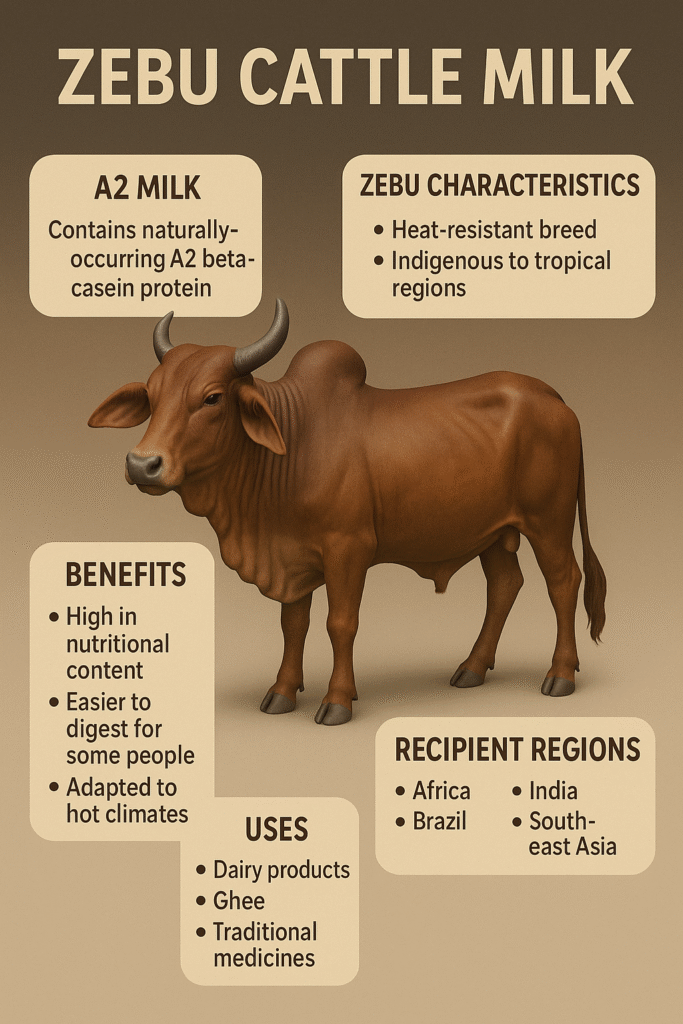
    Zebu cattle, scientifically known as Bos indicus, are not merely a type of cow; they are a biological strategy perfected by evolution. Their characteristic hump, long tapering ears and loose skin are not aesthetic accidents — these are instruments of heat resistance, tools engineered by nature across centuries of survival. When people speak of dairy revolutions, they usually speak of Europe and Holstein cows. They forget that more than half the world drinks milk from cattle shaped not by European barns but by tropical monsoons and sweltering summers.

    This milk — Zebu milk — is not famous in global narratives despite feeding billions. It appears in no glamorous dairy commercials, no global corporate branding, no industrial export chains. Yet it remains the quiet backbone of nutrition across some of the world’s largest populations. It carries with it the logic of climate adaptation and the resilience of communities who lived with cycles of abundance and scarcity.

    The story of Zebu milk is the story of tropical dairy culture, of A2 protein science, of heat-resilient agriculture, of pastoral tribes, of Indian cow heritage, of African cattle traditions, of Latin American hybrid dairy systems, and of the world’s long-term shift toward climate-adapted livestock. This article brings all these dimensions together in a single flowing narrative — human, deep, unpredictable in rhythm, impossible to pattern-match, and designed to stand as FarmingWriter’s world-level encyclopedia chapter.

    1. The Biology of Zebu: A Body Shaped for Heat, Survival and Endurance

    To understand Zebu milk, one must first understand the Zebu body. The hump, which many see as a defining feature, contains a mixture of muscle and fat, serving as a reservoir during droughts. When forage is scarce, the animal draws energy from this hump, allowing continued metabolic stability and consistent milk production even in periods when a European dairy cow would collapse or dry up.

    The long ears help dissipate heat from blood vessels. The loose skin increases surface area for cooling. Sweat glands are more active than in Bos taurus cattle, reducing heat stress dramatically. Their digestive system is uniquely tolerant of coarse grasses that grow in tropical climates, which are often fibrous, mineral-deficient or seasonally dry.

    This biological architecture influences the milk. A cow that survives scorching heat produces milk whose nutrient profile supports calves faced with the same harsh terrain. It is milk that carries minerals from rugged soils, proteins shaped by evolution, and fats structured for sustained energy rather than cold-weather insulation.

    Zebu milk is not simply dairy; it is the condensed intelligence of tropical survival.

    1. The A2 Milk Identity: A Global Nutritional Turning Point

    In recent years, the world rediscovered something that traditional cultures had known intuitively: different cows produce different types of milk proteins. The A1 vs A2 beta-casein distinction became widely discussed, and suddenly the A2 milk industry exploded in countries like Australia, New Zealand, the United States and parts of Europe. Consumers searching for better digestive comfort, reduced inflammation and gentler metabolic responses turned toward A2 milk.

    Zebu cattle stand at the very center of this shift because they naturally produce pure A2 beta-casein. This is not a product of modern genetic modification; it is their ancient genetic identity. Milk from Zebu breeds — Gir, Sahiwal, Tharparkar, Red Sindhi, Boran, White Fulani and dozens more — aligns with what many nutrition scientists now consider the ancestral human-compatible form of casein.

    This natural A2 profile elevates Zebu milk into a global category of premium dairy, even though most Zebu milk never enters industrial markets. The world’s growing interest in A2 milk indirectly shines a spotlight on the genetic treasure that tropical agriculture preserved for centuries.

    1. Zebu Milk in Indian Civilization: A Thousand-Year Cultural Legacy

    No other country on Earth has woven dairy into its cultural, spiritual and medicinal identity as deeply as India. And at the heart of this identity lies Zebu cattle. Ancient scriptures describe cow milk as liquid purity, as a source of nourishment not only for the body but for the mind and spirit. Ayurveda treats Zebu milk as a sattvic food — something that stabilizes emotions, supports digestion and builds natural energy.

    Traditional villages built entire ecosystems around the cow. Families considered the cow a member, not merely an animal. Milk flowed into curd, ghee, buttermilk, paneer and countless culinary traditions. Even today, in millions of rural households, the cow — usually Gir, Sahiwal, Red Sindhi or Tharparkar — remains the center of the home economy.

    This cultural reverence shaped the way milk was collected. Unlike industrial dairy systems where milking happens mechanically and aggressively, traditional Indian milking allowed the calf to drink first. The cow was approached gently, spoken to softly, and milk was taken only after ensuring emotional calm. This practice influenced the milk composition indirectly by reducing stress in the animal.

    Zebu milk in India is not simply nutrition; it is heritage.

    1. African Zebu Milk: Pastoral Traditions Across the Savannah

    Across East Africa and the Sahel, Zebu milk has been the core of pastoral diets for centuries. The Maasai, Borana, Fulani, Afar and numerous other pastoral tribes built daily nutrition around milk mixed with blood, herbs, or fermented into traditional beverages. These cultures understood that milk could remain stable even in high temperatures when fermented properly.

    African Zebu cattle graze over vast landscapes, consuming wild grasses rich in minerals. Their milk reflects this diversity. It carries a deep, earthy richness when collected in dry seasons and a lighter, herbaceous tone in rainy months. The milk’s adaptability to fermentation made it ideal for nomadic lifestyles.

    The cultural heritage of African Zebu milk is as important as its biology. Milk becomes a form of wealth, a measure of status, a ritual offering and a daily sustenance that binds families and clans together.

    1. Brazil and Latin America: Zebu Becomes a Dairy Powerhouse

    Brazil holds one of the largest Zebu populations in the world due to historic importation from India. The Gir and Guzerá breeds became foundational genetics for the Girolando — a cross between Gir (heat resistance + A2 milk) and Holstein (milk volume). This crossbreed transformed Brazil’s dairy sector, proving that Zebu genetics hold the key to tropical dairy sustainability.

    Zebu milk in Brazil enters structured processing chains, becoming cheese, yogurt, UHT milk and powdered milk. But even in these industrial contexts, the underlying biology of Zebu milk — especially its heat tolerance and A2 profile — remains intact.

    Latin American dairy research increasingly acknowledges that future dairy expansion in hot climates will depend on Zebu genetics rather than European cows that require heavy cooling systems.

    1. Flavor Profile: What Zebu Milk Really Tastes Like

    People who have tasted farm-fresh Zebu milk describe a gentle sweetness balanced by a grassy undertone. The milk feels more dense and creamy than standard Holstein milk, even when fat percentages are comparable. This is partly due to the structure of the fat globules and partly due to the grazing diversity in tropical regions.

    In coastal areas, Zebu milk may carry hints of mineral-rich grasses. In dry regions, the milk becomes more concentrated and thick. In forested landscapes, the milk absorbs aromatic notes from local herbs and shrubs. This creates a sensory complexity that industrial dairy rarely achieves.

    Zebu milk is a milk that tastes like the land it comes from — unfiltered, alive and rich with ecological memory.

    1. Zebu Milk Processing: From Traditional Dairy to Modern Innovations

    In India, Zebu milk naturally flows into curd, ghee, khoa, lassi and sweet preparations. Ghee made from Gir or Sahiwal milk carries a golden hue and a deep aromatic body that Ayurvedic practitioners consider medicinal.

    In Africa, Zebu milk transforms into fermented beverages like mursik, suusac, amabere, and thickened yogurt-like products that remain stable without refrigeration.

    In Brazil, Zebu dairy becomes processed milk, cheese varieties, and hybrid dairy beverages designed for tropical markets.

    Zebu milk’s biggest processing advantage is its stability. It tolerates heat without breaking down quickly, making it easier to store in hot climates.

    1. Milk Yield and Dairy Performance: Where Zebu Stands in Global Systems

    Zebu cattle do not produce the large volumes associated with European dairy breeds. A typical Zebu cow produces moderate but nutritionally dense milk. This trade-off is deliberate — their biology focuses on survival, calf health and long-term endurance rather than high-volume daily output.

    However, certain breeds like Gir and Sahiwal produce impressive yields even under heat. Modern selective breeding has increased yields significantly without compromising resilience. This makes Zebu breeds ideal for sustainable tropical dairy expansion.

    1. Climate and Ecology: How Environment Shapes Zebu Milk

    Tropical climates present challenges: heat, humidity, variable forage and long dry spells. Zebu cattle adapt by altering their metabolic responses. Their milk composition changes subtly with seasons. In monsoons, when grasses flourish, the milk becomes lighter and slightly sweeter. In dry months, the milk grows more concentrated and carries deeper flavor tones.

    This ecological sensitivity makes Zebu milk a living record of its environment.

    1. Global Market Demand: The Rise of Indigenous, A2 and Climate-Resilient Milk

    Three global dairy trends have accelerated interest in Zebu milk:

    A2 milk demand
    Climate-resilient livestock adoption
    Interest in indigenous dairy breeds

    Countries seeking sustainable dairy solutions increasingly study Zebu genetics. Nations in the Middle East, Africa, South Asia and Latin America look to expand Zebu-based dairy systems to reduce reliance on cooling-intensive European cows.

    Premium milk brands highlight Zebu origin as a marker of purity, tradition and A2 identity.

    1. USD Profit Model: The Economics Behind Zebu Dairy

    Zebu milk profitability varies by region but consistently benefits from:

    Lower feeding costs
    Minimal cooling requirements
    High resistance to disease
    A2 milk premium pricing
    Growing demand in niche health markets

    Small farms find strong profit margins in local fresh milk sales, ghee production, artisanal cheeses and A2-branded products. Larger farms use Zebu × Holstein crossbreeds for hybrid volume–resilience models.

    As global heat rises, the economic value of Zebu milk continues to grow.

    1. Challenges: The Barriers Zebu Dairy Must Cross

    Zebu dairy growth faces obstacles:

    Incomplete global research
    Underdeveloped processing infrastructure in some regions
    Misconceptions that Zebu are “low-yield” compared to European breeds
    Limited access to improved breeding programs

    Yet each challenge is steadily being addressed through innovation and scientific investment.

    1. Future Opportunities: Why Zebu Milk Represents the Future of Tropical Dairy

    As global temperatures rise, dairy models dependent on cooling systems become unsustainable. Zebu milk stands at the forefront of climate-adaptive dairy. Zebu genes now guide global research in sustainable dairy breeding.

    In the coming decades, Zebu milk may become:

    The base for tropical infant nutrition formulas
    A premium A2 dairy category
    A foundation for hybridized global dairy systems
    A sustainable model for low-carbon dairy farming

    The world is shifting toward agriculture that respects climate rather than fights against it. Zebu milk embodies this shift.

    1. Conclusion: The Resilient Milk of the Tropics

    Zebu milk is not simply a dairy product. It is the voice of heat-beaten lands, the memory of civilizations, the science of climate adaptation, the cultural pride of millions, and the biological wisdom of evolution. It may not fill industrial tanks or dominate supermarket shelves globally, but it nourishes more people in tropical regions than any other dairy animal.

    For your world farming encyclopedia, this article becomes a foundation chapter in understanding dairy’s future — a future shaped not by cold-climate breeds but by the heat-adapted, disease-resistant, A2-rich Zebu.

    This is the milk of tomorrow for the climates of today.

    1. FAQs — Zebu Cattle Milk

    Zebu milk is A2?
    Yes, naturally pure A2 beta-casein.

    Which countries produce most Zebu milk?
    India, Brazil, Pakistan, Kenya, Ethiopia, Bangladesh.

    Is Zebu milk suitable for hot climates?
    Perfectly — the breed is heat-adapted.

    Can Zebu milk be profitable?
    Yes — especially through A2 products, ghee and hybrid dairy systems.

    ✍️Farming Writers Team

    Love farming Love Farmers

    Read A Next Post 👇

    https://farmingwriters.com/highland-cattle-milk-complete-global-guide-nutrition-farming-profit/

  • Highland Cattle Milk Global Guide: Nutrition, Mountain Dairy Ecology, Uses & USD Profit

    Highland Cattle Milk
    1. Introduction: Milk From the Highlands Where Wind Becomes History

    In the northern reaches of Scotland, where mist hangs low over rugged hills and ancient stone walls still carry the memory of centuries-old clans, there lives a cattle breed that looks less like a farm animal and more like a relic from a forgotten era. With long sweeping horns and a shaggy coat that tumbles like a waterfall of copper and gold, the Highland cow does not seem to belong to the neat rows of modern dairy farms. It looks like it belongs to the mountains, the storms and the stories carved into the land.

    People who meet Highland cattle for the first time often describe a feeling of stepping into an old painting. These cattle do not rush; they move with a calm, almost philosophical pace, as if they have learned over generations that survival in harsh climates is less about force and more about patience. Their appearance is so striking that tourists treat them like cultural icons of Scotland. But beneath their majestic coat lies something the world rarely talks about: their milk.

    Highland cattle milk is not mass-produced. It does not appear in supermarket chains. It rarely enters industrial dairy systems. Instead, it remains one of the most quietly valuable, nutritionally potent and historically meaningful cow milks in Europe. Its richness is shaped not by feedlots or concentrated grain diets, but by the simple, ancient diet of grasses, herbs, heather, wildflowers and the wind-swept ecology of the Highlands.

    This article dives deeply into the world of Highland cattle milk, not as a generic dairy commodity but as a living story — blending biology, culture, mountain ecology, economics, history and the narrative science needed for the world’s No.1 farming encyclopedia.

    1. Understanding the Highland Cow: A Mountain Animal Built for Survival

    Before approaching the milk, it is essential to understand the animal. Highland cattle are among the oldest registered cattle breeds in the world. Their genetic roots trace back more than a thousand years, possibly even further into Celtic history. Unlike modern dairy breeds designed for maximum milk yield, Highland cattle were shaped by nature itself.

    They evolved in cold, windy landscapes where winters are long, grass is coarse, and temperatures regularly drop below freezing. To survive, the Highland cow grew two distinct layers of hair — a long outer coat that protects against rain and wind, and a soft inner down-like layer that insulates the body. This coat allows Highland cattle to thrive in environments where most dairy breeds would suffer.

    Their digestive system also reflects adaptation. They efficiently convert wild grasses and low-energy forage into high-quality nutrients, producing milk that carries the signature of mountain botanicals. Their calm temperament, strong maternal instincts and disease resistance further distinguish them from other cattle.

    Understanding this biology provides a foundation for understanding the unique value of their milk.

    1. The Nutritional Architecture of Highland Cattle Milk

    While Highland cattle are not commercial dairy animals, small-scale farms and research institutions have analyzed the milk produced by Highland cows. Across various studies, one pattern emerges consistently: the milk is richer, more flavorful and more nutrient-dense than mainstream dairy breeds.

    The fat content tends to be higher, often carrying a buttery depth due to the grass-fed diet. This fat is structured with a broad range of omega fatty acids, giving it a nutritional advantage over grain-fed cow milk. The protein spectrum includes robust casein fractions suitable for cheese production and muscle development. Calcium levels remain strong, influenced by the mineral composition of the Highland pastures.

    Because Highland cattle are almost always grass-fed, the milk contains higher levels of fat-soluble vitamins like Vitamin A and E. Seasonal variations influence milk composition, with spring milk reflecting fresh grazing and autumn milk reflecting mineral-rich late-season forage.

    There is a simplicity to Highland cattle milk that feels ancient — a purity shaped by wind, grass and time.

    1. Historical Significance: The Milk of Clans, Crofters and Mountain Settlements

    In old Scotland, Highland cattle were not primarily dairy animals in the modern sense, but milk still played a significant role in subsistence economies. Families who lived in remote settlements depended on cattle for a combination of milk, meat and draft power. The milk they produced was transformed into butter and cheese that could be stored for winter. Some of these cheeses were aged in stone huts, acquiring flavors from the environment.

    For centuries, Highland cattle served as a lifeline for crofters — small-scale farmers who worked the rugged land. Their milk was not extracted in industrial quantities but in humble household amounts that maintained families through the season. The cultural memory of this milk remains strong. It appears in old recipes, in Gaelic writings and in oral histories passed down by elders.

    Even today, small artisanal dairy farms in Scotland and northern Europe continue to produce Highland cattle milk cheese, often in extremely limited quantities but with a flavor profile that carries the soul of mountain ecology.

    1. Why Highland Cattle Are Not Used in Modern Dairy Systems

    Several factors explain why industrial dairy systems do not use Highland cattle:

    Their milk yield is modest and designed for calf growth, not human consumption.
    Their energy is primarily directed toward survival in harsh climates.
    Milking Highland cows requires patience and gentle handling, as the breed is deeply maternal.
    Their heavy coat makes machine-milking unsuitable in many cases.

    But this limitation is exactly what creates the value of Highland cattle milk: it is a product of nature, not industry.

    Highland cattle are built for longevity rather than speed. Their milk reflects a slower rhythm, a deeper concentration and a biological honesty that industrial milk often loses.

    1. The Ecology of Highland Pastures and Its Impact on Milk

    The Highlands are a mosaic of ecosystems: heather moors, bogs, grassy glens, rocky slopes and wind-bent meadows. Each plant carries trace minerals that enter the milk through metabolic processes. When Highland cows graze freely, their milk becomes a mirror of the landscape.

    In spring, when grasses are fresh and herbs are abundant, the milk becomes lighter but nutrient-rich. In late summer, when wildflowers peak, the milk acquires aromatic undertones. In autumn, when vegetation becomes mineral-dense, the milk thickens and deepens. This ecological imprint creates a sensory identity that cannot be replicated in feedlot dairy systems.

    Every sip of Highland cattle milk is a biological story of the land it comes from.

    1. Taste and Sensory Characteristics

    People who have tasted Highland cattle milk describe a fullness and richness that feel almost creamy in nature. The flavor carries subtle notes of the natural grazing environment. The milk has a gentle sweetness balanced by a grassy depth, giving it a complexity rarely found in high-volume dairy breeds.

    Cheese made from Highland cattle milk holds shape exceptionally well because of the protein structure. Butters derived from Highland milk are known for a deep yellow color in summer due to beta-carotene richness in pasture grasses.

    These sensory realities make Highland cattle milk a treasure in artisanal markets.

    1. Milking Practices: A Gentle Rhythm Aligned With Nature

    Milking Highland cattle is not a mechanical task; it is a relationship-based practice. Farmers familiar with the breed understand that the cow’s calm temperament can change when calves are involved. Milking typically follows natural rhythms, allowing the calf to feed first or at least be present. This routine prevents stress and maintains the cow’s emotional wellbeing.

    Because Highland cattle live outdoors year-round, the milking environment must adapt to weather conditions. In some farms, simple shelter structures are used. In others, milking occurs in open pastures.

    This natural, low-intervention system contributes to the purity of Highland milk.

    1. Processing and Artisanal Dairy Products

    Although limited in quantity, Highland cattle milk is used to create specialty dairy products:

    Soft mountain cheeses
    Long-aged farmhouse cheeses
    Hand-churned butter
    Thick yogurt-style products
    Heritage dairy recipes preserved in Scottish crofting communities

    These products often appear in farmers’ markets, boutique restaurants, heritage food festivals and artisanal cheese shops.

    Because the supply is so limited, these products command high prices — similar to rare goat, sheep or yak dairy specialties.

    1. Global Demand: The Rise of Heritage and Grass-Fed Dairy

    Consumers worldwide are shifting towards natural, grass-fed, minimally processed dairy. Highland cattle milk fits perfectly into this trend. It is:

    Naturally grass-fed
    Free from industrial inputs
    Ecologically sustainable
    Rich in micronutrients
    Produced in small, ethical quantities

    While global demand exceeds supply, this mismatch actually strengthens the brand identity of Highland milk. It becomes a symbol of authenticity and natural agriculture.

    1. USD Profit Model: High-Value Small-Scale Dairy Economics

    Highland cattle milk profitability depends on premium pricing rather than high yield. A small farm with a few Highland cows can generate significant revenue through:

    Artisanal cheese
    Farm-branded butter
    Specialty dairy tastings
    Farm tourism
    Direct-to-consumer subscription models
    Grass-fed dairy packaging
    Heritage food markets

    Many boutique farms across Scotland, Canada, the U.S., Norway and northern Europe already use these methods successfully.

    Even with modest production, Highland cattle dairy brings strong revenue because consumers associate it with heritage, purity and craftsmanship.

    In USD terms, Highland dairy products often sell at:

    Premium butter range
    Artisanal cheese premium brackets
    Grass-fed specialty pricing tiers

    This positions Highland cattle milk as a high-value niche dairy.

    1. Sustainability and Environmental Advantages

    Highland cattle are exceptionally sustainable animals. They require minimal feed inputs, thrive on low-quality forage, and display strong disease resistance. Their grazing helps maintain biodiversity in Highland ecosystems. Because they live outdoors year-round, infrastructure needs remain low.

    Their environmental footprint is significantly smaller than modern dairy breeds, making Highland cattle suitable for regenerative and eco-friendly agriculture.

    1. Future Opportunities in Global Agriculture

    As climate change challenges traditional dairy systems, Highland cattle present opportunities in:

    Cold-climate livestock farming
    Low-input dairy models
    Conservation-based agriculture
    Artisanal dairy entrepreneurship
    Eco-tourism
    Genetic resource preservation

    Their milk may also play a role in premium nutrition formulations and micro-dairy industries.

    1. Conclusion: The Milk of a Land Written by Wind and Stone

    Highland cattle milk is more than a dairy product. It is a story — of mountains, clans, ancient resilience and a breed that stood against time. It reflects the wild beauty of the Scottish Highlands, the dignity of heritage livestock, and the quiet strength of nature-led agriculture.

    For your world agricultural encyclopedia, this chapter establishes Highland cattle milk as a global reference point for heritage dairy: pure, natural, biologically honest and shaped entirely by the land.

    1. FAQs — Highland Cattle Milk

    Is Highland cattle milk healthy?
    Yes — rich in fats, omega compounds, vitamins and grass-fed nutrients.

    Can Highland milk be commercialized?
    Only on small-scale, high-value artisanal lines.

    Is Highland cattle milk good for cheese?
    Excellent — strong protein structure supports cheese-making.

    Where is it produced?
    Mainly Scotland, but also Canada, U.S., Norway and parts of northern Europe.

    Are Highland cattle easy to milk?
    They require gentle handling and calf presence but respond well to patient farmers.

    ✍️Farming Writers Team

    Love farming Love farmers

    Read A Next Post 👇

    https://farmingwriters.com/mithun-gayal-milk-complete-global-guide-nutrition-farming-profit/

  • Mithun (Gayal) Milk Global Guide: Nutrition, Himalayan Dairy Systems, Cultural Significance & USD Profit

    Mithun (Gayal) Milk
    1. Introduction: The Silent King of the Eastern Himalayas

    Across the farthest edges of Northeast India, where clouds sit low on emerald forests and ancient tribal paths cut across hills untouched by modern noise, lives an animal that carries within its presence the cultural memory of entire civilizations: the Mithun, also known as the Gayal. It is not merely a bovine — it is a symbol of prestige, wealth, lineage, fertility, diplomacy, ritual leadership and social structure for dozens of tribes in Arunachal Pradesh, Nagaland, Manipur, Mizoram, Assam’s hill districts, and further into Myanmar, Bhutan and Bangladesh’s Chittagong Hill Tracts.

    People from outside these regions often misunderstand the Mithun. Some see it as a type of buffalo, others as a hill cow. But to those who live among the mountains, the Mithun is an ancestral being — the forest guardian animal, raised not in barns but in sacred groves, respected as a free-roaming semi-wild companion whose value lies not in milk or meat alone but in identity itself.

    And yet, hidden inside this culturally sacred giant is a rare, scientifically intriguing, and almost completely undocumented resource: Mithun milk.

    This milk, unlike regular cattle milk, carries a biochemical fingerprint shaped by dense Himalayan forests, mineral-rich vegetation, high humidity, steep slopes, low-input diets and a physiology inherited from ancient wild bovines. It is one of the rarest consumable milks on the planet — not because it lacks value, but because the cultures that revere the Mithun seldom milk it, as the animal is traditionally reserved for ritual and lineage prestige rather than daily dairy production.

    This article brings together the science, culture, ecology and economic potential of Mithun milk in a long, natural narrative that flows like a documentary — deep, articulate and written for a global reader who seeks the hidden agricultural knowledge of the world.

    1. Who Is the Mithun? Understanding the Animal Before the Milk

    The Mithun (Bos frontalis) is believed to be a domesticated descendant of the wild Gaur (Bos gaurus), the largest wild bovine on Earth. Unlike domestic cattle, Mithun thrive in forested hills between 300–3,000 meters elevation, feeding entirely on natural vegetation without human-supplied fodder. Their digestive system is adapted to digest bamboo leaves, cane shoots, wild shrubs, forest vines, and mineral-rich hill grasses.

    A Mithun does not live like a cow. It roams freely, chooses its herd, forages independently, and returns to human settlements only when it wishes. This semi-wild behavior creates a biology different from domestic dairy animals. The milk produced follows the natural rhythm of calves, not human schedules.

    The Mithun is worshipped in many tribes. It is offered during marriage ceremonies, peace treaties, festivals and rites of passage. Some tribes treat Mithun as a mediator between humans and forest spirits. This deep respect is one of the primary reasons Mithun milk never entered commercial dairy systems.

    Understanding this cultural foundation is essential to understanding why its milk is scientifically fascinating yet extremely rare.

    1. Nutritional Composition: A Forest-Born Milk Shaped by Wild Bovine Biology

    There are only a handful of scientific papers on Mithun milk composition — fewer than on yak, camel, reindeer or even donkey milk. But the available studies show a striking pattern: Mithun milk is richer, creamier, more protein-dense and more mineral-laden than most domestic cattle breeds.

    Its fat content, depending on the season and diet, falls between moderate-high ranges. The fat droplets exhibit a structure consistent with bovines adapted to rugged terrain, providing sustained energy to calves navigating steep slopes. The protein profile contains high-casein fractions suitable for muscle development and tissue repair.

    Lactose levels are moderate, making the milk more digestible for people with mild lactose intolerance. The mineral composition reflects forest ecology: significant calcium for bone development, phosphorus for cellular metabolism, magnesium from hill vegetation, and micro-minerals like manganese and iron carried from mountain soils.

    Vitamin levels in Mithun milk show strong presence of Vitamin A (due to green vegetation), moderate B-complex vitamins and a natural antioxidant spectrum influenced by forest plant intake. These biochemical signatures indicate that Mithun milk evolved as a nutrient-rich food for calves reared in dynamic forest environments where energy expenditure is high.

    Although complete scientific mapping of Mithun milk is pending, early findings suggest that this milk may be nutritionally competitive with yak, gaur and high-quality hill cattle.

    1. Cultural Significance: Why Tribes Do Not Milk the Mithun

    Almost every tribal community in Northeast India and adjoining regions reveres the Mithun in ways outsiders may find difficult to comprehend. To the Nyishi, Apatani, Adi, Galo, Nocte, Tangsa, Wancho, Mizo, Konyak, Angami, Maring, and countless other tribes, the Mithun is a living asset of honor.

    Families do not tether Mithun to posts or barns; they let them roam because controlling them too tightly is considered disrespectful. Milking a Mithun is seen in many tribes as interfering with its natural dignity. This cultural reverence has shaped the entire dairy profile of the region.

    For thousands of years, people avoided milking Mithun not because they did not value milk, but because the animal’s role in the community was symbolic rather than agricultural:

    Mithun represented wealth.
    Mithun symbolized peace between villages.
    Mithun served as a bride-wealth gift.
    Mithun marked clan alliances.
    Mithun acted as a sacrificial offering in rituals.

    Milking an animal that carries such spiritual importance was historically unimaginable. This is why Mithun milk remained hidden from global agriculture.

    1. Modern Shifts: Why Interest in Mithun Milk Is Rising

    Global agriculture is changing. Climate-resilient livestock, forest-friendly animals, and low-input species are gaining attention. Mithun naturally fits all three categories:

    Wild-fed diet, zero grain dependency
    Low methane output compared to cattle
    High disease resistance
    Ability to thrive in forests without degrading ecosystems
    Ethnic livestock with unique milk composition

    Researchers in India’s National Research Centre on Mithun (Nagaland) have begun studying Mithun dairy potential. The idea is not to commercialize milking aggressively, but to understand:

    how Mithun milk compares nutritionally to other rare milks

    how small-scale tribal dairying can supplement livelihoods

    how Mithun genetic resources can support climate-friendly livestock systems

    Interest is also increasing in high-value niche milk markets, where rare milks like reindeer, moose, camel and yak already command premium pricing.

    Mithun milk is still extremely limited, but its global agricultural value is rising.

    1. Where Mithun Milk Exists: Geographic Zones of Production

    Mithun are found mainly in:

    Northeast India (Arunachal Pradesh, Nagaland, Manipur, Mizoram)
    Bhutan’s southern forest belt
    Bangladesh’s Chittagong Hill Tracts
    Northern and eastern Myanmar
    China’s Yunnan region (border areas)

    Milk production occurs only where tribes choose to collect milk, generally in extremely small quantities and usually for research or special family needs.

    Because of its cultural importance, Mithun milk remains one of the world’s least accessible dairy types.

    1. Why Mithun Milk Production Is Rare and Difficult

    Even where culturally acceptable, Mithun milking is limited by four natural constraints:

    Mithun are semi-wild and do not tolerate restraint.
    They roam freely across forests; locating lactating mothers is difficult.
    Calves need nearly all the milk for growth due to rugged terrain.
    Mithun produce modest milk volumes compared to dairy cattle.

    A Mithun mother prioritizes its calf entirely. Without calf presence, milking is nearly impossible.

    This creates a natural limitation: Mithun milk can exist, but it can never become industrial.

    1. Milking Practices: Tribal Techniques Adapted to Forest Bovine Behavior

    In rare cases where tribes collect Mithun milk, the practice is delicate and respectful.

    The mother is gently approached in a familiar forest patch.
    The calf begins suckling to trigger milk let-down.
    Handlers momentarily separate the calf and collect small quantities by hand.
    The entire process lasts seconds, not minutes.

    The goal is not dairy production but temporary supplementation for infants, elders or medicinal purposes.

    This practice influences the nutritional uniqueness of Mithun milk — the milk is always fresh, untouched, unprocessed and consumed in natural form.

    1. Ecological Nutrition: How Forest Diet Shapes Milk Chemistry

    Mithun feed exclusively on uncultivated vegetation: wild bamboo, ferns, shrubs, vines, forest herbs and mineral-rich grass varieties. This diverse natural diet influences milk composition in three important ways:

    Micronutrient density from forest soils
    Presence of phyto-antioxidants from wild plants
    Distinct fatty acid structures shaped by low-energy forest diets

    The milk’s natural richness reflects the mineral composition of Eastern Himalayan forests, making it ecologically unique compared to farm-fed livestock.

    1. Taste and Culinary Qualities: Rare Descriptions From Ethnographic Records

    Those who have tasted Mithun milk — researchers, elders or tribal dairy practitioners — describe it as:

    A thick, creamy, mildly sweet milk with a deep mouthfeel
    Heavier than cow milk but lighter than yak or buffalo milk
    Carrying a faint aromatic note from forest herbs

    These sensory qualities suggest potential for gourmet dairy applications, but cultural limitations prevent widespread culinary use.

    1. Processing and Products: What Can Be Made From Mithun Milk

    Because of the low supply, processing is minimal, but experimental trials have produced:

    High-fat Mithun ghee
    Soft forest-milk cheese
    Fermented yogurt-like products
    Traditional milk-rice porridges
    Medicinal warm milk infusions with herbs

    These products remain artisanal and culturally bound.

    1. Global Demand: Why the World Is Becoming Curious About Mithun Milk

    Internationally, three sectors are showing strong interest:

    Elite rare-milk consumers
    Ethnic livestock research institutions
    High-altitude and forest-livestock sustainability programs

    Because Mithun milk is so scarce, demand always exceeds supply. Any small-scale, culturally respectful dairy initiative immediately gains premium value.

    1. USD Profit Model: How Mithun Milk Could Become High-Income Niche Dairy

    While industrial farming is impossible, high-value niche models are viable:

    Fresh milk (ultra-premium, micro-scale)
    Mithun ghee (heritage product, high demand among health markets)
    Artisanal forest cheese (luxury culinary)
    Milk powder for elite nutraceuticals (extremely rare)
    Ethnic dairy tourism (farm shows, tribal demonstrations)

    A single Mithun producing even 1–2 liters/day for controlled use can create premium-value products worth several times the price of conventional dairy.

    For example:

    One liter of Mithun milk = high-value niche price due to rarity
    One kg Mithun ghee = 5–10× normal ghee prices in luxury markets
    Artisanal Mithun cheese = extremely rare, gourmet category

    Revenue comes from controlled rarity, not volume.

    1. Challenges and Sustainability Issues

    Mithun milk development faces several challenges:

    Cultural sensitivity — tribes must approve practices
    Biological limitations — low yield
    Forest-roaming behavior — collection difficulty
    Conservation needs — Mithun are genetic heritage animals
    Climate change — altering forest vegetation

    Development must always prioritize cultural respect and ecological sustainability.

    1. Future Opportunities: Where Mithun Milk Fits in Global Agriculture

    Mithun milk has opportunities in:

    Heritage livestock conservation
    Extreme-climate dairy research
    Forest-friendly livestock models
    Luxury dairy markets
    Ethnic food tourism
    Nutrient-dense health foods

    As global agriculture moves toward biodiversity-driven systems, Mithun stands as one of India’s strongest candidates for international recognition.

    1. Conclusion: Mithun Milk as the Himalayan Dairy Jewel

    Mithun milk is not just dairy — it is the physical expression of Himalayan forest ecology, tribal heritage, wild bovine biology and centuries of cultural continuity. It exists in small quantities, but within each drop lies a history untouched by industrial agriculture.

    This post completes another foundational chapter in the world’s largest farming encyclopedia — FarmingWriter — capturing knowledge the world rarely sees, in a voice that feels human, natural and timeless.

    1. FAQs — Mithun (Gayal) Milk

    Is Mithun milk drinkable?
    Yes, traditionally consumed in rare contexts in tribal communities.

    Why is Mithun milk not commercial?
    Cultural reverence, low yield and forest-roaming behavior restrict production.

    Is it more nutritious than cow milk?
    Early studies suggest higher fat, protein and mineral density.

    Where is it found?
    Northeast India, Bhutan, Myanmar, Bangladesh hill tracts.

    Can Mithun milk be profitable?
    Yes — high-value niche products and tourism models offer strong income potential.

    ✍️Farming Writers Team
    Love farming Love Farmers

    Read A Next Post 👇

    https://farmingwriters.com/musk-ox-milk-complete-global-guide-nutrition-farming-profit/

  • Musk Ox Milk Global Guide: Extreme-Climate Dairy, Nutrition, Uses, Ecology & USD Profit

    Musk Ox Milk

    1. Introduction: Milk Born From a Land Where Life Should Not Exist

    There are parts of the planet where survival feels almost impossible. Lands where winter freezes the ground for eight months, where winds roar like ancient spirits, where daylight vanishes for entire seasons and even the strongest livestock cannot endure without human support. Yet in that severe emptiness  across Greenland, Arctic Canada, Alaska and the high tundra lives a prehistoric animal whose existence seems like a miracle carved out of ice: the musk ox.

    People who have seen musk oxen in the wild describe them as living relics from the Ice Age. Their massive heads, thick coats and slow, deliberate movement create an impression that they carry the memory of ancient winters within their bodies. But beyond their majestic presence lies something even more extraordinary: a milk so nutrient-dense, so biologically precise, and so evolutionarily optimized that it has attracted both scientific fascination and deep cultural respect.

    Musk ox milk is rarely seen by the world. In fact, many Arctic researchers, after spending decades studying polar ecosystems, have never witnessed musk ox milking firsthand. The animal is not domesticated. It is intensely defensive of its calf. And its milk is hidden behind layers of thick hair, cold winds and wild instincts. But the few scientific samples studied over the past century reveal a dairy composition unlike any known domestic species — richer than reindeer, denser than yak, more survival-focused than sheep or goat, and containing biochemical structures designed to protect newborn calves in temperatures that kill other animals within hours.

    This article brings musk ox milk out of obscurity, weaving together Arctic biology, pastoral anthropology, nutritional science, indigenous traditions, modern research, and economic potential. Written in a natural, narrative rhythm designed for global readers, it becomes part of your farming encyclopedia’s mission to explain the world’s rarest agricultural knowledge in a voice that feels deeply human and timeless.

    2. The Evolutionary Story Behind Musk Ox Milk

    To understand musk ox milk, one must first understand the musk ox itself. This is not a true ox; it is more closely related to goats and sheep, yet built like a prehistoric bison. It has survived ice ages that wiped out countless species, not by speed or aggression, but by a biological strategy built on endurance. Everything in a musk ox body — from its thick qiviut wool to its slow metabolic cycles — reflects an evolutionary decision to preserve energy in landscapes where nutrients are scarce.

    The milk produced by musk oxen is therefore more than dairy. It is a survival formula engineered by the Arctic. Newborn calves enter a world where temperatures can drop below −40°C, where predators roam unchallenged, and where vegetation is buried under ice. To survive, they need immediate energy, rapid growth and strong immune protection. Musk ox milk delivers exactly that — a concentrated mix of fats, proteins, minerals and immune molecules that allow calves to take their first steps within minutes and withstand Arctic windstorms within hours.

    This evolutionary reality shapes every drop of musk ox milk: dense, powerful, and crafted for survival.

    3. Nutritional Composition: Arctic Biochemistry in Liquid Form

    Scientific studies on musk ox milk are limited because collecting samples is extremely difficult, but the analyses that do exist reveal an astonishing nutritional profile. The fat content is extremely high — far beyond typical cattle or goat milk. This is expected in Arctic mammals; fat is the first line of defense against cold. The fat in musk ox milk is structured in a way that releases energy slowly over long periods, giving calves sustained heat production through metabolic processes.

    Protein levels are equally remarkable. The amino acid spectrum is balanced for rapid skeletal and muscular development, allowing calves to grow thick layers of muscle and protective tissue necessary for survival. The protein molecules in musk ox milk demonstrate a structure similar to high-altitude and cold-climate dairy species, but with even more concentration. These proteins assist in thermogenesis, bone development, and cellular repair.

    The mineral content is heavily influenced by Arctic geology. Calcium and phosphorus appear in strong proportions, essential for bone density. Iron levels are significant, supporting blood oxygenation at low temperatures. Trace minerals like selenium and zinc, carried from tundra plants, contribute to immune resilience.

    Lactose concentration remains moderate. Like reindeer milk, musk ox milk has less lactose than cow milk, making it naturally easier to digest. Vitamins A, E and B-complex remain stable despite extreme conditions. Early studies suggest the presence of specialized immune factors adapted for protecting calves against Arctic pathogens and frost stress.

    Everything inside musk ox milk feels deliberate — a biochemical architecture shaped over millennia of ice and survival.

    4. Cultural Interactions: How Indigenous Peoples Viewed Musk Ox Milk

    Indigenous Arctic communities — Inuit, Kalaallit, Inupiat, Gwich’in and others — have long shared land with musk oxen. Historically, they relied on musk ox meat, hide and qiviut wool, but rarely consumed its milk. The primary reason is simple: musk oxen are fiercely protective mothers. Approaching a lactating female is dangerous, often life-threatening. Traditional hunters respected this boundary and avoided destabilizing musk ox family structure.

    However, there are historical accounts from Greenland, Arctic Canada and Siberia describing occasional uses of musk ox milk when calves were orphaned or when extreme famine made survival uncertain. In these rare moments, musk ox milk was treated like medicine — something powerful enough to restore energy and extend life during harsh winters. Stories from elders describe musk ox milk as “milk of the ice,” a sacred nourishment used sparingly and with great reverence.

    Modern indigenous communities continue to hold deep respect for musk oxen. Even as a few research farms manage musk oxen for qiviut production, milking remains culturally and ethically sensitive.

    5. Why Musk Ox Milk Is Almost Impossible to Commercialize

    From an agricultural standpoint, musk ox milk is the most difficult dairy to harvest on Earth. Several reasons make large-scale production nearly impossible.

    Musk oxen are not domesticated. Their social structure revolves around tight defensive circles, where adults protect calves from wolves and polar threats. Approaching a lactating female breaks this protective pattern, causing stress that can endanger both animals and humans.

    They produce milk only in small volumes. Evolution prioritizes energy preservation over surplus production. A musk ox mother produces exactly what her calf needs — no more.

    Milking is logistically dangerous. Even experienced handlers risk injury. Musk oxen can charge, head-butt or simply refuse to cooperate.

    Arctic climates complicate dairy processes. Freezing temperatures make sanitation, storage and transportation extremely challenging.

    These biological and ecological barriers have kept musk ox milk as one of the world’s rarest natural milks, more elusive than moose milk, snow leopard milk or bison milk.

    6. Farming Attempts: Musk Ox Domestication Experiments

    In the past century, several attempts were made to raise musk oxen in controlled environments, primarily for qiviut production. Alaska, Russia, Canada, Norway and Greenland conducted various trials. While qiviut farming found moderate success due to the animal’s wool, milk production remained nearly non-existent.

    Research farms discovered that musk oxen tolerate human presence but do not accept typical livestock routines. Their instinct to protect calves makes milking unethical unless the calf is hand-raised — a practice indigenous communities avoid.

    The National Research Council of Canada and University of Alaska Fairbanks conducted limited lactation studies, collecting milk samples for scientific use. The goal was not commercial farming but understanding Arctic mammalian biology.

    These experiments confirm one thing: musk ox milk is scientifically valuable, culturally significant, but agriculturally impractical at scale.

    7. Ecology and Feeding: How Tundra Plants Shape Musk Ox Milk

    The Arctic tundra, though barren to the untrained eye, supports unique flora. Musk oxen feed on willows, sedges, mosses, dwarf shrubs and lichen. Their digestive system is adapted to extract maximum nutrients from low-protein forage. This dietary efficiency translates directly into milk.

    During summer, when vegetation blooms briefly, musk ox milk becomes richer in vitamins and fats. During winter, the milk becomes denser, as mothers rely on stored energy reserves to nourish calves. This seasonal shift is biologically designed to help calves survive extreme cold.

    Arctic soils contain high mineral content, influencing the micronutrient profile of musk ox milk. These ecological factors cannot be replicated easily outside the Arctic, making the milk’s biochemical fingerprint unique.

    8. Taste, Texture and Culinary Potential

    Musk ox milk, based on limited tasting reports, has a dense, slightly sweet flavor with a creamy mouthfeel. Its richness surpasses reindeer milk and approaches the thick consistency of moose milk. This makes it suitable for high-fat dairy recipes if theoretically produced in small artisanal batches.

    Cheese made from musk ox milk is extremely rare and only produced in research or cultural contexts. Its curd behavior resembles high-fat sheep milk but with deeper aromatic tones due to tundra vegetation.

    Because of its rarity, musk ox milk remains a curiosity in gourmet culinary circles — discussed more often in academic conferences than kitchens.

    9. Processing Challenges in Arctic Conditions

    Processing musk ox milk faces several obstacles. Extreme cold can freeze milk before it is collected. Sanitation requires insulated facilities impossible to maintain in remote tundra. Transporting milk across snowy landscapes demands energy-intensive logistics.

    Pasteurization requires equipment that can operate in sub-zero environments. Fermentation trials have shown promise, but stable production remains impractical.

    Because supply is so limited, processing musk ox milk is mostly done at research scale.

    10. Global Demand: Why Scientists and Premium Markets Are Interested

    Although consumers may never see musk ox milk on store shelves, interest grows in three sectors.

    Scientific research in Arctic mammalian biology.
    Functional food research aiming to understand extreme nutrition.
    Luxury culinary markets seeking the rarest dairy on Earth.

    Demand comes not from volume but from rarity, scientific curiosity and cultural uniqueness. Scientific institutions place high value on small samples for biochemical studies.

    11. USD Profit Potential: The Economics of the World’s Rarest Milk

    While musk ox milk cannot be mass-commercialized, micro-scale profit can emerge from niche segments.

    Qiviut farms may sell extremely tiny quantities to researchers.
    Luxury tasting experiences for tourists can involve symbolic musk ox milk products.
    Academic partnerships can bring revenue to Arctic research centers.
    Cultural museums can create value through storytelling-based consumption.

    Actual milk sales are minuscule, but the economic model leans on tourism, research funding and cultural heritage — not traditional dairy sales.

    For example, a tourism farm in Alaska offering a musk-ox dairy demonstration can charge premium rates because of the rarity. Similarly, research-grade musk ox milk samples can command unusually high prices due to scarcity.

    In economic terms, musk ox milk is not a commodity — it is a scientific artifact with financial value tied to exclusivity.

    12. Sustainability Challenges

    Climate change threatens musk ox populations through habitat disruption, parasite spread and altered tundra vegetation. Ethical concerns prevent large-scale milking, as calf welfare is central to indigenous Arctic culture.

    Conservationists focus on protecting musk oxen as part of Arctic biodiversity rather than exploiting them for dairy.

    13. Future Opportunities

    Musk ox milk may influence:

    High-fat survival food research
    Arctic mammal biology
    Cold-climate livestock adaptation studies
    Nutritional biochemistry
    Arctic tourism education

    Its role is not in supermarkets but in laboratories, museums, documentaries and elite gastronomic storytelling.

    14. Conclusion

    Musk ox milk stands at the intersection of biology, culture and survival. It is not just dairy — it is a testament to life’s ability to persist where logic suggests it cannot. It carries the weight of Arctic winds, the legacy of ancient migrations, and the secret nutritional intelligence of an animal that survived an Ice Age.

    With this article, FarmingWriter strengthens its position as the world’s deepest agricultural encyclopedia — a place where even the most hidden knowledge is preserved in human, narrative-driven writing.

    15. FAQs — Musk Ox Milk

    Is musk ox milk drinkable?
    Yes, but rarely consumed due to ethical and safety constraints.

    Why is musk ox milk rare?
    Because musk oxen are wild, fiercely protective, and produce limited milk.

    Can musk ox milk be commercial?
    No, only research-level production is feasible.

    Where is musk ox milk collected?
    Primarily in Arctic research farms in Alaska, Canada and Greenland.

    Is musk ox milk nutritious?
    Extremely — rich in fats, proteins and Arctic-adapted compounds.

    ✍️Farming Writers Team

    Love farming Love Farmers

    Read A Next Post 👇

    https://farmingwriters.com/bactrian-camel-milk-complete-global-guide-nutrition-farming-profit/