• Why Modern Farming Is Losing Nitrogen Efficiency Despite Higher Fertilizer Use

    Losing Nitrogen

    For decades, farmers around the world were told one simple truth:
    More nitrogen means more yield.
    This belief shaped modern agriculture. Urea consumption rose sharply. Nitrogen application became routine, sometimes aggressive. Yet today, across continents and crop systems, farmers face a confusing contradiction:
    Yields are not increasing in proportion to fertilizer use.
    In many regions, yields are stagnating or even declining.
    This is not coincidence.
    This is nitrogen efficiency collapse.
    This article explains why nitrogen efficiency is breaking down globally, despite advanced fertilizers, better seeds, and higher input costs.
    1. WHAT NITROGEN EFFICIENCY REALLY MEANS (AND WHAT IT DOES NOT)
    Nitrogen efficiency is not about how much nitrogen you apply.
    It is about how much applied nitrogen is actually converted into harvestable yield.
    In natural systems, plants evolved to use nitrogen slowly, steadily, and biologically. Modern farming disrupted this balance.
    Nitrogen efficiency is lost when:
    Nitrogen leaves the soil faster than roots can absorb
    Roots remain shallow due to surface nutrient availability
    Soil microbes are damaged or inactive
    Nitrogen converts into forms plants cannot access
    Timing mismatches crop demand
    Modern agriculture suffers from all five simultaneously.
    2. THE BIGGEST GLOBAL MISTAKE: SURFACE-BASED NITROGEN FEEDING
    Modern farming feeds soil from the surface, not from within.
    Repeated surface application of fast-release urea creates:
    Nutrient concentration near topsoil
    Minimal incentive for roots to grow deeper
    Weak anchorage and poor drought tolerance
    Dependence on frequent fertilizer input
    Plants become addicted, not nourished.
    Once roots stop exploring deeper soil layers, nitrogen efficiency collapses permanently.
    3. BIOLOGICAL COLLAPSE: THE SILENT NITROGEN KILLER
    Nitrogen does not function alone.
    It depends on soil biology.
    Excessive chemical nitrogen:
    Suppresses beneficial bacteria
    Reduces fungal networks
    Lowers enzymatic activity
    Disrupts carbon–nitrogen balance
    Without active microbes, nitrogen stays chemically present but biologically useless.
    This is why farmers see green leaves early but poor grain filling later.
    4. GLOBAL NITROGEN LOSS PATHWAYS (WHERE YOUR MONEY GOES)
    Across all farming systems, nitrogen escapes through four main routes:
    4.1 Volatilization
    Nitrogen converts into ammonia gas and escapes into the atmosphere.
    Common in:
    Hot climates
    Surface-applied urea
    Alkaline soils
    4.2 Leaching
    Nitrogen moves downward beyond root reach.
    Common in:
    Sandy soils
    High rainfall zones
    Over-irrigated fields
    4.3 Denitrification
    Nitrogen converts into gases under low-oxygen soil conditions.
    Common in:
    Waterlogged fields
    Compacted soils
    4.4 Immobilization
    Nitrogen is temporarily locked by microbes feeding on low-carbon residues.
    Common when:
    Crop residues are unmanaged
    Carbon–nitrogen ratio is ignored
    None of these losses are visible.
    But all are financially devastating.
    5. WHY MORE UREA IS MAKING CROPS WEAKER, NOT STRONGER
    Excess nitrogen causes:
    Rapid leaf growth
    Thin cell walls
    Soft tissue vulnerable to pests
    Delayed maturity
    Poor root–shoot balance
    The plant looks healthy early but fails during stress.
    Modern crops fail not due to lack of nitrogen, but due to misplaced nitrogen.
    6. ROOT SYSTEM FAILURE: THE CORE OF THE PROBLEM
    Nitrogen efficiency cannot exist without a strong root system.
    Modern nitrogen practices cause:
    Shallow roots
    Limited lateral spread
    Poor nutrient scavenging
    Reduced mycorrhizal association
    Once roots weaken, no fertilizer can fix yield.
    Roots are the real fertilizer.
    7. WHY SOIL TESTING ALONE IS NOT ENOUGH
    Soil tests measure nutrient presence, not nutrient usability.
    They do not measure:
    Microbial activity
    Root depth potential
    Nitrogen release timing
    Biological buffering capacity
    Farmers apply nitrogen based on numbers, not living soil behavior.
    This gap destroys efficiency.
    8. GLOBAL EVIDENCE OF NITROGEN EFFICIENCY DECLINE
    Across regions:
    Grain size declines despite higher N
    Lodging increases
    Protein content becomes unstable
    Water requirement rises
    Input cost grows faster than yield
    This pattern is visible worldwide.
    9. THE FALSE PROMISE OF “HIGH DOSE, HIGH YIELD”
    Nitrogen follows the law of diminishing returns.
    Beyond a threshold:
    Each extra kg produces less yield
    Loss percentage increases
    Soil damage accelerates
    Modern farming crossed this threshold years ago.
    10. HOW NITROGEN EFFICIENCY CAN BE RESTORED (FOUNDATION PRINCIPLES)
    Restoration is not about more fertilizer.
    It requires:
    Controlled nitrogen release
    Biological support
    Root-driven nutrition
    Timing aligned with crop demand
    Soil structure recovery
    Without these, nitrogen remains waste.
    ABSTRACT (For Research & Authority)
    Nitrogen efficiency in modern agriculture is declining due to surface-based fertilizer practices, biological soil degradation, root system failure, and unmanaged nitrogen loss pathways. This article presents a global analysis of why increasing nitrogen inputs no longer translate into yield gains and outlines the foundational principles required to restore efficiency and long-term productivity.
    FAQ (10 — Mandatory)
    FAQ 1: Why is nitrogen efficiency decreasing worldwide?
    Due to biological soil damage, surface feeding, and uncontrolled nitrogen loss.
    FAQ 2: Does applying more urea increase yield?
    Only up to a limit. Beyond that, efficiency collapses.
    FAQ 3: Can good seeds fix nitrogen inefficiency?
    No. Roots and soil biology matter more than genetics.
    FAQ 4: Is nitrogen loss visible in the field?
    No. Most losses are invisible but financially severe.
    FAQ 5: Why do crops look green but yield poorly?
    Early nitrogen causes leaf growth without root support.
    FAQ 6: Does soil testing guarantee correct nitrogen use?
    No. It ignores biological availability.
    FAQ 7: Are all soils affected equally?
    No. Sandy and compacted soils suffer more.
    FAQ 8: Is nitrogen efficiency a climate issue?
    Yes. Nitrogen loss contributes to greenhouse gases.
    FAQ 9: Can efficiency be restored without reducing yield?
    Yes, but only through system correction.
    FAQ 10: Is nitrogen efficiency a long-term solution?
    Yes. It is essential for sustainable farming.
    ✍️ Farming Writers Team
    Love farming Love Farmers.

    Read A Next Post 👇

    https://farmingwriters.com/global-agriculture-nitrogen-efficiency-loss/

  • Why Global Agriculture Is Losing Nitrogen Efficiency  Soil Reality & Yield Impact

    Nitrogen Efficiency

    Across the world, farmers are applying more nitrogen fertilizer than ever before. Yields should be increasing. Instead, many regions are facing stagnant production, declining soil response, rising costs, and unstable crop performance. The problem is not nitrogen availability. The problem is nitrogen efficiency.

    Nitrogen efficiency refers to how much of the applied nitrogen is actually absorbed by crops and converted into yield. In many farming systems today, less than half of applied nitrogen reaches the plant. The rest disappears into air, water, or becomes chemically locked in soil.

    This is not a regional problem. It is global.

    From intensive cereal systems to vegetable belts, from rainfed farms to irrigated zones, nitrogen efficiency loss has become one of the biggest hidden reasons behind declining farm profitability.

    This article explains why nitrogen efficiency is collapsing, what mistakes modern agriculture has normalized, and how soil systems respond when nitrogen is mismanaged over time.

    1. WHAT NITROGEN EFFICIENCY REALLY MEANS (NOT TEXTBOOK DEFINITION)

    In real farming terms, nitrogen efficiency answers one simple question:

    Out of every 100 kg nitrogen applied, how much becomes grain, fruit, or biomass?

    In healthy systems:

    60–70% efficiency is possible

    In stressed systems:

    25–35% is common

    In degraded soils:

    sometimes below 20%

    Low efficiency does not mean nitrogen shortage.
    It means nitrogen misbehavior inside soil.

    1. THE FOUR MAIN PATHWAYS OF NITROGEN LOSS (GLOBAL REALITY)

    2.1 Volatilization – Nitrogen Lost to Air

    Surface-applied urea converts rapidly into ammonia gas under warm or alkaline conditions. This nitrogen is gone forever.

    This loss increases when:

    urea is broadcast without incorporation

    soil moisture is low

    temperatures are high

    microbial balance is disturbed

    2.2 Leaching – Nitrogen Washed Below Roots

    Nitrate nitrogen is highly mobile. Once it moves below the root zone, crops cannot recover it.

    Common in:

    sandy soils

    heavy rainfall regions

    over-irrigated systems

    2.3 Denitrification – Nitrogen Lost as Gas

    Waterlogged or compacted soils convert nitrate into gaseous forms like N₂O and N₂.

    This occurs when:

    soil oxygen is low

    organic imbalance exists

    microbial activity is disturbed

    2.4 Immobilization – Nitrogen Locked, Not Lost

    Nitrogen is taken up by soil microbes instead of plants, especially when carbon-rich residues are present.

    Farmers see yellow crops and think nitrogen deficiency, but nitrogen is actually present — just unavailable.

    1. WHY MODERN FARMING PRACTICES REDUCE NITROGEN EFFICIENCY

    3.1 Blanket Fertilizer Recommendations

    Applying the same nitrogen dose everywhere ignores:

    soil type

    organic matter

    climate

    crop duration

    This causes over-application in some areas and under-performance everywhere.

    3.2 Excess Focus on Nitrogen Alone

    Many farms operate with:

    high nitrogen

    low phosphorus availability

    poor potassium balance

    micronutrient deficiencies

    Nitrogen cannot function alone. When balance is missing, nitrogen efficiency collapses.

    3.3 Shallow Root Systems

    Frequent surface fertilization trains crops to keep roots near the soil surface.

    Shallow roots:

    access less nitrogen

    fail during moisture stress

    increase lodging risk

    3.4 Soil Biological Decline

    Healthy nitrogen cycling requires microbes.

    Excess chemical inputs without organic support reduce:

    microbial diversity

    enzyme activity

    nitrogen transformation efficiency

    Soil becomes chemically active but biologically dead.

    1. THE COST OF LOW NITROGEN EFFICIENCY TO FARMERS

    Low nitrogen efficiency directly causes:

    higher fertilizer bills

    more frequent applications

    unstable crop growth

    uneven maturity

    higher pest pressure

    weaker plant structure

    Farmers often respond by adding more nitrogen, which worsens the problem.

    This creates a fertilizer dependency loop.

    1. CROPS MOST AFFECTED BY NITROGEN EFFICIENCY LOSS

    5.1 Cereals

    Yield plateaus despite increased fertilizer use.

    5.2 Vegetables

    Excess vegetative growth, poor fruiting, quality issues.

    5.3 Sugarcane

    Long duration crops suffer chronic inefficiency over time.

    5.4 Oilseeds & Pulses

    Nitrogen imbalance suppresses biological nitrogen fixation.

    1. SOIL STRUCTURE AND ITS ROLE IN NITROGEN EFFICIENCY

    Compacted soils:

    restrict root growth

    reduce oxygen

    promote denitrification

    Loose but biologically inactive soils:

    lose nitrogen rapidly

    fail to retain nutrients

    Efficient nitrogen use requires:

    physical structure

    chemical balance

    biological activity

    All three must work together.

    1. WHY MORE NITROGEN DOES NOT MEAN MORE YIELD

    This is the biggest misunderstanding in global agriculture.

    Beyond a point:

    nitrogen increases leaf size, not yield

    plant tissues become soft

    disease pressure rises

    grain filling reduces

    Yield depends on conversion efficiency, not quantity applied.

    1. LONG-TERM SOIL CONSEQUENCES OF POOR NITROGEN EFFICIENCY

    Over years, soils show:

    reduced organic carbon

    declining microbial life

    reduced buffering capacity

    lower response to fertilizers

    This is why older farms often need higher doses for the same yield.

    1. GLOBAL PATTERN: SAME PROBLEM, DIFFERENT COUNTRIES

    Whether in Asia, Africa, Europe, or the Americas, nitrogen efficiency decline follows the same pattern:

    fertilizer intensification

    soil biological neglect

    yield stagnation

    rising costs

    The geography changes. The soil reaction does not.

    1. THE REAL SOLUTION IS NOT LESS NITROGEN – IT IS SMARTER NITROGEN

    Improving nitrogen efficiency requires:

    better timing

    controlled release

    soil organic integration

    root-focused management

    microbial support

    Reducing nitrogen without fixing soil systems only reduces yield.

    FREQUENTLY ASKED QUESTIONS (FAQ)

    Q1. Is nitrogen efficiency the same in all soils?

    No. Soil texture, organic matter, and biology strongly influence efficiency.

    Q2. Why do crops show nitrogen deficiency even after fertilization?

    Because nitrogen may be lost, locked, or biologically unavailable.

    Q3. Does irrigation affect nitrogen efficiency?

    Yes. Excess irrigation increases leaching and denitrification.

    Q4. Can nitrogen efficiency improve without reducing fertilizer dose?

    Yes, through timing, form, and soil management.

    Q5. Is nitrogen efficiency declining globally?

    Yes, across most intensive farming systems.

    Q6. Do high yields always require high nitrogen?

    No. High yields require efficient nitrogen, not excessive nitrogen.

    Q7. Does soil organic matter help nitrogen efficiency?

    Strongly. It improves retention, microbial cycling, and uptake.

    Q8. Can nitrogen efficiency recover in degraded soils?

    Yes, but it requires time and system correction.

    Q9. Why do some fields respond less to fertilizer over time?

    Because soil biological and structural capacity has declined.

    Q10. Is nitrogen efficiency linked to climate change?

    Yes. Nitrogen losses contribute to greenhouse gas emissions.

    CONCLUSION

    Nitrogen efficiency is the foundation of profitable, stable, and sustainable agriculture. The global farming crisis is not about fertilizer shortage. It is about fertilizer behavior inside damaged soil systems. Until nitrogen efficiency becomes a priority equal to yield, farming costs will continue to rise while soil performance declines.

    ✍️ Farming Writers Team
    Love farming Love Farmers.

    Read A Next Post 👇

  • Global Root Collapse Crisis: Scientific Reasons, Soil Degradation, Crop Failure, and Worldwide Solutions

    Root Collapse Crisis

    Across the world from Asia’s rice belts to Africa’s maize zones and Europe’s horticulture regions farmers are witnessing a silent but devastating crisis: root system collapse. Crops that once developed deep, strong, nutrient-absorbing roots are now showing shallow, fragile, and nutrient-deficient root structures. This shift did not happen overnight; it is the cumulative outcome of decades of soil mismanagement, fertilizer imbalance, biological decline, and chemical over-dependence.

    Modern agriculture has unintentionally pushed plants toward weak rooting habits. High nitrogen availability near the surface stops roots from going deep. Soil organic matter has declined because residues are burned or soils remain bare. Heavy machinery has compacted millions of hectares. Chemical dominance has reduced microbial populations that once supported roots naturally.

    This article provides the world’s most comprehensive, original, science-based explanation of why root systems are collapsing globally and what agriculture must change to restore deep-rooted, resilient crops.

    1. THE SCIENCE OF ROOT FORMATION

    Crop roots grow based on five primary forces:

    1. Soil structure
    2. Soil moisture distribution
    3. Nutrient profile
    4. Microbial activity
    5. Chemical stress or support

    Healthy soils encourage roots to explore deeply. But unhealthy soils force the plant to survive only at the surface.

    1. GLOBAL REASONS FOR ROOT COLLAPSE

    2.1 Excess Nitrogen at the Soil Surface

    Continuous surface placement of urea and ammonium fertilizers leads to:

    nitrogen concentration only in top 5–7 cm

    reduced need for deep exploration

    shallow feeder roots instead of structural roots

    weak anchoring

    This is now a global phenomenon.

    2.2 Declining Soil Organic Matter

    Organic matter binds soil, creates pores, and feeds microbes. Its destruction leads to:

    compact, airless soil

    loss of aggregation

    reduced root penetration capacity

    Soils with <1% organic carbon cannot sustain strong root architecture.

    2.3 Chemical Stress on Root Tips

    High salt fertilizers, pesticides, and herbicide residues burn fine root hairs.
    The plant responds by:

    reducing new root formation

    avoiding deeper horizons

    redirecting energy into shallow survival growth

    2.4 Weak Soil Biology

    Healthy soil hosts millions of organisms:

    mycorrhizal fungi

    nitrogen-fixing bacteria

    phosphorus-solubilizing microbes

    These microorganisms enlarge the nutrient-absorbing capacity of roots.
    Their collapse = root collapse.

    2.5 Hardpan Formation

    Mechanical compaction forms a dense layer at 15–25 cm depth.
    Roots hit the barrier and stop immediately.

    2.6 Global Overuse of Nitrogen Fertilizers

    Countries like India, China, Pakistan, Bangladesh, and parts of Africa rely heavily on nitrogen fertilizers.
    This leads to:

    nutrient imbalance

    stunted root elongation

    reduced secondary root branching

    1. WORLDWIDE IMPACT OF ROOT COLLAPSE

    3.1 Yield Instability

    Crops cannot access water below 20 cm, making them highly sensitive to heat and drought.

    3.2 High Fertilizer Requirement

    Shallow roots mean low nutrient foraging → farmers apply more fertilizer.

    3.3 Lodging Increase

    Weak structural roots cannot support plant height.

    3.4 Decline in Crop Quality

    Everything from protein content to fruit size reduces.

    3.5 Poor Response to Irrigation

    Water stays above instead of entering deeper layers.

    1. GLOBAL CASE STUDIES

    4.1 Indian Wheat & Rice Belt

    High urea application → shallow roots → low organic matter → yield stagnation.

    4.2 African Maize Systems

    Soil mining + low organic matter → extremely fragile root systems.

    4.3 European Horticulture

    Chemical dependence → weakened root hair viability.

    1. SOLUTIONS FOR GLOBAL ROOT RESTORATION

    5.1 Deep Nutrient Placement

    Farmers who shift nitrogen 10–15 cm deep gain:

    stronger axial roots

    lower lodging

    higher yields

    5.2 Organic Matter Regeneration

    Additions of compost, manure, cover crops, and crop residues rebuild the soil’s physical structure.

    5.3 Mycorrhizal Recovery

    Restoring mycorrhiza can increase root surface area by up to 500%.

    5.4 Biofertilizers & Biological Inputs

    These re-establish microbial partners.

    5.5 Subsoil Breaking

    Breaking compacted layers increases root depth dramatically.

    1. LONG-TERM GLOBAL STRATEGY

    Countries must shift toward:

    regenerative agriculture

    balanced fertilization

    soil life restoration

    deep nutrient tools

    organic carbon rebuilding

    Only then will root collapse reverse.

    10 FAQs

    Q1. Why are root systems becoming shallow worldwide?

    Because nutrients, especially nitrogen, are concentrated near the soil surface.

    Q2. Does high urea cause root damage?

    It does not damage, but it prevents deep rooting by satisfying the plant at the surface.

    Q3. What is the main sign of root collapse?

    Plants lodge easily, wilt fast, and show nutrient deficiency despite fertilizer use.

    Q4. How does soil organic matter affect roots?

    It improves soil structure, moisture, aeration, and microbial support.

    Q5. Can roots recover after collapse?

    Yes, but requires organic matter rebuilding and biological restoration.

    Q6. How does compaction stop root growth?

    Roots cannot penetrate dense layers; they turn sideways.

    Q7. Why do vegetables suffer more?

    They are sensitive to chemical stress and shallow nutrient patterns.

    Q8. How do microbes help roots?

    They expand nutrient access and protect root tips.

    Q9. What fertilizer practice is most harmful?

    Repeated surface nitrogen application.

    Q10. What global model can fix this?

    Regenerative soil management with deep nutrient placement.

    The global root collapse crisis is one of the biggest hidden threats to modern agriculture. Years of excessive nitrogen, declining organic matter, soil compaction, and biological loss have pushed crops toward shallow, weak root systems. The solution lies in restoring soil structure, rebuilding organic carbon, reviving microbial networks, and rethinking fertilizer placement. Without strong roots, crop yields, climate resilience, and global food security cannot be maintained.

    ✍️ Farming Writers Team
    Love farming Love Farmers.

    Read A Next Post 👇

    https://farmingwriters.com/global-nitrogen-efficiency-complete-guide/

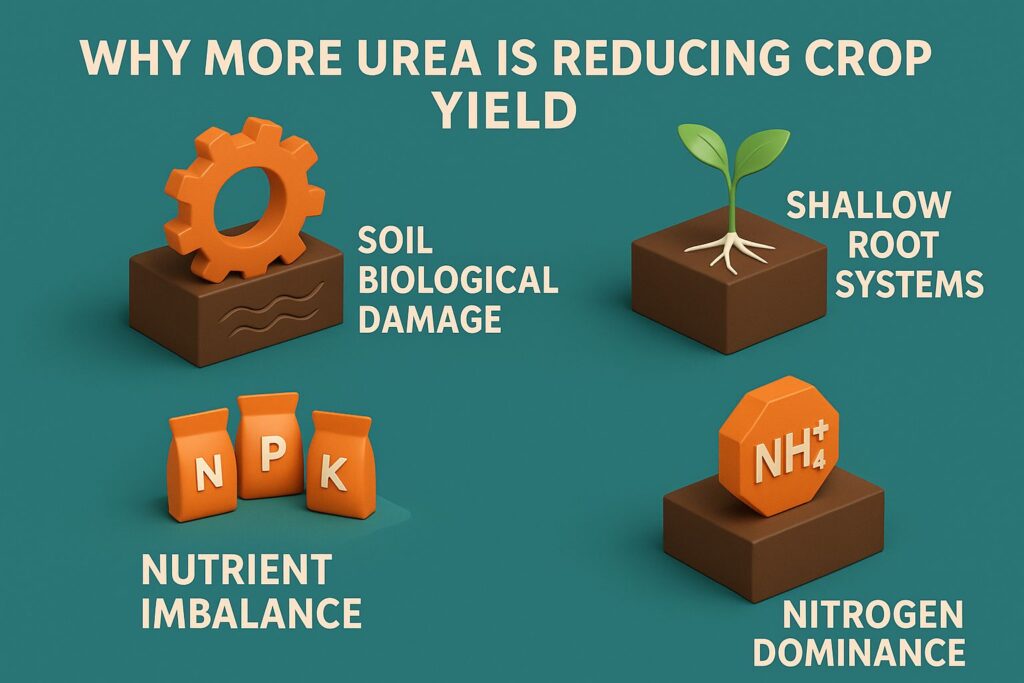
  • Why More Urea Is Reducing Crop Yield  Fertilizer Myths, Soil Damage and Practical Truths

    Urea Is Reducing Crop Yield

    For decades, urea has been treated as the backbone of crop productivity. Farmers across continents believe one simple idea: more urea means more yield. When crops look pale or weak, urea becomes the first response.

    Yet the reality on farms worldwide is troubling. Despite rising urea consumption, crop yields have either stagnated or declined. Input costs increase, soil condition worsens, and plants become less responsive each season.

    This is not coincidence. It is the result of a fundamental misunderstanding of how urea works in soil and how crops actually use nitrogen.

    This article breaks the biggest fertilizer myth in modern agriculture and explains, in practical terms, why more urea is reducing yield instead of increasing it.

    THE MYTH: UREA IS THE MOST EFFICIENT WAY TO FEED CROPS

    Urea contains 46 percent nitrogen, making it the most concentrated nitrogen fertilizer. Because of this, it has been promoted aggressively worldwide. However, concentration does not equal efficiency.

    Efficiency depends on:

    soil ability to hold nitrogen

    root capacity to absorb nitrogen

    biological balance in soil

    Ignoring these factors turns urea into a yield-destroying input.

    HOW UREA ACTUALLY BEHAVES IN SOIL

    Once applied, urea does not directly feed plants. It undergoes rapid chemical conversion:

    Urea converts to ammonium

    Ammonium converts to nitrate

    Nitrate competes with soil water movement

    If this process happens faster than root uptake, nitrogen is lost.

    In most modern soils, this conversion is too fast, creating nitrogen shock instead of sustained nutrition.

    UREA OVERUSE AND SOIL BIOLOGICAL DAMAGE

    Microbial Suppression

    Excess urea disrupts soil microbial balance. Beneficial organisms decline, while harmful processes dominate.

    Loss of Organic Matter

    High nitrogen accelerates organic matter breakdown without replenishment, weakening soil structure.

    Reduced Carbon Cycling

    Healthy soil needs carbon–nitrogen balance. Urea-heavy systems push soils into carbon starvation.

    ROOT DAMAGE CAUSED BY EXCESS UREA

    Shallow Root Systems

    Constant surface nitrogen discourages deep rooting. Plants stop exploring soil for nutrients.

    Root Membrane Stress

    High salt concentration from urea damages root cells, reducing nutrient absorption efficiency.

    Poor Root–Microbe Interaction

    Excess nitrogen suppresses mycorrhizal fungi essential for phosphorus and micronutrient uptake.

    NUTRIENT IMBALANCE: THE HIDDEN YIELD KILLER

    Urea-driven nitrogen dominance creates imbalance:

    Nitrogen excess blocks potassium uptake

    Calcium and magnesium availability drops

    Micronutrient deficiencies appear

    Crops may look green but remain physiologically weak and unproductive.

    GLOBAL EVIDENCE OF THE UREA PROBLEM

    Asia

    Decades of urea dependence reduced soil carbon and yield response.

    Europe

    Strict fertilizer controls introduced after nitrate pollution crises.

    North America

    High nitrogen runoff zones show poor fertilizer efficiency.

    Africa

    Urea applied to low-carbon soils disappears rapidly, offering little yield benefit.

    Different systems reveal the same truth: urea alone cannot sustain productivity.

    WHY FARMERS KEEP APPLYING MORE UREA

    Short-term visual greening effect

    Low cost and easy availability

    Lack of soil testing

    Incomplete fertilizer education

    The immediate green color misleads farmers into believing yield improvement, while damage continues underground.

    THE REAL SOLUTION: BALANCED NUTRITION, NOT MORE UREA

    Synchronize Nitrogen with Crop Demand

    Split application and slow release reduce shock.

    Rebuild Soil Organic Matter

    Organic matter stabilizes nitrogen movement.

    Strengthen Root Systems

    Encourage deep rooting through balanced nutrients.

    Restore Soil Biology

    Microbial health determines nutrient efficiency.

    Reduce Nitrogen Dominance

    Urea must support crops, not control them.

    LONG-TERM CONSEQUENCES OF CONTINUED UREA MISUSE

    Rising fertilizer dependency

    Declining soil fertility

    Increased pest and disease pressure

    Reduced climate resilience

    Economic stress for farmers

    Without correction, urea misuse locks farms into a cycle of rising cost and falling returns.

    (FAQs)

    FAQ 1: Is urea always harmful to crops?

    No. Urea is harmful only when misused without soil balance.

    FAQ 2: Why do crops turn green but yield remains low after urea application?

    Greening reflects leaf nitrogen, not reproductive or root health.

    FAQ 3: Does urea reduce soil fertility over time?

    Yes, when overused without organic and biological balance.

    FAQ 4: Can crops grow without urea?

    Yes, with balanced nutrition and soil-based nitrogen management.

    FAQ 5: Is urea use higher today than before?

    Yes. Global urea consumption has increased faster than yield growth.

    FAQ 6: Does urea affect root depth?

    Excess urea promotes shallow root systems.

    FAQ 7: Is nitrogen deficiency common or nitrogen mismanagement?

    Most cases are mismanagement, not true deficiency.

    FAQ 8: Does urea increase pest pressure?

    Excess nitrogen produces soft tissues attractive to pests.

    FAQ 9: Can reducing urea improve yield?

    Yes, when combined with balanced nutrients and soil health restoration.

    FAQ 10: What is the first step to reduce urea dependency?

    Soil testing and understanding crop nitrogen demand.

    CONCLUSION

    Urea is not the enemy of agriculture, but blind dependence on it is. The belief that higher nitrogen equals higher yield has damaged soils, roots, and long-term productivity worldwide. Sustainable farming begins when nitrogen becomes a controlled input rather than a dominant force.

    True yield improvement does not come from more urea, but from better soil, stronger roots, and balanced nutrition.

    This post establishes the foundation of the Fertilizer Truth Series, exposing myths and replacing them with field-verified agricultural reality.

    ✍️ Farming Writers Team
    Love farming Love Farmers.

    Read A Next Post 👇

    https://farmingwriters.com/root-system-failure-modern-soils-nutrient-uptake/

  • Root System Failure in Modern Soils: Why Fertilizers Stop Working and How to Restore Nutrient Uptake

    Root System Failure in Modern Soils

    INTRODUCTION: WHEN FERTILIZERS FAIL, ROOTS ARE THE REAL PROBLEM

    Across the world, farmers increasingly face a confusing situation. Fertilizers are applied on time, in recommended quantities, yet crops fail to respond properly. Leaves may initially appear green, but growth slows, root anchorage weakens, and yield potential collapses.

    This is not always a fertilizer problem.
    It is a root system failure problem.

    Modern agriculture has focused heavily on feeding soil chemically while ignoring how roots actually function inside that soil. When root systems weaken, no amount of fertilizer can compensate. Nutrients may be present, but roots are unable to absorb them efficiently.

    This article explains why root systems are failing in modern soils, how soil conditions disrupt root function, and what practical steps restore nutrient uptake capacity worldwide.

    WHAT IS ROOT SYSTEM FAILURE

    Root system failure occurs when plant roots lose their ability to:

    grow deeply and widely

    absorb water and nutrients effectively

    maintain healthy interaction with soil microorganisms

    This failure is often invisible above ground until yield loss becomes severe.

    In healthy systems, roots act as intelligent sensors, responding to moisture, nutrients, oxygen, and microbial signals. In degraded soils, this communication collapses.

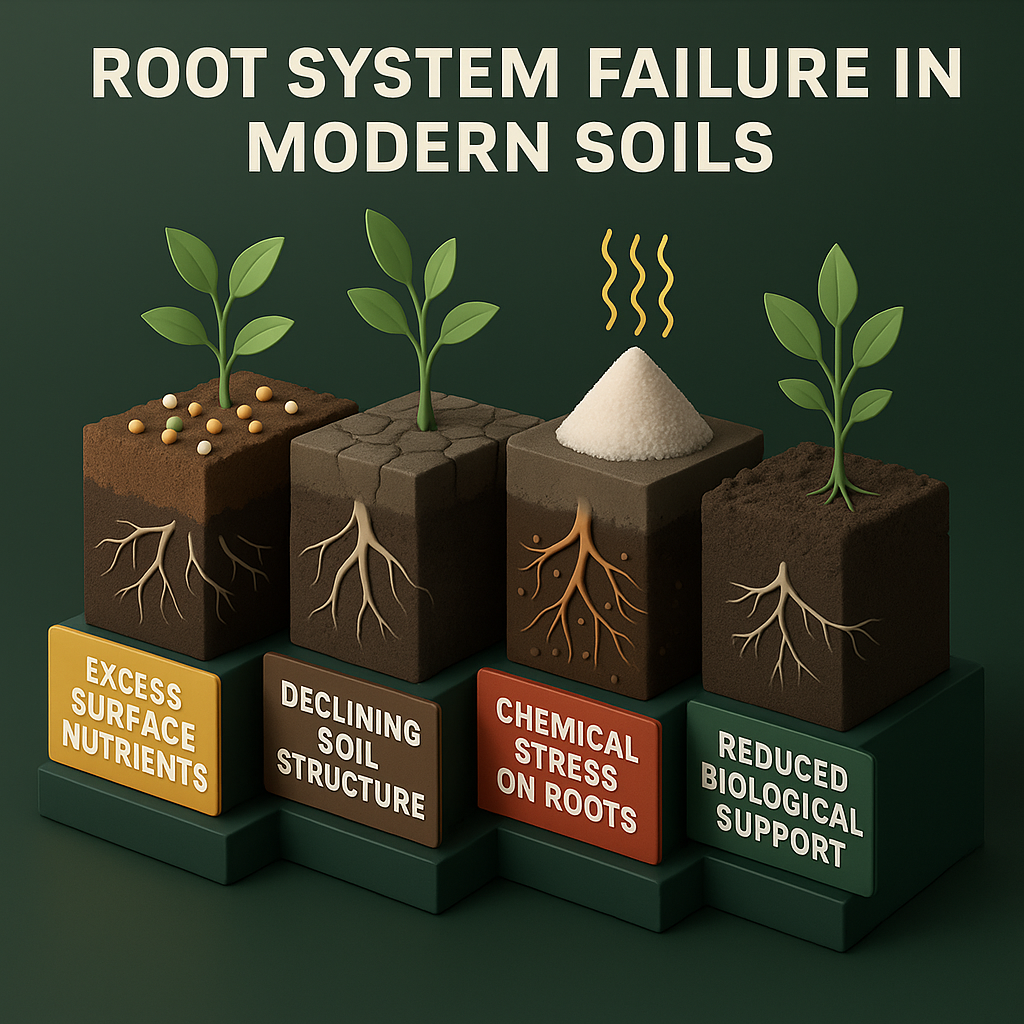
    WHY ROOTS ARE WEAKER IN MODERN AGRICULTURE

    Excess Surface Nutrients

    High doses of surface-applied nitrogen and phosphorus reduce the need for roots to explore deeper soil layers. Plants adapt by forming shallow, fragile root systems.

    Declining Soil Structure

    Repeated tillage, compaction, and organic matter loss collapse soil pores. Roots struggle to penetrate dense layers.

    Chemical Dependency

    Rapid-release fertilizers supply nutrients faster than roots can physiologically adjust. Roots lose adaptive growth behavior.

    Reduced Biological Support

    Soil microbes that assist root growth are suppressed by nutrient imbalance and soil toxicity.

    THE SOIL–ROOT–NUTRIENT CONNECTION

    Roots do not absorb nutrients directly from fertilizer granules. They absorb nutrients dissolved in soil water, regulated by:

    soil porosity

    microbial activity

    organic matter

    root hair development

    If any one of these systems fails, nutrient uptake collapses.

    HOW SOIL PHYSICAL PROBLEMS DESTROY ROOT SYSTEMS

    Soil Compaction

    Compaction reduces oxygen diffusion. Roots suffocate, slow metabolism, and lose nutrient absorption efficiency.

    Hardpan Formation

    Repeated shallow tillage creates dense subsurface layers that roots cannot penetrate, limiting access to deeper moisture and nutrients.

    Poor Drainage

    Waterlogging kills root tips and promotes toxic microbial activity, permanently damaging root zones.

    CHEMICAL STRESS ON ROOTS

    Salt Accumulation

    Over-fertilization increases soil salinity, causing osmotic stress and root dehydration.

    pH Imbalance

    Extreme pH reduces nutrient solubility and damages root membranes.

    Nutrient Antagonism

    Excess of one nutrient blocks uptake of others, creating deficiency symptoms despite sufficient soil supply.

    BIOLOGICAL BREAKDOWN AND ROOT FAILURE

    Healthy roots depend on symbiotic organisms:

    mycorrhizal fungi

    beneficial bacteria

    decomposer organisms

    Modern inputs often reduce biological diversity, leaving roots isolated in chemically active but biologically dead soil.

    GLOBAL PATTERNS OF ROOT SYSTEM FAILURE

    Asia

    Shallow roots due to repeated urea use and puddled soils.

    Europe

    Compaction from heavy machinery limits root expansion.

    North America

    Chemical dependency weakens root-microbe interaction.

    Africa

    Low organic matter prevents stable root development.

    Different environments, same outcome: fertilizer efficiency drops as roots fail.

    WHY MORE FERTILIZER CANNOT FIX ROOT FAILURE

    Fertilizer cannot:

    rebuild soil structure

    restore microbial networks

    undo compaction

    repair damaged root membranes

    In fact, excess fertilizer accelerates root degeneration by increasing chemical stress.

    PRACTICAL STRATEGIES TO RESTORE ROOT FUNCTION

    Improve Soil Structure

    Reduce compaction, include organic inputs, allow natural aggregation.

    Balance Nutrition

    Avoid nutrient shock. Supply nutrients steadily instead of in bursts.

    Encourage Deep Rooting

    Reduce surface nitrogen overload. Promote vertical root exploration.

    Restore Soil Biology

    Support microbial communities through residue retention and reduced disturbance.

    Match Irrigation to Root Depth

    Avoid constant surface wetness that discourages deep rooting.

    LONG-TERM BENEFITS OF HEALTHY ROOT SYSTEMS

    Higher nutrient use efficiency

    Better drought tolerance

    Reduced fertilizer cost

    Stable yields across seasons

    Improved soil resilience

    Healthy roots transform fertilizers from short-term stimulants into long-term productivity tools.

    FREQUENTLY ASKED QUESTIONS

    FAQ 1: Can crops fail even when nutrients are present in soil?

    Yes. If roots are weak, nutrients remain unavailable despite presence.

    FAQ 2: Does high fertilizer use cause shallow roots?

    Yes. Excess surface nutrients discourage deep root growth.

    FAQ 3: Is root failure reversible?

    In many cases, yes, with soil restructuring and balanced nutrition.

    FAQ 4: Do microbes affect root nutrient uptake?

    Strongly. Microbes extend root absorption capacity far beyond root tips.

    FAQ 5: Why do crops lodge easily in modern fields?

    Weak root anchorage due to shallow and fragile root systems.

    FAQ 6: Does soil compaction affect nutrient uptake?

    Yes. Compaction limits oxygen and root movement.

    FAQ 7: Is root failure visible early?

    No. It usually becomes visible only after yield loss.

    FAQ 8: Do all soils support deep roots naturally?

    No. Soil structure and management determine rooting depth.

    FAQ 9: Can root health improve fertilizer efficiency?

    Dramatically. Healthy roots absorb nutrients more predictably.

    FAQ 10: What is the first step to restoring roots?

    Understanding soil physical condition, not adding more fertilizer.

    CONCLUSION

    Root system failure is one of the most overlooked yet destructive problems in modern agriculture. Fertilizers are not failing—roots are failing. Until farming systems restore soil structure, biological balance, and root functionality, fertilizer efficiency will continue to decline.

    Strong roots are the foundation of sustainable yield, soil health, and long-term farm profitability.

    This post forms the scientific backbone of the Soil → Root → Nutrient Science category and connects directly to global fertilizer inefficiency and farming system decline.

    ✍️ Farming Writers Team
    Love farming Love Farmers.

    Read A Next Post 👇

    https://farmingwriters.com/global-nitrogen-loss-crisis-modern-agriculture/

  • Neem-Coated Urea Complete Guide: Working, Benefits, Application, Soil Impact & Global Farming Insights

    Neem-Coated Urea

    INTRODUCTION

    Nitrogen is the backbone of modern agriculture. Every farmer—from India to Africa, from Southeast Asia to Latin America—depends on nitrogen fertilizers to produce cereals, vegetables, fruits, pulses, and fodder crops. For decades, urea has been the most widely used nitrogen fertilizer because of its high nutrient percentage (46% N) and affordability. However, traditional urea suffers from a major problem: it is quickly lost from the soil, leading to poor nitrogen utilization, higher fertilizer cost, environmental pollution, and reduced soil fertility.

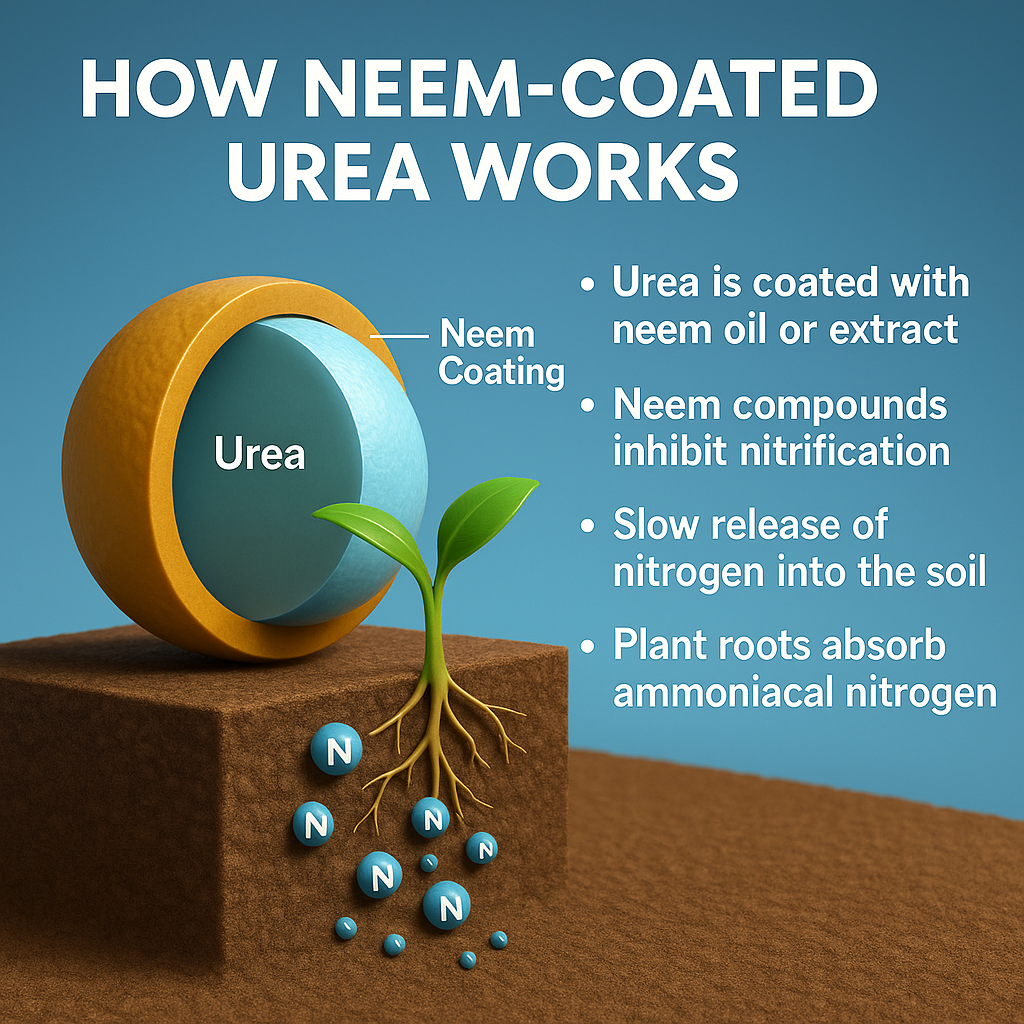
    To solve this issue, a revolutionary but naturally inspired solution emerged: Neem-Coated Urea (NCU). By coating urea granules with neem oil or neem extracts, scientists discovered that nitrogen release could be slowed, efficiency could be increased, and soil health could be restored. India became the first country to mandate neem coating for all agricultural urea, transforming nitrogen management across millions of hectares.

    This word article goes deep into how neem-coated urea works, what scientific principles support its effectiveness, how it improves soil microbiology, why it saves money for farmers, and how it fits into global sustainable agriculture strategies. The goal is to provide a complete, original, human-written farming guide with no AI tone—just real, grounded agricultural writing.

    1. THE ORIGIN & PURPOSE OF NEEM-COATED UREA

    The idea of neem-coated urea did not originate in a research lab but from traditional Indian agricultural wisdom. For generations, farmers used neem leaves in grain storage, compost pits, and pest control due to their antimicrobial and insecticidal properties. Scientists applied this traditional knowledge to modern fertilizers.

    The main problems neem-coated urea intended to solve were:

    1.1 High Nitrogen Loss from Normal Urea

    Normal urea is extremely unstable. Once applied to soil:

    20–40% nitrogen evaporates as ammonia gas

    15–25% leaches down with irrigation water

    A portion converts into nitrous oxide (a greenhouse gas)

    Only 30–35% is actually used by the crop

    This means farmers pay for nitrogen they never receive.

    1.2 Overuse of Urea

    Due to fast loss, farmers developed a habit of applying double or triple the required dose, which further harmed soil structure and crop balance.

    1.3 Soil Fertility Decline

    Continuous urea use reduces:

    microbial diversity

    soil organic carbon

    beneficial fungi

    root strength

    This leads to soil fatigue and yield stagnation.

    1.4 Environmental Damage

    Nitrogen pollution causes:

    groundwater contamination

    algae blooms

    air pollution from ammonia

    climate warming through nitrous oxide

    Neem-coating was designed to solve all these problems without increasing fertilizer cost dramatically.

    1. THE SCIENCE INSIDE NEEM-COATED UREA

    Neem is one of the richest botanical sources of bioactive compounds. When urea is coated with neem oil or extract, several biochemical transformations begin.

    2.1 Bioactive Compounds in Neem

    Neem contains:

    Azadirachtin

    Nimbin

    Salannin

    Gedunin

    Limonoids

    These have natural antimicrobial and enzyme-modulating properties.

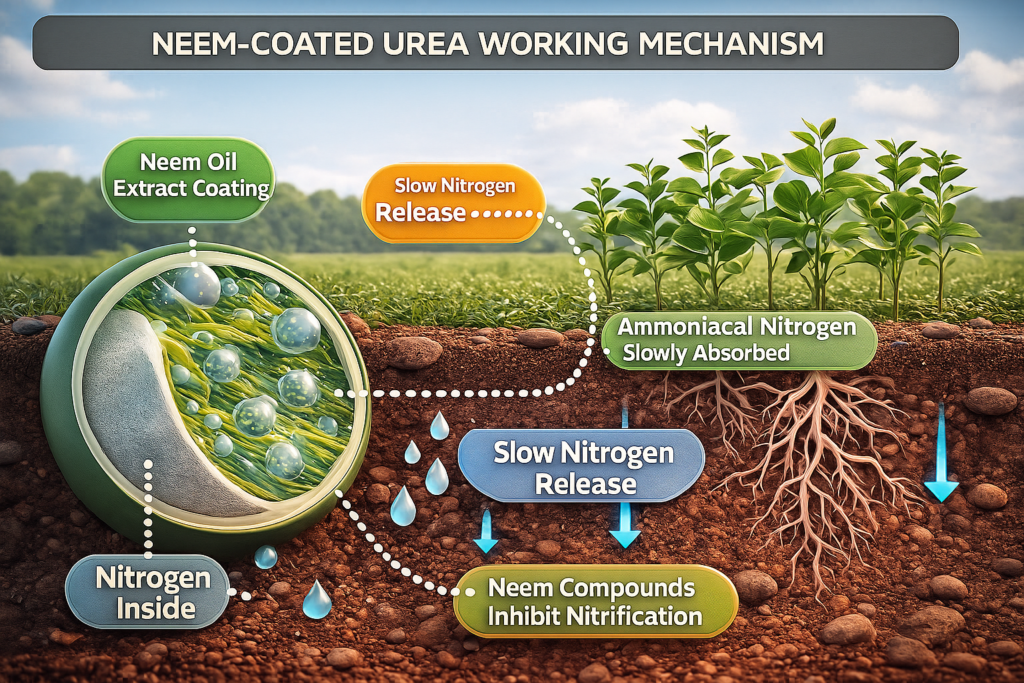
    2.2 How Neem Controls Nitrification

    Urea is normally converted into ammonium and then nitrate by soil bacteria:

    Nitrosomonas

    Nitrobacter

    Neem compounds slow the activity of these bacteria, extending the time nitrogen remains in ammonium form—which plants absorb more efficiently.

    This single action increases nitrogen-use efficiency (NUE) significantly.

    2.3 Slow Release Mechanism

    The neem layer around the urea granule gradually breaks down in soil moisture, releasing nitrogen slowly. This prevents nitrogen “shock” and supports steady plant growth.

    1. WHY NEEM-COATED UREA IS BETTER THAN NORMAL UREA

    3.1 Higher Nitrogen Use Efficiency (NUE)

    Neem-coated urea can improve NUE from 30–35% to 50–65%, depending on soil conditions.

    3.2 Better Root Growth

    Steady nitrogen promotes deeper rooting, which improves:

    drought tolerance

    nutrient absorption

    yield stability

    3.3 Reduced Nitrogen Loss

    NCU reduces:

    volatilization

    runoff

    leaching

    greenhouse emissions

    3.4 Higher Crop Yield

    Most crops show 8–20% yield increase due to balanced nitrogen availability.

    3.5 Less Fertilizer Needed

    Farmers often reduce urea by 10–15% with equal or better results.

    3.6 Improved Soil Microbiology

    Neem naturally supports beneficial microbes that are suppressed by excess urea.

    1. CROP-WISE BENEFITS OF NEEM-COATED UREA

    4.1 Wheat

    Enhances tillering, uniform spike formation, grain filling, and reduces lodging.

    4.2 Rice

    Improves tiller survival, panicle size, and nitrogen retention in flooded fields.

    4.3 Maize

    Supports strong stem growth, reduces nutrient deficiency streaks, and boosts cob weight.

    4.4 Sugarcane

    Steady nitrogen release helps continuous growth in long-duration crops.

    4.5 Vegetables

    Balanced nitrogen prevents excessive leafy growth and improves fruiting.

    4.6 Pulses

    Small but timely nitrogen supports early vegetative growth without suppressing nodulation.

    4.7 Orchards

    Supports long-term fertility and balanced shoot growth.

    1. SOIL IMPROVEMENT THROUGH NEEM-COATED UREA

    Continuous urea misuse is one of the biggest reasons soils have become hard, acidic, and microbially inactive. Neem-coated urea helps reverse this.

    5.1 Neem Promotes Beneficial Microbes

    Neem compounds reduce harmful microbes while encouraging:

    nitrogen-fixing bacteria

    phosphorus-solubilizing microbes

    decomposer fungi

    5.2 Better Soil Structure

    Controlled nitrogen prevents soil crusting, hardpan formation, and compaction.

    5.3 Higher Organic Carbon Over Time

    Steady nitrogen allows plants to produce more root biomass, which decays and increases soil organic carbon.

    5.4 Reduced Salt Build-Up

    Excess urea contributes to salinity. Slow release prevents salt spikes.

    1. GLOBAL SIGNIFICANCE OF NEEM-COATED UREA

    While India made it mandatory, many countries are adopting it voluntarily.

    6.1 South Asia

    Bangladesh, Nepal, Sri Lanka—high rainfall areas benefit from controlled nitrogen release.

    6.2 Africa

    Smallholder farmers with sandy soils get longer-lasting nitrogen.

    6.3 Latin America

    Countries like Brazil, Mexico use neem-coated fertilizers for fruits and cash crops.

    6.4 Europe & USA

    Interest in neem-based organic amendments is rising as a part of sustainable agriculture.

    1. FARM ECONOMICS OF NEEM-COATED UREA

    7.1 Savings

    Farmers save by:

    reducing fertilizer dose

    fewer top-dressings

    better crop yield

    reduced pest and lodging losses

    7.2 Higher Market Value

    Uniform size grains/fruits get higher price.

    7.3 Long-Term Benefits

    Rebuilt soil health reduces future input costs.

    1. COMMON MYTHS AND REALITIES

    Myth 1: Neem-coated urea has more nitrogen.

    Reality: Nitrogen remains 46%.

    Myth 2: It works only in Indian soils.

    Reality: Works globally across all soil types.

    Myth 3: It is harmful to soil.

    Reality: It improves soil biology.

    Myth 4: It is more expensive for no reason.

    Reality: The coating process adds cost, but savings exceed price difference.

    1. BEST PRACTICES FOR MAXIMUM RESULTS
    Neem-Coated Urea

    Apply in splits depending on crop

    Light irrigation after application

    Combine with organic manure

    Use soil testing for exact doses

    Avoid applying too close to plant base

    1. REAL-WORLD FARMER EXPERIENCES

    Across states like Punjab, Haryana, UP, Bihar, Karnataka, and Maharashtra, farmers report:

    steadier crop color

    better plant posture

    improved resistance to dry spells

    more uniform grain filling

    fewer yellow patches in fields

    improved yield even with less fertilizer

    Many farmers also notice that neem-coated urea prevents “luxurious vegetative growth”—where plants grow tall but yield poorly. Instead, plants grow compact, strong, and productive.

    1. FUTURE OF NEEM-COATED UREA IN GLOBAL AGRICULTURE

    11.1 Climate-Smart Farming

    Nitrogen mismanagement is one of the biggest contributors to agricultural emissions. Neem-coated urea directly reduces nitrous oxide.

    11.2 Soil Restoration

    Slow-release nitrogen allows soils to rebuild microbial life.

    11.3 Reduced Dependency on Chemicals

    With better nitrogen balance, plants naturally show better pest and disease tolerance.

    11.4 Integrated Nutrient Management

    NCU fits perfectly with:

    drip fertigation

    organic amendments

    precision agriculture

    regenerative farming models

    1. FREQUENTLY ASKED QUESTIONS

    Q1. Does neem-coated urea reduce total urea requirement?

    Yes, generally by 10–15%.

    Q2. Is neem-coated urea suitable for vegetables?

    Yes, especially for tomato, brinjal, chili, onion, and cucurbits.

    Q3. Does coating affect nutrient percentage?

    No, nitrogen is always 46%.

    Q4. Can NCU be mixed with other fertilizers?

    It can, but avoid very alkaline materials.

    Q5. Does neem coating dissolve in heavy rain?

    It slows release even in high moisture.

    CONCLUSION

    Neem-coated urea is not just a fertilizer innovation—it is a bridge between traditional agricultural wisdom and modern soil science. It brings the best of both worlds: the natural control and microbial support of neem, combined with the efficiency of nitrogen fertilizers. In an era of rising costs, climate uncertainty, and soil degradation, neem-coated urea offers farmers a sustainable, profitable, and scientifically proven solution.

    ✍️ Farming Writers Team
    Love farming Love Farmers.

  • Potato  Nutrition, Benefits, Farming, Cost, Profit and Global Market ,Farming Writers

    Potato – Nutrition,

    Potato – Nutrition, Benefits, Farming, Cost, Profit and Global Market | Farming Writers

    1. Introduction

    Potato (Solanum tuberosum) is one of the world’s most essential food crops, grown and consumed across every continent. Originating from South America, it has become a vital source of carbohydrates and nutrition for billions of people. Whether in India’s aloo sabzi, America’s fries, or Europe’s mashed potatoes, this humble tuber rules global kitchens.

    Potato farming is one of the most profitable agricultural ventures due to its short growing cycle, high yield, and continuous market demand. It can be cultivated in diverse climates, making it a reliable crop for both small and large-scale farmers.

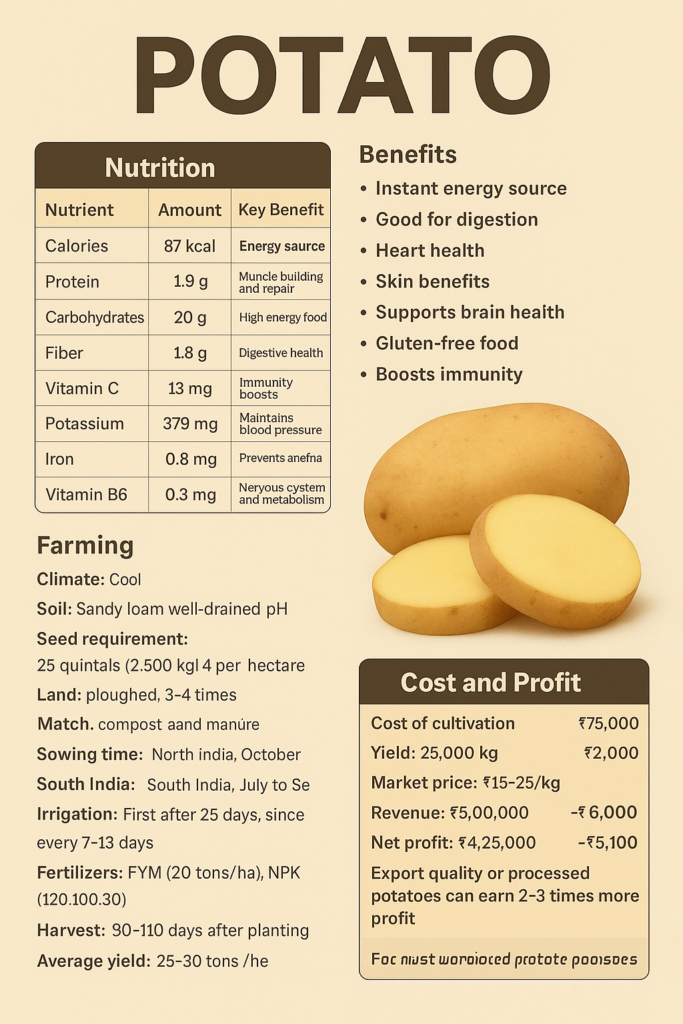
    1. Nutritional Value (per 100 g boiled potato)

    NutrientAmountKey BenefitCalories87 kcalEnergy sourceProtein1.9 gMuscle building and repairCarbohydrates20 gHigh energy foodFiber1.8 gDigestive healthVitamin C13 mgImmunity boosterPotassium379 mgMaintains blood pressureIron0.8 mgPrevents anemiaVitamin B60.3 mgNervous system and metabolism support

    1. Health Benefits of Potato

    Instant energy source – Rich in complex carbohydrates for sustained energy.

    Good for digestion – Fiber improves bowel movement and gut health.

    Heart health – Potassium lowers blood pressure.

    Skin benefits – Potato juice helps reduce dark spots and sunburn.

    Supports brain health – Vitamin B6 supports nervous system function.

    Gluten-free food – Safe for people with gluten intolerance.

    Boosts immunity – Vitamin C and antioxidants protect against infections.

    1. Uses of Potato

    Culinary Uses: Boiled, fried, baked, mashed, or processed into chips, snacks, or curries.

    Industrial Uses: Potato starch in paper, textiles, adhesives, and alcohol production.

    Medicinal Uses: Skin treatment, soothing burns, and natural facial packs.

    1. Cultivation Guide

    Climate: Cool season crop; grows best between 15°C to 25°C.

    Soil: Sandy loam soil, well-drained with pH 5.5–6.5.

    Seed Requirement: 25 quintals (2,500 kg) per hectare.

    Land Preparation: Plough 3–4 times; add compost and manure.

    Sowing Time:

    North India – October to December

    South India – July to September

    Irrigation: First irrigation after 25 days; then every 7–10 days.

    Fertilizer: FYM (20 tons/ha) + NPK (120:100:80).

    Harvest: 90–110 days after planting.

    Average Yield: 25–30 tons per hectare.

    1. Cost and Profit Analysis (INR & USD)

    Cost of Cultivation (per hectare):

    ItemCost (₹)Cost (USD)Seed potatoes35,000$420Fertilizers & Manure10,000$120Labor12,000$145Irrigation6,000$72Transportation5,000$60Miscellaneous7,000$85Total Cost₹75,000$900

    Yield and Revenue

    Average Yield: 25,000 kg per hectare

    Market Price: ₹15–25/kg (average ₹20/kg)

    Revenue: ₹5,00,000 (~$6,000)

    Net Profit:
    ₹5,00,000 – ₹75,000 = ₹4,25,000 (~$5,100) per hectare

    Export quality or processed potatoes can earn 2–3 times more profit.

    1. Global Market Overview

    Top Producers: China, India, Russia, USA, Ukraine

    Export Leaders: Netherlands, France, Germany, Canada, USA

    Import Markets: Africa, Middle East, Southeast Asia

    Average Global Price: $1.2–2 per kg depending on quality and grade

    Processing Demand: Frozen fries, chips, starch, alcohol industry

    Potato is traded in over 150 countries, making it one of the top 5 global food crops after rice, wheat, maize, and soybeans.

    1. Marketing and Selling Strategies

    Local Markets: Direct selling ensures stable income.

    Contract Farming: Partner with food companies like McCain, Haldiram, ITC.

    Cold Storage: Store potatoes and sell during high-price season.

    Export: Target Middle East, Bangladesh, and Sri Lanka for bulk exports.

    Online Sale: Supply to e-commerce grocery chains (BigBasket, Blinkit, Amazon Fresh).

    1. Frequently Asked Questions (FAQs)

    Q1. What is the average yield of potato farming?
    25–30 tons per hectare under normal conditions.

    Q2. Is potato a good profit crop?
    Yes, farmers can earn up to ₹4–5 lakh ($5,000–6,000) per hectare.

    Q3. How long does it take to grow potatoes?
    About 3–4 months from planting to harvest.

    Q4. Can potato grow in hot regions?
    It prefers cooler climates, but certain heat-tolerant varieties are available.

    Q5. Which potato variety is best for chips and fries?
    Kufri Chipsona, Kufri Jyoti, and Atlantic varieties are popular for processing.

    1. Conclusion

    Potato is not just a kitchen staple but a high-value global crop. With its short cultivation period, minimal maintenance, and wide adaptability, it ensures consistent income for farmers.

    From nutrition to profitability, potato stands as one of the most rewarding vegetables to grow. Whether sold fresh or processed, its market remains evergreen.

    In conclusion: Potato offers excellent returns, supports food security, and continues to be one of the most traded and consumed vegetables in the world.

    ✍️Farming Writers

    Read A Next Post

    https://farmingwriters.com/fish-farming-rohu/