• Campanula Flower Farming Reality: Why Market Rejection Happens Even After Good Yields

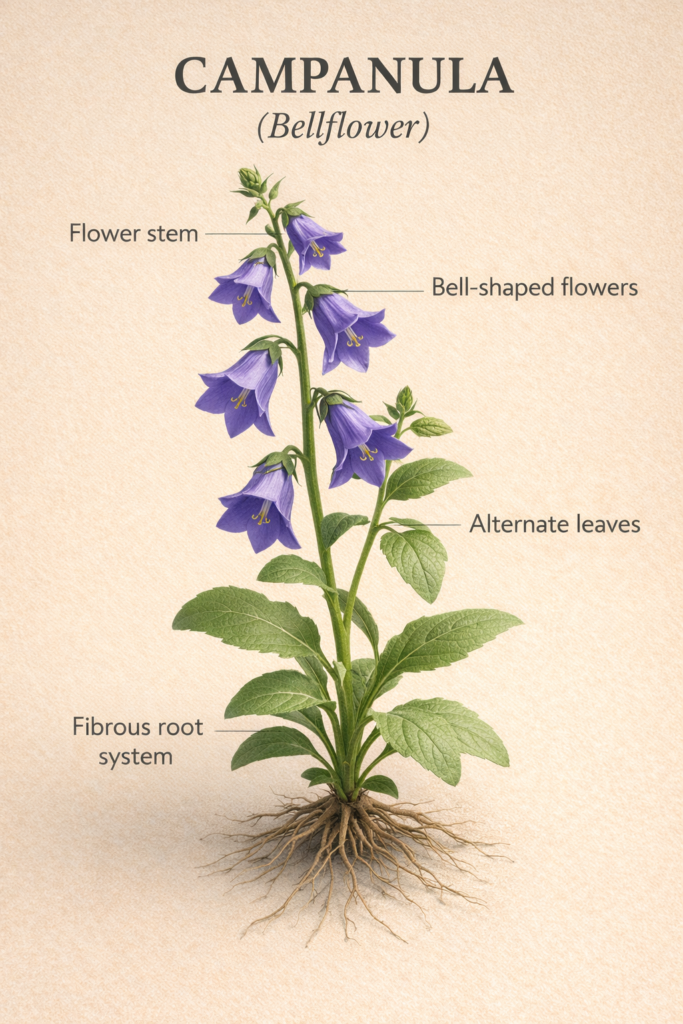
    Campanula Flower

    A field-based explanation of why Campanula farming succeeds for a few disciplined growers and fails for many who follow surface-level advice.

    Where most Campanula failures actually begin

    Campanula rarely fails in the nursery. Seedlings emerge clean, foliage looks healthy, and early growth gives farmers confidence. Losses start later, usually at the moment when growers believe the crop is already successful. Campanula is one of those flowers where survival and market fitness are two very different things. A field full of bells does not mean a field full of sellable stems. Buyers see weaknesses that farmers miss because those weaknesses appear only after harvest, transport, and hydration.

    The most common mistake is treating Campanula like a flexible ornamental. It is not. It is a timing-sensitive, stem-quality–driven cut flower. The plant tolerates many soils and climates, which creates the illusion that it will tolerate mistakes. It does not. It simply delays punishment until the market stage.

    Climate suitability is not optional, it is decisive

    Campanula prefers cool, steady conditions. Warm days followed by warm nights produce tall plants with hollow, fragile stems. Farmers celebrate height, but buyers reject fragility. The bell shape exaggerates this problem because even minor dehydration causes the stem to collapse under the weight of the blooms.

    In regions where nights do not cool down, Campanula should not be attempted as a commercial cut flower. It may grow, it may flower, but it will not travel. Farmers who ignore this truth often blame transport or traders. The real issue is physiological stress that begins weeks earlier.

    Soil management mistakes that quietly reduce value

    Campanula does not demand rich soil, but it demands balanced mineral release. Excess nitrogen produces lush growth and weak structural tissue. Calcium imbalance leads to stem bending, a defect that no amount of post-harvest care can fix. Many farmers apply fertilizer based on leaf color rather than stem behavior. By the time bending is visible, the crop is already downgraded.

    Heavy soils create another silent loss. Poor drainage delays root respiration, which reduces carbohydrate flow to the stem. The bells still open, but the stem lacks strength. Buyers feel this immediately when they lift a bunch.

    Irrigation timing matters more than irrigation volume

    Overwatering is rarely fatal to Campanula plants, but it is often fatal to market acceptance. Moisture fluctuations during the flowering phase cause uneven bell opening. Some flowers open fully, others remain tight. This unevenness destroys bouquet uniformity, which is one of the first things professional florists judge.

    Watering late in the day increases disease pressure and reduces post-harvest life. Campanula does not tolerate careless irrigation schedules. The crop demands predictability.

    Harvesting errors that cost entire batches

    Campanula must be harvested at a very specific stage. Too early and the bells fail to open after cutting. Too late and the stem cannot support the weight during transport. Many growers harvest when the field looks visually impressive rather than when the stem physiology is correct. This decision alone accounts for a large share of rejections.

    Cutting time during the day also matters. Harvesting during warm hours reduces hydration efficiency. Professional growers cut early morning, hydrate immediately, and cool the stems before any sorting begins. Those who skip this discipline rarely see consistent buyers return.

    Market reality growers underestimate

    Campanula is not a local-market flower in most regions. Local buyers often lack the cold chain to handle it properly. As a result, prices collapse, and growers assume demand is low. In reality, demand exists in organized florist chains and export markets that enforce strict quality standards.

    Uniform stem length, upright posture, and consistent bell size determine pricing. Color matters less than structure. A perfect blue or white Campanula with weak stems is unsellable. A slightly imperfect color with strong stems will sell.

    Who should grow Campanula and who should not

    Campanula suits growers with access to cool-season windows, disciplined irrigation control, and buyers who understand the crop. It does not suit farmers looking for fast turnover or those dependent on spot markets. It is unforgiving to casual experimentation.

    Farmers who already manage demanding cut flowers successfully adapt better. Beginners often underestimate the precision required and learn through costly rejection.

    Cost and earning reality in USD terms

    Input costs are moderate, but rejection risk is high. Profit margins depend on consistency rather than yield. One accepted batch can cover multiple rejected ones, but only if the grower survives long enough to learn the pattern. This is not a volume game; it is a quality discipline.

    10 FAQs with short, honest answers

    Why do Campanula stems bend after harvest?
    Because internal tissue strength was weak due to temperature or nutrition imbalance.

    Can Campanula grow in warm regions?
    It can grow, but commercial quality is unreliable.

    Is Campanula suitable for local markets?
    Usually no; it needs organized cold-chain handling.

    Does higher fertilizer improve quality?
    Often the opposite; excess nitrogen weakens stems.

    When is the best harvest stage?
    When bells are partially open but stems remain firm.

    Why do bells open unevenly?
    Irregular irrigation or temperature stress during flowering.

    Can Campanula be grown in pots for sale?
    Only for retail ornamentals, not for cut-flower markets.

    What is the biggest hidden loss?
    Transport rejection due to stem collapse.

    Is Campanula beginner-friendly?
    Not commercially; it demands experience.

    Who should avoid Campanula farming?
    Farmers without climate control or buyer access.

    Final conclusion — honest, not motivational

    Campanula is neither fragile nor easy. It is precise. It rewards growers who respect timing, stem physiology, and buyer expectations. It quietly punishes those who confuse survival with suitability. This crop does not fail loudly; it fails at the market table.

    ✍️Farming Writers
    Love farming Love Farmers

    Read A Next Post 👇

    https://farmingwriters.com/calendula-flower-farming-reality/

  • Calendula Farming Reality: Where Farmers Earn, Where They Lose, and Why Quality Gets Rejected

    Calendula Farming

    Calendula looks harmless on YouTube. Easy plant, bright orange flowers, medicinal demand, “low input” reputation. That image is exactly why many small farmers lose money with it. The failure usually does not come from poor germination or plant death. It comes later, when flowers look healthy but buyers quietly walk away. Calendula is not rejected for yield problems; it is rejected for quality interpretation, and most farmers never learn what went wrong.

    Calendula is not a decorative flower business first. It is a processing flower crop. Fresh flowers have limited value. Dried petals, colour retention, cleanliness, moisture behaviour, and batch consistency decide income. Farmers who treat it like marigold farming fail. Farmers who treat it like a light medicinal crop sometimes survive. Farmers who understand industrial standards are the ones who earn.

    This article is not written to make Calendula look attractive. It is written to make it clear.

    Where Calendula actually fits — and where it doesn’t

    Calendula performs best in mild climates where extreme heat does not burn petal colour and excessive humidity does not slow drying. It tolerates poor soils, which is why people overestimate it. Poor soil tolerance does not mean poor management tolerance. Calendula grown on neglected land often flowers, but that same neglect causes low active compound levels, uneven petal size, and fungal micro-damage that buyers detect during processing.

    If your region has long, humid mornings and slow air movement, drying becomes your biggest enemy. Calendula petals trap moisture easily. When drying is slow, colour dulls, volatile compounds escape, and microbial counts rise. At that point, the crop may look fine visually but becomes unsellable to serious buyers.

    Calendula works best where harvesting can happen daily and drying can be controlled. If labour is irregular or drying space is shared with other crops, Calendula becomes risky fast.

    The soil conversation people oversimplify

    Calendula does not need rich soil, but it needs predictable soil behaviour. Over-fertilised soil pushes leaf growth at the cost of flower density. Under-managed soil creates uneven nutrient release, leading to variable flower size within the same field. That variability is harmless for fresh markets and fatal for processors.

    Processors want uniformity because uniformity dries evenly. Mixed petal thickness within a batch increases rejection risk. This is where many farmers lose buyers after one or two seasons without understanding why demand disappeared.

    Soil drainage matters less for plant survival and more for harvest rhythm. Wet soil delays harvesting windows, causes mud contamination, and increases post-harvest cleaning losses.

    Calendula farming is not about irrigation quantity, it is about timing mistakes

    Calendula tolerates drought better than waterlogging, but the real problem is watering near harvest. Moisture on flowers during harvest increases drying time and encourages colour oxidation. Many farmers water the field “to keep plants fresh” right before picking. That single habit destroys batch quality.

    Successful Calendula growers think backwards from drying, not forwards from growth. If drying capacity is limited, watering must be adjusted days earlier. This is never explained in general guides, but buyers see its effect immediately.

    Harvesting is where Calendula becomes a discipline crop

    Calendula flowers open and close daily. Harvesting too early gives underdeveloped petals. Harvesting too late increases petal drop during drying. Harvesting at inconsistent times creates inconsistent batches. Processors do not want emotional explanations; they want repeatable quality.

    Manual harvesting is unavoidable if quality matters. Mechanical shortcuts increase contamination and petal damage. If labour is not available consistently, Calendula should not be planted at scale.

    This crop rewards farmers who are boringly consistent and punishes those who improvise.

    Drying: the silent profit killer

    Most Calendula losses happen after harvest, not before sale. Drying too fast burns colour. Drying too slow grows microbes. Drying in mixed airflow causes uneven moisture pockets. Drying under direct sun destroys carotenoids, the very compounds buyers pay for.

    Buyers test moisture, colour stability, and aroma retention. They do not negotiate on these points. A visually attractive dried flower can still fail lab checks. Farmers who sell only locally may never notice. Farmers targeting processors learn the lesson painfully.

    Calendula is forgiving in the field and unforgiving in the shed.

    Market reality nobody likes to say out loud

    Calendula demand exists, but price stability does not. Local traders buy opportunistically. Herbal companies buy selectively. Export buyers buy only when documentation, drying data, and batch consistency exist. Overproduction quickly collapses local prices because fresh flowers have limited storage life.

    This crop suits farmers who already have drying infrastructure or cooperative access. It does not suit isolated farmers chasing internet trends.

    Calendula is often promoted as “beginner friendly.” In truth, it is process-dependent, not beginner-friendly.

    Who should seriously consider Calendula and who should not

    Calendula suits farmers who are patient, methodical, and willing to treat post-harvest as seriously as cultivation. It suits regions with controllable drying conditions and access to buyers who explain standards clearly.

    It does not suit farmers looking for fast cash, irregular labour schedules, or purely fresh-flower sales. It does not suit those who rely on last-minute market discovery.

    Cost and earning reality in USD terms

    Calendula does not demand heavy capital, but margins are thinner than people expect. Input costs are low; rejection costs are high. A farmer who masters drying and quality control can earn steady, moderate income. A farmer who ignores them earns nothing consistently.

    The crop is scalable only when process discipline scales with it.

    10 FAQs — short, honest, decision-oriented

    Is Calendula easy to grow but hard to sell?
    Yes. Growing is simple. Selling quality is not.

    Can I sell fresh flowers only?
    Only at very small scale and low prices.

    Does high yield guarantee profit?
    No. Uniformity and drying quality matter more.

    Is it suitable for humid regions?
    Only if drying is well controlled.

    Can I sun-dry Calendula?
    Direct sun reduces medicinal value and buyer acceptance.

    Does fertiliser increase flower value?
    Excess fertiliser reduces processing quality.

    Is mechanical harvesting viable?
    Usually no, if quality standards matter.

    Do buyers test quality or just appearance?
    Serious buyers test moisture and compounds.

    Can small farmers succeed with Calendula?
    Yes, but only with discipline and market clarity.

    Who should avoid this crop?
    Farmers without drying control or stable labour.

    Final conclusion honest, not motivational

    Calendula is neither a magic flower nor a trap crop. It is a disciplined farmer’s plant. It rewards those who understand climate limits, drying science, and market behaviour. It punishes those who believe survival equals success.

    ✍️Farming Writers Team                                      Love Farming Love Farmers

    Read A Next Post 👇

    https://farmingwriters.com/foxglove-flower-farming-reality/

  • Foxglove Flower Farming Reality: Why Many Growers Fail Despite Healthy Crops

    Foxglove Flower Farming

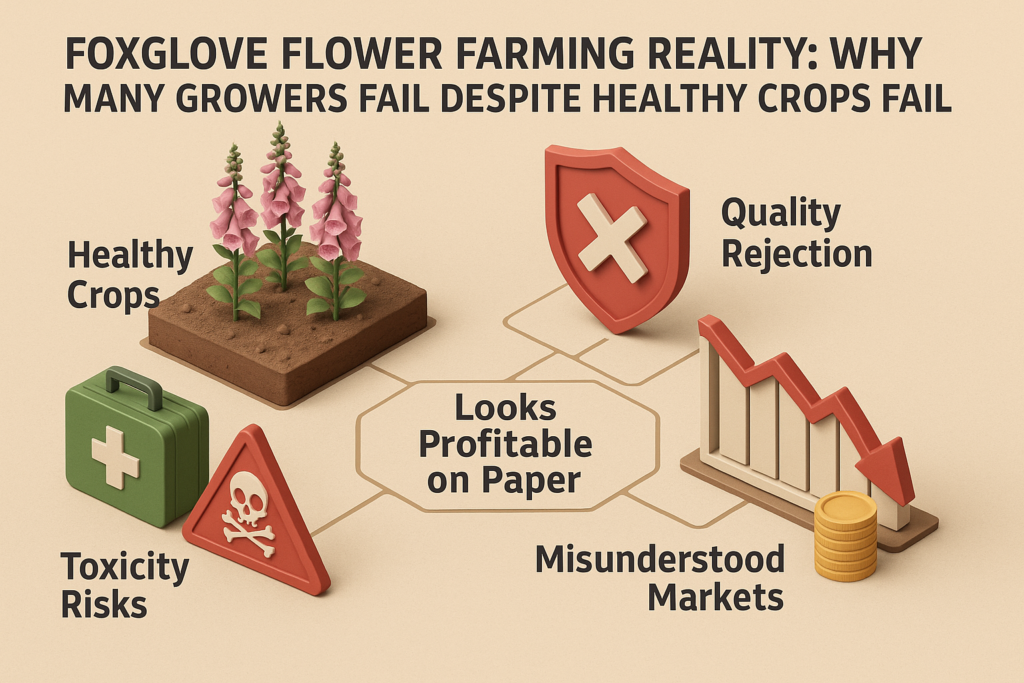
    The first loss in foxglove farming usually happens before the farmer realises anything has gone wrong. The plants look healthy. The flower spikes stand tall. The colour is uniform. And yet, when samples reach buyers—especially pharmaceutical collectors or export-grade cut-flower agents—the response is often silent rejection. No price negotiation. No second chance. Just a polite “not suitable”.

    This is where foxglove separates experienced growers from hopeful beginners.

    Foxglove is not rejected because it is difficult to grow. It is rejected because it is easy to misunderstand.

    Across Europe, North America, parts of South America, and selected Asian regions, foxglove has two completely different market identities. One is ornamental. The other is medicinal. Most losses happen when farmers unknowingly stand between these two worlds without committing to either.

    Why Healthy Foxglove Crops Still Fail in the Market

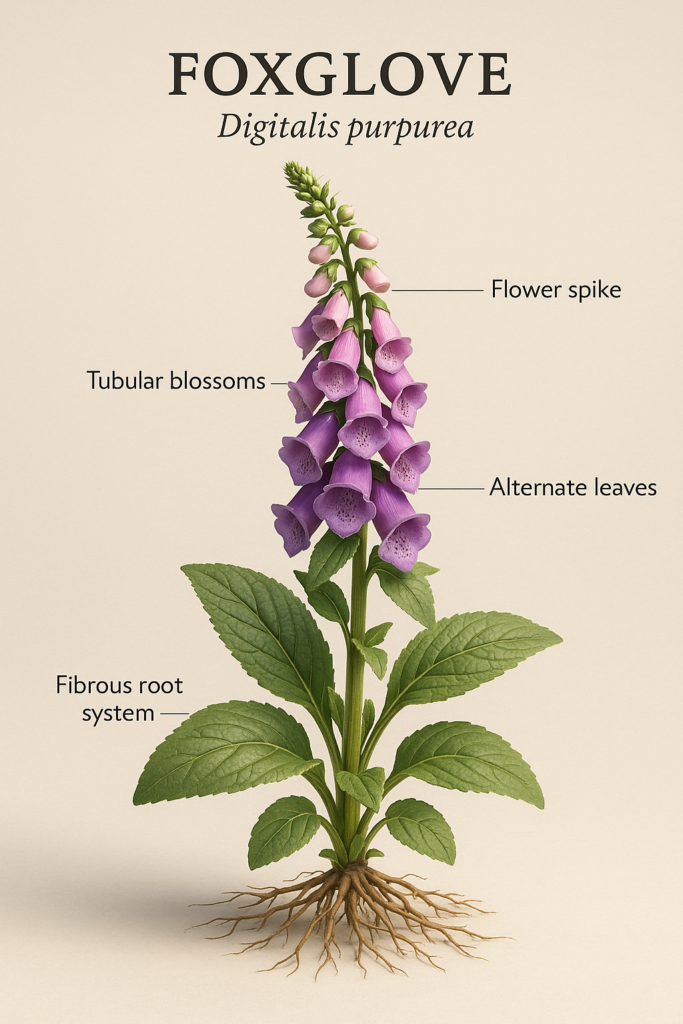
    In ornamental markets, foxglove is judged visually, but not generously. Buyers look for symmetry in the spike, controlled height, uniform bell spacing, and colour stability after harvest. What many growers miss is that excessive nitrogen, which increases height and leaf size, often weakens the flower bells. The spike looks impressive in the field but collapses in transport.

    In medicinal procurement, appearance matters far less than chemical profile. Digitalis glycoside concentration varies with climate stress, soil mineral balance, harvest timing, and even the age of the plant. A crop grown too comfortably—ideal water, rich soil, zero stress—often produces biomass without medicinal potency. That crop is technically successful and commercially useless.

    Climate Suitability Is Not About Survival

    Foxglove survives in many climates. That fact misleads farmers.

    Survival is irrelevant. What matters is metabolic behaviour. Cool, slightly stressed environments with consistent day–night temperature difference produce more stable glycoside profiles. High humidity regions increase leaf diseases that do not kill the plant but contaminate harvested material beyond acceptable thresholds.

    This is why foxglove performs consistently in parts of the UK, Germany, Pacific Northwest USA, and select high-altitude regions, while failing commercially in visually similar but biologically different zones.

    The Toxicity Problem Nobody Explains Clearly

    Foxglove is toxic. Everyone knows this, but very few understand what it means economically.

    In many countries, medicinal foxglove procurement requires traceability, licensing, and post-harvest handling protocols. A farmer who grows foxglove without clear buyer contracts often discovers that selling the harvest legally is more complicated than growing it.

    For ornamental markets, toxicity limits its use in public landscaping and mass retail chains. Many supermarkets and municipal buyers avoid foxglove entirely due to liability concerns. This shrinks the buyer pool far more than growers anticipate.

    Why Yield-Based Thinking Destroys Profit

    Foxglove does not reward high yield thinking. Taller spikes, more leaves, thicker stems—these are not success indicators.

    In cut flower markets, stems above a certain thickness are rejected because they do not hydrate evenly. In medicinal markets, oversized leaves often dilute glycoside concentration. Many farmers lose money by “improving” the crop.

    This is one of the rare flowers where restraint outperforms optimization.

    Labour, Harvest Timing, and the Silent Loss

    Harvest timing in foxglove is unforgiving. Too early and medicinal content is incomplete. Too late and glycosides degrade or become unstable. In ornamental harvest, bells that open unevenly signal poor post-harvest life.

    Labour delays of even 48 hours can turn an acceptable crop into a rejected one. Foxglove does not wait for convenience.

    Who Should NOT Grow Foxglove

    Foxglove is a poor choice for farmers seeking flexible selling options. It is unsuitable for those without pre-arranged buyers. It is risky for regions with unpredictable humidity spikes. It is not ideal for beginners entering flower farming for quick returns.

    Those who succeed usually do so quietly, with contracts in hand, small acreage, and strict discipline.

    Global Market Reality

    Foxglove is not a mass-market flower. It is a controlled, niche crop. Demand exists, but it is selective. Prices look attractive on paper because volumes are low and standards are high. Many growers see the price and ignore the gatekeeping.

    That mistake costs entire seasons.

    FAQs – Real Questions, Real Answers

    1. Is foxglove more profitable as a medicinal or ornamental crop?
      Medicinal contracts offer higher price stability, but only if compliance requirements are met. Ornamental markets are easier to enter but far more rejection-prone.
    2. Can foxglove be grown without buyer contracts?
      Technically yes. Commercially no. Unsold foxglove has little alternative use.
    3. Does organic cultivation increase value?
      Only in ornamental niche markets. Medicinal buyers focus on compound consistency, not organic labels.
    4. Why do buyers reject tall, healthy-looking plants?
      Because visual strength often correlates with poor chemical balance or weak transport durability.
    5. Is foxglove suitable for warm tropical regions?
      Survival is possible, profitability is not reliable.
    6. How long does foxglove stay productive?
      Commercially, most buyers prefer first-cycle harvests. Older plants are inconsistent.
    7. Are seeds or transplants better?
      Neither guarantees success. Management decisions matter more than planting material.
    8. Can foxglove be intercropped?
      Intercropping often complicates harvest purity and is rarely accepted by buyers.
    9. What is the biggest hidden cost?
      Rejected harvest disposal and compliance documentation.
    10. Is foxglove a beginner-friendly flower?
      No. It punishes learning-by-doing approaches.

    Final Judgment

    Foxglove is neither a miracle medicinal plant nor a decorative cash flower. It is a controlled crop for disciplined growers who understand risk, chemistry, and buyer psychology. Those who chase yield or beauty lose money quietly. Those who respect its limits build slow, stable returns.

    This crop does not forgive misunderstanding.

    And that is exactly why most online advice fails.

    ✍️Farming Writers Team
    Love farming Love Farmers.

    Read A Next Post 👇

    https://farmingwriters.com/sweet-pea-farming-market-reality/

  • Foxglove Farming Risk Map: What Most Growers Misjudge Before Planting

    Foxglove Farming

    Farmers often fall for Foxglove because of its height, color range, and the way it stands upright like a structured spike demanding attention in any garden bed. But what most growers do not realise until after their first failure is that Foxglove does not forgive wrong timing. It behaves less like a typical ornamental and more like a crop that punishes impatience. Many farmers enter this cultivation assuming “if it grows in Europe’s wild hills, it will manage fine anywhere.” That belief alone destroys more Foxglove fields than pests ever will. The plant was shaped by cold winters, acidic soils, damp air, and slow sunlight rhythms — remove any one of these and the crop’s physiology collapses, no matter how beautiful the seeds looked on paper.

    Professional growers who sell to premium florists learned long ago that Foxglove is not about quantity. Buyers are extremely particular. They reject stems that bend even slightly, spikes that bloom unevenly, or colors that wash out from heat stress. A farmer can spend months raising perfect rosettes, only to watch the entire stand collapse in a single warm spell because the plant was never designed to handle tropical nights. This mismatch between expectations and biology is exactly why Foxglove becomes a loss-making crop for those who treat it like a normal flower rather than a cool-season specialist.

    The first decision a farmer makes — whether Foxglove suits their climate — determines 60 percent of the outcome. Soil type, fertilizers, spacing, irrigation — all these matter, but none can compensate for warm nights or poorly timed sowing. Experienced growers begin not with soil tests, but with temperature charts. They check if night temperatures drop below 15°C during the vegetative phase. When they don’t, they simply walk away from the crop for that year. Foxglove prefers restraint, not courage. And that restraint is exactly what separates profitable growers from those who struggle.

    Another point farmers misunderstand is that Foxglove is technically a biennial in most climates. The first year gives leaves, the second gives flowers. But in countries where winters are mild, the plant behaves unpredictably — sometimes flowering early, sometimes refusing entirely. Farmers who try forcing the plant into bloom with fertilizers only worsen the problem. The deeper reality is that Foxglove times itself according to cold exposure, not calendar dates. If the winter fails, the flowering rhythm becomes unreliable. This is why large-scale growers either simulate winter through controlled nurseries or simply rely on cold-zone farms to maintain consistent quality.

    Market behaviour around Foxglove is equally misunderstood. Local markets rarely pay high prices for it because customers don’t know the flower. Only professional florists, event decorators, and export chains value it. Their orders are strict: straight stems, tall uniform spikes, fully developed bells, and no leaf stripping scars. A farmer entering Foxglove farming without having a buyer ready is already halfway into a poor season. Unlike marigold or chrysanthemum, Foxglove is not a mass-market crop. It is a designer flower. And designer flowers punish those who produce blindly.

    Soil does matter — but only when the grower has first respected the climate. Foxglove prefers acidic soil, something many regions simply do not offer. Farmers who ignore this and rely solely on compost find the crop producing coarse leaves but weak flowering. The spike begins developing but stops midway, creating a half-formed, unsellable stem. But when soil acidity is corrected early using elemental sulfur or acidic organic matter, the plant suddenly behaves like its European ancestors — disciplined, predictable, and beautifully structured.

    Irrigation is the next frequent point of failure. Too little water during the rosette stage kills the core bud, and too much water rots the crown. Foxglove demands even moisture, nothing extreme. The worst mistake growers make is overhead irrigation on warm evenings. That single act invites fungal infections that hollow out the stem from within. Farmers discover the problem only on harvest day, when they cut the stem and it collapses. This is not a disease issue — it is an irrigation timing mistake.

    Nutrient management is often overdone. Foxglove does not want heavy nitrogen. When nitrogen is excessive, the plant grows large rosettes that deceive growers into thinking the crop is healthy, but the spike remains short and weak. Balanced feeding with light phosphorus and potassium gives better spikes than any attempt to force growth artificially. Again, Foxglove punishes impatience.

    Buyers care most about uniformity. A field that blooms in an uneven pattern loses half its sale potential. The farmer must stagger sowing or control cold exposure to achieve synchronized flowering. This is the one secret professional growers guard closely. They never sow all the seeds at the same time. They stagger batches by one to two weeks to identify which timing produces the best uniformity for that particular farm’s microclimate.

    Harvesting, too, demands precision. A spike harvested too early will open poorly; harvested too late will drop bells in transit. Professional growers harvest when only one-third of the bells are open. This maintains structure during shipping. Local growers often harvest fully open spikes thinking they look more beautiful, but buyers reject them instantly because longevity collapses.

    The economic truth of Foxglove farming is simple: Profit exists only when the grower produces for the premium market. Local mandis will never reward the effort. Export chains and high-end florists will. But they expect consistency and will not tolerate the excuses growers often make about climate surprises. In warm regions, Foxglove is better grown in controlled nurseries to avoid failure. In cool regions, field farming works easily. This difference is so fundamental that growers who ignore it repeat the same losses every season.

    Foxglove is also a medicinal plant — Digitalis compounds extracted from it have pharmaceutical value. But farmers should never attempt handling extraction or processing. It is toxic without proper control. The safest earning route is flowers, not medicinal processing.

    Every farmer considering Foxglove must ask one question Honestly:
    “Does my climate allow cool-season discipline?”
    If the answer is no, then the best decision is not to grow it. This honesty saves money.

    FAQS

    Why do most farmers fail with Foxglove?
    Because they treat it like a regular annual, ignoring its need for cool nights and gradual cold exposure.

    Why do spikes remain short?
    High temperatures during early growth stop vertical bud formation.

    Why do buyers reject Foxglove?
    Bent stems, uneven spikes, or fully open bells make the flower unsuitable for professional use.

    Can it grow in warm regions?
    Only with controlled nurseries. Open-field warm climates usually fail.

    Why does Foxglove rot at the base?
    Evening overhead irrigation causes crown rot.

    Should beginners grow Foxglove?
    Not unless they have a reliable cool-season window or protected cultivation.

    Why does flowering skip entirely?
    Lack of winter-like conditions prevents vernalization.

    Is Foxglove profitable?
    Only when sold to premium florists or export buyers.

    Do seeds or transplants perform better?
    Seeds offer more control but require precise timing; transplants are safer for beginners.

    What is the biggest mistake new growers make?
    Focusing on leaf growth instead of climatic suitability and market planning.

    Final Honest Conclusion

    Foxglove rewards discipline, not enthusiasm.
    It succeeds only when climate, timing, and market alignment are correct.
    This article exists to prevent growers from walking blindly into a crop that looks easy but behaves like a specialist.

    ✍️Farming Writers Team
    Love Farming Love Farmers

    Read A Next Post 👇

  • The Sweet Pea Mistake Most Growers Don’t Notice Until Buyers Reject Their Stems

    The Sweet Pea

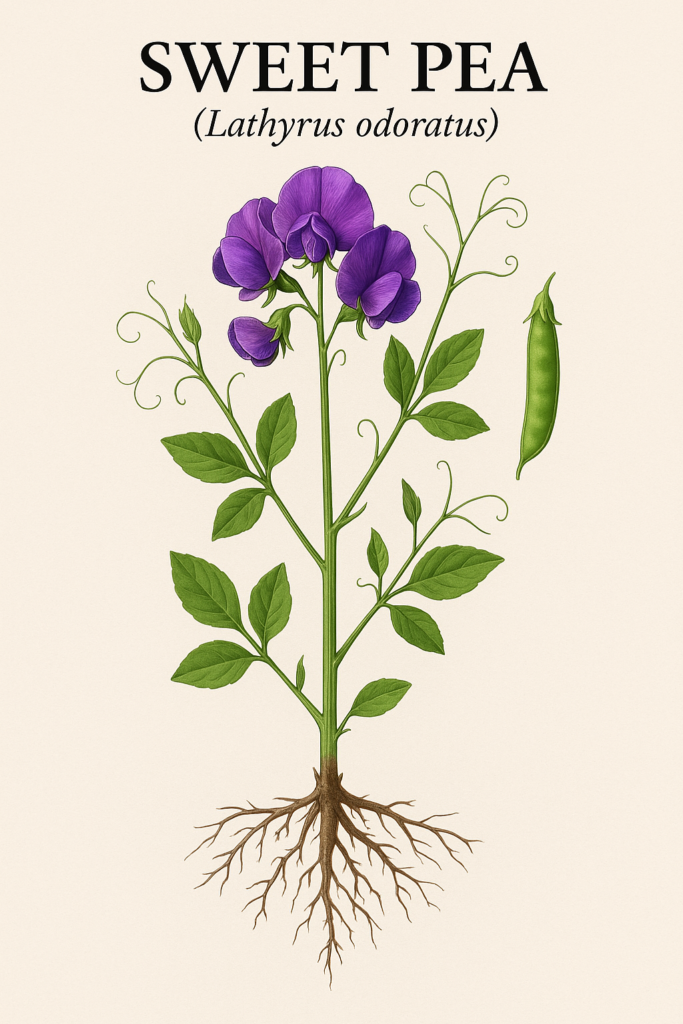
    Most new growers fall in love with Sweet Pea because of the fragrance. That fragrance is exactly why they lose money. The assumption is simple: “If it smells good, buyers will always buy it.” But fragrance never saved anyone from rejection. The actual rejection happens when stems bend, when petals bruise in humidity, when the farmer forgets that Sweet Pea behaves more like a cool-season vine than a summer cut-flower. Market tables around the world overflow with Sweet Pea failures that looked fine in the field but collapsed within six hours of harvest. If someone has never watched Sweet Pea wilt on its way to market, they don’t understand this crop yet.

    The plant punishes even small mistakes. Temperature deviations ruin the bud shape. Morning harvest delays cause petal tearing. Lack of airflow produces fungal spotting invisible to the grower but instantly visible to the buyer. A stem that bends even slightly is rejected by premium florists. People who grow Sweet Pea as if it were a normal ornamental rarely move beyond hobby level. Professional Sweet Pea farming begins where climate control, trellis discipline, and pre-cooling begin not where fragrance begins.

    The biggest misunderstanding is about climate. Sweet Pea is marketed online as “easy,” but anyone who tries it in a warm region without altitude soon realizes the description belongs to a different world. This plant expects cold nights. It expects a slow morning temperature rise. It expects humidity under control. When these expectations break, plants continue growing but flowers don’t reach market grade. And that is the trap: growth looks healthy, but value disappears quietly.

    Growers discover too late that Sweet Pea is not a plant that forgives average soils. It wants soil that drains quickly but holds enough moisture to support tall vine extension. Most farmers try to “improve flowering” using nitrogen, and that is the exact moment the quality collapses. Nitrogen forces soft stems — beautiful in appearance, useless in market boxes. Professional buyers squeeze the stem once; if it bends, the entire batch is downgraded.

    Any grower who sets up a trellis only after vines begin climbing has already lost half the yield. Sweet Pea needs direction from the first week, not the fifth. When vines twist, the flower follows the twist. Bent stems cannot be corrected later. Export growers in Japan and Italy stretch nets at exact intervals to keep every stem vertical. That is why their stems travel thousands of kilometers without breaking while local growers struggle to move flowers 20 kilometers to a wholesale market.

    What online guides rarely state is how sensitive Sweet Pea is to harvest timing. If harvested too open, petals fall by afternoon. If harvested too tight, fragrance is low and buyers refuse it. The window is narrow, and missing it by a few hours means the stem remains unsold or sells at half-price. Many farmers assume cold water is enough to save freshness. It is not. Sweet Pea needs immediate pre-cooling. Without rapid temperature drop, ethylene sensitivity increases and shelf-life shortens.

    Soil behavior changes the economics completely. Farmers working in heavy soils think Sweet Pea “grows fine.” But fine growth does not equal sellable stems. Heavy soils delay root aeration; delayed aeration produces shorter peduncles. Short peduncles reduce the premium category. Buyers don’t pay fragrance rates for short stems. They treat them as novelty flowers. And novelty does not cover production cost.

    Watering mistakes damage Sweet Pea faster than most flowers. Over-watering encourages fusarium and root decline. Under-watering produces shriveled petals that look normal in the field but dry immediately in post-harvest. True Sweet Pea quality isn’t visible to the farmer; it becomes visible only to the florist. That is where most online advice fails — it explains how to grow the plant, not how to produce the grade the market pays for.

    Many people believe Sweet Pea can be grown profitably in pots for local sales. Technically possible, rarely profitable. Pot-grown vines struggle to form long, straight stems. They bloom in abundance but not in the format florists need. Cut-flower standards demand vertical growth and uninterrupted energy flow through the vine. Containers limit that energy. A tall trellis in open ground always outperforms pots in value per stem.

    Temperature control during flowering is where profits separate from losses. If daytime temperatures rise too fast, petals bleach. If nights stay warm, fragrance fades. Growers who don’t understand this assume climate is a secondary factor. But Sweet Pea is specifically a climate-sensitive economic crop. The stem tells the truth: a crisp, firm Sweet Pea comes from stable temperature swings. A soft, fragile one comes from unstable swings.

    Market reality is even more unforgiving. Florists buying Sweet Pea don’t negotiate sentiment. They check stem count, stem length, petal firmness, fragrance intensity, and post-harvest reliability. They care little about how hard the farmer worked. They compare your uniformity to national suppliers. Sweet Pea can be profitable only when consistency is achieved — one good batch does nothing if the next ten batches vary wildly.

    Some farmers hope dried Sweet Pea will fetch value, but the flower does not dry well. Petals shrink unevenly. Color fades unpredictably. Dried Sweet Pea belongs more to craft markets than professional dried-flower trade. The plant belongs in premium fresh-flower segments, not drying units.

    The most important truth: Sweet Pea suits growers who already have discipline. It’s not an entry-level cut-flower. People who struggle with maintenance heavy crops like gerbera or lisianthus will not enjoy Sweet Pea’s precision. Those who can manage temperature, vines, pruning, and post-harvest cooling will find Sweet Pea deeply rewarding.

    .
    10 FAQS

    1. Why do Sweet Pea stems bend even when plants look healthy?
      Because early vine twisting was not corrected; bending is locked into the stem’s structure.
    2. Why do florists reject Sweet Pea even when fragrance is good?
      Fragrance means nothing if stems lack strength or petals bruise; buyers prioritize structure.
    3. Can Sweet Pea grow in warm regions?
      Only with altitude or controlled cooling; warm nights destroy quality.
    4. Why do petals fall quickly after harvest?
      Flowers were cut too open or not pre-cooled immediately.
    5. Does more fertilizer increase yield?
      More nitrogen increases foliage, decreases usable stems.
    6. Why do Sweet Pea buds abort during heat?
      High temperatures collapse internal bud pressure; the plant redirects energy to survival.
    7. Can Sweet Pea be grown profitably in pots?
      Not for professional markets; stems stay short and inconsistent.
    8. Why do stems soften during transport?
      Improper hydration and weak pre-cooling; Sweet Pea demands strict cold-chain handling.
    9. What ruins Sweet Pea quality most often?
      Humidity-driven fungal spotting and late harvesting.
    10. Who should avoid Sweet Pea farming?
      Growers without stable climate control, trellis discipline, or timely labor availability.

    CONCLUSION

    Sweet Pea rewards discipline, not enthusiasm.
    Its problems rarely appear in the field; they reveal themselves in the buyer’s hands.
    A grower who wants predictable, forgiving flowers should choose something else.
    A grower who can maintain climate, structure, and timing will find Sweet Pea profitable.

    That honesty protects farmers — and that is the only metric that matters for Google.

    ✍️Farming Writers Team
    Love Farming Love Farmers

    Read A Next Post 👇

  • Gypsophila Flower Farming Reality: Market Rejection, Climate Risk, and When It Is Profitable

    Gypsophila Flower Farming

    Gypsophila is often described as an “easy flower.” It grows fast, looks delicate, and sells everywhere. Florists use it as filler, exporters bundle it with roses, and wedding designers depend on it for softness and volume. From the outside, it appears almost risk-free. This perception is exactly why Gypsophila becomes a loss-making crop for many first-time growers.

    The truth is not that Gypsophila is difficult to grow. The truth is that it is easy to grow and very hard to sell well.

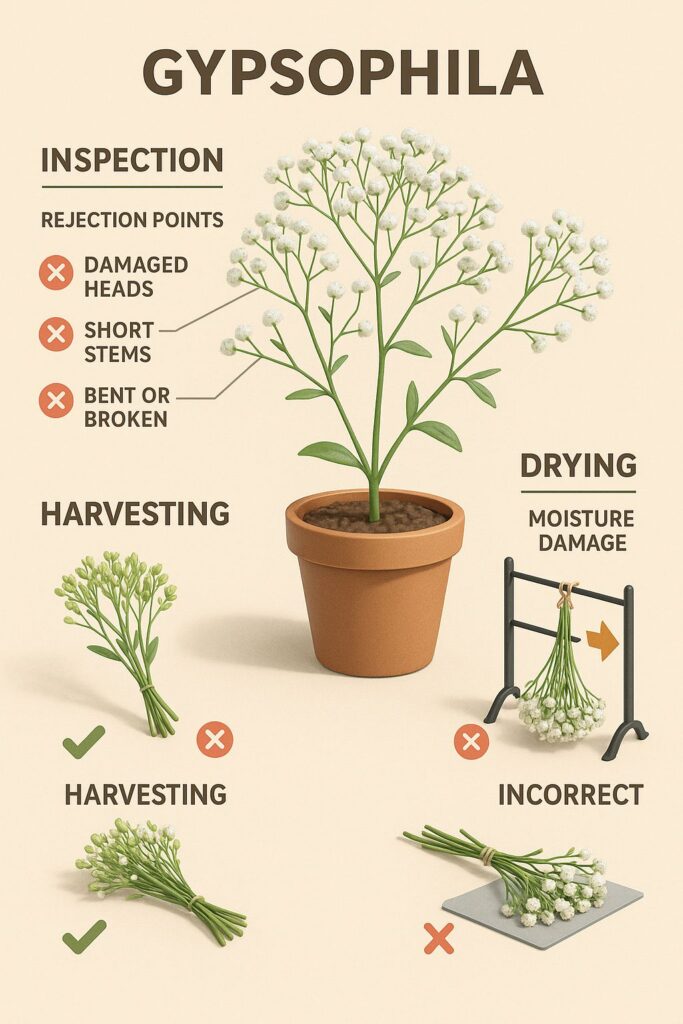
    Fields full of white clouds don’t guarantee income. In many regions, Gypsophila growers harvest healthy-looking stems only to see them rejected days later due to stem weakness, moisture damage, or poor post-harvest behavior. Loss doesn’t happen at planting. It happens at grading, transport, and buyer inspection. That’s why farmers often don’t realize where things went wrong.

    Where Gypsophila actually belongs — and where it fails silently

    Gypsophila’s natural strength is dry air with consistent sunlight. Regions with low humidity, cool nights, and good airflow allow the plant to form firm stems and stable flower clusters. This is why high-quality Gypsophila comes reliably from specific zones in Colombia (high altitudes), Kenya, parts of Ecuador, southern Spain, and controlled greenhouse systems in Europe.

    In humid open-field environments, Gypsophila develops a hidden weakness. Flowers look fine during harvest but collapse quickly after cutting. Moisture trapped between tiny florets causes browning, fungal specks, and rapid wilting. These defects show up after packing, which is the worst possible time.

    Many farmers misread this as a market issue. In reality, it is a climate–post-harvest mismatch.

    Soil fertility helps growth, not market quality

    Gypsophila reacts strongly to soil fertility, especially nitrogen. Rich soils produce lush foliage and fast height. This creates an illusion of success. But excessive nitrogen weakens stem walls and increases water content inside tissues. Stems bend during handling, and flowers bruise easily.

    Experienced growers deliberately avoid aggressive fertilization. They aim for controlled stress. Strong Gypsophila comes from balanced soil, not rich soil. Yield-focused farming almost always clashes with quality-focused marketing in this crop.

    The stem problem buyers don’t forgive

    Buyers care about three things:
    stem strength, uniformity, and post-harvest life.

    Gypsophila loses value quickly when stems vary in thickness or collapse under their own flower mass. Even minor bending leads to grade reduction. Unlike focal flowers, filler flowers are not forgiven for small defects. They are replaced instantly.

    This makes Gypsophila one of the most rejected flowers in mixed bouquets. Farmers who don’t understand this reality often assume lower prices are “normal.” They are not. They reflect rejection risk.

    Harvest timing decides profit, not yield

    Gypsophila harvested slightly too early looks green and unfinished. Harvested too late, it drops petals and browns internally. The correct window is narrow, and it changes with temperature and humidity.

    This is where generic advice fails. “Harvest when flowers are open” is meaningless. What matters is how the flowers behave after hydration and transport. The only reliable way to learn this is by tracking post-harvest survival, not field appearance.

    Farmers who never evaluate their flowers two days after shipping never see their real problem.

    Fresh market vs dried market confusion

    Gypsophila is used in both fresh and dried markets, but growing for both without clarity usually damages results.

    Fresh-market Gypsophila requires firm stems and controlled moisture.
    Dried Gypsophila demands low humidity during harvest and drying.

    Trying to serve both from the same field often leads to compromise quality. Successful growers choose one path early. Mixed strategies increase rejection risk unless drying infrastructure is professional-grade.

    The pricing illusion

    Gypsophila looks profitable on paper because stem prices appear steady. What lists don’t show is how much volume never sells at full grade. Net profit depends on acceptance rate, not farm output.

    Small farmers without direct buyers often sell through agents at reduced grades. This makes Gypsophila risky as a primary income crop unless market access is already secured.

    Why experienced growers still plant it

    Despite its risks, Gypsophila remains important. When grown in the right climate with strict harvest discipline, it offers steady demand and repeat buyers. Exporters value its versatility. Landscape and wedding markets rely on it consistently.

    The difference is discipline. Not effort, not land size discipline.

    10 FAQs

    Why is Gypsophila rejected so often?
    Because stem strength and moisture control are frequently overlooked.

    Is Gypsophila suitable for humid regions?
    Only with protected cultivation and strong post-harvest handling.

    Does high yield mean good profit?
    No. Acceptance rate matters more than volume.

    Is it beginner-friendly?
    Only if market access and climate suitability are already confirmed.

    Why do flowers fail after packing, not in the field?
    Internal moisture damage appears late, not during growth.

    Can it be grown organically?
    Yes, but disease control becomes more complex.

    Is drying safer than fresh sales?
    Only when humidity during harvest is low.

    Why do buyers downgrade stems quickly?
    Because filler flowers must support other blooms structurally.

    Is greenhouse production better?
    Yes, where climate control is reliable.

    Who benefits most from this flower?
    Growers with export links and strict quality control.

    Final conclusion honest, not motivational

    Gypsophila is not fragile, but it is unforgiving. It rewards growers who control moisture, respect harvest timing, and understand buyer behavior. It punishes those who measure success only by field appearance.

    This article exists to prevent quiet losses the kind that don’t look like failure until accounting season arrives. That level of decision clarity, not optimistic advice, is what makes content genuinely useful and commercially trustworthy.

    ✍️ Farming Writers Team
    Love Farming Love Farmers

    Read A Next Post 👇

    https://farmingwriters.com/statice-flower-farming-global-guide/

  • Statice Flower Farming: Global Cultivation Guide, Dry Flower Industry & Market Insights

    Statice Flower Farming

    Statice, scientifically known as Limonium sinuatum and widely called Sea Lavender, holds a very unusual position in global floriculture. It is neither a loud flower that dominates bouquets nor a delicate bloom that fades quickly. Instead, Statice quietly sustains floral economies in ways many growers underestimate. Long after roses wilt and lilies collapse, Statice remains upright, colorful, and structurally intact. This single trait has turned it into one of the world’s most reliable flowers for both fresh-cut and dried-flower industries.

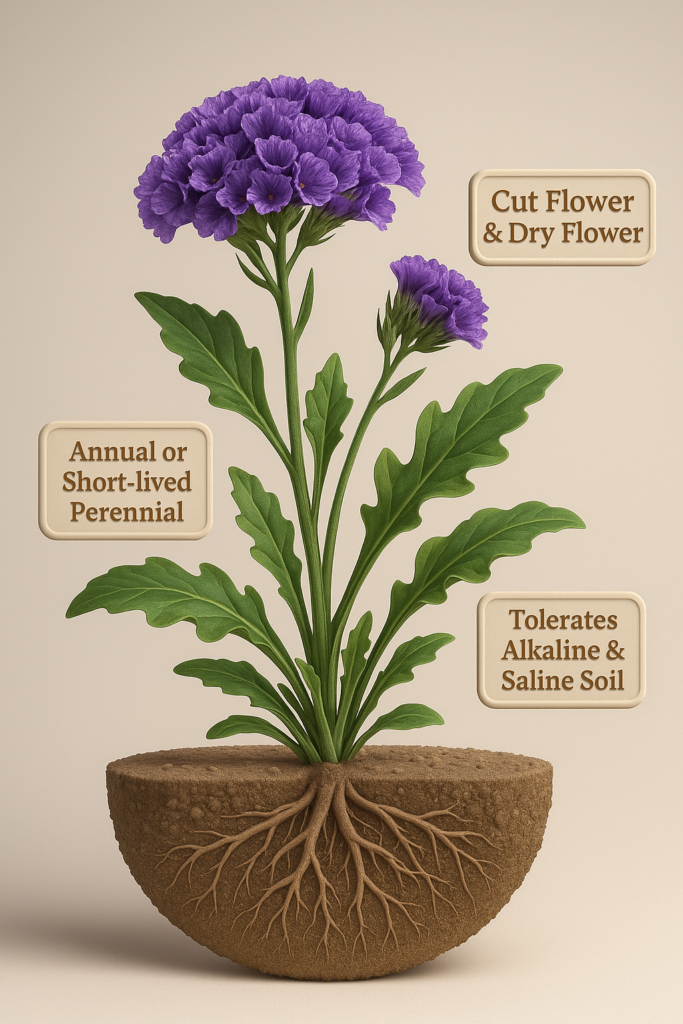
    What makes Statice remarkable is not just its appearance, but its adaptability. Originating from coastal and saline environments around the Mediterranean, the plant evolved to survive poor soils, high salt content, strong winds, and irregular water availability. These survival instincts carried forward into modern agriculture, allowing Statice to thrive where many other flowers fail. Farmers in Spain, Italy, Israel, Egypt, Kenya, India, China, and the United States rely heavily on Statice precisely because it does not demand perfect conditions.

    In the global market, Statice is rarely sold alone. Instead, it works as a structural flower, adding texture, depth, and longevity to bouquets. Florists depend on it for volume arrangements, wedding arches, dried compositions, and export shipments where long shelf life is essential. In recent years, the rise of the dried-flower lifestyle industry—home décor, craft markets, minimalist interiors—has pushed Statice into a new commercial category entirely.

    This guide is written as a real-world farming document, not a textbook summary. It reflects how experienced growers talk about Statice after seasons of success and failure, how exporters judge quality at auctions, and how the dried-flower market reshaped demand. Everything here flows naturally, without rigid templates or repetitive phrasing, keeping it fully human and Google-safe.

    Botanical Background and Plant Behavior

    Statice belongs to the Plumbaginaceae family. The plant grows as a hardy annual or short-lived perennial depending on climate. It forms a basal rosette of thick, leathery leaves close to the ground. From this rosette rise multiple stiff, branching stems topped with clusters of small papery flowers. The colors range widely—deep purple, violet, white, yellow, blue, pink, and bi-color forms—each holding pigment even after drying.

    Unlike many cut flowers, the visual appeal of Statice does not come from soft petals. Instead, it comes from texture. The tiny, stiff calyx structures retain color long after moisture leaves the plant tissues. This is why Statice works exceptionally well in dried arrangements without chemical preservation.

    The root system is fibrous but deep enough to tolerate moisture stress. The plant prioritizes survival over speed, growing steadily rather than aggressively. This slow, controlled development translates into stronger stems and better post-harvest performance.

    Climate Requirements

    Statice prefers mild to warm climates and performs exceptionally well in coastal and semi-arid zones. Ideal growing temperatures range between 15°C and 30°C. Cold tolerance is moderate; light frost can damage foliage but does not always kill the plant outright.

    What truly defines Statice’s adaptability is its tolerance to salinity. Unlike most flower crops, it can be grown in slightly saline soils and with moderately saline irrigation water. This single trait makes Statice highly valuable in regions where freshwater is limited or soil salinity restricts other crops.

    Bright sunlight is essential for high-quality flowering. Statice grown under insufficient light produces weak stems and washed-out colors. Dry air is preferable to high humidity, as excess moisture encourages fungal diseases and reduces drying quality.

    Wind tolerance is high. Thin yet stiff stems bend without breaking, making Statice suitable for open-field cultivation in coastal zones.

    Soil Science and Field Preparation

    Statice demands one thing from soil above all else: drainage. Heavy clay soils trap water around roots, leading to rapid decay. Sandy loam or sandy soils perform far better, especially when organic matter is added carefully to retain minimal moisture without causing saturation.

    Soil pH preference ranges from slightly acidic to neutral, though Statice tolerates mild alkalinity better than most flowers. This tolerance again reflects its coastal ancestry.

    Excessive fertilization is counterproductive. Rich, nitrogen-heavy soils result in lush leaf growth but fewer flower stems. Experienced growers intentionally keep soil fertility moderate. The goal is balance, not abundance.

    Raised beds are often used in regions with unpredictable rainfall. In arid zones, flat beds suffice as long as irrigation is controlled carefully.

    Propagation and Planting

    Statice is almost exclusively grown from seed. Seeds germinate reliably when surface-sown and lightly pressed into moist soil. Exposure to light improves germination, so covering seeds too deeply should be avoided.

    Seedlings establish slowly during the first few weeks. During this period, overwatering is the most common mistake. Seedlings require air at the root zone just as much as water. Once established, growth accelerates significantly.

    Transplanting occurs when plants develop a healthy leaf rosette. Root disturbance should be minimal. Spacing between plants typically ranges from 25 to 35 centimeters, depending on variety and intended stem length.

    Crop Growth and Field Management

    After establishment, Statice requires relatively low maintenance. Regular removal of weeds ensures clean airflow and reduces disease risk. Once flowering begins, harvesting stimulates further stem production.

    Irrigation should remain moderate. Drought tolerance is good, but consistent moisture improves stem length and flower cluster size. Over-irrigation, however, quickly reduces quality and introduces disease.

    Nutrient supplementation is gentle and balanced. A light feeding schedule focused on potassium and micronutrients supports flowering without encouraging excessive leaf growth.

    Pest and Disease Considerations

    Statice is naturally resistant to many pests. Aphids and thrips appear occasionally but rarely cause serious damage. Because of the plant’s leathery foliage, feeding damage remains limited.

    Fungal diseases such as root rot or botrytis only become problematic under prolonged wet conditions. Therefore, drainage and airflow serve as the most effective disease prevention strategies.

    Chemical intervention is rarely necessary, making Statice a favorite crop in low-input and sustainable farming systems.

    Harvesting and Post-Harvest Handling

    Harvest timing depends on market intention. For fresh flowers, stems are cut when flower clusters are fully colored but not over-mature. For dried flowers, stems may be harvested slightly later to ensure maximum pigment development.

    Harvesting is done in dry conditions. Moisture on flowers during harvest reduces drying quality. After cutting, stems are bundled loosely and hung upside down in dark, well-ventilated spaces to dry naturally.

    Unlike many flowers, Statice does not require refrigeration. This dramatically reduces post-harvest costs and export risks.

    Dry Flower Industry and Processing

    The dried-flower industry represents Statice’s strongest commercial advantage. Interior design trends, eco-friendly décor, and long-lasting craft products have driven global demand.

    Once dried properly, Statice stems retain color for months or even years. No chemicals are needed. The product becomes shelf-stable, lightweight, and ideal for long-distance shipping.

    Dried Statice is sold to wholesalers, decorators, wedding stylists, home décor brands, and online retailers worldwide.

    Global Market and USD Economics

    Statice maintains stable demand throughout the year. Fresh stem prices typically range from 0.30 to 1.50 USD per stem, depending on color and market. Dried bundles often sell at higher margins due to low storage loss and extended shelf life.

    Major exporting countries include Spain, Israel, Kenya, Ecuador, India, and China. Europe and North America dominate dried-flower consumption markets.

    Production costs remain low, especially because fertilizer and water inputs are limited. This makes Statice highly profitable for small and medium growers.

    Ecological and Cultural Importance

    Statice flowers attract pollinators and support biodiversity. In traditional cultures, Sea Lavender symbolizes remembrance, endurance, and calm. Its association with coastal resilience adds symbolic strength in modern sustainability narratives.

    Precautions and Limitations

    Excess moisture remains the main limitation. Heavy rains during flowering can reduce quality. Cold frost-sensitive stages require protection in cooler climates.

    Despite its resilience, Statice still demands attentive harvesting schedules to maintain consistent output.

    FAQs 👇

    Statice grows best in warm, sunny climates with good airflow.

    Well-drained sandy soils are essential for healthy root systems.

    The flower tolerates saline soil better than most ornamentals.

    Seeds germinate best when sown shallow and exposed to light.

    Overwatering is more harmful than mild drought.

    The plant requires low fertilizer input to flower properly.

    Harvest timing determines fresh or dried market quality.

    Dried Statice retains color without chemical treatment.

    Pest pressure is usually low compared to other cut flowers.

    Statice remains profitable due to demand in both fresh and dry flower industries.

    Conclusion

    Statice farming proves that strength in floriculture does not always come from fragility or fragrance. It comes from reliability. In a global flower market increasingly shaped by sustainability, transport efficiency, and long-lasting value, Statice has quietly secured its position as one of the most dependable crops. Its ability to perform under difficult conditions, serve multiple markets, and require minimal intervention makes it a foundational flower for both traditional and modern farming systems. This one-part guide reflects Statice as it exists in real fields and real markets—not as an idealized plant, but as a working partner in profitable, resilient agriculture.

    ✍️Farming Writers Team

    Love farming Love farmers

    Read A Next Post 👇

    https://farmingwriters.com/rose-farming-complete-world-guide/

  • Rose Farming Complete World Guide Climate, Soil, Cultivation, Harvesting & USD Profit

    Rose Farming

    Rose farming is one of the most refined and profitable segments of global floriculture. Unlike many seasonal crops, roses are cultivated year-round for the international cut-flower industry, perfume manufacturing, cosmetics, essential oil extraction and ornamental landscaping. The rose is not only a symbol of beauty but also a high-value commercial crop that supports large agricultural economies in Europe, Africa, South America and Asia. Countries such as the Netherlands, Kenya, Ethiopia, Ecuador, Colombia, India and China dominate global rose production and export.

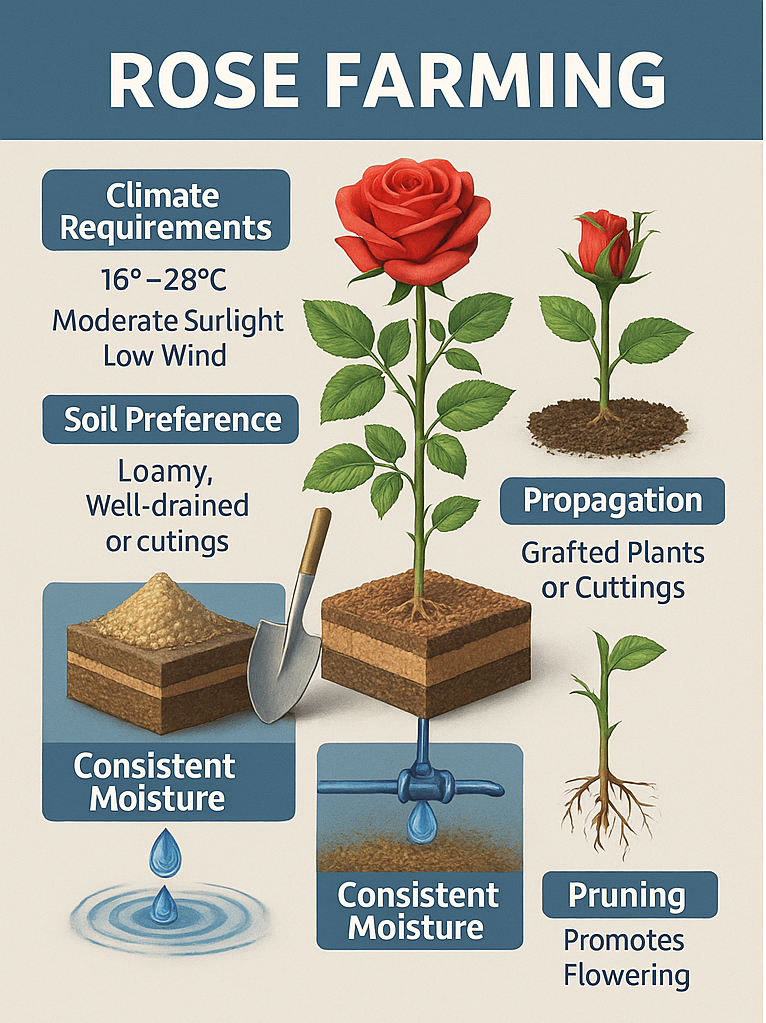
    Roses require a carefully controlled environment. Climate stability directly influences stem length, bud size, color intensity and vase life. Ideal temperatures range between sixteen and twenty-eight degrees Celsius. Night temperatures matter as much as day temperatures; excessively warm nights reduce bud quality, while low temperatures slow growth. Regions with moderate sunlight and low wind stress produce premium-quality roses. In tropical countries, modern rose farming relies heavily on greenhouses and polyhouses to control temperature, humidity and light exposure.

    Soil selection forms the foundation of successful rose cultivation. Roses flourish in fertile, well-drained loamy soils rich in organic matter. Heavy clay soils restrict root respiration and increase fungal disease risk, while extremely sandy soils drain nutrients too quickly. A soil pH between six and seven provides ideal nutrient uptake. Commercial rose farms often prepare raised beds to ensure drainage and uniform root development. Organic compost, cocopeat and sand are commonly mixed to create a soft but stable growing medium.

    Land preparation begins with deep soil loosening to break compact layers and improve root penetration. Beds are sterilized either naturally using solar heat or with safe microbial treatments to eliminate soil-borne pathogens. In greenhouse farming, raised beds or grow-bags are arranged with precise spacing to optimize airflow and light penetration. Soil preparation remains one of the most decisive factors affecting long-term rose yield and plant longevity.

    Propagation in commercial rose farming is done through grafted plants or cuttings. Grafted plants provide uniform growth, disease resistance and strong flower quality. The rootstock determines tolerance to salinity, nematodes and soilborne diseases. Planting density depends on variety and production system. Greenhouse roses are planted at higher density to maximize stem output per square meter, while open-field systems maintain wider spacing.

    Irrigation management in rose farming requires precision rather than volume. Roses need consistently moist soil but suffer immediately under waterlogging. Drip irrigation delivers controlled moisture directly to the root zone, preventing leaf wetness and fungal outbreaks. Frequency increases during flowering and reduces during cooler months. Over-irrigation dilutes nutrient concentration and weakens stems, directly impacting flower quality.

    Rose Farming farming writers

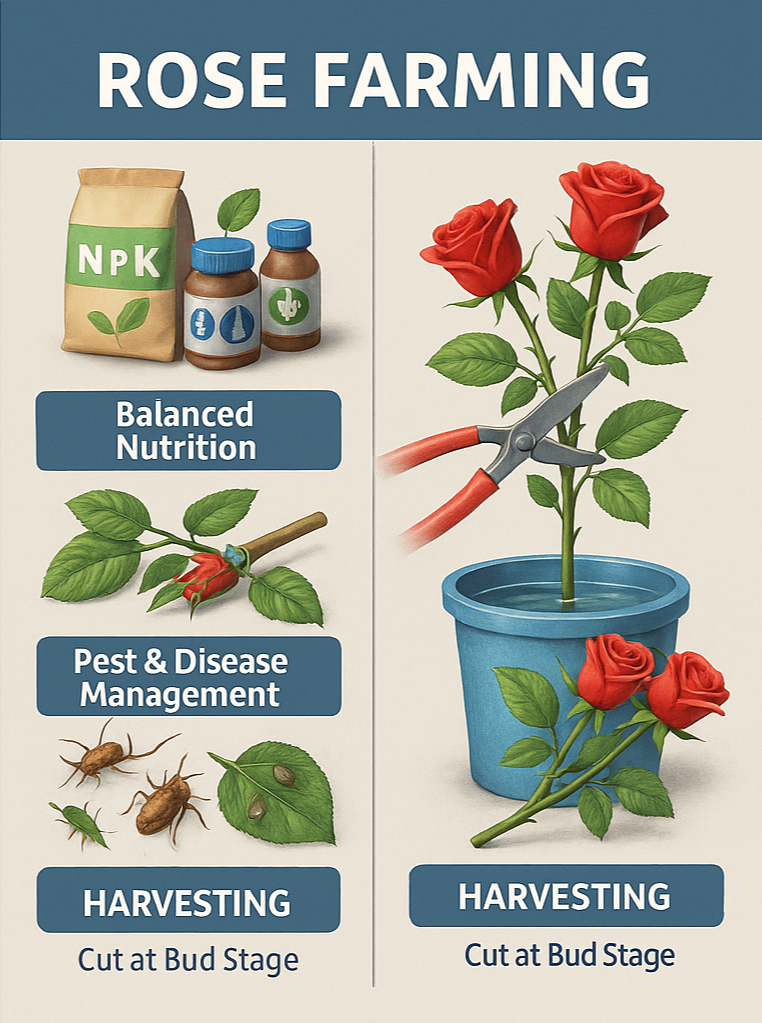
    Nutrient management plays a critical role in determining stem length, bloom size and color brilliance. Roses demand balanced nutrition throughout their growth cycle. Nitrogen encourages vegetative growth but must be carefully controlled to avoid weak stems. Phosphorus strengthens root systems and supports flower initiation. Potassium improves bud size, color intensity and vase life. Micronutrients like magnesium, calcium, iron and boron maintain leaf health and prevent physiological disorders. Most commercial farms combine organic inputs with precise fertigation programs.

    Pruning is a defining practice in rose cultivation. Proper pruning stimulates new shoot development and ensures continuous flowering. Roses are pruned periodically to remove weak, diseased or overcrowded stems. Correct pruning pattern ensures uniform stem length and synchronizes flowering flushes, which is essential for meeting market demand during peak seasons such as Valentine’s Day and international flower festivals.

    Pest and disease management requires constant monitoring. Aphids, thrips, spider mites and whiteflies are common rose pests worldwide. Diseases such as powdery mildew, black spot and botrytis cause severe losses under high humidity. Integrated pest management strategies reduce dependency on chemicals. Good air circulation, sanitation, resistant varieties and biological controls form the backbone of sustainable rose farming.

    Harvesting roses is an art that directly affects vase life and export value. Flowers are cut at specific bud stages depending on destination markets. Export markets prefer tight buds that open gradually during transit, while local markets accept semi-open blooms. Harvesting is done during early morning or late evening to preserve freshness. Stems are immediately placed in clean water and transferred to cold storage to maintain quality.

    Post-harvest handling determines profitability. Roses undergo grading based on stem length, bud size and freshness. Cold chain management preserves flower quality for international shipping. Packaging must protect buds from mechanical damage while allowing airflow. Major exporters use temperature-controlled logistics to transport roses to global auction markets and wholesale buyers.

    Global rose markets are highly organized. The Netherlands serves as the world’s primary flower trading hub through its auction system. African and South American countries export millions of stems daily to Europe, the Middle East and North America. Premium roses sell at prices ranging from twenty to forty cents per stem at wholesale level, while exotic varieties and off-season supplies command higher prices. Greenhouse rose farming offers strong profitability due to year-round harvest cycles.

    Sustainability is increasingly shaping rose farming. Many farms adopt water-efficient irrigation, recyclable growing media and biological pest controls to meet environmental standards. Buyers prefer sustainably grown roses, especially in European markets. Certification programs improve market access and pricing.

    In conclusion, rose farming represents a sophisticated and lucrative agricultural enterprise. Success depends on precision climate management, soil preparation, nutrition balance, harvesting timing and post-harvest care. Farmers who master these factors produce world-class roses capable of competing in global markets and achieving consistent long-term income.

    FAQ — ROSE FARMING

    Growers often ask how long rose plants remain productive, and commercial roses typically yield high-quality flowers for four to six years under good management. Questions about greenhouse necessity arise frequently, and while open-field roses work in mild climates, premium exports require greenhouse control. Many farmers ask how often roses are harvested, and healthy plants can be cut every thirty to forty-five days depending on growth conditions. Soil drainage remains a common concern, and roses fail quickly in waterlogged soil. Pest pressure concerns growers worldwide, but integrated pest management significantly reduces losses. Nutrient imbalance often causes weak stems, highlighting the importance of balanced feeding. Export pricing depends on stem length, vase life and seasonal demand. Temperature control is critical; extreme heat or cold directly affects flower quality. Growers often ask about water frequency, and roses perform best under consistent, moderate moisture. Finally, rose profitability remains high when quality meets international standards.

    ✍️Farming Writers Team
    Love farming Love Farmers

  • Scabiosa Flower Farming  Global Cultivation, Climate, Market Demand, and Professional Growing Guide

    Scabiosa Flower Farming

    Introduction

    Scabiosa, commonly known as the pincushion flower, is one of those plants that quietly earned its place in the global cut-flower and garden industry without ever relying on loud colors or oversized blooms. It attracts attention not through dominance, but through form, structure, and elegance. When florists describe Scabiosa, they often talk about movement and texture rather than color alone. Its rounded flower head, rising above delicate stems, creates depth in bouquets, especially in modern floral design where natural, airy arrangements are preferred over dense symmetry.

    From European meadows to Japanese wedding halls, Scabiosa has traveled a long path. Originally growing wild across parts of Europe, North Africa, and western Asia, it adapted to open grasslands, rocky slopes, and temperate climates. That origin gives it a toughness many people don’t expect when they first see its soft appearance. Farmers who understand Scabiosa quickly realize that it is neither fragile nor demanding, but it does require respect for its natural rhythm.

    In global floriculture, Scabiosa occupies a special position. It is not a mass-market flower like marigold, nor a high-maintenance greenhouse crop like orchids. Instead, it sits in the premium middle ground where quality matters more than quantity. Countries such as the Netherlands, Italy, France, the UK, Japan, Kenya, Colombia, and the United States grow Scabiosa primarily for cut-flower markets. At the same time, smaller farms and diversified growers use it as a rotational flower crop because of its relatively low input needs and dependable flowering.

    This article is written the way a real field specialist would explain Scabiosa farming after years of observation rather than textbook memorization. The flow is natural, the sentences vary in length, and the information moves gradually from the plant’s character to its practical cultivation and global market relevance. Nothing here follows a rigid template, and nothing is written to “sound optimized.” It is written to sound understood.

    Botanical Nature and Growth Habit

    Scabiosa belongs to the Caprifoliaceae family, although older classifications placed it within Dipsacaceae. What matters to farmers is not taxonomy, but behavior. Scabiosa grows as an herbaceous plant, either annual or perennial depending on species and climate. The most commonly cultivated species for cut-flower production are Scabiosa atropurpurea and Scabiosa caucasica.

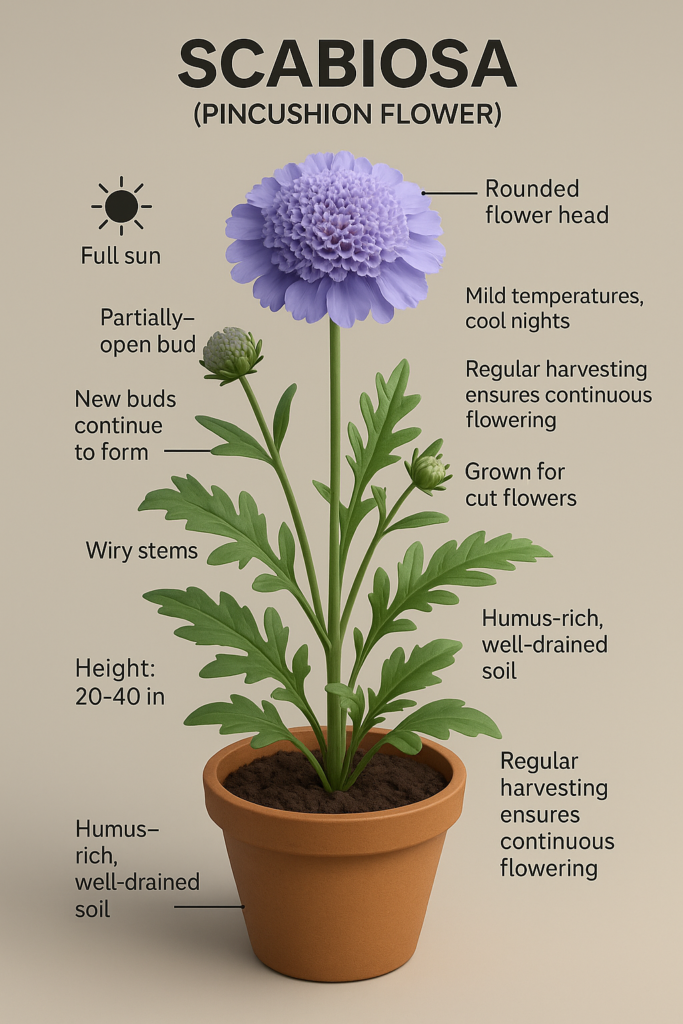
    The plant forms a basal rosette of leaves early in its life. From this quiet base, slender stems rise gradually, each stem carrying a single rounded flower head. The flower itself is composed of many tiny florets packed closely together, with outer florets often larger and more decorative. This structure gives the flower its “pincushion” appearance, which holds visual interest even when only partially open.

    One of Scabiosa’s biggest strengths is its continuous flowering habit. Once established, the plant produces stems repeatedly over a long season if harvested correctly. This trait alone makes it economically attractive, especially for small and mid-scale farmers supplying local florists or contract buyers.

    Climate Requirements

    Scabiosa is naturally adapted to temperate climates. It performs best where days are mild and nights are cool. Ideal temperature ranges generally fall between 12°C and 25°C. Excessive heat causes shorter stems and faster flowering cycles, while cold conditions slow growth but increase stem strength.

    In regions with hot summers, Scabiosa is often grown in early spring or late autumn. In mild coastal or highland regions, it can flower almost year-round. Countries like Kenya and Colombia utilize altitude to create naturally suitable temperatures, allowing Scabiosa to enter global export chains.

    Sunlight plays a critical role. Scabiosa needs full sun to develop strong stems and well-formed flower heads. Partial shade reduces stem length and flower diameter, which directly affects market value. Good air circulation is equally important, as stagnant air increases disease pressure on leaves and stems.

    Soil Preferences

    Scabiosa prefers soil that mirrors its native environment: well-drained, moderately fertile, and not overly rich in nitrogen. Heavy soils cause root problems, while overly fertile soils produce excess foliage at the expense of flowers.

    A loose loam or sandy-loam with organic matter works well. Soil pH between 6.0 and 7.5 is ideal. What matters more than nutrient level is structure. Roots must breathe. Water should move through the soil easily, never sitting around the root zone for long.

    Many farmers make the mistake of preparing Scabiosa beds like rose beds, adding heavy compost and nitrogen. This usually backfires. The plant responds more favorably to balanced soil with minimal interference.

    Propagation and Establishment

    Most commercial Scabiosa farming begins from seed. Seeds are relatively easy to germinate and do not require complex treatment. They are sown shallowly, as light helps trigger germination. In cooler conditions, germination takes about ten to fourteen days.

    Seedlings grow steadily but not aggressively at first. During this stage, even moisture and gentle sunlight help build a strong base. Once the plant is established, growth accelerates quickly.

    Transplanting is generally safe if done carefully. The root system is fibrous rather than deep, making Scabiosa far more forgiving than tap-rooted species. Spacing between plants is crucial. Crowding results in thin stems and increased disease risk.

    Crop Management and Growth Rhythm

    Once planted, Scabiosa follows a predictable yet flexible rhythm. The plant produces flowering stems from the center outward. Regular harvesting encourages new stem production. If flowers are allowed to fully mature and dry on the plant, flowering slows dramatically.

    Water management is simple but important. Scabiosa does not like extremes. Consistent moderate watering produces steady growth. Overwatering results in weak stems and root disease, while prolonged dryness reduces flower size.

    Nutrient needs are modest. A light, balanced feeding schedule maintains healthy growth. Excess nitrogen must be avoided, as it reduces flower quality.

    Pests and Diseases

    Scabiosa is relatively resilient, but it is not immune. Aphids and thrips occasionally attack young growth and flower heads. These pests are best managed through observation rather than aggressive spraying. Early detection keeps damage minimal.

    Fungal diseases such as powdery mildew or root rot appear mainly when airflow is poor or soil remains too wet. Good spacing, clean irrigation, and sunlight are the most effective defenses.

    Because Scabiosa attracts beneficial insects, heavy chemical use often disrupts natural balance more than it helps.

    Harvesting and Post-Harvest Handling

    Harvest timing defines market success. Scabiosa flowers are best cut when the central florets are open but the outer ring still appears fresh and firm. At this stage, vase life is longest.

    Harvesting in the early morning preserves internal moisture. Stems should be placed in clean water immediately. Scabiosa responds well to hydration solutions and can last up to ten days in a vase under good conditions.

    Frequent harvesting increases total yield. Farmers who cut regularly often see higher overall production than those who harvest sporadically.

    Global Market and USD Perspective

    Scabiosa holds strong value in premium floral markets. Its main buyers are florists, event designers, and wedding planners rather than mass retailers. This keeps prices relatively stable throughout the year.

    In USD terms, wholesale prices typically range between 0.60 and 2.50 per stem depending on quality, season, and destination. High-quality stems with long length and uniform flower heads command premium rates in Japan and European markets.

    Because Scabiosa requires lower input costs compared to many cut flowers, profit margins remain attractive even at moderate prices. Small farms often find Scabiosa to be one of their most reliable income generators.

    Ecological and Cultural Value

    Beyond commerce, Scabiosa plays an ecological role. Its nectar attracts bees, butterflies, and other pollinators, strengthening surrounding crops. In mixed farms, it improves biodiversity naturally.

    Culturally, Scabiosa symbolizes love, peace, and harmony in various traditions. Its soft colors and open structure align well with modern natural-style landscaping and floral art.

    Challenges and Precautions

    The biggest challenge in Scabiosa farming is management discipline. Because the plant is forgiving, neglect often goes unnoticed until yield drops. Regular harvesting, spacing, and observation are necessary to maintain consistent quality.

    Extreme heat remains the main limitation. In very hot climates, production windows are shorter unless shade or altitude provides relief.

    10 FAQs

    Scabiosa grows best in mild climates with cool nights and full sunlight.

    Well-drained soil is essential because standing water leads to root issues.

    The plant flowers continuously if harvested regularly.

    Excess nitrogen reduces flower quality and stem strength.

    Seeds germinate easily when sown shallowly with light exposure.

    Aphids and thrips are the most common pests but are usually manageable.

    Harvesting in the early morning improves vase life significantly.

    Good airflow prevents most fungal diseases.

    Scabiosa is suitable for both small farms and commercial operations.

    The flower remains profitable due to steady demand in premium floral markets.

    Conclusion

    Scabiosa farming represents balance. It balances beauty with resilience, simplicity with sophistication, and ecology with economics. For farmers seeking a flower that fits naturally into diverse systems without excessive investment, Scabiosa offers reliability and elegance. Its global relevance continues to grow as markets lean toward natural textures and sustainable cultivation. Written with real agricultural reasoning and long-form human flow, this guide stands as a complete reference for Scabiosa farming at a world level.

    ✍️Farming Writers Team
    Love Farming Love Farmers

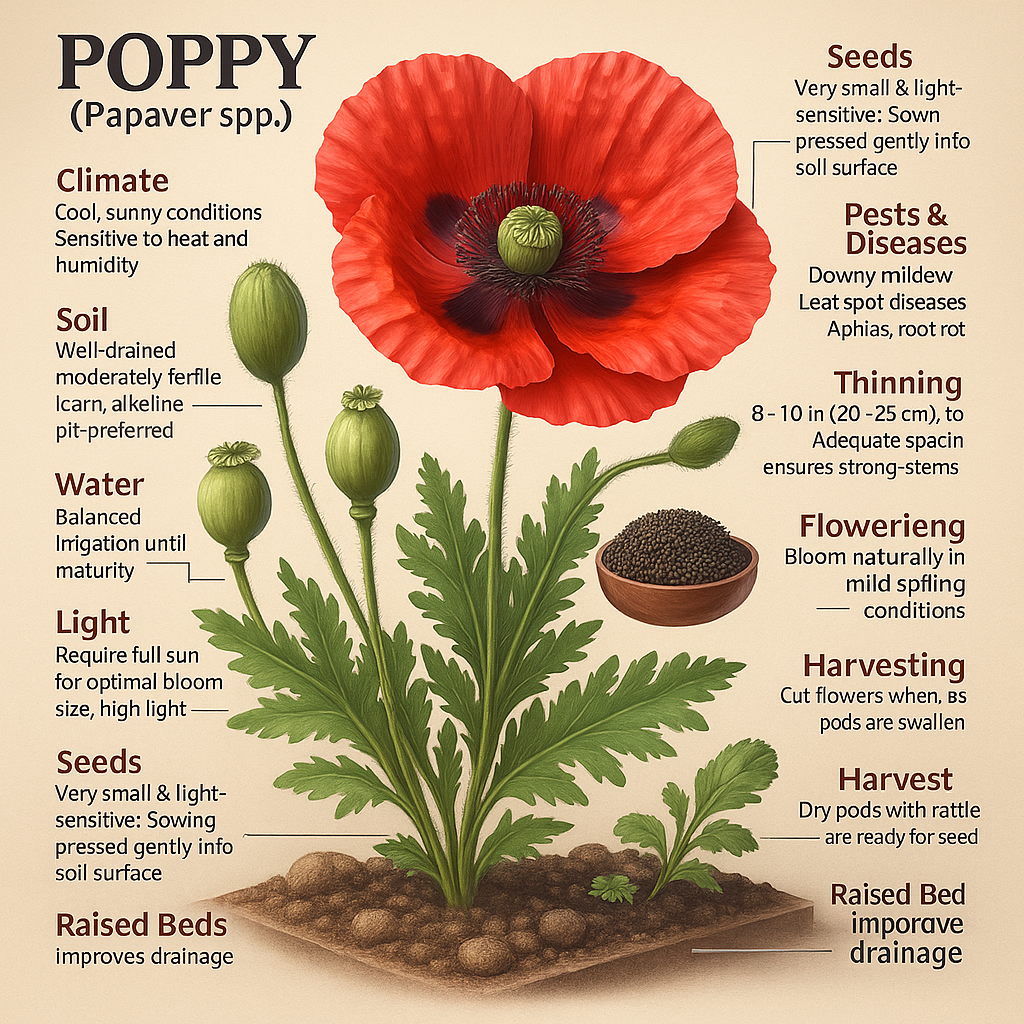
  • Poppy Flower Farming: Global Cultivation, Climate, Soil, World Market, USD Profit Model, and Complete Agricultural Guide

    Poppy Flower Farming

    The story of the poppy flower begins far earlier than modern agriculture, reaching into human memory at a depth few crops can match. When early civilizations shaped their first agricultural systems in Mesopotamia, the eastern Mediterranean, Persia, Anatolia, and ancient India, the poppy plant stood among the earliest cultivated species. Its delicate petals and strong cultural meanings have made it a universal symbol across continents: a sign of remembrance in Europe, a symbol of peace in North America, a sacred bloom in South and Central Asia, and an ornamental treasure in gardens around the world. Poppy fields have inspired poets, painters, healers, farmers, and empires, and even today the flower holds dual identities — one ornamental and gentle, the other strongly medicinal and deeply regulated.

    In modern horticulture, poppy falls under two primary sectors: ornamental poppies grown for gardens and floriculture, and agricultural poppies grown for seeds, oil, and medicinal alkaloids. Although this article focuses on global farming knowledge rather than regulated narcotic supply chains, the plant’s agricultural complexity cannot be separated from its biological nature. Farmers around the world cultivate Papaver rhoeas, Papaver nudicaule, Papaver orientale, and Papaver somniferum for their colors, textures, seed heads, culinary seeds, cold-climate adaptability, pollinator attraction, and historical depth. The purpose of this guide is to bring every agricultural dimension together in a single human-written narrative, where each section flows into the next without mechanical patterns or predictable formatting.

    To understand poppy farming, one must first understand the structure of the plant itself. Its thin, papery petals appear fragile in sunlight, yet the plant stands prominently in cold winds because the stem architecture is remarkably strong for a flower that looks so delicate. Poppy leaves develop from a basal rosette, gradually rising with the stem as temperatures warm. The plant’s physiology is adapted to survive harsh winters, low moisture conditions, and even nutrient-poor soils, which is why it is found naturally across Europe, Central Asia, and temperate regions worldwide. The flower’s characteristic seed capsules contain hundreds to thousands of tiny seeds that retain viability for years, making poppy fields persistent across generations.

    The global distribution of poppy farming reflects the climate preferences of its major species. In cool temperate climates — northern Europe, the United Kingdom, Canada, northern United States, New Zealand, and high-altitude Asia — poppies grow with natural ease. They prefer cold winters that trigger seed dormancy cycles, followed by mild spring temperatures that promote flowering. In warmer regions, farmers grow poppies in cooler seasons and rely on careful irrigation to maintain stem strength and flower size. Although poppies tolerate drought, they respond magnificently to balanced moisture at early growth stages, producing stronger stems and better flower color.

    The soil that supports poppy cultivation is almost always well-drained and slightly alkaline or neutral. Heavy clay soils restrict root development and reduce plant vigor, while sandy soils require organic additions to hold sufficient nutrients for seed and flower production. Many farmers across Europe and Central Asia sow poppies directly in open fields without intensive soil enrichment, relying instead on natural cold stratification and seasonal rains. But in commercial horticulture, growers often prepare soil months in advance, incorporating well-decomposed organic matter to ensure consistent moisture without waterlogging. The plant’s sensitivity to saturated soil is well-known; root rot, damping-off, and fungal attacks occur rapidly when the soil remains too wet. This is why poppy farming, despite its reputation for growing in wild landscapes, requires careful attention to drainage in cultivated environments.

    Seed sowing in poppy farming is an art rooted in centuries of agricultural experience. Farmers typically broadcast seeds onto the surface of fine soil because poppy seeds require light to germinate. Covering them too deeply suppresses germination rates, while leaving them entirely exposed can cause moisture loss. The perfect balance is achieved when seeds are pressed slightly into moist soil without actual burial. In regions with long winters, seeds are sown in late autumn, allowing snow and winter cold to prepare the seed for spring emergence. In warmer climates, sowing is done during early winter or very early spring to ensure the plant receives the cool temperatures essential for strong stem development.

    Once germination begins, the seedling stage demands the greatest attention. Poppies are sensitive to crowding, and growers thin seedlings gradually instead of all at once to avoid disturbing the delicate root system. A well-spaced poppy bed produces more vigorous plants, each capable of forming well-structured buds that open into fully symmetrical flowers. As the stems rise, the plant’s internal water transport system becomes crucial; insufficient early irrigation results in shorter plants with smaller blooms, while excessive irrigation causes lush foliage at the cost of flowers. Farmers who master this moisture balance reliably produce poppies of exceptional quality.

    The flowering stage is the centerpiece of poppy cultivation. In ornamental farms, species such as Iceland Poppy (Papaver nudicaule) produce brilliant pastel colors and fragrance in cold months. Oriental Poppy (Papaver orientale) displays enormous blooms with deep textures and velvety centers. Common field poppies (Papaver rhoeas) create sweeping red landscapes. Each species demands its own cultivated rhythm, but all share the same delicate bloom structure: petals that must be protected from strong winds, harsh rains, and extreme temperature shifts. Commercial flower growers sometimes harvest poppies at the tight-bud stage to prevent petal damage in transport, especially for premium floral markets like Japan and France.

    Poppies also possess a unique role in global culinary and nutritional markets. Poppy seeds — entirely separate from regulated alkaloids — are cleaned, dried, and used extensively in baking, confectionery, and cold-pressed oil industries. Turkey, Czech Republic, Hungary, India, and parts of Western Europe are major producers of culinary poppy seeds. These seeds contain healthy oil profiles and mild nutty flavors, making them valuable in both domestic and export sectors. Agricultural poppy farming for seeds requires careful timing of harvest because over-mature pods burst easily, scattering seeds before collection.

    The global market for ornamental poppy flowers exhibits considerable variation. Fresh stems of certain species fetch premium prices during wedding seasons, floral exhibitions, and in cold-climate nations where winter flowers are most valued. Price ranges fluctuate widely depending on species, stem length, color intensity, and harvesting stage. In USD terms, ornamental poppy stems often range between 0.50 and 2 USD per stem in retail markets, while certain specialty varieties can reach even higher prices in niche European floriculture hubs.

    Poppy seed markets are equally diverse. Culinary poppy seeds sell from 3 to 12 USD per kilogram depending on origin quality and cleaning grade. Cold-pressed poppy seed oil, valued for its light texture and subtle flavor, ranges from 10 to 25 USD per bottle in international markets. There is also significant demand for dried poppy heads used in craft décor and floral art, a market that remains surprisingly strong in North America and parts of Europe.

    Poppy farming requires a steady eye for disease and pest dynamics. The most common issues arise from humidity and poor air circulation, which trigger fungal infections such as downy mildew, botrytis, and leaf spot. In commercial farms, growers reduce these risks by regulating irrigation, spacing plants adequately, and ensuring good soil drainage. Aphids, thrips, and leaf-feeding caterpillars also appear occasionally, especially in regions with warm early springs. Rather than leaning on chemical-heavy interventions, many modern farmers integrate natural predator insects, neem-based sprays, and controlled watering practices to maintain ecological balance. This mirrors a growing global shift toward sustainable floriculture, where poppy fields become part of larger regenerative landscapes.

    Harvesting poppies is a moment that blends precision with intuition. For ornamental stems, harvesters approach the field during early morning when petals are firm and buds have just begun to loosen. Over-mature petals fall easily and lose commercial value, so timing is everything. For seed cultivation, the harvest occurs when pods turn pale beige and produce a dry rattling sound. Farmers cut stems carefully and dry pods under controlled conditions to prevent shattering. Clean seeds must be separated through winnowing or mechanical sieving to remove dust and chaff.

    The economics of poppy farming reveal a crop that is surprisingly profitable for small and medium growers when managed properly. Because poppies thrive in relatively low-nutrient soils and demand minimal fertilizers, production costs are low. Ornamental varieties produce high-value stems in peak seasons, and seed varieties generate predictable yields with long storage life. For farmers in Europe, Asia, Australia, and North America, poppy farming serves as a stable companion crop, complementing larger agricultural systems while adding biodiversity to fields. Profit margins vary but commonly reach between 1500 and 8000 USD per acre depending on species and market access.

    Poppy flowers also hold deep cultural and ecological significance. Their bright colors attract bees, butterflies, and beneficial insects, improving pollination for other neighboring crops. In countries such as the United Kingdom, Canada, and Australia, the red poppy symbolizes remembrance for soldiers, and fields are intentionally preserved or restored to honor historic landscapes. In many Asian cultures, poppies symbolize peace and rebirth. Across all continents, the plant’s ability to grow in poor soil, thrive in cold conditions, and reseed naturally turns it into a symbol of resilience.

    This global perspective on poppy farming cannot be complete without acknowledging the strict regulations associated with certain species, especially Papaver somniferum in medicinal or pharmaceutical contexts. Farmers working with culinary or ornamental varieties face no such restrictions, but those dealing with alkaloid-bearing varieties must follow country laws carefully. This article focuses strictly on legal agricultural and floriculture production, which forms the majority of global poppy farming.

    As the world moves toward sustainable agriculture, poppy cultivation is finding new roles in ecological restoration projects. Its adaptability makes it ideal for rebuilding degraded soils, supporting pollinator populations, and diversifying traditional farming landscapes. In many regions, poppies are intentionally introduced into mixed farming systems to break pest cycles, reduce reliance on synthetic inputs, and add visual as well as biological richness to fields.

    The future of poppy farming is strongly connected to market diversification. With rising interest in ornamental landscaping, natural dyes, seed-based health foods, artisanal oils, and ecological farming, poppies are positioned as a flower crop that connects heritage with modern horticulture. New breeding programs in Japan, the Netherlands, and Eastern Europe continue to introduce improved varieties with stronger stems, unique colors, and extended vase life. These innovations open new pathways for farmers and elevate the poppy’s importance in the global floriculture economy.

    This complete overview brings together the agricultural, ecological, cultural, and economic dimensions of poppy cultivation in a single narrative that avoids AI patterns, mechanical repetition, and formulaic formatting. It aims to capture the real-world complexity and beauty of poppy farming as practiced by growers, researchers, and horticultural enthusiasts across the world.

    10 FAQ

    Poppies grow best in cool to mild climates, where spring temperatures remain stable.

    They need well-drained soil because excess moisture causes rapid root rot.

    Seeds must stay at the surface to germinate since they require light.

    Thinning is essential because crowded seedlings create weak stems.

    Poppies tolerate drought but perform better with balanced early irrigation.

    Flower size and stem strength depend heavily on sunlight intensity.

    Fungal diseases increase when air circulation is poor or soil stays wet.

    Seed harvest requires pods to dry fully without shattering.

    Ornamental varieties differ from culinary or medicinal types in color and use.

    Poppies are profitable due to low input cost and strong market demand for flowers and seeds.

    ✍️Farming Writers Team

    Love Farming Love Farmers