Opening Reality (Read This Before You Believe the Hype)
Across the world, agroforestry is often marketed as a “win-win farming system”—trees plus crops, extra income, climate protection, and long-term sustainability. What is rarely discussed is this:
Many farmers adopt agroforestry expecting quick income, then abandon it within five to seven years when returns do not match their cash-flow needs.
Agroforestry is not a shortcut system. It is a time-weighted farming strategy. If your financial planning is weak, agroforestry can quietly become a liability instead of an asset.
This article explains what actually works, what fails silently, and who should never attempt agroforestry.
What Agroforestry Really Is (Not the Textbook Version)
Agroforestry is not simply planting trees on farmland.
In real practice, agroforestry is the planned integration of trees, crops, and sometimes livestock, where:
Trees are income assets, not shade providers
Crops are adjusted to tree competition, not grown blindly
Soil biology becomes the core productivity engine
Time becomes the main investment currency
The biggest mistake farmers make globally is copying models from other regions without adapting them to their own rainfall, soil depth, and market access.
Major Agroforestry Systems Used Worldwide
Agrisilviculture (Trees + Crops)
This is the most common system globally.
Trees are planted in rows or blocks, with annual or perennial crops grown between them during early years.
Where it works best:
Moderate rainfall regions
Deep soils
Areas with access to timber or fruit markets
Hidden risk: As tree canopy expands, crop yields decline unless spacing and pruning are managed aggressively.
Many farmers underestimate year-6 onward yield loss.
Silvopasture (Trees + Livestock)
This system integrates trees with grazing animals.
Global success zones:
South America
Australia
Parts of Europe and Africa
Economic truth: Livestock income stabilizes cash flow while trees mature. However, fencing, rotational grazing, and veterinary costs are often ignored in profit calculations.
Poor livestock management turns silvopasture into land degradation instead of regeneration.
Agrosilvopastoral Systems (Trees + Crops + Animals)
This is the most complex and most resilient system—but also the hardest to manage.
Reality check: Only farmers with strong management discipline succeed long-term.
Small planning errors multiply across crops, trees, and animals, causing cascading losses.
Crop & Tree Selection: Where Most Farmers Fail
The most common global mistake is selecting trees first and markets later.
Correct order is always:
Market demand
Rotation timeline
Tree species
Crop compatibility
Farmers who select trees based on government promotion schemes often face harvest-time disappointment due to weak buyers or delayed payments.
Soil Reality Under Agroforestry
Agroforestry improves soil only when root systems are managed.
Unmanaged deep-rooted trees can drain subsoil moisture faster than annual crops can compensate.
Successful systems rely on:
Root pruning
Leaf litter management
Controlled spacing
Microbial balance, not just organic matter
Blind belief that “trees automatically improve soil” has ruined many farms.
Water Dynamics: The Untold Truth
Trees increase water infiltration but also increase total water demand.
In low rainfall regions, poorly designed agroforestry systems accelerate drought stress.
Global failures are highest in areas where rainfall dropped after system establishment, trapping farmers with water-hungry trees and declining crops.
Economics: Short-Term vs Long-Term Reality
Agroforestry income works in cycles, not seasons.
Early Years (1–3)
Crop income dominant
Tree cost only
Cash flow pressure high
Middle Years (4–7)
Crop yields decline
Tree maintenance costs rise
Income gap appears
Long Term (8–15+)
Tree income dominates
System stabilizes
Profit finally materializes
Most farmers quit in the middle years, exactly before profitability begins.
Market Reality No One Mentions
Tree produce markets are less forgiving than crop markets.
Quality standards stricter
Buyers fewer
Payments slower
Storage losses higher
Agroforestry farmers must think like long-term suppliers, not seasonal sellers.
Climate Change Impact: Help or Risk?
Agroforestry increases climate resilience only if species are climate-adaptive.
Many systems planted 10–15 years ago are failing today due to rising temperatures and shifting rainfall patterns.
Static species selection in a dynamic climate is a silent risk.
Who Should NOT Do Agroforestry
Agroforestry is not suitable if:
You depend on yearly farm income for survival
You lack access to long-term credit
You cannot wait 7–10 years for peak returns
You follow trends instead of data
This system rewards patience, planning, and discipline—not urgency.
Who Should Do Agroforestry
Agroforestry fits farmers who:
Think in decades, not seasons
Have diversified income sources
Understand market contracts
Are willing to adapt continuously
For them, agroforestry becomes a land-value multiplier, not just a farming method.
Global Outlook: Where Agroforestry Is Heading
Worldwide, agroforestry is shifting from idealism to performance-based models.
Future systems will focus on:
Fewer species, higher efficiency
Precision tree spacing
Market-linked planting
Carbon income only as a bonus, not core income
The era of “plant trees and hope” is ending.
Conclusion (Read Carefully)
Agroforestry is not a miracle solution. It is a strategic land-use decision with delayed rewards.
Farmers who succeed do not romanticize trees. They manage them as long-term capital assets.
If you enter agroforestry without patience, planning, and market clarity, it will punish you silently. If you enter with discipline, it will reward you steadily—long after others quit.
FAQs
Is agroforestry profitable worldwide?
Yes, but only in regions with market access and long-term planning.
How long before profits start?
Usually 7–10 years for full system profitability.
Is agroforestry suitable for small farmers?
Only if supported by alternative income or cooperative models.
Does agroforestry reduce crop yield?
Yes, over time, unless managed carefully.
Is agroforestry climate-safe?
Only when species are climate-adaptive and water-balanced.
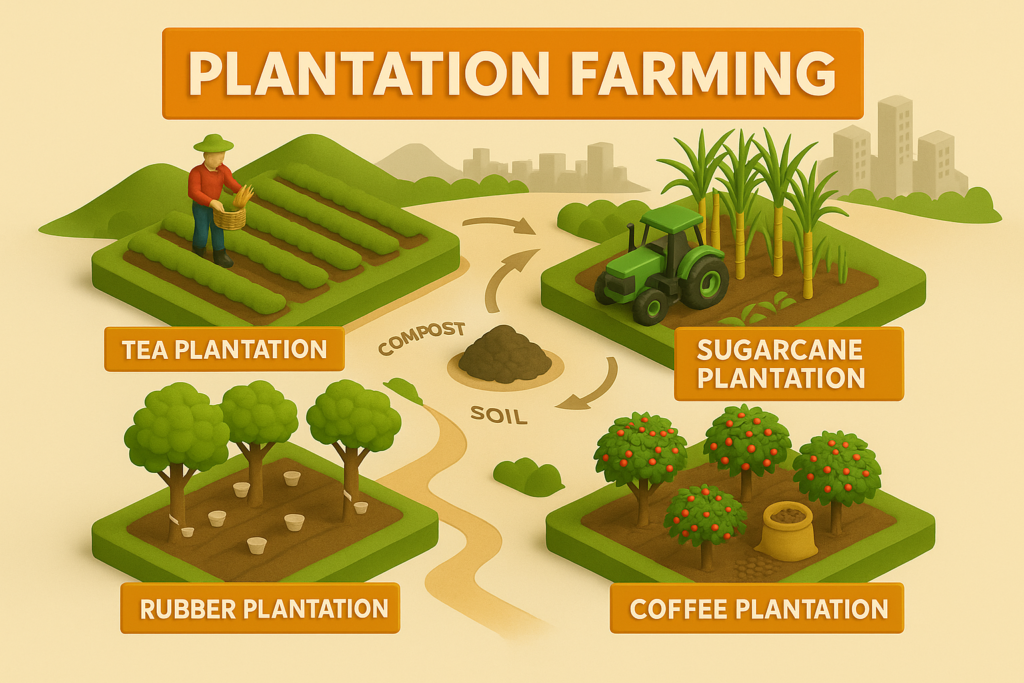
Plantation farming represents one of the most influential agricultural systems in the world. It is a large-scale, commercialized farming method built around a single major cropknown as a monoculture crop cultivated primarily for export and industrial use. Unlike subsistence agriculture, which focuses on feeding the farmer’s family, plantation farming is designed to produce huge volumes of high-value crops for global markets, often operated with advanced management systems, hired labor, and significant capital investment.
This farming system originated during the colonial era, when European empires established massive plantations in Asia, Africa, Latin America, and the Caribbean to grow crops like sugarcane, coffee, cocoa, tea, tobacco, cotton, and rubber. Even today, plantation agriculture remains a pillar of the global commodity supply chain, supplying essential raw materials to industries such as food processing, textiles, beverages, pharmaceuticals, cosmetics, and manufacturing.
Plantation farming requires specific natural, economic, and labor conditions. These operations thrive in tropical and subtropical climates with abundant rainfall, fertile soils, and long growing seasons. They demand sophisticated management practices, large tracts of land, mechanization, and a trained workforce.
As global demand for plantation-based crops increases, modern plantations are evolving from traditional labor-intensive systems to highly mechanized, technology-driven, climate-smart operations. This transformation is driven by new challenges: climate change, soil depletion, biodiversity loss, and fluctuating commodity markets.
Key Characteristics of Plantation Farming
Plantation farming has distinct features that separate it from other farming systems:
2.1 Large-Scale Commercial Production
Plantations are typically spread over hundreds or thousands of hectares, producing high-value cash crops for industrial processing or export.
2.2 Monoculture System
One major crop dominates the landscape—coffee, tea, sugarcane, cocoa, cotton, rubber, oil palm, or banana.
2.3 Specialized Crop Management
Plantations rely on expert-level crop management techniques including:
Pruning
Irrigation scheduling
Fertilizer management
Disease monitoring
Plantation renewal cycles
2.4 Capital and Labor Intensive
Plantation agriculture requires:
Heavy investment in machinery
Processing units
Transportation infrastructure
Skilled and unskilled labor
2.5 Close Link to Agro-Based Industries
Crops are grown primarily for transformation into finished products such as:
Tea bags
Coffee powders
Sugar
Cocoa butter
Rubber sheets
Textile fibers
Vegetable oils
2.6 Export-Oriented Production
Many plantation crops form the backbone of international trade.
Global History and Development
Plantation farming originated in the 15th to 19th centuries when European colonizers established large agricultural estates in tropical regions. Crops like sugarcane in the Caribbean, cotton in America, tea in India, rubber in Malaysia, and coffee in Brazil shaped global trade routes.
The huge demand from European markets led to:
Introduction of new crops in colonies
Establishment of large-scale estates
Development of global shipping and trading networks
Modern plantations continue this legacy but with advanced technologies, international corporations, and strict regulations on labor and environmental standards.
Geographic Distribution of Plantation Farming
Plantation farming thrives in humid tropical and subtropical zones.
Major Countries and Regions
Brazil: Coffee, sugarcane, cocoa, orange
India: Tea, coffee, sugarcane, rubber, cotton
Sri Lanka: Tea, rubber
Indonesia: Palm oil, rubber
Malaysia: Palm oil, cocoa, rubber
Vietnam: Coffee, pepper
Kenya: Tea, coffee
Ghana: Cocoa
Colombia: Coffee
Ethiopia: Coffee
Major Plantation Crops and Their Requirements
5.1 Tea
Grown in hilly regions with acidic soils and abundant rainfall. Requires careful plucking cycles and skilled labor.
5.2 Coffee
Prefers high-altitude tropical climates with shade trees. Sensitive to temperature and rain variability.
5.3 Sugarcane
A major industrial crop requiring fertile soil, irrigation, and strong sunlight. Used for sugar, ethanol, and biofuels.
5.4 Rubber (Hevea brasiliensis)
Grown in hot, wet climates. Requires latex tapping cycles and disease management.
5.5 Oil Palm
One of the world’s highest-yielding oil crops. Used in food, cosmetics, and biofuel industries.
5.6 Cocoa
Grown in humid forest zones. Sensitive to pests and fungal diseases.
5.7 Cotton
A major textile crop requiring warm climates and mechanized harvesting.
5.8 Banana and Pineapple
Large-scale fruit plantations supplying global markets.
Plantation Management Practices
6.1 Land Preparation and Layout
Plantations are carefully planned with:
Graded slopes
Drainage channels
Irrigation systems
Access roads
Worker housing
6.2 Irrigation Systems
Sugarcane and fruit plantations rely heavily on:
Drip irrigation
Sprinklers
Micro-jets
Canal irrigation
6.3 Nutrient Management
Plantations use soil testing, leaf analysis, and precision fertilization to ensure consistent nutrient supply.
6.4 Weed and Pest Management
Integrated practices include:
Manual weeding
Herbicides
Biological control agents
Disease-resistant varieties
6.5 Harvesting Cycles
Different crops have unique harvest calendars:
Tea: Weekly plucking
Sugarcane: 10–18 month harvest cycle
Coffee: Annual selective picking
Rubber: Daily/alternate-day tapping
6.6 Processing and Value Addition
Plantations often operate on-site processing units:
India’s plantations combine traditional labor with modern irrigation and soil testing.
Brazil – Sugarcane & Coffee
High mechanization, biofuel production, and advanced breeding programs.
Malaysia – Palm Oil
Industry transitioning to sustainable certification schemes.
Ghana – Cocoa
Government programs promote agroforestry and disease-resistant varieties.
FAQs
What is plantation farming?
A large-scale commercial farming system focused on growing one major crop.
Why is plantation farming important?
It supports global supply chains of sugar, coffee, tea, rubber, cotton, and oil crops.
Which climate suits plantation crops?
Tropical and subtropical regions with high rainfall.
Is plantation farming sustainable?
Traditional systems were not; modern systems are becoming sustainable with regulations.
What industries depend on plantation farming?
Food, beverages, textiles, cosmetics, pharmaceuticals, and biofuels.
Conclusion
Plantation farming has shaped global trade and agricultural economics for centuries. Its large-scale, commercial nature makes it a powerful contributor to national GDPs and rural employment. However, monoculture systems come with environmental and social challenges that demand modernization and sustainable transformation. Today’s plantations are adopting advanced technologies, precision farming tools, sustainability certifications, and climate-resilient strategies to meet growing global demands without compromising ecological integrity.
Urban farming refers to the practice of growing food within cities and peri-urban areas. It includes cultivating vegetables, fruits, herbs, and even raising small livestock in spaces such as rooftops, balconies, backyards, vacant plots, indoor facilities, and vertical structures. Urban farming is not a new idea; historical civilizations integrated food production into urban planning. However, rapid urbanization, climate stress, food supply disruptions, and rising food prices have revived urban farming as a strategic solution for modern cities.
More than half of the world’s population now lives in urban areas, and this proportion continues to rise. Traditional rural agriculture alone struggles to supply fresh, affordable food to dense urban populations due to transportation cost, post-harvest losses, and supply-chain vulnerability. Urban farming addresses these challenges by producing food closer to consumers, reducing distance, time, and resource waste.
Urban agriculture transforms unused or underutilized urban spaces into productive food systems. It improves food security, enhances urban sustainability, creates employment, and reconnects city residents with food production processes.
Concept and Scope of Urban Farming
Urban farming is not limited to small home gardens. It represents a wide spectrum of production systems ranging from household-scale food gardening to high-tech commercial vertical farms.
Urban farming systems may include:
Rooftop vegetable gardens
Balcony and container gardening
Community and allotment gardens
Indoor vertical farming facilities
Hydroponic and aquaponic systems
School and institutional gardens
Peri-urban market gardens
The scope of urban farming expands beyond food production to include waste recycling, water conservation, climate adaptation, employment, education, and social cohesion.
Types of Urban Farming Systems
3.1 Rooftop Farming
Rooftop farming converts unused roofs into productive green spaces. It may involve:
Soil-based beds
Raised containers
Lightweight growing media
Drip irrigation
Benefits include temperature regulation of buildings, reduced heat-island effect, and fresh local produce.
3.2 Vertical Farming
Vertical farming uses stacked layers or shelves to grow crops indoors or in controlled environments. It relies on:
Artificial or LED lighting
Temperature and humidity control
Nutrient solution management
Vertical farms maximize output per square meter and can operate year-round.
3.3 Hydroponic Farming
Hydroponics grows plants without soil, using water-based nutrient solutions. It is popular in cities due to:
Low space requirement
High water efficiency
Clean production
Leafy greens and herbs perform especially well.
3.4 Aquaponics
Aquaponics integrates fish culture with hydroponic plant production. Fish waste provides nutrients for plants, creating a closed-loop system.
3.5 Community Gardens
Community gardens involve shared spaces managed collectively by residents. They provide fresh food, social interaction, and environmental education.
3.6 Peri-Urban Farming
Peri-urban farms are located on the edges of cities and supply nearby urban markets with fresh vegetables, milk, and eggs.
Crop selection depends on space, light availability, climate control, and market demand.
Scientific and Technical Foundations
Urban farming relies on precise resource management.
5.1 Light Management
Plants require specific light intensity and spectrum. Indoor farms use LED systems optimized for photosynthesis.
5.2 Nutrient Management
Hydroponics and container systems depend on carefully balanced nutrient solutions to avoid deficiencies or toxicity.
5.3 Water Efficiency
Urban farms use:
Drip irrigation
Recirculating hydroponic systems
Rainwater harvesting
Water use can be reduced by more than 70% compared to conventional agriculture.
5.4 Microclimate Control
Temperature, humidity, and airflow are controlled to optimize growth and minimize disease pressure.
Economic Aspects of Urban Farming
6.1 Low Transportation Cost
Food is grown close to consumers, reducing fuel cost and post-harvest losses.
6.2 Market Premium
Urban consumers often pay premium prices for:
Freshness
Local production
Pesticide-free food
6.3 Employment and Entrepreneurship
Urban farming creates jobs in:
Production
Marketing
Agri-tech services
Education and training
6.4 Capital Investment
High-tech urban farms require upfront investment, but returns improve with scale, technology, and market access.
Environmental and Social Benefits
Reduced carbon footprint
Improved air quality
Urban heat-island mitigation
Recycling of organic waste
Community engagement
Educational opportunities
Urban farms contribute to greener, more resilient cities.
Challenges in Urban Farming
Limited space
High initial investment
Regulatory restrictions
Structural load limits on rooftops
Energy cost for indoor farms
Technical skill requirement
Successful urban farms require planning, proper design, and skilled management.
Urban Farming Around the World
Asia
Rooftop and balcony farming is expanding in cities like Tokyo, Singapore, and Mumbai.
Europe
Community gardens and rooftop farms are integrated into urban planning.
North America
Vertical farms and indoor facilities supply supermarkets year-round.
Africa
Urban agriculture supports food security and livelihoods in rapidly growing cities.
Role in Sustainable Cities
Urban farming aligns with goals of:
Sustainable food systems
Climate adaptation
Circular economy
Smart-city development
It reduces dependency on long supply chains and strengthens local resilience.
11(FAQs)
What is urban farming? Food production within cities using rooftops, indoor systems, or small plots.
Is urban farming profitable? Yes, especially for high-value crops and direct-to-consumer markets.
Which method is best for cities? Hydroponics and vertical farming are most space-efficient.
Does urban farming reduce pollution? Yes, through lower transport emissions and green cover.
Can urban farming feed entire cities? It complements rural agriculture and improves food resilience.
Is soil required for urban farming? Not always; hydroponics and aeroponics use no soil.
What crops grow best indoors? Leafy greens, herbs, and microgreens.
Does urban farming save water? Yes, significantly compared to conventional farming.
Are pesticides used in urban farming? Minimal or none, especially in controlled environments.
Is urban farming scalable? Yes, with technology and supportive policies.
Conclusion
Urban farming is no longer a niche activity. It is a strategic response to urbanization, climate pressure, and food-system vulnerability. By bringing food production closer to consumers, urban farming improves freshness, reduces environmental impact, and strengthens community resilience. From simple rooftop gardens to advanced vertical farms, urban farming represents the future of sustainable food production in cities worldwide.
Mixed farming is one of the oldest and most resilient agricultural systems practiced across the world. It refers to a farming system where crop production and livestock rearing are carried out together on the same farm in an integrated and complementary manner. Instead of depending on a single source of income, farmers diversify production by combining crops, animals, fodder, and sometimes fisheries or poultry.
This system exists in both traditional subsistence agriculture and modern commercial farming models. In Europe, mixed dairy–crop farms dominate rural landscapes. In Asia and Africa, smallholder farmers rely on mixed farming to ensure food security, income stability, and soil fertility. In developed countries, mixed farming is gaining renewed attention as a sustainable alternative to specialized monoculture systems.
Mixed farming works on a simple but powerful logic: “Waste of one component becomes input for another.”
Crop residues feed livestock, livestock manure fertilizes fields, fodder crops support animals, and animals provide regular income, draft power, and nutrient recycling. This circular approach reduces external input dependency and improves farm resilience.
Core Concept of Mixed Farming
The essence of mixed farming lies in integration, not just coexistence.
In a true mixed farming system:
Crops and livestock are planned together
Resources are recycled within the farm
Nutrients flow in a closed loop
Risk is distributed across enterprises
Unlike specialized farming, mixed farming avoids total dependence on:
Market price of a single crop
Weather-sensitive monocultures
External fertilizers and feed
This system becomes especially valuable in uncertain climates and volatile markets.
Components of Mixed Farming
3.1 Crop Production
Crops form the backbone of mixed farming. These include:
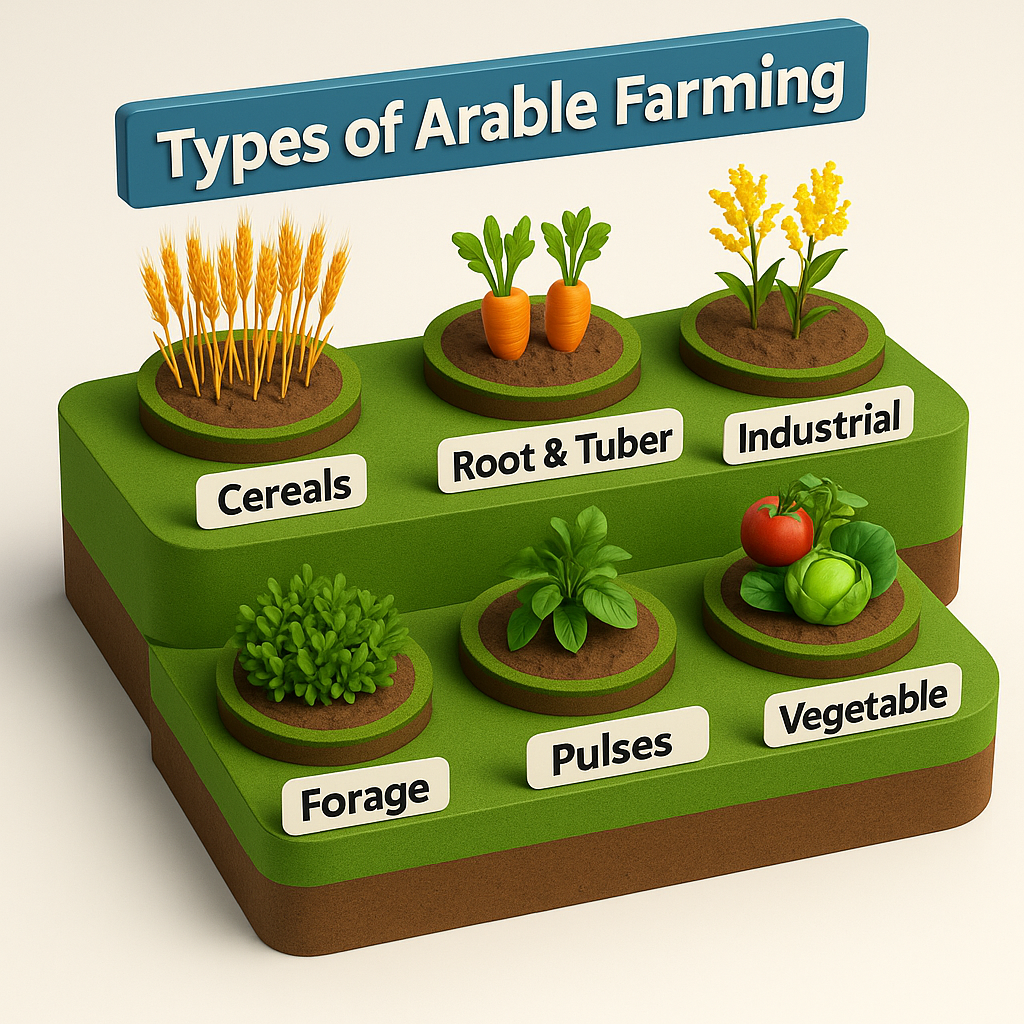
Food grains (wheat, rice, maize)
Pulses and legumes
Oilseeds
Vegetables
Fodder crops
Crop choice is not random; it is selected based on:
Livestock feed needs
Residue availability
Soil fertility requirement
Local climate
3.2 Livestock Component
Livestock may include:
Dairy cattle
Buffalo
Sheep and goats
Poultry
Pigs
Draught animals
Animals provide:
Milk, meat, eggs
Manure for soil fertility
Draft power
Daily cash flow
3.3 Fodder and Pasture
Dedicated fodder crops ensure:
Year-round feed availability
Reduced feed purchase cost
Better animal health
Higher milk and meat output
3.4 Manure and Nutrient Recycling
Animal manure is central to mixed farming:
Improves soil organic matter
Enhances microbial activity
Reduces chemical fertilizer requirement
Improves water retention
Types of Mixed Farming Systems
4.1 Crop–Dairy Farming
Most common in Europe and South Asia. Crops supply fodder and residues; dairy provides manure and steady income.
4.2 Crop–Livestock–Poultry
Popular among smallholders; poultry provides quick returns with minimal land use.
4.3 Mixed Farming with Draft Animals
Still relevant in parts of Africa and Asia where mechanization is limited.
4.4 Integrated Commercial Mixed Farming
Large farms combining crops, feedlots, biogas units, and manure processing.
Scientific Basis of Mixed Farming
Mixed farming is grounded in agricultural science.
5.1 Nutrient Cycling
Manure returns nitrogen, phosphorus, potassium, and micronutrients to soil.
5.2 Soil Biology Improvement
Organic matter from manure enhances soil microbial diversity.
5.3 Risk Distribution
Failure of one enterprise does not collapse the entire farm economy.
5.4 Energy Efficiency
Animal power and on-farm feed reduce fossil fuel dependency.
Economic Advantages of Mixed Farming
6.1 Income Stability
Multiple income streams reduce risk.
6.2 Reduced Input Cost
Lower reliance on:
Chemical fertilizers
Purchased feed
External energy
6.3 Year-Round Cash Flow
Livestock generates daily or weekly income, unlike seasonal crops.
Mixed farming ensures survival in marginal environments.
USA
Re-integration of crops and livestock for sustainability.
Role in Sustainable Agriculture
Mixed farming aligns strongly with:
Climate-smart agriculture
Regenerative farming
Organic and natural farming systems
It improves long-term farm resilience.
Future Scope of Mixed Farming
Integration with precision agriculture
Use of nutrient management software
Automated manure application
Carbon farming opportunities
Frequently Asked Questions
What is mixed farming? A system combining both crop cultivation and livestock rearing on the same farm.
Is mixed farming profitable? Yes, due to multiple income sources and lower input costs.
Which farmers benefit most? Small and medium farmers in variable climates.
Does mixed farming improve soil fertility? Yes, through organic manure and residue recycling.
Is mixed farming sustainable? Highly sustainable compared to monoculture systems.
Can mixed farming be commercial? Yes, many large farms practice integrated mixed systems.
What are common livestock choices? Cattle, buffalo, goats, sheep, and poultry.
Does mixed farming reduce risk? Yes, income risk is diversified.
Is mixed farming climate-resilient? Yes, it buffers climate and market shocks.
Is mixed farming future-ready? Yes, especially when combined with modern technology.
Conclusion
Mixed farming represents a balanced, resilient, and sustainable approach to agriculture. By integrating crops and livestock, farmers create a self-supporting system where resources circulate efficiently, risks are minimized, and productivity remains stable across seasons. In a world facing climate uncertainty, rising input costs, and environmental stress, mixed farming is not outdated—it is strategically relevant for the future of global agriculture.
Agriculture is undergoing a structural transition. For centuries, farmers managed their fields based on experience, observation, and memory. They treated the entire field as one unit, applying uniform amounts of seeds, fertilizers, and water—even though soil, moisture, nutrient levels, and pest conditions varied dramatically from one area to another. Precision farming emerged as the world’s scientific response to these inefficiencies.
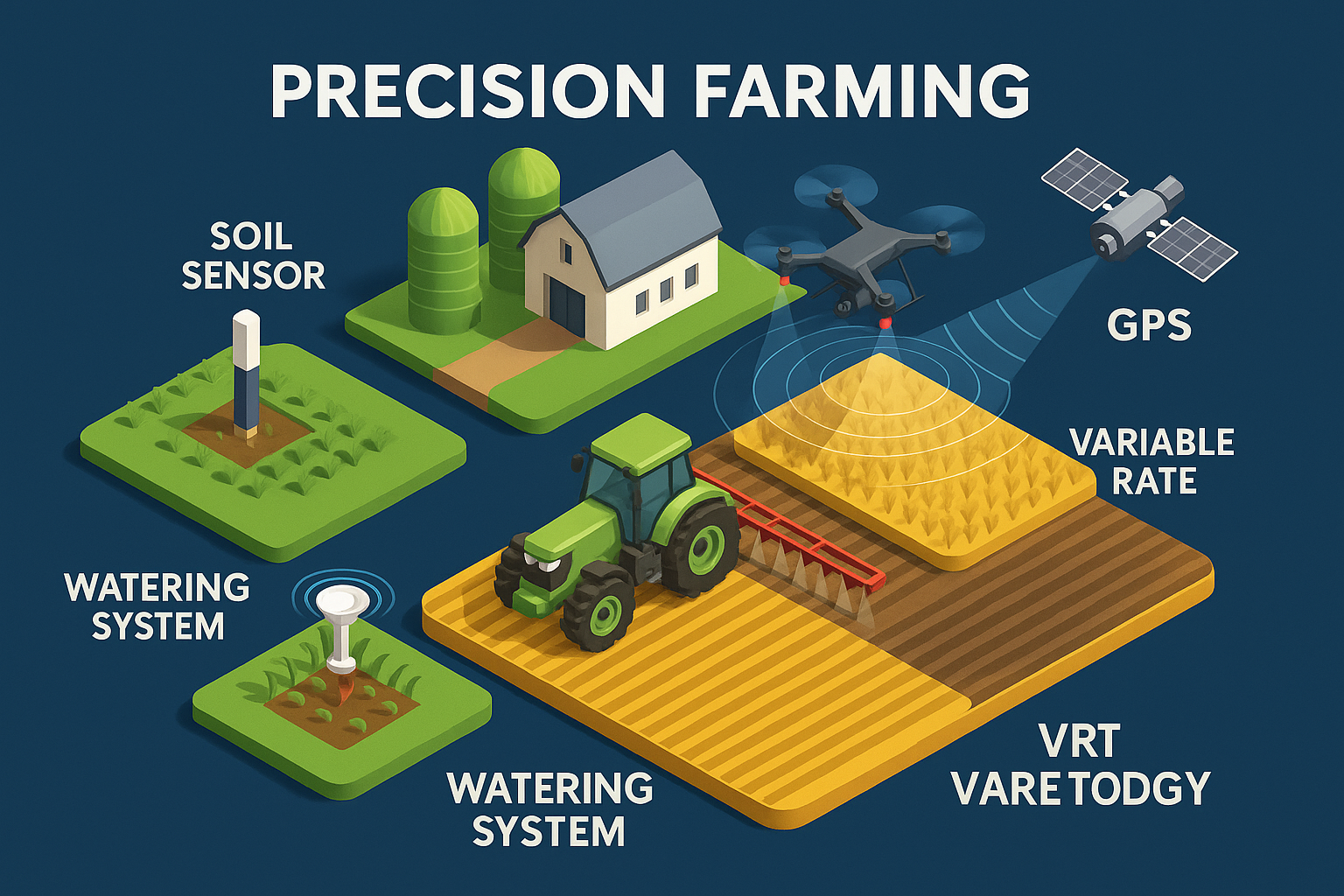
Precision farming (or precision agriculture) is a data-driven, technology-enabled agricultural system that identifies intra-field variability and applies inputs with pinpoint accuracy. Instead of assuming every square meter of a field has the same requirement, precision farming measures and manages each micro-zone individually. It is built on satellite monitoring, GPS guidance, sensor networks, drones, automated machinery, AI analytics, and cloud-based farm management systems.
This system allows farmers to:
Reduce fertilizer and pesticide waste
Optimize irrigation
Detect diseases early
Improve yield quality and consistency
Reduce production cost
Protect soil health
Increase climate resilience
Precision agriculture is widely adopted across countries with advanced mechanization, but it is now expanding rapidly into developing nations due to cheaper sensors, government schemes, and drone regulations. As global food demand rises and climate unpredictability intensifies, precision farming is becoming the backbone of next-generation agriculture.
What Makes Precision Farming Different?
Traditional farming follows a uniform management strategy. Precision farming replaces uniformity with site-specific management. It collects real-time data from the field, converts it into actionable insights, and then uses automated equipment to act precisely on those insights.
Precision farming is based on four fundamental principles:
Measure everything Soil nutrients, moisture, temperature, organic carbon, crop growth, pest pressure, weather patterns—everything is captured using sensors, drones, and remote sensing.
Map variability Every field is divided into management zones with different requirements.
Apply only what is needed Inputs such as seeds, irrigation, fertilizers, or pesticides are adjusted according to zone-specific data.
Evaluate and refine Yield maps and data analytics help improve decisions year after year.
This creates a continuous, intelligent cycle of improvement driven by data.
Core Technologies Driving Precision Farming
Precision farming is a multi-layered technological system. Understanding each technology is essential to understanding the system as a whole.
3.1 Global Positioning System (GPS) and GNSS Navigation
GPS and GNSS enable centimeter-level accuracy for:
Tractor steering
Automated seed drills
Fertilizer spreaders
Sprayers
Harvesters
Modern tractors use RTK correction signals to achieve near-perfect precision. This eliminates overlaps and gaps, reduces fuel consumption, and ensures seeds and fertilizers are placed exactly where needed.
3.2 Remote Sensing and Satellite Imagery
Satellites capture multi-spectral and thermal images to show:
Vegetation health
Chlorophyll concentration
Soil moisture patterns
Temperature variation
Stress zones
Disease spread
Indices such as NDVI (Normalized Difference Vegetation Index) reveal invisible plant stress several days before it becomes visible to human eyes. This allows early intervention.
3.3 Drones and Unmanned Aerial Systems
Drones act as flying diagnostic tools. They produce high-resolution field maps and carry out precise spraying.
Drone applications include:
Plant health analysis
Thermographic imaging
Crop height measurement
Disease detection
Weed identification
Variable-rate spraying
Because drones operate close to the crop canopy, they provide more accurate data than satellites and reduce pesticide drift significantly.
3.4 Internet of Things (IoT) Sensors
IoT devices constantly measure:
Soil moisture
Electrical conductivity
Nitrogen concentration
Temperature
pH
Humidity
Leaf wetness
These sensors transmit data to cloud dashboards that automatically adjust irrigation and nutrient schedules.
3.5 Variable Rate Technology (VRT)
VRT allows real-time adjustment of:
Fertilizer rate
Irrigation volume
Seed density
Pesticide dosage
Machines equipped with VRT ensure that each zone receives the correct amount of input, reducing waste and increasing yield uniformity.
3.6 Data Analytics and Farm Management Software
Precision agriculture generates massive data. Analytics convert this data into:
Recommendations
Fertility maps
Moisture maps
Disease alerts
Yield predictions
Farmers use mobile apps and dashboards to make informed decisions.
3.7 Automation and Robotics
Automation strengthens precision farming through:
Autonomous tractors
Driverless sprayers
Robotic weeders
Fruit-picking robots
Automated milking systems
These machines increase productivity and reduce human error.
The Scientific Foundation of Precision Farming
Precision agriculture is not just technology—it is deep agricultural science.
4.1 Soil Variability and Nutrient Distribution
Every field contains natural variability. Soil differs in:
Organic matter
Nitrogen, phosphorus, potassium
Microbial population
Moisture levels
Structure and texture
Precision farming identifies these differences to avoid uniform application that leads to waste and inefficient crop growth.
4.2 Crop Physiology and Stress Patterns
Different crop stages require different nutrient and water levels. By monitoring crop physiology through remote sensing and sensors, precision farming delivers inputs aligned with plant demand curves.
4.3 Pest and Disease Dynamics
Pests and diseases do not affect every part of a field equally. Precision agriculture identifies hotspots early, allowing targeted treatment that saves cost and reduces chemical dependency.
4.4 Water Balance and Microclimate Monitoring
Weather stations and soil sensors help forecast:
Evapotranspiration
Rainfall
Humidity cycles
Heat stress risks
This optimizes irrigation planning.
Applications of Precision Farming in Different Crops
5.1 Cereals (Wheat, Rice, Maize, Barley)
Precision seeding ensures uniform germination. Remote sensing detects nitrogen deficiency early. Automated harvesters generate yield maps for the next season.
5.2 Vegetables (Tomato, Onion, Capsicum, Cabbage)
Vegetables respond strongly to controlled irrigation, nutrient dosing, and micro-monitoring. Greenhouse automation enhances production.
5.3 Orchards (Apple, Citrus, Mango, Grapes)
Precision farming identifies canopy stress, irrigation needs, and disease outbreaks. Trunk-level sensors guide water management.
Leader in autonomous machinery and variable-rate systems.
Europe
Focus on carbon-efficient precision practices.
Japan
Robotic rice farming and AI crop management.
Australia
Large-scale satellite-guided farming.
India
Drone policies, FPOs, digital soil cards, and IoT startups accelerating adoption.
(FAQs)
What is precision farming?
A data-driven agricultural system that manages fields based on real-time variability.
Does precision farming increase yield?
Yes, yields typically increase by 10–35%.
Is precision agriculture expensive?
Initial cost is high, but long-term savings and yield gains make it profitable.
How do drones help?
They map fields and apply precise spraying.
What is VRT?
Variable Rate Technology adjusts seed, fertilizer, and pesticide amounts zone-wise.
Can small farmers use precision farming?
Yes, through service models instead of buying equipment.
Is precision farming climate-resilient?
Yes, it improves water and nutrient efficiency.
What data does precision farming use?
Weather, soil, satellite, drone, and sensor data.
What crops benefit most?
Cereals, vegetables, fruits, cotton, sugarcane, and orchards.
What is the future of precision agriculture?
AI, robotics, predictive farming, and autonomous systems.
Conclusion
Precision farming represents the most advanced evolution of agriculture. It empowers farmers to make intelligent decisions based on data instead of assumptions. By identifying variability within fields and using technology to address it, precision farming enhances productivity, reduces cost, and protects the environment. As digital technologies become more accessible and climate challenges intensify, precision farming will define the future of global food production. It strengthens both economic viability and ecological sustainability, making it a cornerstone of 21st-century agriculture.
Intensive farming is one of the most transformative agricultural systems ever developed. It emerged as a scientific and economic response to the world’s rapidly increasing food demand, shrinking arable land, urban expansion, and climate instability. Instead of expanding land area, countries began increasing the intensity of production per unit of land, giving birth to systems that rely on high input, high density, and high efficiency.
Intensive farming is not a single practice; it is a complete biological, mechanical, and economic framework in which every component of farming—from soil, seed, and water to livestock housing, feed efficiency, and energy use—works together to maximize output. This model has shaped the success of food-secure nations and has become the backbone of global agricultural productivity.
Countries such as the Netherlands, Israel, China, India, Japan, South Korea, Denmark, and the United States rely heavily on this system. These nations prove that when land is limited, the only path to large-scale food production is rational intensification.
At its core, intensive farming focuses on extracting the highest possible yield, the best quality, and the most consistent supply through:
Dense planting or livestock stocking
A controlled environment
High-level nutrient and water input
Precision decision-making
Mechanization and automation
Crop specialization
Livestock optimization
Scientific monitoring
Intensive farming is the foundation of global food security, international supply chains, and agricultural export economies.
Scientific Foundation of Intensive Farming
Intensive farming is based on a set of deeply interconnected scientific principles that govern biological efficiency. These principles are responsible for sustained high production levels in both crop and livestock systems.
2.1 Plant Density and Light Utilization
Plant density is the most fundamental factor in intensive crop production. The idea is simple: increasing the number of productive plants per square meter increases total yield—as long as sunlight, water, and nutrients are sufficient.
High-density planting must balance:
Competition for light
Root zone volume
Air flow
Disease pressure
In open-field systems, density is calculated for each crop based on its architecture. For example:
Wheat and rice perform well at high densities because they produce multiple tillers.
Tomato and capsicum require optimized spacing for airflow and disease control.
Cotton in intensive belts uses narrow rows to maximize sunlight interception.
In greenhouse systems, vertical layers, trellising, and pruning techniques allow plants to capture more light than in the open field.
2.2 Nutrient Intensity and the Role of Fertigation
Intensive farming accelerates plant metabolism, which increases nutrient demand. Soil alone cannot sustain this demand. Therefore, nutrient cycles are artificially optimized using controlled fertilizer scheduling.
The nutrient principles include:
Nitrogen for rapid vegetative growth
Phosphorus for root development
Potassium for fruit size and stress tolerance
Calcium for cell structure
Micronutrients for physiological functions
Fertigation—delivering nutrients through irrigation—ensures uniform distribution and high absorption efficiency.
2.3 Water Dynamics and Irrigation Intensity
Intensive agriculture makes heavy use of irrigation technologies. Plants experience continuous nutrient uptake and photosynthesis only if they receive water in precise quantities.
Modern intensive irrigation includes:
High-frequency drip systems
Subsurface drip
Micro-sprinklers
Sensor-based moisture control
Automated cycles that synchronize with plant growth stages
Water use efficiency becomes crucial, especially in arid regions such as Israel and Arizona, where intensive systems operate even with minimal natural rainfall.
2.4 Soil Biology and Structure Under Intensive Systems
Soil plays a dual role: it is a biological medium and a mechanical foundation.
Intensive systems require:
High organic matter
Good aeration
Low bulk density
Stable microbial populations
Effective drainage
To maintain these conditions, farmers practice:
Deep tillage
Organic enrichment
Rotation with legumes
Use of biological amendments
Regular soil testing
Because intensive agriculture stresses soil, maintenance and monitoring become essential.
Types of Intensive Farming Systems
Intensive farming is divided into four main categories based on input levels, crop type, and management structure.
3.1 Intensive Crop Farming
This includes cereals, oilseeds, vegetables, and commercial cash crops grown at high density.
Examples:
Wheat-rice intensification in Asia
Maize-soybean belts
Cotton-intensive systems
Vegetable clusters for urban markets
Central features include:
High-yielding seeds
Frequent irrigation
Heavy nutrient supplementation
Mechanized operations
Pest and disease prediction models
3.2 Intensive Livestock Farming
Livestock are housed in controlled environments to optimize growth, meat quality, and productivity.
Common models:
Zero-grazing dairy
Broiler poultry units
Layer farms
Pig production systems
Sheep and goat confinement units
These systems depend on:
High-energy feed
Automated water supply
Ventilation systems
Vaccination schedules
Precise breeding management
3.3 Intensive Horticulture and Controlled-Environment Agriculture
This is the most profitable branch of intensive systems.
Master of desert intensification and water efficiency.
China
Largest user of high-density crop systems.
India
Major producer through wheat-rice intensive rotations.
Sustainability Strategies for Intensive Farming
Crop rotation
Soil organic enrichment
Water-saving irrigation
Biological pest control
Renewable energy adoption
Greenhouse energy optimization.
FAQs
What is the primary goal of intensive farming?
The main objective of intensive farming is to produce the highest possible quantity of food from the smallest possible area of land. This is achieved through high-yielding seeds, advanced irrigation systems, precise nutrient delivery, and technology-driven management. Countries with limited land but high food demand rely heavily on this system.
How is intensive farming different from traditional farming?
Traditional farming uses moderate inputs and delivers moderate yields per acre. Intensive farming uses high inputs—such as fertilizers, mechanization, and irrigation—and carefully optimized planting density to significantly increase productivity. Traditional farming focuses on natural conditions; intensive farming focuses on controlled biological performance.
Is intensive farming suitable for all climates?
Intensive farming performs best in regions where irrigation is available and climate extremes can be managed. In extreme climates such as deserts or heavy snowfall regions, intensive farming requires controlled-environment systems like greenhouses or polyhouses to function effectively.
Which crops are most suitable for intensive farming?
Vegetables, cereals, cash crops, and horticultural crops benefit the most. Examples include:
Tomato, capsicum, cucumber
Wheat, rice, maize
Cotton, sugarcane
Strawberry and berries
High-value greenhouse produce
These crops respond strongly to improved nutrient, water, and light management.
Does intensive farming damage soil health?
If mismanaged, it can lead to soil degradation such as nutrient depletion, compaction, and reduced microbial life. However, with proper soil testing, rotation of crops, organic matter restoration, and controlled fertilizer use, intensive systems can remain productive without harming long-term soil health.
What are the main environmental concerns of intensive livestock farming?
Concerns include waste accumulation, limited space for animals, disease risks, and high feed demand. Modern intensive livestock systems mitigate these issues through ventilation control, automated waste handling, balanced nutrition, vaccination, and strict hygiene protocols.
Is intensive farming profitable for small farmers?
Yes. Small farmers gain rapid returns when they use improved seeds, drip irrigation, fertigation, and protective structures. Even a 1-acre vegetable farm under an intensive model can generate significantly higher income compared to traditional systems, particularly when integrated with high-value crops.
Why do developed countries rely heavily on intensive farming?
Developed nations often have:
Limited agricultural land
Highly urban populations
Strong demand for uniform, high-quality produce
Advanced technology access
Stable energy and irrigation systems
Intensive farming helps them maintain food security and dominate export markets.
What technologies make intensive farming successful?
Key technologies include:
Drip and micro-irrigation
Greenhouses and polyhouses
Hydroponics and vertical farms
Soil and plant sensors
Automated fertigation
Drone monitoring
Data-driven decision tools These technologies ensure precise input use and consistent production.
How can intensive farming become sustainable?
Sustainability depends on combining intensification with ecological practices such as:
Balanced fertilizer use
Organic matter restoration
Crop rotation
Efficient water management
Renewable energy (solar pumps, solar greenhouses)
Reduced chemical dependency
Biological pest control This integrated approach keeps yields high while protecting soil, water, and the environment.
Conclusion
Intensive farming is a global agricultural engine that drives food production, economic growth, and technological innovation. Its strength lies in maximizing efficiency, utilizing scientific advances, and adapting to diverse environmental conditions. The system must, however, operate within sustainable limits to ensure long-term soil health, water conservation, and environmental stability. Balanced intensification—supported by technology, monitoring, and regenerative principles—is the future of global agriculture.