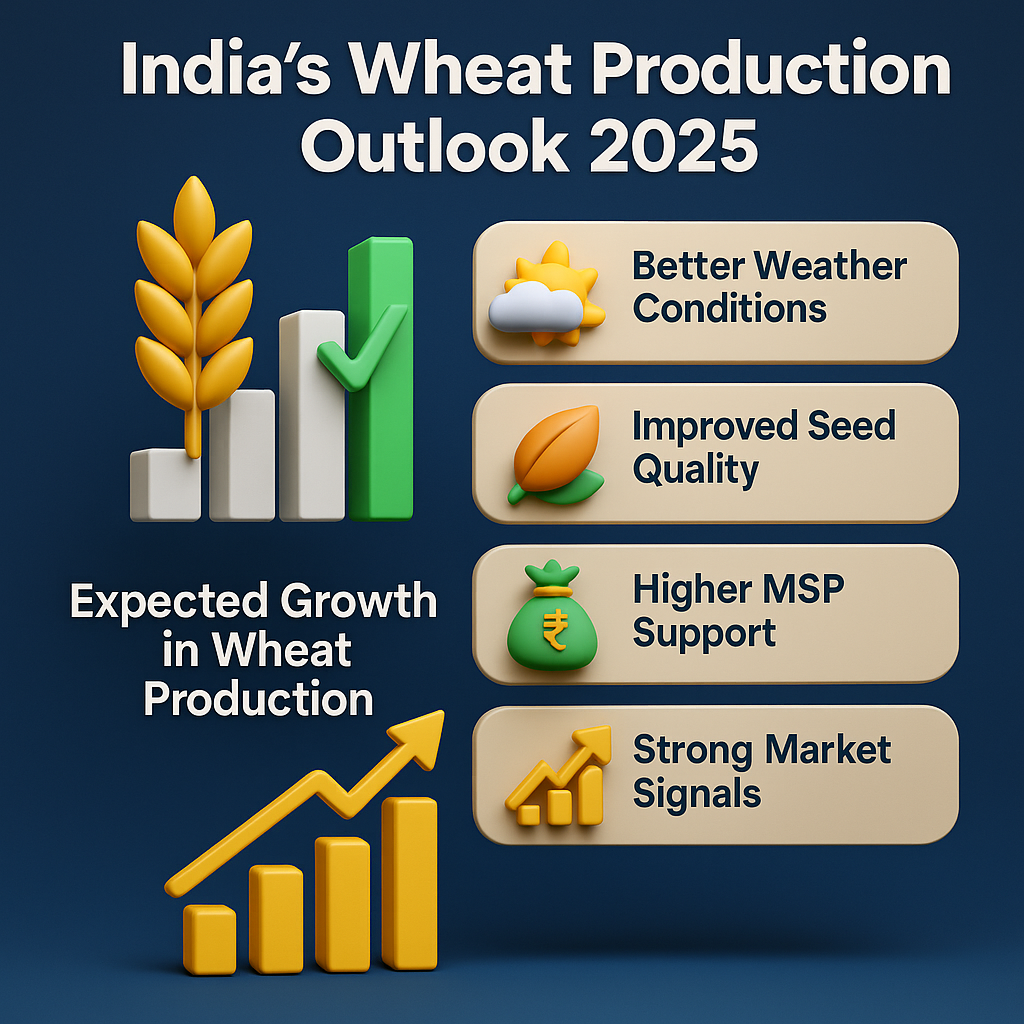
India’s wheat sector is preparing for one of its strongest years as early field assessments from multiple farming regions indicate improved crop health for the 2024–25 season. According to preliminary observations from agricultural officers, wheat sowing has been completed earlier than last year in major states like Punjab, Haryana, Uttar Pradesh, and Rajasthan, giving farmers a better crop window and more stable growing conditions.
Experts say that the combination of favourable winter temperatures, more moisture in the soil, and improved seed varieties is creating an ideal environment for higher yields. Farmers who had suffered from unexpected heatwaves in the previous years are now cautiously optimistic, noting that this season feels more balanced and predictable.
Agronomists also highlight that the adoption of heat-resistant and early-maturing seed varieties has increased significantly. These varieties help protect the crop from late-season temperature spikes, a challenge that has repeatedly affected wheat grains during March in the past decade. Many farmers have shifted to high-yield seeds recommended by state agricultural universities, contributing to the overall production outlook.
The Indian Meteorological Department has projected stable winter temperatures and low chances of extreme weather events for the coming months. This is especially important because wheat is highly sensitive during the grain-filling stage. Stable night temperatures and controlled day-time heat help maintain grain weight, leading to higher quality and improved market value.
Meanwhile, market indicators are showing early signs of stronger prices. Traders in major mandis report active buying interest due to projected demand from flour mills and exporters. With global wheat supplies tightening in some regions due to weather-related losses, India’s wheat export prospects appear more promising this year.
The government’s Minimum Support Price (MSP) for wheat has also been revised upward, which is boosting farmer confidence. Many believe that the combination of a supportive MSP and stronger open-market demand will create a profitable environment during the procurement season.
Despite the positive outlook, agricultural economists caution that the final production figures will depend on February–March temperature patterns. A sudden rise in heat or unseasonal rainfall could still affect the final yield. Farmers, however, are taking preventive steps such as timely irrigation, crop monitoring, and controlled fertilizer application to reduce risks.
As of now, India’s wheat landscape reflects a renewed sense of hope. If conditions remain favourable, the country may see a significant boost in production, benefiting both domestic markets and export opportunities.
✍️Farming writers Team
Love farming Love farmers


Leave a ReplyShare your thoughts: We’d love to hear your farming ideas or experiences!