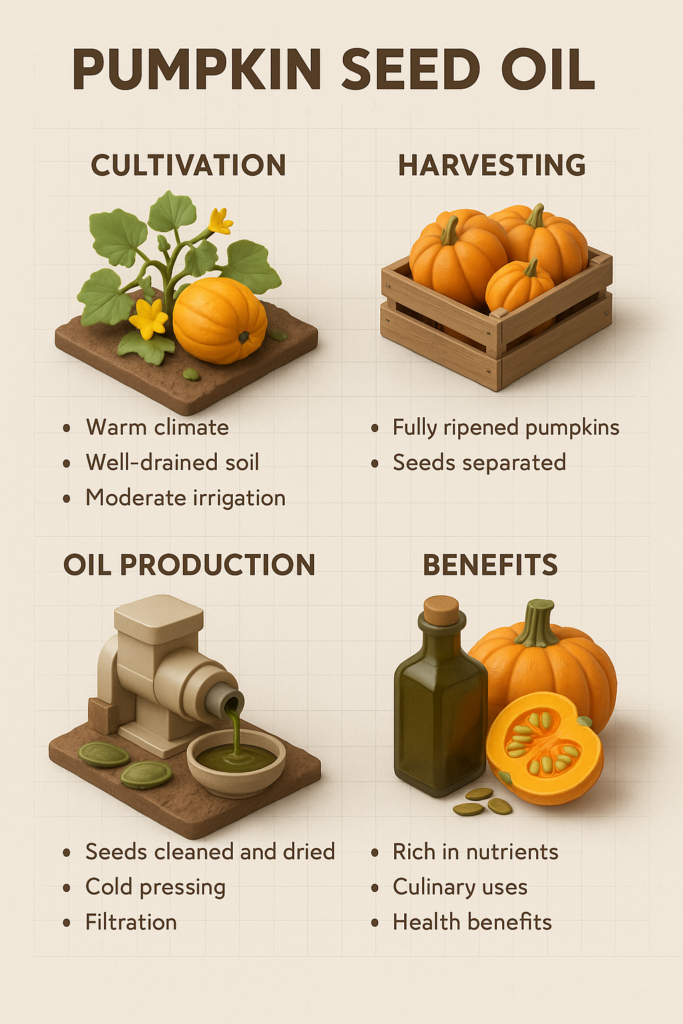
Pumpkin seed oil looks deceptively simple from the outside. Pumpkins grow easily. Seeds are visible. Oil extraction appears straightforward. Many farmers assume that if pumpkins are already grown for vegetables, seed oil is a natural extra income stream. This assumption is where most financial disappointment begins.
Pumpkin seed oil is not a by-product business. It is a primary quality-driven oil market. The difference between a profitable operation and a loss-making one is not yield alone, but seed maturity, oil chemistry, processing discipline, and buyer alignment. Farmers who treat pumpkin seed oil as an extension of vegetable farming often produce oil that sells slowly, sells cheaply, or fails quality checks altogether.
The first hidden reality is that pumpkin varieties grown for table consumption are rarely ideal for oil. Many produce seeds with low oil content, inconsistent fatty acid profiles, or thick seed coats that complicate extraction. Farmers who use mixed pumpkin varieties collect seeds that look similar but behave very differently during pressing. The oil yield fluctuates from batch to batch, confusing pricing and damaging buyer confidence.
Another overlooked factor is seed volume economics. Pumpkin seed oil requires large quantities of clean, fully matured seeds. A visually good pumpkin harvest does not guarantee enough seed weight per hectare. Many farms discover that after seed cleaning and drying, usable seed volume is far lower than expected. At that point, oil extraction costs begin to outweigh returns.
Water and soil management also play a quiet role. Pumpkins tolerate moisture, but excessive irrigation close to maturity dilutes seed density and oil concentration. Seeds may look full but contain higher moisture and lower oil percentage. When pressed, oil recovery drops, and oxidation risk increases. This loss is invisible until oil quality testing or storage problems appear.
Harvest Timing — Where Quality Is Won or Lost
Pumpkin seed oil quality is decided before extraction, not during it. Harvest timing is critical. Fully ripened pumpkins produce seeds with stable oil composition. Early-harvested pumpkins produce seeds that press into oil with weaker aroma, lighter color, and shorter shelf life. Buyers notice this immediately.
Farmers under market pressure often harvest pumpkins early to avoid rot or field loss. This decision protects vegetable income but damages oil potential. Seed oil buyers do not pay compensation for early harvest risks. They simply reject oil that does not meet sensory or laboratory standards.
Seed separation itself is another failure point. Mechanical seed extraction damages seed surfaces, increasing oxidation during drying. Traditional manual separation preserves quality but increases labor costs. Many farms compromise here and unknowingly reduce oil grade before pressing even begins.
Drying practices matter more than most guides admit. Sun-drying seeds in uncontrolled conditions exposes them to dust, moisture swings, and fungal spores. Improperly dried seeds may still press oil, but that oil struggles to pass storage stability tests. Farmers then blame pressing machines, while the damage was already done at drying stage.
Oil Production — Pressing Is Not the Problem, Discipline Is
Cold pressing pumpkin seeds is technically simple but operationally unforgiving. Temperature control during pressing determines oil aroma, color depth, and oxidation resistance. Overheating even by a small margin alters fatty acid stability. Many small units lack precise temperature monitoring, leading to inconsistent batches.
Filtration is another underestimated step. Pumpkin seed oil contains fine particles that settle slowly. Rushing filtration or skipping resting periods results in cloudy oil that fails cosmetic or premium edible market standards. Clear oil commands higher prices; cloudy oil is pushed into bulk edible markets at reduced margins.
Storage conditions often finish what poor processing starts. Exposure to light, oxygen, or reactive metal containers degrades oil silently. Farmers discover quality loss only when buyers test samples weeks later. By then, the entire batch may be downgraded.
The hard truth is that oil extraction machinery rarely causes failure. Process shortcuts do. Pumpkin seed oil rewards patience and punishes speed.
Market Reality — Not All Pumpkin Seed Oil Is Equal
Online price figures for pumpkin seed oil rarely explain grade differences. Premium cold-pressed oil with consistent color, nutty aroma, and clean filtration sells into specialty food, wellness, and export markets. Industrial or inconsistent oil sells domestically at much lower prices.
Buyers do not negotiate quality upward. They downgrade price downward. A farmer expecting premium pricing but delivering average oil experiences this gap painfully.
Packaging also affects market acceptance. Buyers equate packaging discipline with production discipline. Poor bottling, weak labeling, or inconsistent batch coding reduce trust, even if oil quality is acceptable.
Another market truth is volume consistency. Buyers prefer fewer suppliers who deliver steady quality over many small suppliers with fluctuating output. Farmers producing small, irregular batches struggle to retain buyers despite good oil quality.
Scale Economics — Where Pumpkin Seed Oil Actually Makes Sense
Pumpkin seed oil works best at two extremes. Small-scale producers with tight quality control, direct customers, and storytelling-based sales succeed. Large-scale processors sourcing standardized seeds at volume also succeed. Mid-scale farms often get trapped between high costs and limited market access.
Seed-only pumpkin cultivation improves economics compared to dual-purpose vegetable-seed farming. Dedicated oil-seed pumpkin fields allow optimized spacing, nutrition, and harvest timing. Farmers mixing objectives usually dilute both.
Who Should Avoid Pumpkin Seed Oil Farming
Farmers needing fast turnover income should avoid this crop. Those without drying space, storage discipline, or testing access are exposed to quality rejection. Farmers unwilling to separate seed production from vegetable mindset struggle most.
Who Should Consider It Seriously
Pumpkin seed oil suits farmers who already manage oilseed crops, understand batch discipline, and have identified buyers before planting. It also suits cooperatives pooling seed volume for consistent processing.
The Real Decision Point
Pumpkin seed oil is not difficult, but it is exacting. It rewards farmers who respect small details and punishes those who rely on assumptions. Most losses occur not because the crop fails, but because farmers underestimate how strict oil markets actually are.
FAQs — Questions Farmers Ask After First Season
How long before profit? Usually from the first season if quality and buyers are aligned.
Can vegetable pumpkins be used? Technically yes, economically risky.
Is cold pressing mandatory? For premium markets, yes.
Does color matter? Strongly. It signals oil quality to buyers.
Is testing necessary? For serious markets, absolutely.
Final Conclusion
Pumpkin seed oil farming is a precision oil business disguised as a simple crop. Farmers who treat it casually lose quietly. Farmers who plan it as a quality-first oil operation find steady demand and repeat buyers. The difference lies not in land or machines, but in discipline and expectation.
✍️Farming Writers Team
Love farming Love Farmers.
Read A Next Post 👇