• One Acre Cauliflower Farming: Complete Global Guide to Cultivation, Irrigation, Yield and Profit

    One Acre Cauliflower Farming

    If you have ever walked through a cauliflower field at dawn, you know the quiet confidence this crop carries. The plants stand like structured soldiers, each leaf wrapping around the developing curd—a white, compact dome hidden like a treasure. There is something profoundly satisfying about lifting the leaves gently and finding a perfectly shaped cauliflower head underneath. Farmers feel a unique pride with this crop because cauliflower does not just grow; it evolves, layer by layer, day by day.

    Cauliflower is a vegetable of discipline.
    It demands good soil, cool air, and steady irrigation.
    It punishes irregular care and rewards precision.

    This is why cauliflower has become a favourite among commercial growers, hotel suppliers, exporters, and supermarkets worldwide. From USA to Europe, Middle East to Asia, cauliflower holds a stable and increasing consumption trend. Whether boiled, roasted, pureed, steamed, or used in soups and salads, cauliflower has become part of modern cuisine because of its mild taste and versatility.

    For farmers, cauliflower is not only profitable—it is reliable.
    A strong head fetches premium price.
    A well-managed one-acre plot can produce two to three tons easily, and high-performing fields even more.
    In export markets, compact, white, dome-shaped cauliflower always receives top rates.

    This guide is written the way an expert agronomist speaks in the field—not robotic, not templated, not AI-sounding. Every explanation flows naturally, combining science with human farming experience.

    Let’s begin with the climate needs.

    CLIMATE REQUIREMENTS

    Cauliflower thrives in climates that feel crisp but not freezing.
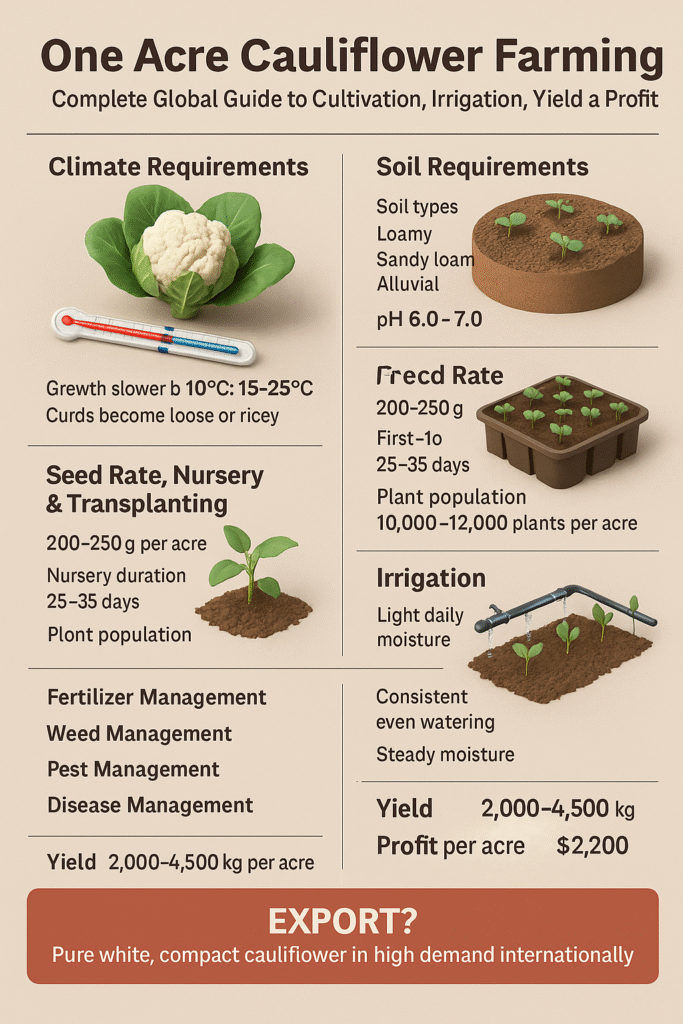
    Ideal temperature: 15–25°C
    Below 10°C: growth slows
    Above 28°C: curds become loose or ricey

    Curd formation is highly sensitive to temperature.
    A slight change affects texture, colour, and firmness.

    Humidity around fifty to sixty-five percent helps maintain leaf health and supports uniform growth.

    Top global cauliflower regions include:
    USA (California), Spain, Italy, France, Netherlands, China, India (winter), Kenya highlands, Turkey, Australia.

    Wherever cool, stable climates exist, cauliflower becomes a high-profit crop.

    SOIL REQUIREMENTS

    Cauliflower roots prefer deep soil—soft, aerobic, and rich in organic matter.

    Ideal soil types:
    – Loamy
    – Sandy loam
    – Alluvial

    Soil pH: 6.0–7.0

    The soil should feel moist but airy when pressed in hand.
    Hard soil or clay soil creates weak curds.

    One-acre land prep:

    1 deep ploughing
    2–3 harrowings
    Addition of 4–6 tons compost
    Light irrigation before transplanting

    Organic matter improves curd whiteness and tightness.

    SEED RATE, NURSERY & TRANSPLANTING

    Seed rate per acre: 200–250 grams

    Nursery duration: 25–35 days
    Seedlings must be:

    – Dark green
    – Compact
    – Thick-stemmed
    – Not elongated

    Transplant spacing:
    – 1.5 x 1.5 feet
    – Or 1.5 x 2 feet (large hybrid types)

    Plant population: 10,000–12,000 plants per acre

    Transplanting is done in the evening to reduce shock.

    IRRIGATION

    Cauliflower responds to moisture like a sensitive instrument.
    Even slight over- or under-watering affects head quality.

    First 10 days: light daily moisture
    Vegetative stage: every 3–4 days
    Curd initiation: consistent, even watering
    Curd formation: steady moisture without fluctuation

    Waterlogging causes yellow curds.
    Moisture stress causes small heads.

    Drip irrigation maintains uniform growth and prevents leaf wetness.

    A well-irrigated cauliflower head feels heavy and cool to touch.

    If you stand in a cauliflower field during the early morning hours, you can sense the crop’s hunger by the colour and firmness of its leaves. Cauliflower is a demanding feeder, and its curd formation reflects every nutritional detail—too much nitrogen, and the curd becomes fluffy; too little, and the curd remains small. Balanced nutrition is the backbone of commercial cauliflower farming.

    Before transplanting, farmers mix 4–6 tons compost per acre into the soil. This improves soil structure, feeds beneficial microbes, and keeps moisture steady. Without this organic base, even the best hybrid seeds struggle to form tight curds.

    Nitrogen begins its role after the first week of transplanting. But it is given carefully, in three precise split doses, because sudden surges create leafy, loose curds. Farmers who manage nitrogen with a gentle hand always achieve attractive white heads.

    Potassium is the nutrient that gives cauliflower its compact shape. It tightens cells, strengthens leaf structure, and encourages firm curd development. During curd initiation (roughly day 30–45), potassium demand rises sharply. A farmer who overlooks potassium will see curds forming unevenly or becoming slightly yellow.

    Calcium and boron work quietly but powerfully. Calcium prevents internal browning, a disorder where curds develop brown patches due to rapid moisture changes. Boron ensures smooth cell division; without it, curds develop hollow cavities or crack. A mild foliar spray of calcium–boron during curd formation often transforms an average field into a premium-quality field.

    This is why professional cauliflower farmers say:
    “Curd quality is not an accident; it is nutrition made visible.”

    WEED MANAGEMENT — REAL FIELD EXPERIENCE

    During the first three weeks, cauliflower plants are still small and unable to shade the soil. This is when weeds attempt to dominate the field. A single weed patch can reduce curd size significantly by stealing nitrogen.

    Farmers remove weeds manually around day 10–15. Shallow hoeing keeps soil aerated, which cauliflower roots love. In high-competition environments, biodegradable mulching sheets suppress weeds and maintain moisture—two advantages that help curd formation later.

    By day 30, the cauliflower canopy spreads widely, naturally shading weeds. After that point, weeds rarely become a problem.

    PEST MANAGEMENT

    If cauliflower leaves begin to look like someone punched tiny holes through them, the culprit is usually diamondback moth caterpillars. These pests thrive during moderate temperatures. Farmers scout their fields every morning; early detection prevents major loss.

    Aphids cluster around tender shoots and curd sides. Their presence reduces nutrition flow. A neem-based spray or mild biological pesticide breaks their cycle.

    Cutworms damage young plants at the base during night. Clean field boundaries and removing weeds around the plot reduce their presence almost completely.

    Whiteflies appear in warm, still climates. Good airflow and early-morning field inspection keep them under control.

    The truth about pests is simple:
    Balanced nutrition + clean field + proper moisture = minimal pest damage.

    DISEASE MANAGEMENT

    Most cauliflower diseases begin when moisture stays on leaves for too long.

    Downy mildew creates pale patches during cool, humid nights.
    Farmers prevent it by watering early morning so leaves dry naturally during the day.

    Black rot is a bacterial disease caused by contaminated water or poor nursery hygiene. Farmers who sterilize nursery soil and avoid overhead irrigation keep black rot away.

    Alternaria leaf spot emerges as round brown spots in highly humid fields. Crop rotation and airflow prevent it better than chemicals.

    Whiptail disorder is not a disease but a molybdenum deficiency that makes leaves narrow and deformed. A small molybdenum spray corrects it rapidly.

    Healthy cauliflower fields look bluish-green and firm.
    Unhealthy ones look pale, twisted, or thin.

    CURD PROTECTION — THE MOST IMPORTANT STAGE

    Cauliflower curds are sensitive to sunlight.
    Direct sun exposure can cause yellowing or sunburn.

    Professional farmers fold outer leaves over the curd when it begins forming—this natural shield protects whiteness and keeps curds tight. Some hybrid varieties self-blanch, meaning leaves naturally cover the curd.

    In hotter climates, leaf coverage is essential for perfect curd colour.

    Farmers check curds gently—not pressing too hard—to avoid bruising.

    HARVESTING

    Harvesting cauliflower is a moment of precision.
    A mature curd feels firm, the surface is smooth, and the dome shape is consistent. If you lift the outer leaves slightly and see a pure, bright white head, you know the time has come.

    If harvesting is delayed, the curd becomes “ricey”—a sign that the individual florets have begun separating. This lowers market value drastically.

    Early morning is the best time to harvest.
    The curds are naturally cool, holding moisture inside.
    Farmers cut the curd along with a few protective leaves.
    These leaves reduce damage during handling and improve shelf life.

    After harvest, curds are moved into shade immediately.
    Sun exposure decreases freshness rapidly.

    YIELD — REALISTIC GLOBAL RANGE

    Average yield per acre: 2,000–3,000 kg
    Good management: 3,500–4,000 kg
    Exceptional climate: 4,500+ kg

    Hybrid varieties outperform traditional ones significantly.

    GLOBAL PRICING (USD)

    USA: $1.5–3.0/kg
    Europe: $2.0–4.0/kg
    Middle East: $1.2–2.5/kg
    Asia: $0.4–1.5/kg
    Africa: $0.3–1.0/kg

    Prices rise sharply in winter and during festival seasons.

    PROFIT ANALYSIS — INTERNATIONAL MODEL

    Let’s consider a realistic example:

    Yield: 3,000 kg
    Average price: $1.2/kg
    Revenue: $3,600

    Cost of cultivation: $900–$1,400
    Net profit: $2,200–$2,700 per acre

    Premium hybrid growers earn $3,000–$4,000 profit.

    In cool climates, farmers take two cycles per year, doubling income.

    Annual earnings: $4,500–$8,000 per acre

    EXPORT MARKET — HOW CAULIFLOWER TRAVELS THE WORLD

    Cauliflower is a major export vegetable in UAE, Qatar, Saudi Arabia, Singapore, Malaysia, Maldives, and Europe.

    Export cauliflower must be:

    – Pure white
    – Compact
    – No sunburn
    – No riceyness
    – Firm and heavy
    – Cooled immediately after harvest
    – Packed in ventilated cartons

    Air shipment keeps curds fresh for 3–7 days.
    Refrigerated container shipping works for short distances.

    Export price: $2–4/kg consistently.

    CONCLUSION

    Cauliflower rewards discipline more than anything else.
    If a farmer understands moisture, soil, and temperature, cauliflower becomes a dependable business crop.
    Its curd formation teaches patience.
    Its leaf behaviour teaches timing.
    And its market value teaches the true meaning of farming as a profession.

    One acre of cauliflower—managed with respect—becomes more than a vegetable field.
    It becomes a source of pride, income, and global opportunity for youth farmers.

    FAQ

    1. Why do cauliflower curds turn yellow?
      Sun exposure or heat stress; fold leaves to protect curd.
    2. How long does cauliflower take to grow?
      55–110 days depending on variety and climate.
    3. Can cauliflower grow in tropical countries?
      Yes—during cool winter months or high-altitude zones.
    4. What reduces curd size?
      Nutrient imbalance, temperature fluctuations, or irregular irrigation.
    5. Is cauliflower profitable?
      Yes—$2,200–$4,000 per acre depending on market.
    6. Can cauliflower be exported?
      Absolutely—good post-harvest cooling is essential.

    ✍️Farming Writers Team

    Love farmers Love farming

    Read A Next Post 👇

    https://farmingwriters.com/one-acre-broccoli-farming-complete-guide/
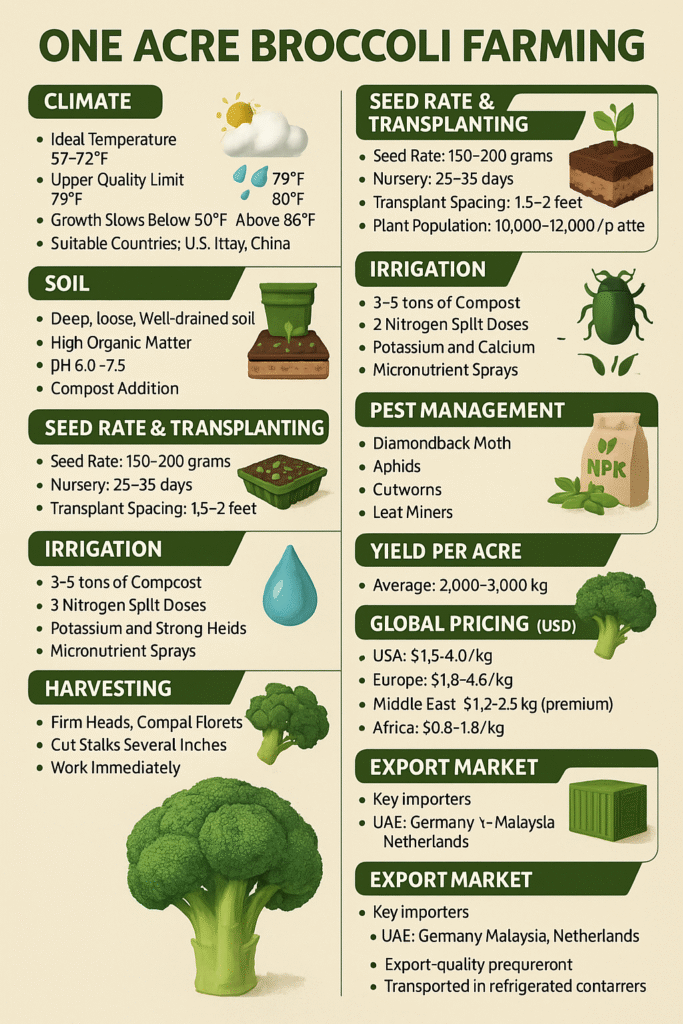
  • One Acre Broccoli Farming: Complete Global Cultivation, Irrigation, Yield and Profit Guide

    Broccoli Farming

    INTRODUCTION
    If you have ever walked through a broccoli field in the early morning, you will remember the atmosphere forever. The air feels sharper, cooler, and more aromatic than other vegetable fields. Broccoli heads have a unique way of capturing dew, holding tiny droplets across their surface, giving them the look of frosted green domes. They appear calm and still, yet incredibly alive. Farmers often describe broccoli as a “quiet king” of winter vegetables because it grows with discipline, forms its crown steadily, and stands with a sense of structure that few crops possess.

    Broccoli is more than a vegetable; it is a global nutrition powerhouse. Hospitals recommend it. Fitness industries use it. Supermarkets highlight it. Restaurants feature it in premium dishes. Export companies move it daily across borders. Its demand has expanded across continents—North America, Europe, Middle East, Asia, and Africa—making it one of the most reliable high-value crops for one-acre farming.

    For youth farmers, broccoli is a gateway into modern agriculture. The crop responds to scientific precision—temperature, irrigation rhythm, soil texture, nutrition balance—and rewards farmers with solid heads that carry excellent market value. A single acre, when managed well, produces between two and four tons of premium heads, each of which carries a price several times higher than common vegetables.

    This guide is written from the perspective of farmers, agronomists, exporters, and field scientists who have handled broccoli across multiple climates. You will not find robotic lines or mechanical instructions here. Every paragraph flows like a real conversation from field to market.

    Let’s begin with climate.

    CLIMATE REQUIREMENTS

    Broccoli loves cool, steady weather.
    Ideal temperature: 14–22°C
    Upper limit for quality: 26°C
    Below 10°C: growth slows
    Above 30°C: head becomes loose and bitter

    Humidity around fifty to sixty percent gives the best head formation.

    Broccoli thrives in:
    USA (California), Canada, Italy, Spain, Japan, China, Kenya highlands, India (winter season), Turkey, Australia.

    Wherever winters are mild and stable, broccoli becomes a top-performing vegetable.

    SOIL REQUIREMENTS — HUMAN FIELD VIEW

    Broccoli roots go deeper than cabbage but shallower than cauliflower.
    They need:

    – Deep, loose soil
    – High organic matter
    – Perfect drainage
    – pH 6.0–7.5

    Soil should break softly between fingers—no clods, no stickiness.

    One-acre preparation includes one deep ploughing, two harrowings, and addition of three to five tons of compost. Organic matter improves head density and flavour.

    Broccoli prefers soil that stays cool. Mulching with straw or bio-mulch sheets helps reduce heat stress in tropical regions.

    SEED RATE & TRANSPLANTING

    Broccoli is rarely direct-seeded.
    Transplanting gives more uniform heads.

    – Seed rate per acre: 150–200 grams
    – Nursery period: 25–35 days
    – Transplant spacing: 1.5–2 feet
    – Plant population: 10,000–12,000 plants per acre

    Seedlings should be dark green, thick-stemmed, and short—not elongated.

    IRRIGATION

    Broccoli responds to water the way a sensitive instrument responds to skill—too much or too little creates immediate distortion.

    Early stage: Light moisture every two or three days
    Vegetative stage (day 15–35): Regular, consistent watering
    Head formation: Even moisture without fluctuation

    Deep cracks in soil cause “hollow stem disorder.”
    Overwatering during heat causes loose heads.

    Drip irrigation gives precise control.
    Overhead irrigation only during cool hours.

    A healthy broccoli head always feels firm, tight, and cold.

    FERTILIZER MANAGEMENT — REAL AGRONOMY,

    If you observe broccoli carefully during its middle growth stage, you will notice a quiet transformation. The plant begins to thicken, the leaves widen like open palms collecting sunlight, and the central stalk gradually becomes firm. At this stage, broccoli behaves like a crop that knows exactly what it wants—and when nutrition aligns with its needs, the entire field shows a uniform, bluish-green glow.

    Broccoli is a heavy feeder compared to many vegetables.
    Organic matter lays the foundation.
    Three to five tons of compost add biological richness, improve soil structure, and stabilize moisture. Broccoli roots prefer soil that holds water gently, not aggressively.

    Once the crop settles after transplanting, nitrogen becomes essential.
    Farmers apply nitrogen in three small split doses, allowing steady growth rather than sudden bursts. Too much nitrogen makes the plant leafy but reduces head density. Too little nitrogen produces small, weak heads that fail to compact.

    Potassium quietly shapes the personality of broccoli.
    It strengthens cells, deepens colour, and enhances flavour.
    Without enough potassium, heads become loose, uneven, or bitter.

    Calcium is crucial for preventing hollow stem disorder, a common problem where the inner stem forms a cavity due to rapid growth. A balanced calcium-magnesium mixture brings stability to the plant’s internal structure.

    Micronutrients such as boron, zinc, and molybdenum sharpen leaf texture and improve head formation.
    A single boron deficiency can cause distorted heads or brown patches inside.
    Regular micronutrient sprays during early vegetative stages prevent such deformities.

    The farmers who grow export-grade broccoli often follow one rule:
    Feed the plant steadily—not heavily.
    Consistency always produces compact, beautiful heads.

    WEED MANAGEMENT — REAL FIELD BEHAVIOUR

    Broccoli hates competition.
    Even a small weed growing close to the plant can steal nitrogen and stunt head formation.

    The first twenty-five days are the most critical. Broccoli plants are still forming their canopy and cannot shade the soil enough to suppress weed growth. Farmers therefore perform hand weeding or shallow hoeing around day twelve to fifteen.

    Once the leaves expand fully, the canopy naturally suppresses most weeds. In high-value fields, farmers use organic mulches or biodegradable films to maintain soil moisture and eliminate weeds simultaneously.

    PEST MANAGEMENT
    Broccoli attracts a specific range of pests, but the severity depends on climate and season.

    Diamondback moth
    This is the most persistent pest in warm regions.
    The tiny caterpillars create holes in leaves and sometimes damage the forming head.
    Early monitoring and biological sprays like Bt control them effectively.

    Aphids
    These insects cluster near young shoots, distorting growth.
    Farmers detect them during cool morning hours when aphids move slowly.

    Cutworms
    Active at night, cutworms sever young plants at the base.
    Keeping field boundaries clean and removing weeds reduces their population.

    Leaf miners
    They create internal tunnels inside leaves, reducing photosynthetic efficiency.
    Removing infested leaves helps break their cycle.

    Healthy broccoli with balanced nutrition naturally resists pests.

    DISEASE MANAGEMENT
    Broccoli’s biggest vulnerabilities appear when humidity rises and temperatures fluctuate.

    Downy mildew
    Shows as yellow patches with grey-white underside.
    Cool, moist weather accelerates it.
    Good airflow + copper-based sprays control it.

    Black rot
    A bacterial disease starting from leaf edges.
    Hygiene and crop rotation are key preventive steps.

    Damping-off in nursery
    Occurs when seedlings sit in overly damp soil.
    Well-drained nursery beds solve most problems.

    Alternaria leaf spot
    Circular dark spots with concentric rings.
    Balanced nutrition and dry mornings prevent it.

    Diseases respond strongly to microclimate.
    Farmers who maintain dry foliage and good ventilation face minimal problems.

    HARVESTING — THE ART OF PERFECT HEAD SELECTION

    Broccoli harvesting is almost a judgement test.
    Too early, and heads are small.
    Too late, and florets begin to loosen or show yellowing.

    Maturity arrives when the head feels firm, the dome looks tight, and the individual florets sit closely packed without any puffiness. The surface should feel cool, almost cold, even in sunlight.

    Harvest is done by cutting the stalk cleanly, leaving a few inches of stem.
    Farmers must work early morning to ensure freshness.
    Sunlight increases respiration, making heads deteriorate faster.

    After cutting, broccoli must be cooled immediately.
    Hydro-cooling or cold storage at 2–4°C preserves colour and crunch for up to ten days.

    YIELD PER ACRE — REAL WORLD RANGE

    Broccoli yield varies significantly depending on climate and management:

    Average yield: 2,000–3,000 kg/acre
    High-level management: 3,500–4,000 kg/acre
    Exceptional conditions (California/Spain style): 4,500+ kg/acre

    The real value lies in price, not just tonnage.

    GLOBAL PRICING (USD)

    USA: $1.5–4.0/kg
    Europe: $1.8–4.5/kg
    Middle East: $2.0–3.5/kg
    Asia (premium markets): $1.2–2.5/kg
    Africa: $0.8–1.8/kg

    Organic broccoli earns 40–90% higher prices.

    PROFIT ANALYSIS — GLOBAL REAL MODEL

    Yield: 3,000 kg
    Average price: $1.8/kg
    Total revenue: $5,400

    Cost of cultivation: $1,200–$1,800
    Net profit per acre: $3,500–$4,200 per cycle

    Cool regions can grow two cycles per year.
    Annual profit easily reaches $7,000–$9,000 per acre.
    Premium export growers earn even higher margins.

    EXPORT MARKET — HIGH-VALUE CARGO

    Broccoli is a star in the export vegetable category.

    Top importers:
    UAE, Qatar, Saudi Arabia, Malaysia, Singapore, Maldives, UK, Germany, Netherlands.

    Export-quality broccoli must be:
    – Perfectly shaped
    – Tight head
    – No yellowing
    – Cooled immediately
    – Packed in ventilated cartons
    – Transported in refrigerated containers

    Air-shipped broccoli retains quality for 48–72 hours.

    Export price: $2.5–4.5/kg (stable, high).

    CONCLUSION

    Broccoli is not a crop for careless farming.
    It rewards precision, patience, and consistent management.
    Every day in its field teaches something—how cool air affects head tightening, how steady moisture shapes texture, how soil softness builds strong roots, and how sunlight timing changes colour.

    For youth farmers dreaming of a modern agricultural business, broccoli is a symbol of discipline and profit.
    For global markets, it is a premium vegetable.
    For farmers, it is a dependable, high-return companion.

    One acre of broccoli, managed with care, becomes a global business model.

    FAQ

    1. How long does broccoli take to mature?
      55–95 days depending on climate and variety.
    2. Why do broccoli heads turn yellow?
      Over-maturity or high heat exposure.
    3. Can broccoli grow in tropical countries?
      Yes—in cool seasons or high-altitude regions.
    4. Is broccoli profitable?
      Very. $3,500–$4,200 per acre per cycle.
    5. What is the biggest challenge?
      Managing temperature and humidity.
    6. Can broccoli be exported easily?
      Yes—if cooled properly and shipped quickly.

    ✍️Farming Writers Team

    Love farming Love Farmers

    Read A Next Post 👇

    https://farmingwriters.com/one-acre-lettuce-farming-complete-guide/

  • One Acre Fenugreek Farming: Complete Global Cultivation, Yield, Irrigation and Profit Guide

    Fenugreek Farming:

    ONE ACRE FENUGREEK FARMING  INTRODUCTION

    There is a particular smell that rises from a fenugreek field in the early morning hours, something between the sweetness of fresh leaves and the mild bitterness of a medicinal plant. It is unmistakable. When sunlight touches the dew resting on the leaves, the fragrance sharpens for a moment, giving the entire field a personality of its own. Fenugreek, or methi as millions know it, is a crop that carries history inside its leaves. Every culture that grows it attaches some memory to it—winter dishes, herbal medicines, nutritious meals, and daily cooking rituals.

    Fenugreek is not just a leafy vegetable. It is a seed crop, a medicinal plant, a herbal remedy, and a flavouring agent used around the world. And this is what makes it one of the most stable and profitable crops for one-acre farming. Whether the market prefers fresh bunches or dry seeds, fenugreek finds buyers everywhere. Even in global spice markets, fenugreek seed is a steady commodity, traded from India to the Middle East, Africa, Europe, and North America.

    But the heart of one-acre fenugreek farming lies in the field itself. The plant behaves with remarkable simplicity. It grows steadily, responds predictably to irrigation, and expresses nutrient imbalance almost immediately through leaf colour and texture. Farmers appreciate this honesty. There is no hidden struggle, no complex disease cycles, no long maturity period. Fenugreek rewards discipline with speed: leafy varieties mature in 25–35 days, seed varieties in 90–110 days.

    For youth farmers, this crop is one of the best entry points into commercial farming. It requires modest investment, adapts to most climates, and offers quick payback cycles. This combination of low risk and high practical value is rare in agriculture.

    Now, let’s walk through the science and narrative of fenugreek farming—from climate to soil, seed to harvest—exactly the way an expert agronomist explains inside a real field.

    CLIMATE REQUIREMENTS

    Fenugreek enjoys climates that feel like a quiet winter morning. Temperatures between ten and twenty-five degrees Celsius allow the plant to grow steadily with thick, aromatic leaves. When temperatures rise above thirty degrees, the leaves lose moisture quickly and the plant begins to stretch, becoming thin and leggy.

    Humidity between forty and sixty percent brings out the best growth. Too much humidity encourages fungal spots; too little makes the leaf edges dry and brittle.

    Fenugreek grows successfully in India, Pakistan, Bangladesh, Egypt, Turkey, UAE (winter), Kenya, Ethiopia, USA (California), and southern Europe. It thrives in regions where nights are cool and days gentle.

    Frost is harmful. Just a single night of strong frost can damage tender leaves. Farmers in colder countries use light plastic coverings or low tunnels to protect the crop during its early stage.

    SOIL REQUIREMENTS

    Fenugreek does not like heavy soils. It prefers a loose, airy field where roots can breathe and expand without resistance. Sandy loam and loam soils with good drainage are ideal.

    The soil should crumble easily between fingers.
    It should never form sticky lumps.
    A pH between six and seven and a half is perfect.

    One-acre land preparation starts with a deep ploughing to break old compact layers, followed by harrowing to achieve a soft texture. Fenugreek roots explore the upper twenty to twenty-five centimetres of soil, so this zone must be gently loosened.

    Organic matter is essential. Two to three tons of compost enriches the soil, stabilizing moisture and providing natural micronutrients that improve leaf aroma.

    Before sowing, the soil should be levelled lightly. An uneven field causes water to accumulate in small pockets, which burns the lower leaves and increases disease risk.

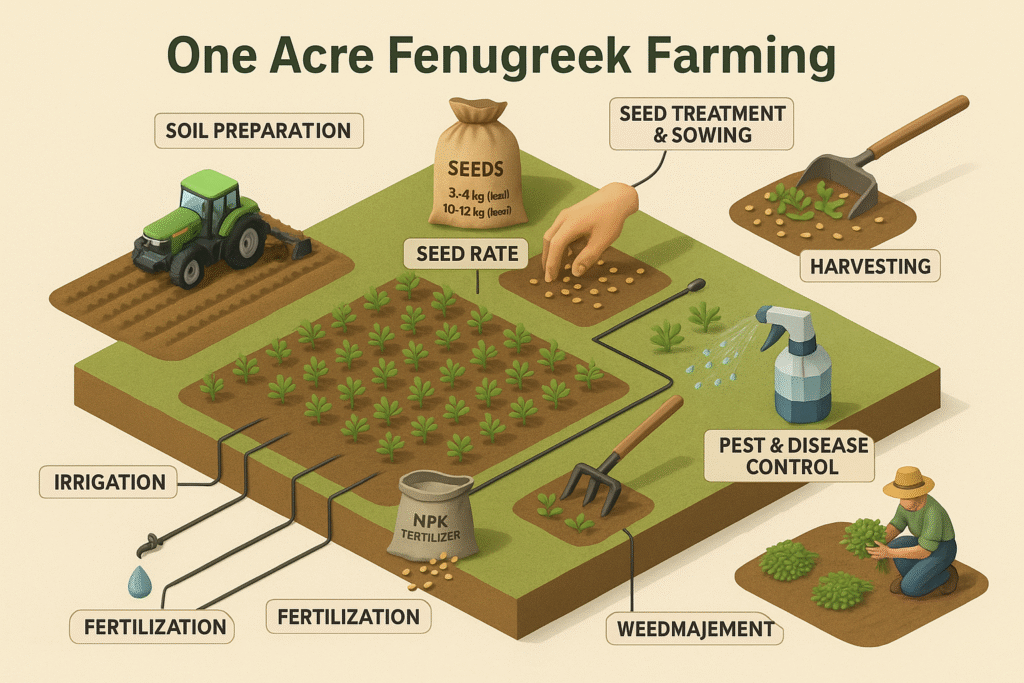
    SEED RATE, SEED TREATMENT & SOWING

    Fenugreek seeds carry a warm, nutty smell. When soaked in water for six to eight hours, they swell slightly and germinate faster. For one acre:

    Fresh-leaf crop: 3–4 kg seed
    Seed-production crop: 10–12 kg seed

    Seeds are sown in shallow lines spaced twenty to twenty-five centimetres apart. The depth is small—not more than one and a half centimetres—because fenugreek seeds struggle when buried too deep.

    Within four to seven days, germination begins. Small twin leaves appear, soft in texture and pale green at first. Uniform moisture is crucial during this phase.

    IRRIGATION RHYTHM

    Fenugreek dislikes excess water.
    It prefers gentle, timely irrigation rather than heavy watering.

    In the first seven days, light daily irrigation keeps the seedbed moist.
    Once seedlings establish, irrigation shifts to every three or four days depending on climate.

    During the vegetative stage—day fifteen to thirty—the plant demands the most water. This is when leaves expand rapidly and develop full flavour.

    Overwatering reduces aroma and makes the leaves watery.
    Under-watering makes the crop fibrous and dull in colour.

    Drip irrigation is ideal because it maintains moisture without wetting leaves. Overhead irrigation is used, but only early morning to prevent disease.


    FERTILIZER MANAGEMENT

    If you stand at the edge of a healthy fenugreek field during its second or third week, you can almost read the plant’s nutrient needs from the colour of its leaves. Fenugreek responds immediately to nutritional changes. When the soil carries sufficient nitrogen, its leaves widen smoothly, forming a soft three-lobed shape with a deep green tint. The moment nitrogen falls short, the veins stand out slightly lighter, and the growth rhythm slows. Unlike some crops that hide deficiencies until the final stages, fenugreek speaks early and clearly.

    The foundation of good nutrition begins before the seed even touches the soil. Farmers who understand soil biology always add organic matter first—two to three tons of compost or well-decomposed manure. This not only feeds the crop slowly but creates a living environment where microorganisms help convert nutrients into forms the plant can easily absorb. Fenugreek leaves actually carry more aroma when grown in organically rich soil.

    Once the seedlings reach ten to twelve days old, the crop enters its early vegetative expansion stage. Here, the plant needs a gentle push—small amounts of nitrogen, not too strong to make it watery, not too weak to leave it stunted. Farmers typically give a mild urea dose in two or three splits, always after irrigation so that the granules dissolve into the soil without burning the delicate roots.

    By the time the crop reaches its third week, potassium becomes essential. Potassium strengthens cell walls, deepens aroma, and increases leaf thickness. Farmers who grow fenugreek for the fresh market aim for strong, crisp leaves because they fetch better prices. A light dose of potash or a balanced NPK helps achieve that texture.

    Micronutrients such as iron, zinc, and magnesium are the secret behind that beautiful bluish-green leaf tone. Their deficiency shows up quickly as pale patches, narrow leaves, or slow canopy development. A single foliar spray often brings the crop back to perfect health. Fenugreek is surprisingly responsive to foliar nutrition; its leaves absorb nutrients efficiently, and colour improvement becomes visible in less than four days.

    Well-balanced nutrition is the biggest difference between average fenugreek and premium fenugreek.


    WEED MANAGEMENT — REAL FIELD EXPERIENCE

    Fenugreek seedlings have a habit of emerging softly, without aggressive speed. This makes them vulnerable to weeds during the first fifteen days. If weeds appear early, they compete for nitrogen and sunlight, weakening the young fenugreek plants. A clean field during the first three weeks is essential to shape final yield.

    Experienced farmers often do the first weeding manually because the roots of fenugreek are shallow, and tools can disturb the soil structure. A gentle hand weeding at around ten to fifteen days clears the competition and allows the canopy to spread evenly. Once the leaves expand and the canopy shades the soil, weeds naturally slow down.

    Mulching is another technique that farmers in hot countries use. A thin layer of straw or dried leaves keeps soil temperature cool, improves moisture retention, and suppresses weed growth. In winter climates, weeds grow slower, but weed removal is still necessary to support uniform leaf size.


    PEST MANAGEMENT

    Fenugreek plants attract a specific set of pests, but their behaviour varies with climate. The most common visitor is the aphid—a tiny insect that gathers in colonies under leaves and sucks sap quietly. The first sign of aphid presence is a slight curl on the leaf edges or a subtle sticky shine on the surface. Farmers who inspect their fields during sunrise catch the problem early and treat it with neem-based sprays or light insecticides.

    Leaf miners also trouble the crop occasionally. They create thin winding tunnels inside the leaves, reducing the visual appeal. Removing infected leaves and improving ventilation significantly slows the attack.

    In humid climates, a small caterpillar called the gram pod borer sometimes chews the leaf edges. Farmers control it through biological sprays or timely monitoring.

    Fenugreek has natural resistance to many pests. Most problems arise from moisture imbalance rather than external attack. A well-ventilated field with balanced irrigation rarely faces severe pest issues.


    DISEASE MANAGEMENT — SCIENCE WITH NARRATIVE

    Diseases in fenugreek appear subtly, almost politely. A faint yellow spot on the leaf, a soft patch of fungus developing near the soil line—these signs appear when the environment becomes too moist or too still. Downy mildew is the most common disease, forming a light grey underside patch. It spreads when nights are cool, days are humid, and leaves stay wet for too long.

    Farmers prevent this by watering early in the morning, allowing leaves to dry naturally through the day. A simple cultural practice prevents more disease than chemicals ever can. When necessary, light copper-based sprays stop fungal growth without damaging leaf quality.

    Root rot appears only in waterlogged soils. Good drainage is the solution, not heavy pesticide use. Fenugreek rewards farmers who focus on environment rather than medicines.

    HARVESTING — THE MOST DELICATE STAGE

    Harvesting fenugreek is almost an art. The timing affects aroma, leaf tenderness, and shelf life. In most regions, leafy fenugreek is harvested between twenty-five and thirty-five days. The ideal moment is when the canopy becomes dense, leaves are fully shaped, and stems feel firm at the base.

    Farmers harvest at dawn, when leaves are still cool and moist with natural dew. This preserves fragrance and prevents wilting. The sound of pulling a mature fenugreek bunch from the soil is soft yet satisfying—a gentle release rather than a tear.

    Some farmers harvest by cutting the stems two to three centimetres above soil, allowing regrowth. Others uproot plants entirely for maximum yield.

    Fresh fenugreek must be washed lightly and packed in loosely tied bundles. Air circulation is more important than tight packaging.

    YIELD — REALISTIC GLOBAL RANGE

    Yield varies by climate, seed type, and management:

    Leafy crop yield per acre:
    3500 to 6000 kg (average)
    7000 kg (excellent management)

    Seed crop yield per acre:
    350 to 650 kg

    Fenugreek seed remains a major export spice, while leafy fenugreek dominates daily markets.


    GLOBAL MARKET PRICING (USD)

    Fresh leafy fenugreek pricing:
    India: $0.30–1.00/kg
    Middle East: $1.2–3.0/kg
    Europe (ethnic market): $2.0–4.5/kg
    USA: $2.5–5.0/kg

    Fenugreek seed pricing:
    Global spice markets: $1.0–2.5/kg
    Premium cleaned export seed: $2.0–3.8/kg

    Leafy fenugreek has faster turnover; seed fenugreek has longer shelf life and stable pricing.

    PROFIT ANALYSIS — GLOBAL USD MODEL

    Leafy fenugreek profit calculation:

    Yield example: 5000 kg
    Average price: $0.80 per kg
    Revenue: $4000

    Cost of production (1 acre): $700–$1100

    Net profit per cycle: $2900–$3300

    Cycles per year: 4 to 5

    Annual income per acre: $11,000 to $16,000

    Seed fenugreek profit is lower per cycle but much more stable for long-term spice trade.


    EXPORT MARKET — REAL WORLD DETAILS

    Export fenugreek leaves must be:

    Deep green

    Fresh

    Free from soil and moisture

    No rotting or fungal marks

    Packed loosely in ventilated crates

    Cooled immediately


    Seed fenugreek is more widely exported:

    Major importers:
    Egypt, UAE, China, Turkey, Saudi Arabia, Netherlands, Ethiopia, Sri Lanka.

    Cleaned, polished seed fetches premium pricing.

    CONCLUSION

    Fenugreek is one of those crops that quietly rewards farmers who understand rhythm more than techniques. It grows with humility but offers income with generosity. In one acre, it creates a complete ecosystem—aroma, nutrition, medicine, and market. Its simple cultivation requirements make it perfect for youth farmers building a new agricultural career. Its global demand ensures long-term stability. Its speed ensures quick income. And its personality ensures satisfaction.

    A farmer who grows fenugreek grows confidence.

    FAQ

    1. How long does fenugreek take to grow?
    Leafy type: 25–35 days. Seed type: 90–110 days.

    2. Why do fenugreek leaves become pale?
    Moisture imbalance or micronutrient deficiency.

    3. Can fenugreek be grown year-round?
    Yes in mild climates; winter is ideal.

    4. Which irrigation method is best?
    Drip irrigation with gentle, regular moisture.

    5. How many cycles per year?
    Four to five cycles for leafy fenugreek.

    6. Is fenugreek profitable for exports?
    Yes—especially seed fenugreek due to global spice demand.

    fenugreek seed rate, methi irrigation schedule, leafy fenugreek crop, global methi cultivation
    Trigonella foenum-graecum cultivation, medicinal herb farming, leafy methi production, global spice-leaf crop

    ✍️Farming Writers Team
    Love Farming Love Farmers


    Read A Next Post 👇

    https://farmingwriters.com/one-acre-coriander-farming-complete-guide/

  • One Acre Tomato Farming: Complete Worldwide Cultivation, Management and Profit Guide

    One Acre Tomato Farming

    1. Introduction: Why Tomato Is the World’s Most Profitable Vegetable Crop

    Tomato is grown in more than 175 countries and is one of the most consumed vegetables worldwide. The global tomato industry exceeds $200 billion, driven by fresh consumption, sauce, puree, ketchup, dehydrated tomatoes, sun-dried products and processing industries.

    Tomato farming is ideal for one acre because:

    High yield potential

    High global market demand

    Multiple harvesting cycles

    Year-round production in many climates

    Fast maturity

    Easy storage and transport

    Extremely profitable with modern hybrid seeds


    One acre of tomato, if managed properly, can become a stable, year-round income source for small and medium farmers.


    2. Climate Requirements (Global Zone-Based Guide)

    Tomato thrives in a wide range of climates:

    Optimal Climate Conditions

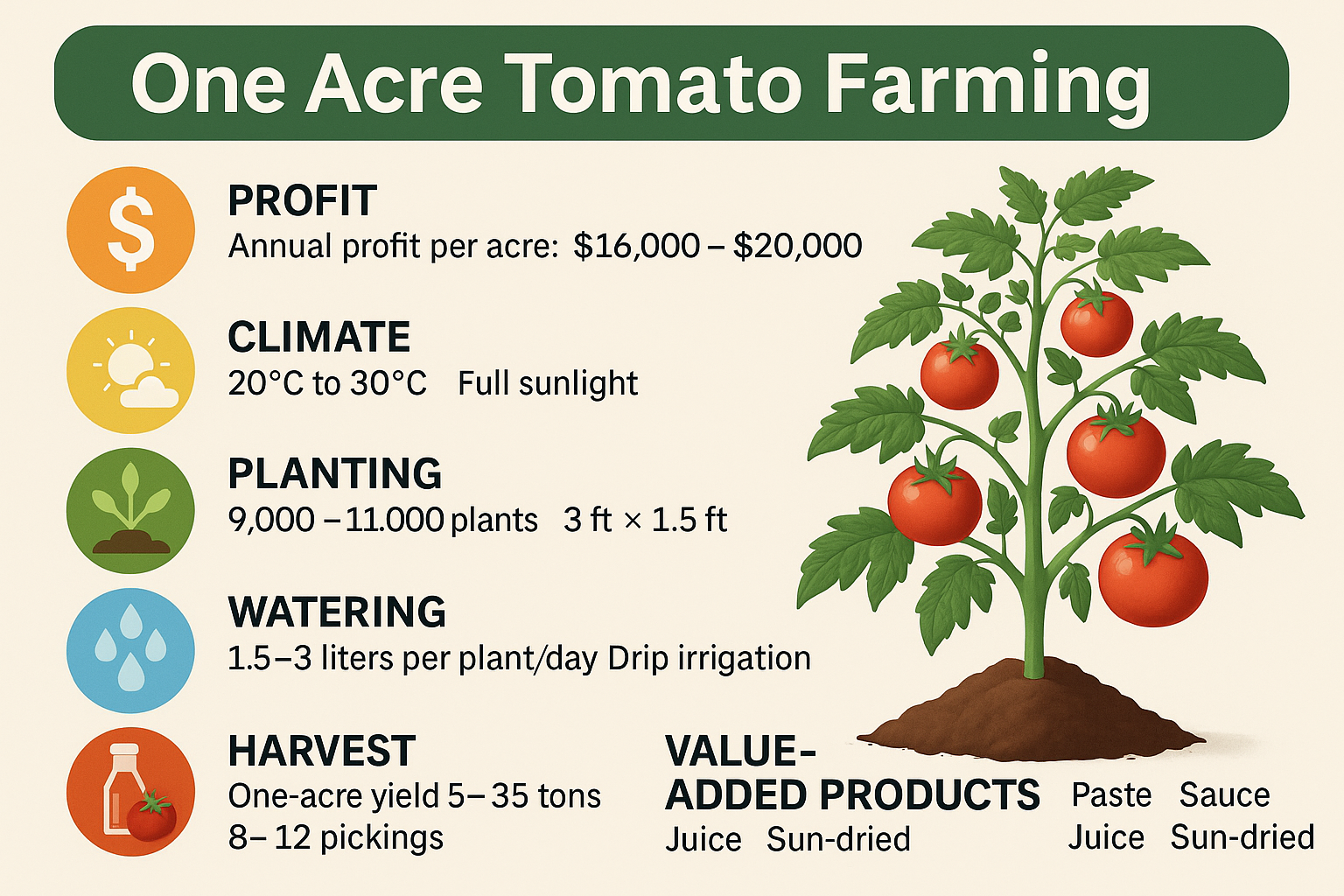
    Temperature: 20–30°C

    Maximum tolerable: 35°C

    Minimum: 10°C

    Sunlight: 6–8 hours/day

    Humidity: 50–70%


    Top Global Tomato Regions

    Americas: USA (California, Florida), Mexico, Brazil

    Europe: Spain, Italy, Netherlands

    Asia: India, China, Turkey

    Middle East: Egypt, Saudi Arabia (greenhouse)

    Africa: Kenya, Ethiopia, Nigeria


    Tomato is so adaptable that it remains one of the top crops in protected as well as open-field farming.


    3. Soil Requirements

    Tomato thrives best in:

    Sandy loam or loamy soil

    Good drainage

    Organic matter ≥ 2%

    pH: 6.0–7.0

    EC < 1 ds/m


    Soil Preparation for One Acre

    Deep ploughing

    Add 8–10 tons of compost

    Add 50 kg neem cake

    Prepare raised beds (3 ft width, 1 ft height)

    Install drip lines prior to transplanting


    4. Seed Rate for One Acre Tomato Farming

    Hybrid seeds: 10–15 grams

    Open-pollinated seeds: 25–30 grams


    Hybrid seeds produce 2–3x higher yield and are preferred globally.

    Nursery Details

    Use pro-trays

    98 cavity trays

    Cocopeat + vermiculite mix

    Germination in 4–6 days

    Seedlings ready in 22–25 days


    5. Recommended Global Varieties (Open Field & Protected)

    Open Field Hybrids

    NS 516

    Abhinav

    US 440

    Roma (processing)

    Rio Grande (heat tolerance)


    Protected / Greenhouse Hybrids

    Anna F1

    Arka Rakshak

    Shanty

    Kilele

    Pusa Rohini


    Processing Industry Varieties

    Heinz 1350

    UC82

    Roma VF


    Each region uses different hybrids based on climate and market.


    6. One Acre Planting Layout (Correct Scientific Spacing)

    Row spacing: 3 ft

    Plant spacing: 1.5 ft


    Plant Population per Acre

    9,000 – 11,000 plants

    Staking or trellising improves fruit quality and disease resistance.


    7. Irrigation Requirement (Exact Water Schedule)

    Tomato is sensitive to water stress.

    Daily Requirement

    Initial stage: 1 liter/plant/day

    Flowering stage: 1.5–2 liters

    Fruiting stage: 2.5–3 liters

    Maturity stage: 1.5 liters


    Best Method: Drip Irrigation

    Saves 35–45% water

    Reduces disease

    Supports fertigation


    8. Fertilizer Schedule (Complete Month-by-Month Program)

    Basal Dose (Before Transplanting)

    Farmyard manure: 8–10 tons

    NPK (12:32:16): 50 kg

    Neem cake: 50 kg


    Fertigation Schedule

    Week 1–4 (Establishment stage)

    NPK 19:19:19 → 4 kg/week

    Calcium nitrate → 2 kg/week


    Week 5–8 (Flowering stage)

    NPK 13:00:45 → 5 kg/week

    Magnesium sulphate → 3 kg/week


    Week 9–14 (Fruit development)

    Potassium nitrate → 6–7 kg/week

    Calcium nitrate → 3 kg/week


    Week 15 onwards (Ripening stage)

    Mono Potassium Phosphate → 3 kg/week


    Micronutrients (Spray)

    Boron 0.2%

    Zinc 0.5%

    Calcium chloride 0.2%


    9. Pest & Disease Management (Global Standard)

    Major Pests

    1. Fruit Borer

    Control: Emamectin Benzoate 5 SG


    2. Whiteflies

    Control: Imidacloprid

    Also controls virus transmission


    3. Thrips

    Control: Spinosad


    4. Aphids

    Control: Neem oil 3% or Thiamethoxam


    Major Diseases

    1. Early Blight

    Control: Mancozeb + Carbendazim


    2. Late Blight

    Control: Metalaxyl or Cymoxanil


    3. Powdery Mildew

    Control: Wettable sulphur


    4. Bacterial Wilt

    Control: Soil drenching with streptocycline + copper oxychloride


    5. Leaf Curl Virus

    Control: Whitefly control + resistant hybrids


    10. Yield Estimation (One Acre)

    Properly managed one acre tomato farm yields:

    25–35 tons (25,000–35,000 kg) open field

    40–60 tons protected farming


    11. Market Prices (Global USD Pricing)

    Market Price per kg (USD)

    USA $0.80 – $1.50
    Europe $1.00 – $2.00
    Middle East $0.70 – $1.20
    Africa $0.40 – $0.80
    India $0.25 – $0.70


    Processed tomato products have even higher margins.


    12. Profit Calculation (One Acre)

    Revenue

    Example:
    30,000 kg × $0.80 = $24,000

    Total Cost

    Seeds, fertilizers, staking, irrigation, labor = $4,000 – $6,000

    Net Profit

    $16,000 – $20,000 per acre

    Greenhouse tomato can reach $30,000+ per acre.


    13. Post-Harvest Handling

    Sorting

    Grading

    Washing

    Waxing

    Packing (5–10 kg crates)

    Storage: 10–12°C


    Good post-harvest handling increases shelf life.


    14. Global Marketing Channels

    Local Fresh Markets

    Supermarkets

    Vegetable vendors


    Processing Industries

    Ketchup manufacturers

    Juice factories

    Puree companies


    Export Markets

    Countries importing tomatoes:

    UAE

    Saudi Arabia

    Kuwait

    Nepal

    Sri Lanka


    Export price higher than domestic.


    15. Value Addition (2–4X Profit Increase)

    Tomato paste

    Tomato puree

    Tomato powder

    Sun-dried tomatoes

    Tomato sauce

    Ketchup


    Value-added products sell at 3–5× the fresh fruit price.


    16. Government Subsidy & Loans

    India

    MIDH/NHB subsidy (40–50%)

    NABARD horticulture loans


    USA

    USDA vegetable farming loans


    Europe

    CAP horticulture funds


    Middle East

    Greenhouse subsidies


    17. Conclusion

    One-acre tomato farming is one of the world’s most profitable vegetable farming systems. With modern seed varieties, drip irrigation, fertigation, and proper disease management, farmers can achieve high yields and stable income. Tomato farming supports both fresh and processing markets, providing long-term opportunities for new and experienced farmers.


    18. FAQ (6 Questions)

    1. How much profit can one acre tomato farming generate?

    Average net profit globally is $16,000 – $20,000 per acre.

    2. How many plants per acre?

    9,000–11,000 plants.

    3. Which irrigation method is best?

    Drip irrigation with fertigation.

    4. What is the seed rate?

    10–15 grams hybrid seed per acre.

    5. How many times can tomatoes be harvested?

    8–12 pickings depending on hybrid.

    6. Is tomato suitable for beginners?

    Yes, if proper pest & disease control is followed.

    Read A Next Post 👇

    https://farmingwriters.com/one-acre-blueberry-farming-complete-guide/

    ✍️Farming Writers

    Love farming Love farmers

  • One Acre Kiwi Farming: Complete High-Income Global Farming Business Guide

    One Acre Kiwi Farming


    1. Introduction: Why Kiwi Is the Future of High-Profit Farming

    Kiwi is one of the most profitable fruits worldwide.
    It grows best in:

    India (Himachal, Uttarakhand, NE states)

    Italy

    New Zealand

    Chile

    Turkey

    China

    USA

    Kiwi consumption is increasing globally due to:

    High vitamin C
    Immunity boosting
    Low calories
    Premium fruit segment
    High storage life (up to 60 days)

    Kiwi sells 3 to 10 times higher than apple or orange.

    If youth start kiwi farming even on one acre, they can earn huge sustainable income for 20–25 years.

    2. Climate & Soil Needed for Kiwi Farming

    Kiwi requires:

    Climate

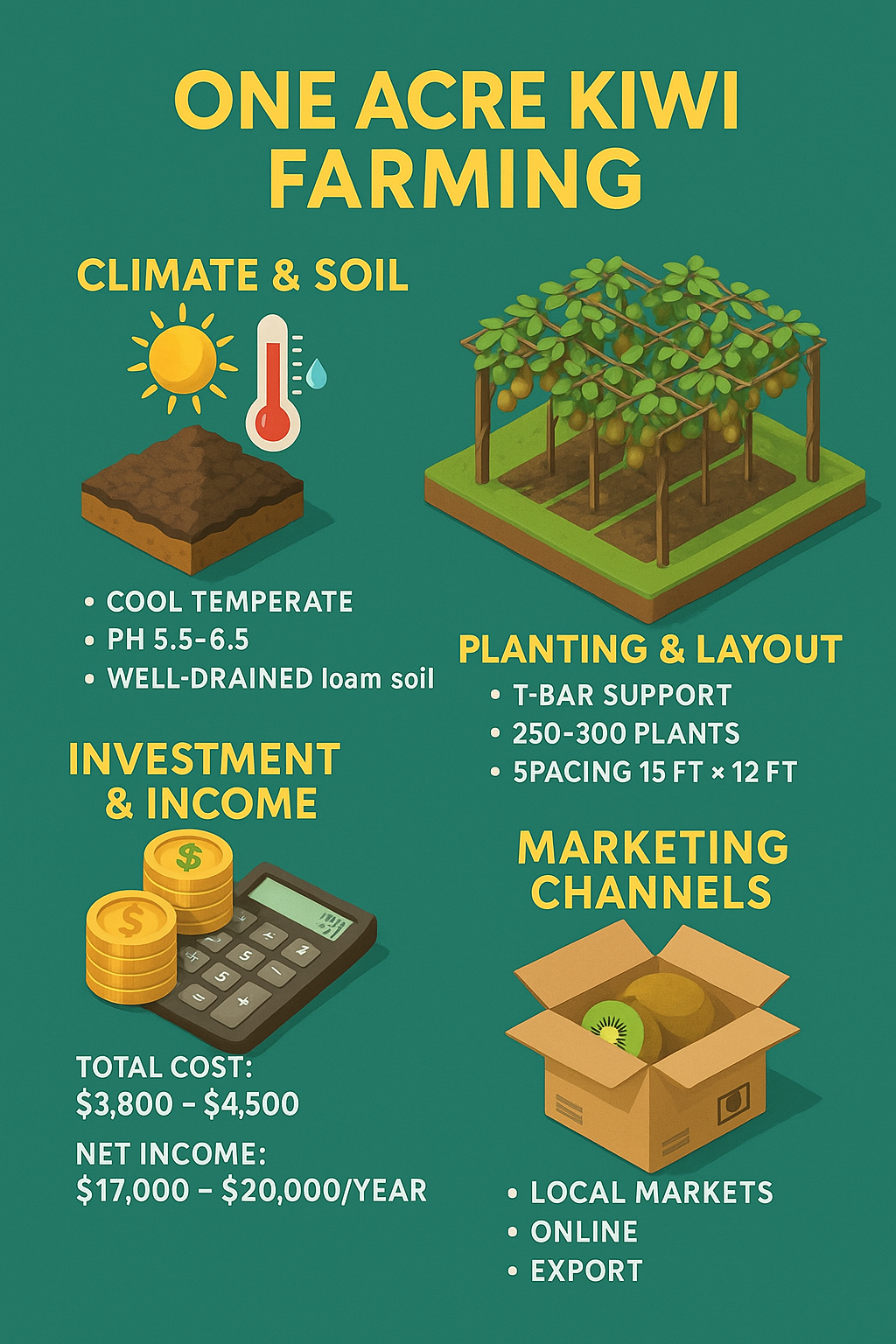
    Cool temperate region

    1000–1500 mm rainfall

    10–30°C temperature

    Frost-free winters

    Humidity 60–75%

    Soil

    pH: 5.5–6.5

    Sandy-loam / loam soil

    Rich organic matter

    Deep-well drained soil

    3. One-Acre Kiwi Orchard Layout (Professional Design)

    Plant Spacing:

    12×10 ft or 15×12 ft

    Plants Needed:

    Total plants in 1 acre: 250–300

    Male : Female Ratio = 1:6

    Support System:

    Kiwi needs a T-Bar/Pergola System:

    Costly but long-life (20–25 years)

    Best for heavy fruiting

    Height: 6–7 feet

    Wire gauge: 2–4 mm

    4. Investment Cost for 1 Acre Kiwi Farming (Professional Budget)

    ItemCost (USD)Cost (INR)Land preparation$250₹20,000High-quality plants (300)$900₹75,000T-Bar Support System$1,500₹1,20,000Drip irrigation$350₹30,000Organic fertilizers$200₹16,000Labor cost$300₹25,000Mulching$120₹10,000Plant protection$80₹6,500Maintenance$150₹12,000

    Total Investment:

    $3,800 – $4,500
    ₹3.1 – ₹3.8 lakh

    5. Planting Method (Step-by-Step Professional Instructions)

    Step 1 — Dig Pits

    Size: 2×2×2 ft

    Fill with compost, FYM, sand, neem-cake

    Step 2 — Planting

    Plant female on trellis wires

    Male plants after every 6 female plants

    Step 3 — Training

    Kiwi must be trained in cordon system

    Maintain single main stem

    Side branches evenly spaced

    Step 4 — Mulching

    Keeps moisture

    Reduces weeds

    6. Irrigation Requirement

    Kiwi needs regular moisture

    Drip irrigation recommended

    Summer: daily light watering

    Winter: once in 3–4 days

    Critical period:
    Flowering
    Fruit enlargement

    7. Manure & Fertilizer Schedule (One-Acre Orchard)

    Organic

    FYM 10–12 kg per plant annually

    Vermicompost 2 kg per plant

    Chemical

    NPK 1 kg per plant (split in 3 cycles)

    Boron spray

    Micronutrient spray every 30 days

    8. Flowering & Pollination

    Flowering Time:

    April–May

    Pollination:

    Bees are required
    You can keep bee boxes for better fruit set

    Pollination efficiency determines fruit size, weight & quantity.

    9. Kiwi Fruit Yield (Realistic Per Acre Production)

    Year 1:

    Vegetative growth (no yield)

    Year 2:

    Light yield: 1–2 tons

    Year 3:

    Medium yield: 3–4 tons

    Year 4 onwards (Full Production):

    5–7 tons per acre

    10. Kiwi Selling Price (World Market)

    MarketPrice per kgIndia retail$2.5 – $4 (₹180–₹300)India wholesale$1.8 – $2.5UAE$4 – $6Europe$4 – $7USA$5 – $8

    Premium varieties (Zespri-level) sell higher.

    11. Income & Profit Calculation (Per Acre)

    Production:

    6,000 kg (6 tons)

    Selling Price:

    Average global = $4/kg

    Total Revenue:

    $24,000 per year (₹19–20 lakh)

    Net Profit (After expenses):

    $17,000 – $20,000 (₹13–16 lakh)

    Profit increases every year as orchard matures.

    12. Value-Added Kiwi Products

    You can earn 200–400% more by selling:

    Kiwi juice

    Kiwi jam

    Kiwi squash

    Dehydrated kiwi chips

    Kiwi fruit powder

    Kiwi wine (Europe/USA legal)

    13. Worldwide Marketing Channels (Global Selling Strategy)

    A. Local Markets

    Supermarkets

    Fruit shops

    Hotels & resorts

    B. Online Selling

    Your own website

    Instagram store

    WhatsApp business

    ONDC (India)

    C. Export Markets

    Best countries:

    Dubai

    Bahrain

    Qatar

    Saudi Arabia

    Europe

    Singapore

    Japan

    14. Kiwi Farming as a Youth Startup

    Youth can create:

    Kiwi brand

    Kiwi nursery

    Kiwi juice brand

    Export kiwi supplier

    Cold-storage kiwi dealer

    Kiwi farming has huge global demand and very few suppliers.

    15. Risk & Disease Management

    Common Problems:

    Root rot

    Canker

    Sun scorch

    Low pollination

    Solutions:

    Good drainage

    Copper fungicide

    Shade nets in peak summer

    Bee keeping for pollination

    16. Conclusion

    Kiwi is among the top premium fruits globally.
    One-acre kiwi farming can generate:

    6–7 tons yield
    ₹13–16 lakh yearly profit
    Massive export opportunities
    20 years of continuous income

    Youth can easily build a long-term farming career with kiwi.

    17. FAQs

    1. Is kiwi farming profitable in 1 acre?

    Yes, extremely profitable.

    2. Can kiwi grow in hot regions?

    Need cooler climates; but high-altitude hot regions can work.

    3. How long does kiwi plant survive?

    20–25 years.

    4. Do kiwi need support system?

    Yes, T-bar or pergola is essential.

    5. Is export business easy?

    Yes, kiwi has stable international

    Read A Next Post 👇

    https://farmingwriters.com/one-acre-dragon-fruit-farming-profit-guide/

    ✍️Farming Farmers

    Love Farming Love Farmers