There are days in a farmer’s life when the sky looks silent, the fields look tired, and the heart feels like it is carrying too much at once. These days do not announce themselves. They simply arrive, the way an unexpected cloud drifts over a warm afternoon. Nothing dramatic happens. No loud tragedy. Just a steady weight inside the chest, one that only a person who works with the earth can fully understand.
Most people imagine that motivation is a loud voice. Something powerful. Something burning. But farmers know the truth: real strength rarely comes with noise. It comes quietly, often disguised as routine. It arrives in the moments when giving up seems easier but continuing feels necessary.
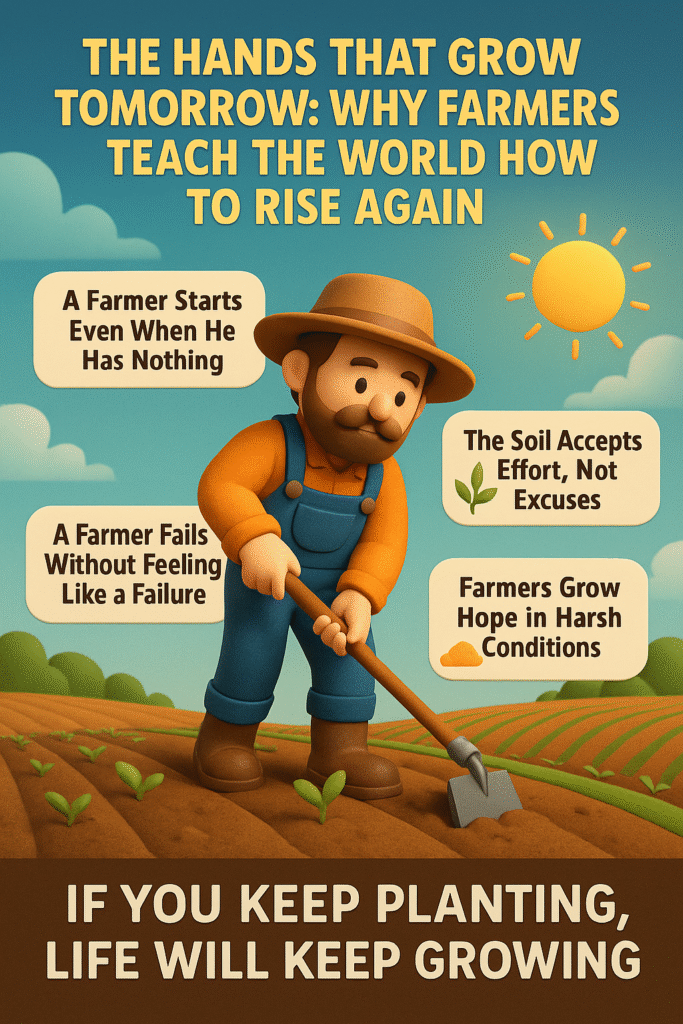
A farmer wakes up before dawn—not because he is inspired, not because he has clarity, but because the land does not pause for his confusion. The soil waits. The animals wait. The seasons move. And so he moves with them.
There is a unique honesty in farming life. The land does not flatter you. It does not promise fairness, comfort, or an easy path. It simply reflects your effort—and sometimes even that reflection feels unfair. A season can betray you. A drought can mock your patience. Pests can ignore your planning. Yet somehow, after all this, the farmer prepares again. This preparation is the heartbeat of farming, and it is also the foundation of human resilience.
Farmers understand something the world often forgets: life does not reward perfection. It rewards participation. Showing up. Trying again. Placing one foot in front of the other on the days when the mind whispers that there is no point.
Farming is not just an occupation; it is an ongoing conversation between uncertainty and courage. Every decision is made with incomplete information. Every season contains both hope and fear in equal amounts. Farmers do not walk into each day expecting comfort. They walk expecting movement—forward, backward, sideways, whatever direction nature allows—but always movement.
A farmer standing in his field is a philosopher without books. He learns patience not from theory but from watching a seed that refuses to sprout. He learns humility not from lectures but from storms that arrive without warning. He learns discipline from the tireless rhythm of farm life. He learns acceptance when a harvest falls short despite his best effort. And he learns gratitude when the soil responds with abundance after weeks of doubt.
This blend of emotion and responsibility shapes a kind of person the world often overlooks. People admire success, breakthroughs, inventions—but the quiet strength of a farmer rarely enters the spotlight. Yet without this strength, nothing else would survive. Cities breathe because fields work. Economies stand because farmers kneel in soil. Families eat because someone somewhere is checking moisture levels at dawn.
Motivation for a farmer is rarely a speech. It is the sound of the first bird at sunrise. The smell of wet soil after the first rain. The memory of last year’s struggle. The promise of this year’s chance. Hope, for farmers, is not dramatic. It is practical. It is stitched into every decision, every movement, every prayer whispered to the open sky.
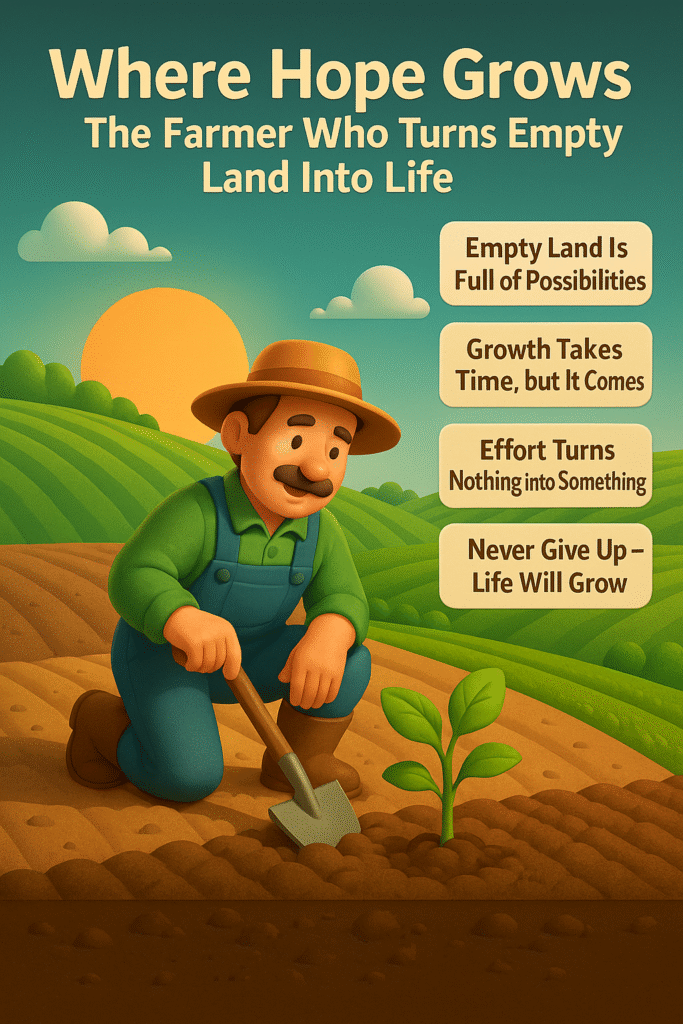
But the deepest motivation comes in a way most people never understand: through loss. When a farmer loses a crop, he loses more than income. He loses energy, dreams, calculated risks, plans built over months. But he also gains something essential—a sharper understanding of life. When he prepares the land again after such loss, that act alone carries more power than a thousand motivational seminars. It says: “I am not done. The land is not done with me.”
Continuing after loss is not a habit. It is a philosophy. A way of seeing the world. A belief that while nature may not guarantee results, effort still matters. In fact, it is often the only thing that matters.
Farmers do not keep going because they ignore reality. They keep going because they understand it more deeply than anyone else. They know that waiting for perfect conditions is another way of quitting. They know that each sunrise is a negotiation between uncertainty and determination. They know that responsibility weighs more than emotion, and that feeding people is not a job—it is a quiet promise to humanity.
And so farmers continue. Day after day. Season after season. In heat that steals breath. In winters that test bones. In rains that wash away plans. They keep going not because life is easy but because stopping would be harder.
In every village, in every field around the world, there is a farmer walking home at dusk with a tired body and a restless mind. He carries doubts, fears, half-formed hopes—and yet he also carries something the world desperately needs: the courage to try again tomorrow.
And that is why farming remains one of the most powerful teachers on earth. The land teaches effort without assurance. It teaches responsibility without applause. It teaches hope without guarantees. It teaches people to keep moving even when nothing makes sense.
If the world wants to understand true strength, it should not look at awards, speeches, or victories. It should look at a farmer bent over the soil, planting again after a failure he never deserved. That moment is pure courage. That moment is pure human spirit. That moment is the real definition of motivation.
Quietly.
Consistently.
Honestly.
This is the work behind the world.
✍️Farming Writers Team
Love Farming Love Farmers
Read A Next Post 👇
https://farmingwriters.com/the-long-road-home-farmer-resilience/