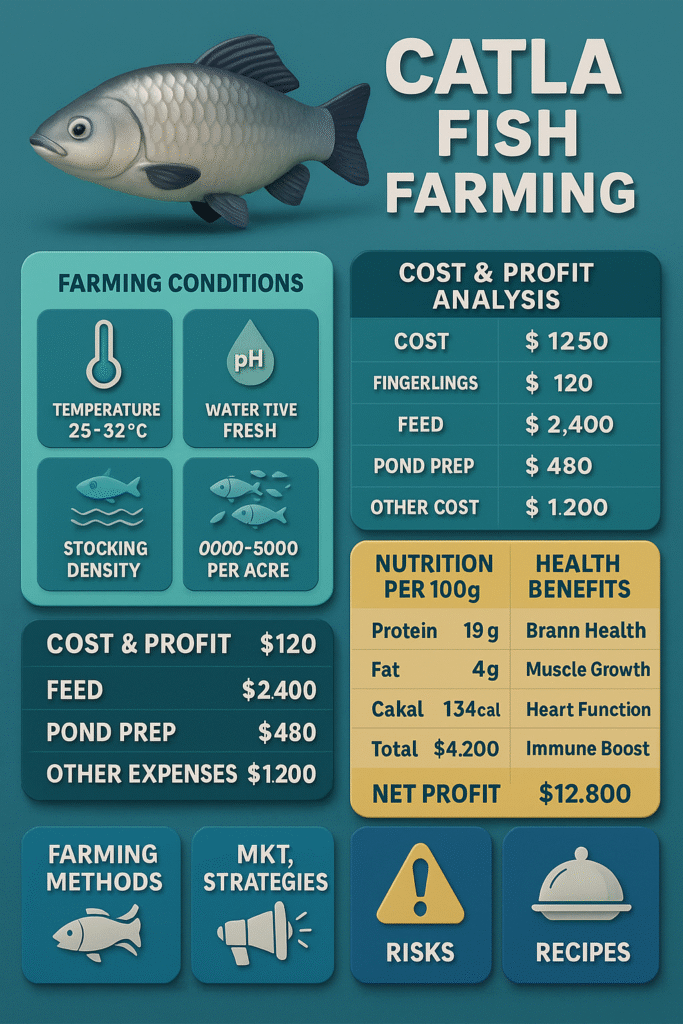
Catla (Catla catla) is one of the most important freshwater fish species in Asian aquaculture. Known for its fast growth, high market demand, and delicious taste, Catla is widely farmed across India, Bangladesh, Nepal, Sri Lanka, Myanmar, and exported to the Gulf and Western countries.
Catla is a surface-feeding carp, highly suitable for composite fish farming with Rohu and Mrigal. Because of its higher growth rate, Catla can reach 2–3 kg in just 12 months, making it one of the most profitable fish for farmers.
What is Catla?
Scientific Name: Catla catla
Family: Cyprinidae
Common Names: Bhakura, Catla, Katla, Bengal Carp
Native to: Indian rivers – Ganga, Yamuna, Brahmaputra
Catla has a large head, wide mouth, and compressed body structure suitable for fast swimming and rapid growth.
Why Catla is Popular Worldwide
High protein content
Easy to farm
Naturally disease resistant
Large consumer demand
Fast growth compared to Rohu
Can be farmed with multiple fish
Low maintenance farming
Catla is exported as chilled fish, fillets, dried fish, and frozen fish blocks.
Ideal Climate & Water Requirements
FactorRequirementTemperature25–32°CWater TypeFreshwaterpH Level6.8–8.5Oxygen5 mg/L minimumDepth1.5–2 metersTank/Pond Size1 acre recommended
Catla cannot survive in cold water (<18°C), so aeration and temperature control are crucial in cold regions.
Catla Growth Cycle
Fingerling stage: 2–3 grams
3 months: 250–350 grams
6 months: 700–900 grams
12 months: 1.5–2.2 kg
18 months: 2.5–3.5 kg
Farmers usually harvest Catla at 1.5–2 kg, which sells fastest in the market.
Farming Methods
- Pond Culture (Traditional)
Most popular, low-cost, ideal for small farmers.
- Tank / Cement Culture
Used in limited farm areas or rooftop aquaculture.
- Cage Culture
Used in reservoirs and lakes for mass production.
- RAS (Recirculating Aquaculture System)
Modern, high-density farming, premium quality fish.
Pond Design & Water Preparation
Pond size: 1 acre
Depth: 1.5–2m
Use lime, cow dung, urea, super phosphate for plankton production.
Install aerators to maintain oxygen levels.
Catla prefers surface layer, so surface aeration is very important.
Seed/Fingerlings Selection
Healthy, active fish
Minimum size 3–4 inches
No deformities
Buy only from certified hatcheries
Ideal stocking density:
4,000–5,000 fingerlings per acre with Rohu & Mrigal.
Feeding Schedule
Catla is a surface feeder, eating plankton and floating feed.
Feed composition:
Protein: 22–28%
Carbohydrates: 35–40%
Fat: 3–5%
Daily feeding: 3–5% of body weight.
Health Management
Common issues:
Gill disease
Fungal infection
Parasitic worms
Low oxygen shock
Prevent with:
Regular liming
Clean water
Good quality feed
Aeration
Avoid overcrowding
Cost & Investment Analysis (1 Acre)
CategoryCost (₹)Cost ($ USD)Pond Prep₹40,000$480Lime/Fertilizer₹15,000$180Fingerlings₹10,000$120Feed₹2,00,000$2,400Labour₹40,000$480Electricity₹25,000$300Miscellaneous₹20,000$240Total Cost₹3,50,000$4,200
Market Price & Global Demand
MarketPrice per kgIndia₹160–230/kgBangladesh৳180–260/kgGulf Countries$5–10/kgUSA (Imported Catla)$7–14/kgUK£6–12/kg
Catla demand is strong in Indian diaspora markets worldwide.
Profit Calculation (1 Acre)
Yield: 8–10 tons
Revenue: ₹14–22 lakh ($17,000–26,000)
Net Profit: ₹8–12 lakh ($10,000–14,500)
Profit Margin: 40–50%
Catla gives slightly higher profit than Rohu due to faster growth.
Nutrition Facts (per 100g)
Calories: 134
Protein: 19g
Fat: 4g
Omega-3: 210 mg
Vitamin B12: Excellent
Iron: 1.2 mg
Phosphorus: 150 mg
Health Benefits
Supports brain development
High protein muscle growth
Good for heart & cholesterol
Strengthens bones
Immunity booster
Great for pregnant women
Medical & Ayurvedic Uses
Helps cure anemia
Supports joint health
Beneficial for child growth
Good for weak immunity
Supports brain function
Catla fish oil is used in health supplements.
Risks & Weaknesses
Sensitive to low oxygen
Big head = lower fillet yield
Prone to fungal infections
Cannot survive in cold climates
Needs clean water
Catla Recipes (Worldwide)
Catla Fish Curry
Bengali Bhakura Jhol
Sri Lankan Spicy Stew
Grilled Catla Fillet
Fried Catla (South Indian style)
Marketing Strategies
Sell to local fish markets
Supply to hotels & restaurants
Export to Gulf countries
Sell online (fresh/chilled fish)
Partner with seafood distributors
Business Opportunities
Catla hatcheries
Feed production
Pond management services
Fish processing units
Fish export business
Polyculture farming farms
FAQs
Q1: How fast does Catla grow?
→ 1.5–2 kg in 10–12 months.
Q2: Is Catla profitable?
→ Yes, 40–50% profit.
Q3: Can Catla be grown with Rohu?
→ Yes, best in composite farming.
Q4: What is Catla price in USD?
→ $5–14/kg depending on exporting country.
Q5: What is the survival rate?
→ 85–90%.
Conclusion
Catla fish farming is one of the most profitable freshwater aquaculture businesses in South Asia. With high demand, fast growth, and stable market price, Catla provides an excellent income source for both small farmers and commercial producers. Its export potential, nutritional benefits, and low-cost maintenance make it a top fish for long-term business success.
Catla fish farming, Catla farming profit, Catla cost, Catla nutrition
✍️Farming Writers
Love farming Love farmers
Read A Next Post 👇