• Foxglove Farming Risk Map: What Most Growers Misjudge Before Planting

    Foxglove Farming

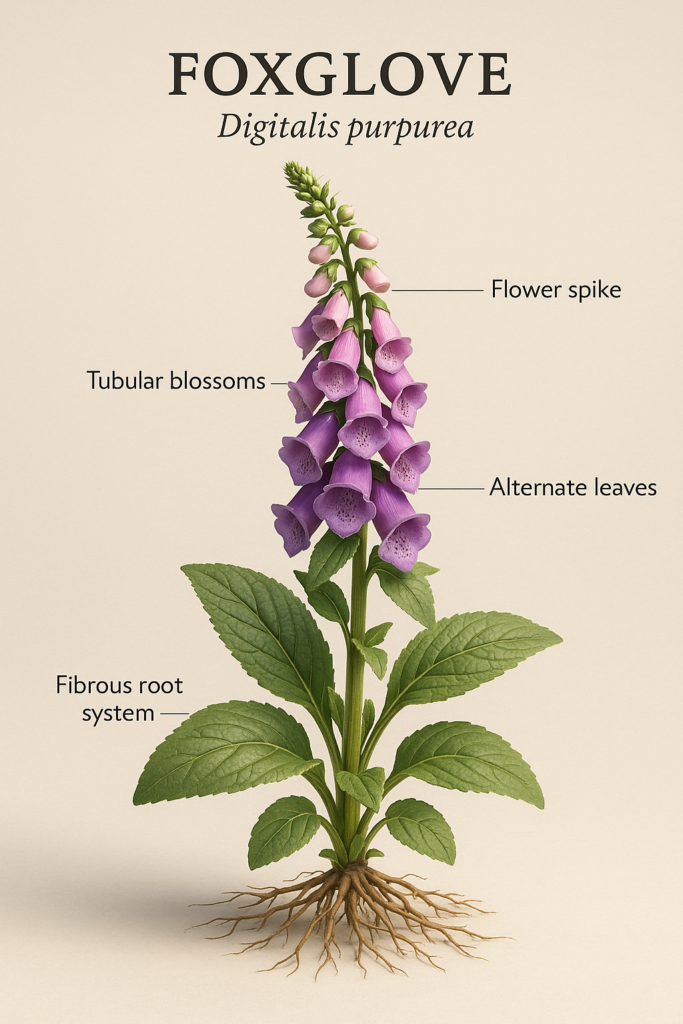
    Farmers often fall for Foxglove because of its height, color range, and the way it stands upright like a structured spike demanding attention in any garden bed. But what most growers do not realise until after their first failure is that Foxglove does not forgive wrong timing. It behaves less like a typical ornamental and more like a crop that punishes impatience. Many farmers enter this cultivation assuming “if it grows in Europe’s wild hills, it will manage fine anywhere.” That belief alone destroys more Foxglove fields than pests ever will. The plant was shaped by cold winters, acidic soils, damp air, and slow sunlight rhythms — remove any one of these and the crop’s physiology collapses, no matter how beautiful the seeds looked on paper.

    Professional growers who sell to premium florists learned long ago that Foxglove is not about quantity. Buyers are extremely particular. They reject stems that bend even slightly, spikes that bloom unevenly, or colors that wash out from heat stress. A farmer can spend months raising perfect rosettes, only to watch the entire stand collapse in a single warm spell because the plant was never designed to handle tropical nights. This mismatch between expectations and biology is exactly why Foxglove becomes a loss-making crop for those who treat it like a normal flower rather than a cool-season specialist.

    The first decision a farmer makes — whether Foxglove suits their climate — determines 60 percent of the outcome. Soil type, fertilizers, spacing, irrigation — all these matter, but none can compensate for warm nights or poorly timed sowing. Experienced growers begin not with soil tests, but with temperature charts. They check if night temperatures drop below 15°C during the vegetative phase. When they don’t, they simply walk away from the crop for that year. Foxglove prefers restraint, not courage. And that restraint is exactly what separates profitable growers from those who struggle.

    Another point farmers misunderstand is that Foxglove is technically a biennial in most climates. The first year gives leaves, the second gives flowers. But in countries where winters are mild, the plant behaves unpredictably — sometimes flowering early, sometimes refusing entirely. Farmers who try forcing the plant into bloom with fertilizers only worsen the problem. The deeper reality is that Foxglove times itself according to cold exposure, not calendar dates. If the winter fails, the flowering rhythm becomes unreliable. This is why large-scale growers either simulate winter through controlled nurseries or simply rely on cold-zone farms to maintain consistent quality.

    Market behaviour around Foxglove is equally misunderstood. Local markets rarely pay high prices for it because customers don’t know the flower. Only professional florists, event decorators, and export chains value it. Their orders are strict: straight stems, tall uniform spikes, fully developed bells, and no leaf stripping scars. A farmer entering Foxglove farming without having a buyer ready is already halfway into a poor season. Unlike marigold or chrysanthemum, Foxglove is not a mass-market crop. It is a designer flower. And designer flowers punish those who produce blindly.

    Soil does matter — but only when the grower has first respected the climate. Foxglove prefers acidic soil, something many regions simply do not offer. Farmers who ignore this and rely solely on compost find the crop producing coarse leaves but weak flowering. The spike begins developing but stops midway, creating a half-formed, unsellable stem. But when soil acidity is corrected early using elemental sulfur or acidic organic matter, the plant suddenly behaves like its European ancestors — disciplined, predictable, and beautifully structured.

    Irrigation is the next frequent point of failure. Too little water during the rosette stage kills the core bud, and too much water rots the crown. Foxglove demands even moisture, nothing extreme. The worst mistake growers make is overhead irrigation on warm evenings. That single act invites fungal infections that hollow out the stem from within. Farmers discover the problem only on harvest day, when they cut the stem and it collapses. This is not a disease issue — it is an irrigation timing mistake.

    Nutrient management is often overdone. Foxglove does not want heavy nitrogen. When nitrogen is excessive, the plant grows large rosettes that deceive growers into thinking the crop is healthy, but the spike remains short and weak. Balanced feeding with light phosphorus and potassium gives better spikes than any attempt to force growth artificially. Again, Foxglove punishes impatience.

    Buyers care most about uniformity. A field that blooms in an uneven pattern loses half its sale potential. The farmer must stagger sowing or control cold exposure to achieve synchronized flowering. This is the one secret professional growers guard closely. They never sow all the seeds at the same time. They stagger batches by one to two weeks to identify which timing produces the best uniformity for that particular farm’s microclimate.

    Harvesting, too, demands precision. A spike harvested too early will open poorly; harvested too late will drop bells in transit. Professional growers harvest when only one-third of the bells are open. This maintains structure during shipping. Local growers often harvest fully open spikes thinking they look more beautiful, but buyers reject them instantly because longevity collapses.

    The economic truth of Foxglove farming is simple: Profit exists only when the grower produces for the premium market. Local mandis will never reward the effort. Export chains and high-end florists will. But they expect consistency and will not tolerate the excuses growers often make about climate surprises. In warm regions, Foxglove is better grown in controlled nurseries to avoid failure. In cool regions, field farming works easily. This difference is so fundamental that growers who ignore it repeat the same losses every season.

    Foxglove is also a medicinal plant — Digitalis compounds extracted from it have pharmaceutical value. But farmers should never attempt handling extraction or processing. It is toxic without proper control. The safest earning route is flowers, not medicinal processing.

    Every farmer considering Foxglove must ask one question Honestly:
    “Does my climate allow cool-season discipline?”
    If the answer is no, then the best decision is not to grow it. This honesty saves money.

    FAQS

    Why do most farmers fail with Foxglove?
    Because they treat it like a regular annual, ignoring its need for cool nights and gradual cold exposure.

    Why do spikes remain short?
    High temperatures during early growth stop vertical bud formation.

    Why do buyers reject Foxglove?
    Bent stems, uneven spikes, or fully open bells make the flower unsuitable for professional use.

    Can it grow in warm regions?
    Only with controlled nurseries. Open-field warm climates usually fail.

    Why does Foxglove rot at the base?
    Evening overhead irrigation causes crown rot.

    Should beginners grow Foxglove?
    Not unless they have a reliable cool-season window or protected cultivation.

    Why does flowering skip entirely?
    Lack of winter-like conditions prevents vernalization.

    Is Foxglove profitable?
    Only when sold to premium florists or export buyers.

    Do seeds or transplants perform better?
    Seeds offer more control but require precise timing; transplants are safer for beginners.

    What is the biggest mistake new growers make?
    Focusing on leaf growth instead of climatic suitability and market planning.

    Final Honest Conclusion

    Foxglove rewards discipline, not enthusiasm.
    It succeeds only when climate, timing, and market alignment are correct.
    This article exists to prevent growers from walking blindly into a crop that looks easy but behaves like a specialist.

    ✍️Farming Writers Team
    Love Farming Love Farmers

    Read A Next Post 👇
  • The Sweet Pea Mistake Most Growers Don’t Notice Until Buyers Reject Their Stems

    The Sweet Pea

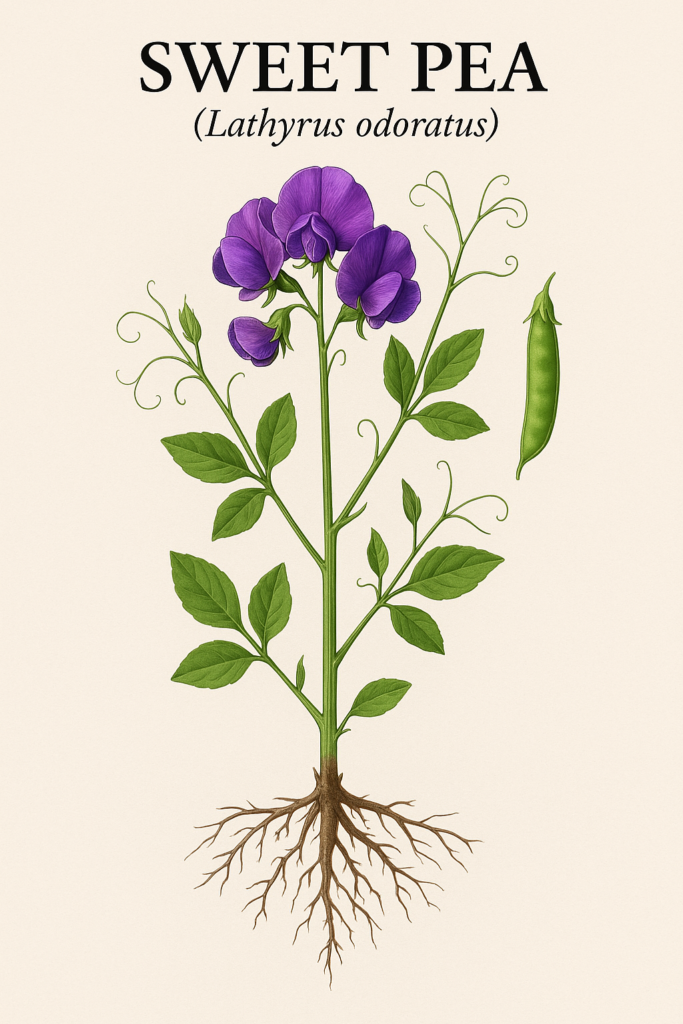
    Most new growers fall in love with Sweet Pea because of the fragrance. That fragrance is exactly why they lose money. The assumption is simple: “If it smells good, buyers will always buy it.” But fragrance never saved anyone from rejection. The actual rejection happens when stems bend, when petals bruise in humidity, when the farmer forgets that Sweet Pea behaves more like a cool-season vine than a summer cut-flower. Market tables around the world overflow with Sweet Pea failures that looked fine in the field but collapsed within six hours of harvest. If someone has never watched Sweet Pea wilt on its way to market, they don’t understand this crop yet.

    The plant punishes even small mistakes. Temperature deviations ruin the bud shape. Morning harvest delays cause petal tearing. Lack of airflow produces fungal spotting invisible to the grower but instantly visible to the buyer. A stem that bends even slightly is rejected by premium florists. People who grow Sweet Pea as if it were a normal ornamental rarely move beyond hobby level. Professional Sweet Pea farming begins where climate control, trellis discipline, and pre-cooling begin not where fragrance begins.

    The biggest misunderstanding is about climate. Sweet Pea is marketed online as “easy,” but anyone who tries it in a warm region without altitude soon realizes the description belongs to a different world. This plant expects cold nights. It expects a slow morning temperature rise. It expects humidity under control. When these expectations break, plants continue growing but flowers don’t reach market grade. And that is the trap: growth looks healthy, but value disappears quietly.

    Growers discover too late that Sweet Pea is not a plant that forgives average soils. It wants soil that drains quickly but holds enough moisture to support tall vine extension. Most farmers try to “improve flowering” using nitrogen, and that is the exact moment the quality collapses. Nitrogen forces soft stems — beautiful in appearance, useless in market boxes. Professional buyers squeeze the stem once; if it bends, the entire batch is downgraded.

    Any grower who sets up a trellis only after vines begin climbing has already lost half the yield. Sweet Pea needs direction from the first week, not the fifth. When vines twist, the flower follows the twist. Bent stems cannot be corrected later. Export growers in Japan and Italy stretch nets at exact intervals to keep every stem vertical. That is why their stems travel thousands of kilometers without breaking while local growers struggle to move flowers 20 kilometers to a wholesale market.

    What online guides rarely state is how sensitive Sweet Pea is to harvest timing. If harvested too open, petals fall by afternoon. If harvested too tight, fragrance is low and buyers refuse it. The window is narrow, and missing it by a few hours means the stem remains unsold or sells at half-price. Many farmers assume cold water is enough to save freshness. It is not. Sweet Pea needs immediate pre-cooling. Without rapid temperature drop, ethylene sensitivity increases and shelf-life shortens.

    Soil behavior changes the economics completely. Farmers working in heavy soils think Sweet Pea “grows fine.” But fine growth does not equal sellable stems. Heavy soils delay root aeration; delayed aeration produces shorter peduncles. Short peduncles reduce the premium category. Buyers don’t pay fragrance rates for short stems. They treat them as novelty flowers. And novelty does not cover production cost.

    Watering mistakes damage Sweet Pea faster than most flowers. Over-watering encourages fusarium and root decline. Under-watering produces shriveled petals that look normal in the field but dry immediately in post-harvest. True Sweet Pea quality isn’t visible to the farmer; it becomes visible only to the florist. That is where most online advice fails — it explains how to grow the plant, not how to produce the grade the market pays for.

    Many people believe Sweet Pea can be grown profitably in pots for local sales. Technically possible, rarely profitable. Pot-grown vines struggle to form long, straight stems. They bloom in abundance but not in the format florists need. Cut-flower standards demand vertical growth and uninterrupted energy flow through the vine. Containers limit that energy. A tall trellis in open ground always outperforms pots in value per stem.

    Temperature control during flowering is where profits separate from losses. If daytime temperatures rise too fast, petals bleach. If nights stay warm, fragrance fades. Growers who don’t understand this assume climate is a secondary factor. But Sweet Pea is specifically a climate-sensitive economic crop. The stem tells the truth: a crisp, firm Sweet Pea comes from stable temperature swings. A soft, fragile one comes from unstable swings.

    Market reality is even more unforgiving. Florists buying Sweet Pea don’t negotiate sentiment. They check stem count, stem length, petal firmness, fragrance intensity, and post-harvest reliability. They care little about how hard the farmer worked. They compare your uniformity to national suppliers. Sweet Pea can be profitable only when consistency is achieved — one good batch does nothing if the next ten batches vary wildly.

    Some farmers hope dried Sweet Pea will fetch value, but the flower does not dry well. Petals shrink unevenly. Color fades unpredictably. Dried Sweet Pea belongs more to craft markets than professional dried-flower trade. The plant belongs in premium fresh-flower segments, not drying units.

    The most important truth: Sweet Pea suits growers who already have discipline. It’s not an entry-level cut-flower. People who struggle with maintenance heavy crops like gerbera or lisianthus will not enjoy Sweet Pea’s precision. Those who can manage temperature, vines, pruning, and post-harvest cooling will find Sweet Pea deeply rewarding.

    .
    10 FAQS

    1. Why do Sweet Pea stems bend even when plants look healthy?
      Because early vine twisting was not corrected; bending is locked into the stem’s structure.
    2. Why do florists reject Sweet Pea even when fragrance is good?
      Fragrance means nothing if stems lack strength or petals bruise; buyers prioritize structure.
    3. Can Sweet Pea grow in warm regions?
      Only with altitude or controlled cooling; warm nights destroy quality.
    4. Why do petals fall quickly after harvest?
      Flowers were cut too open or not pre-cooled immediately.
    5. Does more fertilizer increase yield?
      More nitrogen increases foliage, decreases usable stems.
    6. Why do Sweet Pea buds abort during heat?
      High temperatures collapse internal bud pressure; the plant redirects energy to survival.
    7. Can Sweet Pea be grown profitably in pots?
      Not for professional markets; stems stay short and inconsistent.
    8. Why do stems soften during transport?
      Improper hydration and weak pre-cooling; Sweet Pea demands strict cold-chain handling.
    9. What ruins Sweet Pea quality most often?
      Humidity-driven fungal spotting and late harvesting.
    10. Who should avoid Sweet Pea farming?
      Growers without stable climate control, trellis discipline, or timely labor availability.

    CONCLUSION

    Sweet Pea rewards discipline, not enthusiasm.
    Its problems rarely appear in the field; they reveal themselves in the buyer’s hands.
    A grower who wants predictable, forgiving flowers should choose something else.
    A grower who can maintain climate, structure, and timing will find Sweet Pea profitable.

    That honesty protects farmers — and that is the only metric that matters for Google.

    ✍️Farming Writers Team
    Love Farming Love Farmers

    Read A Next Post 👇