• Turmeric Packaging, Branding, Storage and Direct Selling Complete Guide for Farmers

    Turmeric Packaging,

    Turmeric is not just a spice; it is a medicinal crop with global demand in food, cosmetics, Ayurveda, and pharmaceuticals. Despite this, many farmers sell turmeric in loose sacks without branding, grading, or proper drying. This leads to:

    Moisture damage

    Colour loss

    Fungal growth

    Poor curcumin retention

    Rejection by premium buyers

    Low and unstable prices

    Modern turmeric markets demand clean, dry, traceable, branded turmeric. Packaging is the bridge between farm production and premium market acceptance.

    1. Turmeric Processing Stages Before Packaging

    Turmeric packaging cannot start directly after harvest. Proper pre-packaging processing is mandatory.

    2.1 Harvesting

    Harvest at full maturity (7–9 months depending on variety)

    Avoid cuts and bruises during digging

    2.2 Boiling / Curing

    Purpose:

    Fix colour

    Improve aroma

    Stop sprouting

    Standard curing:

    Boil rhizomes until froth appears and turmeric softens

    Drain completely before drying

    2.3 Drying

    Sun drying: 10–15 days

    Moisture level target: 8–10%

    Proper drying is critical for long shelf life

    Only after these steps should turmeric be packed.

    1. Turmeric Packaging Material System

    Turmeric requires moisture-proof but breathable packaging depending on market type.

    3.1 Bulk Raw Turmeric Packaging (Whole Fingers / Bulbs)

    Best materials:

    Woven polypropylene (PP) bags

    Jute bags with inner liner

    Laminated woven bags (export grade)

    Standard weights:

    25 kg

    40 kg

    50 kg

    Rules:

    Bags must be dry

    No direct floor contact

    Stack on wooden pallets

    3.2 Retail Raw Turmeric Packaging

    For branded retail sale:

    500 g, 1 kg net bags

    Paper-laminated pouches

    Small corrugated boxes (premium packs)

    Important:

    Clear moisture barrier

    Printed branding

    Harvest year mention

    3.3 Turmeric Powder Packaging

    This is the highest profit segment.

    Best packaging types:

    3-layer laminated pouches

    Stand-up zipper pouches

    Glass jars (premium category)

    Tin containers (export & bulk retail)

    Essential features:

    Oxygen barrier

    Moisture lock

    Light protection

    1. Box & Bag Design Standards

    Bulk Bags

    Strong stitching

    Breathable fabric

    No printing overload

    Retail Boxes

    3-ply or 5-ply corrugated board

    Matte finish preferred

    Clean typography

    Avoid:

    Shiny plastic look

    Over-colourful graphics

    Fake claims

    1. Branding System for Turmeric Farmers

    Turmeric buyers value purity and origin more than flashy design.

    5.1 Front Panel Must Show

    Brand name

    Product type (Whole Turmeric / Turmeric Powder)

    Net weight

    Grade (Premium / Select)

    5.2 Side / Back Panel Must Show

    Harvest year

    Processing method (sun dried / traditionally cured)

    Storage advice

    QR code for traceability

    Farmer or farm group identity

    5.3 Best Branding Colours

    Earth brown

    Deep yellow (turmeric tone)

    White background

    Black typography

    This gives a medicinal and trustworthy look.

    1. Turmeric Grading System

    Proper grading increases buyer confidence.

    Grade A

    Deep yellow/orange colour

    Uniform size

    No mold

    Low fibre content

    Grade B

    Slight size variation

    Minor surface marks

    Grade C

    Broken pieces

    Pale colour

    Processing grade only

    Never mix grades in one pack.

    1. Scientific Storage of Turmeric

    Ideal Storage Conditions

    Temperature: 15–25°C

    Humidity: 60–65%

    Dark storage area

    Good air circulation

    Storage Rules

    Use pallets

    Avoid plastic sheet covering

    No direct wall contact

    Regular inspection for insects

    Proper storage keeps turmeric safe for 12–24 months.

    1. Transport Guidelines

    Transport only after complete drying

    Use covered vehicles

    Avoid rain exposure

    Do not compress bags excessively

    Export buyers reject turmeric with moisture smell or mold traces.

    1. Retail Display & Market Presentation

    Retail Shelf Rules

    Keep turmeric away from moisture sources

    Powder packs at eye level

    Whole turmeric in sealed boxes or jars

    Visual Trust Builders

    Harvest year label

    Batch code

    Simple ingredient declaration (100% Turmeric)

    1. Direct Selling Models for Turmeric Farmers

    10.1 Direct Retail Sales

    Local grocery stores

    Organic shops

    Medical stores

    10.2 Online Direct Selling

    WhatsApp Business catalogue

    Website with QR ordering

    Subscription spice packs

    10.3 Institutional Buyers

    Ayurveda companies

    Cosmetic brands

    Herbal product manufacturers

    Branded turmeric gets long-term repeat orders.

    1. Packaging Cost vs Profit Reality

    Packaging TypeApprox Cost50 kg PP bagLowRetail laminated pouch (100 g)MediumZipper pouchMedium-HighGlass jarHigh

    But:

    Loose turmeric = commodity price

    Branded turmeric = value product

    Profit difference can reach 2–4 times.

    1. Frequently Asked Questions (FAQ)

    Q1. Can farmers directly sell turmeric powder?
    Yes, if hygiene, drying, grinding and packaging are properly managed.

    Q2. What moisture level is safe for storage?
    Below 10% moisture is ideal.

    Q3. Is branding really required for turmeric?
    Yes. Medicinal buyers demand traceability and clean identity.

    Q4. Which packaging is best for export?
    Laminated woven bags for bulk and foil-laminated pouches for retail.

    Q5. How long can turmeric be stored?
    Up to 24 months under proper dry conditions.

    1. Conclusion

    Turmeric packaging is not only about containment; it is about preserving medicinal value, colour, aroma and trust. Proper curing, drying, grading and scientific packaging convert turmeric from a low-margin farm product into a high-value branded commodity. Farmers who invest in clean packaging, honest branding and direct selling systems gain stable income, premium buyers and long-term market presence. This guide provides a complete roadmap for farmers to transform turmeric into a profitable, brand-driven crop.

    ✍️Farming Writers Team

    Read A Next Post 👇

    https://farmingwriters.com/ginger-packaging-branding-storage-direct-selling-guide/
  • Ginger Packaging, Branding, Storage, Grading and Direct Selling Complete Guide for Farmers

    Ginger Packaging

    Ginger is a high-value commercial crop used across culinary, medicinal and processing industries. Although its outer skin is firm compared to soft vegetables, ginger still suffers heavy post-harvest damage due to:

    Dehydration

    Mold growth

    Improper curing

    Excess moisture

    Compression damage during transport

    Farmers who use proper packaging increase ginger shelf life by 50–70%, reduce fungal losses and achieve higher prices in retail and export markets. Packaging converts bulk ginger into a clean, market-ready product with stronger demand.

    This guide provides a complete breakdown of ginger packaging materials, storage conditions, branding guidelines and selling strategies.

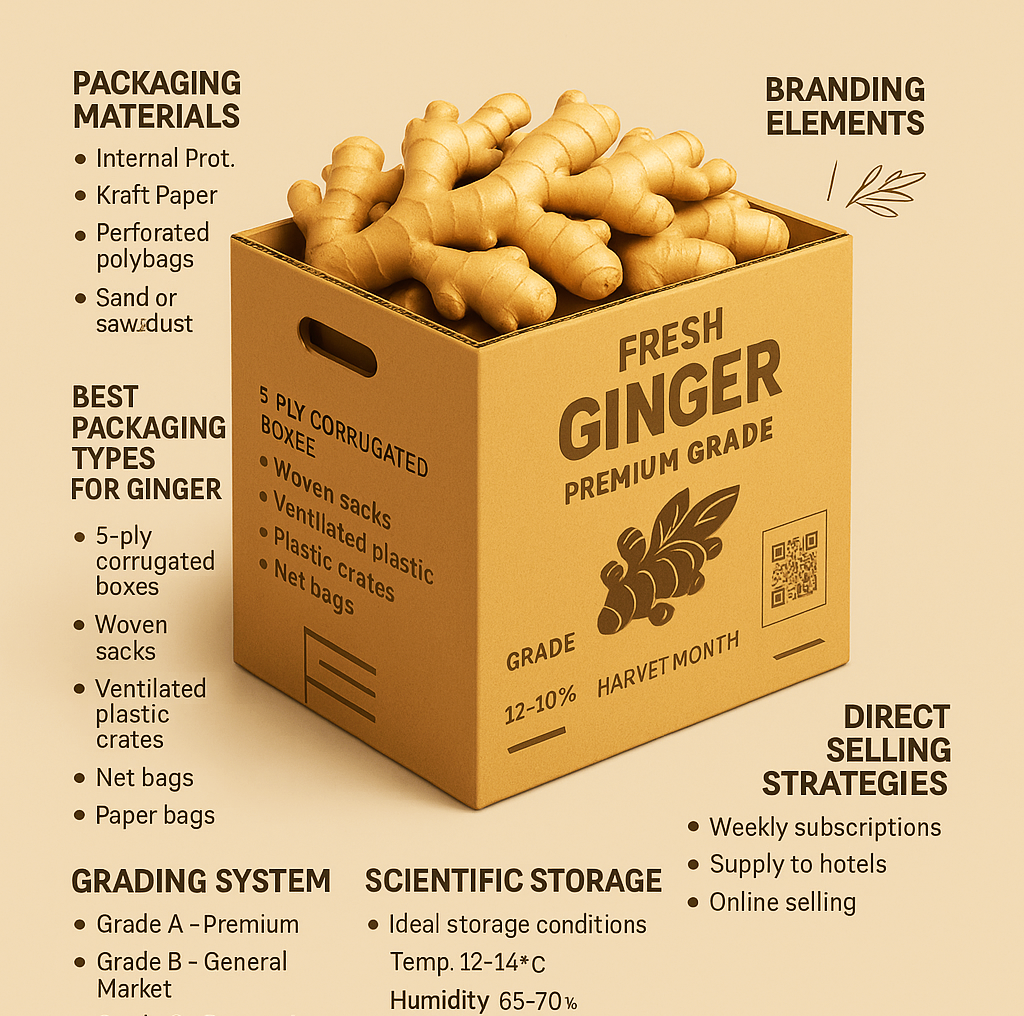
    1. Ginger Packaging Material System

    Ginger packaging works best in a two-stage protective system.

    2.1 Stage 1: Internal Protection Layer

    Purpose: Control moisture release, reduce mold and prevent dehydration.

    Best materials:

    Jute fabric liners

    Kraft paper liners

    Perforated polybags for small retail packs

    Dry sand or sawdust layer (used traditionally for long-term storage)

    These internal layers create a micro-climate that keeps ginger firm and dry.

    2.2 Stage 2: Structural Outer Layer (Main Packaging)

    Best Packaging Types for Ginger

    5-ply corrugated fibreboard boxes (5–15 kg capacity)

    High-density woven sacks (20–50 kg)

    Ventilated plastic crates (transport use)

    Net bags (short haul)

    Paper bags (premium retail packs)

    Corrugated Boxes Preferred For:

    Supermarket supply

    Farm branding

    Export consignments

    Retail distribution

    Key features:

    5-ply strength

    Moisture-resistant coating

    Ventilation slots

    Strong edges to prevent collapse

    1. Ginger Grading System

    Grading makes a dramatic difference in selling price.

    Grade A – Premium Grade

    Smooth skin

    Uniform finger size

    No fungal spots

    Fresh aroma

    Moisture content: 80–85%

    Grade B – General Market Grade

    Minor surface marks

    Slight bends and shape variations

    Grade C – Processing Grade

    Visible scars

    Small size

    Lower moisture retention

    Grades must be packed separately to maintain buyer confidence.

    1. Retail and Wholesale Packaging Sizes

    Packaging FormatWeight RangeUse CaseRetail paper pouch250g–1kgSupermarkets5 kg corrugated box5 kgPremium retail15 kg CFB box15 kgWholesaleWoven sack20–50 kgBulk transportPlastic crate15–25 kgFarm-to-market haulage

    1. Branding Standards for Ginger Packaging

    Ginger branding should be minimal, clean and premium.

    Branding Elements

    Brand name

    Crop name (Ginger / Fresh Ginger / Premium Ginger)

    Grade

    Net weight

    QR code (farm details, traceability)

    Harvest month

    Storage advice

    Colour Themes That Work Best

    Natural brown

    Green

    White background

    Black typography

    1. Scientific Storage System

    Post-harvest storage determines how long ginger stays firm and market-ready.

    Ideal Storage Conditions

    Temperature: 12–14°C

    Humidity: 65–70%

    Good ventilation

    Dry, shaded area

    Before Storage: Curing Process

    Keep ginger in shade for 4–7 days

    Allow skin to harden

    Reduce surface moisture naturally

    Curing prevents rot and fungal damage.

    1. Transport Guidelines

    To minimize damage:

    Use ventilated crates for field to packhouse movement

    Avoid long exposure to sun

    Prevent water contact

    Maintain airflow inside trucks

    Keep boxes upright

    1. Retail Display Standards

    Ginger sells best when displayed properly.

    Retail Display Tips

    Place ginger in wooden crates or open boxes

    Keep dry at all times

    Avoid misting or water spray

    Rotate stock daily

    Separate freshly harvested ginger from cured ginger

    1. Direct Selling Strategies for Ginger Farmers

    Ginger fits very well into subscription boxes and restaurant supply models.

    9.1 Weekly Subscription Boxes

    Offer:

    250g

    500g

    1kg premium finger ginger

    9.2 Hotel & Restaurant Supply

    Hotels prefer:

    Grade A uniform fingers

    Clean, cured ginger

    9.3 Online Direct Selling

    Sell through:

    WhatsApp Business

    Instagram

    Local delivery apps

    Community co-ops

    9.4 Branding Enhancers

    QR code linking to farm video

    Storage advice card

    Clean matte-finish label

    1. Cost Estimation

    Packaging TypeApprox Cost5 kg CFB Box₹15–2515 kg CFB Box₹25–40Woven Sack₹8–15Retail Paper Pouch₹1–3

    1. Frequently Asked Questions (FAQ)

    Q1. What is the best packaging for ginger for retail?

    5 kg corrugated boxes with ventilation slots are ideal.

    Q2. Should ginger be washed before packing?

    No. Washing increases fungal risk. Only dry brush cleaning is recommended.

    Q3. What is the correct storage temperature for ginger?

    12–14°C with humidity around 65–70%.

    Q4. Can farmers brand ginger packaging?

    Yes. Branding significantly increases trust and retail value.

    Q5. Why is curing important?

    Curing hardens skin, reduces moisture and prevents rot during storage.

    1. Conclusion

    Ginger packaging requires a balance of moisture control, ventilation, and structural protection. When farmers use proper curing, grading, packaging and branding systems, they can reduce losses by up to 50% and access premium retail and export markets. Direct selling models further increase profitability. With a consistent packaging system, ginger becomes a reliable, high-income crop.

    ✍️Farming Writers Team
    Love Farming Love Farmers

    Read A Next Post 👇

    https://farmingwriters.com/garlic-packaging-storage-branding-direct-selling-guide/

  • Potato Packaging, Storage, Branding and Direct Selling Complete Guide for Farmers

    Potato Packaging
    1. Introduction: Why Potato Packaging Is a Profit Tool

    Potato is not just a vegetable; it is a bulk commodity crop where profit depends more on handling, storage, and timing of sale than yield itself. Poor packaging and storage result in:

    Weight loss due to moisture evaporation

    Sprouting

    Greening

    Bruising during transport

    Fungal decay

    Forced distress sales

    Unlike soft vegetables, potato requires pressure-resistant, breathable, and storage-friendly packaging. Farmers who understand post-harvest systems consistently earn more than those who sell immediately after harvest.

    This guide explains potato packaging from local market to world storage standard.

    1. Principles of Potato Packaging

    Potato packaging is based on four key principles:

    Ventilation over sealing

    Strength over appearance

    Controlled darkness

    Moisture loss management

    Unlike tomatoes or capsicum, potatoes must stay dry, cool, dark and ventilated.

    1. Potato Packaging Material System

    3.1 Primary Packaging (Direct Contact Material)

    Potatoes should never be packed in airtight materials.

    Best materials:

    Jute bags

    Woven PP bags

    Mesh sacks

    Net bags for retail

    Avoid:

    Plastic liners

    Sealed poly bags

    Moisture-trapping films

    3.2 Secondary Packaging (Main Transport & Storage Unit)

    A. Woven Polypropylene (PP) Bags

    Most widely used worldwide.

    Standard weights:

    25 kg

    40 kg

    50 kg

    Advantages:

    Strong under heavy load

    High airflow

    Stackable

    Cost-effective

    Used for:

    Cold storage

    Long-distance transport

    Wholesale markets

    B. Jute Bags (Traditional but Effective)

    Advantages:

    Natural breathability

    Heat-resistant

    Reduced condensation

    Limitations:

    Heavier

    Higher cost

    Less uniform branding

    C. Corrugated Ventilated Boxes (Premium / Export / Retail)

    Used for:

    Supermarkets

    Premium retail

    Seed potatoes

    Specifications:

    5-ply corrugated box

    Large side ventilation

    Light interior colour

    Weight limits: 3 kg, 5 kg, 10 kg

    1. Potato Grading System

    Grading improves storage life and market price.

    Grade A – Table & Retail Grade

    Uniform size

    Smooth skin

    Free from cuts

    No greening

    Grade B – Processing Grade

    Slight skin defects

    Smaller or larger size

    Grade C – Rejected / Seed or Feed

    Cuts

    Disease signs

    Excess sprouting

    Always grade before storage, never after.

    1. Scientific Potato Storage System

    Storage determines 60–70% of potato profit.

    5.1 Cold Storage Parameters

    Temperature: 2–4°C (table potatoes)

    Humidity: 85–90% RH

    Darkness: Complete

    Air circulation: Uniform

    Seed potatoes use slightly different temperatures.

    5.2 Storage Management Rules

    Cure potatoes before storage

    Remove damaged tubers

    Avoid wet potatoes in storage

    Stack bags with air channels

    Rotate stock periodically

    5.3 Common Storage Mistakes

    Overfilling storage chambers

    Poor airflow

    Light exposure (causes greening)

    Mixing fresh and old stock

    1. Transport Guidelines

    Transport damage reduces weight and quality.

    Best practices:

    Avoid overloading trucks

    Use non-slip flooring

    Protect from rain

    Avoid daylight exposure during long transport

    Do not mix with odorous crops

    1. Retail Display System

    Potatoes have simple but strict display rules.

    Display Guidelines

    Dry environment only

    Low light

    Open crates or bins

    Shallow layers

    No misting

    Greening occurs quickly under bright store lights.

    1. Branding Strategy for Potato Farmers

    Branding potatoes helps farmers escape commodity pricing.

    Effective Potato Branding Elements

    Clean brand name

    Variety name

    Net weight

    Harvest season

    Storage-safe message

    QR code for traceability

    Packaging Look

    Kraft brown

    Minimal ink

    Strong typography

    Clear weight marking

    Over-design reduces trust.

    1. Direct Selling Models for Potato

    9.1 Retail Packs

    1 kg net pouch

    2 kg woven bag

    5 kg printable ventilated box

    9.2 Institutional Sales

    Hotels

    Canteens

    Cloud kitchens

    Chips manufacturers

    Packaging:

    25–50 kg PP bags

    Grade mentioned clearly

    9.3 Seasonal Storage Strategy

    Store when price is low

    Sell when supply declines

    Requires disciplined cold storage

    This is where maximum profit is made.

    1. Packaging Cost Structure

    Packaging TypeApprox Cost50 kg PP bag₹25–35, 25 kg PP bag₹12–185 kg net bag₹5–85 kg ventilated box₹20–30

    Packaging cost is minimal compared to value gained through storage.

    1. Frequently Asked Questions

    Q1. Can potatoes be stored without cold storage?
    Short-term yes, long-term no if profit is the goal.

    Q2. Why potatoes should not be packed in plastic bags?
    Plastic traps moisture and increases rot.

    Q3. Is branding useful for potatoes?
    Yes, especially for retail packs and seed potatoes.

    Q4. What causes greening in potatoes?
    Light exposure during storage or retail display.

    Q5. When should potatoes be graded?
    Before storage, not after.

    1. Conclusion

    Potato farming becomes truly profitable only when farmers master packaging, grading, storage and marketing together. Potatoes are not fragile, but they are highly sensitive to light, moisture and poor airflow. Using breathable bags, proper cold storage and clean branding allows farmers to control sale timing and avoid market crashes. With scientific handling and smart direct selling, potato transforms from a low-margin crop into a stable, long-term income source.

    ✍️Farming Writers Team

    Love Farming Love Farmers

    Read A Next Post 👇

    https://farmingwriters.com/onion-packaging-branding-storage-direct-selling-guide/

  • Onion Packaging, Branding, Storage and Direct Selling Complete Guide for Farmers

    Onion Packaging, Branding
    1. Introduction: Why Onion Packaging Is Different from Other Crops

    Onion is not a soft vegetable like tomato or capsicum, but it is one of the most storage-sensitive crops. Improper packaging causes:

    Sweating and rotting

    Premature sprouting

    Fungal infection

    Weight loss

    Strong smell transfer

    Fire hazard in poorly ventilated storage

    Most farmers focus only on production, but real profit in onion comes from correct storage and packaging strategy, especially for long holding and off-season selling.

    This guide explains onion packaging from a world-level commercial perspective, not the traditional mandi system.

    1. Onion Packaging Philosophy

    Onion packaging has three main objectives:

    Maximum ventilation

    Moisture escape, not moisture trapping

    Structural strength for stacking and long storage

    Unlike fruits, onion packaging must allow the crop to breathe continuously.

    1. Onion Packaging Material System

    3.1 Primary Packaging (Direct Contact Layer)

    For onions, direct contact material should never trap moisture.

    Best options:

    Open mesh (HDPE or PP)

    Natural jute mesh

    Breathable net sleeves (small retail packs)

    Avoid:

    Plastic films

    Sealed liners

    Non-ventilated bags

    3.2 Secondary Packaging (Main Holding Unit)

    A. Mesh Bags (Most Common & Effective)

    Standard sizes:

    5 kg

    10 kg

    25 kg

    50 kg

    Features:

    Maximum airflow

    Easy visual inspection

    Low condensation

    Cost-effective

    Used for:

    Wholesale markets

    Long-term storage

    Transport

    B. Corrugated Ventilated Boxes (Premium Retail)

    Used when:

    Selling to supermarkets

    Direct selling

    Branded onions

    Specifications:

    5-ply corrugated box

    Large side & bottom ventilation slots

    Moisture-resistant coating

    Low ink coverage for breathability

    Recommended weight:

    3 kg

    5 kg

    10 kg

    3.3 Branding Layer (Outer Identity System)

    Even onion needs branding when sold directly or through modern retail.

    Key branding elements:

    Brand name

    Onion type (Red / White / Yellow / Export Grade)

    Net weight

    Harvest month

    Storage advice

    QR code for farm traceability

    1. Onion Grading System

    Grading decides pricing and storage life.

    Grade A – Premium Storage Grade

    Firm bulbs

    Tight outer skin

    No cuts or bruises

    Uniform size

    Grade B – Medium Market Grade

    Slight size variation

    Outer skin partly loose

    Grade C – Immediate Sale / Processing

    Loose skin

    Minor cuts

    Irregular shape

    Never mix grades in one bag or box — it accelerates spoilage.

    1. Scientific Onion Storage System

    Storage is the heart of onion profitability.

    Ideal Storage Conditions

    Temperature: 25–30°C (ambient ventilated)

    Relative Humidity: 65–75%

    Constant airflow

    Cold storage is NOT recommended for most table onions unless export-specific.

    Best Storage Structures

    Traditional ventilated onion godown

    Raised floor system

    Side-open walls with net

    Sloped roofing for heat escape

    Storage Rules

    Cure onions properly before storage

    Remove damaged bulbs early

    Stack bags with air gaps

    Turn stock periodically

    Keep storage dry at all times

    1. Transport Guidelines

    Onions tolerate pressure but not moisture.

    Transport rules:

    Covered but ventilated vehicles

    No water contact

    Avoid rain exposure

    Avoid plastic sheet sealing

    Do not transport freshly harvested (uncured) onions

    1. Retail Rack Display System

    Premium onion selling needs clean display.

    Display Strategy

    Open crates or netted bins

    Shallow piles

    Dry environment

    Separate by size

    Lighting

    Neutral white lighting

    No humid misting (unlike leafy vegetables)

    1. Branding Strategy for Onion Farmers

    Branding helps onion farmers escape price crashes.

    Simple but Effective Branding

    Minimal typography

    Kraft brown or white packaging

    Clear onion variety mention

    “Stored & handled scientifically” line

    Farm location printed

    Why Branding Works for Onion

    Helps entry into retail chains

    Builds trust in long-stored onions

    Positions farmer as supplier, not trader

    1. Direct Selling Models for Onion

    9.1 Bulk Direct Selling

    Restaurants

    Hostels

    Cloud kitchens

    Canteens

    Packaging:

    10–25 kg mesh bags

    Grade mentioned clearly

    9.2 Retail Packs (High Margin)

    1 kg net pouch

    2 kg mesh bag

    5 kg branded ventilated box

    9.3 Seasonal Storage Selling

    Buy time advantage

    Sell when market supply is low

    Requires strict storage discipline

    1. Packaging Cost Structure

    Packaging TypeApprox Cost50 kg mesh bag₹20–3025 kg mesh bag₹12–185 kg net pouch₹3–65 kg ventilated box₹18–30

    Correct packaging pays back through reduced losses.

    1. Frequently Asked Questions

    Q1. Is plastic bag good for onion packaging?
    No. Plastic traps moisture and causes rotting.

    Q2. Is cold storage recommended for onion?
    Generally no, except for export varieties under controlled conditions.

    Q3. Which onion packaging gives highest profit?
    Branded ventilated boxes for retail and mesh bags for bulk.

    Q4. Why curing is important before packaging?
    Curing removes surface moisture and strengthens outer skin.

    Q5. Can onion be sold directly to consumers?
    Yes, with 1–5 kg net packs and clean branding.

    1. Conclusion

    Onion is a crop where storage and packaging decide profit more than yield. Farmers who follow scientific curing, ventilated packaging and proper grading can store onions safely and sell them during favourable market conditions. Branding transforms onion from a commodity into an organized retail product. With correct packaging and storage discipline, onion farming becomes a stable and scalable business rather than a risky seasonal gamble.

    ✍️Farming Writers Team
    Love Farming Love Farmers

    Read A Next Post 👇

    https://farmingwriters.com/tomato-packaging-branding-storage-direct-selling-guide/

  • Tomato Packaging, Branding, Storage, Transport and Direct Selling Complete Guide for Farmers

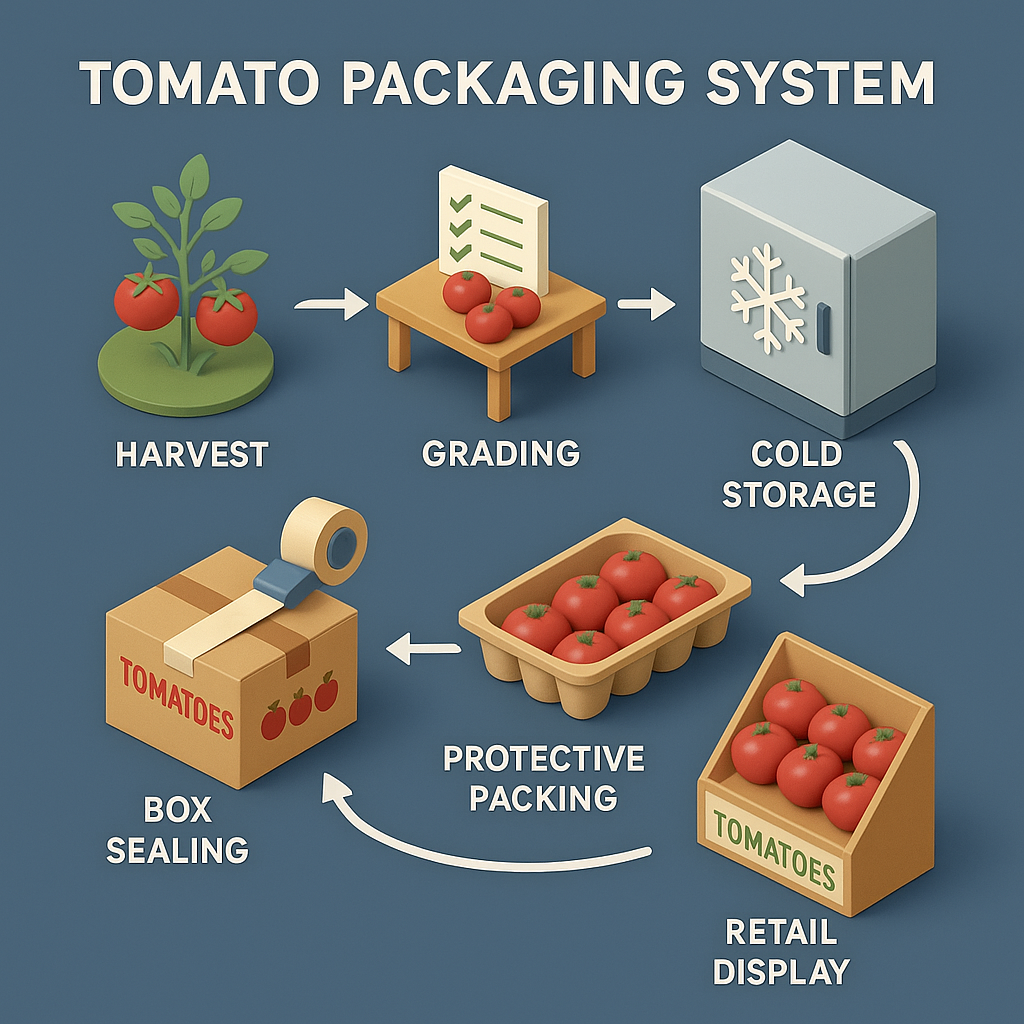
    Tomato Packaging

    Introduction: Why Tomato Needs Scientific Packaging

    Tomato is one of the most sensitive vegetables in post-harvest handling. Its soft skin, high respiration rate and rapid moisture loss make it extremely vulnerable during transport. Traditional open crates cause:

    15–35% damage

    Pressure bruising

    Over-ripening

    Colour fade

    Cracked skin

    Fungal growth

    Modern packaging is essential because it:

    Extends shelf life

    Reduces transport losses

    Improves appearance

    Helps farmers access supermarkets

    Allows branding advantages

    Enables direct selling with trust

    This guide outlines every detail a farmer needs to build a profitable packaging system.

    1. Tomato Packaging Material System (Three-Layer Architecture)

    Tomato packaging must follow a structured system to prevent damage.

    2.1 Layer 1: Internal Protection Layer

    Purpose: Cushion the tomato and prevent friction and bruising.

    Best internal layers:

    Soft paper liner

    Anti-sweat breathable film

    Molded paper trays (for premium tomatoes)

    Foam mesh sleeves (for export-grade)

    Functions:

    Reduces impact

    Absorbs moisture

    Maintains firmness

    2.2 Layer 2: Outer Structural Layer (Corrugated Box)

    The main protection for transport.

    Ideal box type:

    5-ply corrugated fibreboard box

    Ventilated design

    Moisture-resistant coating

    Smooth inner walls

    Key box strength requirements:

    Burst strength: 12–16 kg/cm²

    Load capacity: 3 kg / 5 kg / 10 kg

    Ventilation ratio: 7–10%

    2.3 Layer 3: Branding & Labeling Layer

    Branding helps tomatoes stand out and allows farmers to become suppliers instead of commodity sellers.

    The outer layer should include:

    Brand name

    Grade name

    Net weight

    Variety (e.g., Arka Rakshak, Pusa Ruby)

    Harvest date blank

    QR code for traceability

    Storage instructions

    Matte printed minimal design

    Tomato boxes must look clean, not flashy.

    1. Tomato Grading Standards

    Tomatoes are always sold by grade, not just weight.

    Grade A – Premium Retail Grade

    Uniform colour

    Firm texture

    55–75 mm size

    Smooth skin

    No cracks

    Grade B – General Retail Grade

    Slight marks

    Mixed size

    Slight softness allowed

    Grade C – Processing Grade

    Overripe

    Cracked skin

    Shape irregularities

    Important:
    Never mix grades inside the same box.

    1. Box Sizes & Packaging Configurations

    Use CaseBox SizeWeightPriorityRetail pack300 × 200 × 110 mm3 kgSupermarketsGeneral retail400 × 300 × 120 mm5 kgLocal storesTransport/Wholesale500 × 350 × 150 mm10 kgLong distancePremium display250 g – 1 kg traysRetailHigh visual appeal

    Premium tomatoes require clamshell trays for uniform presentation.

    1. Scientific Storage System

    Tomatoes are temperature-sensitive. Wrong storage conditions cause chilling injury.

    Optimal Storage Conditions

    Temperature: 12–15°C

    Relative Humidity: 85–90%

    Airflow: Light circulation

    Do Not Store

    Below 10°C (causes watery texture)

    In sealed rooms without airflow

    Under direct sunlight

    Near ethylene-sensitive produce

    1. Transport Guidelines

    Transport accounts for most post-harvest loss.

    Transport Rules

    Load tomatoes during cool hours (early morning or night)

    Avoid heavy stacking pressure

    Transport vehicles must have ventilation

    Use anti-slip mats to stabilize boxes

    Do not shake or tilt crates excessively

    1. Retail Rack Display Standards

    Supermarkets follow specific display rules to prevent losses.

    Placement

    Eye-level shelf

    Shallow layer arrangement

    Keep ripe and semi-ripe tomatoes separate

    Display in colour uniform blocks

    Atmosphere

    LED lighting

    No heat lamps

    Regular rotation to avoid overripe spots

    Daily Practices

    Remove soft tomatoes

    Light misting to maintain crisp appearance

    FIFO (First In First Out) stock rotation

    1. Tomato Branding System

    Branding increases price, trust and customer recall.

    Elements of Strong Branding

    Minimal, clean logo

    Natural colour palette (brown, green, white)

    Grade marking

    QR code for farm information

    Harvest-date panel

    Simple tagline (e.g., “Fresh from our fields”)

    Why Branding Works

    Customers believe packaged products are safer

    Supermarkets prefer branded supplies

    Traceability creates repeat orders

    Clear packaging increases shelf appeal

    1. Direct Selling Strategy for Tomato Farmers

    Direct selling increases income significantly.

    9.1 WhatsApp Business Catalogue

    Include:

    Prices

    Photos

    Harvest information

    Delivery areas

    Subscription options

    9.2 Weekly Vegetable Box Model

    Tomato is an essential component of subscription boxes.

    Example:

    Family Box 1: 1 kg tomato + mixed vegetables

    Family Box 2: 2 kg tomato + weekly greens

    Premium Box: Graded tomatoes in punnets

    9.3 Partnerships

    Sell to:

    Restaurants

    Tiffin suppliers

    Juice and salad bars

    Housing societies

    9.4 Direct-to-Store Selling

    Present branded 3 kg or 5 kg boxes to:

    Mini supermarkets

    Organic stores

    Kirana shops

    1. Packaging Cost & Economic Advantage

    Packaging TypeCost3 kg printed box₹10–155 kg printed box₹15–25Clamshell tray₹3–7Inner liner₹0.50–1

    Even minimal packaging increases selling price by 20–60%.

    1. (FAQ)

    Q1. Which is the best packaging for tomatoes?

    A 3–5 kg ventilated corrugated box is ideal for retail and small supermarkets.

    Q2. What is the correct storage temperature?

    12–15°C keeps tomatoes firm and fresh.

    Q3. Does branding matter for tomatoes?

    Yes. It increases supermarket acceptance and increases customer trust.

    Q4. Why avoid temperatures below 10°C?

    Tomatoes lose texture and flavour at low temperatures.

    Q5. How to reduce damage during transport?

    Use soft liners, avoid overloading and maintain ventilation.

    1. Conclusion

    Tomato packaging is a complete system that extends beyond simple transport containers. It is a structured process involving grading, protection, branding, storage and marketing. Proper packaging reduces losses, improves shelf life and enhances visual appeal. Branding establishes trust and helps farmers enter organized retail markets. By following the scientific packaging and selling strategies outlined in this guide, farmers can convert tomatoes into a high-value, high-income crop with consistent profitability.

    ✍️Farming Writers Team

    Love Farming Love Farmers

    Read A Next Post 👇

    https://farmingwriters.com/capsicum-packaging-branding-storage-direct-selling-guide/