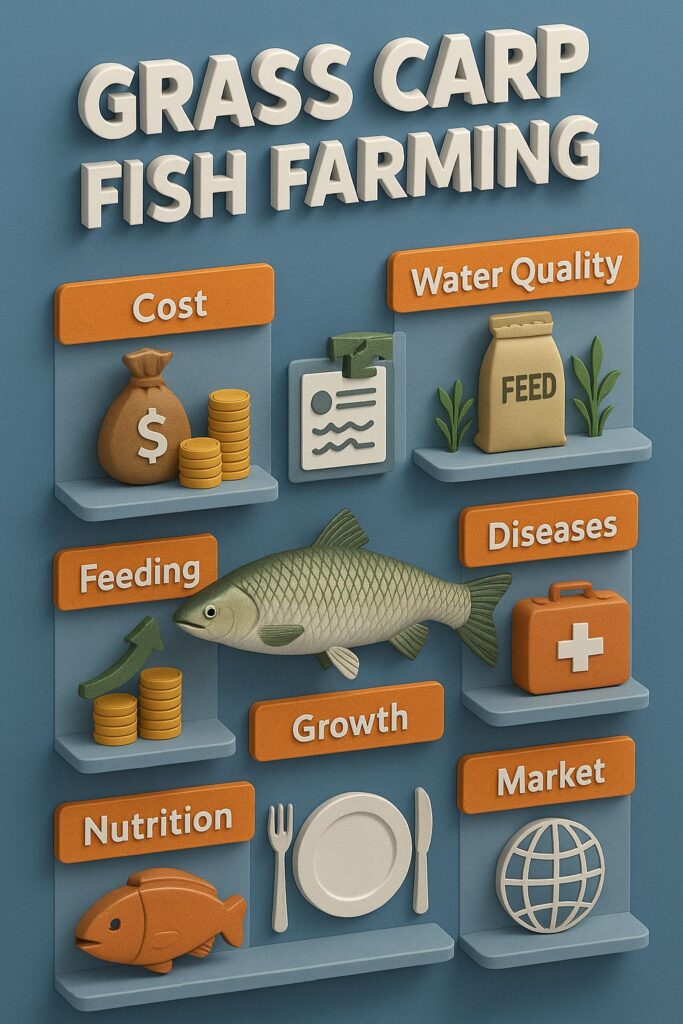
• Common Carp Fish Farming: Global Guide on Cost, Profit, Feeding, Water Quality, Growth, Diseases & Commercial Aquaculture

    Common Carp Fish Farming


    1. Introduction: Why Common Carp is the World’s Most Successful Freshwater Fish

    Common Carp (Cyprinus carpio) is one of the most widely farmed freshwater fish species in the world, known for its strong adaptability, fast growth, low maintenance, and exceptionally stable market demand. It is the backbone of carp aquaculture in Europe, Asia, Eastern Europe, Russia, and Central Asia. The species can thrive in a variety of pond environments, including poor-quality waters where many other species cannot survive.

    Common Carp’s ability to tolerate fluctuating temperatures, low oxygen levels, muddy waters, and high-stock ponds has made it ideal for small farmers and large commercial aquaculture enterprises alike. It is farmed extensively in India, Bangladesh, China, Vietnam, Thailand, Malaysia, Kazakhstan, Poland, Ukraine, Romania, Czech Republic, and many other countries.

    The species plays a crucial role in polyculture systems with Rohu, Catla, Silver Carp, Grass Carp, and Bighead Carp. Because Common Carp is a bottom feeder, it occupies the lowest ecological niche in the pond, improving nutrient cycling and helping maintain pond ecology.

    This article provides the full, world-class commercial aquaculture blueprint for Common Carp production.


    2. Biological & Commercial Profile

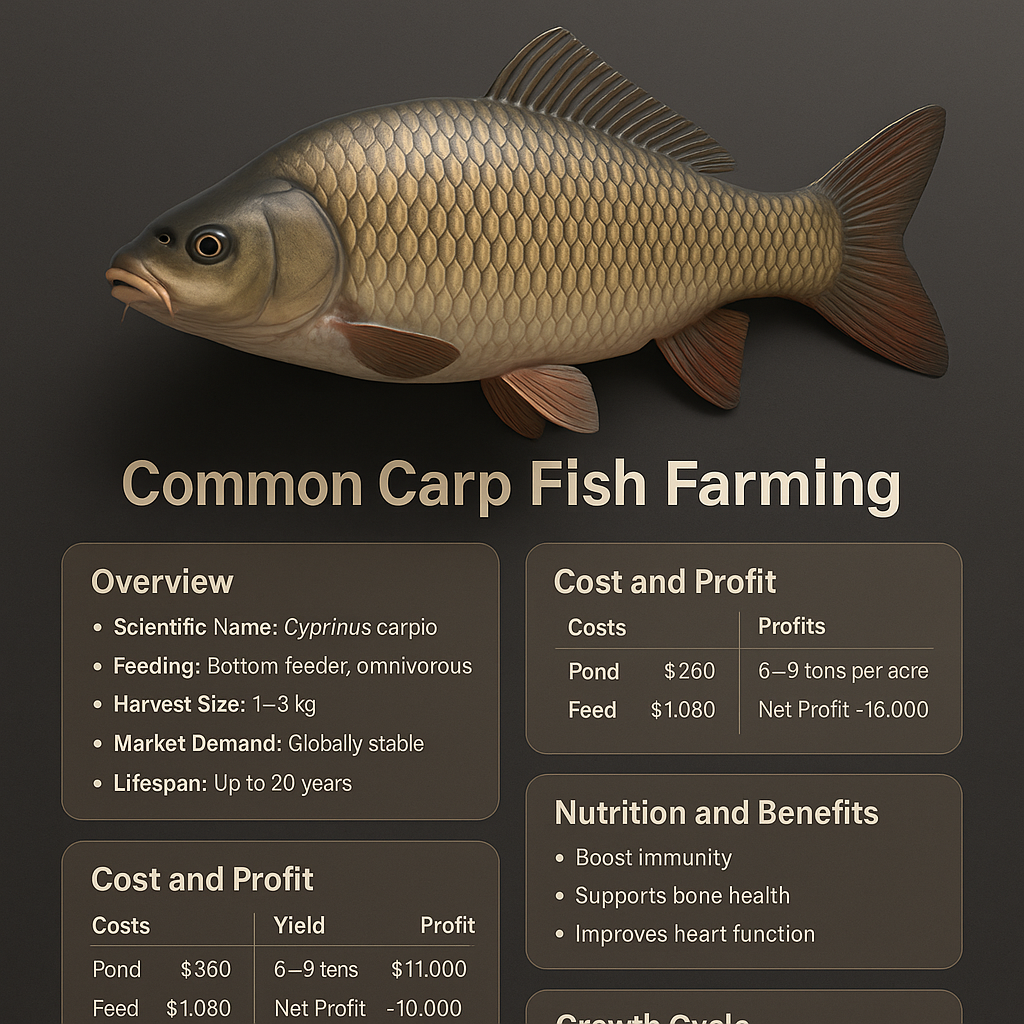
    Scientific Name: Cyprinus carpio

    Origin: Europe & Central Asia

    Feeding Habit: Bottom feeder; omnivorous

    Commercial Harvest Size: 1–3 kg

    Total Growth Potential: 10–15 kg

    Lifespan: Up to 20 years

    Market Demand: Extremely stable globally


    Farmers prefer Common Carp because of its reliability, predictable growth, and low risk of farming failure.

    3. Global Importance of Common Carp

    Common Carp is one of the first fish species ever domesticated for aquaculture. Its importance lies in:

    1. Versatility and High Survival: Thrives in low-quality ponds.


    2. Strong Market Acceptance: Consumed across Europe, Asia, and Africa.


    3. Low Feed Cost: Omnivorous feeding behavior reduces dependence on pellets.


    4. Compatibility with Polyculture: Perfectly fits carp composite systems.


    5. High Commercial Value: Sells well as whole fish, gutted fish, and fillets.


    Top Common Carp Producing Countries

    China, India, Bangladesh, Vietnam, Indonesia,
    Poland, Czech Republic, Romania, Ukraine,
    Russia, Iran, Israel,

    Top Importing Regions

    Middle East

    Europe

    Africa

    Southeast Asia


    Common Carp is especially popular in European cuisine, where it is used in soups, smoked products, and holiday dishes.

    4. Ideal Climate & Water Conditions

    Parameter Required Range

    Temperature 18–30°C
    pH 6.5–8.5
    Oxygen 3.5–6 mg/L
    Water Depth 1–3 meters
    Alkalinity 100–250 ppm
    Hardness 80–200 ppm


    Common Carp’s biggest advantage is its ability to survive even if oxygen temporarily drops below 3 mg/L, though growth slows.

    5. Water Quality Management (Professional Parameters)

    Ammonia: Below 0.02 ppm

    Nitrite: Below 0.01 ppm

    Turbidity: 20–40 cm

    Nitrate: Below 25 ppm

    Organic Load: Avoid excessive sludge

    Common Carp tolerates muddy waters, but clean water with moderate turbidity ensures faster feeding and better growth.


    6. Global Farming Systems

    1. Earthen Pond Culture

    Most common worldwide.

    2. Polyculture Integration

    Pairs with:

    Rohu

    Catla

    Grass Carp

    Silver Carp

    Bighead Carp

    Mrigal


    Common Carp occupies the bottom zone.

    3. Tank Farming

    Works well with oxygenation.

    4. RAS Farming

    Provides consistent high-quality fish for exports.

    5. Cage Culture

    Used in reservoirs across Asia and Europe.


    7. Pond Preparation

    Steps

    1. Dry pond for 7–10 days


    2. Remove weeds and predators


    3. Apply lime (based on pH)


    4. Add manure to boost plankton


    5. Fill pond in stages


    6. Install aerators


    Common Carp requires soft to moderately hard water with good organic matter.


    8. Seed Quality & Stocking Density

    Fingerling Criteria

    3–5 inch size

    Active swimming

    Clear eyes

    No red spots or lesions

    Uniform size batch


    Stocking Density

    Monoculture: 3000–4000 per acre

    Polyculture: 1500–2500 per acre


    Common Carp fingerlings are hardy and adapt quickly.

    9. Feeding Management

    Common Carp’s omnivorous feeding habit reduces feed cost significantly.

    Natural Feed

    Algae

    Worms

    Zooplankton

    Detritus

    Bottom organisms


    Supplemental Feed

    Rice bran

    Wheat bran

    Oil cakes

    Farm-made pellets

    22–28% protein floating pellets


    Daily Feeding Rate

    2–3% of body weight

    FCR

    1.8–2.2 (excellent for bottom feeding carp)

    10. Growth Cycle

    Age Weight

    1 month 60–80g
    3 months 200–300g
    6 months 800–1000g
    12 months 1.5–2.5 kg
    18 months 3–4 kg


    Under optimum conditions, Common Carp reaches 2 kg in one year.

    11. Diseases & Biosecurity

    Common Carp is hardy but can be affected by:

    EUS

    Gill rot

    Bacterial septicemia

    Worm infestation

    Fungal infection


    Prevention

    Maintain oxygen

    Regular liming

    Use KMnO₄ bath

    Avoid sludge buildup

    Use quality feed

    12. Cost of Farming (1 Acre)

    Component INR USD

    Pond Prep ₹30,000 $360
    Fingerlings ₹20,000 $240
    Feed ₹90,000 $1080
    Labour ₹35,000 $420
    Electricity ₹25,000 $300
    Miscellaneous ₹20,000 $240
    Total ₹2,20,000 $2640


    13. Global Market Prices (USD)

    Region Price per kg

    India $2–3
    Bangladesh $2–3
    China $1.5–2.5
    Middle East $4–6
    Europe $5–10
    USA $6–12 (processed)


    Europe is the premium market.

    14. Profit Analysis

    Production: 6–9 tons per acre

    Revenue: ₹12–18 lakh ($14,000–22,000)

    Net Profit: ₹9–13 lakh ($11,000–16,000)

    Profit Margin: 50–60%


    Very stable profit species.
    15. Nutrition Profile (per 100g)

    Calories: 127

    Protein: 17g

    Fat: 5.6g

    Omega-3: 180mg

    Minerals: Iron, Zinc, Selenium

    Vitamins: A, D, B12

    16. Health Benefits

    Boosts immunity

    Supports bone health

    Improves heart function

    High digestibility

    Suitable for elderly diets

    Strong protein source for athletes

    17. Medical & Industrial Uses

    Surimi

    Fish oil

    Fish meal

    Cosmetic collagen

    Fertilizer

    18. Risks & Challenges

    Sensitive to sudden pH drops

    Sludge accumulation reduces growth

    Overfeeding increases ammonia

    Temperature below 12°C slows metabolic rate

    19. Popular Recipes Worldwide

    Eastern European Carp Soup

    Common Carp Fillets

    Grilled Carp Steaks

    Smoked Carp

    Carp Cutlets

    20. Marketing & Export Opportunities

    Common Carp sells well in:

    Local fish markets

    Hotels and restaurants

    Frozen seafood export

    Wholesale distributors

    Online seafood platforms


    Export potential is strong in:

    Europe

    Middle East

    Africa


    21. Business Expansion Models

    Polyculture expansion

    Multi-acre pond clusters

    Carp hatcheries

    Fillet processing plants

    Cage farming in reservoirs

    RAS-based export farms


    22. FAQs

    Q1. How fast does Common Carp grow?

    It reaches 1.5–2.5 kg in 12 months under good conditions.

    Q2. Does it require commercial feed?

    Not always. It survives well on natural feed and low-cost supplements.

    Q3. Is Common Carp profitable?

    Yes, profit margin is 50–60% per cycle.

    Q4. What is the global price?

    Ranges from $2 to $12 per kg depending on region.

    Q5. Is it suitable for polyculture?

    Yes, it plays the role of bottom feeder in multi-species ponds.

    Q6. Can it tolerate poor water quality?

    Yes, it is one of the most tolerant carp species.


    23. Conclusion

    Common Carp is one of the most reliable, profitable, and sustainable fish species in global aquaculture. It provides strong yields, stable markets, easy farming management, and long-term income. Its adaptability makes it ideal for both small farmers and commercial enterprises. With proper water quality, feeding, and disease management, Common Carp delivers consistent production and strong profitability.

    ✍️Farming Writers Team

    Love farming Love farmers

    Read A Next Post 👇

    https://farmingwriters.com/common-carp-fish-farming-complete-global-guide/
  • Common Carp Fish Farming: Global Guide on Cost, Profit, Feeding, Water Quality, Growth, Diseases & Commercial Aquaculture

    Common Carp Fish Farming

    1. Introduction: Why Common Carp is the World’s Most Successful Freshwater Fish

    Common Carp (Cyprinus carpio) is one of the most widely farmed freshwater fish species in the world, known for its strong adaptability, fast growth, low maintenance, and exceptionally stable market demand. It is the backbone of carp aquaculture in Europe, Asia, Eastern Europe, Russia, and Central Asia. The species can thrive in a variety of pond environments, including poor-quality waters where many other species cannot survive.

    Common Carp’s ability to tolerate fluctuating temperatures, low oxygen levels, muddy waters, and high-stock ponds has made it ideal for small farmers and large commercial aquaculture enterprises alike. It is farmed extensively in India, Bangladesh, China, Vietnam, Thailand, Malaysia, Kazakhstan, Poland, Ukraine, Romania, Czech Republic, and many other countries.

    The species plays a crucial role in polyculture systems with Rohu, Catla, Silver Carp, Grass Carp, and Bighead Carp. Because Common Carp is a bottom feeder, it occupies the lowest ecological niche in the pond, improving nutrient cycling and helping maintain pond ecology.

    This article provides the full, world-class commercial aquaculture blueprint for Common Carp production.


    2. Biological & Commercial Profile

    Scientific Name: Cyprinus carpio

    Origin: Europe & Central Asia

    Feeding Habit: Bottom feeder; omnivorous

    Commercial Harvest Size: 1–3 kg

    Total Growth Potential: 10–15 kg

    Lifespan: Up to 20 years

    Market Demand: Extremely stable globally


    Farmers prefer Common Carp because of its reliability, predictable growth, and low risk of farming failure.


    3. Global Importance of Common Carp

    Common Carp is one of the first fish species ever domesticated for aquaculture. Its importance lies in:

    1. Versatility and High Survival: Thrives in low-quality ponds.


    2. Strong Market Acceptance: Consumed across Europe, Asia, and Africa.


    3. Low Feed Cost: Omnivorous feeding behavior reduces dependence on pellets.


    4. Compatibility with Polyculture: Perfectly fits carp composite systems.


    5. High Commercial Value: Sells well as whole fish, gutted fish, and fillets.


    Top Common Carp Producing Countries

    China

    India

    Bangladesh

    Vietnam

    Indonesia

    Poland

    Czech Republic

    Romania

    Ukraine

    Russia

    Iran

    Israel


    Top Importing Regions

    Middle East

    Europe

    Africa

    Southeast Asia


    Common Carp is especially popular in European cuisine, where it is used in soups, smoked products, and holiday dishes.


    4. Ideal Climate & Water Conditions

    Parameter Required Range

    Temperature 18–30°C
    pH 6.5–8.5
    Oxygen 3.5–6 mg/L
    Water Depth 1–3 meters
    Alkalinity 100–250 ppm
    Hardness 80–200 ppm


    Common Carp’s biggest advantage is its ability to survive even if oxygen temporarily drops below 3 mg/L, though growth slows.


    5. Water Quality Management (Professional Parameters)

    Ammonia: Below 0.02 ppm

    Nitrite: Below 0.01 ppm

    Turbidity: 20–40 cm

    Nitrate: Below 25 ppm

    Organic Load: Avoid excessive sludge

    Common Carp tolerates muddy waters, but clean water with moderate turbidity ensures faster feeding and better growth.


    6. Global Farming Systems

    1. Earthen Pond Culture

    Most common worldwide.

    2. Polyculture Integration

    Pairs with:

    Rohu

    Catla

    Grass Carp

    Silver Carp

    Bighead Carp

    Mrigal


    Common Carp occupies the bottom zone.

    3. Tank Farming

    Works well with oxygenation.

    4. RAS Farming

    Provides consistent high-quality fish for exports.

    5. Cage Culture

    Used in reservoirs across Asia and Europe.


    7. Pond Preparation

    Steps

    1. Dry pond for 7–10 days


    2. Remove weeds and predators


    3. Apply lime (based on pH)


    4. Add manure to boost plankton


    5. Fill pond in stages


    6. Install aerators


    Common Carp requires soft to moderately hard water with good organic matter.


    8. Seed Quality & Stocking Density

    Fingerling Criteria

    3–5 inch size

    Active swimming

    Clear eyes

    No red spots or lesions

    Uniform size batch


    Stocking Density

    Monoculture: 3000–4000 per acre

    Polyculture: 1500–2500 per acre


    Common Carp fingerlings are hardy and adapt quickly.


    9. Feeding Management

    Common Carp’s omnivorous feeding habit reduces feed cost significantly.

    Natural Feed

    Algae

    Worms

    Zooplankton

    Detritus

    Bottom organisms


    Supplemental Feed

    Rice bran

    Wheat bran

    Oil cakes

    Farm-made pellets

    22–28% protein floating pellets


    Daily Feeding Rate

    2–3% of body weight

    FCR

    1.8–2.2 (excellent for bottom feeding carp)


    10. Growth Cycle

    Age Weight

    1 month 60–80g
    3 months 200–300g
    6 months 800–1000g
    12 months 1.5–2.5 kg
    18 months 3–4 kg


    Under optimum conditions, Common Carp reaches 2 kg in one year.


    11. Diseases & Biosecurity

    Common Carp is hardy but can be affected by:

    EUS

    Gill rot

    Bacterial septicemia

    Worm infestation

    Fungal infection


    Prevention

    Maintain oxygen

    Regular liming

    Use KMnO₄ bath

    Avoid sludge buildup

    Use quality feed


    12. Cost of Farming (1 Acre)

    Component INR USD

    Pond Prep ₹30,000 $360
    Fingerlings ₹20,000 $240
    Feed ₹90,000 $1080
    Labour ₹35,000 $420
    Electricity ₹25,000 $300
    Miscellaneous ₹20,000 $240
    Total ₹2,20,000 $2640


    13. Global Market Prices (USD)

    Region Price per kg

    India $2–3
    Bangladesh $2–3
    China $1.5–2.5
    Middle East $4–6
    Europe $5–10
    USA $6–12 (processed)


    Europe is the premium market.


    14. Profit Analysis

    Production: 6–9 tons per acre

    Revenue: ₹12–18 lakh ($14,000–22,000)

    Net Profit: ₹9–13 lakh ($11,000–16,000)

    Profit Margin: 50–60%


    Very stable profit species.


    15. Nutrition Profile (per 100g)

    Calories: 127

    Protein: 17g

    Fat: 5.6g

    Omega-3: 180mg

    Minerals: Iron, Zinc, Selenium

    Vitamins: A, D, B12


    16. Health Benefits

    Boosts immunity

    Supports bone health

    Improves heart function

    High digestibility

    Suitable for elderly diets

    Strong protein source for athletes


    17. Medical & Industrial Uses

    Surimi

    Fish oil

    Fish meal

    Cosmetic collagen

    Fertilizer


    18. Risks & Challenges

    Sensitive to sudden pH drops

    Sludge accumulation reduces growth

    Overfeeding increases ammonia

    Temperature below 12°C slows metabolic rate


    19. Popular Recipes Worldwide

    Eastern European Carp Soup

    Common Carp Fillets

    Grilled Carp Steaks

    Smoked Carp

    Carp Cutlets


    20. Marketing & Export Opportunities

    Common Carp sells well in:

    Local fish markets

    Hotels and restaurants

    Frozen seafood export

    Wholesale distributors

    Online seafood platforms


    Export potential is strong in:

    Europe

    Middle East

    Africa


    21. Business Expansion Models

    Polyculture expansion

    Multi-acre pond clusters

    Carp hatcheries

    Fillet processing plants

    Cage farming in reservoirs

    RAS-based export farms


    22. FAQs (SEO Optimized)

    Q1. How fast does Common Carp grow?

    It reaches 1.5–2.5 kg in 12 months under good conditions.

    Q2. Does it require commercial feed?

    Not always. It survives well on natural feed and low-cost supplements.

    Q3. Is Common Carp profitable?

    Yes, profit margin is 50–60% per cycle.

    Q4. What is the global price?

    Ranges from $2 to $12 per kg depending on region.

    Q5. Is it suitable for polyculture?

    Yes, it plays the role of bottom feeder in multi-species ponds.

    Q6. Can it tolerate poor water quality?

    Yes, it is one of the most tolerant carp species.


    23. Conclusion

    Common Carp is one of the most reliable, profitable, and sustainable fish species in global aquaculture. It provides strong yields, stable markets, easy farming management, and long-term income. Its adaptability makes it ideal for both small farmers and commercial enterprises. With proper water quality, feeding, and disease management, Common Carp delivers consistent production and strong profitability.


    ✍️Farming Writers

    Love Farming Love Farmers

    Read A Next Post 👇

    https://farmingwriters.com/tilapia-fish-farming-global-guide-profit-cost-health-benefits/

  • Bighead Carp Fish Farming: Global Guide on Cost, Profit, Feeding, Water Quality, Growth, Nutrition & Commercial Aquaculture

    Bighead Carp Fish Farming

    1. Introduction: Bighead Carp in Global Aquaculture

    Bighead Carp (Hypophthalmichthys nobilis) is one of the fastest-growing and most economically important freshwater fish species in the world. Closely related to Silver Carp, it has become a cornerstone species in large-scale aquaculture across China, Vietnam, Bangladesh, India, Russia, Thailand, Myanmar, Malaysia, and Eastern Europe. The species is globally recognized for its rapid growth, high survival rate, tolerance to different pond conditions, and strong demand in domestic and export markets.

    Bighead Carp is a large-headed, plankton-feeding fish that grows exceptionally well in ponds, tanks, cages, and reservoirs. It belongs to the family Cyprinidae and is widely used in composite fish culture, where it occupies the mid to upper layers of the water column. Because Bighead Carp feeds primarily on zooplankton, it helps maintain pond ecological balance and improves the growth of other carp species by controlling excess plankton that may otherwise deteriorate water quality.

    This article provides the complete  professional fish farming guide, covering biology, pond construction, feeding, diseases, cost, profit, marketing, nutrition, global pricing, and export potential.

    2. Species Profile & Biological Characteristics

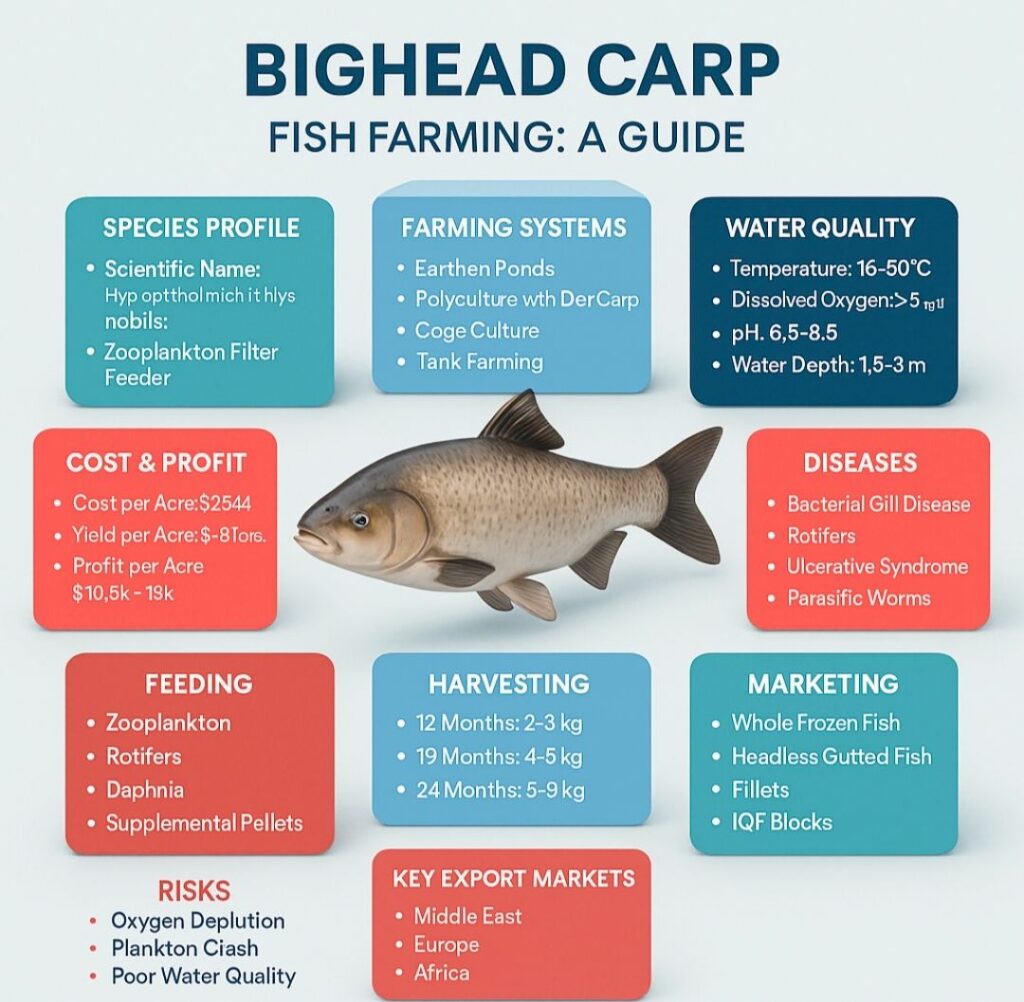
    Scientific Name: Hypophthalmichthys nobilis

    Common Names: Bighead Carp, Aristichthys nobilis (older classification)

    Family: Cyprinidae

    Origin: China (Yangtze River Basin)

    Feeding Habit: Zooplankton filter feeder

    Growth Potential: 8–20 kg in ponds

    Commercial Harvest: 2–4 kg

    Lifespan: 10–14 years

    Market Type: Whole fish, chilled fish, frozen fillets, surimi

    Biologically, Bighead Carp is robust and adapts well to a wide range of aquatic environments, making it suitable for global aquaculture.

    3. Global Importance of Bighead Carp Farming

    Bighead Carp plays a major economic role in several countries because:

    It grows rapidly, reaching 2–3 kg in 10–12 months.

    It requires minimal commercial feed since its primary food source is zooplankton.

    It has high consumer demand in Asia, Europe, and the Middle East.

    It has strong export potential as frozen fish and fillets.

    It fits perfectly in polyculture systems, reducing production cost per acre.

    Top Bighead Carp Producing Countries

    China

    Bangladesh

    India

    Vietnam

    Myanmar

    Thailand

    Russia

    Romania

    Ukraine

    Kazakhstan

    Malaysia

    Indonesia

    Global Consumers

    Bighead Carp is popular among:

    Asian households

    Hotels and restaurants

    Frozen seafood buyers

    Export-oriented processors

    Traditional markets in Eastern Europe

    Because of its affordability and high nutrition content, Bighead Carp supports food security programs in many nations.

    4. Ideal Climate & Environmental Requirements

    Bighead Carp adapts to various environments but grows best under the following conditions:

    ParameterRequirementTemperature18–30°CDissolved OxygenMinimum 5 mg/LWater Depth1.5–3 meterspH Level6.5–8.5Water Hardness80–150 ppmFlowing WaterModerately flowing water improves feeding

    The species tolerates low temperatures but stops feeding below 10°C.

    5. Water Quality Requirements

    High-quality water ensures optimal growth.

    Key Water Parameters

    Ammonia: Below 0.02 ppm

    Nitrite: Below 0.01 ppm

    Nitrate: Below 25 ppm

    Alkalinity: 100–200 ppm

    Transparency: 25–40 cm (ideal for plankton bloom)

    Maintaining a healthy plankton population is the cornerstone of Bighead Carp aquaculture success.

    6. Global Farming Systems Used for Bighead Carp

    1. Earthen Pond Farming

    Common in Asia due to low cost per acre.

    2. Polyculture with Silver Carp, Rohu, Catla, and Common Carp

    This system stabilizes pond productivity and increases total yield.

    3. Cage Culture in Rivers & Reservoirs

    Used in China, Vietnam, and Russia.
    Allows high-density fish production.

    4. Tank & Cement Pond Farming

    Ideal for small-scale producers near urban markets.

    5. RAS (Recirculating Aquaculture System)

    High control, used for export-quality production.

    6. Pen Culture in Floodplains

    Seasonal farming technique used in Bangladesh and Myanmar.

    7. Pond Preparation & Layout Design

    Recommended Pond Size

    1 acre

    Depth: 1.5–2.5 meters

    Strong embankments

    Proper inlet/outlet system

    Preparation Steps

    Remove weeds

    Dry pond bottom

    Apply lime to stabilize pH

    Fertilize to promote zooplankton

    Install aerators

    Fill water in stages

    Zooplankton population is critical for Bighead Carp growth.

    8. Seed Selection & Stocking Density

    Fingerling Quality Indicators

    Uniform size

    Active movement

    No deformities

    Bright eyes

    Clean gills

    Stocking Density Recommendations

    Monoculture: 2000–3000 per acre

    Polyculture: 800–1500 per acre

    Stocking density varies depending on availability of zooplankton.

    9. Feeding Management

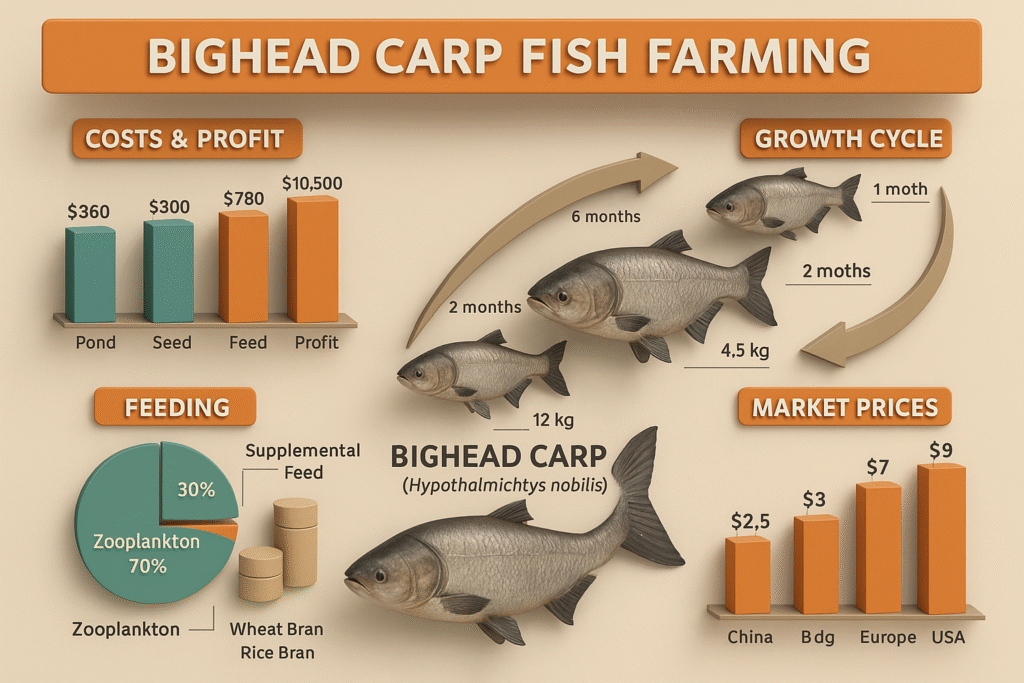
    Bighead Carp is a zooplankton filter feeder, making its input cost extremely low.

    Primary Natural Food

    Zooplankton

    Rotifers

    Daphnia

    Cladocerans

    Copepods

    Micro-organisms

    Enhancing Natural Food

    Cow dung

    Poultry manure

    Urea

    Superphosphate

    Supplemental Feed (only if needed)

    Wheat bran

    Rice polish

    18–22% protein pellets

    Daily Feeding Rate

    1–2% body weight (only supplements)

    Since natural food is abundant, supplementary feed is minimal.

    10. Growth Cycle & Harvesting Timeline

    AgeWeight1 month40–60g3 months250–350g6 months800–1200g12 months2–3 kg18 months4–5 kg24 months6–8 kg

    Bighead Carp grows faster in semi-flowing water.

    11. Disease Management & Biosecurity

    Common diseases:

    Bacterial gill disease

    Ulcerative syndrome

    Parasitic worms

    Ich infection

    Fungal growth

    Prevention Measures

    Maintain oxygen

    Regular water exchange

    Avoid overcrowding

    Use disinfected nets

    Seed treatment with KMnO₄

    Monthly liming

    12. Cost of Farming (1 Acre)

    ComponentINRUSDPond Prep₹30,000$360Fingerlings₹25,000$300Fertilizer₹12,000$144Supplements₹65,000$780Labour₹35,000$420Water/Electricity₹25,000$300Miscellaneous₹20,000$240Total₹2,12,000$2,544

    Bighead Carp is cost-efficient because feed requirements are low.

    13. Global Market Pricing (USD)

    RegionPrice per kgChina$2–3Bangladesh$2–3India$2–3.5Vietnam$2.5–4Russia$3–5Europe$5–9Middle East$4–8

    Processed fillets fetch higher prices.

    14. Profitability Analysis

    Yield: 6–10 tons per acre

    Revenue: ₹12–20 lakh ($14,000–24,000)

    Net Profit: ₹9–15 lakh ($10,500–18,000)

    Profit Margin: 55–65%

    Bighead Carp provides excellent profit because feed expense is low.

    15. Nutrition Profile (per 100g)

    Calories: 118

    Protein: 17g

    Fat: 4g

    Omega-3: 180mg

    Vitamin A, D

    Potassium

    Iron

    Phosphorus

    16. Health Benefits

    Heart-friendly

    Lean protein source

    Supports bone strength

    Helps muscle development

    Boosts immunity

    Good for low-fat diet plans

    Suitable for diabetic and elderly diets

    17. Medical & Industrial Applications

    Used in therapeutic diets

    Fish oil used in supplements

    Skin used for collagen extraction

    Surimi production

    Fertilizer and fish meal industry

    18. Risks & Challenges

    Sensitive to oxygen depletion

    Plankton crash can reduce feeding

    Cannot tolerate highly polluted water

    Temperature below 10°C slows metabolism

    Needs regular water quality monitoring

    19. Global Recipes

    Bighead Carp Stew

    Chinese Ginger Carp

    Fried Carp Cutlets

    Eastern European Carp Soup

    Grilled Carp with herbs

    Steamed Carp with garlic

    20. Marketing & Export Potential

    Bighead Carp is exported as:

    Whole frozen fish

    Headless gutted fish

    Fillets

    Canned carp

    IQF blocks

    Surimi

    Top Export Markets

    Middle East

    Europe

    Africa

    Asia-Pacific

    21. Business Expansion Opportunities

    Polyculture farms

    Cage farming clusters

    Carp hatcheries

    Fillet processing units

    Export-oriented farms

    Cold storage and distribution networks

    22. FAQs

    Q1: How fast does Bighead Carp grow?

    It reaches 2–3 kg within 12 months under proper plankton-rich conditions.

    Q2: What is its main food?

    Zooplankton is the primary food source.

    Q3: What is the best stocking density?

    2000–3000 per acre in monoculture.

    Q4: Is Bighead Carp profitable?

    Yes, profit margins range from 55–65%.

    Q5: What is the global market price?

    $2–9 per kg depending on region and product type.

    Q6: Is Bighead Carp suitable for polyculture?

    Yes, and it enhances pond productivity.

    Q7: What are the main diseases?

    Gill disease, fungal infections, and parasitic worms.

    23. Conclusion

    Bighead Carp fish farming is one of the most profitable and sustainable freshwater aquaculture businesses in the world. Its reliance on natural food, high growth rate, strong market acceptance, and compatibility with polyculture systems make it an ideal species for both small-scale farmers and large commercial enterprises. With proper water management, stocking density, and plankton enhancement, Bighead Carp ensures consistent income and long-term business stability.

    Bighead Carp fish farming, Bighead Carp profit, Bighead Carp aquaculture guide, Bighead Carp feeding system

    freshwater carp farming, global fish production, plankton-feeding fish, carp stocking density, freshwater aquaculture systems

    ✍️Farming Writers

    Love farming Love farmers

    Read A Next Post 👇

    https://farmingwriters.com/silver-carp-fish-farming-complete-global-guide/
  • Grass Carp Fish Farming: Global Guide on Cost, Profit, Water Quality, Feeding, Growth, Nutrition & Aquaculture Management

    Grass Carp Fish Farming

    1. Introduction: The Global Rise of Grass Carp Farming

    Grass Carp (Ctenopharyngodon idella) has become one of the most influential freshwater aquaculture species in the world due to its exceptional growth rate, herbivorous feeding habits, strong survival capability, and consistent global consumer demand. Over the last three decades, the species has expanded from its native regions in China and Russia to more than seventy countries where governments, private farms, landowners, and aquaculture corporations use it for food production, weed control, and commercial fishery enhancement.

    The popularity of Grass Carp is not accidental. It is the direct outcome of three advantages that very few fish species offer:

    Low production cost due to herbivorous feeding behavior
    Grass Carp feeds primarily on aquatic vegetation, grasses, weeds, and low-cost floating feed. This makes it extremely economical to rear in countries where commercial feed is expensive.

    High adaptability to large pond and reservoir culture
    It grows efficiently in ponds, irrigation tanks, reservoirs, and cage systems, allowing both small farmers and large-scale aquaculture enterprises to participate.

    Stable global market demand
    Grass Carp has a mild flavor, white meat, low fat, and high protein—all qualities that appeal to consumers in Asia, Eastern Europe, and parts of North America. This wide acceptance stabilizes its price throughout the year.

    Because of these advantages, Grass Carp farming has become an integral component of freshwater aquaculture systems in India, Bangladesh, Vietnam, Thailand, Myanmar, Israel, Romania, Ukraine, and many African nations. China remains the world leader, producing more Grass Carp than any other country produces any single freshwater species.

    This article offers a complete, step-by-step global guide on Grass Carp aquaculture—from pond construction and seed selection to feeding management, disease prevention, market strategy, export analysis, and long-term business planning.

    2. Species Overview and Biological Significance

    Grass Carp belongs to the Cyprinidae family and is closely related to Chinese Major Carps. It is naturally found in fast-flowing rivers of China and Russia. Over the years, it has been successfully introduced to controlled environments across Asia, Europe, and North America, largely for weed control and commercial fish production.

    Scientific and Biological Profile

    Scientific Name: Ctenopharyngodon idella

    Family: Cyprinidae

    Common Names: White Amur, Grass Carp

    Origin: Amur River Basin

    Feeding Type: Herbivorous

    Body Structure: Long torpedo-shaped, designed for swimming

    Growth Potential: 6–12 kg, depending on conditions

    Commercial Harvest Size: 1.5–3 kg

    Lifespan: 10–15 years

    The fish’s biology makes it ideal for stocking in large ponds, canals, and reservoirs. Since it feeds aggressively on submerged and floating vegetation, Grass Carp plays a dual role as both a farmed fish and an ecological weed controller.

    3. Global Importance and Market Distribution

    Grass Carp is among the most produced freshwater fish in the world in terms of total biomass. It holds a dominant position in the aquaculture industries of:

    China

    India

    Bangladesh

    Vietnam

    Thailand

    Indonesia

    Russia

    Romania

    Ukraine

    Israel

    In these countries, Grass Carp serves two purposes:

    Commercial fish farming for food markets.

    Aquatic weed control in reservoirs, irrigation canals, drinking-water bodies, and aquaculture tanks.

    Top International Grass Carp Markets

    China (domestic consumption + processing export)

    Europe (whole fish + fillets)

    Middle East (fresh/chilled demand)

    India & Bangladesh (fresh whole fish)

    USA (white amur used for weed control and fisheries enhancement)

    The global demand for Grass Carp is stable and reliable, with prices rising gradually due to increasing protein requirements, population growth, and lack of alternative low-cost white fish species.

    4. Climate and Environmental Needs

    Grass Carp adapts best to tropical and subtropical climates. This is why countries like India, Bangladesh, Vietnam, and Thailand excel in production.

    Ideal Environmental Conditions

    ParameterOptimal RangeTemperature20°C to 30°CDissolved OxygenMinimum 5–6 mg/LpH6.5 to 8.5SalinityFreshwater onlyPond Depth1.5–2.5 meters

    Grass Carp cannot tolerate cold water for long periods. Temperatures below 12°C slow down metabolism, reduce feeding, and impact growth.

    5. Water Quality Parameters

    Water quality directly affects growth, feed consumption, and survival rates. Farmers in countries like China and Vietnam follow strict guidelines which have been adopted globally.

    Recommended Water Standards

    Hardness: 80–150 ppm

    Alkalinity: 100–200 ppm

    Ammonia: Below 0.02 ppm

    Nitrate: Below 25 ppm

    Flow Rate: Moderate water movement preferred

    Maintaining these parameters reduces disease outbreaks and ensures efficient feed conversion.

    6. Farming Systems Used Around the World

    Grass Carp farming can be adapted to different environments and production volumes. Here are the most widely adopted systems:

    1. Traditional Pond Culture

    Used by small and medium-scale farmers.

    2. Polyculture System

    Widely practiced in Asia:

    Grass Carp

    Rohu

    Catla

    Silver Carp

    Common Carp

    Mrigal

    Each fish utilizes a different layer of water and feed, resulting in efficient use of pond resources.

    3. Cage Culture in Reservoirs

    China, Russia, Vietnam, and Thailand use cages for high-density production.

    4. Tank Culture

    Suitable for regions with limited land availability.

    5. Biofloc Farming

    Possible but not ideal, as Grass Carp prefers vegetation.

    6. Recirculating Aquaculture Systems (RAS)

    Used for producing export-quality fish.

    7. Pond Construction and Preparation

    Pond Size and Design

    1 acre is ideal for commercial operation

    Depth 1.5–2.5 meters

    Gentle slope to facilitate water flow

    Proper inlet and outlet channels

    Pond Preparation Steps

    Sun-drying the bottom

    Liming based on soil pH

    Organic fertilization to promote plankton

    Introducing aquatic plants

    Installing aerators

    Grass Carp requires substantial aquatic vegetation, so initial pond preparation must promote natural plant growth.

    8. Fingerlings and Stocking Density

    Seed Selection Guidelines

    Fingerling size: 3–5 inches

    Color: Natural silver-grey

    Gills should be bright red

    Must swim actively

    Stocking Density

    For 1 acre:

    3000 to 4000 Grass Carp fingerlings

    In polyculture, fewer Grass Carp are stocked as they feed aggressively on vegetation.

    9. Feeding Management

    Grass Carp’s herbivorous nature lowers farming cost drastically.

    Natural Feed Sources

    Napier grass

    Para grass

    Azolla

    Duckweed

    Hydrilla

    Lettuce

    Spinach

    Aquatic weeds

    Commercial Feed

    20–25% protein floating pellets

    Used primarily during lean vegetation seasons

    Daily Feeding Rate

    2–3% of body weight

    Feed Conversion Ratio (FCR)

    1.6:1 on average
    (Highly efficient among freshwater species.)

    10. Growth Cycle and Harvest Timeline

    AgeExpected Weight1 month60–80g3 months300–400g6 months1–1.2 kg12 months2–2.5 kg18 months3–4 kg

    Grass Carp grows rapidly when vegetation is abundant.

    11. Disease Management and Biosecurity

    Although hardy, Grass Carp can be affected by:

    Gill rot

    Fungal infections

    Columnaris

    Parasitic worms

    Biosecurity Recommendations

    Lime every 25–30 days

    Maintain dissolved oxygen

    Remove sludge regularly

    Prevent overcrowding

    Use potassium permanganate baths for seed treatment

    12. Cost of Production (1 Acre World Model)

    ComponentCost (INR)Cost (USD)Pond Prep₹30,000$360Fingerlings₹20,000$240Vegetation/Feed₹1,20,000$1,440Labour₹35,000$420Water/Electricity₹25,000$300Miscellaneous₹20,000$240Total Cost₹2,50,000$3,000

    13. Global Market Price (USD)

    RegionPrice per kgUSA$5–8Europe$4–7China$2–3India$2–3.5Middle East$4–8

    Grass Carp fillets fetch higher rates in export markets.

    14. Profitability Analysis

    Production: 8–10 tons per acre

    Revenue: $15,000–22,000

    Net Profit: $10,800–15,600

    Profit Margin: 50–60%

    Grass Carp earns higher profits due to low feed cost and strong demand.

    15. Nutrition Profile (per 100g)

    Calories: 112

    Protein: 17g

    Fat: 5g

    Omega-3: 200mg

    Vitamin A, D, B12

    Iron, Zinc, Potassium

    16. Health Benefits

    Grass Carp supports:

    Heart health

    Muscle growth

    Immune function

    Brain development

    Recovery diets

    Elderly nutrition

    Its white meat is easy to digest and suitable for all age groups.

    17. Medical and Industrial Uses

    Used in patient recovery diets

    Fish oil for supplements

    Used in therapeutic nutrition

    Low-fat protein source for metabolic patients

    18. Risks and Challenges

    Sensitive to polluted water

    Cannot tolerate cold climate

    Vegetation shortage slows growth

    Overcrowding leads to stress

    19. Popular Recipes Around the World

    Steamed Grass Carp

    Grass Carp Curry

    Fried Carp Slices

    Grilled Carp with herbs

    Chinese Carp Soup

    Romanian Carp Stew

    20. Marketing and Export Opportunities

    Strong markets include:

    India

    China

    Vietnam

    Eastern Europe

    Middle East

    USA (special permits required)

    Export products:

    Frozen whole fish

    Fillets

    Cleaned and gutted fish

    IQF blocks

    21. Business Expansion Models

    Polyculture farms

    Integrated farms

    Large reservoir cage farming

    Hatchery business

    Processing and fillet plants

    Export-oriented farms

    22. Conclusion

    Grass Carp fish farming is one of the most reliable and profitable aquaculture ventures in the world. Its rapid growth, herbivorous feeding nature, stable market demand, and minimal production cost make it a preferred species for both small-scale farmers and large commercial aquaculture enterprises. When managed professionally with proper water quality, vegetation supply, and disease control, Grass Carp provides strong returns, high sustainability, and long-term financial stability.

    Grass Carp fish farming, Grass Carp cost and profit, Grass Carp aquaculture guide, Grass Carp feeding system, Freshwater carp business, global fish farming systems, weed-based fish culture, carp stocking density

    ✍️Farming Writers

    Love farming Love farmers

    Read A Next Post 👇

    https://farmingwriters.com/pangasius-basa-fish-farming-complete-guide/