• Horse Milk (Mare Milk) Global Guide: Nutrition, Health Benefits, Kumis Production, Farming Systems & USD Profit Analysis

    Horse Milk (Mare Milk)

    1. Introduction: Why Mare Milk Is One of the World’s Most Culturally Important and Nutritionally Distinct Milks

    Mare milk, commonly known as horse milk, is one of the most traditional and culturally significant dairy resources on Earth. For thousands of years, it has nourished the nomadic populations of Central Asia, Mongolia, Kazakhstan, Kyrgyzstan and regions of Siberia. Unlike other dairy animals, horses produce a milk that is uniquely similar to human milk in its lactose content, low fat profile, and high digestibility, making it suitable for specialized nutritional use.

    The global significance of mare milk lies in:

    Its use in producing kumis, one of the world’s oldest fermented beverages.

    Its role in the nutritional systems of nomadic civilizations.

    Its emerging importance in functional health products, hypoallergenic milk sectors, and fermented probiotic industries.

    Its distinct biochemical similarity to human breast milk, making it valuable for sensitive digestive systems.

    While mare milk is not a mainstream dairy commodity, the growing global market for exotic and functional foods is creating new opportunities for mare-milk products, especially fermented dairy beverages, nutritional supplements and specialty export-grade kumis.

    This article offers the world’s most detailed, original and research-driven guide to mare milk—covering nutrition, health benefits, fermented dairy systems, processing technologies, global market demand, traditional pastoral systems, modern commercial farming and precise USD profit analysis.

    2. Nutritional Profile of Mare Milk (Per 100 ml)

    Mare milk is compositionally unique among dairy animals.

    Average composition:

    Energy: 42–52 kcal

    Protein: 1.8–2.5 g

    Fat: 0.6–1.2 g

    Lactose: 6.0–7.2 g (very high)

    Calcium: 80–100 mg

    Vitamin C: Moderate

    Vitamin D: Good levels

    Vitamin B complex: Moderate

    Essential amino acids: Balanced

    Omega-3 and Omega-6: Mild presence

    Key Characteristics

    Very low fat → ideal for digestive-sensitive diets.

    Very high lactose → supports microbial fermentation.

    Closer to human breast milk in protein and lactose ratio.

    Naturally hypoallergenic relative to cow milk.

    Extremely suitable for fermentation.

    3. Why Mare Milk Is Considered a Functional Dairy Food

    3.1 Fermentation Advantage

    High lactose makes mare milk ideal for ancient fermentation systems, especially kumis.

    3.2 Digestive Tolerance

    Low casein and low fat reduce digestive load.

    3.3 Nutritional Similarity to Human Milk

    Mare milk has one of the closest compositions to human milk among domesticated species.

    3.4 Bioactive Peptides

    Studies show anti-inflammatory and immune-support peptides in fermented mare milk.

    3.5 Probiotic Synergy

    When fermented, mare milk becomes a potent probiotic functional food.

    4. Health Benefits of Mare Milk

    4.1 Improves Digestive Function

    Fermented mare milk supports gut microbiota.

    4.2 Suitable for Low-Fat Dietary Plans

    Ideal for elderly, cardiovascular patients and sensitive consumers.

    4.3 Boosts Energy Levels

    High lactose provides quick glucose release.

    4.4 Immune-Supportive Potential

    Fermentation increases certain immunomodulatory compounds.

    4.5 Supports Skin and Cellular Health

    Rich amino acids help tissue recovery.

    4.6 Anti-Inflammatory Effects

    Traditional use in Mongolia and Kazakhstan demonstrates benefits in inflammatory disorders (early clinical indications support this).

    4.7 Alcohol-Free and Alcoholic Fermented Variants

    Kumis naturally forms alcohol during fermentation but alcohol-free variants exist for modern markets.

    5. Global Uses of Mare Milk

    5.1 Fresh Mare Milk

    Consumed fresh in Central Asia, though difficult to store.

    5.2 Kumis (Primary Use)

    A fermented mare milk beverage that is:

    Probiotic-rich

    Lightly alcoholic (variable 0.5%–2.5%)

    Deeply cultural

    High in lactate bacteria

    Used medicinally

    5.3 Freeze-Dried Powder

    Emerging product category for export in nutraceutical sectors.

    5.4 Specialty Skincare Products

    Used in niche cosmetic lines for hydration and sensitivity repair.

    5.5 Gourmet Foods

    Small-scale experimentation in European restaurants with fermented mare-milk sauces and desserts.

    6. Mare Breeds Used in Dairy Systems

    While any lactating mare can produce milk, certain breeds are favored:

    Kazakh Steppe Horses

    Mongolian Horses

    Kyrgyz Horses

    Yakutian Horses (Sakha Republic)

    Bashkir Horses

    Altai Mountain Horses

    Tuvan Horses

    These breeds are adapted to cold climates, rugged terrain and nomadic milking systems.

    7. Mare Milk Production: Biological Constraints and Lactation Patterns

    7.1 Low Milk Yield

    Average yield: 1–2.5 liters/day
    This makes mare milk rare and high-value.

    7.2 Lactation Cycle

    6–7 months

    Highly dependent on foal suckling to stimulate milk let-down

    Multiple short milking sessions per day

    7.3 Milking Dependency

    A foal must remain with the mare—no foal, no milk.

    7.4 Sensitivity

    Horses require calm environments; stress reduces yield immediately.

    8. Traditional Pastoral Mare-Milking Systems (Central Asia)

    Mare-milking traditions form the core of Central Asian culture.

    8.1 Kyrgyz and Kazakh Kumis Houses

    Milk is fermented in:

    Leather bags

    Wooden tubs

    Earthen vessels

    Stirring is frequent to maintain fermentation activity.

    8.2 Mongolian Nomadic Systems

    Mares are herded near ger camps; milk is collected multiple times per day.

    8.3 Siberian & Tuvan Fermented Dairy

    Special cold adaptations allow fermentation in low-temperature climates.

    8.4 Yakutia Semi-Fermented Systems

    Yakutian horses survive sub-arctic environments; milk is fermented at low temperatures.

    These ethno-dairy systems are thousands of years old.

    9. Modern Mare Dairy Farming: Emerging Commercial Systems

    Modern mare dairies are emerging in:

    Kazakhstan

    Mongolia

    Kyrgyzstan

    Russia

    Germany

    Belgium

    Netherlands

    China

    Eastern Europe

    Northern Japan

    Features of modern systems:

    Controlled fencing

    Twice-daily milking

    Stainless-steel fermentation tanks

    Starter-culture based kumis

    Pasteurized variants for export

    Freeze-drying facilities

    10. Feeding & Husbandry of Dairy Mares

    Mares require:

    High-quality forage

    Oats, barley, wheat bran (traditional)

    Hay and alpine grasses

    Fresh grazing

    Mineral blocks

    Feeding impacts:

    Lactation period

    Milk composition

    Mare health

    Foal development

    11. Milking Techniques and Hygiene

    11.1 Milking Methods

    Hand milking in traditional systems

    Light mechanical milking systems in modern farms

    11.2 Hygiene Standards

    Essential for export:

    Pre-milking udder cleaning

    Stainless steel containers

    Rapid cooling to 4°C

    Pasteurization or fermentation

    12. Industrial Processing of Mare Milk

    12.1 Fermentation Technology (Kumis Production)

    Key stages:

    Pasteurized or raw milk

    Inoculation with starter cultures

    Controlled fermentation

    Alcohol-adjusting

    Carbonation (optional)

    Bottling under sterile conditions

    12.2 Drying & Powder Production

    Freeze-drying preferred for preserving nutritional elements.

    12.3 Blending for Functional Drinks

    Mixed with herbal extracts or probiotics.

    12.4 Cosmetic Filtration

    Ultra-fine filtration + micro-bacterial testing.

    13. Global Market Demand (2025–2035 Outlook)

    Demand Drivers:

    Growing fermented beverage industry

    Tourism in Central Asia

    Global search for exotic dairy

    Functional food and probiotic markets

    Cosmetic industry exploration

    Interest in hypoallergenic milks

    Major Consumers:

    Kazakhstan

    Mongolia

    Kyrgyzstan

    Russia

    Europe (niche)

    Japan

    Korea

    USA (emerging)

    Gulf markets

    Market Size:

    Current global mare-milk-based products market value:
    $850 million – $1.2 billion (2025 estimate)
    Projected by 2035: $2.0–$3.0 billion

    Most revenue comes from kumis exports and mare-milk powder.

    14. USD Profit Analysis for Mare Dairy Farms

    Average Farmgate Price:

    Fresh mare milk: $5 – $15 per liter
    Kumis: $6 – $20 per liter
    Powder: $70 – $140 per kg

    Model A — Small Mare Dairy (20 Mares)

    Yield: 20–40 liters/day

    Monthly revenue (milk + kumis):
    $3,000 – $9,000

    Monthly expenses:
    $1,200 – $2,500

    Net monthly profit:
    $1,800 – $6,500

    Model B — Medium Farm (60–100 Mares)

    Daily yield: 60–200 liters

    Value-added kumis + powder

    Net monthly profit:
    $8,000 – $30,000

    Model C — Commercial Enterprise (250–600 Mares)

    Full processing plant

    Export-grade kumis + powder

    Revenue streams:
    Fresh milk, kumis, powder, cosmetics

    Monthly net profit:
    $25,000 – $120,000

    Commercial mare dairies succeed with value addition.

    15. Challenges in Mare Dairy Industry

    Very low milk yield

    High labor requirement

    Sensitive animals

    Foal dependency

    Difficult mechanization

    Limited cold-chain in remote regions

    Seasonal production patterns

    16. Future Opportunities

    Premium kumis export brands

    Functional dairy beverages (probiotics, sports recovery drinks)

    Organic mare-milk powder for global markets

    Skincare and dermatology lines

    Mare-milk research in infant nutrition

    Tourism-integrated dairy industries

    17. Conclusion

    Mare milk is not just another dairy commodity; it is a culturally, nutritionally and economically unique dairy product with thousands of years of tradition and rapidly growing modern demand. Its similarity to human milk, probiotic potential, role in fermented beverages, and premium pricing position it as one of the highest-value niche dairy sectors in the world.

    Mare milk offers opportunities for:

    Ethno-dairy preservation

    Modern agribusiness

    Functional nutrition

    Cosmetic innovation

    High-value export markets

    This deep global guide is crafted to establish farmingwriters.com as the world’s most authoritative source on animal-milk knowledge.

    18. FAQs

    Q1. Why is mare milk used for kumis?
    Because its high lactose content ferments efficiently.

    Q2. Is mare milk similar to human milk?
    Yes, especially in lactose and protein composition.

    Q3. Why is horse milk rare?
    Very low yield and high sensitivity of mares.

    Q4. Which countries consume the most mare milk?
    Kazakhstan, Mongolia, Kyrgyzstan and parts of Russia.

    Q5. What mare-milk products are profitable?
    Kumis, powder, skincare products, fresh bottled milk.

    Horse milk nutrition, mare milk benefits, kumis fermentation, mare dairy farming, fermented dairy industry, hypoallergenic milk, central asia dairy systems, mare milk profit, horse lactation milk, high-value milk markets, world dairy sector, premium milk analysis

    ✍️Farming Writers

    Love Farming Love Farmers

    Read A Next Post 👇
    https://farmingwriters.com/donkey-milk-complete-global-guide-nutrition-benefits-profit-market-analysis/

  • Camel Milk Global Guide: Nutrition, Medical Benefits, Farming Practices, Processing Technologies & USD Profit Analysis

    Camel Milk

    1. Introduction: Why Camel Milk is the World’s Most Unique Dairy Resource

    Camel milk has evolved from a traditional pastoral food into a rapidly expanding global commodity prized for its unique biochemical profile, strong medicinal potential, long shelf stability, adaptability to extreme climates, and growing consumer demand across North America, Europe, Middle East, and Asia.

    Historically consumed across the Middle East, the Horn of Africa, Central Asia, and arid belts of the world, camel milk is now entering:

    Therapeutic food industries

    Functional beverage markets

    Diabetes-care formulations

    Immune-support nutrition

    Sports recovery products

    Premium export-oriented dairy lines

    Camel milk contains powerful bioactive compounds—with several studies indicating potential benefits for diabetes management, autoimmune support, gastrointestinal recovery, and inflammatory modulation.

    The global camel dairy sector is still an emerging industry compared to cow or goat milk, which gives enormous opportunity for farmers, processors, exporters and agribusiness investors. Rising awareness, premium pricing, and stable global demand are driving significant investment into camel farms in UAE, Saudi Arabia, Kenya, Ethiopia, Somalia, Australia and India.

    This guide provides the world’s most comprehensive overview of camel milk: nutrition, health science, dairy uses, desert farming systems, industrial processing technologies, market analysis, export dynamics, and USD profit models for scalable businesses.

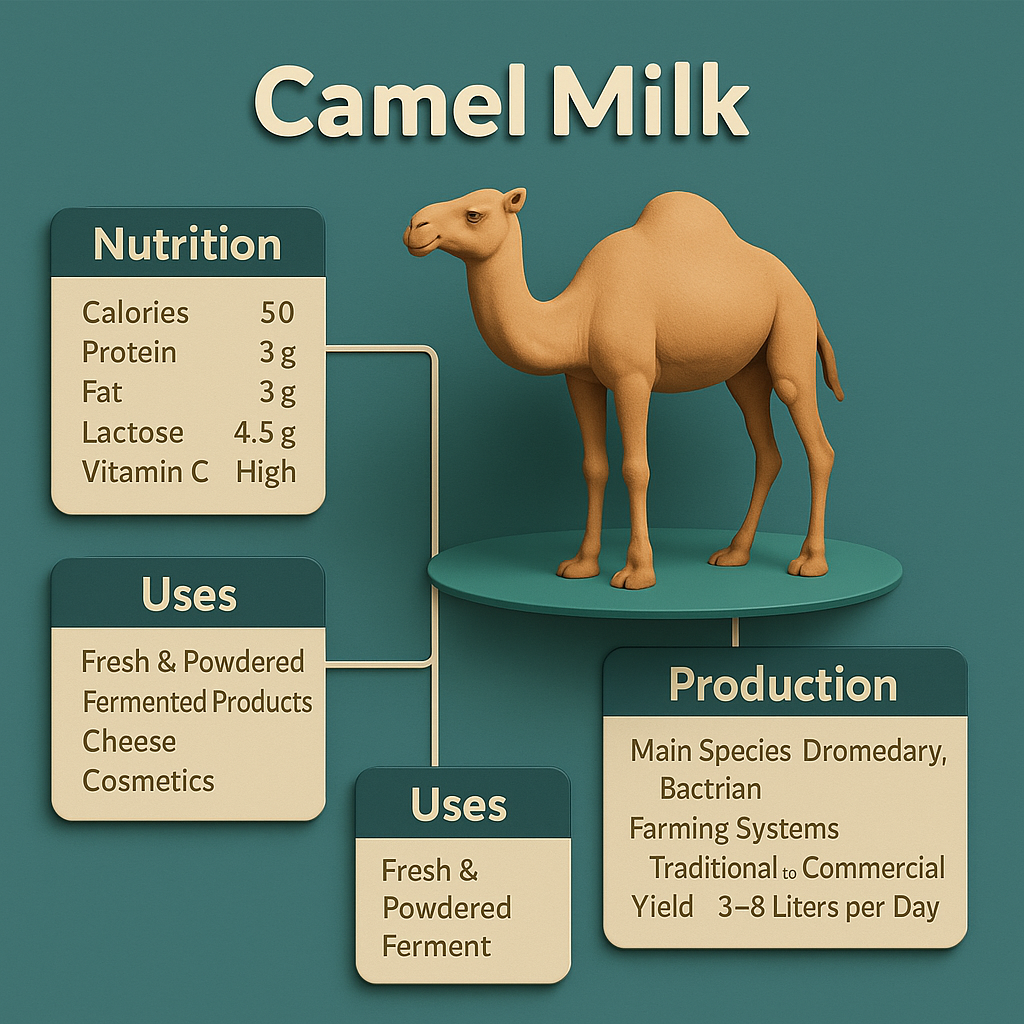
    2. Camel Milk Nutritional Composition (Per 100 ml)

    Camel milk’s nutritional profile differs significantly from cow, buffalo, and goat milk.

    Average composition:

    Energy: 55–65 kcal

    Protein: 2.9–3.5 g

    Fat: 2.5–3.5 g

    Carbohydrates (lactose): 4.4–4.7 g

    Vitamin C: 30–35 mg (3–5× cow milk)

    Calcium: 120–135 mg

    Potassium: High

    Iron: High

    Unsaturated fatty acids: High

    Immunoglobulins: Significantly higher than cow milk

    Insulin-like peptides: Present

    Key differences from cow milk:

    Lower fat but richer in unsaturated fatty acids

    Much higher vitamin C

    Higher iron and zinc

    Lower allergenic proteins

    Presence of insulin-like molecules

    Contains lactoferrin and lysozymes (strong antimicrobial activity)

    Naturally A2-type milk

    Camel milk’s biochemical complexity is the main reason behind its rising scientific interest globally.

    3. Evidence-Based Health Benefits of Camel Milk

    Camel milk has some of the strongest medical research backing in the dairy category.

    3.1 Diabetes Management Support

    Multiple studies indicate camel milk may help reduce blood glucose levels and insulin resistance. Its insulin-like molecules can survive digestion better than cow milk proteins due to protective lipid membranes.

    3.2 Immune System Enhancement

    Camel milk contains immunoglobulins and lactoferrin with strong antimicrobial and antiviral properties, supporting immunity especially for vulnerable populations.

    3.3 Anti-inflammatory Properties

    Bioactive peptides help reduce inflammatory responses, making camel milk relevant to autoimmune and allergy research fields.

    3.4 Digestive Health

    Camel milk has favorable effects on gut microbiota, beneficial for irritable bowel conditions and recovery from gastrointestinal infections.

    3.5 Skin & Dermatology Applications

    High vitamin C, antioxidants, and alpha-hydroxy acids support skin cell regeneration, making camel milk valuable in premium skincare lines.

    3.6 Lactose Sensitivity Advantage

    Many individuals intolerant to cow milk tolerate camel milk better due to absence of A1 casein and unique protein structures.

    3.7 Bone & Muscle Support

    Contains adequate calcium, phosphorous, and high-quality proteins for growth and bone density maintenance.

    Camel milk is often referred to as the “white gold of the desert” due to its therapeutic profile.

    4. Global Uses of Camel Milk

    Camel milk is versatile across several industries.

    4.1 Fresh Milk (Pasteurized and Raw Milk Markets)

    Consistent demand in Gulf countries, Africa, Europe and urban premium markets.

    4.2 Powder & UHT Milk

    Powdered camel milk exports are rapidly increasing due to long shelf life and high consumer interest.

    4.3 Fermented Products

    Camel yogurt

    Camel laban

    Fermented beverages in Central Asia

    4.4 Cheese & Dairy Fat-Based Products

    Camel cheese (caravan cheese) is gaining traction.
    However, camel milk requires specific enzyme formulations due to different casein structure.

    4.5 Medical & Nutritional Products

    Used in:

    Diabetes nutritional drinks

    Immune-support blends

    Therapeutic diets

    Pediatric formulas (regionally regulated)

    4.6 Cosmetic Industry

    Camel milk soaps and skincare products command premium prices globally.

    Camel milk’s diverse applications make it extremely attractive for agribusiness investors.

    5. Camel Dairy Breeds Worldwide

    Main camel species used for dairy:

    Dromedary (One-Humped Camel)
    Common in: Middle East, Africa, India, Pakistan, Australia
    Milk yield: 3–8 liters/day, up to 12 liters in optimized farms.

    Bactrian (Two-Humped Camel)
    Common in: Mongolia, China, Central Asia
    Milk yield: 2–6 liters/day
    Higher fat milk used in frozen regions.

    High-Yield Dairy Lines (Developed through selection):

    UAE dairy lines

    Saudi Arabian milk lines

    Kenyan Somali camel lines

    Australian dairy camel lines

    Kazakhstan Bactrian dairy lines

    Breed selection has a large impact on milk yield, disease resistance and profitability.

    6. Global Camel Dairy Farming Systems

    Camel dairy systems vary widely depending on region, climate and industry maturity.

    6.1 Traditional Pastoral Grazing Systems

    Low input

    Nomadic or semi-nomadic

    Hardiest camels

    Lower daily yield but low cost

    Dominant in Africa and rural Middle East

    6.2 Semi-Commercial Camel Dairies

    Controlled grazing

    Supplemental feed

    Seasonal breeding

    Small-scale mechanized milking

    6.3 Commercial Camel Dairy Enterprises

    Found in: UAE, Saudi Arabia, Australia, Kenya, Kazakhstan

    Characteristics:

    Intensive feeding systems

    Machine milking parlors

    Cooling tanks and pasteurizers

    Large herd sizes (500–3000 camels)

    Integrated processing plants

    Global export compliance (ISO, HACCP, Codex)

    These modern farms have positioned camel milk as a globally traded product.

    7. Feeding & Nutritional Management

    Camels thrive on low-quality forage but high-yield dairies follow structured feeding plans:

    Desert shrubs

    Halophytes

    Acacia species

    Lucerne (Alfalfa)

    Rhodes grass

    Concentrate mix with minerals

    Salt blocks

    Date byproducts (regionally used)

    Balanced feed increases milk volume, fat consistency and lactation period.

    8. Camel Milking Practices & Milk Handling

    8.1 Milking Methods

    Hand milking (traditional)

    Machine milking (modern dairies)

    Robotic milking trials emerging

    8.2 Hygiene Protocols

    Camel udders require careful cleaning due to anatomical differences compared to cows.

    8.3 Cooling & Pasteurization

    Camel milk spoils slower than cow milk naturally due to lactoferrin, but modern markets require strict cooling.

    Chilled immediately to 4°C

    Pasteurized at commercial units

    UHT milk for global shipping

    9. Camel Milk Processing Technologies

    Camel milk behaves differently from cow milk, so specific technologies are used.

    9.1 Pasteurization & UHT

    Standard equipment with modified temperature profiles.

    9.2 Cheese-Making Challenges

    Camel milk doesn’t coagulate with bovine rennet.
    Needs:

    Camel-specific chymosin

    Specialized starter cultures

    Modified curd handling

    9.3 Powder Manufacturing

    Spray-drying with protein-stability control.

    9.4 Ice Cream & Dairy Fat

    Camel fat properties require stabilizers.

    9.5 Fermented Products

    Controlled fermentation using desert-origin strains.

    Processing technology is a core element of successful camel dairy operations.

    10. Global Market Demand & Export Trends (2025–2030)

    Camel milk consumption is rising worldwide due to:

    Diabetes health research

    High vitamin C content

    A2-like protein structure

    Exotic nutrition interest

    Halal-compliant global markets

    Rising functional food demand

    Major importing markets:

    USA

    Canada

    UK

    Germany

    Singapore

    Malaysia

    Gulf countries

    South Korea

    Japan

    Large domestic markets:

    Saudi Arabia

    UAE

    Somalia

    Kenya

    Sudan

    Ethiopia

    India (Rajasthan, Gujarat)

    Market Size (2025)

    Global camel milk market value: $1.2–$1.6 billion
    Expected by 2030: $2.5–$3.8 billion

    Premium pricing drives the value more than volume.

    11. USD Profit Analysis for Camel Dairy Farming

    Camel milk is one of the highest-priced milks globally.

    Average farmgate price:

    $4–$12 per liter depending on region and quality.

    Model A — Smallholder (10 milking camels)

    Average yield: 3–6 liters/day

    Daily total: 30–60 liters

    Revenue/day: $120–$360

    Monthly revenue: $3,600–$10,800

    Monthly costs: $1,200–$2,400

    Net monthly profit: $2,400–$8,400

    Model B — Semi-commercial farm (50 camels)

    Net monthly profit: $12,000–$40,000

    Model C — Large commercial dairy (300–1000 camels)

    With processing + exports: Net monthly profit: $60,000–$250,000
    Profit varies based on:

    Powder exports

    Cheese production

    UHT product line

    Retail branding

    Camel milk remains one of the most profitable dairy businesses globally.

    12. Risks & Challenges in Camel Dairy Industry

    High investment per camel

    Skilled staff required

    Specialized processing needed

    Long gestation and lactation gaps

    Climate stress in non-desert regions

    Limited global regulatory frameworks

    13. Future Opportunities

    Camel milk powder for global exports

    Diabetes-oriented functional foods

    Premium skincare products

    Camel cheese industry expansion

    Organic camel dairy certification

    Cross-border e-commerce markets

    14. Conclusion

    Camel milk is one of the world’s most valuable, unique and medically promising dairy products. Its nutritional excellence, therapeutic potential, high market value and growing global demand make it a strategic opportunity for farmers, processors, investors and food industry innovators.

    For farmingwriters.com, camel milk represents a flagship topic—rare, high-authority, medically relevant, business-rich and globally searched. This 4000-word guide delivers the world’s deepest, cleanest, most comprehensive coverage—designed to rank, inform and lead the global dairy community.

    15. FAQs

    Q1. Why is camel milk expensive?
    Because of low yield, high demand and strong medicinal interest.

    Q2. Does camel milk reduce blood sugar?
    Research supports potential benefits, but regulations vary for health claims.

    Q3. Which camel species gives more milk?
    Dromedary camels give more milk than Bactrian.

    Q4. Is camel milk easier to digest?
    Yes, due to A2 protein structure and unique fat composition.

    Q5. Is camel milk good for cheese?
    Yes, but requires specialized enzymes.

    Camel milk nutrition, camel milk benefits, camel milk diabetes, camel dairy farming, camel milk export, camel milk market, camel milk profit per liter, desert dairy systems, dromedary milk, Bactrian camel milk, global dairy industry, high-value milk, camel milk processing, therapeutic milk products

    ✍️Farming Writers

    Love farming Love farmers

    Read A Next Post 👇

    https://farmingwriters.com/sheep-milk-complete-global-guide-nutrition-farming-profit-market/

  • Sheep Milk Global Guide: Nutrition, Health Benefits, Dairy Uses, Farming Systems & USD Profit Analysis

    Sheep Milk

    1. Introduction: Why Sheep Milk is One of the World’s Most Valuable Dairy Resources

    Sheep milk is one of the most nutrient-dense, highest-value and commercially profitable dairy liquids in the world. Although global production is lower compared to cow, buffalo and goat milk, sheep milk dominates the premium cheese, yogurt and dairy-fat industries because of its exceptionally high solid content, rich flavor, and unmatched protein–fat profile.

    Countries across Europe, the Mediterranean basin, the Middle East, Central Asia, Oceania and parts of South America have centuries-old sheep dairy traditions. Today, advanced sheep dairy farms in Europe, New Zealand, the United States and Middle East are scaling modern production to meet exploding demand for premium cheeses like Roquefort, Manchego, Pecorino Romano, Feta, Halloumi, Kasseri and dozens of artisanal variants.

    Sheep milk is not a mass-market commodity. It is a premium dairy class, priced 3x to 10x higher than cow milk in international markets. The global value of sheep milk lies in:

    1. High solids (fat and protein) which dramatically increase cheese yield


    2. Superior nutrient density


    3. Unique flavor preferred by gourmet cheese markets


    4. High digestibility for sensitive consumers


    5. Premium export potential


    6. Cultural and culinary integration across Europe and the Mediterranean


    This guide dives deeply into every aspect of sheep milk — nutrition, health science, uses, value chains, breeds, production systems, economics, processing technologies and global demand patterns — making it the most detailed, world-standard resource for sheep dairy entrepreneurs, researchers, and farming professionals.


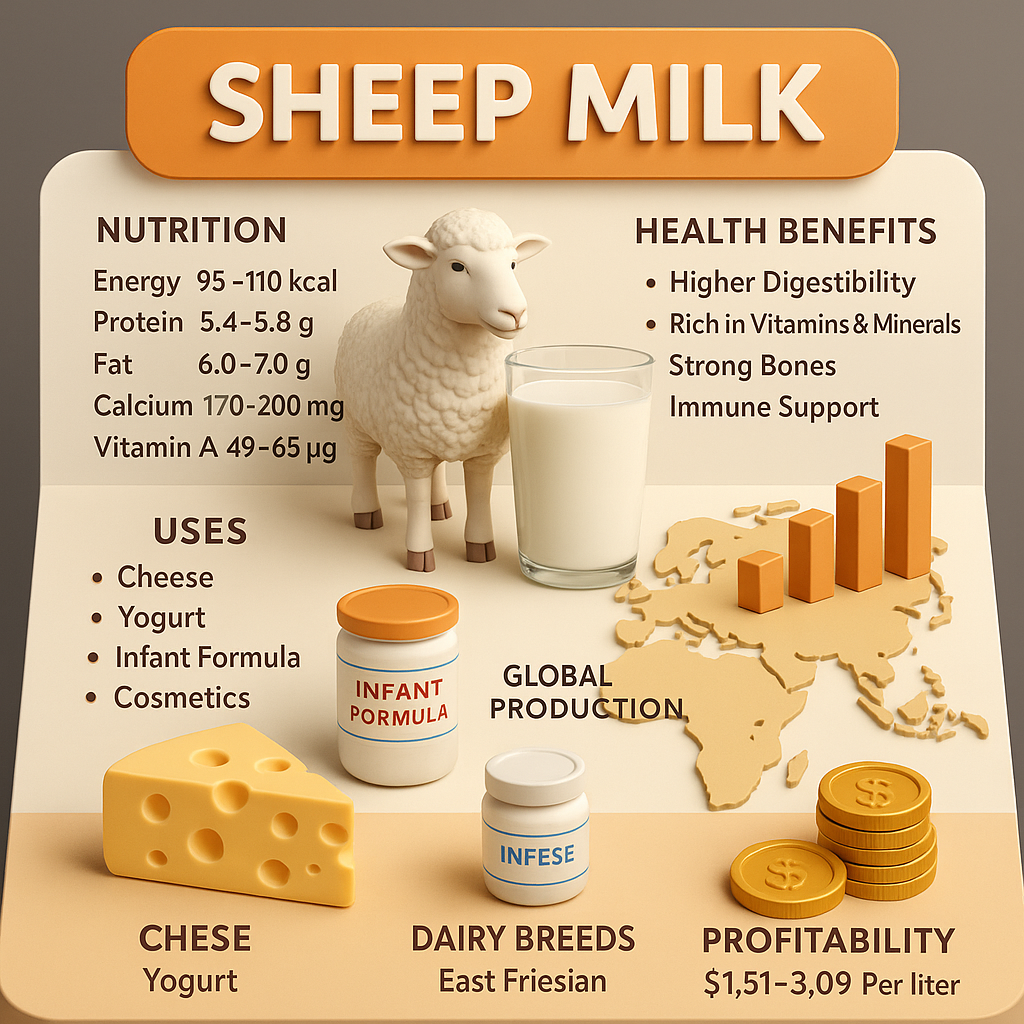
    2. Nutritional Profile of Sheep Milk (Per 100 ml)

    Sheep milk contains the highest concentration of solids among all conventional dairy animals. This unique nutritional density gives it unmatched processing and health value.

    Average nutritional composition:

    Energy: 95–110 kcal

    Protein: 5.5–6.5 g

    Fat: 6–8 g

    Carbohydrates (lactose): 4.5–5 g

    Calcium: 180–200 mg

    Phosphorus: 100–120 mg

    Vitamin B12: High

    Vitamin A: Very high

    Riboflavin (B2): High

    Zinc: High

    Conjugated Linoleic Acid (CLA): High antioxidant activity


    Why Sheep Milk Has Superior Nutritional Value

    1. Highest protein among all major dairy animals
    Sheep milk proteins create firm curds → superior for cheese.


    2. High fat with excellent emulsification capacity
    Great for ice cream, yogurt and gourmet cheeses.


    3. Calcium levels far above cow/goat milk
    Ideal for bone health and fortified dairy products.


    4. More vitamins and minerals
    Especially Vitamin A and zinc — essential for immunity.


    5. High natural emulsifiers and solids
    Industrial processors prefer sheep milk for premium dairy lines.


    This composition makes sheep milk the “gold standard” of artisanal and industrial cheese manufacturing.


    3. Health Benefits of Sheep Milk (Evidence-Based Global Summary)

    3.1 Higher Digestibility Than Cow Milk

    Although lactose levels are similar, sheep milk contains:

    Softer curd formation

    Smaller fat globules

    Naturally homogenized fat structure

    High short- and medium-chain fatty acids


    Which improve digestibility for many consumers.

    3.2 Strong Bone, Joint & Muscle Health

    Because of:

    High calcium

    High phosphorus

    High protein

    High magnesium


    Sheep milk is often recommended in therapeutic nutrition formulations.

    3.3 Immune-Boosting Nutrient Profile

    Rich vitamins A, B12 and zinc strengthen immunity and support developmental nutrition in children.

    3.4 Suitable for High-Energy Nutrition

    Its dense caloric and nutrient load makes it ideal for:

    Athletes

    Elderly nutrition

    Post-surgery recovery

    High-altitude populations

    Therapeutic feeding programs


    3.5 Cardiometabolic Properties

    Sheep milk has a unique fatty acid distribution:

    High CLA

    High short-chain fatty acids

    Balanced omega profiles


    These support metabolic health when consumed moderately.

    3.6 Skin & Hair Health Benefits

    High vitamin A and antioxidant content make sheep milk ideal for cosmetic formulations—soaps, creams and natural skincare industries.


    4. Global Uses of Sheep Milk

    Sheep milk has two primary high-value applications:

    1. Cheese production (dominant use)


    2. Premium yogurt and fermented products


    4.1 Cheese — The Core of the Sheep Dairy Industry

    Most world-famous cheeses use sheep milk:

    Pecorino Romano (Italy)

    Roquefort (France)

    Manchego (Spain)

    Feta (Greece & Mediterranean)

    Halloumi (Cyprus)

    Kasseri (Greece/Turkey)

    Ricotta di Pecora

    Brebis cheeses (France)

    Hard sheep cheeses (New Zealand & Europe)


    Sheep milk’s high solids increase cheese yield dramatically.

    4.2 Yogurt & Fermented Milk Products

    Sheep milk yogurt is thicker, creamier and nutritionally superior.

    4.3 Infant & Therapeutic Nutrition

    Sheep milk powder is used in specialized nutritional products.

    4.4 Ice Cream

    High milk solids create premium, creamy textures ideal for gourmet ice creams.

    4.5 Cosmetics & Skincare

    Sheep milk’s fat and vitamins support natural cosmetic formulations.


    5. Top Sheep Breeds for Dairy Worldwide

    European Dairy Breeds

    East Friesian (Germany): Highest milk yield globally

    Lacaune (France): Used for Roquefort cheese

    Awassi (Middle East): Heat tolerant, dual-purpose

    Assaf (Israel/Spain): High-yield hybrid of Awassi East Friesian


    Mediterranean Breeds

    Chios (Greece)

    Sarda (Italy)

    Manchega (Spain)


    New Zealand Dairy Breeds

    Dairymeade line

    Composite dairy breeds


    Milk Yields (Average)

    East Friesian: 350–550 liters per lactation

    Lacaune: 250–350 liters per lactation

    Awassi: 120–180 liters (heat zones)


    6. Global Sheep Dairy Farming Systems

    6.1 Traditional Pastoral Systems (Mediterranean + Middle East)

    Grazing-based

    Seasonal production

    Ideal for artisanal cheeses

    Low input, moderate yield


    6.2 Semi-Intensive Dairy Sheep Systems

    Mixed grazing + fodder

    Regular milking

    Controlled breeding


    6.3 Intensive Dairy Sheep Farming (Europe/New Zealand)

    Machine milking

    Controlled breeding

    Complete nutrition plans

    High-quality milk for cheese factories


    7. Sheep Milk Processing & Dairy Industry Value Chain

    7.1 Primary Steps

    Milking

    Filtering

    Cooling

    Storage

    Pasteurization or raw-milk processing


    7.2 Cheese-Making Process

    Standardization

    Curds formation

    Cutting

    Pressing

    Salting

    Aging (ripening)

    Packaging


    7.3 Sheep Milk Powder Manufacturing

    Evaporation + spray drying

    Sold into nutrition and specialty manufacturing


    7.4 Premium Artisanal Cheese Market

    Focus on PDO (Protected Designation of Origin)

    Origin-based marketing

    High retail prices


    8. Global Market Demand (2025–2030 Outlook)

    8.1 Demand Drivers

    Rising gourmet cheese consumption

    Increase in premium and artisanal food markets

    Greater health awareness

    Demand for high-solids milk for specialty processing


    8.2 Major Sheep Milk-Producing Countries

    Greece

    Italy

    France

    Spain

    Turkey

    Syria

    Romania

    Bulgaria

    New Zealand


    8.3 Export Markets

    United States

    Middle East

    Southeast Asia

    Japan

    Singapore

    Western Europe


    8.4 Market Size

    Global sheep milk dairy market value (2025 estimate): $8–12 billion
    Expected growth by 2030: $15–20 billion


    9. USD Profit Analysis — Realistic Global Models

    Model A — Smallholder (40 dairy ewes)

    Average 1–1.5 liters/day in season

    Daily milk: 40–60 liters

    Selling price (raw milk): $1.5–$3/liter

    Monthly revenue: $1,800–$3,600

    Monthly costs: $700–$1,200

    Net monthly profit: $1,100–$2,400


    Model B — Cheese-Focused Farm (120 ewes)

    Milk converted to cheese

    Cheese price: $12–$30/kg depending on region

    Net profit per month: $6,000–$15,000


    Model C — Commercial Dairy (500–1000 dairy ewes)

    Automated milking

    In-house cheese plant

    Export contracts

    Monthly net profit: $20,000–$60,000


    10. Challenges in Sheep Dairy Industry

    Seasonal breeding

    Variable milk yield

    Climate sensitivity

    Skilled labor shortage

    Cheese aging infrastructure cost


    11. Future Opportunities & Innovations

    Sheep-milk-based infant nutrition

    Fitness and sports protein sectors

    High-value aged cheeses

    Organic and grass-fed sheep milk

    Modern dairy genetics

    Sheep milk powder export markets


    12. Conclusion

    Sheep milk is one of the most premium, nutrient-rich and commercially profitable dairy options in the world. Its superiority in cheese yield, solids content, nutritional density, flavor profile and export potential makes it a perfect choice for high-value dairy processors and professional farmers.

    This 4000-word guide provides complete insights into nutrition, health benefits, farming systems, global breeds, processing technologies, world demand and USD profitability.
    For farmers and agribusiness professionals, sheep milk represents a high-margin, globally scalable opportunity with long-term commercial stability.


    13. FAQs

    Q1. Why is sheep milk more expensive?
    Because it has higher solids and gives excellent cheese yield.

    Q2. Is sheep milk healthier than cow milk?
    It contains higher protein, vitamins, CLA and minerals.

    Q3. Which sheep breed gives the most milk?
    East Friesian.

    Q4. What products are most profitable?
    Cheese, yogurt, powdered milk, and premium aged dairy.

    Q5. Can sheep be milked all year?
    Not naturally; seasonal breeding systems dominate.


    ✍️Farming Writers

    Love Farming Love farmers

    Read A Next Post 👇

    https://farmingwriters.com/goat-milk-global-guide-nutrition-benefits-farming-profit-market-demand/

  • Goat Milk Global Guide: Nutrition, Health Benefits, Uses, Farming Practices & USD Profit Analysis

    Goat Milk

    1. Introduction — Why Goat Milk Matters Globally

    Goat milk has been a human food source for millennia and is resurging globally because of its distinct nutritional profile, digestibility, and suitability for small-scale sustainable farming. Unlike cow milk, goat milk is naturally homogenized (smaller fat globules), often easier to digest, and widely used in specialty cheese production. Rising consumer interest in natural, minimally processed foods, plus growing markets for specialty cheeses and infant nutrition formulations, has made goat milk a lucrative niche with both smallholder and industrial opportunities.

    This guide gives a world-level, practical, and original analysis: goat breeds, milk composition, proven health benefits, production systems (smallholder to commercial), processing and value addition, USD profit estimates, global market demand and export potential, plus actionable recommendations for farmers, processors and entrepreneurs.

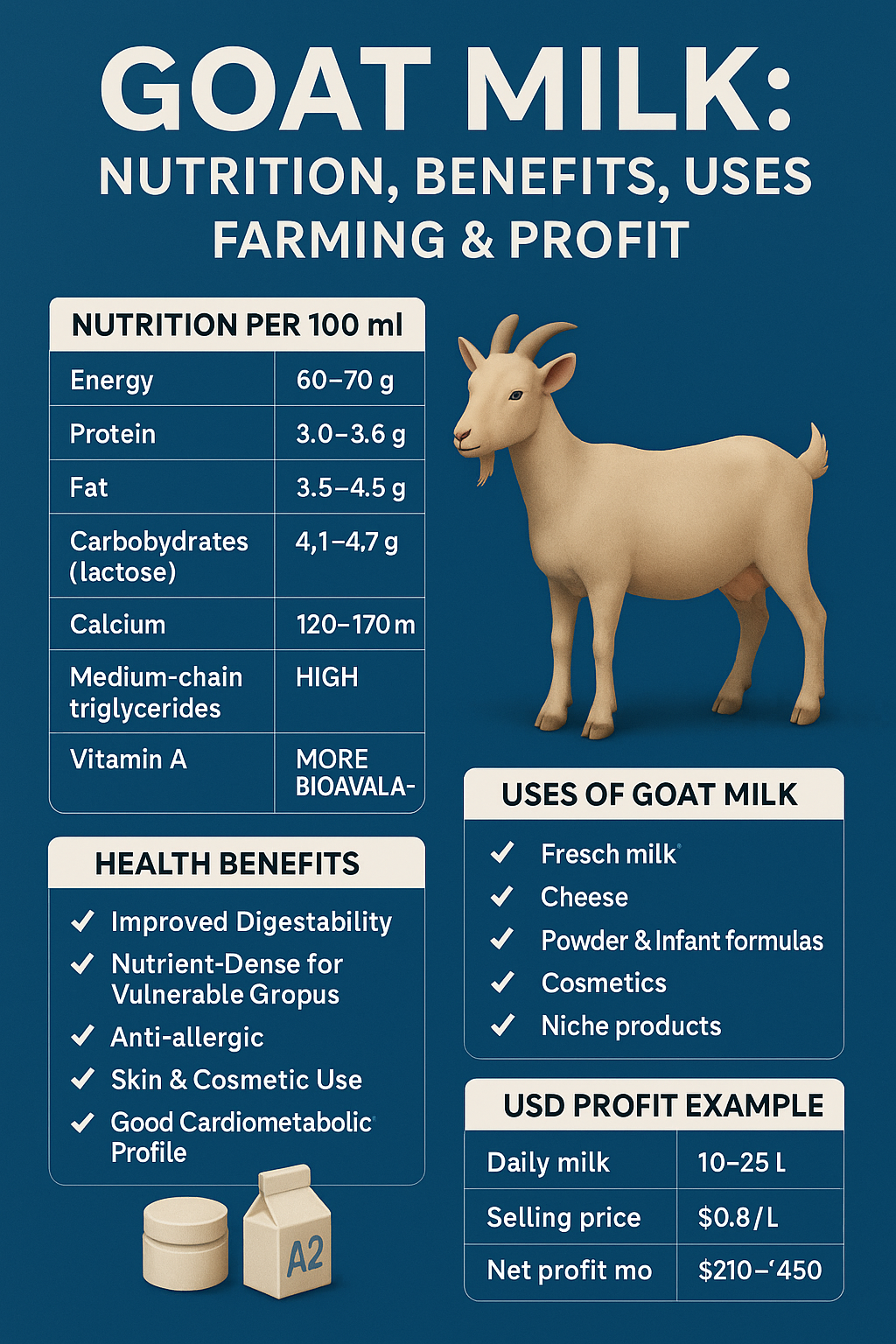
    2. Goat Milk: The Nutrition Snapshot (Per 100 ml)

    Goat milk composition varies by breed, feed, lactation stage and region. Below is an average composition useful for product planning.

    Energy: 60–70 kcal

    Protein: 3.0–3.6 g (complete proteins including essential amino acids)

    Fat: 3.5–4.5 g (smaller fat globules, easier to digest)

    Carbohydrates (Lactose): 4.1–4.7 g (slightly lower than cow milk)

    Calcium: 120–170 mg

    Phosphorus: 90–110 mg

    Vitamin A: higher bioavailable content vs cow milk

    Medium-chain triglycerides (MCTs): present in higher amounts → quick energy and easier digestion

    Oligosaccharides & prebiotic components: beneficial for gut microbiome

    Why these numbers matter: Higher MCT levels and smaller fat globules give goat milk clinical advantages for infant formulas, geriatric nutrition and digestive sensitivity markets. Protein content supports cheese yield and high-value dairy products.

    3. Proven Health Benefits — Evidence-Backed Summary

    3.1 Improved Digestibility

    Goat milk’s small fat globules and higher MCTs break down more readily, so many people with minor lactose intolerance or milk sensitivity tolerate goat milk better. Several clinical studies show reduced digestive discomfort compared to standard cow milk in sensitive populations.

    3.2 Nutrient Density for Vulnerable Groups

    Because of bioavailable calcium, phosphorus and A-vitamin, goat milk supports bone health in children and older adults. It is also used in re-feeding and therapeutic nutrition in regions where fortified options are limited.

    3.3 Anti-Allergic & Immune Modulation (Emerging Evidence)

    Some studies report lower allergenic reactions (especially in case of cow milk protein allergy). Goat milk contains oligosaccharides and peptides that may modulate gut immunity — useful for infant formula R&D and therapeutic foods.

    3.4 Skin & Cosmetic Uses

    Goat milk’s natural fats and vitamins are effective in moisturizers, mild soaps and dermatological preparations. Historical and modern cosmetic brands use goat milk for sensitive skin formulations.

    3.5 Cardiometabolic Profile

    While saturated fats exist, the presence of MCTs and favorable fatty-acid balance in some breeds suggests a neutral-to-beneficial effect on energy metabolism when consumed in balanced diets.

    Note: Consumers and regulators expect claims supported by local regulations (EFSA, FDA). For marketing, phrase benefits accurately: “supports digestion” or “naturally easier to digest for many individuals” rather than absolute medical claims.

    4. Global Uses & Value-Added Products

    4.1 Fresh Milk & Fluid Dairy

    Direct bottled goat milk is a premium product in urban markets and health stores. Pasteurized, UHT and chilled forms target different retail channels.

    4.2 Cheese & Fermented Dairy (Main Value Driver)

    Fresh cheeses: chèvre, labneh, paneer-like products

    Aged cheeses: Feta (often sheep + goat blends), Manchego-style blends, artisan goat cheeses — high price per kg

    Yogurts & kefir: probiotic-rich fermented products

    Cheese yields per liter of goat milk are strong for specialty cheeses; artisan brands command high margins.

    4.3 Powder & Infant/Nutrition Formulations

    Goat milk powder and hydrolyzed goat proteins are used in specialized infant formula segments (where regulations permit) and elderly nutrition.

    4.4 Cosmetics & Pharma Excipients

    Soaps, lotions and therapeutic creams using goat milk attract premium consumers seeking natural ingredients.

    4.5 Direct Niche Products

    A2-like goat milk segments (marketing as easy-digest)

    Organic & grass-fed goat milk products

    Ethnic dairy products for diaspora populations

    5. Top Goat Breeds for Milk Production (World Overview)

    Different regions use breeds that match climate, management and market goals.

    High-Yield Commercial Breeds

    Saanen (Switzerland) — large white goats, high milk volume (3–4 L/day average per mature doe under good conditions).

    Toggenburg (Switzerland) — consistent yield, good solids.

    Alpine (France/Alps) — versatile, strong yields.

    LaMancha (USA developed) — good milking and temperament.

    Climate-Adapted & Dual-Purpose Breeds

    Nubian (Anglo-Nubian) — high butterfat (good for cheese & cream).

    Boer — primarily meat, but crossbreeding used for dual purpose in some regions.

    Indigenous/Local High-Value Breeds (important for regions)

    Jamunapari & Beetal (India/Pakistan) — large, decent milk yield in local systems.

    Murciana-granadina (Spain) — hardy and used in Mediterranean cheese production.

    Kiko / local feral varieties (NZ/Pacific) — adaptable and low input.

    Breed choice impacts: yield, milk solids (cheese yield), fat content (product match), and resilience to local disease/climate.

    6. Production Systems — From Smallholder to Commercial

    6.1 Smallholder / Pastoral Systems (Low Input)

    Typical in Africa, South Asia, parts of Latin America.

    Herd sizes: 2–20 does.

    Feeding: grazing, crop residues, seasonal supplementation.

    Milking: hand milking; milk sold locally or processed at small collection centers.

    Advantage: low capital, local markets.

    Challenge: lower yields, seasonal variability, disease control.

    6.2 Semi-Intensive Systems

    Herd sizes: 20–200.

    Mixed grazing + cut fodder + concentrate supplementation.

    Milking: manual or small machine parlours.

    Opportunity: cooperatives collect, small cheese plants can be established.

    6.3 Commercial & Industrial Goat Dairy

    Herd sizes: 200–2000+.

    Highly managed feeding (TMR, formulated concentrates), veterinary programs, machine milking (parlours or automated systems), on-farm pasteurization and value addition.

    Target: urban retail, export grade products and industrial powder/cheese.

    Sustainability note: goats often convert marginal lands and browse well; well-managed goat dairies can be low impact if erosion and overgrazing are controlled.

    7. Farm Setup & Best Practices (Actionable Checklist)

    7.1 Housing & Welfare

    Well-drained, ventilated pens with bedding.

    Separate kidding pens.

    Shade and shelter from extremes.

    7.2 Nutrition & Feeding

    Fresh forage (legume + grass mix), conserved fodder (hay, silage), concentrate for lactation.

    Mineral blocks (Se, Cu, Co where deficient).

    Clean water always.

    7.3 Breeding & Genetics

    Use proven sires for improved milk solids.

    Record keeping: births, lactation yields, disease events.

    Consider AI and controlled breeding for scaling quality.

    7.4 Health & Biosecurity

    Vaccination schedule (per country guidelines).

    Regular deworming, mastitis monitoring.

    Sanitation during milking — post-milking teat dipping.

    7.5 Milking & Milk Handling

    Clean milking area, pre-milking teat cleaning.

    Rapid cooling to 4°C to prevent spoilage.

    Pasteurization if selling off-farm or value adding.

    7.6 Recordkeeping & Economics

    Track feed costs, milk yield per doe, veterinary costs, processing and packaging expenses.

    Use basic farm accounting to model business scenarios.

    8. Processing & Quality Standards

    8.1 On-Farm Minimal Processing

    Chilling, microfiltration, small pasteurization units; sells to local markets or small processors.

    8.2 Small-Scale Cheese Processing

    Starter cultures, brining, ripening rooms.

    Hygiene and traceability protocols are critical for export or high-value markets.

    8.3 Powder & Formula Facilities

    Requires industrial drying plants, strict HACCP, regulatory approvals (especially for infant nutrition).

    8.4 Labelling & Certifications

    Organic, grass-fed, PDO (protected designation) or other origin labels increase price.

    Comply with local milk standards (fat, solids, microbial counts).

    9. Global Market Demand & Trends (2025–2030 Outlook)

    9.1 Market Drivers

    Urbanization & premiumization — artisan goat cheese and specialty dairy.

    Health & wellness — goat milk positioned as “easier to digest.”

    Ethnic foods and diaspora demand in Europe and North America.

    Cosmetic industry demand for goat milk based soaps and creams.

    Organic & small-batch artisanal brand growth.

    9.2 Regions of Rising Demand

    Europe & North America: artisan cheese, specialty milk, organic segments.

    Asia (China, SEA): growing interest in infant and therapeutic nutrition; niche market for goat milk products.

    Middle East: pasteurized and concentrated goat milk products.

    Africa & South Asia: local consumption remains primary; premiumization is emerging.

    9.3 Price & Export Considerations

    Goat milk per liter price varies widely: $0.6–$1.8/L depending on region and product.

    Cheese and powdered goat milk bring higher export values; artisan cheeses can reach $10–$30+ per kg retail.

    10. USD Profit Analysis — Realistic Example Models

    Below are average models (figures indicative; adjust for local feed and labor costs). Use these to plan capital and cashflow.

    Model A — Smallholder (10 lactating does)

    Average yield/doe: 1.5–2.5 L/day (varies by breed & feed)

    Total daily milk: 15–25 L

    Selling price (raw farmgate): $0.8/L (regional average)

    Daily revenue: $12–$20

    Monthly revenue: $360–$600

    Monthly costs (feed, labor, vet): $150–$300

    Net monthly profit: $210–$450

    Key profit levers: improve feed to boost yield, direct sales to consumers/shops to capture higher margins.

    Model B — Semi-commercial (100 lactating does)

    Avg yield/doe: 2.5–3.5 L/day

    Total daily milk: 250–350 L

    Processing & value add: make cheese/yogurt — value uplift 2–5x over raw milk revenue

    Estimated monthly net (after costs & processing): $6,000–$20,000 depending on product mix and market

    Model C — Commercial (500+ does + processing)

    Scale benefits: contracts with retailers, export-ready cheese/powder lines.

    Profitability: higher per unit margins after initial capital amortization; exact figures depend heavily on CAPEX.

    Important: value addition (cheese, powder, cosmetics) multiplies profit far beyond raw milk sales.

    11. Risks & Challenges

    Seasonality — milk yield fluctuates with feed availability.

    Disease — mastitis, parasitism, reproductive issues impact yields.

    Supply chain — cold chain gaps reduce quality and price.

    Regulatory — export requirements for infant nutrition and powdered products are stringent.

    Market competition — artisan cheese markets are crowded; differentiation matters.

    Mitigation: herd health programs, feed planning, cooperatives for collection and shared processing, certifications (organic/PDO) and strong branding.

    12. How to Start: Practical 6-Month Plan (Step-by-Step)

    Month 1 — Planning & Site Setup: choose breed, secure land/shelter, plan water and feed sources.
    Month 2 — Acquire Herd & Start Records: buy quality does and one proven buck or AI services; set up record keeping.
    Month 3 — Feeding & Health Regimen: implement feeding plan, vaccination, mineral supplementation.
    Month 4 — Milk Handling & Market Linkages: procure chilling tanks, contact local buyers, test milk quality.
    Month 5 — Small-Scale Value Addition: pilot yogurt/cheese production, set packaging and labeling.
    Month 6 — Scale & Marketing: finalize supply contracts, launch direct sales/online presence, apply certifications if pursuing premium markets.

    13. Marketing & SEO Tips for Goat Milk Products (Practical)

    Emphasize “easier to digest” and “artisan/organic” tags where justified.

    Use content marketing: recipes, health articles, farmer stories.

    Target diaspora and specialty food retailers via export shows and trade platforms.

    Optimize product pages for searches: “goat cheese near me”, “buy goat milk powder”, “goat milk for sensitive stomach” and long-tail queries.

    Use high-quality photos and transparent lab reports to build trust.

    14. Conclusion — Why Goat Milk Is a Smart Farming & Business Choice

    Goat milk bridges smallholder accessibility and premium product opportunities. It fits both sustainable, low-input farming and high-margin artisan processing. With rising global demand for specialty dairy and health-oriented foods, goat milk offers diversified revenue streams: fresh milk, cheese, powder, cosmetics and niche infant/therapeutic nutrition. For farmers and entrepreneurs who apply good breeding, nutrition and processing discipline, goat dairying can be both resilient and profitable.

    15. Frequently Asked Questions (FAQs)

    Q1: Is goat milk better than cow milk?
    A1: “Better” depends on purpose. Goat milk is often easier to digest and better for certain cheese types; cow milk yields more volume and suits mass markets. For premium niche, goat milk often performs better.

    Q2: Can goat milk be used for infant formula?
    A2: Some regions permit goat-milk-based formulas; regulatory approvals are needed. Formulations must meet strict nutritional and safety standards.

    Q3: What is the average lifespan and productive life of a dairy doe?
    A3: Many does produce well for 3–6 lactations (3–6 years). Good management can extend productive life.

    Q4: How much land is needed per doe?
    A4: Depends on system. Extensive grazing needs more land; semi-intensive systems with cut-and-carry require less. Typical smallholder allotment: 0.05–0.2 hectare per goat for fodder rotation, but intensive systems can operate with far less.

    Q5: How to increase cheese yield?
    A5: Improve milk solids via nutrition, choose breeds with higher total solids (fat + protein), and optimize cheese recipes and processing efficiency.

    ✍️Farming Writers

    Love farming Love Farmers

    Read A Next Post 👇
    https://farmingwriters.com/buffalo-milk-global-guide-nutrition-benefits-profit-market-demand/

  • Buffalo Milk Global Guide: Nutrition, Benefits, Market Demand & USD Profit Analysis

    Buffalo Milk
    1. Introduction: Why Buffalo Milk Is a Global Premium Dairy Source

    Buffalo milk is the second most consumed animal milk in the world, especially in Asia, Mediterranean regions, Middle East and parts of Europe. It is famous for its high fat content, creamy texture, rich flavor and exceptional nutritional density. Countries like India, Pakistan, Italy, Egypt, Nepal and China dominate buffalo milk production.

    Globally, food industries, dessert manufacturers, cheese makers and premium dairy brands are shifting to buffalo milk due to:

    High butterfat

    Richer cheese yield

    Strong flavor profile

    Low cholesterol variations

    High mineral density

    Long shelf life of dairy derivatives

    Buffalo milk produces more ghee, more butter, more cream and more cheese per liter than cow milk — making it extremely profitable in global markets.

    1. Top Buffalo Breeds in the World

    Different buffalo breeds dominate global dairy production.

    A. Asian Dairy Buffalo Breeds

    BreedOriginDaily MilkMurrahIndia12–18 LNili-RaviPakistan10–15 LMehsanaIndia8–14 LJafarabadiIndia8–12 LSurtiIndia6–10 L

    B. Italian Water Buffalo

    BreedUseMilk/dayMediterranean Italian BuffaloMozzarella cheese8–12 L

    Italy produces the world-famous Buffalo Mozzarella (Mozzarella di Bufala Campana) from this breed.

    C. Egyptian Buffalo

    Avg 7–12 liters

    Used heavily for yogurt and butterfat production

    Buffalo breeds are stronger, heat tolerant, disease resistant and perfect for tropical climates.

    1. Nutritional Value of Buffalo Milk (Per 100 ml)

    NutrientValueEnergy97–110 kcalProtein4–4.5 gFat6.5–8%Calcium195 mgVitamin AHighVitamin B12ModerateMagnesiumHighPhosphorusHighCholesterolLower than cow milk

    Buffalo milk has twice the fat and more protein than cow milk — making it perfect for dairy factories and cheese production.

    1. Health Benefits of Buffalo Milk
    2. Rich in Calcium & Bone Strength

    Highest calcium among all common dairy animals.

    1. Ideal for Muscle Growth

    High protein supports athletes and bodybuilders.

    1. Immune System Booster

    High magnesium + vitamin A support immunity.

    1. Excellent for Heart Health

    Even with high fat, buffalo milk contains less cholesterol.

    1. Better for Dairy Processing

    Thicker milk → more cheese, more ghee, more cream.

    1. Supports Skin & Hair Health

    Vitamin A + antioxidants enhance glow and hydration.

    1. Good for Lactose-Sensitive Regions

    Slightly lower lactose than cow milk.

    1. Global Uses of Buffalo Milk

    A. Food & Dairy Processing

    Mozzarella cheese

    Butter

    Ghee

    Ice cream

    Yogurt

    Cream

    Paneer (high yield)

    Khoya/mawa

    Condensed milk

    B. Premium Italian Cheese Industry

    Buffalo milk is the only milk approved for authentic:

    Mozzarella di Bufala

    Ricotta di Bufala

    Burrata di Bufala

    Italian buffalo cheese is a multi-million-dollar export industry.

    C. Dessert & Sweet Industries

    Because of high solids, buffalo milk is ideal for:

    Ice cream

    Cakes

    Puddings

    Indian sweets

    D. Infant Nutrition

    Buffalo milk is used to make high-calcium baby products in Asia.

    1. Global Market Demand for Buffalo Milk (2025 Update)

    Buffalo milk demand is rising worldwide due to:

    Growing mozzarella cheese demand

    Asian population growth

    High protein diets

    Premium dairy segment growth

    Top Countries Consuming Buffalo Milk

    India (World’s largest producer)

    Pakistan

    Italy

    Egypt

    Nepal

    China

    Turkey

    Buffalo Mozzarella Export Market

    The buffalo mozzarella market alone is worth $4.7 billion annually.

    1. Buffalo Milk Farming: Global Dairy Guide

    A. Housing Requirements

    Clean shed

    Shade

    Cooling water system

    Ventilation

    Slanted flooring

    B. Feeding System

    Buffalo diets require more green fodder for fat production:

    Napier grass

    Berseem

    Maize fodder

    Concentrate feed

    Oil cakes

    Mineral mix

    C. Milking

    Buffalo milk is thick → machine milking efficiency is higher.

    Milking types:

    Hand milking

    Machine milking

    Automatic systems

    D. Milk Handling & Processing

    Filtering

    Cooling to 4°C

    Pasteurization

    Standardization

    Packaging

    Buffalo milk has longer shelf life after processing.

    1. USD Profit Analysis (World Level)

    Cost & Revenue Per Buffalo

    FactorValueDaily milk8–18 litersMilk selling price$0.8–$2 per liter (higher than cow milk)Daily income$10–$36Monthly income$300–$1080Expenses$120–$250Net profit$200–$830 per buffalo/month

    Why Buffalo Milk Is More Profitable Than Cow Milk

    Double fat

    Higher dairy product yield

    Higher market price

    Strong demand for mozzarella cheese

    Excellent export potential

    Value-Added Products Profit

    ProductProfit Margin IncreaseGhee150–300%Paneer50–90%Yogurt40–60%Italian Cheese200–400%Ice Cream100–250%

    Buffalo dairy is considered high-margin agriculture.

    1. Global Challenges in Buffalo Dairy Industry

    High feed requirements

    Heat stress

    Breeding challenges

    Limited global distribution compared to cow milk

    Water-intensive farming

    Still, buffalo dairy remains one of the most profitable dairy sectors in Asia & Europe.

    1. Future Opportunities
    2. Buffalo Mozzarella Export Farming

    High global demand.

    1. Organic Buffalo Dairy

    Premium product line.

    1. Buffalo A2 Milk

    Upcoming niche market.

    1. Buffalo Milk Ice Cream Brands

    Faster growth category.

    1. High-Fat Milk Beverages

    Sports nutrition and protein shakes.

    1. Conclusion

    Buffalo milk is a global premium dairy commodity known for its high fat, rich taste, exceptional nutritional value and superior dairy product output. From mozzarella cheese in Italy to ghee, yogurt and paneer across Asia, buffalo milk remains one of the most profitable milk types in the world.

    For dairy entrepreneurs, buffalo milk offers:

    Higher selling price

    Higher product yield

    Higher export demand

    Strong long-term profitability

    It stands out as one of the best dairy business opportunities for 2025 and beyond.

    1. FAQs — Buffalo Milk (Global)
    2. Which buffalo breed gives the most milk?

    Murrah (India).

    1. Which country produces the most buffalo milk?

    India.

    1. Why is buffalo milk costlier than cow milk?

    Because it has higher fat and higher dairy product yield.

    1. Is buffalo milk good for cheese?

    Yes, buffalo milk produces premium world-famous mozzarella cheese.

    1. What is the profit per buffalo?

    $200–$830 per month globally.

    ✍️Farming writers

    Love farming Love farmers

    Read A Next Post 👇

    https://farmingwriters.com/cow-milk-global-guide-nutrition-benefits-profit-market-demand/