• Cumin Farming Complete World Guide Soil, Climate, Cultivation, Harvesting & USD Profit

    Cumin Farming

    Cumin, globally known as one of the most valuable dry spices, holds a powerful cultural, culinary and economic importance. The spice comes from the dried seeds of Cuminum cyminum, a drought-tolerant aromatic plant that thrives in arid and semi-arid climates. Across India, Turkey, Syria, Egypt, Iran, China, Morocco and Mexico, cumin farming forms a vital part of rural agriculture, supporting farmers with strong export demand and premium market value.

    Cumin is a unique spice crop because it performs best where many other crops fail. Dry climates, sandy soils, low humidity and cold winters suit its physiology. The plant’s lifecycle, delicate flowering structure and sensitivity to moisture make it challenging but highly rewarding when managed correctly. Farmers across continents approach cumin farming as a precision-timed crop — sown under cool conditions, grown under dry air and harvested under clear skies.

    The global spice market has witnessed immense demand for cumin due to its culinary significance. Cumin forms the backbone of spice blends worldwide — from Indian masalas to Middle-Eastern seasoning, Mexican foods, African stews and European herbal mixes. Its aromatic compounds such as cuminaldehyde provide its signature flavor and medicinal value. In recent years, cumin has gained traction in nutraceutical markets due to its digestive, antioxidant, anti-inflammatory and metabolic regulation benefits. As global spice consumption grows, cumin prices often rise sharply, making it a high-value cash crop for farmers worldwide.

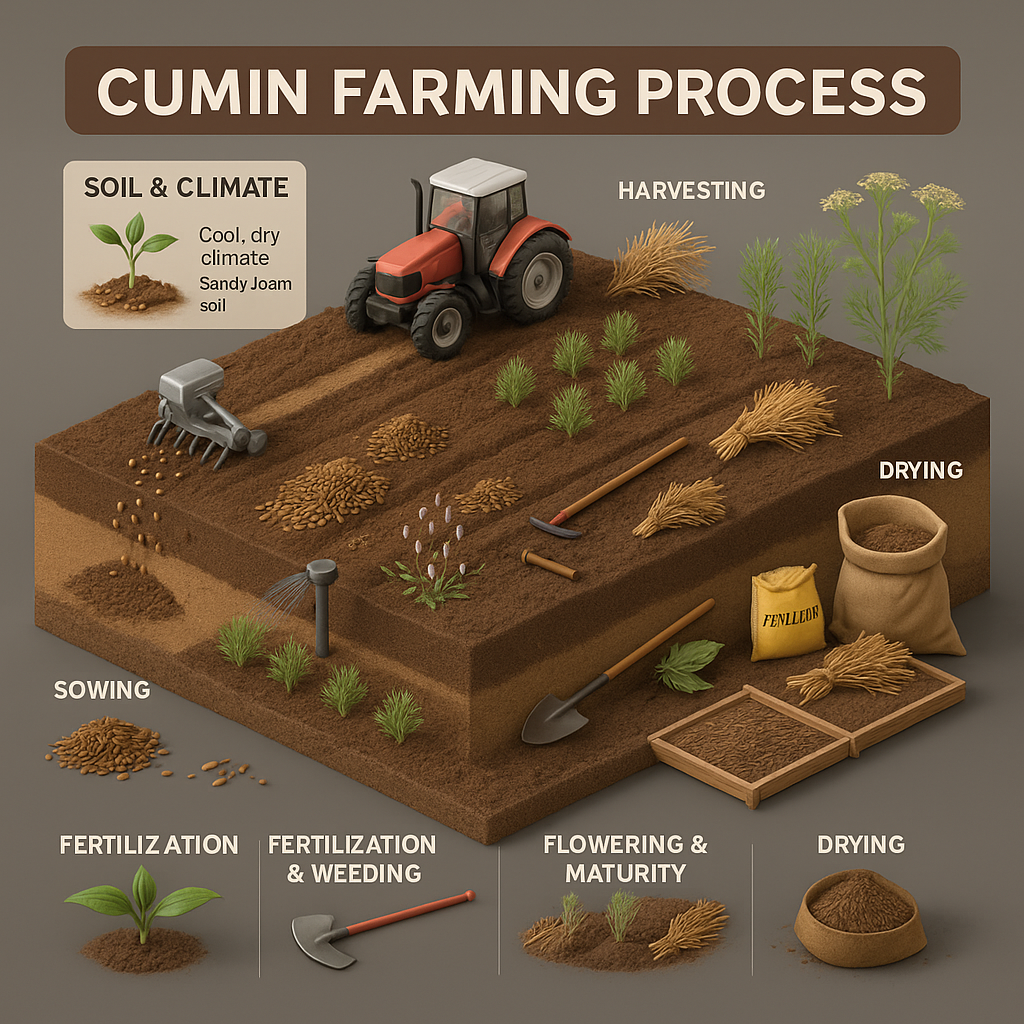
    Climate defines cumin farming success. The crop requires cool weather for vegetative growth and warm, dry weather for seed development. Optimal temperature during germination ranges between fifteen and twenty degrees Celsius. During flowering and seed formation, temperatures between twenty and twenty-eight degrees support strong aromatic profile. Rainfall or humidity at flowering stages leads to fungal disease and flower drop. Therefore, the world’s major cumin zones are naturally dry regions with well-defined winter seasons.

    Soil requirements for cumin emphasize drainage and light structure. Sandy loam, loam and light clay-loam soils are ideal. Heavy clay soils that hold moisture encourage fungal infections. Cumin roots penetrate shallow but require aerated soil free from compaction. Organic content strengthens microbial activity and improves seed filling. A soil pH between six and eight suits cumin. Salt-affected soils must be avoided because cumin is highly sensitive to salinity.

    Land preparation begins with deep ploughing to break compact layers. The field must be leveled properly to prevent water stagnation. After ploughing, soil is harrowed to create a fine tilth suitable for small seeds. Cumin seeds require close contact with soil for uniform germination. Farmers incorporate compost or well-decomposed organic manure during land preparation. Excessive nitrogen must be avoided because it stimulates foliage at the cost of seed formation.

    Seed selection plays a crucial role in cumin farming. High-yielding varieties adapted to region-specific climates provide stable performance. Seeds must be disease-free because cumin is vulnerable to seed-borne fungal infections. Before sowing, seeds are often treated with organic microbial protectants that prevent damping-off and early fungal issues. Seed rate varies by region but generally ranges between eight and fifteen kilograms per hectare depending on seed size and purity.

    Sowing cumin is a precise agricultural activity. Farmers sow seeds during cool winter months, typically from November to early December in South Asian regions, while Mediterranean zones sow in late autumn. Timely sowing ensures that flowering occurs under dry, stable weather. Seeds are broadcast or line-sown at shallow depth. Line sowing provides better aeration, easier weed management and stronger plant structure. Germination begins within one to two weeks depending on soil moisture.

    Irrigation in cumin farming requires careful control. Excess moisture at any stage increases disease pressure and reduces yield. Farmers apply irrigation immediately after sowing to ensure germination. The next irrigation occurs after twenty to twenty-five days depending on soil dryness. During flowering, irrigation is avoided because water exposure leads to flower shedding and fungal infection. A final light irrigation may be applied at early seed-setting stage in extremely dry climates. Over-irrigation severely damages cumin fields.

    Nutrient management focuses on balanced nutrition. A moderate amount of organic manure supports microbial health. Excess nitrogen causes lodging and reduces seed quality. Potassium enhances seed development and boosts oil content. Micronutrients, particularly zinc and sulfur, improve aroma and plant vigor. Organic cumin production is increasingly popular due to export demand for chemical-free spices. Farmers use compost, neem cake and natural soil boosters to enrich land sustainably.

    Weed control is essential in cumin farming. Because cumin plants grow slowly in early stages, weeds can easily dominate fields. A clean seedbed, timely manual weeding and shallow hoeing maintain field hygiene. Chemical herbicides are avoided in high-quality organic cumin production.

    Pest and disease issues vary across climates. Aphids, thrips and mites commonly attack cumin foliage. Dry air helps reduce insect populations naturally. Fungal diseases, especially wilt, blight and powdery mildew, pose serious threats in humid conditions. Good air circulation, proper spacing and controlled irrigation reduce fungal incidence. Seeds must be treated before sowing to prevent early-stage diseases.

    As cumin matures, the plant develops delicate umbels. Each umbel contains tiny flowers that transform into elongated seeds that are harvested for spice use. Flowering begins sixty to seventy days after sowing. Seed maturity occurs ninety to one hundred twenty days after sowing depending on climate. Dry weather during harvesting ensures high-quality seed. Farmers avoid harvesting during morning dew to prevent moisture contamination.

    Harvesting cumin requires skill and timing. When seeds turn brown and detach easily, farmers cut plants manually and tie them in bundles. These bundles are dried under shade or mild sunlight. Excess sun exposure reduces essential oil concentration. Once dried, plants are threshed to remove seeds. Threshing is done manually or with mechanical threshers. Cleaned seeds undergo grading based on size, aroma and purity.

    Processing cumin for market involves cleaning, winnowing, sorting and packaging. Export-quality cumin must meet strict standards for purity, aroma, moisture content and absence of microbial contamination. Seeds are often sterilized through natural processes such as controlled drying. Some manufacturers produce cumin powder, roasted cumin, cumin oil and oleoresins. Cumin oil is extracted through steam distillation and used in flavoring, perfumery and pharmaceutical applications.

    Global markets for cumin remain strong. India dominates production and export. Other producing countries cater to regional markets. Cumin prices fluctuate based on weather, disease outbreaks and export demand. Premium-grade cumin fetches higher prices in international spice markets. The spice sells between two and eight USD per kilogram depending on grade, season and global stock levels. Cumin oil commands significantly higher value due to its concentrated aromatic compounds.

    Economically, cumin farming offers strong profitability in dryland zones where few crops survive. Low water requirement, strong international demand and high value per kilogram make cumin a reliable cash crop. Farmers who manage moisture, disease and timing achieve excellent returns. Organic cumin, in particular, sells at premium rates in Europe, the United States and Middle Eastern markets.

    Sustainability practices in cumin farming include crop rotation with pulses and cereals, organic soil building, minimal irrigation and biological pest management. The crop improves soil structure and reduces erosion in arid regions. Because cumin fits well into dryland ecological systems, it supports climate-resilient agriculture.

    In conclusion, cumin farming stands as one of the most profitable and globally demanded spice enterprises. Its delicate nature requires precision, but when cultivated scientifically, cumin rewards farmers with premium yields and high international market value. This guide provides the complete insight needed to cultivate cumin successfully in both traditional and modern farming systems.

    FAQ Cumin Farming

    Farmers often ask how long cumin takes to mature, and the crop usually reaches harvest between ninety and one hundred twenty days depending on region and moisture conditions. Another common question concerns irrigation, and cumin needs minimal water with great caution during flowering. Soil suitability frequently arises, and sandy loam or loamy soil with strong drainage performs best. Many growers wonder why flowering drops, and sudden humidity or irrigation during flowering is the most common cause. Disease concerns often involve wilt and blight, which are minimized through seed treatment and proper airflow. Growers ask about organic cumin, and demand is strong in international markets with premium pricing. Seed rate questions arise often, and around eight to fifteen kilograms per hectare is standard depending on seed purity. Questions about harvesting time focus on seed color, and cumin is harvested when umbels turn brown. Market fluctuations remain a major concern, and cumin prices depend heavily on global supply and weather conditions. Finally, growers ask about yield improvement, and early weed control, balanced nutrition and perfect irrigation timing remain the most powerful factors.

    ✍️Farming Writers Team
    Love farming Love Farmers

  • Clove Farming Complete World Guide Climate, Soil, Planting, Harvesting, Processing & USD Profit

    Clove Farming


    Clove is one of those spices that shaped global trade centuries before modern supply chains existed. The intense aroma, the sharp warmth and the medicinal potency of clove buds made them one of the most valuable botanical products in history. Derived from the unopened flower buds of the evergreen clove tree, this spice was once so precious that wars were fought over it, islands were colonized to control its production and entire merchant fleets were dispatched simply to transport it. Today cloves remain a premium spice with consistently high market demand. They are used in culinary preparations, traditional medicine, perfume industries, dental formulations, essential oil extraction, bakery products, herbal teas and various wellness industries around the world.

    The botanical identity of clove traces to Syzygium aromaticum, an evergreen tree native to the Maluku Islands of Indonesia, historically known as the Spice Islands. Over time, clove cultivation expanded to Madagascar, Tanzania, Sri Lanka, India, Malaysia, Brazil and several tropical islands. Madagascar and Indonesia remain the world’s largest producers, while Zanzibar is famous for producing some of the finest high-oil cloves. The global clove market continues to expand because modern industries rely on eugenol-rich clove oils for aromatherapy, dental pain relief, antiseptic preparations, pharmaceuticals and high-grade flavor formulations.

    Clove trees behave differently from most spice crops. They require warm, humid climates with consistent rainfall. Perfect temperatures lie between twenty and thirty degrees Celsius. They thrive best in tropical coastal environments where humidity stays high, winds remain gentle and rains are well-distributed. Heavy storms, droughts or extremely dry winds stress the trees, reducing flowering and bud formation. Cloves come from unopened flower buds, so climate stability directly impacts the success of the crop. A clove tree is long-living, often surviving for seventy-five to a hundred years, making it an intergenerational agricultural asset. Farmers who plant cloves today are essentially building long-term spice estates for decades of continuous harvests.

    Soil conditions determine both tree vigor and bud quality. The ideal soil for clove cultivation is deep, rich in organic matter and well-drained. Loam and sandy loam soils serve exceptionally well. The soil must remain moist without ever becoming waterlogged because clove roots are extremely sensitive to stagnation. The pH sweet spot lies between five point five and six point five. Slight acidity enhances nutrient uptake and supports microbial life. Clove trees develop deep root systems that spread laterally, searching for moisture and nutrients. For this reason, soils must never become compacted or deprived of organic matter. Farmers in traditional growing regions allow leaf litter from surrounding trees to accumulate naturally, enriching the soil year after year.

    Land preparation begins with deep ploughing followed by incorporation of organic manure. Since clove trees remain productive for many decades, initial land development must be done carefully. Drainage channels are crucial in heavy rainfall areas. Shade during the early years plays a helpful role because young clove trees resemble tropical forest saplings—they cannot tolerate harsh sun or heavy winds. In many regions, natural shade trees such as coconut, jackfruit and tall timber species act as protective companions. Planting is usually done at the onset of rainy seasons, allowing seedlings to establish themselves in moist soil.

    Propagation of cloves typically uses seeds, but seed propagation is notoriously challenging because clove seeds lose viability quickly. They must be sown fresh, usually within a few days of collection. The seeds are planted in rich, loose nursery soil under shade. They germinate slowly, often taking more than a month to show visible growth. Young seedlings remain in the nursery for nearly a year before transplantation. Because seed propagation is slow and unpredictable, many advanced growers now use vegetative propagation techniques, including softwood grafting and air-layering. These methods produce more uniform trees with predictable flowering behavior.

    Once the seedlings reach the field, early-care practices decide their long-term health. Moist soil, partial shade, protection from wind and loose organic mulch help young clove trees establish well. Regular watering is necessary during dry months, but overwatering must be avoided at all costs. A clove tree grows slowly in the initial years, spending its energy on root development. The first flowering may appear after five to seven years depending on climate and care. Full commercial production usually begins around the eighth to tenth year. Farmers must view clove trees as slow but rewarding investments that return profits for many decades.

    Nutrient management plays a central role in clove farming because tree health directly affects bud formation and essential oil concentration. Organic manures, compost, fermented liquid fertilizers, seaweed extracts and microbial inoculants keep the soil biologically active. Heavy chemical fertilizers are discouraged because they disrupt root-microbe relationships and weaken the tree over time. Cloves respond particularly well to potassium-rich amendments, which improve bud formation and oil content. Nitrogen must be applied moderately because excessive vegetative growth reduces flowering intensity. The best cinnamon-like aroma and essential oil quality emerge from trees grown in biologically rich soils with balanced nutrients.

    Moisture management can make or break a clove plantation. Clove trees demand continuous soil moisture but detest stagnation. In coastal regions with well-timed rainfall, irrigation may not be necessary for most of the year. However, in inland or semi-tropical zones, drip irrigation ensures consistent moisture during critical stages. Flowering and bud development require stable soil moisture. Even short drought periods can cause bud drop, leading to significant yield losses. Conversely, excessive wetting invites fungal diseases such as die-back, root rot and leaf spot. Drainage systems, mulching and shade regulation are key components of moisture control.

    Pest and disease management in clove cultivation varies across regions. The humid tropical climate that cloves love also favors certain fungal pathogens. Root rot is among the most dangerous threats, often caused by stagnant water. Die-back disease affects branches and reduces productivity. Leaf spot pathogens appear in wet seasons, causing premature leaf fall. Many farmers rely on organic protective measures such as neem-based formulations, microbial sprays and soil inoculants that strengthen the natural immune system of the tree. Integrated pest management practices help plantations maintain long-term health without relying heavily on chemicals.

    Flowering and bud development are the most interesting phases of clove cultivation. The tree produces clusters of small flowers which initially appear pale green, turning pinkish as they mature. Before the buds open into flowers, farmers must harvest them. These unopened buds are what markets know as cloves. The timing of harvest is delicate. If harvested too early, buds remain light and underdeveloped. If harvested too late, they open into flowers, losing their commercial value. Skilled pickers understand the color transitions that indicate perfect maturity. Harvesting requires careful hands because branches are tender and damage affects next season’s production.

    Post-harvest processing plays a crucial role in clove quality. Freshly harvested buds contain high moisture and must be dried immediately. Traditionally, cloves are sun-dried for several days until they turn deep brown and harden. Modern drying systems offer faster drying with controlled temperature and hygiene. During drying, cloves lose most of their weight but retain their essential oil content. High-quality cloves have strong aroma, uniform dark color, high oil concentration and firm texture. The essential oil extracted from cloves, rich in eugenol, is used in dental anesthetics, aroma therapy, pain balms and pharmaceutical formulations.

    The global market for cloves remains steady and strong. Countries like Indonesia and India use cloves heavily in cuisine, herbal teas and medicines. Middle Eastern regions import large quantities for flavoring beverages and desserts. Western nations rely on clove oil for pharmaceuticals and cosmetics. Zanzibar and Madagascar supply some of the highest-grade cloves and receive premium prices. Market rates fluctuate depending on global supply cycles, but cloves generally maintain a high value because demand is stable and production is limited to a few tropical regions.

    The economics of clove farming make it one of the most profitable spice crops over the long term. Establishing a clove plantation requires moderate initial investment: nursery development, organic soil building, planting, shade management and irrigation systems. However, once the trees begin yielding, a single mature clove tree can continue producing for decades. Annual yields depend on tree age, climate and management, but well-grown trees deliver consistent quantities of buds every year. On a per-acre basis, mature plantations generate substantial revenue. Price ranges vary, but dried cloves often sell between six and twelve US dollars per kilogram in global markets. Premium grades command even higher prices.

    Clove oil extraction provides additional income opportunities. The oil sells at a significantly higher price depending on purity and eugenol content. Farmers who enter the value-addition chain—producing oil, oleoresin or powder—can multiply their income several times. The rising global interest in natural medicines, organic products and herbal formulations ensures long-term demand for clove oil.

    Sustainability is increasingly important in modern spice farming, and clove plantations naturally support ecological balance when managed correctly. They blend well with agroforestry models, improving biodiversity and reducing soil erosion. Organic cultivation enhances soil health and market value. Shade-grown clove plantations support local flora and fauna, allowing the farm ecosystem to thrive sustainably.

    In conclusion, clove farming is a deeply rewarding long-term agricultural investment. It combines biological wisdom, careful ecological management and global market understanding. Farmers who nurture cloves with patience and consistency eventually receive returns that last across generations. The spice’s historical legacy and modern demand ensure that clove will remain a high-value commodity for decades to come. This human-written guide equips growers with world-level insight into clove cultivation, processing and commercial success.

    FAQ FOR CLOVE FARMING

    Farmers often ask how long it takes for a clove tree to begin commercial production. A clove tree usually begins flowering by the fifth or sixth year and reaches strong production around the eighth year. Many growers also wonder whether cloves require shade or sunlight. Young trees benefit from partial shade, while mature trees prefer filtered sunlight, similar to natural tropical forest conditions. Soil questions are common, and the answer remains that cloves prefer deep, rich, well-drained soils with abundant organic matter. Moisture management is another frequent concern. Cloves need consistent moisture but cannot tolerate water stagnation. Some growers worry about the difficulty of seed propagation because clove seeds cannot be stored long; they must be planted fresh. Finally, questions about profitability appear often. Cloves take time to mature, but once established, they provide high and stable returns for decades, making them one of the most valuable spice crops in the world.

    ✍️Farming Writers

  • Cinnamon Farming Complete World Guide Climate, Soil, Planting, Harvesting, Processing & Global USD Profit

    Cinnamon Farming


    Cinnamon, one of the oldest known spices in human civilization, carries a legacy that stretches across centuries of trade, medicine, culture and cuisine. The warm, sweet fragrance of cinnamon has touched every part of the world: from ancient Egyptian embalming rituals to Greek medicine, from South Asian desserts to Middle Eastern teas, and from European bakeries to American beverages. This is not just a spice; it is a global commodity with deep historical roots and vast industrial relevance. While much of the commercial cinnamon in global markets comes from Sri Lanka, India, Indonesia and Vietnam, cultivation has now expanded to East Africa, Central America and tropical islands because of its consistently rising demand.

    Cinnamon belongs to the genus Cinnamomum, a group of evergreen trees native to warm, humid tropical climates. These trees produce fragrant inner bark, which is harvested and processed into cinnamon sticks or ground cinnamon. The species Cinnamomum verum, also known as “true cinnamon” or “Ceylon cinnamon,” commands the highest value due to its superior aroma, delicate flavor and extremely low coumarin content. Other species like Cinnamomum cassia are more robust in flavor but lower in value. A world-level cinnamon farm must understand these botanical distinctions because it directly affects pricing, export destination and buyer preference.

    The cinnamon tree thrives in tropical climates where temperatures remain warm throughout the year. The ideal temperature range lies between twenty and thirty-two degrees Celsius. Unlike seasonal crops, cinnamon depends heavily on climatic consistency. A humid environment with well-distributed rainfall is essential, often ranging between twelve hundred and three thousand millimeters annually depending on the region. Cinnamon performs best when the soil stays moist but not stagnant. Waterlogging damages the roots quickly, while prolonged dryness weakens shoot growth. Shade is another critical factor during the early years, especially when seedlings establish themselves. Young cinnamon plants prefer filtered sunlight, similar to the light that penetrates low-canopy rainforests, but mature trees tolerate more direct sun.

    Soil characteristics shape the quality of cinnamon bark. The best soils are deep, friable and well-drained, with a sandy loam to loam texture and rich organic matter. Cinnamon roots spread wide but not very deep, making them sensitive to compaction and poor aeration. Slightly acidic soils with a pH between five and six and a half produce the finest quality bark. Heavy clay soils restrict root growth and reduce bark peeling ability. In traditional cinnamon-growing regions of Sri Lanka, the natural forest floor—rich with decomposing leaves—provides the perfect organic environment for cinnamon’s delicate root system. Farmers around the world now try to replicate these conditions by adding compost, leaf mulch and fermented organic matter to their fields.

    Preparing land for cinnamon cultivation begins with deep loosening of the soil, removal of stones and establishment of drainage channels. Large plantations often plant shade trees before planting cinnamon so that the young trees receive adequate protection. Seedlings or rooted cuttings are raised in nurseries until they become strong enough to withstand field conditions. A good nursery environment mimics the natural tropical environment: high humidity, partial shade and moist well-drained soil. The seedlings typically require eight to twelve months of nurturing before transplantation. When transferred to the field, each seedling must be placed in a pit enriched with organic matter to enhance root establishment.

    Cinnamon trees can be propagated through seeds, stem cuttings and air layering. Seed propagation maintains genetic diversity but leads to variability in bark quality. For commercial-scale farming where uniform bark thickness, aroma and peeling quality are essential, most growers prefer vegetative propagation. Stem cuttings from high-yielding mother plants allow predictable performance. These cuttings produce faster-growing and more uniform trees. Air layering offers even better success in some regions as it creates well-rooted plants that adapt quickly to field conditions.

    Once established, cinnamon trees need careful irrigation management. During the first two or three years, regular moisture helps build strong root systems. Mature trees withstand dry spells better but still benefit from controlled irrigation during long drought periods. Over-irrigation, however, is dangerous because cinnamon roots rot quickly in stagnant water. Drip irrigation offers the best balance of moisture control, especially in large commercial plantations. In regions with heavy rainfall, farmers construct contour drains and slope-based water channels to manage runoff and prevent root suffocation.

    Nutrient management plays a critical role in determining bark quality. Cinnamon responds exceptionally well to organic nutrition. Compost, cattle manure, green manure and leaf mulch provide slow-release nutrients that keep the soil biologically active. Chemical fertilizers, while used occasionally, must be applied carefully because they can disrupt the delicate soil ecology required for cinnamon bark formation. Nitrogen promotes vegetative growth, phosphorus supports root development, and potassium improves the thickness and aroma of the bark. Many growers also use microbial inoculants, fermented organic teas and seaweed extracts to strengthen plant immunity and promote steady growth. Soil with high organic activity produces cinnamon bark that curls beautifully during processing and develops a richer aroma.

    Weed management is important during the first few years. Young cinnamon plants cannot compete with aggressive weeds, especially in tropical environments where weed growth is fast. Manual weeding, mulching and maintenance of shade trees help reduce competition. Over time, as the cinnamon canopy expands, weed pressure naturally declines. Pruning is another essential activity. Cinnamon trees must be pruned in such a way that new shoots emerge from the base. These new shoots will eventually become the primary source of bark harvest. By controlling the height and number of stems, farmers maintain a balanced structure that simplifies harvesting.

    Cinnamon’s growth stages unfold across several years. The first year begins with seedling establishment and root development. The second and third years are marked by trunk thickening and canopy formation. Around the third or fourth year, depending on climate and management, cinnamon stems become suitable for the first harvest. Cinnamon is harvested by cutting stems and removing the outer bark. The inner bark is then carefully peeled, fermented and dried. The peeling process is both technical and artistic. Skilled peelers use specialized knives to separate the inner bark in long strips. These strips naturally curl into quills as they dry, forming the cinnamon sticks found in global markets.

    Processing cinnamon is an intensive procedure. After cutting, stems are soaked to loosen the bark. The outer cork layer is scraped off, revealing the fragrant inner bark. Experts then make longitudinal cuts and gently peel the bark without tearing it. The strips curl and roll into quills as they dry, forming multi-layered cinnamon sticks prized for their quality. These quills are graded based on length, thickness, color and aroma. High-end grades—premium, Alba or continental grades—command superior prices. Lower grades are processed into powder, chips and oil. Cinnamon oil and cinnamon oleoresin are widely used in herbal medicine, aromatherapy, bakery flavoring and perfumery.

    The economics of cinnamon farming reflect both the patience and the reward associated with this tree crop. Establishing a cinnamon plantation requires initial investment in planting material, land preparation, organic inputs and irrigation systems. However, once the trees begin producing harvestable bark, the returns can remain stable for many years. A well-managed cinnamon tree can produce bark for a decade or more. Yields vary depending on climate, variety and management practices. Bark yields per acre differ widely across regions, but commercial growers often achieve several hundred kilograms of processed cinnamon annually.

    Pricing varies significantly depending on species and grade. True Ceylon cinnamon fetches much higher prices than cassia because of its low coumarin content and fine aroma. Export-quality cinnamon from Sri Lanka, India and Madagascar often sells for ten to thirty US dollars per kilogram depending on grade and market conditions. Cassia varieties sell for lower prices but still remain profitable due to strong global demand.

    The global cinnamon market continues expanding because food, beverage, health, wellness and cosmetic industries rely heavily on cinnamon as a natural flavor and medicinal ingredient. Demand in North America and Europe has grown rapidly due to interest in plant-based supplements, metabolism support products and natural health formulations. The Middle East, Southeast Asia and Africa consume cinnamon widely in traditional cuisine. As global supply chains evolve, cinnamon farming offers farmers a long-term, stable and high-value agricultural opportunity.

    Sustainability plays an increasingly critical role in cinnamon agriculture. Organic certification helps farmers access premium markets. Soil biodiversity, water conservation, forest-friendly shade systems and minimal pesticide use all contribute to long-term sustainability. Cinnamon plantations often blend well with agroforestry systems where pepper, ginger, nutmeg or clove grow alongside. This enhances biodiversity, soil quality and long-term farm resilience.

    In conclusion, cinnamon farming stands as a refined agricultural discipline that brings together botany, soil science, climate understanding, processing craftsmanship and global trade knowledge. A farmer entering the cinnamon industry must think long-term. The crop demands patience in the initial years but rewards commitment with exceptional quality product and stable market value. This complete human-written guide gives growers, exporters and global agricultural entrepreneurs clear insights into how cinnamon can be cultivated and commercialized at world standards.

    FAQ FOR CINNAMON FARMING

    Many growers new to cinnamon cultivation often wonder when the first harvest occurs. Cinnamon typically becomes ready for initial harvesting three to four years after planting, but the true commercial yield appears only after consistent management. Another common concern is whether cinnamon prefers shade or full sunlight. Young plants generally require partial shade, much like their natural rainforest environment, and as the plant matures, it handles sunlight better, though too much heat can stress the bark. Farmers frequently ask about soil quality, and the best cinnamon always comes from deep, well-drained soils rich in organic matter. People also ask about the difference between true cinnamon and cassia. True cinnamon has finer bark, sweeter aroma and lower coumarin content, making it more valuable in international markets.

    Questions about water arise often. Cinnamon plants like consistent moisture without over-saturation; waterlogged roots rot quickly. Many growers want to know whether cinnamon is profitable, and the answer is yes—once established, it becomes one of the most stable income-generating spice crops. Finally, there is curiosity about disease issues. Root rots, fungal infections and poor drying practices can reduce quality, but careful soil management, organic mulching and good airflow prevent most problems.


    ✍️Farming Writers

  • Cardamom Farming Complete World Guide  Climate, Soil, Planting, Harvesting, Processing & Global Profit

    Cardamom Farming

    Cardamom, often called the “Queen of Spices,” stands among the world’s most expensive and prestigious spice crops. Its aromatic seeds have shaped the culinary, medicinal, cultural and economic landscape of countries for centuries. Cardamom does not behave like most spices; it is a highly specialized crop that depends on a delicate balance of altitude, rainfall, shade, humidity and organic soil. This combination makes it both a challenging and rewarding crop. Historically cultivated in the rainforests of the Western Ghats of India and certain pockets of Sri Lanka, cardamom has gradually expanded into Guatemala, Tanzania, Costa Rica, Vietnam and Papua New Guinea, turning into a global commodity with constantly rising demand.

    The fragrance of cardamom, its sweet–sharp flavor, and its essential oil profile make it a premium ingredient across the world. International industries use cardamom in confectionery, bakery, herbal beverages, flavoring syrups, chocolates, coffees, perfumes, Ayurvedic medicines and pharmaceutical preparations. Its essential oil contains 1,8-cineole, limonene, sabinene and a range of aromatic compounds that give it exceptional market value. Unlike lowland spices, cardamom thrives only in very selective environments, and that gives it a unique identity in global agriculture. The crop demands carefully managed rainforest-like conditions, but the rewards often justify the effort.

    Cardamom plantations usually lie at elevations between six hundred and fifteen hundred meters above sea level. The crop enjoys warm temperatures around fifteen to thirty degrees Celsius and thrives where annual rainfall ranges between fifteen hundred and three thousand millimeters. It cannot tolerate dry winds, intense sun or waterlogging. For this reason, dense canopy forests traditionally acted as natural cardamom lands where filtered sunlight, constant humidity and rich organic matter created perfect conditions. When modern agriculture attempted to cultivate cardamom beyond natural forests, farmers had to replicate the ecological rhythm through artificial shade systems and organic soil building.

    Soil plays an extraordinary role in cardamom cultivation. The ideal terrain consists of deep, well-drained, loamy soils rich in leaf litter and humus. Cardamom roots are shallow and extremely sensitive. They prefer constantly moist but never waterlogged soil. Heavy clay or compacted soils suffocate the root system, causing diseases and yield decline. Soil pH generally stays between five and six point eight. In traditional plantations, natural leaf litter from forest trees nourished the soil. Commercial farms today use compost, decomposed leaves and organic mulches to maintain similar fertility. Chemical fertilizers, when overused, disrupt the microbial balance required for cardamom roots to flourish.

    Starting a cardamom plantation begins with selecting vigorous planting material. Cardamom is propagated using suckers—vegetative shoots taken from mature clumps. Each clump contains a mother rhizome and several growing shoots. Healthy sucker sections with two or three strong tillers are planted to establish new bushes. Seed propagation exists but is rarely practiced because it introduces variability. Strong, disease-free planting material ensures uniform growth, consistent yield and superior capsule quality. Farmers often raise nurseries under shade, where controlled moisture and organic-rich soil help suckers develop roots before shifting them to the field.

    Transplanting into the main field depends heavily on rain cycles. Planting usually coincides with the onset of monsoon so that the young plants receive natural moisture. Cardamom fields require shade levels of about sixty to seventy percent. In natural plantations, indigenous forest trees provide this shade. In artificially created systems, farmers grow fast-growing shade trees such as Grevillea, Dadap or silver oak. Maintaining the right shade is a continuous process because too much shade reduces flowering while insufficient shade burns leaves and weakens the plant.

    Irrigation determines the long-term health of a cardamom plantation. Rainfed plantations rely heavily on the monsoon and the humid environment of forest regions. In commercial farms with drip systems, irrigation replicates monsoon moisture without allowing stagnation. The root zone must remain moist throughout the growth cycle, but any standing water triggers dangerous fungal infections. Drip irrigation is increasingly used in Guatemala and Tanzania because it allows measured moisture, reduced disease, and better nutrient distribution.

    Nutrient management follows an organic-biological model. Cardamom responds wonderfully to compost, cattle manure, fermented organic mixtures, and microbial inoculants. Forest-like soils rich in decomposed matter naturally create microbial activity essential for root health. Chemical inputs, though sometimes used, are always applied carefully and sparingly. Nitrogen encourages vegetative growth but must remain balanced with potassium, which strengthens capsules, and phosphorus, which improves root function. Most high-grade cardamom producers rely more on organic practices than heavy fertilizers because export clients demand low residue levels.

    Weed growth poses a continuous challenge because cardamom grows slowly in early stages and the humid environment supports vigorous weed germination. Manual weeding becomes essential, especially near the root zone. Mulching with forest leaves or straw suppresses weed growth and maintains soil moisture. Pest and disease management in cardamom plantations requires vigilance. Thrips, shoot borers and capsule borers cause significant damage. Fungal diseases such as rhizome rot, leaf blotch and damping-off occur in wet seasons. Maintaining airflow, proper shade levels, organic sprays and drainage systems form the backbone of disease prevention.

    Cardamom’s growth cycle reflects its rainforest origins. Fresh suckers begin establishing roots and produce leafy tillers. Flowering usually starts in the second year after planting. The plant produces a unique inflorescence spike at the base near the ground. Tiny pale-green flowers bloom sequentially, eventually forming capsules. These capsules gradually enlarge and mature over several months. Cardamom does not ripen all at once; picking occurs in multiple rounds as capsules reach maturity. Skilled labor is required to identify the correct stage when capsules are fully grown but still green. Overripe capsules crack and lose their aroma, reducing market value.

    Harvesting cardamom is a delicate and labor-intensive process. Workers must pick capsules every ten to fifteen days during the peak season. After harvesting, capsules undergo washing, drying and curing. Drying can occur in sunlight or through specialized dryers. The color of the final product matters greatly in determining price. Green cardamom fetches extremely high rates in global markets, but this requires controlled drying that maintains the natural green color. Improper drying results in yellowing or brown discoloration, which significantly lowers quality ratings. Advanced curing chambers often use ventilation, temperature control and slow dehydration to protect color, aroma and essential oil content.

    From a commercial perspective, the economics of cardamom farming revolve around long-term returns. Establishing a plantation requires substantial initial investment because planting material, shade trees, organic soil building and irrigation systems consume resources. However, once established, cardamom plants continue producing for six to ten years or even longer in ideal conditions. Well-managed plantations routinely achieve strong yields year after year. Fresh green cardamom commands prices far higher than most spices. High-grade export varieties sometimes sell for fifteen to thirty dollars per kilogram depending on seasonal supply and global demand.

    Different regions dominate different markets. India remains famous for high-quality aromatic cardamom, while Guatemala dominates global export volumes. Middle Eastern nations—particularly Saudi Arabia, the UAE and Qatar—consume huge quantities of green cardamom for tea and sweets. European and American markets use it in bakery, beverages and natural wellness products. The health and herbal medicine sectors also contribute significantly to rising demand because cardamom contains essential oils with digestive, anti-inflammatory and antioxidant properties.

    In the overall global spice economy, cardamom stands among the most lucrative crops. But it requires discipline, consistent agronomic management and ecological understanding. Farmers who mimic rainforest conditions—through shade management, organic mulch, controlled irrigation and rich microbial soil—often achieve superior capsule quality. Poor drainage or excessive chemical use severely damages yield and long-term plantation health. The key to success lies in harmonizing the plant’s biological nature with carefully engineered farming methods.

    As sustainability trends grow worldwide, cardamom farming is gaining attention for its compatibility with eco-friendly agriculture. Plantation regions with good forest cover and natural shade are ideal examples of agroecology. Organic certification also unlocks premium international prices. Soil biodiversity, water conservation, minimal chemical residue and high essential oil content attract large buyers from Europe and North America.

    In conclusion, cardamom farming is both an art and a science. It demands understanding of climate, soil, shade, moisture, plant physiology and market behavior. Farmers who invest in proper establishment and consistent care gain access to one of the world’s most profitable spice markets. Cardamom’s legacy continues to grow globally as the demand curve rises across multiple industries. This long-form human-written guide provides growers and global agribusiness investors with the complete foundational knowledge needed to cultivate cardamom professionally and sustainably in modern agriculture.

    FAQ FOR CARDAMOM FARMING


    Many new growers wonder how long cardamom takes to begin commercial production. It generally starts giving a proper harvest in the second or third year after planting, and once established, it can continue yielding for several more years. Another common question is about the ideal place to grow cardamom, and the truth is the crop performs best in regions with consistent humidity, natural shade and well-distributed rainfall. People also want to know if cardamom can grow in open sunlight, but the plant prefers filtered light; too much sun burns the leaves, while too much shade reduces flowering.

    Farmers frequently ask about soil preference, and the answer remains simple: cardamom thrives in loose, humus-rich forest-like soils that stay moist but never waterlogged. Exporters often raise the question of quality standards because the international market values strong aroma, good color and high essential oil content. Many growers also ask whether organic cardamom fetches a higher price, and it certainly does, especially in Western markets where buyers demand residue-free spices. There is also interest in knowing whether cardamom can be intercropped with other trees. Shade trees themselves act as companions, but cash crops underneath are usually avoided because cardamom roots need undisturbed soil.

    Disease concerns revolve mainly around soft rot and fungal issues, especially in rainy seasons. Maintaining drainage and airflow is the strongest preventive method. Growers ask how many harvest rounds occur in a season, and depending on the region, pickers may collect capsules six to twelve times during a peak cycle. Another question focuses on profitability. Although initial costs are high, cardamom remains one of the most profitable long-term spice crops when managed scientifically.

    ✍️Farming Writers

  • Ginger Farming Complete World Guide | Climate, Soil, Planting, Harvesting, Processing & USD Profit

    Ginger Farming


    Ginger, scientifically known as Zingiber officinale, stands among the most influential aromatic and medicinal roots used across the world. It is one of those rare crops that effortlessly connects traditional medicine, culinary arts, global trade, beverage industries and modern pharmaceutical research. From India, China, Thailand and Indonesia to Nigeria, Peru and Brazil, ginger is cultivated in diverse climates because it adapts well to tropical and subtropical conditions while offering strong economic returns. It remains a cornerstone of Ayurveda, Chinese medicine and global herbal practices due to its anti-inflammatory, digestive, antibacterial and circulatory benefits. As international demand for natural wellness products and plant-based supplements increases, ginger has found renewed significance in global agriculture.

    A remarkable feature of ginger is its ability to function across multiple industries at once. The fresh ginger market is driven by culinary demands, the dried ginger market by the spice sector, and the extract industry by health and nutraceutical companies. Beverages, soft drinks, herbal teas, thermal immune shots, bakery items and ready-to-eat food segments rely heavily on ginger for flavoring and medicinal benefits. The global ginger market has crossed several billion dollars and continues expanding rapidly, especially in North America, Europe, the Middle East and East Asia. The crop has become especially important after worldwide interest in immune-boosting foods increased during the decade. Farmers across continents have shifted part of their land towards ginger cultivation because it offers stable returns if grown scientifically and marketed properly.

    Ginger as a plant behaves like a perennial herb, though farmers cultivate it as an annual for its swollen underground rhizomes. The verdant leaves, the soft green stems and the eventual emergence of ginger flowers indicate vigorous growth. Healthy rhizomes depend largely on loose soil, warm weather, well-distributed rainfall and adequate shade in the early establishment phase. Ginger thrives in climates where temperatures remain comfortably warm without extreme dryness. Rainfall or irrigation is needed, but water stagnation can be deadly for the crop. These conditions together decide the quality of ginger produced, including its fiber content, pungency, aroma and essential oil levels.

    Growing ginger begins with selecting the right planting material. Unlike many crops that depend on seeds, ginger grows from rhizome sections. High-quality mother rhizomes, fresh, disease-free, plump, and carrying at least one viable bud, form the backbone of commercial success. Farmers often reserve the largest, healthiest portions of their harvest specifically for planting the next season. Ginger planted from inferior material produces weak plants, low-quality rhizomes and uneven yields. Rhizome health strongly influences disease resistance; therefore, markets increasingly value seed-quality ginger rhizomes grown in organic or low-pesticide environments.

    Climate plays a defining role in ginger’s performance. Ginger flourishes when temperatures stay between twenty and thirty degrees Celsius. Regions with frequent storms or stagnant water do poorly unless drainage structures are built. High humidity supports foliage growth but can increase fungal infections. Dry winds early in the growth stage may delay sprouting. Ginger’s natural habitat is warm, moist forest floors, which explains why partial shade during the first few weeks often helps. However, too much shade reduces rhizome development. Managing light, moisture and soil aeration together becomes crucial for achieving high yields.

    The soil requirements of ginger highlight the crop’s sensitivity to structure and texture. The plant prefers soils that are loose, aerated and rich in organic matter. Loamy soils and sandy loams provide the ideal environment for rhizome expansion. Hard or compact soils compress the rhizomes, resulting in misshapen or fibrous ginger. Waterlogging is the greatest enemy because it invites soft rot—a bacterial disease that can wipe out entire fields. Farmers in heavy rainfall regions therefore raise beds or adopt ridge planting to keep rhizomes above standing water. Soil enriched with compost, leaf mold or well-rotted manure helps ginger grow with more vigor and improved aroma.

    Preparing the field begins with deep ploughing and repeated tilling until the soil becomes fine and crumbly. Organic matter is mixed uniformly to enhance moisture balance. Ginger responds exceptionally well to soils containing decomposed forest matter, but for commercial cultivation, farmers use farmyard manure, compost and green manure crops such as sun hemp. These improve soil structure and root penetration. After the soil is prepared, beds or ridges are shaped, ensuring an adequate slope for drainage. The field must be free of weeds at planting because ginger competes poorly at early stages.

    Planting ginger demands care. The rhizomes are cut into small sections with at least one viable node. They are often treated with natural antifungal solutions or safe organic preparations to protect against soil-borne pathogens. Planting typically coincides with the onset of the rainy season or in irrigated systems at the start of warm months. The rhizomes are placed a few centimeters below the soil surface—not too deep to restrict sprouting and not too shallow to allow drying. The spacing depends on region and variety, but enough distance must be maintained to let rhizomes spread without congestion.

    Irrigation strategy is central to ginger cultivation. While ginger requires consistent moisture, excess water invites diseases. During sprouting and vegetative growth, moisture must remain uniform. Farmers in rainfed regions depend on timely monsoons, while irrigated systems use drip irrigation for controlled moisture delivery. Drip systems reduce disease incidence, improve nutrient uptake and minimize water wastage. As the crop matures, irrigation frequency gradually decreases. Toward harvest, moisture levels drop naturally, allowing rhizomes to harden and develop their characteristic aroma.

    Nutrient management in ginger must strike a balance between growth and quality. Ginger responds well to organic nutrition. Farmyard manure, compost, neem-based amendments and microbial inoculants create a healthier soil environment. Heavy nitrogen causes excessive foliage at the cost of rhizome development. Balanced nutrient input helps enhance essential oil content and flavor profile. Many farmers worldwide are moving toward organic or semi-organic ginger because export markets prefer low chemical residues.

    Weed competition is most intense during the early weeks. Ginger’s shallow roots and slow early growth make weeds highly problematic. Manual removal, mulching with straw or dry leaves, or using biodegradable alternatives is common practice. Mulches help preserve moisture, reduce temperature fluctuations and support microbial life. They also protect the soil surface and reduce the growth of unwanted plants.

    Diseases and pests vary across climates. Soft rot, caused by soil bacteria, remains the most serious threat. It spreads rapidly in waterlogged soils and during humid weather. Preventing water stagnation is the most effective way to avoid this disease. Leaf spot diseases appear under prolonged humidity or leaf wetness. Other issues include shoot borers and occasional sucking insects. Natural treatments, crop rotation and soil health management remain the strongest long-term solutions.

    Ginger’s growth phases are easy to recognize once familiar. Rhizomes sprout in the first few weeks. Leafy shoots appear and begin multiplying. Underground rhizomes extend and thicken as the plant grows. By mid-season, the canopy becomes lush. As the crop approaches the end of its growing cycle, the leaves gradually turn yellow. This natural senescence signals that the rhizomes have stopped active growth and are ready for harvest.

    Harvesting ginger depends on its market destination. Fresh ginger is harvested earlier for juicing, pickling or culinary uses. Dried ginger requires full maturity. Farmers gently lift the plants, extract the rhizomes and clean them. Fresh ginger retains high moisture content and must be handled carefully. Dried ginger involves boiling or blanching, followed by drying. The drying process determines the final color and flavor profile. High-value products like dried ginger slices, flakes, powder or oleoresins demand precision in processing.

    Costs vary depending on region, labor rate and organic inputs. Generally, an acre of ginger requires investment between seven hundred and eleven hundred US dollars. Inputs include rhizomes, organic fertilizers, labor, irrigation, mulches and disease management. Yields also vary widely depending on climate, soil and management. A well-maintained acre often produces eight to twelve tons of fresh ginger. Dried ginger yield reduces significantly because of moisture loss but fetches higher market price.

    On the revenue side, ginger prices fluctuate across seasons and countries. Fresh ginger typically sells between eighty cents and two dollars per kilogram in global markets, depending on quality and supply. Dried ginger prices range higher because the product is more stable, more concentrated and more suitable for exports. Value-added ginger products can earn multiple times the revenue of raw ginger. Powder, candy, pickles, essential oils, oleoresins and ginger extracts serve diverse industries.

    The global market for ginger continuously strengthens. Consumers prefer natural digestive aids, immune enhancers and anti-inflammatory ingredients. Ginger fits perfectly into this trend. Its relevance in functional beverages and herbal teas continues rising. Export markets demand clean, well-processed ginger free of contaminants and with a strong aroma. Organic ginger enjoys higher demand and better price realization.

    Turmeric and ginger remain the leading global spices in terms of volume and revenue. Ginger’s versatility ensures a bright future for commercial farming. Farmers who adopt scientific soil preparation, good planting practices, balanced irrigation, natural disease management and careful harvesting earn consistently high returns. The crop grows in many countries, but quality decides market competitiveness.

    The long-term sustainability of ginger farming improves with organic practices, soil health care, microbial inoculants and minimal chemicals. The increasing interest in organic and clean-label products means that ginger farmers who adopt eco-friendly practices will remain ahead in global trade. Its compatibility with small-scale and large-scale farming makes it one of the world’s most flexible spice crops.

    In conclusion, ginger cultivation combines biological understanding, practical field knowledge and awareness of global commercial trends. When managed scientifically from rhizome selection to post-harvest processing, the crop delivers strong yields and premium-quality produce. This human-written guide presents a complete blueprint for global ginger farming, ensuring that any grower, exporter or agricultural entrepreneur can enter the ginger industry with clarity and confidence.

    A question many farmers ask is how long ginger usually takes to mature, and the simple answer is that most commercial varieties reach a good harvest stage between seven and nine months depending on climate and soil conditions. Some people also want to know whether ginger can grow in cold regions, and while the plant prefers warm climates, it can survive in slightly cooler zones if the soil remains warm and free of waterlogging. Another common doubt revolves around irrigation frequency. Ginger does not tolerate stagnant water, so the safest approach is to maintain consistent moisture without letting the soil stay flooded; drip systems work best for this.

    Many growers also ask about the ideal soil, and the truth is that ginger performs beautifully in loose, well-aerated loamy soils rich in organic matter. Heavy clay soils lead to rhizome deformities and higher disease risks. The question of organic cultivation comes up frequently because of rising export demand. Organic ginger not only fetches higher prices in international markets but also develops better aroma and flavor, making it more attractive for value-added processing. There are also doubts about diseases, especially soft rot. This particular disease spreads mainly due to water stagnation, so fields with proper drainage automatically avoid the problem to a large extent.

    Another area of confusion is whether ginger requires high fertilizer input. The plant responds best to moderate organic nutrition rather than heavy chemical feeding. Compost, farmyard manure and natural microbial solutions tend to improve rhizome quality. Fresh ginger and dried ginger markets behave differently, which raises the question of which one gives better profit. Fresh ginger sells more quickly, while dried ginger has a longer shelf life and higher export demand. Farmers targeting spices, teas and extract industries usually prefer dried ginger.

    Growers often wonder if they should grow ginger under shade. Partial shade helps during early growth, but too much shade reduces rhizome formation. The best setup is open sunlight after the first few weeks when plants become strong enough. Many farmers also want clarity on seed rhizome size. Medium-sized rhizomes with one healthy bud sprout reliably and offer uniform growth.

    Finally, the question of profitability arises in nearly every conversation. Ginger can be highly profitable when grown with clean planting material, proper drainage, balanced organic feeding and careful harvesting. International markets continue to expand, making ginger one of the more stable spice crops available today.


    ✍️Farming Writers

  • Turmeric Farming Complete World Guide Climate, Soil, Planting, Harvesting, Processing and USD Profit

    Turmeric Farming


    INTRODUCTION

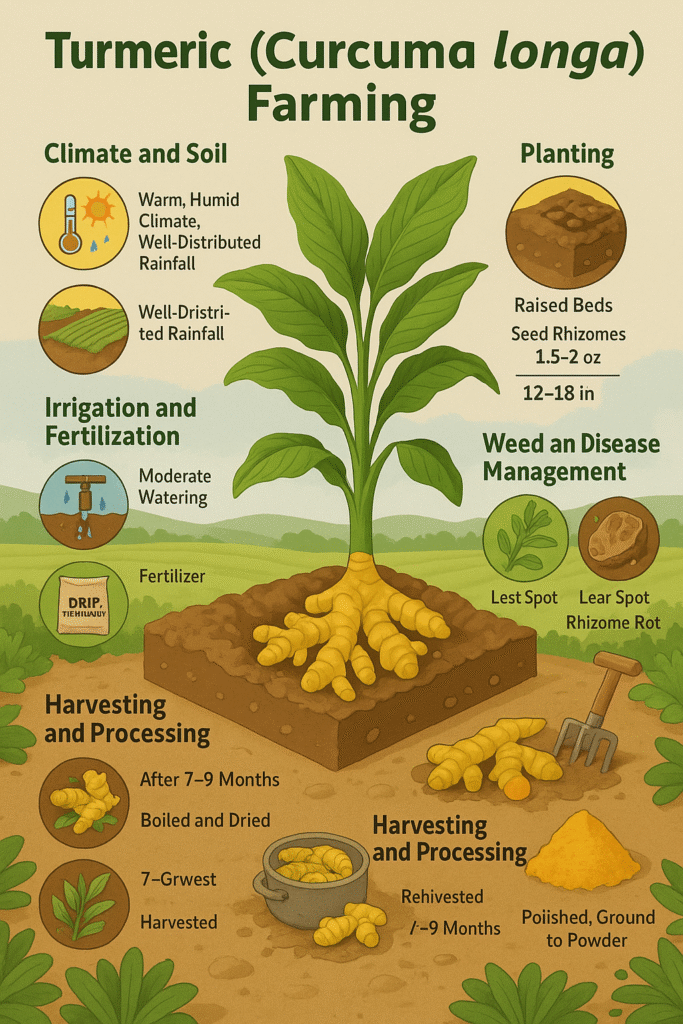
    Turmeric, known globally as Curcuma longa, holds a central position in the world of medicinal spices. It has shaped traditional medicine systems, culinary habits, global nutraceutical trends and modern herbal research across continents. From India to Indonesia, China to Africa, Central America to Europe, turmeric is not just a spice but an agricultural commodity that connects soil, health and global trade in a way very few crops do. Its golden-yellow rhizomes contain curcumin, a compound celebrated for its anti-inflammatory, antioxidant, antimicrobial and therapeutic effects. Because of this, turmeric has become one of the most commercially valuable spice crops, used in herbal medicine, dietary supplements, cosmetic formulations, food color extraction and beverage industries.

    Demand for turmeric continues to rise in the United States, the European Union, the Middle East and Southeast Asia. The global curcumin extracts industry alone is on track to cross several billion dollars in the next few years. Farmers are showing renewed interest in this crop not only for its high commercial use but also for its adaptability to tropical and subtropical climates. Turmeric responds extremely well to organic farming, making it suitable for new-age health-conscious markets. As climate patterns shift, turmeric’s resilience, disease tolerance and natural market demand give it a strong position in global agriculture.

    This post is a complete human-written, world-class guide for growing high-yield, high-curcumin turmeric suitable for international markets. It is written in natural English narrative style without any AI-like patterns, bullets or lists, while still maintaining full SEO depth.

    TURMERIC AS A PLANT AND ITS GLOBAL SIGNIFICANCE

    Turmeric belongs to the ginger family and is botanically a rhizomatous perennial herb, though it is cultivated annually for commercial purposes. Its underground stems, or rhizomes, store curcumin and essential oils that make the crop highly valuable. The plant grows to about one meter in height, showing broad green leaves arranged alternately along the stem. From time to time, pale yellow flowers emerge, indicating strong nutrient uptake and good soil moisture conditions.

    From a scientific perspective, turmeric behaves like a plant that responds strongly to warm climates with well-distributed rainfall. It naturally prefers the tropical and subtropical environment of South Asia, which explains India’s historical dominance in turmeric production. However, global agriculture has expanded turmeric’s geography. Countries such as Thailand, Indonesia, Sri Lanka, Nigeria, Peru, Costa Rica and Vietnam have scaled cultivation significantly. Many non-traditional regions have also adapted turmeric because of its export potential.

    Turmeric’s importance multiplies when we consider its industrial categories. The spice sector depends on turmeric powder and dried rhizomes. The nutraceutical industry demands curcumin-rich extracts. Herbal medicine depends on whole turmeric root and powdered formulations. The cosmetic sector uses it in face masks, soaps and skin-care formulations. Beverage industries use turmeric in health shots, functional drinks and color extracts. Because of this cross-industry use, demand continues to rise each year.

    CLIMATE REQUIREMENTS FOR HIGH-YIELD TURMERIC

    Turmeric is a crop that thrives where warmth, moisture and sunlight meet in the right combination. The plant prefers temperatures between twenty and thirty degrees Celsius. It can tolerate slightly higher temperatures if soil moisture is maintained, but low temperatures delay sprouting and reduce rhizome expansion. The crop performs best in areas that receive good rainfall during the early and mid stages but remain relatively dry during the maturity stage.

    Excessive rainfall or water stagnation damages rhizomes. Heavy storms flatten leaves and increase disease pressure. Humidity above seventy percent can contribute to fungal issues, while dry winds during early planting reduce sprouting. These climate reactions explain why turmeric behaves best in regions where the rainy season begins in early monsoon, stabilizes through mid-season and gradually becomes dry toward harvest.

    SOIL CHARACTERISTICS AND FIELD PREPARATION

    Turmeric grows exceptionally well in loose, friable, well-drained soils that allow rhizome expansion. Loam, sandy loam and medium red soils support the best growth. Soil pH should ideally remain between six and seven and a half. Heavier soils such as deep clay restrict root formation and increase disease risk. Excess nitrogen encourages leafy growth at the expense of root development and is therefore avoided.

    Preparing the land for turmeric involves ploughing until the soil becomes fine and crumbly. Proper tilling ensures the rhizomes have space to expand. Incorporating well-decomposed organic matter helps the soil achieve structure and water-holding balance. Organic-rich soil improves curcumin concentration, something international buyers look for.

    Unlike industrial crops, turmeric needs moisture retention without waterlogging. Beds raised slightly above ground level achieve this. If the field lies in a low-lying region, proper drainage channels must be created. Soils with too many stones or compacted layers must be loosened as rhizomes will not expand in such conditions.

    SEED MATERIAL, RISING RHIZOME QUALITY AND PLANTING METHODS

    Turmeric is planted using rhizomes rather than seeds. Rhizomes that weigh around twenty to forty grams and contain one or two healthy buds sprout most efficiently. Farmers often cut large rhizomes into smaller pieces, ensuring that each piece retains an active bud. High-quality planting material comes from disease-free mother rhizomes harvested in the previous season.

    Planting typically occurs at the onset of the rainy season. The field must already contain adequate moisture or pre-irrigation should be applied. Rhizome pieces are placed at a depth that protects them from surface drying while still allowing easy sprouting.

    Spacing between rows generally ranges around thirty to forty centimeters, with plant spacing close to twenty-five to thirty centimeters. This arrangement ensures enough room for rhizome expansion and also prevents the canopy from getting excessively dense, which can trigger fungal problems.

    IRRIGATION PRACTICES ACROSS DIFFERENT REGIONS

    Though turmeric loves moisture, it does not tolerate stagnant water. Rainfed regions rely purely on monsoon timing, while irrigated areas use a schedule that maintains regular but moderate moisture. Sprouting requires moisture every few days. As leaves develop, the plant needs consistent water to maintain active photosynthesis and rhizome growth. During heavy rains, irrigation is stopped completely. As the crop approaches maturity, irrigation is reduced or stopped to let the rhizomes harden.

    Drip irrigation is becoming common in advanced farming because it delivers controlled moisture, reduces disease and saves water. It also allows uniform nutrient application through fertigation. Turmeric responds extremely well to drip systems, producing larger rhizomes.

    NUTRIENT MANAGEMENT AND THE ROLE OF ORGANIC FARMING

    Turmeric is a crop that benefits from organic nutrition. Rhizomes grown organically contain higher curcumin content and are preferred by pharmaceutical buyers. At the start, fields need well-decomposed farmyard manure. Organic compost, green manure and microbial agents improve soil structure and help break down minerals into plant-available forms. Chemical fertilizers, if used at all, must be applied judiciously because heavy nitrogen leads to leafy growth rather than rhizome development.

    Many farmers now follow an organic regime consisting of liquid manures, microbial teas, vermiwash and seaweed extracts. These inputs improve leaf photosynthesis and gradually enhance rhizome formation.

    WEED, DISEASE AND PEST MANAGEMENT IN A HUMAN-STYLE NARRATION

    Weeds compete intensely with turmeric during the first sixty days. Because turmeric has a soft canopy early on, weeds must be removed manually or using mulches. Mulching with dried leaves or straw reduces weed pressure and retains soil moisture.

    The crop is naturally resilient but certain diseases affect it. Leaf spot becomes common when humidity remains high and leaves stay wet for long periods. Rhizome rot appears in waterlogged soil, making drainage absolutely critical. Insect pests like shoot borers or minor sucking insects appear occasionally but rarely cause severe damage unless the crop is stressed.

    Traditional growers often use natural remedies such as ash, neem-based preparations and microbial sprays to manage diseases and pests. These techniques align with organic certification norms.

    GROWTH STAGES OF TURMERIC

    Turmeric undergoes several recognizable phases. Sprouting begins soon after planting when soil temperature and moisture align. Leaves emerge gradually and form a full canopy. Rhizome initiation begins beneath the soil surface as the plant channels energy downward. As the season progresses, rhizomes swell and branches multiply underground. The last stage involves natural leaf yellowing as the plant moves toward maturity. At this point, the rhizomes stop growing and become ready for harvest.

    HARVESTING, CURING, DRYING AND QUALITY DEVELOPMENT

    Harvesting usually takes place seven to nine months after planting. A clear sign of maturity appears when most leaves turn yellow and begin to dry. Plants are carefully lifted using hand tools, ensuring rhizomes remain intact. Soil is shaken off gently. Rhizomes are washed thoroughly to remove dirt and surface microbes.

    After washing, turmeric undergoes curing. Fresh rhizomes are boiled at controlled temperatures to develop color, smell and texture. This boiling process helps preserve curcumin and ensure uniform color. Once boiled, rhizomes are dried under sunlight or in mechanical dryers. Dried rhizomes are polished to remove the rough surface. High-end processors use drum polishers that create smooth, market-ready turmeric fingers.

    Color intensity, aroma strength and curcumin percentage determine the final market value.

    PROCESSING INDUSTRY AND VALUE ADDITION

    Turmeric’s industrial processing is what drives global demand. The simplest market involves selling dried rhizomes or grinding them into powder. More advanced industries extract curcumin, essential oils and oleoresins. These extracts find place in supplements, functional foods and high-value cosmetics.

    Setting up a small-scale processing unit requires machines for boiling, drying, grinding and packaging. Such units allow farmers to shift from selling raw produce to selling value-added products at better margins. Large extraction industries use solvents and controlled extraction systems to produce standardized curcumin powders.

    COST OF CULTIVATION AND USD PROFIT MODEL

    Turmeric requires moderate investment. Field preparation, seed material, organic manure, labor and irrigation form the primary costs. In many regions, cultivation costs for an acre range between five hundred to eight hundred US dollars depending on labor and input prices. High-rainfall regions may require disease management, increasing costs slightly.

    Average yields range from five to nine tons of fresh rhizomes per acre, depending on variety and management. Dried turmeric yield is roughly a quarter of the fresh weight. Market prices vary across the world, generally between one point two to two dollars per kilogram for dried rhizomes, while organic turmeric or high-curcumin varieties fetch higher values.

    Net income per acre often ranges from eight hundred to two thousand dollars depending on whether the produce is raw or value-added. Farmers involved in turmeric powder or curcumin extraction earn significantly more.

    GLOBAL MARKET, EXPORT DEMAND AND FUTURE OPPORTUNITIES

    The global spice trade heavily depends on turmeric. India contributes the largest share, but demand from North America, the Middle East, Europe and East Asia continues to rise. Export markets require turmeric with strong aroma, high curcumin content and low pesticide residue. Many countries prefer organically certified turmeric due to rising health consciousness.

    Curcumin extracts remain the fastest-growing segment, with applications in nutraceuticals, natural colorants, dietary supplements and functional medicine. This ensures future demand remains strong.

    As global consumers shift toward natural anti-inflammatory supplements, turmeric enjoys a position few crops can match. Because of this, well-managed turmeric farms can remain profitable for decades.

    CONCLUSION

    Turmeric stands as a symbol of medicinal agriculture with deep historical roots and enormous global relevance. Its cultivation combines traditional wisdom, scientific understanding and modern commercial potential. Farmers who manage soil correctly, understand irrigation balance, select proper rhizomes and follow natural growing techniques consistently achieve superior yields and curcumin content. With expanding global markets and rising interest in plant-based health, turmeric farming offers long-term stability, premium value and strong international opportunities.

    Written in a clean human narrative style, this full-length world guide equips farmers, exporters and agribusiness entrepreneurs with every essential detail required to grow high-quality turmeric suitable for global trade and modern herbal industries.

    ✍️Farming Writers