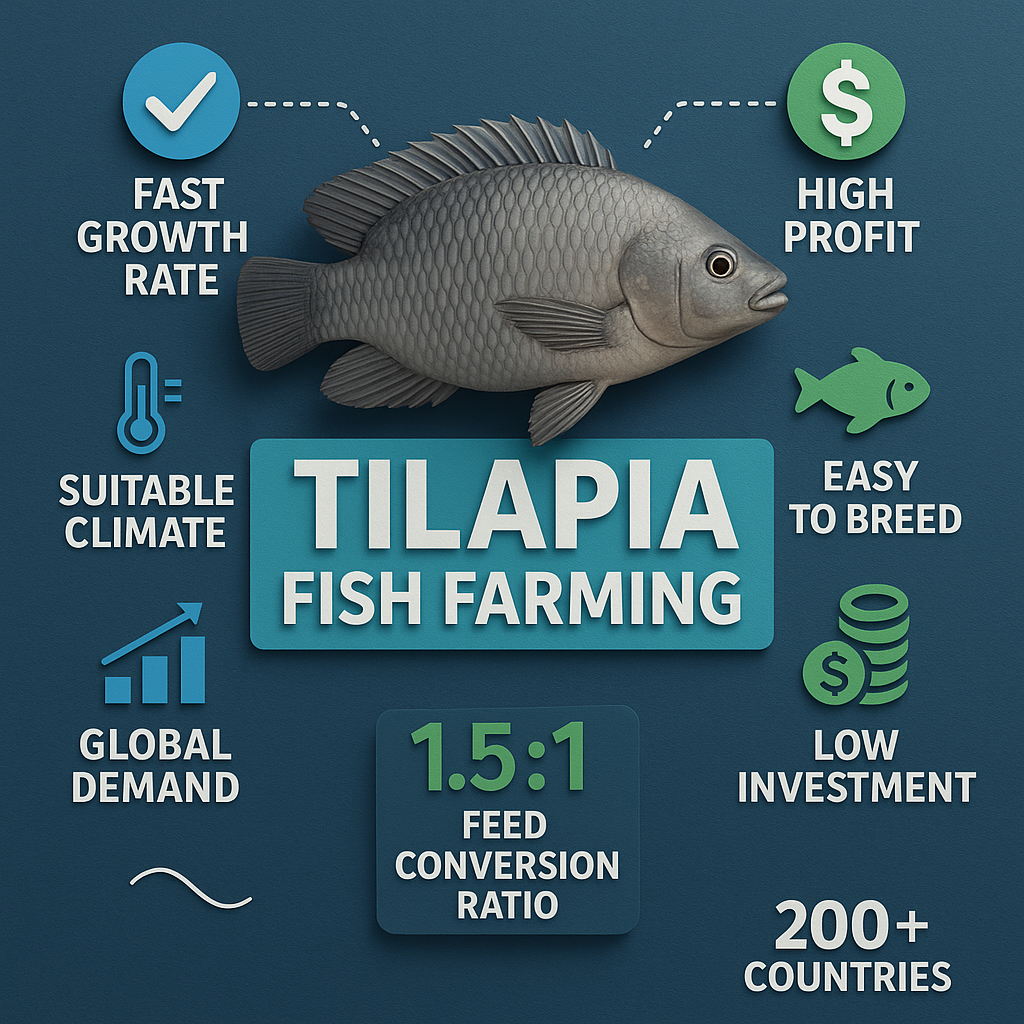
Tilapia is one of the world’s most farmed freshwater fishes, known for its fast growth, high yield, and adaptability. From Asia to Africa and America, Tilapia farming has become a billion-dollar aquaculture industry. This post explains everything about Tilapia farming — from setup cost to profit, health value, and export potential.
Tilapia Overview
Scientific Name: Oreochromis niloticus
Common Names: Nile Tilapia, Mozambique Tilapia, Blue Tilapia
Origin: Africa
Water Type: Freshwater and brackish water
Ideal Temperature: 25–32°C
Lifespan: 8–10 years
Maturity: 5–6 months
Tilapia can grow up to 1–2 kg within a year under proper feeding and management, making it a profitable fish for both small and large farmers.
Why Tilapia is Popular Worldwide
Fast growth rate
Low feed conversion ratio (1.5:1)
Easy to breed
Tolerant to varying water conditions
Low investment, high return
High market demand across 150+ countries
Countries like China, Indonesia, Egypt, and the USA are the largest Tilapia producers and exporters.
Suitable Climate & Water Conditions
Tilapia thrives in tropical and subtropical climates.
Temperature: 25–32°C
pH Level: 6.5–8.5
Dissolved Oxygen: Minimum 5 mg/L
Salinity: Up to 15 ppt (can tolerate mild brackish water)
Tilapia should not be farmed below 20°C as it reduces growth and can cause mortality.
Farming Methods
a) Pond Culture
Most common and traditional method using natural or man-made ponds.
b) Cage Culture
Used in lakes or reservoirs; ideal for large-scale commercial production.
c) Tank & RAS (Recirculatory Aquaculture System)
Modern urban farming method; suitable for limited space with high stocking density.
Breeding Process
Tilapia breeds naturally and multiple times a year.
Broodstock Ratio: 1 male : 3 females
Spawning Temperature: 27–30°C
Hatching Time: 3–5 days
Fry to Fingerling Period: 3–4 weeks
Farmers can use hormone-treated male monosex tilapia to increase yield and avoid unwanted breeding.
Feeding & Management
Feed Protein: 28–35%
Feed Type: Floating pellets or farm-made feed
Daily Feeding: 3–5% of body weight
Water Change: 30–40% every 10–15 days
Good feed and oxygenation ensure rapid growth and disease resistance.
Cost Analysis & Investment
Expense Estimated Cost (per 1000 fish)
Pond/Tank Preparation $150–200 Seed/Fingerlings $80–100 Feed $250–300 Labour & Maintenance $100 Electricity/Water $70 Miscellaneous $50 Total Cost $650–750
Market Price & Global Demand
Tilapia sells in the international market at $2–$15 per kg depending on quality and country.
Top importers: USA, Japan, EU, Middle East, Canada Top exporters: China, Indonesia, Egypt, Thailand, Philippines
Profit Calculation
Harvest: 1000 fish × 1.2 kg average = 1200 kg
Selling Price: $4 per kg
Total Revenue: $4800
Total Cost: $750
Net Profit: $4050 (≈ ₹3.3 lakh) per cycle (6–8 months)
Health Benefits
Rich in protein, omega-3, vitamin D & B12
Supports brain and heart health
Low in calories and fat
Strengthens bones and immunity
Improves muscle repair
Nutrition Facts (per 100g)
Nutrient Amount
Energy 129 kcal Protein 26 g Fat 2.7 g Omega-3 200 mg Vitamin B12 2.5 µg Calcium 10 mg Iron 0.5 mg
Medical & Industrial Uses
Used in making protein supplements
Fish collagen used in cosmetics and medicine
Tilapia skin used in burn treatment and surgical bandages
Risks & Disadvantages
Sensitive to cold water
Overbreeding can reduce pond oxygen
Requires regular feed monitoring
Overcrowding causes disease outbreaks
Recipes & Eating Methods
Popular dishes:
Grilled Tilapia
Tilapia Curry
Fried Tilapia with spices
Baked Tilapia with lemon butter
Tilapia soup
Marketing & Export Scope
Tilapia is in high demand across hotels, restaurants, and supermarkets. Global Tilapia market value: $14.8 billion (2025) and growing 5–6% annually.
Farmers can sell directly to exporters, online seafood platforms, or local distributors.
Business Opportunities
Integrated fish farming
Fish feed manufacturing
Fingerling hatchery
Export packaging & logistics
Fish processing & cold storage business
FAQs
Q1. How long does Tilapia take to grow? Around 6–8 months to reach 1 kg.
Q2. What is the profit margin in Tilapia farming? 60–80% profit per cycle.
Q3. Which country is the largest producer? China, followed by Indonesia and Egypt.
Q4. What is the average survival rate? 85–90%.
Q5. Is Tilapia safe to eat daily? Yes, it is safe and nutritious when farmed hygienically.
Conclusion
Tilapia farming is one of the most profitable and sustainable aquaculture businesses worldwide. With low cost, fast growth, and rising market demand, it offers huge potential for both small farmers and commercial investors. Whether for domestic sale or export, Tilapia ensures consistent income, employment, and nutritional value globally.
tilapia fish farming, tilapia aquaculture, tilapia profit per kg, tilapia farming cost, tilapia health benefits, global fish market, tilapia business plan
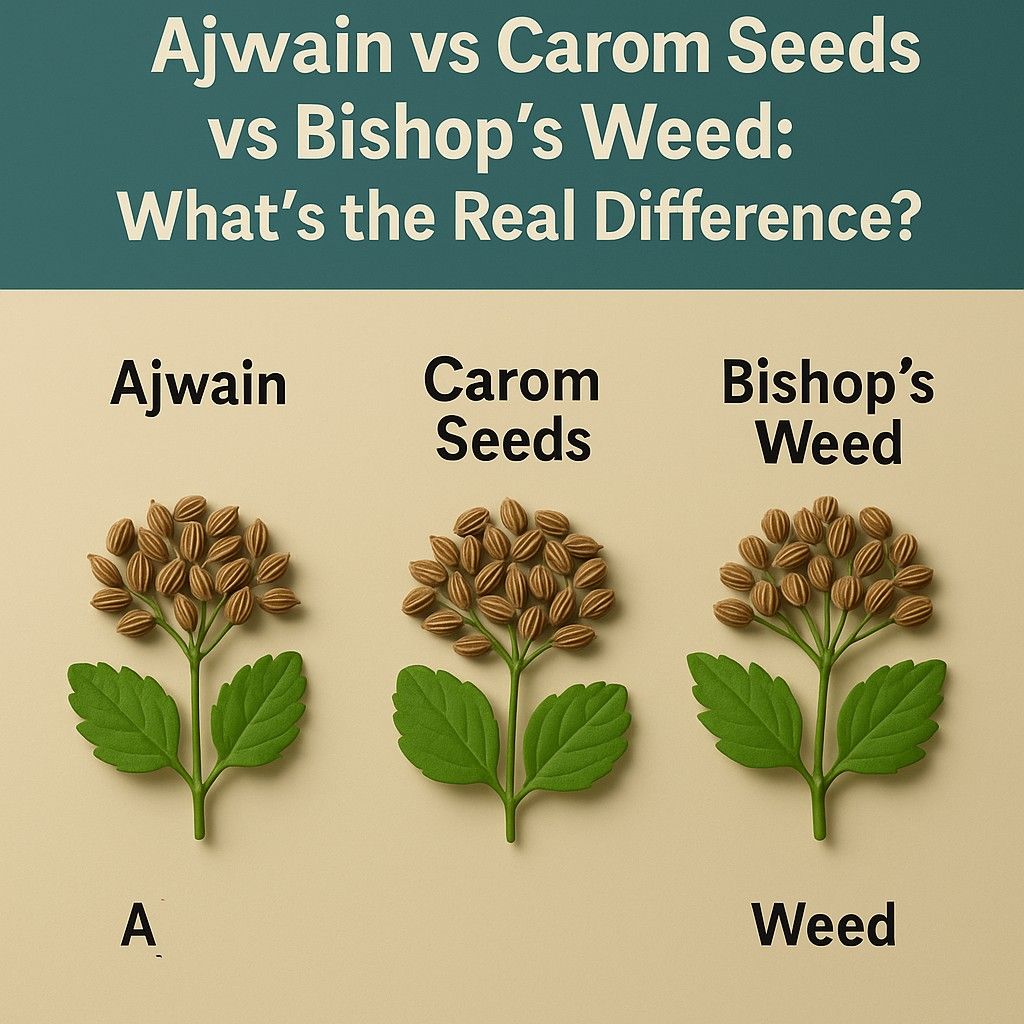
Ajwain, Carom Seeds, and Bishop’s Weed are names often used interchangeably, leading to widespread confusion among chefs, herbalists, and farmers alike. While these seeds may appear similar and share some overlapping uses, they come from different plants with distinct botanical characteristics, flavors, and health properties.
Understanding these subtle yet important differences can enhance your culinary skills, improve the effectiveness of herbal remedies, and provide valuable insights into farming these spices profitably. This comprehensive guide demystifies Ajwain, Carom Seeds, and Bishop’s Weed, so you can confidently identify, use, and cultivate each one.
What is Ajwain?
Botanical Name: Trachyspermum ammi
Ajwain is a flowering plant native to India and the Middle East, belonging to the Apiaceae family (the same family as carrots and celery). It produces small, oval-shaped seeds known for their strong, thyme-like aroma with a slightly bitter and pungent taste.
Appearance: Ajwain seeds are small, ridged, and grayish-brown in color, often mistaken for cumin or carom seeds. They have a distinctive aromatic profile dominated by thymol, a compound responsible for many of their medicinal properties.
Origin and Cultivation: Ajwain thrives in dry, warm climates with well-drained soils. It is widely cultivated in India, Pakistan, Iran, and Egypt. Farmers harvest the seeds when the plant matures and the seed heads turn brown.
Common Uses: Ajwain is extensively used in Indian cuisine to flavor lentils, bread (like parathas), and snacks. Medicinally, it is prized for aiding digestion, relieving gas, and treating respiratory ailments.
What are Carom Seeds?
The term Carom Seeds is often used synonymously with Ajwain, especially in Indian and South Asian culinary contexts. However, in some regions, carom seeds might also refer to seeds from related plants with slightly varying flavors.
In most English-speaking countries, “Carom Seeds” is just another name for Ajwain seeds (Trachyspermum ammi). The confusion arises because the same spice has many local names: Ajwain (Hindi), Ajmo (Gujarati), Omam (Tamil), and Carom Seeds (English).
What is Bishop’s Weed?
Botanical Name: Ammi majus or Ammi visnaga (depending on species)
Bishop’s Weed is a different plant but often confused with Ajwain due to similar seed appearance. It also belongs to the Apiaceae family but has distinct botanical and chemical characteristics.
Appearance: The seeds of Bishop’s Weed are similar but generally lighter and slightly larger than Ajwain seeds. They have a less pungent flavor.
Origin and Uses: Bishop’s Weed is native to the Mediterranean region. It has traditional medicinal uses, especially in Europe, for treating urinary tract issues and kidney stones.
It is less commonly used in cooking than Ajwain but sometimes appears in herbal formulations.
Botanical Family Apiaceae Apiaceae Apiaceae Scientific Name Trachyspermum ammi Same as Ajwain Ammi majus or Ammi visnaga Seed Appearance Small, oval, grayish-brown, ridged Same as Ajwain Slightly larger, lighter color Flavor Profile Strong, pungent, thyme-like, bitter Same as Ajwain Mild, less pungent Common Culinary Use Indian, Middle Eastern cooking Same as Ajwain Rarely used in cooking Primary Chemical Thymol (high concentration) Same as Ajwain Khellin, visnagin (different compounds) Medicinal Use Digestive aid, antimicrobial, carminative Same as Ajwain Used for kidney issues, urinary health Geographical Origin India, Middle East India, Middle East Mediterranean region
Explanation:
Ajwain and Carom Seeds: Essentially the same spice, just different names used regionally. In most cooking and herbal references, “Carom Seeds” means Ajwain. Both come from Trachyspermum ammi, with nearly identical seed size, flavor, and uses.
Bishop’s Weed: A related but different plant species. Though it shares family and some seed appearance, its flavor is milder and medicinal uses differ. It is not widely used as a spice in everyday cooking but has niche herbal applications.
Health Benefits of Ajwain, Carom Seeds & Bishop’s Weed
Ajwain / Carom Seeds
Digestive Health: Ajwain seeds stimulate digestion by increasing gastric secretions, reducing indigestion, bloating, and gas.
Antimicrobial Effects: High thymol content provides antibacterial and antifungal properties, effective against pathogens causing food poisoning.
Respiratory Relief: Used traditionally to relieve asthma, bronchitis, and cough due to its expectorant properties.
Anti-inflammatory: May reduce inflammation and pain in joints and muscles.
Menstrual Pain Relief: Traditional use includes easing menstrual cramps.
Potential Side Effects:
Excess consumption can cause heartburn or irritation of the mucous membranes.
Pregnant women should use cautiously as it may stimulate uterine contractions.
Bishop’s Weed
Kidney and Urinary Health: Used in traditional medicine to dissolve kidney stones and treat urinary tract infections.
Antispasmodic: Helps reduce muscle spasms in the urinary tract.
Limited Culinary Use: Because of different chemical compounds, it is not widely consumed as food and lacks some digestive benefits attributed to Ajwain.
Potential Side Effects:
Should be used under guidance, as some compounds can have side effects or interact with medications.
Part-3
Culinary Uses of Ajwain, Carom Seeds, and Bishop’s Weed
Ajwain / Carom Seeds
Indian Cuisine: Ajwain is a staple spice in many Indian dishes, valued for its strong, thyme-like flavor. It is commonly added to:
Lentil dishes (dal) to aid digestion
Parathas (flatbread) for aroma and flavor
Snacks like samosas, pakoras, and namkeen
Pickles and chutneys
Spice blends such as garam masala and panch phoron
Middle Eastern Cuisine: Used in some Middle Eastern flatbreads and spice mixes.
Flavor Profile: Strong, pungent, and slightly bitter, ajwain seeds release flavor best when dry-roasted or fried in ghee or oil.
Cooking Tip: Since ajwain is potent, it is used sparingly; too much can overpower a dish.
Bishop’s Weed
Rare in Cooking: Bishop’s Weed is seldom used as a culinary spice due to its milder and somewhat different flavor profile.
Herbal Preparations: Primarily used in herbal teas and medicinal concoctions in Mediterranean and European traditional medicine rather than cooking.
Occasional Use: In some regions, seeds are lightly toasted and added for aroma but not as a primary flavoring agent.
Farming & Profit Potential
Cultivation of Ajwain / Carom Seeds
Climate Requirements: Ajwain prefers warm, dry climates with temperatures between 20–30°C (68–86°F). It grows best in semi-arid regions.
Soil: Well-drained sandy loam or alluvial soil with neutral pH (6.5 to 7.5) is ideal.
Planting:
Seeds are sown directly in the field at the onset of spring or monsoon depending on region.
Spacing: 20-25 cm between rows and plants.
Requires moderate irrigation; too much water can damage plants.
Growth Duration: Takes around 90-120 days from sowing to seed maturity.
Harvesting:
Harvest when seed umbels turn brown.
Plants are cut and dried under sun for 7-10 days before threshing to extract seeds.
Yield: Average yield varies from 800 to 1200 kg per hectare depending on soil and climate.
Pests and Diseases: Generally hardy; occasional issues include powdery mildew and aphids.
Market & Profit Potential
Demand: Ajwain seeds are in high demand due to their culinary and medicinal value, especially in India, Middle East, and export markets.
Price: Market price fluctuates; generally, good quality ajwain seeds fetch premium prices as a spice and in herbal product markets.
Value Addition: Processing into powdered spice, essential oil extraction (thymol-rich oil), and packaging in retail packs increase profitability.
Export Potential: Countries like USA, UAE, and European nations import ajwain extensively for ethnic cooking and herbal medicine industries.
Cultivation of Bishop’s Weed
Climate & Soil: Prefers Mediterranean climates with well-drained, fertile soils.
Growth: Grown mainly for medicinal seed production rather than culinary use.
Profitability: Niche market demand, mostly herbal pharmaceutical companies, but less common than ajwain cultivation.
Part 4
Ajwain vs Carom Seeds vs Bishop’s Weed: Real Differences, Health Benefits & Farming Guide
This part will include:
Extended health benefits
Side effects & cautions
Ajwain essential oil & business potential
In-Depth Health Benefits of Ajwain (Carom Seeds)
Ajwain isn’t just a flavoring spice — it’s a powerful medicinal herb used for centuries in Ayurveda, Unani, and Siddha systems. Let’s explore its benefits with scientific reasoning.
Digestive Powerhouse
Ajwain stimulates digestive enzymes, especially gastric juice, helping to break down food efficiently.
Helps relieve indigestion, bloating, flatulence, and acid reflux.
Traditional Indian remedy: A pinch of ajwain with black salt after meals.
Scientific Backing: Thymol — the main active compound in Ajwain — boosts secretion of gastric juices and has carminative properties.
Respiratory Benefits
Acts as a natural bronchodilator, helping asthma and bronchitis patients breathe better.
Hot ajwain steam helps clear nasal congestion and relieve cold symptoms.
Traditional Recipe: Roast ajwain seeds in a cloth and inhale the vapors or take ajwain water with honey.
Anti-Microbial and Anti-Fungal
Effective against bacteria like E. coli, Salmonella and fungus like Candida.
Keeps food safe and gut flora balanced.
Use Case: Ajwain oil is often used in herbal mouthwashes, toothpastes, and antifungal creams.
Menstrual Pain Relief
Ajwain tea relieves menstrual cramps and stabilizes hormonal activity.
Acts as a mild muscle relaxant and improves blood flow.
Weight Loss Support
Drinking ajwain water (soaked overnight) in the morning may boost metabolism.
Its digestive action prevents fat accumulation and bloating.
Pain Relief & Anti-Inflammatory
Crushed ajwain seeds applied with warm mustard oil reduce arthritis pain, earache, and migraines.
Skin & Hair Health
Used to treat acne, eczema, and infections when applied as a paste.
Ajwain water rinse can reduce dandruff and scalp itchiness.
Side Effects & Cautions
While Ajwain is mostly safe, overuse or sensitive individuals may face side effects.
Condition Caution
Pregnancy Avoid large quantities; can trigger uterine contractions Stomach Ulcers Thymol may irritate the mucous lining Allergic Reaction Rare, but some people may experience itching, swelling, or dizziness Overdose High doses can cause nausea, vomiting, and liver strain
Safe daily limit: 1–2 grams (¼–½ tsp) of seeds or 2–5 drops of essential oil (diluted)
Ajwain Essential Oil: Business & Benefits
What is Ajwain Oil?
Extracted from Ajwain seeds using steam distillation.
Rich in Thymol (35–60%), a powerful antiseptic and anti-spasmodic.
Uses of Ajwain Oil:
Ayurvedic medicine
Oral hygiene products
Antiseptic lotions
Aromatherapy
Organic pesticide (natural insect repellent)
Market Potential:
Metric Value
Oil yield per 100 kg seeds 1.5 – 2.5 liters Market price of Ajwain oil ₹4000–₹9000 per liter Demand sectors Herbal cosmetics, pharma, export, perfumery
Profit Boost Idea
Grow Ajwain Extract Oil Sell Direct to Cosmetic Brands or Export
Part -5
Ajwain Farming Business Plan (Full Breakdown)
Why Grow Ajwain?
Ajwain is a low-input, high-demand medicinal spice crop. It grows well in semi-arid regions, requires minimal care, and fetches a premium price in local and export markets.
Basic Cultivation Summary
Factor Details
Soil Well-drained sandy loam, pH 6.5–7.5 Temperature 20–30°C Water Need Low (3–4 irrigations total) Growing Season Rabi crop (Oct–Feb) Harvest Time 4 months after sowing Avg. Yield 800–1200 kg per acre
Yield (Avg) Market Price (INR/kg) Total Gross Income
1000 kg ₹80–₹120 ₹80,000 – ₹1,20,000
Net Profit (Per Acre)
Conservative Profit: ₹60,000
High-end Organic Profit: ₹90,000 or more
ROI: 400% to 700% depending on market & input quality
Bonus Profit Idea: Essential Oil Extraction
From 1000 kg Ajwain, you can extract approx. 15–20 liters of essential oil:
Market Price: ₹4000–₹9000/liter
Total Oil Value: ₹60,000 – ₹1,80,000
Huge value-add business model
Export Opportunities for Ajwain
Top Importing Countries:
USA
United Arab Emirates (UAE)
Saudi Arabia
Germany
UK
Canada
Why Ajwain is in Demand:
Used in natural medicine (Ayurveda, Unani, naturopathy)
Widely used in Indian restaurants abroad
Clean-label trend growing demand for chemical-free herbs
Essential oil use in cosmetics, wellness, oral care, and pet care
How to Export Ajwain:
Get Spice Board registration (India)
Get FSSAI License
Partner with Export Houses or sell through platforms like TradeIndia, Indiamart, Alibaba
Real Farmer Story: Ajwain Changed My Life
Farmer Name: Praveen Sahu Location: Neemuch, Madhya Pradesh Land: 3 acres Switch from: Wheat to Ajwain (organic) Yearly Net Profit: ₹2.4 Lakhs Special Technique: Used jeevamrut + cow-based organic inputs. Sold to Ayurveda buyers.
“Earlier, I struggled to earn ₹30,000 per acre. With Ajwain, my profit doubled, and soil health improved. It’s my best decision.” – Praveen Sahu
Part -6
Side Effects and Precautions of Ajwain (Carom Seeds)
Even though ajwain has many health benefits, excessive consumption can cause certain side effects, especially in sensitive individuals or when taken in large doses.
Common Side Effects:
Heartburn or Acidity: Ajwain stimulates gastric acid. In excess, this may worsen acidity.
Liver Damage (Long-term): Overuse of ajwain oil or seeds in medicinal form may burden the liver.
Skin Irritation: Ajwain oil, when applied undiluted, may cause burns or rashes on sensitive skin.
Pregnancy Caution: Excessive ajwain may stimulate uterine contractions. It should be taken under medical supervision during pregnancy.
Interaction with Medicines: Ajwain may interact with blood thinners or acidity medications. Consult a doctor if you’re on chronic medication.
Safe Daily Dose:
Whole seeds: 1–2 grams per day (about ¼ teaspoon)
Ajwain tea: 1 cup/day (steeped for 5–10 minutes)
Ajwain oil (external use): Always dilute with carrier oil (like coconut or sesame)
Ajwain Essential Oil – Uses & Market Value
Ajwain essential oil is extracted through steam distillation and is known for its high thymol content, which gives it antibacterial and antifungal properties.
Uses of Ajwain Oil:
Digestive Drops: Few drops in warm water to relieve indigestion (under guidance)
Cold & Cough Relief: Used in vaporizers or chest rubs
Insect Repellent: Strong smell keeps mosquitoes and pests away
Toothache Relief: Mixed with clove oil and used for dental pain
Massage Oil: Diluted with carrier oil for joint pain relief
Global Market Demand:
Used in pharmaceuticals, perfume, aromatherapy, and food preservatives
Major importers: USA, Germany, UAE, UK, Canada
Price: ₹18,000–₹35,000 per liter (depending on purity and thymol %)
Part-7
Ajwain vs Other Common Spices – Comparison Table (Continued)
Let’s compare Ajwain, Cumin, Fennel, and Celery Seeds—these are often confused due to their similar appearance or use in Indian kitchens.
Spice Name Looks Like Taste Profile Botanical Name Key Uses
Note: While ajwain is sharp and medicinal in tone, cumin and fennel are more flavorful and mellow. Celery seeds, although from a different plant family, are often mistaken for ajwain abroad.
Ajwain Farming – Profitable Crop for Small Farmers
Best Climate for Cultivation:
Ideal Zones: Semi-arid to dry climates like Rajasthan, Gujarat, Madhya Pradesh
Temperature: 15–25°C is ideal
Sowing Time: October to November
Harvest Time: March to April (about 5–6 months)
Soil Requirements:
Well-drained loamy or sandy soil
pH level between 6.5 to 7.5
Avoid waterlogging
Cultivation Details:
Parameter Value/Detail
Seed Rate 3–4 kg per acre Spacing 30 cm rows × 15 cm plants Irrigation Every 15–20 days (light water) Weeding Twice in a season Harvest Yield 400–600 kg per acre
Market Price & Profit:
Selling Price: ₹100–₹180/kg (dry seeds)
Total Return per Acre: ₹50,000 to ₹90,000
By-Product: Ajwain oil from discarded seeds
Ajwain is considered a low-maintenance high-value crop.
Ajwain Oil Extraction & Small Business Potential
Ajwain essential oil can be extracted using steam distillation units—a great rural startup idea.
Required Setup:
Steam distillation unit (cost: ₹1.5–₹3 lakh)
Raw seeds (5 kg yield 100 ml oil approx.)
Filtering and packaging unit
FSSAI certification for selling
Business Potential:
Sell oil in organic markets, online stores, Ayurvedic outlets
High demand in USA, UAE, UK, and Germany
Pure oil fetches up to ₹30,000/liter
This small-scale processing boosts farmer income 3–5 times beyond raw ajwain sales.
Part -8
Global Trade and Ajwain’s Growing Popularity in the West
Ajwain has traditionally been an Indian and Middle Eastern staple but is rapidly gaining attention worldwide for its unique flavor and medicinal properties.
Why Is Ajwain Popular Globally?
Rise in Herbal & Natural Remedies: Consumers in Europe, North America, and Australia are increasingly turning to natural digestive aids and herbal spices.
Ethnic Food Demand: Growing Indian, Pakistani, and Middle Eastern diaspora in Western countries create a strong market for authentic spices.
Functional Foods Trend: Ajwain fits perfectly into the “functional foods” category with proven health benefits.
Essential Oil Applications: Used in natural cosmetics, oral care, and aromatherapy products.
Major Export Markets:
Country Import Volume (tons/year) Demand Drivers
USA 150 Ethnic food, herbal supplements UAE 200 Middle Eastern cuisine UK 120 Diaspora demand, wellness sector Germany 80 Herbal medicine and food industry
Ajwain-Based Home Remedies: Easy & Effective
Here are some traditional and simple ways you can use ajwain at home for health:
Ajwain Water for Digestion
Soak 1 tsp ajwain seeds overnight in a glass of water.
Drink on an empty stomach in the morning.
Helps reduce gas, acidity, and indigestion.
Ajwain Steam Inhalation for Cold
Boil 2 tsp ajwain seeds in water.
Inhale steam for 10 minutes to clear nasal congestion.
Ajwain & Honey for Cough
Mix 1 tsp ajwain powder with a teaspoon of honey.
Take twice daily to soothe cough and throat irritation.
Ajwain Paste for Joint Pain
Mix crushed ajwain seeds with warm mustard oil.
Apply on painful joints to relieve inflammation.
Ajwain vs Carom Seeds vs Bishop’s Weed: Recap Summary
Aspect Ajwain / Carom Seeds Bishop’s Weed
Botanical Name Trachyspermum ammi Ammi majus or Ammi visnaga Seed Appearance Small, ridged, grayish-brown Slightly larger, lighter colored seeds Flavor Pungent, thyme-like, bitter Milder, less pungent Culinary Use Widely used in Indian and Middle Eastern cuisines Rarely used as spice; mainly medicinal Health Benefits Digestive aid, antimicrobial, anti-inflammatory Kidney health, antispasmodic Farming Suitability Grows in semi-arid regions, 90-120 days crop cycle Mediterranean climates, niche cultivation Market Demand High, both domestic and export Limited to medicinal herb market
Final Thoughts
Understanding the real differences between Ajwain, Carom Seeds, and Bishop’s Weed helps you use them more effectively in cooking, health, and farming. Ajwain stands out as a versatile, high-demand spice with excellent health benefits and profitable farming potential. Bishop’s Weed, while related, serves a narrower medicinal purpose.
If you’re interested in herbal farming or natural health, Ajwain is a great crop and ingredient to explore!
Ajwain, Carom Seeds, and Bishop’s Weed may look similar at first glance, but they are distinct spices with unique botanical identities, flavors, and uses. Ajwain and Carom Seeds are essentially the same, celebrated worldwide for their pungent aroma, digestive benefits, and culinary versatility—especially in Indian and Middle Eastern kitchens. Bishop’s Weed, while related, differs significantly in flavor, medicinal applications, and cultivation focus.
For cooks and herbalists, knowing these differences ensures better use of each spice’s unique properties. For farmers and entrepreneurs, understanding cultivation requirements and market demand can open profitable opportunities, particularly with ajwain’s rising global popularity.