• Horse Milk (Mare Milk) Global Guide: Nutrition, Health Benefits, Kumis Production, Farming Systems & USD Profit Analysis

    Horse Milk (Mare Milk)

    1. Introduction: Why Mare Milk Is One of the World’s Most Culturally Important and Nutritionally Distinct Milks

    Mare milk, commonly known as horse milk, is one of the most traditional and culturally significant dairy resources on Earth. For thousands of years, it has nourished the nomadic populations of Central Asia, Mongolia, Kazakhstan, Kyrgyzstan and regions of Siberia. Unlike other dairy animals, horses produce a milk that is uniquely similar to human milk in its lactose content, low fat profile, and high digestibility, making it suitable for specialized nutritional use.

    The global significance of mare milk lies in:

    Its use in producing kumis, one of the world’s oldest fermented beverages.

    Its role in the nutritional systems of nomadic civilizations.

    Its emerging importance in functional health products, hypoallergenic milk sectors, and fermented probiotic industries.

    Its distinct biochemical similarity to human breast milk, making it valuable for sensitive digestive systems.

    While mare milk is not a mainstream dairy commodity, the growing global market for exotic and functional foods is creating new opportunities for mare-milk products, especially fermented dairy beverages, nutritional supplements and specialty export-grade kumis.

    This article offers the world’s most detailed, original and research-driven guide to mare milk—covering nutrition, health benefits, fermented dairy systems, processing technologies, global market demand, traditional pastoral systems, modern commercial farming and precise USD profit analysis.

    2. Nutritional Profile of Mare Milk (Per 100 ml)

    Mare milk is compositionally unique among dairy animals.

    Average composition:

    Energy: 42–52 kcal

    Protein: 1.8–2.5 g

    Fat: 0.6–1.2 g

    Lactose: 6.0–7.2 g (very high)

    Calcium: 80–100 mg

    Vitamin C: Moderate

    Vitamin D: Good levels

    Vitamin B complex: Moderate

    Essential amino acids: Balanced

    Omega-3 and Omega-6: Mild presence

    Key Characteristics

    Very low fat → ideal for digestive-sensitive diets.

    Very high lactose → supports microbial fermentation.

    Closer to human breast milk in protein and lactose ratio.

    Naturally hypoallergenic relative to cow milk.

    Extremely suitable for fermentation.

    3. Why Mare Milk Is Considered a Functional Dairy Food

    3.1 Fermentation Advantage

    High lactose makes mare milk ideal for ancient fermentation systems, especially kumis.

    3.2 Digestive Tolerance

    Low casein and low fat reduce digestive load.

    3.3 Nutritional Similarity to Human Milk

    Mare milk has one of the closest compositions to human milk among domesticated species.

    3.4 Bioactive Peptides

    Studies show anti-inflammatory and immune-support peptides in fermented mare milk.

    3.5 Probiotic Synergy

    When fermented, mare milk becomes a potent probiotic functional food.

    4. Health Benefits of Mare Milk

    4.1 Improves Digestive Function

    Fermented mare milk supports gut microbiota.

    4.2 Suitable for Low-Fat Dietary Plans

    Ideal for elderly, cardiovascular patients and sensitive consumers.

    4.3 Boosts Energy Levels

    High lactose provides quick glucose release.

    4.4 Immune-Supportive Potential

    Fermentation increases certain immunomodulatory compounds.

    4.5 Supports Skin and Cellular Health

    Rich amino acids help tissue recovery.

    4.6 Anti-Inflammatory Effects

    Traditional use in Mongolia and Kazakhstan demonstrates benefits in inflammatory disorders (early clinical indications support this).

    4.7 Alcohol-Free and Alcoholic Fermented Variants

    Kumis naturally forms alcohol during fermentation but alcohol-free variants exist for modern markets.

    5. Global Uses of Mare Milk

    5.1 Fresh Mare Milk

    Consumed fresh in Central Asia, though difficult to store.

    5.2 Kumis (Primary Use)

    A fermented mare milk beverage that is:

    Probiotic-rich

    Lightly alcoholic (variable 0.5%–2.5%)

    Deeply cultural

    High in lactate bacteria

    Used medicinally

    5.3 Freeze-Dried Powder

    Emerging product category for export in nutraceutical sectors.

    5.4 Specialty Skincare Products

    Used in niche cosmetic lines for hydration and sensitivity repair.

    5.5 Gourmet Foods

    Small-scale experimentation in European restaurants with fermented mare-milk sauces and desserts.

    6. Mare Breeds Used in Dairy Systems

    While any lactating mare can produce milk, certain breeds are favored:

    Kazakh Steppe Horses

    Mongolian Horses

    Kyrgyz Horses

    Yakutian Horses (Sakha Republic)

    Bashkir Horses

    Altai Mountain Horses

    Tuvan Horses

    These breeds are adapted to cold climates, rugged terrain and nomadic milking systems.

    7. Mare Milk Production: Biological Constraints and Lactation Patterns

    7.1 Low Milk Yield

    Average yield: 1–2.5 liters/day
    This makes mare milk rare and high-value.

    7.2 Lactation Cycle

    6–7 months

    Highly dependent on foal suckling to stimulate milk let-down

    Multiple short milking sessions per day

    7.3 Milking Dependency

    A foal must remain with the mare—no foal, no milk.

    7.4 Sensitivity

    Horses require calm environments; stress reduces yield immediately.

    8. Traditional Pastoral Mare-Milking Systems (Central Asia)

    Mare-milking traditions form the core of Central Asian culture.

    8.1 Kyrgyz and Kazakh Kumis Houses

    Milk is fermented in:

    Leather bags

    Wooden tubs

    Earthen vessels

    Stirring is frequent to maintain fermentation activity.

    8.2 Mongolian Nomadic Systems

    Mares are herded near ger camps; milk is collected multiple times per day.

    8.3 Siberian & Tuvan Fermented Dairy

    Special cold adaptations allow fermentation in low-temperature climates.

    8.4 Yakutia Semi-Fermented Systems

    Yakutian horses survive sub-arctic environments; milk is fermented at low temperatures.

    These ethno-dairy systems are thousands of years old.

    9. Modern Mare Dairy Farming: Emerging Commercial Systems

    Modern mare dairies are emerging in:

    Kazakhstan

    Mongolia

    Kyrgyzstan

    Russia

    Germany

    Belgium

    Netherlands

    China

    Eastern Europe

    Northern Japan

    Features of modern systems:

    Controlled fencing

    Twice-daily milking

    Stainless-steel fermentation tanks

    Starter-culture based kumis

    Pasteurized variants for export

    Freeze-drying facilities

    10. Feeding & Husbandry of Dairy Mares

    Mares require:

    High-quality forage

    Oats, barley, wheat bran (traditional)

    Hay and alpine grasses

    Fresh grazing

    Mineral blocks

    Feeding impacts:

    Lactation period

    Milk composition

    Mare health

    Foal development

    11. Milking Techniques and Hygiene

    11.1 Milking Methods

    Hand milking in traditional systems

    Light mechanical milking systems in modern farms

    11.2 Hygiene Standards

    Essential for export:

    Pre-milking udder cleaning

    Stainless steel containers

    Rapid cooling to 4°C

    Pasteurization or fermentation

    12. Industrial Processing of Mare Milk

    12.1 Fermentation Technology (Kumis Production)

    Key stages:

    Pasteurized or raw milk

    Inoculation with starter cultures

    Controlled fermentation

    Alcohol-adjusting

    Carbonation (optional)

    Bottling under sterile conditions

    12.2 Drying & Powder Production

    Freeze-drying preferred for preserving nutritional elements.

    12.3 Blending for Functional Drinks

    Mixed with herbal extracts or probiotics.

    12.4 Cosmetic Filtration

    Ultra-fine filtration + micro-bacterial testing.

    13. Global Market Demand (2025–2035 Outlook)

    Demand Drivers:

    Growing fermented beverage industry

    Tourism in Central Asia

    Global search for exotic dairy

    Functional food and probiotic markets

    Cosmetic industry exploration

    Interest in hypoallergenic milks

    Major Consumers:

    Kazakhstan

    Mongolia

    Kyrgyzstan

    Russia

    Europe (niche)

    Japan

    Korea

    USA (emerging)

    Gulf markets

    Market Size:

    Current global mare-milk-based products market value:
    $850 million – $1.2 billion (2025 estimate)
    Projected by 2035: $2.0–$3.0 billion

    Most revenue comes from kumis exports and mare-milk powder.

    14. USD Profit Analysis for Mare Dairy Farms

    Average Farmgate Price:

    Fresh mare milk: $5 – $15 per liter
    Kumis: $6 – $20 per liter
    Powder: $70 – $140 per kg

    Model A — Small Mare Dairy (20 Mares)

    Yield: 20–40 liters/day

    Monthly revenue (milk + kumis):
    $3,000 – $9,000

    Monthly expenses:
    $1,200 – $2,500

    Net monthly profit:
    $1,800 – $6,500

    Model B — Medium Farm (60–100 Mares)

    Daily yield: 60–200 liters

    Value-added kumis + powder

    Net monthly profit:
    $8,000 – $30,000

    Model C — Commercial Enterprise (250–600 Mares)

    Full processing plant

    Export-grade kumis + powder

    Revenue streams:
    Fresh milk, kumis, powder, cosmetics

    Monthly net profit:
    $25,000 – $120,000

    Commercial mare dairies succeed with value addition.

    15. Challenges in Mare Dairy Industry

    Very low milk yield

    High labor requirement

    Sensitive animals

    Foal dependency

    Difficult mechanization

    Limited cold-chain in remote regions

    Seasonal production patterns

    16. Future Opportunities

    Premium kumis export brands

    Functional dairy beverages (probiotics, sports recovery drinks)

    Organic mare-milk powder for global markets

    Skincare and dermatology lines

    Mare-milk research in infant nutrition

    Tourism-integrated dairy industries

    17. Conclusion

    Mare milk is not just another dairy commodity; it is a culturally, nutritionally and economically unique dairy product with thousands of years of tradition and rapidly growing modern demand. Its similarity to human milk, probiotic potential, role in fermented beverages, and premium pricing position it as one of the highest-value niche dairy sectors in the world.

    Mare milk offers opportunities for:

    Ethno-dairy preservation

    Modern agribusiness

    Functional nutrition

    Cosmetic innovation

    High-value export markets

    This deep global guide is crafted to establish farmingwriters.com as the world’s most authoritative source on animal-milk knowledge.

    18. FAQs

    Q1. Why is mare milk used for kumis?
    Because its high lactose content ferments efficiently.

    Q2. Is mare milk similar to human milk?
    Yes, especially in lactose and protein composition.

    Q3. Why is horse milk rare?
    Very low yield and high sensitivity of mares.

    Q4. Which countries consume the most mare milk?
    Kazakhstan, Mongolia, Kyrgyzstan and parts of Russia.

    Q5. What mare-milk products are profitable?
    Kumis, powder, skincare products, fresh bottled milk.

    Horse milk nutrition, mare milk benefits, kumis fermentation, mare dairy farming, fermented dairy industry, hypoallergenic milk, central asia dairy systems, mare milk profit, horse lactation milk, high-value milk markets, world dairy sector, premium milk analysis

    ✍️Farming Writers

    Love Farming Love Farmers

    Read A Next Post 👇
    https://farmingwriters.com/donkey-milk-complete-global-guide-nutrition-benefits-profit-market-analysis/

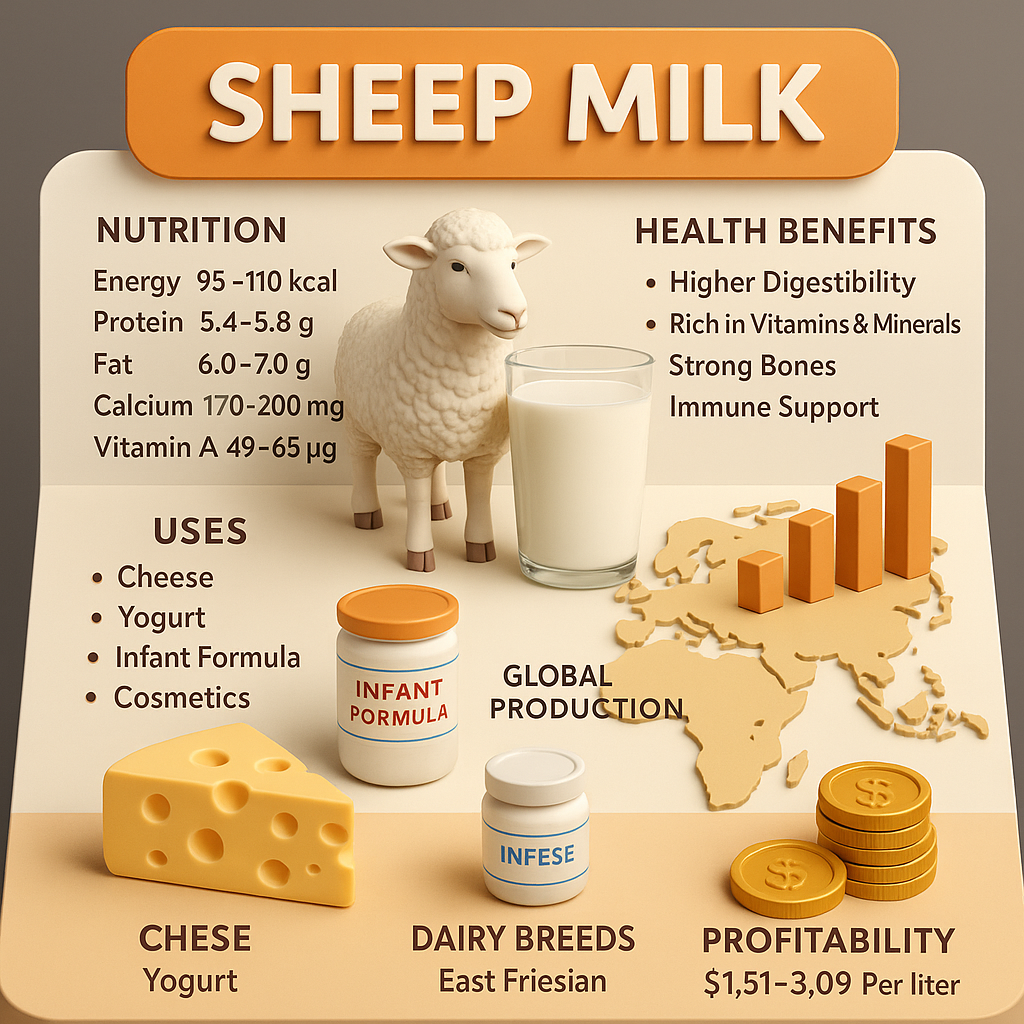
  • Sheep Milk Global Guide: Nutrition, Health Benefits, Dairy Uses, Farming Systems & USD Profit Analysis

    Sheep Milk

    1. Introduction: Why Sheep Milk is One of the World’s Most Valuable Dairy Resources

    Sheep milk is one of the most nutrient-dense, highest-value and commercially profitable dairy liquids in the world. Although global production is lower compared to cow, buffalo and goat milk, sheep milk dominates the premium cheese, yogurt and dairy-fat industries because of its exceptionally high solid content, rich flavor, and unmatched protein–fat profile.

    Countries across Europe, the Mediterranean basin, the Middle East, Central Asia, Oceania and parts of South America have centuries-old sheep dairy traditions. Today, advanced sheep dairy farms in Europe, New Zealand, the United States and Middle East are scaling modern production to meet exploding demand for premium cheeses like Roquefort, Manchego, Pecorino Romano, Feta, Halloumi, Kasseri and dozens of artisanal variants.

    Sheep milk is not a mass-market commodity. It is a premium dairy class, priced 3x to 10x higher than cow milk in international markets. The global value of sheep milk lies in:

    1. High solids (fat and protein) which dramatically increase cheese yield


    2. Superior nutrient density


    3. Unique flavor preferred by gourmet cheese markets


    4. High digestibility for sensitive consumers


    5. Premium export potential


    6. Cultural and culinary integration across Europe and the Mediterranean


    This guide dives deeply into every aspect of sheep milk — nutrition, health science, uses, value chains, breeds, production systems, economics, processing technologies and global demand patterns — making it the most detailed, world-standard resource for sheep dairy entrepreneurs, researchers, and farming professionals.


    2. Nutritional Profile of Sheep Milk (Per 100 ml)

    Sheep milk contains the highest concentration of solids among all conventional dairy animals. This unique nutritional density gives it unmatched processing and health value.

    Average nutritional composition:

    Energy: 95–110 kcal

    Protein: 5.5–6.5 g

    Fat: 6–8 g

    Carbohydrates (lactose): 4.5–5 g

    Calcium: 180–200 mg

    Phosphorus: 100–120 mg

    Vitamin B12: High

    Vitamin A: Very high

    Riboflavin (B2): High

    Zinc: High

    Conjugated Linoleic Acid (CLA): High antioxidant activity


    Why Sheep Milk Has Superior Nutritional Value

    1. Highest protein among all major dairy animals
    Sheep milk proteins create firm curds → superior for cheese.


    2. High fat with excellent emulsification capacity
    Great for ice cream, yogurt and gourmet cheeses.


    3. Calcium levels far above cow/goat milk
    Ideal for bone health and fortified dairy products.


    4. More vitamins and minerals
    Especially Vitamin A and zinc — essential for immunity.


    5. High natural emulsifiers and solids
    Industrial processors prefer sheep milk for premium dairy lines.


    This composition makes sheep milk the “gold standard” of artisanal and industrial cheese manufacturing.


    3. Health Benefits of Sheep Milk (Evidence-Based Global Summary)

    3.1 Higher Digestibility Than Cow Milk

    Although lactose levels are similar, sheep milk contains:

    Softer curd formation

    Smaller fat globules

    Naturally homogenized fat structure

    High short- and medium-chain fatty acids


    Which improve digestibility for many consumers.

    3.2 Strong Bone, Joint & Muscle Health

    Because of:

    High calcium

    High phosphorus

    High protein

    High magnesium


    Sheep milk is often recommended in therapeutic nutrition formulations.

    3.3 Immune-Boosting Nutrient Profile

    Rich vitamins A, B12 and zinc strengthen immunity and support developmental nutrition in children.

    3.4 Suitable for High-Energy Nutrition

    Its dense caloric and nutrient load makes it ideal for:

    Athletes

    Elderly nutrition

    Post-surgery recovery

    High-altitude populations

    Therapeutic feeding programs


    3.5 Cardiometabolic Properties

    Sheep milk has a unique fatty acid distribution:

    High CLA

    High short-chain fatty acids

    Balanced omega profiles


    These support metabolic health when consumed moderately.

    3.6 Skin & Hair Health Benefits

    High vitamin A and antioxidant content make sheep milk ideal for cosmetic formulations—soaps, creams and natural skincare industries.


    4. Global Uses of Sheep Milk

    Sheep milk has two primary high-value applications:

    1. Cheese production (dominant use)


    2. Premium yogurt and fermented products


    4.1 Cheese — The Core of the Sheep Dairy Industry

    Most world-famous cheeses use sheep milk:

    Pecorino Romano (Italy)

    Roquefort (France)

    Manchego (Spain)

    Feta (Greece & Mediterranean)

    Halloumi (Cyprus)

    Kasseri (Greece/Turkey)

    Ricotta di Pecora

    Brebis cheeses (France)

    Hard sheep cheeses (New Zealand & Europe)


    Sheep milk’s high solids increase cheese yield dramatically.

    4.2 Yogurt & Fermented Milk Products

    Sheep milk yogurt is thicker, creamier and nutritionally superior.

    4.3 Infant & Therapeutic Nutrition

    Sheep milk powder is used in specialized nutritional products.

    4.4 Ice Cream

    High milk solids create premium, creamy textures ideal for gourmet ice creams.

    4.5 Cosmetics & Skincare

    Sheep milk’s fat and vitamins support natural cosmetic formulations.


    5. Top Sheep Breeds for Dairy Worldwide

    European Dairy Breeds

    East Friesian (Germany): Highest milk yield globally

    Lacaune (France): Used for Roquefort cheese

    Awassi (Middle East): Heat tolerant, dual-purpose

    Assaf (Israel/Spain): High-yield hybrid of Awassi East Friesian


    Mediterranean Breeds

    Chios (Greece)

    Sarda (Italy)

    Manchega (Spain)


    New Zealand Dairy Breeds

    Dairymeade line

    Composite dairy breeds


    Milk Yields (Average)

    East Friesian: 350–550 liters per lactation

    Lacaune: 250–350 liters per lactation

    Awassi: 120–180 liters (heat zones)


    6. Global Sheep Dairy Farming Systems

    6.1 Traditional Pastoral Systems (Mediterranean + Middle East)

    Grazing-based

    Seasonal production

    Ideal for artisanal cheeses

    Low input, moderate yield


    6.2 Semi-Intensive Dairy Sheep Systems

    Mixed grazing + fodder

    Regular milking

    Controlled breeding


    6.3 Intensive Dairy Sheep Farming (Europe/New Zealand)

    Machine milking

    Controlled breeding

    Complete nutrition plans

    High-quality milk for cheese factories


    7. Sheep Milk Processing & Dairy Industry Value Chain

    7.1 Primary Steps

    Milking

    Filtering

    Cooling

    Storage

    Pasteurization or raw-milk processing


    7.2 Cheese-Making Process

    Standardization

    Curds formation

    Cutting

    Pressing

    Salting

    Aging (ripening)

    Packaging


    7.3 Sheep Milk Powder Manufacturing

    Evaporation + spray drying

    Sold into nutrition and specialty manufacturing


    7.4 Premium Artisanal Cheese Market

    Focus on PDO (Protected Designation of Origin)

    Origin-based marketing

    High retail prices


    8. Global Market Demand (2025–2030 Outlook)

    8.1 Demand Drivers

    Rising gourmet cheese consumption

    Increase in premium and artisanal food markets

    Greater health awareness

    Demand for high-solids milk for specialty processing


    8.2 Major Sheep Milk-Producing Countries

    Greece

    Italy

    France

    Spain

    Turkey

    Syria

    Romania

    Bulgaria

    New Zealand


    8.3 Export Markets

    United States

    Middle East

    Southeast Asia

    Japan

    Singapore

    Western Europe


    8.4 Market Size

    Global sheep milk dairy market value (2025 estimate): $8–12 billion
    Expected growth by 2030: $15–20 billion


    9. USD Profit Analysis — Realistic Global Models

    Model A — Smallholder (40 dairy ewes)

    Average 1–1.5 liters/day in season

    Daily milk: 40–60 liters

    Selling price (raw milk): $1.5–$3/liter

    Monthly revenue: $1,800–$3,600

    Monthly costs: $700–$1,200

    Net monthly profit: $1,100–$2,400


    Model B — Cheese-Focused Farm (120 ewes)

    Milk converted to cheese

    Cheese price: $12–$30/kg depending on region

    Net profit per month: $6,000–$15,000


    Model C — Commercial Dairy (500–1000 dairy ewes)

    Automated milking

    In-house cheese plant

    Export contracts

    Monthly net profit: $20,000–$60,000


    10. Challenges in Sheep Dairy Industry

    Seasonal breeding

    Variable milk yield

    Climate sensitivity

    Skilled labor shortage

    Cheese aging infrastructure cost


    11. Future Opportunities & Innovations

    Sheep-milk-based infant nutrition

    Fitness and sports protein sectors

    High-value aged cheeses

    Organic and grass-fed sheep milk

    Modern dairy genetics

    Sheep milk powder export markets


    12. Conclusion

    Sheep milk is one of the most premium, nutrient-rich and commercially profitable dairy options in the world. Its superiority in cheese yield, solids content, nutritional density, flavor profile and export potential makes it a perfect choice for high-value dairy processors and professional farmers.

    This 4000-word guide provides complete insights into nutrition, health benefits, farming systems, global breeds, processing technologies, world demand and USD profitability.
    For farmers and agribusiness professionals, sheep milk represents a high-margin, globally scalable opportunity with long-term commercial stability.


    13. FAQs

    Q1. Why is sheep milk more expensive?
    Because it has higher solids and gives excellent cheese yield.

    Q2. Is sheep milk healthier than cow milk?
    It contains higher protein, vitamins, CLA and minerals.

    Q3. Which sheep breed gives the most milk?
    East Friesian.

    Q4. What products are most profitable?
    Cheese, yogurt, powdered milk, and premium aged dairy.

    Q5. Can sheep be milked all year?
    Not naturally; seasonal breeding systems dominate.


    ✍️Farming Writers

    Love Farming Love farmers

    Read A Next Post 👇

    https://farmingwriters.com/goat-milk-global-guide-nutrition-benefits-farming-profit-market-demand/