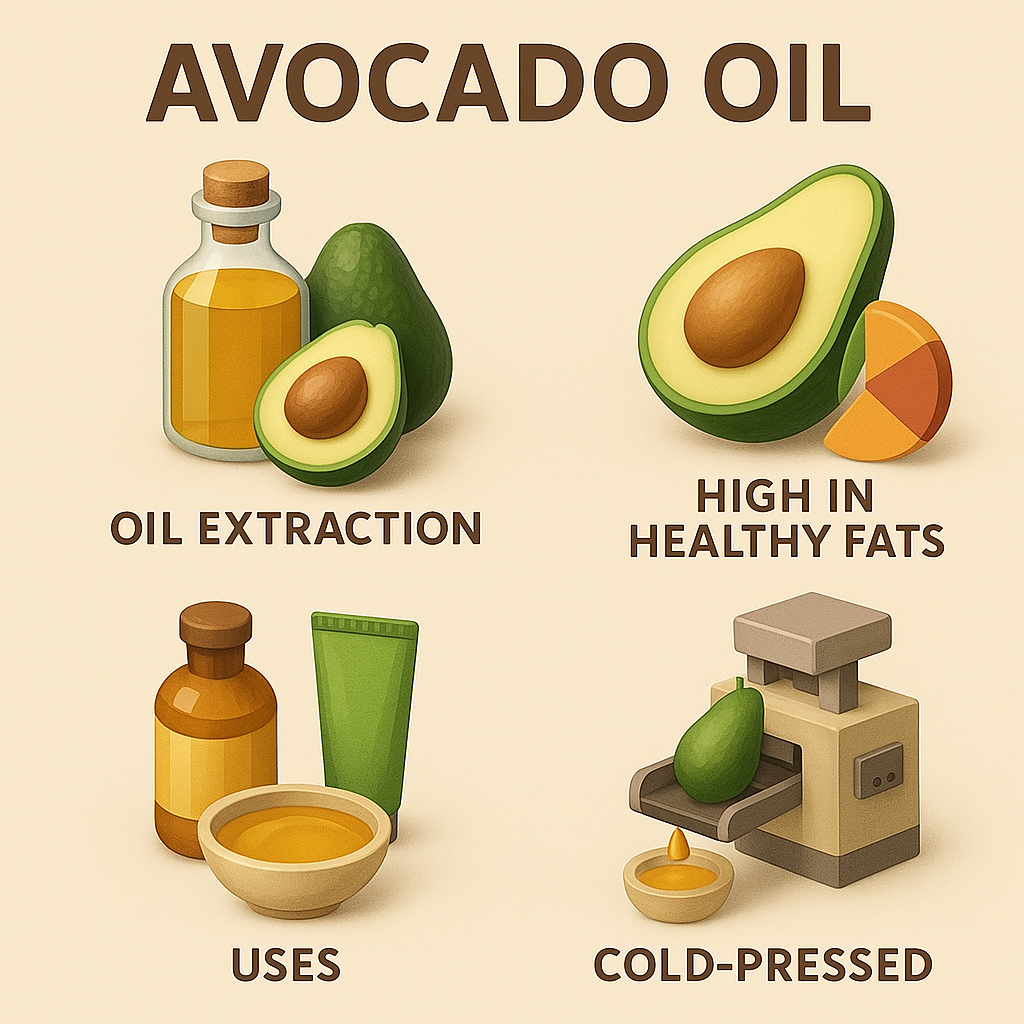
Most farmers who enter avocado oil farming come with the same assumption: “If the fruit sells at a premium, the oil must be even more profitable.” This belief is the starting point of most losses in this sector. The reality is that oil-grade avocados follow a different set of economics entirely, and the farmers who fail are usually the ones who treat them like table-fruit orchards. Buyers in the oil market don’t care about fruit beauty, shape, size, or what Instagram posts call “premium varieties.” They care about oil percentage, dry matter, enzymatic stability, and how the fruit behaves during cold pressing. These qualities don’t show themselves when the orchard is young, which is why many farmers realize the truth only after four or five years when the oil content refuses to cross commercial thresholds.
In regions where rainfall fluctuates too sharply, the fruit swells quickly but accumulates very little oil. This is a common trap. Farmers see large, heavy fruits and assume high oil content. When they finally send samples to extraction units, the oil yield turns out embarrassingly low. A processor will simply tell them, “Your fruits are table-grade, not oil-grade,” and that ends the business. Nothing is more frustrating than investing years into a crop only to be told your product belongs to a different market entirely.
The deeper issue is that many farmers never speak to an oil extractor before planting orchards. They listen to nursery sellers, who push varieties without understanding regional oil trends. Nurseries rarely mention that avocado oil buyers prefer fruit with specific dry-matter levels reached only under consistent sunlight and controlled irrigation. In cloudy or high-moisture regions, the fruit reaches physical maturity but the lipid formation stalls midway. Farmers assume oil content increases automatically as the fruit ripens, but the formation of fatty acids is a climate-driven process more than a ripening process. This misunderstanding destroys the economics of entire orchards.
A second major misconception is that damaged or irregular fruits will automatically qualify as “oil-grade waste.” This is only partially true. Oil processors accept damaged fruit only if the enzymatic activity has not already started breaking down the flesh. Once the fruit begins internal browning, the oil becomes unstable. The farmer who stores fruits for too long before delivery unknowingly destroys the oil quality and receives a rejection. In some regions, processors have shifted to a 6–8 hour delivery window after harvest because even a single afternoon of heat can push the fruit into early enzymatic spoilage.
One would expect that buyers explain this upfront, but they don’t. Oil extraction companies rarely educate farmers about rejection factors it is not in their interest. They simply say “low oil,” “poor stability,” or “not suitable for premium grade,” leaving farmers confused about what actually happened. This lack of transparency is the primary reason farmers keep repeating mistakes generation after generation.
Then there is the issue of water. Avocado trees survive drought for some time, but oil formation collapses under inconsistent irrigation cycles. A shortage during flowering reduces fruit set, and sudden heavy watering later causes the fruit to enlarge without accumulating the necessary oil. This is why the same variety performs brilliantly in Mexico but collapses in parts of India or East Africa. Farmers often look at success stories from other countries without realizing that avocado oil is not about the tree it is about the moisture rhythm that tree experiences through the year.
Some farmers believe they can “force” oil formation by delaying harvest. But delay beyond physiological maturity causes the fruit to degrade internally. Oil percentage may increase slightly, but the oil’s oxidative stability declines sharply, making it unsuitable for premium buyers. This forces the farmer into lower-value bulk oil markets, where margins are minimal. The orchard may still produce fruit, but the economics fail completely.
Understanding extraction realities is equally important. Cold-pressed avocado oil is not extracted the way cold-pressed sesame or coconut oil is. The fruit must be pulped and processed before enzymatic breakdown increases free fatty acid (FFA) levels. If FFA crosses certain thresholds even by small margins the oil receives a lower grade. In many producing regions, inexperienced farmers harvest fruits with microscopic fungal infections that are not visible externally. These infections increase FFA levels during storage, ruining the oil before the farmer even realizes something is wrong.
Processors can detect this instantly. They simply reject the lot, and the farmer is forced to sell the fruit at minimal prices to feed processors or cattle, recovering only a fraction of cost. The farmer assumes the processor is cheating, but in most cases, the oil genuinely would not meet stability standards.
Avocado oil also faces a unique market illusion: the premium cosmetic oil market is extremely strict about color and clarity. Many farmers assume dark golden oil is the highest quality, but several premium buyers prefer lighter shades because they indicate lower oxidation. Farmers unfamiliar with this nuance complain that their “dark rich oil” is undervalued. They do not know that oil color reveals whether the fruit was handled under heat or stress.
In regions where orchard spacing is too tight, the lower canopy receives insufficient sunlight, creating fruits that look identical but have poorer lipid chemistry. These fruits mix with high-quality ones during harvest, pulling the entire batch down in grade. Orchard design matters more for oil production than for fruit markets. Farmers who plant dense orchards because nursery sellers recommend it often regret the decision years later.
The biggest blind spot, however, is market demand. Most new growers expect oil processors to pay premium rates year-round. They do not realize that processors switch to Chilean or Kenyan suppliers whenever local supply becomes inconsistent in quality. Oil processors do not rely on single regions. They care only about consistent chemistry. A region that can produce stable oil one year and unstable oil the next is simply avoided. Farmers misinterpret this as price manipulation, but it is nothing more than professional risk management.
There is another subtle but significant challenge: the difference between edible-grade and cosmetic-grade oil. Edible-grade avocado oil has a much larger market but sells at moderate prices. Cosmetic-grade oil sells at premiums but must adhere to extremely tight peroxide values and FFA thresholds. A minor lapse during harvest or drying can downgrade the product instantly. Farmers who expect premium cosmetic prices without premium handling almost always end up disappointed.
Those who succeed share a few traits. They treat the orchard not as a fruit farm but as a lipid farm. They monitor dry matter at intervals rather than relying on calendar-based harvest. They work with extraction units from the beginning, sending trial batches long before the orchard reaches full maturity. They select varieties not for beauty, not for social media popularity, but for regional lipid formation reliability. They do not chase record yields. Instead, they chase consistent chemistry.
The hard truth is that avocado oil farming is unsuitable for regions with unpredictable rainfall or poor post-harvest logistics. It rewards farmers who can deliver fruits quickly, maintain strict harvest discipline, and understand extraction parameters. It punishes farmers who treat it casually.
If a farmer has unreliable irrigation, cannot control harvest timing, or lives far from an extraction facility, another oil crop will serve them better. Avocado oil farming is not forgiving. A farmer who relies on hope will lose money. A farmer who relies on data will likely succeed.
FAQ
- When should a farmer avoid avocado oil farming?
If irrigation is irregular or the orchard is far from an oil extraction unit, the risk outweighs the reward. - Why do processors reject fruits even when yield looks high?
Large fruits often have low oil due to moisture spikes; processors care about chemistry, not appearance. - What mistake reduces oil grade the fastest?
Delaying fruit delivery. Enzyme activity ruins stability within hours. - Is cosmetic-grade oil realistic for new farmers?
Not unless the entire handling chain is extremely disciplined. Most farmers unintentionally produce edible-grade only. - What is the most misleading advice online?
That any avocado variety can be used for oil. Only certain lines accumulate stable lipids reliably.
✍️Farming Writers Team
Love Farming Love Farmers
Read A Next Post 👇
