For decades, farmers around the world were told one simple truth:
More nitrogen means more yield.
This belief shaped modern agriculture. Urea consumption rose sharply. Nitrogen application became routine, sometimes aggressive. Yet today, across continents and crop systems, farmers face a confusing contradiction:
Yields are not increasing in proportion to fertilizer use.
In many regions, yields are stagnating or even declining.
This is not coincidence.
This is nitrogen efficiency collapse.
This article explains why nitrogen efficiency is breaking down globally, despite advanced fertilizers, better seeds, and higher input costs.
1. WHAT NITROGEN EFFICIENCY REALLY MEANS (AND WHAT IT DOES NOT)
Nitrogen efficiency is not about how much nitrogen you apply.
It is about how much applied nitrogen is actually converted into harvestable yield.
In natural systems, plants evolved to use nitrogen slowly, steadily, and biologically. Modern farming disrupted this balance.
Nitrogen efficiency is lost when:
Nitrogen leaves the soil faster than roots can absorb
Roots remain shallow due to surface nutrient availability
Soil microbes are damaged or inactive
Nitrogen converts into forms plants cannot access
Timing mismatches crop demand
Modern agriculture suffers from all five simultaneously.
2. THE BIGGEST GLOBAL MISTAKE: SURFACE-BASED NITROGEN FEEDING
Modern farming feeds soil from the surface, not from within.
Repeated surface application of fast-release urea creates:
Nutrient concentration near topsoil
Minimal incentive for roots to grow deeper
Weak anchorage and poor drought tolerance
Dependence on frequent fertilizer input
Plants become addicted, not nourished.
Once roots stop exploring deeper soil layers, nitrogen efficiency collapses permanently.
3. BIOLOGICAL COLLAPSE: THE SILENT NITROGEN KILLER
Nitrogen does not function alone.
It depends on soil biology.
Excessive chemical nitrogen:
Suppresses beneficial bacteria
Reduces fungal networks
Lowers enzymatic activity
Disrupts carbon–nitrogen balance
Without active microbes, nitrogen stays chemically present but biologically useless.
This is why farmers see green leaves early but poor grain filling later.
4. GLOBAL NITROGEN LOSS PATHWAYS (WHERE YOUR MONEY GOES)
Across all farming systems, nitrogen escapes through four main routes:
4.1 Volatilization
Nitrogen converts into ammonia gas and escapes into the atmosphere.
Common in:
Hot climates
Surface-applied urea
Alkaline soils
4.2 Leaching
Nitrogen moves downward beyond root reach.
Common in:
Sandy soils
High rainfall zones
Over-irrigated fields
4.3 Denitrification
Nitrogen converts into gases under low-oxygen soil conditions.
Common in:
Waterlogged fields
Compacted soils
4.4 Immobilization
Nitrogen is temporarily locked by microbes feeding on low-carbon residues.
Common when:
Crop residues are unmanaged
Carbon–nitrogen ratio is ignored
None of these losses are visible.
But all are financially devastating.
5. WHY MORE UREA IS MAKING CROPS WEAKER, NOT STRONGER
Excess nitrogen causes:
Rapid leaf growth
Thin cell walls
Soft tissue vulnerable to pests
Delayed maturity
Poor root–shoot balance
The plant looks healthy early but fails during stress.
Modern crops fail not due to lack of nitrogen, but due to misplaced nitrogen.
6. ROOT SYSTEM FAILURE: THE CORE OF THE PROBLEM
Nitrogen efficiency cannot exist without a strong root system.
Modern nitrogen practices cause:
Shallow roots
Limited lateral spread
Poor nutrient scavenging
Reduced mycorrhizal association
Once roots weaken, no fertilizer can fix yield.
Roots are the real fertilizer.
7. WHY SOIL TESTING ALONE IS NOT ENOUGH
Soil tests measure nutrient presence, not nutrient usability.
They do not measure:
Microbial activity
Root depth potential
Nitrogen release timing
Biological buffering capacity
Farmers apply nitrogen based on numbers, not living soil behavior.
This gap destroys efficiency.
8. GLOBAL EVIDENCE OF NITROGEN EFFICIENCY DECLINE
Across regions:
Grain size declines despite higher N
Lodging increases
Protein content becomes unstable
Water requirement rises
Input cost grows faster than yield
This pattern is visible worldwide.
9. THE FALSE PROMISE OF “HIGH DOSE, HIGH YIELD”
Nitrogen follows the law of diminishing returns.
Beyond a threshold:
Each extra kg produces less yield
Loss percentage increases
Soil damage accelerates
Modern farming crossed this threshold years ago.
10. HOW NITROGEN EFFICIENCY CAN BE RESTORED (FOUNDATION PRINCIPLES)
Restoration is not about more fertilizer.
It requires:
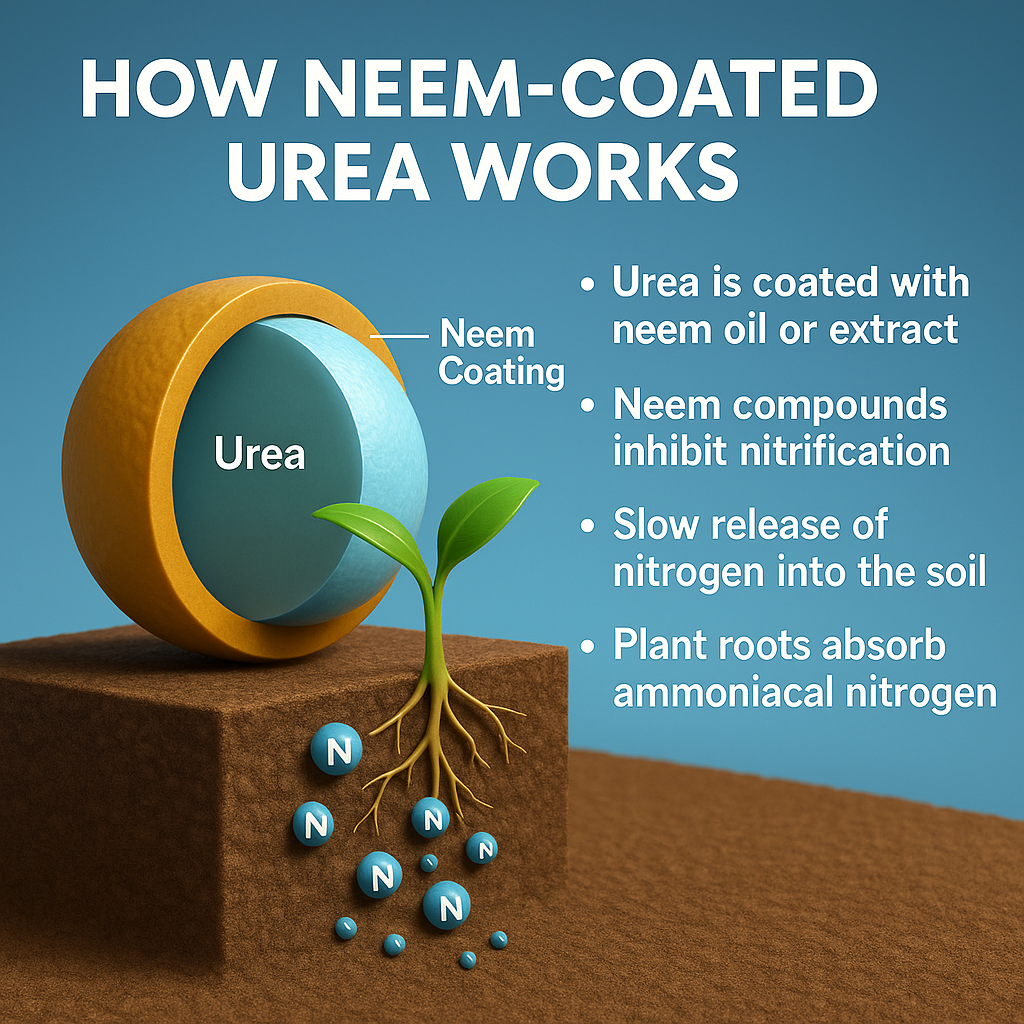
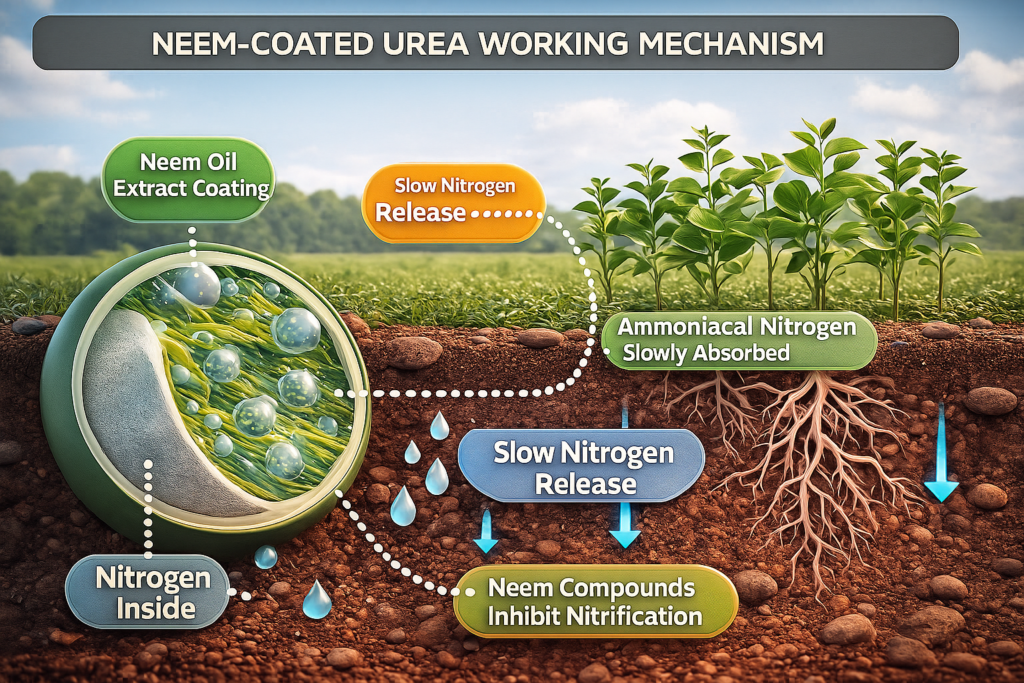
Controlled nitrogen release
Biological support
Root-driven nutrition
Timing aligned with crop demand
Soil structure recovery
Without these, nitrogen remains waste.
ABSTRACT (For Research & Authority)
Nitrogen efficiency in modern agriculture is declining due to surface-based fertilizer practices, biological soil degradation, root system failure, and unmanaged nitrogen loss pathways. This article presents a global analysis of why increasing nitrogen inputs no longer translate into yield gains and outlines the foundational principles required to restore efficiency and long-term productivity.
FAQ (10 — Mandatory)
FAQ 1: Why is nitrogen efficiency decreasing worldwide?
Due to biological soil damage, surface feeding, and uncontrolled nitrogen loss.
FAQ 2: Does applying more urea increase yield?
Only up to a limit. Beyond that, efficiency collapses.
FAQ 3: Can good seeds fix nitrogen inefficiency?
No. Roots and soil biology matter more than genetics.
FAQ 4: Is nitrogen loss visible in the field?
No. Most losses are invisible but financially severe.
FAQ 5: Why do crops look green but yield poorly?
Early nitrogen causes leaf growth without root support.
FAQ 6: Does soil testing guarantee correct nitrogen use?
No. It ignores biological availability.
FAQ 7: Are all soils affected equally?
No. Sandy and compacted soils suffer more.
FAQ 8: Is nitrogen efficiency a climate issue?
Yes. Nitrogen loss contributes to greenhouse gases.
FAQ 9: Can efficiency be restored without reducing yield?
Yes, but only through system correction.
FAQ 10: Is nitrogen efficiency a long-term solution?
Yes. It is essential for sustainable farming.
✍️ Farming Writers Team
Love farming Love Farmers.
Read A Next Post 👇
https://farmingwriters.com/global-agriculture-nitrogen-efficiency-loss/