- Introduction: Why Onion Needs Precision Care
Onion is a shallow-rooted, slow-starting crop with hollow leaves and a tight bulb structure. These traits make it highly sensitive to moisture stress, nutrient imbalance, thrips outbreaks, fungal leaf diseases, and bulb rots. Profit comes only with preventive care, not late treatment.
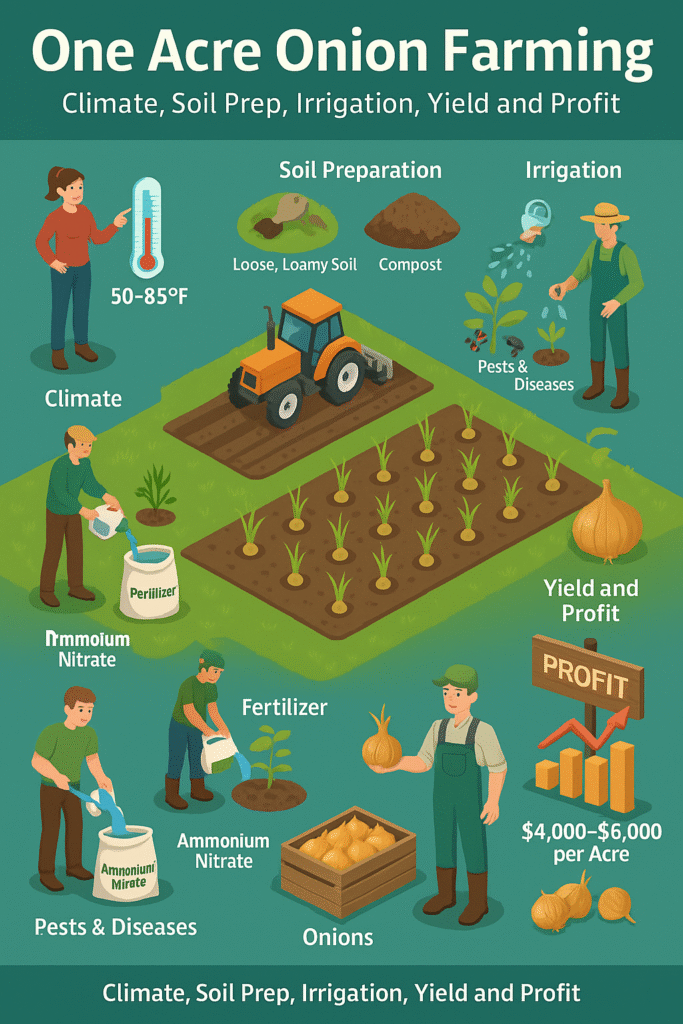
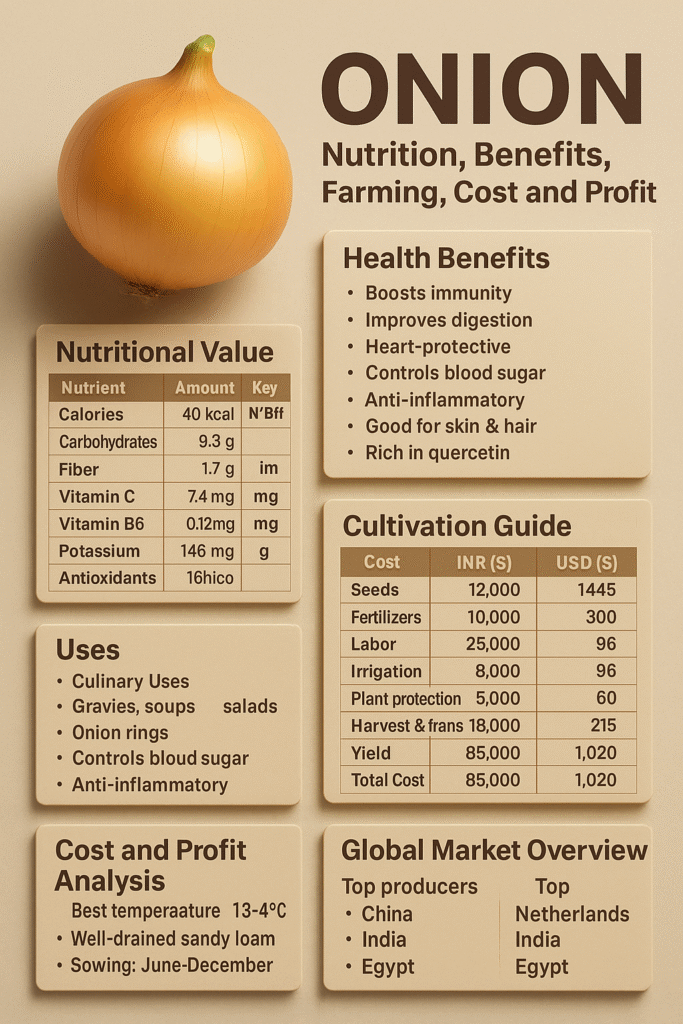
- Climate & Soil Requirements
Ideal climate:
Temperature: 15–25°C (bulb formation best at 20–25°C)
Humidity: Medium; high humidity triggers leaf diseases
Sunlight: Full sun
Soil:
Texture: Sandy loam to loam, well drained
pH: 6.0–7.0
Avoid heavy clay and waterlogging (causes basal rot)
- Land Preparation & Bed Design
Deep ploughing to remove clods and pests
Raised beds improve drainage and reduce rot
Organic matter is critical for uniform bulb size
Per acre soil boost:
FYM/compost: 3–4 tons
Neem cake: 200–250 kg
Biochar (optional): 25–30 kg
Trichoderma mixed with compost
- Nursery & Transplanting Care
Seed treatment (mandatory): Trichoderma + Pseudomonas (reduces damping-off, basal rot).
Nursery rules:
Raised beds, light irrigation, no stagnation
Weekly neem spray to deter thrips
Avoid dense sowing (reduces disease)
Seedling age:
6–8 weeks (15–20 cm height)
Transplanting:
Evening transplanting
Spacing: 15 × 10 cm (bulb onions); wider for seed crop
Light irrigation immediately after transplant
- Irrigation Management
Onion roots are shallow; irregular watering ruins bulbs.
Rules:
Frequent light irrigations
No waterlogging
Stop irrigation 10–15 days before harvest (for better curing)
Problems:
Overwatering → basal rot, soft bulbs
Underwatering → small bulbs, doubles, splitting
- Nutrient Management (Onion Nutrition Science)
Basal: Balanced NPK + organic matter
Vegetative: Nitrogen in splits (avoid excess)
Bulb initiation: Potassium increases size & storage life
Micronutrients: Sulphur (pungency), Zinc (growth), Boron (uniform bulbs)
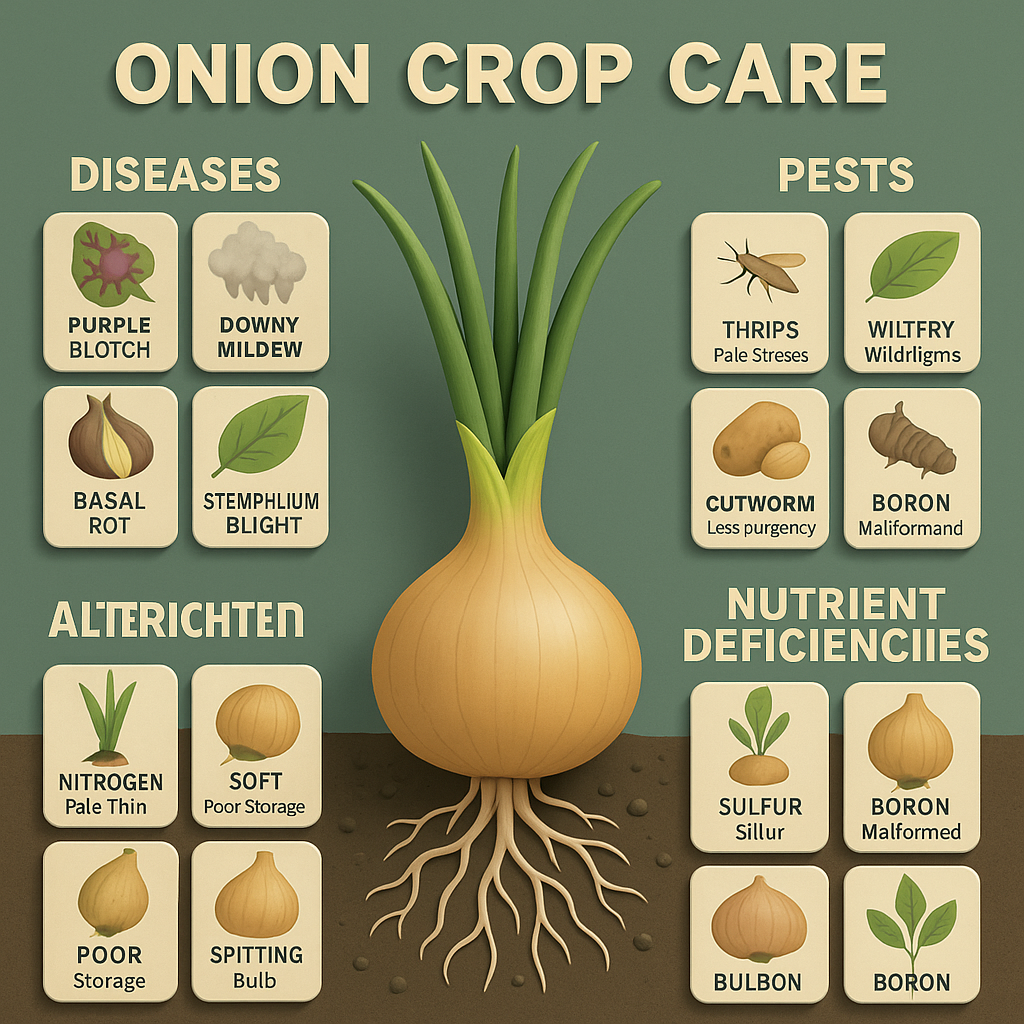
Deficiency symptoms:
N low → pale thin leaves
K low → soft bulbs, poor storage
S low → less pungency
B low → malformed bulbs
- Major Onion Diseases (A–Z)
7.1 Purple Blotch (Alternaria porri)
Symptoms: Purple lesions with yellow halo on leaves.
Damage: Reduced photosynthesis, poor bulb size.
Favouring conditions: Warm + humid.
Care:
Wider spacing, airflow
Balanced nitrogen
Preventive fungicide rotation / copper-based sprays
Organic: Neem + compost tea preventive
7.2 Downy Mildew
Symptoms: Greyish growth on leaves, sudden collapse.
Care:
Avoid overhead irrigation
Improve drainage
Preventive sprays before cool, humid weather
7.3 Basal Rot (Fusarium)
Symptoms: Bulb base rots, plants topple.
Cause: Poor drainage, infected soil.
Care:
Crop rotation
Trichoderma soil application
Avoid excess moisture
7.4 Stemphylium Blight
Symptoms: Small tan spots turning brown; leaf drying.
Care:
Remove affected leaves
Maintain K nutrition
Timely protective sprays
7.5 Bacterial Soft Rot
Symptoms: Watery, foul-smelling bulbs (often post-harvest).
Care:
Gentle harvesting
Proper curing
Dry, ventilated storage
- Onion Pests (A–Z)
8.1 Thrips (Most dangerous onion pest)
Damage:
Silvery streaks
Leaf curling
Bulb size reduction up to 50%
Season: Dry, warm weather
Care:
Blue sticky traps
Maintain humidity lightly
Neem-based sprays early
Threshold-based selective insecticides
8.2 Onion Maggot
Damage: Larvae feed at bulb base → wilting.
Care:
Deep ploughing
Clean field sanitation
Avoid fresh manure
8.3 Cutworms
Damage: Seedlings cut at ground level.
Care:
Clean nursery
Evening monitoring
Neem cake in soil
- Weed Management
Weeds compete early and host thrips.
Early hand weeding
Mulching reduces both weeds and disease splash
Clean borders are essential
- Bulb Development, Harvest & Curing
Signs of maturity:
50–70% neck fall
Leaves yellow and dry
Harvest:
Dry weather harvest
Avoid bruising
Curing:
Shade cure 7–10 days
Proper curing = longer shelf life
- Storage Management (Major Loss Stage)
Store only cured onions
Cool, dry, ventilated storage
Remove damaged bulbs immediately
Avoid high humidity (causes rot & sprouting)
- FAQs
Why onion bulbs remain small?
Irregular irrigation and low potassium.
Why tips dry early?
Thrips damage or nutrient imbalance.
Best fertilizer for bulb size?
Potassium with balanced nitrogen.
Why onions rot in storage?
Poor curing and high humidity.
Can excess nitrogen harm onions?
Yes, it reduces storage life and increases disease.
Best control for thrips?
Early monitoring + neem + threshold-based control.
Why leaves turn purple?
Purple blotch or nutrient stress.
When to stop irrigation?
10–15 days before harvest.
Why bulbs split or double?
Irregular water and excess nitrogen.
Best yield booster?
Uniform moisture + potassium + healthy leaves.
Conclusion
Onion farming success depends on even moisture, thrips control, balanced nutrition, airflow, and proper curing. Preventive field management and careful post-harvest handling decide both yield and market value. This guide gives farmers a complete, practical system used across major onion-growing regions worldwide.
✍️Farming Writers Team
Love farming Love Farmers.
Read A Next Post 👇
https://farmingwriters.com/potato-complete-crop-care-global-guide/