• Why Modern Farming Is Losing Nitrogen Efficiency Despite Higher Fertilizer Use

    Losing Nitrogen

    For decades, farmers around the world were told one simple truth:
    More nitrogen means more yield.
    This belief shaped modern agriculture. Urea consumption rose sharply. Nitrogen application became routine, sometimes aggressive. Yet today, across continents and crop systems, farmers face a confusing contradiction:
    Yields are not increasing in proportion to fertilizer use.
    In many regions, yields are stagnating or even declining.
    This is not coincidence.
    This is nitrogen efficiency collapse.
    This article explains why nitrogen efficiency is breaking down globally, despite advanced fertilizers, better seeds, and higher input costs.
    1. WHAT NITROGEN EFFICIENCY REALLY MEANS (AND WHAT IT DOES NOT)
    Nitrogen efficiency is not about how much nitrogen you apply.
    It is about how much applied nitrogen is actually converted into harvestable yield.
    In natural systems, plants evolved to use nitrogen slowly, steadily, and biologically. Modern farming disrupted this balance.
    Nitrogen efficiency is lost when:
    Nitrogen leaves the soil faster than roots can absorb
    Roots remain shallow due to surface nutrient availability
    Soil microbes are damaged or inactive
    Nitrogen converts into forms plants cannot access
    Timing mismatches crop demand
    Modern agriculture suffers from all five simultaneously.
    2. THE BIGGEST GLOBAL MISTAKE: SURFACE-BASED NITROGEN FEEDING
    Modern farming feeds soil from the surface, not from within.
    Repeated surface application of fast-release urea creates:
    Nutrient concentration near topsoil
    Minimal incentive for roots to grow deeper
    Weak anchorage and poor drought tolerance
    Dependence on frequent fertilizer input
    Plants become addicted, not nourished.
    Once roots stop exploring deeper soil layers, nitrogen efficiency collapses permanently.
    3. BIOLOGICAL COLLAPSE: THE SILENT NITROGEN KILLER
    Nitrogen does not function alone.
    It depends on soil biology.
    Excessive chemical nitrogen:
    Suppresses beneficial bacteria
    Reduces fungal networks
    Lowers enzymatic activity
    Disrupts carbon–nitrogen balance
    Without active microbes, nitrogen stays chemically present but biologically useless.
    This is why farmers see green leaves early but poor grain filling later.
    4. GLOBAL NITROGEN LOSS PATHWAYS (WHERE YOUR MONEY GOES)
    Across all farming systems, nitrogen escapes through four main routes:
    4.1 Volatilization
    Nitrogen converts into ammonia gas and escapes into the atmosphere.
    Common in:
    Hot climates
    Surface-applied urea
    Alkaline soils
    4.2 Leaching
    Nitrogen moves downward beyond root reach.
    Common in:
    Sandy soils
    High rainfall zones
    Over-irrigated fields
    4.3 Denitrification
    Nitrogen converts into gases under low-oxygen soil conditions.
    Common in:
    Waterlogged fields
    Compacted soils
    4.4 Immobilization
    Nitrogen is temporarily locked by microbes feeding on low-carbon residues.
    Common when:
    Crop residues are unmanaged
    Carbon–nitrogen ratio is ignored
    None of these losses are visible.
    But all are financially devastating.
    5. WHY MORE UREA IS MAKING CROPS WEAKER, NOT STRONGER
    Excess nitrogen causes:
    Rapid leaf growth
    Thin cell walls
    Soft tissue vulnerable to pests
    Delayed maturity
    Poor root–shoot balance
    The plant looks healthy early but fails during stress.
    Modern crops fail not due to lack of nitrogen, but due to misplaced nitrogen.
    6. ROOT SYSTEM FAILURE: THE CORE OF THE PROBLEM
    Nitrogen efficiency cannot exist without a strong root system.
    Modern nitrogen practices cause:
    Shallow roots
    Limited lateral spread
    Poor nutrient scavenging
    Reduced mycorrhizal association
    Once roots weaken, no fertilizer can fix yield.
    Roots are the real fertilizer.
    7. WHY SOIL TESTING ALONE IS NOT ENOUGH
    Soil tests measure nutrient presence, not nutrient usability.
    They do not measure:
    Microbial activity
    Root depth potential
    Nitrogen release timing
    Biological buffering capacity
    Farmers apply nitrogen based on numbers, not living soil behavior.
    This gap destroys efficiency.
    8. GLOBAL EVIDENCE OF NITROGEN EFFICIENCY DECLINE
    Across regions:
    Grain size declines despite higher N
    Lodging increases
    Protein content becomes unstable
    Water requirement rises
    Input cost grows faster than yield
    This pattern is visible worldwide.
    9. THE FALSE PROMISE OF “HIGH DOSE, HIGH YIELD”
    Nitrogen follows the law of diminishing returns.
    Beyond a threshold:
    Each extra kg produces less yield
    Loss percentage increases
    Soil damage accelerates
    Modern farming crossed this threshold years ago.
    10. HOW NITROGEN EFFICIENCY CAN BE RESTORED (FOUNDATION PRINCIPLES)
    Restoration is not about more fertilizer.
    It requires:
    Controlled nitrogen release
    Biological support
    Root-driven nutrition
    Timing aligned with crop demand
    Soil structure recovery
    Without these, nitrogen remains waste.
    ABSTRACT (For Research & Authority)
    Nitrogen efficiency in modern agriculture is declining due to surface-based fertilizer practices, biological soil degradation, root system failure, and unmanaged nitrogen loss pathways. This article presents a global analysis of why increasing nitrogen inputs no longer translate into yield gains and outlines the foundational principles required to restore efficiency and long-term productivity.
    FAQ (10 — Mandatory)
    FAQ 1: Why is nitrogen efficiency decreasing worldwide?
    Due to biological soil damage, surface feeding, and uncontrolled nitrogen loss.
    FAQ 2: Does applying more urea increase yield?
    Only up to a limit. Beyond that, efficiency collapses.
    FAQ 3: Can good seeds fix nitrogen inefficiency?
    No. Roots and soil biology matter more than genetics.
    FAQ 4: Is nitrogen loss visible in the field?
    No. Most losses are invisible but financially severe.
    FAQ 5: Why do crops look green but yield poorly?
    Early nitrogen causes leaf growth without root support.
    FAQ 6: Does soil testing guarantee correct nitrogen use?
    No. It ignores biological availability.
    FAQ 7: Are all soils affected equally?
    No. Sandy and compacted soils suffer more.
    FAQ 8: Is nitrogen efficiency a climate issue?
    Yes. Nitrogen loss contributes to greenhouse gases.
    FAQ 9: Can efficiency be restored without reducing yield?
    Yes, but only through system correction.
    FAQ 10: Is nitrogen efficiency a long-term solution?
    Yes. It is essential for sustainable farming.
    ✍️ Farming Writers Team
    Love farming Love Farmers.

    Read A Next Post 👇

    https://farmingwriters.com/global-agriculture-nitrogen-efficiency-loss/
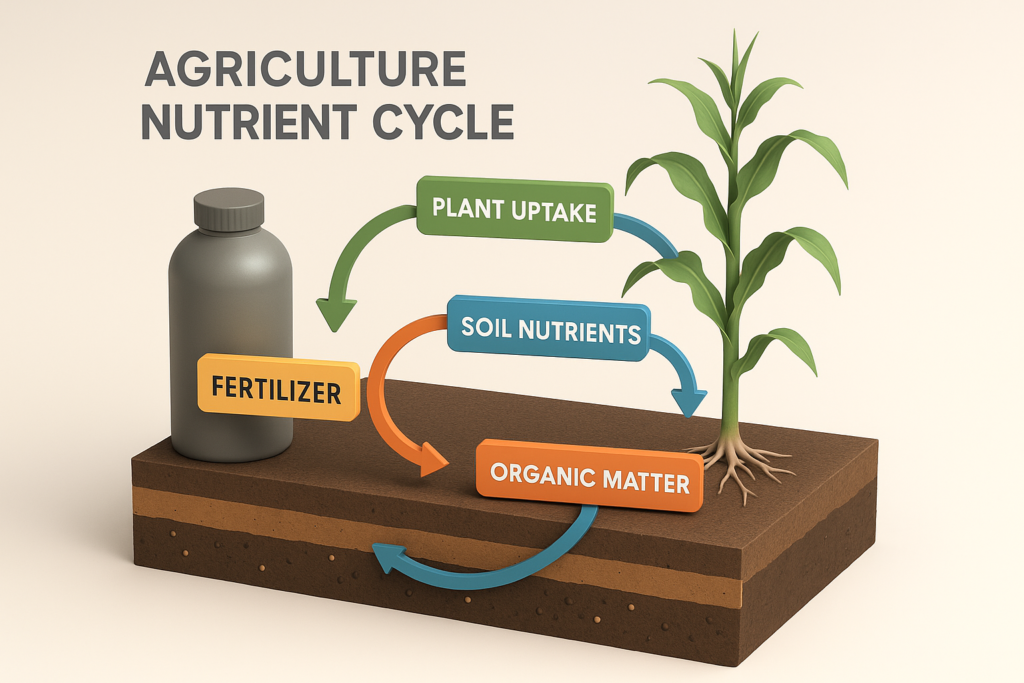
  • Global Root Collapse Crisis: Scientific Reasons, Soil Degradation, Crop Failure, and Worldwide Solutions

    Root Collapse Crisis

    Across the world from Asia’s rice belts to Africa’s maize zones and Europe’s horticulture regions farmers are witnessing a silent but devastating crisis: root system collapse. Crops that once developed deep, strong, nutrient-absorbing roots are now showing shallow, fragile, and nutrient-deficient root structures. This shift did not happen overnight; it is the cumulative outcome of decades of soil mismanagement, fertilizer imbalance, biological decline, and chemical over-dependence.

    Modern agriculture has unintentionally pushed plants toward weak rooting habits. High nitrogen availability near the surface stops roots from going deep. Soil organic matter has declined because residues are burned or soils remain bare. Heavy machinery has compacted millions of hectares. Chemical dominance has reduced microbial populations that once supported roots naturally.

    This article provides the world’s most comprehensive, original, science-based explanation of why root systems are collapsing globally and what agriculture must change to restore deep-rooted, resilient crops.

    1. THE SCIENCE OF ROOT FORMATION

    Crop roots grow based on five primary forces:

    1. Soil structure
    2. Soil moisture distribution
    3. Nutrient profile
    4. Microbial activity
    5. Chemical stress or support

    Healthy soils encourage roots to explore deeply. But unhealthy soils force the plant to survive only at the surface.

    1. GLOBAL REASONS FOR ROOT COLLAPSE

    2.1 Excess Nitrogen at the Soil Surface

    Continuous surface placement of urea and ammonium fertilizers leads to:

    nitrogen concentration only in top 5–7 cm

    reduced need for deep exploration

    shallow feeder roots instead of structural roots

    weak anchoring

    This is now a global phenomenon.

    2.2 Declining Soil Organic Matter

    Organic matter binds soil, creates pores, and feeds microbes. Its destruction leads to:

    compact, airless soil

    loss of aggregation

    reduced root penetration capacity

    Soils with <1% organic carbon cannot sustain strong root architecture.

    2.3 Chemical Stress on Root Tips

    High salt fertilizers, pesticides, and herbicide residues burn fine root hairs.
    The plant responds by:

    reducing new root formation

    avoiding deeper horizons

    redirecting energy into shallow survival growth

    2.4 Weak Soil Biology

    Healthy soil hosts millions of organisms:

    mycorrhizal fungi

    nitrogen-fixing bacteria

    phosphorus-solubilizing microbes

    These microorganisms enlarge the nutrient-absorbing capacity of roots.
    Their collapse = root collapse.

    2.5 Hardpan Formation

    Mechanical compaction forms a dense layer at 15–25 cm depth.
    Roots hit the barrier and stop immediately.

    2.6 Global Overuse of Nitrogen Fertilizers

    Countries like India, China, Pakistan, Bangladesh, and parts of Africa rely heavily on nitrogen fertilizers.
    This leads to:

    nutrient imbalance

    stunted root elongation

    reduced secondary root branching

    1. WORLDWIDE IMPACT OF ROOT COLLAPSE

    3.1 Yield Instability

    Crops cannot access water below 20 cm, making them highly sensitive to heat and drought.

    3.2 High Fertilizer Requirement

    Shallow roots mean low nutrient foraging → farmers apply more fertilizer.

    3.3 Lodging Increase

    Weak structural roots cannot support plant height.

    3.4 Decline in Crop Quality

    Everything from protein content to fruit size reduces.

    3.5 Poor Response to Irrigation

    Water stays above instead of entering deeper layers.

    1. GLOBAL CASE STUDIES

    4.1 Indian Wheat & Rice Belt

    High urea application → shallow roots → low organic matter → yield stagnation.

    4.2 African Maize Systems

    Soil mining + low organic matter → extremely fragile root systems.

    4.3 European Horticulture

    Chemical dependence → weakened root hair viability.

    1. SOLUTIONS FOR GLOBAL ROOT RESTORATION

    5.1 Deep Nutrient Placement

    Farmers who shift nitrogen 10–15 cm deep gain:

    stronger axial roots

    lower lodging

    higher yields

    5.2 Organic Matter Regeneration

    Additions of compost, manure, cover crops, and crop residues rebuild the soil’s physical structure.

    5.3 Mycorrhizal Recovery

    Restoring mycorrhiza can increase root surface area by up to 500%.

    5.4 Biofertilizers & Biological Inputs

    These re-establish microbial partners.

    5.5 Subsoil Breaking

    Breaking compacted layers increases root depth dramatically.

    1. LONG-TERM GLOBAL STRATEGY

    Countries must shift toward:

    regenerative agriculture

    balanced fertilization

    soil life restoration

    deep nutrient tools

    organic carbon rebuilding

    Only then will root collapse reverse.

    10 FAQs

    Q1. Why are root systems becoming shallow worldwide?

    Because nutrients, especially nitrogen, are concentrated near the soil surface.

    Q2. Does high urea cause root damage?

    It does not damage, but it prevents deep rooting by satisfying the plant at the surface.

    Q3. What is the main sign of root collapse?

    Plants lodge easily, wilt fast, and show nutrient deficiency despite fertilizer use.

    Q4. How does soil organic matter affect roots?

    It improves soil structure, moisture, aeration, and microbial support.

    Q5. Can roots recover after collapse?

    Yes, but requires organic matter rebuilding and biological restoration.

    Q6. How does compaction stop root growth?

    Roots cannot penetrate dense layers; they turn sideways.

    Q7. Why do vegetables suffer more?

    They are sensitive to chemical stress and shallow nutrient patterns.

    Q8. How do microbes help roots?

    They expand nutrient access and protect root tips.

    Q9. What fertilizer practice is most harmful?

    Repeated surface nitrogen application.

    Q10. What global model can fix this?

    Regenerative soil management with deep nutrient placement.

    The global root collapse crisis is one of the biggest hidden threats to modern agriculture. Years of excessive nitrogen, declining organic matter, soil compaction, and biological loss have pushed crops toward shallow, weak root systems. The solution lies in restoring soil structure, rebuilding organic carbon, reviving microbial networks, and rethinking fertilizer placement. Without strong roots, crop yields, climate resilience, and global food security cannot be maintained.

    ✍️ Farming Writers Team
    Love farming Love Farmers.

    Read A Next Post 👇

    https://farmingwriters.com/global-nitrogen-efficiency-complete-guide/

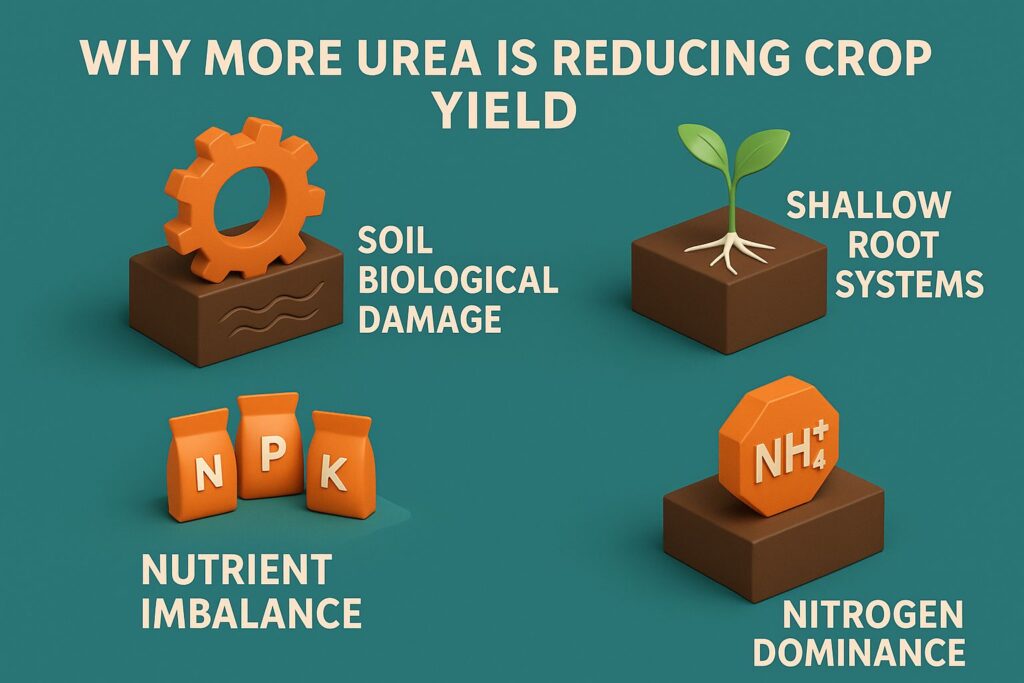
  • Why More Urea Is Reducing Crop Yield  Fertilizer Myths, Soil Damage and Practical Truths

    Urea Is Reducing Crop Yield

    For decades, urea has been treated as the backbone of crop productivity. Farmers across continents believe one simple idea: more urea means more yield. When crops look pale or weak, urea becomes the first response.

    Yet the reality on farms worldwide is troubling. Despite rising urea consumption, crop yields have either stagnated or declined. Input costs increase, soil condition worsens, and plants become less responsive each season.

    This is not coincidence. It is the result of a fundamental misunderstanding of how urea works in soil and how crops actually use nitrogen.

    This article breaks the biggest fertilizer myth in modern agriculture and explains, in practical terms, why more urea is reducing yield instead of increasing it.

    THE MYTH: UREA IS THE MOST EFFICIENT WAY TO FEED CROPS

    Urea contains 46 percent nitrogen, making it the most concentrated nitrogen fertilizer. Because of this, it has been promoted aggressively worldwide. However, concentration does not equal efficiency.

    Efficiency depends on:

    soil ability to hold nitrogen

    root capacity to absorb nitrogen

    biological balance in soil

    Ignoring these factors turns urea into a yield-destroying input.

    HOW UREA ACTUALLY BEHAVES IN SOIL

    Once applied, urea does not directly feed plants. It undergoes rapid chemical conversion:

    Urea converts to ammonium

    Ammonium converts to nitrate

    Nitrate competes with soil water movement

    If this process happens faster than root uptake, nitrogen is lost.

    In most modern soils, this conversion is too fast, creating nitrogen shock instead of sustained nutrition.

    UREA OVERUSE AND SOIL BIOLOGICAL DAMAGE

    Microbial Suppression

    Excess urea disrupts soil microbial balance. Beneficial organisms decline, while harmful processes dominate.

    Loss of Organic Matter

    High nitrogen accelerates organic matter breakdown without replenishment, weakening soil structure.

    Reduced Carbon Cycling

    Healthy soil needs carbon–nitrogen balance. Urea-heavy systems push soils into carbon starvation.

    ROOT DAMAGE CAUSED BY EXCESS UREA

    Shallow Root Systems

    Constant surface nitrogen discourages deep rooting. Plants stop exploring soil for nutrients.

    Root Membrane Stress

    High salt concentration from urea damages root cells, reducing nutrient absorption efficiency.

    Poor Root–Microbe Interaction

    Excess nitrogen suppresses mycorrhizal fungi essential for phosphorus and micronutrient uptake.

    NUTRIENT IMBALANCE: THE HIDDEN YIELD KILLER

    Urea-driven nitrogen dominance creates imbalance:

    Nitrogen excess blocks potassium uptake

    Calcium and magnesium availability drops

    Micronutrient deficiencies appear

    Crops may look green but remain physiologically weak and unproductive.

    GLOBAL EVIDENCE OF THE UREA PROBLEM

    Asia

    Decades of urea dependence reduced soil carbon and yield response.

    Europe

    Strict fertilizer controls introduced after nitrate pollution crises.

    North America

    High nitrogen runoff zones show poor fertilizer efficiency.

    Africa

    Urea applied to low-carbon soils disappears rapidly, offering little yield benefit.

    Different systems reveal the same truth: urea alone cannot sustain productivity.

    WHY FARMERS KEEP APPLYING MORE UREA

    Short-term visual greening effect

    Low cost and easy availability

    Lack of soil testing

    Incomplete fertilizer education

    The immediate green color misleads farmers into believing yield improvement, while damage continues underground.

    THE REAL SOLUTION: BALANCED NUTRITION, NOT MORE UREA

    Synchronize Nitrogen with Crop Demand

    Split application and slow release reduce shock.

    Rebuild Soil Organic Matter

    Organic matter stabilizes nitrogen movement.

    Strengthen Root Systems

    Encourage deep rooting through balanced nutrients.

    Restore Soil Biology

    Microbial health determines nutrient efficiency.

    Reduce Nitrogen Dominance

    Urea must support crops, not control them.

    LONG-TERM CONSEQUENCES OF CONTINUED UREA MISUSE

    Rising fertilizer dependency

    Declining soil fertility

    Increased pest and disease pressure

    Reduced climate resilience

    Economic stress for farmers

    Without correction, urea misuse locks farms into a cycle of rising cost and falling returns.

    (FAQs)

    FAQ 1: Is urea always harmful to crops?

    No. Urea is harmful only when misused without soil balance.

    FAQ 2: Why do crops turn green but yield remains low after urea application?

    Greening reflects leaf nitrogen, not reproductive or root health.

    FAQ 3: Does urea reduce soil fertility over time?

    Yes, when overused without organic and biological balance.

    FAQ 4: Can crops grow without urea?

    Yes, with balanced nutrition and soil-based nitrogen management.

    FAQ 5: Is urea use higher today than before?

    Yes. Global urea consumption has increased faster than yield growth.

    FAQ 6: Does urea affect root depth?

    Excess urea promotes shallow root systems.

    FAQ 7: Is nitrogen deficiency common or nitrogen mismanagement?

    Most cases are mismanagement, not true deficiency.

    FAQ 8: Does urea increase pest pressure?

    Excess nitrogen produces soft tissues attractive to pests.

    FAQ 9: Can reducing urea improve yield?

    Yes, when combined with balanced nutrients and soil health restoration.

    FAQ 10: What is the first step to reduce urea dependency?

    Soil testing and understanding crop nitrogen demand.

    CONCLUSION

    Urea is not the enemy of agriculture, but blind dependence on it is. The belief that higher nitrogen equals higher yield has damaged soils, roots, and long-term productivity worldwide. Sustainable farming begins when nitrogen becomes a controlled input rather than a dominant force.

    True yield improvement does not come from more urea, but from better soil, stronger roots, and balanced nutrition.

    This post establishes the foundation of the Fertilizer Truth Series, exposing myths and replacing them with field-verified agricultural reality.

    ✍️ Farming Writers Team
    Love farming Love Farmers.

    Read A Next Post 👇

    https://farmingwriters.com/root-system-failure-modern-soils-nutrient-uptake/