• Why Global Agriculture Is Losing Nitrogen Efficiency  Soil Reality & Yield Impact

    Nitrogen Efficiency

    Across the world, farmers are applying more nitrogen fertilizer than ever before. Yields should be increasing. Instead, many regions are facing stagnant production, declining soil response, rising costs, and unstable crop performance. The problem is not nitrogen availability. The problem is nitrogen efficiency.

    Nitrogen efficiency refers to how much of the applied nitrogen is actually absorbed by crops and converted into yield. In many farming systems today, less than half of applied nitrogen reaches the plant. The rest disappears into air, water, or becomes chemically locked in soil.

    This is not a regional problem. It is global.

    From intensive cereal systems to vegetable belts, from rainfed farms to irrigated zones, nitrogen efficiency loss has become one of the biggest hidden reasons behind declining farm profitability.

    This article explains why nitrogen efficiency is collapsing, what mistakes modern agriculture has normalized, and how soil systems respond when nitrogen is mismanaged over time.

    1. WHAT NITROGEN EFFICIENCY REALLY MEANS (NOT TEXTBOOK DEFINITION)

    In real farming terms, nitrogen efficiency answers one simple question:

    Out of every 100 kg nitrogen applied, how much becomes grain, fruit, or biomass?

    In healthy systems:

    60–70% efficiency is possible

    In stressed systems:

    25–35% is common

    In degraded soils:

    sometimes below 20%

    Low efficiency does not mean nitrogen shortage.
    It means nitrogen misbehavior inside soil.

    1. THE FOUR MAIN PATHWAYS OF NITROGEN LOSS (GLOBAL REALITY)

    2.1 Volatilization – Nitrogen Lost to Air

    Surface-applied urea converts rapidly into ammonia gas under warm or alkaline conditions. This nitrogen is gone forever.

    This loss increases when:

    urea is broadcast without incorporation

    soil moisture is low

    temperatures are high

    microbial balance is disturbed

    2.2 Leaching – Nitrogen Washed Below Roots

    Nitrate nitrogen is highly mobile. Once it moves below the root zone, crops cannot recover it.

    Common in:

    sandy soils

    heavy rainfall regions

    over-irrigated systems

    2.3 Denitrification – Nitrogen Lost as Gas

    Waterlogged or compacted soils convert nitrate into gaseous forms like N₂O and N₂.

    This occurs when:

    soil oxygen is low

    organic imbalance exists

    microbial activity is disturbed

    2.4 Immobilization – Nitrogen Locked, Not Lost

    Nitrogen is taken up by soil microbes instead of plants, especially when carbon-rich residues are present.

    Farmers see yellow crops and think nitrogen deficiency, but nitrogen is actually present — just unavailable.

    1. WHY MODERN FARMING PRACTICES REDUCE NITROGEN EFFICIENCY

    3.1 Blanket Fertilizer Recommendations

    Applying the same nitrogen dose everywhere ignores:

    soil type

    organic matter

    climate

    crop duration

    This causes over-application in some areas and under-performance everywhere.

    3.2 Excess Focus on Nitrogen Alone

    Many farms operate with:

    high nitrogen

    low phosphorus availability

    poor potassium balance

    micronutrient deficiencies

    Nitrogen cannot function alone. When balance is missing, nitrogen efficiency collapses.

    3.3 Shallow Root Systems

    Frequent surface fertilization trains crops to keep roots near the soil surface.

    Shallow roots:

    access less nitrogen

    fail during moisture stress

    increase lodging risk

    3.4 Soil Biological Decline

    Healthy nitrogen cycling requires microbes.

    Excess chemical inputs without organic support reduce:

    microbial diversity

    enzyme activity

    nitrogen transformation efficiency

    Soil becomes chemically active but biologically dead.

    1. THE COST OF LOW NITROGEN EFFICIENCY TO FARMERS

    Low nitrogen efficiency directly causes:

    higher fertilizer bills

    more frequent applications

    unstable crop growth

    uneven maturity

    higher pest pressure

    weaker plant structure

    Farmers often respond by adding more nitrogen, which worsens the problem.

    This creates a fertilizer dependency loop.

    1. CROPS MOST AFFECTED BY NITROGEN EFFICIENCY LOSS

    5.1 Cereals

    Yield plateaus despite increased fertilizer use.

    5.2 Vegetables

    Excess vegetative growth, poor fruiting, quality issues.

    5.3 Sugarcane

    Long duration crops suffer chronic inefficiency over time.

    5.4 Oilseeds & Pulses

    Nitrogen imbalance suppresses biological nitrogen fixation.

    1. SOIL STRUCTURE AND ITS ROLE IN NITROGEN EFFICIENCY

    Compacted soils:

    restrict root growth

    reduce oxygen

    promote denitrification

    Loose but biologically inactive soils:

    lose nitrogen rapidly

    fail to retain nutrients

    Efficient nitrogen use requires:

    physical structure

    chemical balance

    biological activity

    All three must work together.

    1. WHY MORE NITROGEN DOES NOT MEAN MORE YIELD

    This is the biggest misunderstanding in global agriculture.

    Beyond a point:

    nitrogen increases leaf size, not yield

    plant tissues become soft

    disease pressure rises

    grain filling reduces

    Yield depends on conversion efficiency, not quantity applied.

    1. LONG-TERM SOIL CONSEQUENCES OF POOR NITROGEN EFFICIENCY

    Over years, soils show:

    reduced organic carbon

    declining microbial life

    reduced buffering capacity

    lower response to fertilizers

    This is why older farms often need higher doses for the same yield.

    1. GLOBAL PATTERN: SAME PROBLEM, DIFFERENT COUNTRIES

    Whether in Asia, Africa, Europe, or the Americas, nitrogen efficiency decline follows the same pattern:

    fertilizer intensification

    soil biological neglect

    yield stagnation

    rising costs

    The geography changes. The soil reaction does not.

    1. THE REAL SOLUTION IS NOT LESS NITROGEN – IT IS SMARTER NITROGEN

    Improving nitrogen efficiency requires:

    better timing

    controlled release

    soil organic integration

    root-focused management

    microbial support

    Reducing nitrogen without fixing soil systems only reduces yield.

    FREQUENTLY ASKED QUESTIONS (FAQ)

    Q1. Is nitrogen efficiency the same in all soils?

    No. Soil texture, organic matter, and biology strongly influence efficiency.

    Q2. Why do crops show nitrogen deficiency even after fertilization?

    Because nitrogen may be lost, locked, or biologically unavailable.

    Q3. Does irrigation affect nitrogen efficiency?

    Yes. Excess irrigation increases leaching and denitrification.

    Q4. Can nitrogen efficiency improve without reducing fertilizer dose?

    Yes, through timing, form, and soil management.

    Q5. Is nitrogen efficiency declining globally?

    Yes, across most intensive farming systems.

    Q6. Do high yields always require high nitrogen?

    No. High yields require efficient nitrogen, not excessive nitrogen.

    Q7. Does soil organic matter help nitrogen efficiency?

    Strongly. It improves retention, microbial cycling, and uptake.

    Q8. Can nitrogen efficiency recover in degraded soils?

    Yes, but it requires time and system correction.

    Q9. Why do some fields respond less to fertilizer over time?

    Because soil biological and structural capacity has declined.

    Q10. Is nitrogen efficiency linked to climate change?

    Yes. Nitrogen losses contribute to greenhouse gas emissions.

    CONCLUSION

    Nitrogen efficiency is the foundation of profitable, stable, and sustainable agriculture. The global farming crisis is not about fertilizer shortage. It is about fertilizer behavior inside damaged soil systems. Until nitrogen efficiency becomes a priority equal to yield, farming costs will continue to rise while soil performance declines.

    ✍️ Farming Writers Team
    Love farming Love Farmers.

    Read A Next Post 👇
  • Root System Failure in Modern Soils: Why Fertilizers Stop Working and How to Restore Nutrient Uptake

    Root System Failure in Modern Soils

    INTRODUCTION: WHEN FERTILIZERS FAIL, ROOTS ARE THE REAL PROBLEM

    Across the world, farmers increasingly face a confusing situation. Fertilizers are applied on time, in recommended quantities, yet crops fail to respond properly. Leaves may initially appear green, but growth slows, root anchorage weakens, and yield potential collapses.

    This is not always a fertilizer problem.
    It is a root system failure problem.

    Modern agriculture has focused heavily on feeding soil chemically while ignoring how roots actually function inside that soil. When root systems weaken, no amount of fertilizer can compensate. Nutrients may be present, but roots are unable to absorb them efficiently.

    This article explains why root systems are failing in modern soils, how soil conditions disrupt root function, and what practical steps restore nutrient uptake capacity worldwide.

    WHAT IS ROOT SYSTEM FAILURE

    Root system failure occurs when plant roots lose their ability to:

    grow deeply and widely

    absorb water and nutrients effectively

    maintain healthy interaction with soil microorganisms

    This failure is often invisible above ground until yield loss becomes severe.

    In healthy systems, roots act as intelligent sensors, responding to moisture, nutrients, oxygen, and microbial signals. In degraded soils, this communication collapses.

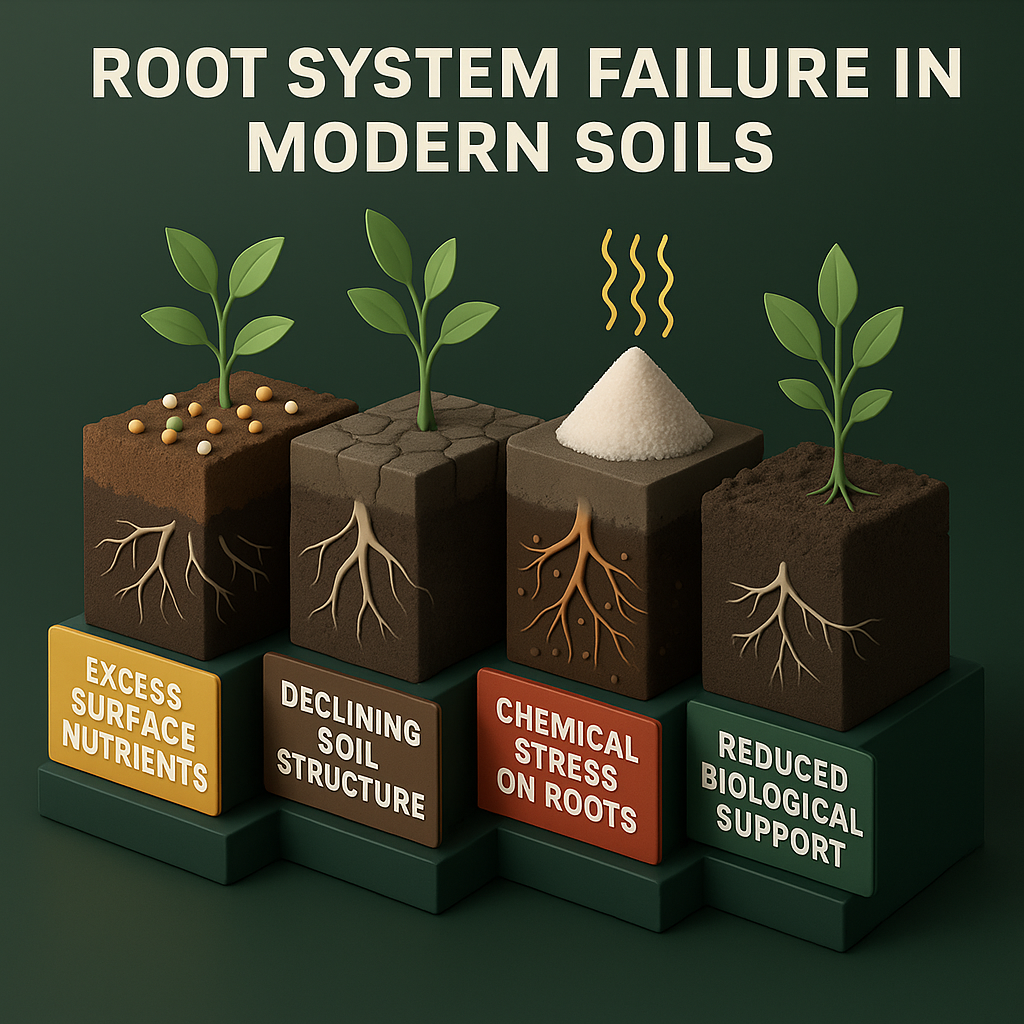
    WHY ROOTS ARE WEAKER IN MODERN AGRICULTURE

    Excess Surface Nutrients

    High doses of surface-applied nitrogen and phosphorus reduce the need for roots to explore deeper soil layers. Plants adapt by forming shallow, fragile root systems.

    Declining Soil Structure

    Repeated tillage, compaction, and organic matter loss collapse soil pores. Roots struggle to penetrate dense layers.

    Chemical Dependency

    Rapid-release fertilizers supply nutrients faster than roots can physiologically adjust. Roots lose adaptive growth behavior.

    Reduced Biological Support

    Soil microbes that assist root growth are suppressed by nutrient imbalance and soil toxicity.

    THE SOIL–ROOT–NUTRIENT CONNECTION

    Roots do not absorb nutrients directly from fertilizer granules. They absorb nutrients dissolved in soil water, regulated by:

    soil porosity

    microbial activity

    organic matter

    root hair development

    If any one of these systems fails, nutrient uptake collapses.

    HOW SOIL PHYSICAL PROBLEMS DESTROY ROOT SYSTEMS

    Soil Compaction

    Compaction reduces oxygen diffusion. Roots suffocate, slow metabolism, and lose nutrient absorption efficiency.

    Hardpan Formation

    Repeated shallow tillage creates dense subsurface layers that roots cannot penetrate, limiting access to deeper moisture and nutrients.

    Poor Drainage

    Waterlogging kills root tips and promotes toxic microbial activity, permanently damaging root zones.

    CHEMICAL STRESS ON ROOTS

    Salt Accumulation

    Over-fertilization increases soil salinity, causing osmotic stress and root dehydration.

    pH Imbalance

    Extreme pH reduces nutrient solubility and damages root membranes.

    Nutrient Antagonism

    Excess of one nutrient blocks uptake of others, creating deficiency symptoms despite sufficient soil supply.

    BIOLOGICAL BREAKDOWN AND ROOT FAILURE

    Healthy roots depend on symbiotic organisms:

    mycorrhizal fungi

    beneficial bacteria

    decomposer organisms

    Modern inputs often reduce biological diversity, leaving roots isolated in chemically active but biologically dead soil.

    GLOBAL PATTERNS OF ROOT SYSTEM FAILURE

    Asia

    Shallow roots due to repeated urea use and puddled soils.

    Europe

    Compaction from heavy machinery limits root expansion.

    North America

    Chemical dependency weakens root-microbe interaction.

    Africa

    Low organic matter prevents stable root development.

    Different environments, same outcome: fertilizer efficiency drops as roots fail.

    WHY MORE FERTILIZER CANNOT FIX ROOT FAILURE

    Fertilizer cannot:

    rebuild soil structure

    restore microbial networks

    undo compaction

    repair damaged root membranes

    In fact, excess fertilizer accelerates root degeneration by increasing chemical stress.

    PRACTICAL STRATEGIES TO RESTORE ROOT FUNCTION

    Improve Soil Structure

    Reduce compaction, include organic inputs, allow natural aggregation.

    Balance Nutrition

    Avoid nutrient shock. Supply nutrients steadily instead of in bursts.

    Encourage Deep Rooting

    Reduce surface nitrogen overload. Promote vertical root exploration.

    Restore Soil Biology

    Support microbial communities through residue retention and reduced disturbance.

    Match Irrigation to Root Depth

    Avoid constant surface wetness that discourages deep rooting.

    LONG-TERM BENEFITS OF HEALTHY ROOT SYSTEMS

    Higher nutrient use efficiency

    Better drought tolerance

    Reduced fertilizer cost

    Stable yields across seasons

    Improved soil resilience

    Healthy roots transform fertilizers from short-term stimulants into long-term productivity tools.

    FREQUENTLY ASKED QUESTIONS

    FAQ 1: Can crops fail even when nutrients are present in soil?

    Yes. If roots are weak, nutrients remain unavailable despite presence.

    FAQ 2: Does high fertilizer use cause shallow roots?

    Yes. Excess surface nutrients discourage deep root growth.

    FAQ 3: Is root failure reversible?

    In many cases, yes, with soil restructuring and balanced nutrition.

    FAQ 4: Do microbes affect root nutrient uptake?

    Strongly. Microbes extend root absorption capacity far beyond root tips.

    FAQ 5: Why do crops lodge easily in modern fields?

    Weak root anchorage due to shallow and fragile root systems.

    FAQ 6: Does soil compaction affect nutrient uptake?

    Yes. Compaction limits oxygen and root movement.

    FAQ 7: Is root failure visible early?

    No. It usually becomes visible only after yield loss.

    FAQ 8: Do all soils support deep roots naturally?

    No. Soil structure and management determine rooting depth.

    FAQ 9: Can root health improve fertilizer efficiency?

    Dramatically. Healthy roots absorb nutrients more predictably.

    FAQ 10: What is the first step to restoring roots?

    Understanding soil physical condition, not adding more fertilizer.

    CONCLUSION

    Root system failure is one of the most overlooked yet destructive problems in modern agriculture. Fertilizers are not failing—roots are failing. Until farming systems restore soil structure, biological balance, and root functionality, fertilizer efficiency will continue to decline.

    Strong roots are the foundation of sustainable yield, soil health, and long-term farm profitability.

    This post forms the scientific backbone of the Soil → Root → Nutrient Science category and connects directly to global fertilizer inefficiency and farming system decline.

    ✍️ Farming Writers Team
    Love farming Love Farmers.

    Read A Next Post 👇
    https://farmingwriters.com/global-nitrogen-loss-crisis-modern-agriculture/

  • Global Nitrogen Loss Crisis in Modern Agriculture: Causes, Soil Science, Yield Impact & Practical Solutions

    Global Nitrogen Loss

    INTRODUCTION: THE INVISIBLE CRISIS DESTROYING FARM PROFITABILITY

    Across the world, farmers share a common experience. Fertilizer use has increased year after year, yet crop response has weakened. Yields no longer rise in proportion to input costs. Fields appear green at first, but productivity remains stagnant.

    This is not an isolated regional issue. It is a global nitrogen loss crisis affecting almost every farming system on the planet.

    Nitrogen is the most important nutrient for crop growth. It drives leaf development, photosynthesis, and biomass formation. For decades, nitrogen fertilizers helped agriculture achieve massive yield gains. However, the same nitrogen has now become inefficient, unstable, and economically damaging when mismanaged.

    This article explains why nitrogen is being lost before crops can use it, why applying more fertilizer worsens the problem, and how farmers worldwide can regain nitrogen efficiency through practical, soil-centered solutions.

    WHAT IS NITROGEN LOSS AND WHY IT MATTERS

    Nitrogen loss means nitrogen exits the soil-plant system without entering the crop. Studies across continents show that only 30–40 percent of applied nitrogen is actually absorbed by crops. The remaining portion is lost to air, water, or immobilized beyond root reach.

    This loss matters because:

    Farmers pay for fertilizer that crops never use

    Soils degrade over time

    Water and air pollution increase

    Yields stagnate despite higher investment

    Nitrogen loss is both an economic failure and an ecological failure.

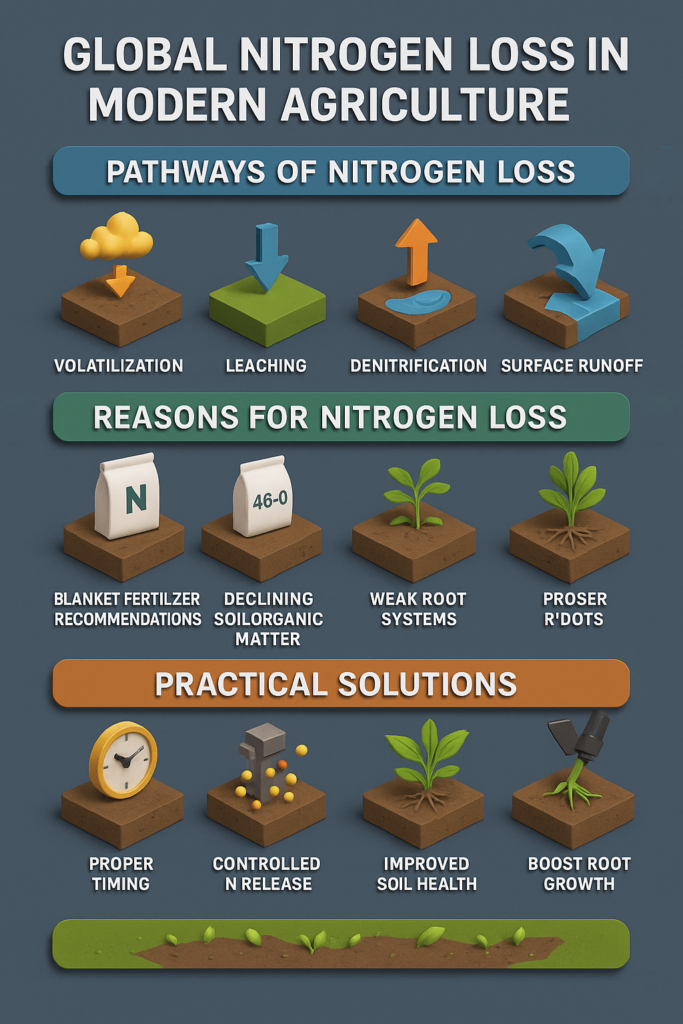
    MAJOR PATHWAYS OF NITROGEN LOSS

    Volatilization

    Nitrogen converts into ammonia gas and escapes into the atmosphere, especially when urea is surface-applied in warm, alkaline conditions.

    Leaching

    Nitrate nitrogen dissolves easily in water and moves downward beyond root zones, common in sandy soils and high rainfall regions.

    Denitrification

    In waterlogged or compacted soils, microbes convert nitrate into nitrogen gases that escape into the air.

    Surface Runoff

    Nitrogen moves with irrigation or rainfall across the soil surface instead of entering the root zone.

    Each pathway is controlled by soil structure, moisture, temperature, and management practices.

    WHY MODERN AGRICULTURE FAILED TO CONTROL NITROGEN

    Blanket Fertilizer Recommendations

    Uniform fertilizer guidelines ignore site-specific soil conditions, crop histories, and climate variations. This leads to overuse in some areas and inefficiency in others.

    Overdependence on Soluble Nitrogen

    Fast-acting fertilizers release nitrogen rapidly, overwhelming soil systems that cannot retain or regulate nutrient flow.

    Declining Soil Organic Matter

    Organic matter acts as nitrogen storage. Globally, soil organic carbon levels are declining, leaving nitrogen vulnerable to loss.

    Mechanization Without Precision

    Mechanized agriculture increased speed but often reduced accuracy. Poor placement and timing increase nitrogen escape.

    THE ROLE OF SOIL IN THE NITROGEN CRISIS

    Soil is not an inert medium. It actively controls nitrogen behavior.

    Soil Texture

    Sandy soils lose nitrogen rapidly

    Clay soils lose nitrogen under poor aeration

    Balanced soils still suffer if organic matter is low

    Soil pH

    Alkaline soils increase volatilization

    Acidic soils reduce nitrogen uptake

    Neutral soils perform best

    Soil Compaction

    Compacted soils restrict oxygen, accelerate denitrification, and limit root access to nitrogen.

    Ignoring soil health converts nitrogen fertilizer into a short-lived input rather than a productive resource.

    ROOT SYSTEM FAILURE: THE MISSING LINK

    Modern farming often feeds soil without building roots.

    Shallow Root Development

    Excess surface nitrogen discourages deep root growth. Crops become dependent on topsoil nutrients only.

    Timing Mismatch

    Nitrogen release often peaks when roots are not fully developed, leading to loss instead of uptake.

    Biological Disconnection

    High nitrogen suppresses beneficial microbes that support nutrient transfer, weakening root-soil synergy.

    A weak root system guarantees nitrogen loss, regardless of fertilizer quantity.

    GLOBAL EXPRESSIONS OF THE NITROGEN LOSS CRISIS

    South Asia

    Heavy urea use, flood irrigation, and warm climates cause severe volatilization and leaching.

    Europe

    Groundwater nitrate contamination forced strict fertilizer regulations.

    North America

    Runoff from large farms pollutes rivers and lakes, reducing nitrogen efficiency.

    Africa

    Low organic matter and sandy soils allow nitrogen to disappear rapidly after application.

    Different regions, same underlying failure: nitrogen moves faster than roots can absorb it.

    WHY MORE FERTILIZER MAKES YIELDS WORSE

    When yields decline, farmers apply more nitrogen. This creates a destructive cycle:

    Excess nitrogen harms soil biology

    Roots weaken

    Nitrogen loss increases

    Yield response declines

    Fertilizer use rises again

    This cycle explains why fertilizer bills increase while productivity remains flat.

    PRACTICAL SOLUTIONS TO THE GLOBAL NITROGEN LOSS CRISIS

    Improve Application Timing

    Split applications aligned with crop growth stages improve absorption.

    Strengthen Soil Organic Matter

    Crop residues, compost, and cover crops stabilize nitrogen.

    Use Controlled Nitrogen Release

    Slowing nitrogen availability improves synchronization with root demand.

    Restore Root Health

    Balanced nutrition, aerated soils, and reduced compaction increase uptake.

    Make Soil-Based Decisions

    Soil testing and site-specific management replace guesswork with precision.

    LONG-TERM BENEFITS OF SOLVING NITROGEN LOSS

    Higher and stable yields

    Lower fertilizer costs

    Improved soil structure

    Cleaner water and air

    Greater climate resilience

    Nitrogen efficiency determines the future profitability of farming worldwide.

    FREQUENTLY ASKED QUESTIONS (FAQs)

    FAQ 1: Why do crops respond poorly even after applying recommended nitrogen doses?

    Because a large portion of nitrogen is lost through volatilization, leaching, or denitrification before roots can absorb it.

    FAQ 2: Is nitrogen loss higher today than in traditional farming systems?

    Yes. Traditional systems had higher organic matter and slower nutrient release, reducing losses naturally.

    FAQ 3: Does soil type really influence nitrogen efficiency?

    Yes. Sandy soils leach nitrogen quickly, while poorly drained soils lose nitrogen through denitrification.

    FAQ 4: Why does adding more urea sometimes reduce yield?

    Excess urea damages soil biology, weakens roots, and creates nutrient shock, lowering long-term productivity.

    FAQ 5: Is irrigation a major driver of nitrogen loss?

    Yes. Poor irrigation management accelerates both leaching and denitrification.

    FAQ 6: How does low organic matter increase nitrogen loss?

    Without organic carbon, soil cannot retain nitrogen, allowing it to move freely out of the root zone.

    FAQ 7: Can nitrogen loss be reduced without increasing fertilizer cost?

    Yes. Proper timing, soil health improvement, and root-focused management often reduce losses without extra expense.

    FAQ 8: Is nitrogen loss only an environmental issue?

    No. It directly reduces farm profitability by increasing input costs without yield gains.

    FAQ 9: Does climate affect nitrogen loss patterns?

    Yes. Heat, rainfall, and moisture conditions strongly control nitrogen behavior.

    FAQ 10: What is the first step to improving nitrogen efficiency?

    Understanding soil condition through testing and observation is the foundation of effective nitrogen management.

    CONCLUSION

    The global nitrogen loss crisis is not caused by insufficient fertilizer supply. It is caused by soil degradation, weak root systems, and careless nutrient management. Increasing fertilizer input without restoring soil function is unsustainable and economically damaging.

    Future yield improvement depends on controlling nitrogen behavior, synchronizing nutrient release with root demand, and rebuilding soil systems that retain nutrients instead of losing them.

    This post establishes the foundation for the Global Farming Problems → Practical Solutions series, where future articles will address soil recovery, root science, and fertilizer truth in depth.

    ✍️ Farming Writers Team
    Love farming Love Farmers.

    Read A Next Post 👇
    https://farmingwriters.com/neem-coated-urea-complete-guide/

  • Neem-Coated Urea Complete Guide: Working, Benefits, Application, Soil Impact & Global Farming Insights

    Neem-Coated Urea

    INTRODUCTION

    Nitrogen is the backbone of modern agriculture. Every farmer—from India to Africa, from Southeast Asia to Latin America—depends on nitrogen fertilizers to produce cereals, vegetables, fruits, pulses, and fodder crops. For decades, urea has been the most widely used nitrogen fertilizer because of its high nutrient percentage (46% N) and affordability. However, traditional urea suffers from a major problem: it is quickly lost from the soil, leading to poor nitrogen utilization, higher fertilizer cost, environmental pollution, and reduced soil fertility.

    To solve this issue, a revolutionary but naturally inspired solution emerged: Neem-Coated Urea (NCU). By coating urea granules with neem oil or neem extracts, scientists discovered that nitrogen release could be slowed, efficiency could be increased, and soil health could be restored. India became the first country to mandate neem coating for all agricultural urea, transforming nitrogen management across millions of hectares.

    This word article goes deep into how neem-coated urea works, what scientific principles support its effectiveness, how it improves soil microbiology, why it saves money for farmers, and how it fits into global sustainable agriculture strategies. The goal is to provide a complete, original, human-written farming guide with no AI tone—just real, grounded agricultural writing.

    1. THE ORIGIN & PURPOSE OF NEEM-COATED UREA

    The idea of neem-coated urea did not originate in a research lab but from traditional Indian agricultural wisdom. For generations, farmers used neem leaves in grain storage, compost pits, and pest control due to their antimicrobial and insecticidal properties. Scientists applied this traditional knowledge to modern fertilizers.

    The main problems neem-coated urea intended to solve were:

    1.1 High Nitrogen Loss from Normal Urea

    Normal urea is extremely unstable. Once applied to soil:

    20–40% nitrogen evaporates as ammonia gas

    15–25% leaches down with irrigation water

    A portion converts into nitrous oxide (a greenhouse gas)

    Only 30–35% is actually used by the crop

    This means farmers pay for nitrogen they never receive.

    1.2 Overuse of Urea

    Due to fast loss, farmers developed a habit of applying double or triple the required dose, which further harmed soil structure and crop balance.

    1.3 Soil Fertility Decline

    Continuous urea use reduces:

    microbial diversity

    soil organic carbon

    beneficial fungi

    root strength

    This leads to soil fatigue and yield stagnation.

    1.4 Environmental Damage

    Nitrogen pollution causes:

    groundwater contamination

    algae blooms

    air pollution from ammonia

    climate warming through nitrous oxide

    Neem-coating was designed to solve all these problems without increasing fertilizer cost dramatically.

    1. THE SCIENCE INSIDE NEEM-COATED UREA

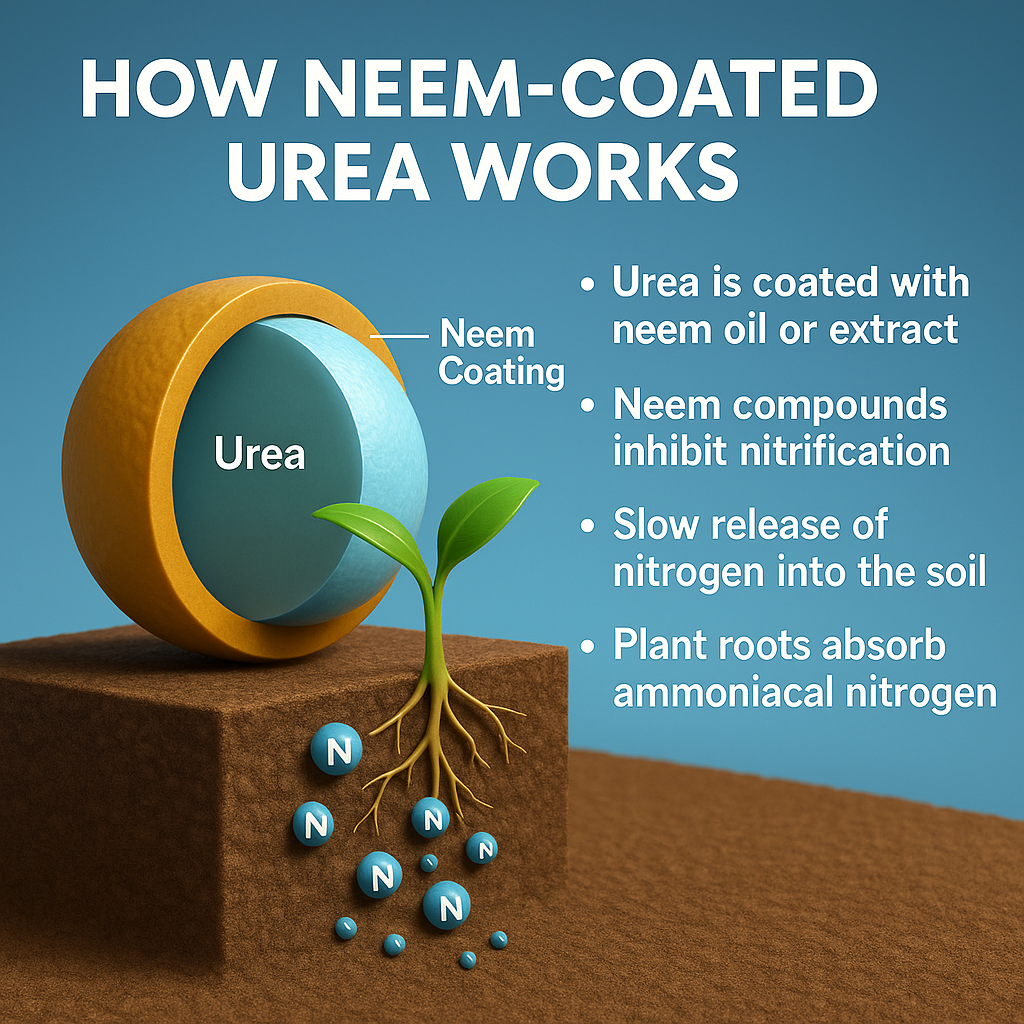
    Neem is one of the richest botanical sources of bioactive compounds. When urea is coated with neem oil or extract, several biochemical transformations begin.

    2.1 Bioactive Compounds in Neem

    Neem contains:

    Azadirachtin

    Nimbin

    Salannin

    Gedunin

    Limonoids

    These have natural antimicrobial and enzyme-modulating properties.

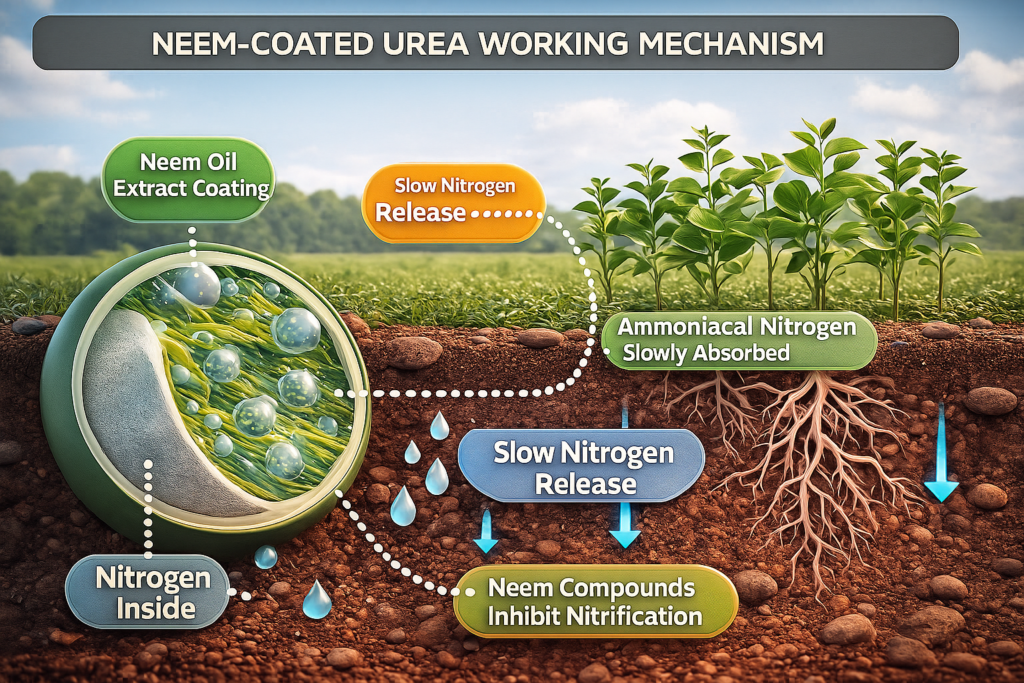
    2.2 How Neem Controls Nitrification

    Urea is normally converted into ammonium and then nitrate by soil bacteria:

    Nitrosomonas

    Nitrobacter

    Neem compounds slow the activity of these bacteria, extending the time nitrogen remains in ammonium form—which plants absorb more efficiently.

    This single action increases nitrogen-use efficiency (NUE) significantly.

    2.3 Slow Release Mechanism

    The neem layer around the urea granule gradually breaks down in soil moisture, releasing nitrogen slowly. This prevents nitrogen “shock” and supports steady plant growth.

    1. WHY NEEM-COATED UREA IS BETTER THAN NORMAL UREA

    3.1 Higher Nitrogen Use Efficiency (NUE)

    Neem-coated urea can improve NUE from 30–35% to 50–65%, depending on soil conditions.

    3.2 Better Root Growth

    Steady nitrogen promotes deeper rooting, which improves:

    drought tolerance

    nutrient absorption

    yield stability

    3.3 Reduced Nitrogen Loss

    NCU reduces:

    volatilization

    runoff

    leaching

    greenhouse emissions

    3.4 Higher Crop Yield

    Most crops show 8–20% yield increase due to balanced nitrogen availability.

    3.5 Less Fertilizer Needed

    Farmers often reduce urea by 10–15% with equal or better results.

    3.6 Improved Soil Microbiology

    Neem naturally supports beneficial microbes that are suppressed by excess urea.

    1. CROP-WISE BENEFITS OF NEEM-COATED UREA

    4.1 Wheat

    Enhances tillering, uniform spike formation, grain filling, and reduces lodging.

    4.2 Rice

    Improves tiller survival, panicle size, and nitrogen retention in flooded fields.

    4.3 Maize

    Supports strong stem growth, reduces nutrient deficiency streaks, and boosts cob weight.

    4.4 Sugarcane

    Steady nitrogen release helps continuous growth in long-duration crops.

    4.5 Vegetables

    Balanced nitrogen prevents excessive leafy growth and improves fruiting.

    4.6 Pulses

    Small but timely nitrogen supports early vegetative growth without suppressing nodulation.

    4.7 Orchards

    Supports long-term fertility and balanced shoot growth.

    1. SOIL IMPROVEMENT THROUGH NEEM-COATED UREA

    Continuous urea misuse is one of the biggest reasons soils have become hard, acidic, and microbially inactive. Neem-coated urea helps reverse this.

    5.1 Neem Promotes Beneficial Microbes

    Neem compounds reduce harmful microbes while encouraging:

    nitrogen-fixing bacteria

    phosphorus-solubilizing microbes

    decomposer fungi

    5.2 Better Soil Structure

    Controlled nitrogen prevents soil crusting, hardpan formation, and compaction.

    5.3 Higher Organic Carbon Over Time

    Steady nitrogen allows plants to produce more root biomass, which decays and increases soil organic carbon.

    5.4 Reduced Salt Build-Up

    Excess urea contributes to salinity. Slow release prevents salt spikes.

    1. GLOBAL SIGNIFICANCE OF NEEM-COATED UREA

    While India made it mandatory, many countries are adopting it voluntarily.

    6.1 South Asia

    Bangladesh, Nepal, Sri Lanka—high rainfall areas benefit from controlled nitrogen release.

    6.2 Africa

    Smallholder farmers with sandy soils get longer-lasting nitrogen.

    6.3 Latin America

    Countries like Brazil, Mexico use neem-coated fertilizers for fruits and cash crops.

    6.4 Europe & USA

    Interest in neem-based organic amendments is rising as a part of sustainable agriculture.

    1. FARM ECONOMICS OF NEEM-COATED UREA

    7.1 Savings

    Farmers save by:

    reducing fertilizer dose

    fewer top-dressings

    better crop yield

    reduced pest and lodging losses

    7.2 Higher Market Value

    Uniform size grains/fruits get higher price.

    7.3 Long-Term Benefits

    Rebuilt soil health reduces future input costs.

    1. COMMON MYTHS AND REALITIES

    Myth 1: Neem-coated urea has more nitrogen.

    Reality: Nitrogen remains 46%.

    Myth 2: It works only in Indian soils.

    Reality: Works globally across all soil types.

    Myth 3: It is harmful to soil.

    Reality: It improves soil biology.

    Myth 4: It is more expensive for no reason.

    Reality: The coating process adds cost, but savings exceed price difference.

    1. BEST PRACTICES FOR MAXIMUM RESULTS
    Neem-Coated Urea

    Apply in splits depending on crop

    Light irrigation after application

    Combine with organic manure

    Use soil testing for exact doses

    Avoid applying too close to plant base

    1. REAL-WORLD FARMER EXPERIENCES

    Across states like Punjab, Haryana, UP, Bihar, Karnataka, and Maharashtra, farmers report:

    steadier crop color

    better plant posture

    improved resistance to dry spells

    more uniform grain filling

    fewer yellow patches in fields

    improved yield even with less fertilizer

    Many farmers also notice that neem-coated urea prevents “luxurious vegetative growth”—where plants grow tall but yield poorly. Instead, plants grow compact, strong, and productive.

    1. FUTURE OF NEEM-COATED UREA IN GLOBAL AGRICULTURE

    11.1 Climate-Smart Farming

    Nitrogen mismanagement is one of the biggest contributors to agricultural emissions. Neem-coated urea directly reduces nitrous oxide.

    11.2 Soil Restoration

    Slow-release nitrogen allows soils to rebuild microbial life.

    11.3 Reduced Dependency on Chemicals

    With better nitrogen balance, plants naturally show better pest and disease tolerance.

    11.4 Integrated Nutrient Management

    NCU fits perfectly with:

    drip fertigation

    organic amendments

    precision agriculture

    regenerative farming models

    1. FREQUENTLY ASKED QUESTIONS

    Q1. Does neem-coated urea reduce total urea requirement?

    Yes, generally by 10–15%.

    Q2. Is neem-coated urea suitable for vegetables?

    Yes, especially for tomato, brinjal, chili, onion, and cucurbits.

    Q3. Does coating affect nutrient percentage?

    No, nitrogen is always 46%.

    Q4. Can NCU be mixed with other fertilizers?

    It can, but avoid very alkaline materials.

    Q5. Does neem coating dissolve in heavy rain?

    It slows release even in high moisture.

    CONCLUSION

    Neem-coated urea is not just a fertilizer innovation—it is a bridge between traditional agricultural wisdom and modern soil science. It brings the best of both worlds: the natural control and microbial support of neem, combined with the efficiency of nitrogen fertilizers. In an era of rising costs, climate uncertainty, and soil degradation, neem-coated urea offers farmers a sustainable, profitable, and scientifically proven solution.

    ✍️ Farming Writers Team
    Love farming Love Farmers.

  • Organic Farming: Complete Global Guide to Natural, Chemical-Free Agriculture

    Organic Farming
    1. Introduction

    Organic farming represents one of the most important shifts in global agriculture. It is not merely a rejection of chemical fertilizers and pesticides; it is a scientifically structured ecological production system built on the principles of soil health, biodiversity, nutrient recycling, and ecological balance. Unlike conventional farming, which attempts to maximize yield using synthetic inputs, organic agriculture focuses on long-term soil fertility, natural production cycles, ecological pest management, and chemical-free food quality.

    The concept of organic farming emerged as a response to the environmental impacts of industrial agriculture:

    Soil degradation

    Decline in soil microorganisms

    Water pollution

    Heavy pesticide usage

    Loss of biodiversity

    Residues in food

    Today, organic agriculture is practiced in over 180 countries and managed under strict international certification systems such as USDA Organic, EU Organic, India Organic (NPOP), and JAS (Japan). Organic farming contributes directly to soil restoration, food safety, climate resilience, and sustainable rural livelihoods.

    Organic farming works on the fundamental concept of feeding the soil rather than directly feeding the plant. Once the soil’s biological system becomes active, plant nutrition, health, and resilience improve naturally.

    1. Core Principles of Organic Farming

    The global organic movement is governed by four universally accepted principles established by IFOAM.

    2.1 Principle of Health

    Organic farming protects the health of:

    Soil

    Plants

    Livestock

    Humans

    Ecosystems

    By eliminating toxic chemical inputs, organic systems prioritize nutrient-dense food and long-term wellness.

    2.2 Principle of Ecology

    Farming must work with ecological systems rather than dominate them.
    This means:

    Encouraging soil organisms

    Promoting pollinators

    Integrating biodiversity

    Managing natural nutrient cycles

    2.3 Principle of Fairness

    Organic farming ensures fairness across the value chain:

    Farmers receive fair returns

    Workers are treated ethically

    Animals are raised humanely

    Consumers receive safe, authentic food

    2.4 Principle of Care

    Organic farming must be precautionary, minimizing environmental, health, and social risks.

    1. Scientific Foundation of Organic Farming

    Organic farming is deeply rooted in biological science. It uses complex natural processes that industrial chemical farming often suppresses.

    3.1 Soil as a Living Biological System

    Healthy soil contains millions of microorganisms in a single gram. These microbes perform essential functions:

    Decompose organic matter

    Fix nitrogen

    Release nutrients

    Build soil structure

    Support plant immunity

    Improve root growth

    Organic soil has:

    Higher carbon content

    Improved aeration

    Better water retention

    Lower compaction

    Higher biological diversity

    3.2 Nutrient Cycling and Slow-Release Nutrition

    Organic farming relies on:

    Compost

    Green manure

    Farmyard manure

    Crop residues

    Vermicompost

    Biofertilizers

    Natural mineral amendments

    Nutrients are released gradually through microbial processes such as mineralization. This provides long-term fertility without nutrient shock.

    3.3 Ecological Pest and Disease Management

    Organic pest management relies on ecological principles:

    Balanced nutrition

    Host plant resistance

    Intercropping

    Trap crops

    Beneficial insects

    Natural predators

    Botanical extracts

    Mechanical controls

    Chemical pesticides kill both pests and beneficial organisms, while organic systems aim to strengthen natural pest resistance.

    3.4 Water Efficiency and Soil-Water Relations

    Organic soil holds more water due to:

    High organic matter

    Stable soil structure

    Deep roots

    Mulching practices

    This reduces irrigation needs and enhances drought tolerance.

    1. Major Methods in Organic Farming

    4.1 Crop Rotation

    Crop rotation prevents nutrient depletion and breaks pest cycles.
    Examples:

    Cereals → Legumes → Oilseeds

    Vegetables → Leafy greens → Root vegetables

    4.2 Green Manuring

    Green manure crops add organic matter and nitrogen.
    Common green manures:

    Sunhemp

    Dhaincha

    Cowpea

    Berseem

    4.3 Composting

    Composting transforms organic waste into humus, improving soil structure and nutrient balance.
    Benefits include:

    Improved soil buffering

    Enhanced microbial activity

    Slow nutrient release

    4.4 Vermicomposting

    Earthworms accelerate decomposition, producing nutrient-rich vermicast with high microbial content.

    4.5 Mulching

    Mulching conserves moisture, prevents weed growth, and improves soil temperature stability.

    4.6 Biological Pest Control

    Organic farmers rely on:

    Ladybirds

    Lacewings

    Parasitic wasps

    Entomopathogenic fungi

    Nematode pathogens

    4.7 Organic Sprays

    Botanical preparations include:

    Neem oil

    Garlic-ginger extract

    Panchagavya

    Jivamrut

    Fermented plant extracts

    4.8 Biofertilizers

    Beneficial microbes provide natural fertility:

    Rhizobium (legumes)

    Azotobacter

    Azospirillum

    Phosphate-solubilizing bacteria

    Mycorrhiza

    1. Organic Crop Production Systems

    5.1 Organic Cereals

    Crops rely on soil fertility, rainwater conservation, and natural weed suppression methods.

    5.2 Organic Vegetables

    High-value organic category due to zero pesticide residue.
    Includes:

    Tomato

    Capsicum

    Onion

    Cucumber

    Leafy greens

    5.3 Organic Fruits

    High demand in domestic and export markets.
    Crops include:

    Mango

    Banana

    Citrus

    Grapes

    Apple

    5.4 Organic Spices

    Most profitable organic segment.
    Exports include:

    Turmeric

    Ginger

    Cinnamon

    Cardamom

    Pepper

    5.5 Organic Medicinal Plants

    Pharmaceutical and herbal industries prefer organically grown:

    Ashwagandha

    Tulsi

    Giloy

    Aloe vera

    Organic Livestock Farming

    Organic livestock production follows a strict ecological standard. It ensures animal welfare, natural feeding systems, outdoor movement, and stress-free living conditions. Unlike industrial livestock systems that rely on synthetic feed additives, hormones, or routine antibiotics, organic livestock farming prioritizes natural immunity, clean environments, and balanced nutrition.

    Feed and Nutrition

    Animals must consume organically produced feed. This may include:

    Organic pasture

    Organic fodder

    Organic grains

    Natural mineral supplements

    No urea-treated fodder

    No chemically formulated concentrates

    Feed must be free from GMOs and synthetic additives.

    Housing and Living Conditions

    Organic livestock must have:

    Clean shelter

    Adequate space

    Natural ventilation

    Access to open areas and sunlight

    Comfortable bedding

    Hygienic water

    Crowding, confinement, and restrictive cages are prohibited.

    Disease Prevention

    Instead of synthetic antibiotics, organic farms use:

    Herbal medicine

    Biological remedies

    Natural immunity boosters

    Clean housing

    Balanced nutrition

    Vaccinations (allowed)

    Only in emergencies can antibiotics be used, and such animals lose organic status for a defined period.

    Global Organic Certification Systems

    Certification ensures that organic products meet international standards.
    Certification verifies:

    Production method

    Input materials

    Food safety

    Traceability

    Documentation

    Transport and storage

    Major Certification Bodies

    USDA Organic (United States)
    Known for strict standards regarding GMOs and pesticide residues.

    EU Organic (European Union)
    Covers farming, processing, packaging, and imports.

    NPOP / India Organic
    India’s national standard, recognized by EU and USDA under equivalency.

    JAS (Japan Agricultural Standard)
    Highly regulated, especially for processed organic foods.

    Australian Certified Organic (ACO)
    Strong in livestock, grain, and horticulture categories.

    Certification Process

    The certification process includes:

    Registration with approved agency

    Farm inspection

    Soil and produce testing

    Documentation verification

    Conversion period monitoring

    Annual review

    Conversion Period

    Most farms require a 2–3 year chemical-free period to regain natural soil health before certification is granted.

    Prohibited Substances

    Organic farming strictly prohibits:

    Synthetic fertilizers

    Chemical pesticides

    GMOs

    Growth hormones

    Antibiotics (routine use)

    Sewage sludge

    Artificial preservatives

    Economic Model of Organic Farming

    Organic farming has a unique economic structure compared to conventional agriculture. It reduces long-term costs while increasing value due to premium pricing.

    Cost Components

    Organic farming involves:

    Higher labor for practices like composting, weeding, and crop care

    Investment in soil-building activities

    Certification costs

    Organic input production (compost, biofertilizer, natural sprays)

    Revenue and Profit Potential

    Organic produce sells at substantial premium prices, often 20–200% more than conventional products. Markets supporting organic agriculture include:

    Fresh vegetables

    Fruits

    Spices

    Medicinal plants

    Processed organic products

    Global retailers like Whole Foods, Auchan, and Carrefour lead organic sales.

    Long-Term Profitability

    Initially, yields may drop during the transition phase. However, after 2–4 years:

    Soil fertility increases

    Input costs decrease

    Yield stabilizes

    Market rate remains consistently higher

    Organic farming thus becomes more profitable in the long term due to:

    Lower input prices

    Improved soil health

    Premium returns

    Global Case Studies in Organic Farming

    India

    India has rapidly expanded organic production, especially in:

    Sikkim (100% organic state)

    Rajasthan

    Karnataka

    Uttarakhand

    Maharashtra

    Major exports include spices, tea, pulses, and oilseeds.

    United States

    The U.S. has the world’s largest organic market.
    High demand categories include:

    Milk

    Vegetables

    Fruits

    Packaged organic food products

    Europe

    Countries like Germany, France, Italy, and Spain have strong organic sectors. Strict pesticide regulations and high consumer awareness influence growth.

    Australia

    Australia has the largest area under organic certification due to vast grazing lands. Organic livestock production is a major contributor.

    China and Japan

    Asia’s organic food demand is rapidly increasing, especially in urban centers, where consumers prefer residue-free food.

    Challenges in Organic Farming

    Organic farming offers many benefits but also faces practical challenges that need scientific, policy, and market support.

    Lower Yields in Initial Years

    Due to lack of synthetic fertilizers, initial yields drop during soil recovery.

    Weed Management Difficulty

    Without herbicides, weeding requires:

    Manual labor

    Mulching

    Crop rotation

    Mechanical weeders

    Pest Pressure

    Biological control requires strong observation and timely interventions.

    Higher Labor Requirement

    Organic farming is knowledge-intensive rather than material-intensive.

    Market Misinformation

    Farmers must avoid false labeling and maintain strict documentation to prevent rejection in export markets.

    Certification Complexity

    Documentation, inspection, and compliance are time-consuming.

    Environmental and Sustainability Advantages

    Organic farming significantly contributes to environmental stability.

    Soil Carbon Enhancement

    Organic farming increases soil organic carbon, which improves:

    Water retention

    Soil fertility

    Microbial activity

    Climate resilience

    Biodiversity Conservation

    Organic fields support:

    Pollinators

    Birds

    Beneficial insects

    Fungi

    Soil fauna

    Water Pollution Prevention

    No chemical leaching occurs due to absence of synthetic fertilizers and pesticides.

    Climate Change Mitigation

    Organic farms use:

    Less energy

    More renewable inputs

    More carbon-sequestering practices

    Frequently Asked Questions (FAQs)

    What defines organic farming?

    Organic farming is a natural agricultural system that avoids synthetic fertilizers, chemical pesticides, GMOs, and growth hormones while promoting ecological balance and soil health.

    Do organic farms use fertilizers?

    Yes, but only natural ones like compost, manure, green manure, and biofertilizers.

    Can organic farming match conventional yields?

    After the transition period, yields can stabilize and even exceed conventional systems in healthy soils.

    Does organic farming improve nutrition?

    Organic produce often has higher antioxidants, better mineral content, and no chemical residues.

    Is organic farming profitable?

    Yes. Due to high market demand and premium pricing, organic farming offers strong returns once the soil stabilizes.

    How do organic farmers manage weeds?

    By mulching, crop rotation, mechanical weeders, intercropping, and biological methods.

    How long does organic certification take?

    On average 2–3 years.

    What is not allowed in organic farming?

    Synthetic fertilizers, GMOs, pesticides, herbicides, artificial hormones, and routine antibiotics.

    Which crops perform best organically?

    Vegetables, spices, fruits, legumes, and medicinal plants.

    Does organic farming help climate change?

    Yes. It increases soil carbon, reduces pollution, conserves water, and reduces energy use.

    Conclusion

    Organic farming is not a return to primitive agriculture; rather, it is an advanced ecological science that integrates soil biology, biodiversity management, nutrient cycles, and sustainable economics. It avoids harmful chemical inputs and restores nature’s ability to support long-term food production. While the transition may challenge farmers initially, organic farming ultimately leads to healthier soil, higher-quality food, improved environment, and stable profits.

    As global consumers seek safe, residue-free produce and governments invest in sustainable practices, organic farming is set to become a key pillar of future agriculture.

    ✍️Farming Writers Team

    Love farming Love Farmers.

    Read A Next Post 👇
    https://farmingwriters.com/agronomy-plant-science-education-usa/

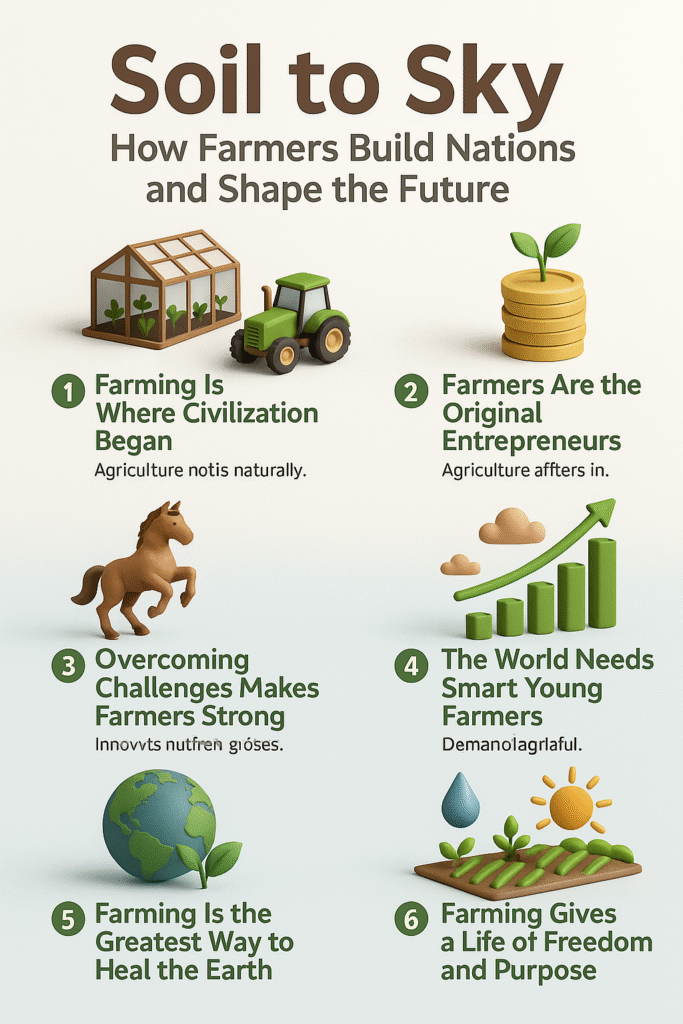
  • Soil to Sky: How Farmers Build Nations and Shape the Future

    Soil to Sky

    In a world racing toward technology, artificial intelligence, and digital advancement, one truth remains unshaken: no invention can replace the hands that feed the world. Farming is not a backup plan; it is the original profession of humanity — the source of survival, culture, economy, and peace. From the soil beneath our feet to the sky above our heads, a farmer’s work touches every aspect of life. Yet, too often, the world forgets the silent strength of agricultural heroes.

    This blog is a reminder — to the youth, to the world, and to future generations — that agriculture is not just necessary; it is extraordinary. It is one of the greatest opportunities of the 21st century, a profession filled with dignity, prosperity, and purpose. Let us explore why farmers are the true creators of nations and why farming is the rightful path for a strong, sustainable global future.

    1. Farming Is Where Civilization Began — And Where The Future Begins

    Every great civilization — India, Egypt, Mesopotamia, Rome, China — was built on agriculture. Kingdoms rose on fertile lands, cultures flourished around rivers, and communities formed where crops grew. Farming is not “old” — it is eternal.

    Even today:

    Food decides political stability

    Agriculture defines national strength

    Countries with strong farms have strong economies

    The world may advance, but survival will always begin in the soil.

    In the future, farming will become even more important because population will increase, food demand will rise, and climate will change. The nations that invest in agriculture today will lead tomorrow.

    1. Farmers Are the ORIGINAL Entrepreneurs

    Long before modern business started, farmers were:

    Managing resources

    Predicting markets

    Observing nature

    Adapting strategies

    Handling risk

    Innovating for survival

    Every season is a business cycle. Every harvest is a product launch. Every field is a factory.

    A farmer is not a laborer — he is a strategist, manager, scientist, and entrepreneur rolled into one.

    Today, agriculture is transforming faster than ever:

    Global export markets

    Organic premium industries

    Agritech startups

    Processed food brands

    Farm-to-table businesses

    Hydroponics and greenhouse farming

    A young farmer can build an empire starting with just a few acres of land.

    1. Overcoming Challenges Makes Farmers the Strongest People on Earth

    Most people give up when circumstances change.
    Farmers adapt when:

    Rain falls too much

    Rain doesn’t fall at all

    Heat rises

    Prices crash

    Pests attack

    Profit becomes uncertain

    Farming builds resilience that no other profession teaches.

    A farmer wakes up every day not knowing the outcome — but still works with faith and courage.

    That is what makes farmers real warriors.

    The world respects soldiers who fight at the borders. Farmers fight every day on the fields — with climate, with nature, with uncertainty — to protect food security for the entire world.

    1. The World Needs Smart Young Farmers Now More Than Ever

    The average age of farmers globally is increasing:

    USA: 58 years

    Europe: 57 years

    India: 50+ years

    Japan: 67 years

    This is dangerous.
    If youth do not take over, the world will face massive food shortages.

    Young farmers bring:

    Technology

    Modern education

    Digital tools

    Data-driven solutions

    Climate awareness

    Business mindset

    The future of farming depends on youth.
    The world needs smart farmers, educated farmers, digital farmers — not just traditional workers.

    A young mind in a field can change an entire nation.

    1. Farming Is the Greatest Way to Heal the Earth

    When the world talks about climate change, sustainability, carbon emissions, global warming — farming becomes the center of every solution.

    Sustainable agriculture can:

    Restore soil health

    Reduce carbon footprint

    Increase biodiversity

    Save water

    Rebuild nature

    Protect future generations

    A farmer can do more for the planet in one season than many industries can do in decades.

    Planting a single tree.
    Using organic compost.
    Saving water through drip irrigation.
    Growing climate-resilient crops.

    These small actions create a global impact.

    Farmers are not just feeding the planet — they are healing it.

    1. Farming Gives a Life of Freedom, Peace, and Purpose

    Many people chase jobs, money, schedules, and office pressure. Farming offers something far more valuable:

    Freedom.
    Sunlight.
    Nature.
    Health.
    Family.
    Purpose.

    A farmer works under the open sky, not under artificial lights.
    He breathes fresh air, not air-conditioned stress.
    Every day, he builds something real — life itself.

    There is no greater peace than watching seeds sprout because of your care.
    No greater joy than feeding the world through your own effort.

    Farming gives a life that is grounded, simple, meaningful, and deeply satisfying.

    1. The Next Billionaire Will Be a Farmer — or an Agriculture Innovator

    Yes, it is happening.

    The world’s biggest markets are shifting toward:

    Organic superfoods

    Export-grade fruits

    Spices and herbs

    Medicinal crops

    Plant-based protein

    Eco-friendly products

    Smart farming equipment

    Agritech AI and robotics

    The next decades will be dominated by food production and sustainability.
    People who enter agriculture today will become pioneers of tomorrow.

    This is why global investors are pouring money into agriculture.

    Land is the only asset that always appreciates.
    Food is the only business that never loses demand.

    Farming is not “low income.”
    Farming is generational wealth.

    1. A Message for Every Farmer in the World

    If you are a farmer reading this —
    You are the backbone of your nation.
    You are the guardian of the earth.
    You are the protector of humanity.

    You work early so the world can wake up.
    You work late so the world can sleep peacefully.

    You don’t just grow crops —
    You grow dreams, health, and hope.

    You deserve respect, pride, and honor.

    1. A Message for Youth: Farming Is Not Backward — It Is the Future

    Young brother, young sister —
    Don’t run away from the soil that feeds you.

    Farming is modern.
    Farming is scientific.
    Farming is global.
    Farming is profitable.
    Farming is respected.

    The world doesn’t need more followers.
    The world needs creators — farmers.

    If you choose agriculture, you choose leadership.

    The world is waiting for the next generation of farming heroes.

    FAQs

    1. Is farming still profitable today?
      Yes. With modern technology, organic markets, and export opportunities, farming is more profitable than ever.
    2. Why should young people join agriculture?
      Because the world needs innovation, technology, and fresh ideas in farming to solve future food challenges.
    3. Is modern farming difficult?
      Not with smart tools. Drones, sensors, drip irrigation, and hybrid crops make farming efficient and scalable.
    4. Can farming make someone financially stable?
      Absolutely. Agriculture offers long-term wealth, land appreciation, and growing market demand.
    5. What is the future of farming?
      Tech-driven, sustainable, organic, climate-friendly, and globally connected agriculture.

    Conclusion

    From the soil that gives life to the sky that nourishes every field, farming remains the strongest pillar of humanity. In a world driven by speed, technology, and competition, agriculture stands as the quiet power that feeds every nation and sustains every life. The future will belong not to those who chase trends, but to those who build foundations — and no foundation is stronger than farming.

    Farmers are more than workers; they are creators of tomorrow.
    They sow hope, nurture dreams, and harvest the food that keeps the world alive.

    For youth, agriculture is not a step back — it is a giant leap forward.
    A chance to innovate, to lead, and to shape a more sustainable world.

    The next era of greatness will rise not from corporate towers but from green fields, strong hands, and brave hearts. The future of food, climate, and global stability lies with those who choose to farm.

    From soil to sky — the world is nourished by farmers, and the future will shine in their hands.

    ✍️Farming Writers

    Love farming Love Farmers

    Read A Next Post 👇

    https://farmingwriters.com/the-farmers-courage-growing-in-tough-conditions/