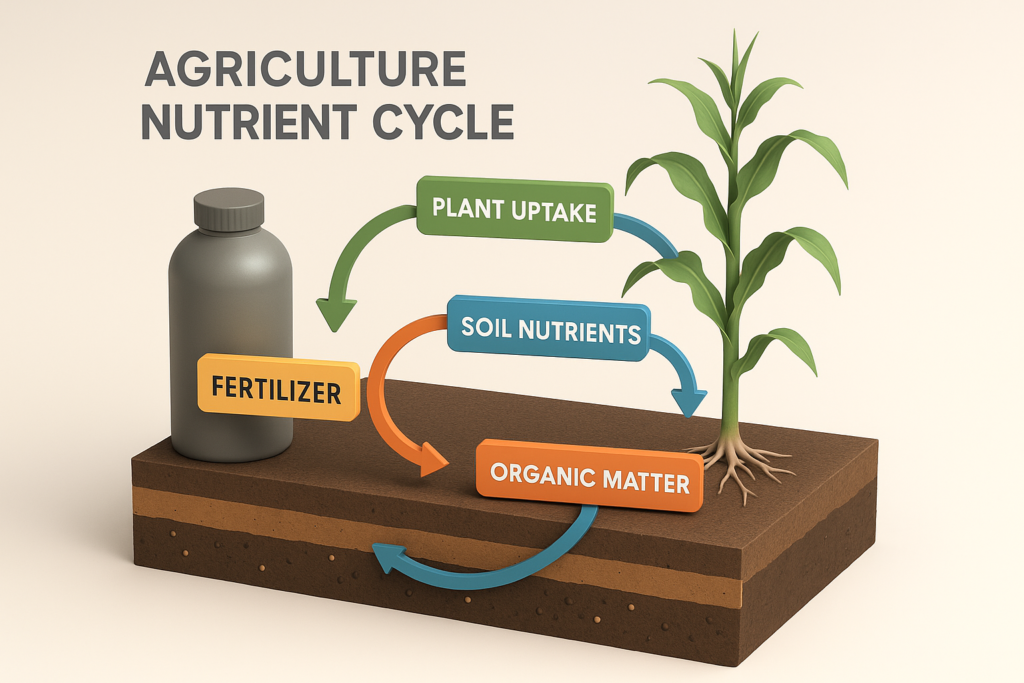
• Global Root Collapse Crisis: Scientific Reasons, Soil Degradation, Crop Failure, and Worldwide Solutions

    Root Collapse Crisis

    Across the world from Asia’s rice belts to Africa’s maize zones and Europe’s horticulture regions farmers are witnessing a silent but devastating crisis: root system collapse. Crops that once developed deep, strong, nutrient-absorbing roots are now showing shallow, fragile, and nutrient-deficient root structures. This shift did not happen overnight; it is the cumulative outcome of decades of soil mismanagement, fertilizer imbalance, biological decline, and chemical over-dependence.

    Modern agriculture has unintentionally pushed plants toward weak rooting habits. High nitrogen availability near the surface stops roots from going deep. Soil organic matter has declined because residues are burned or soils remain bare. Heavy machinery has compacted millions of hectares. Chemical dominance has reduced microbial populations that once supported roots naturally.

    This article provides the world’s most comprehensive, original, science-based explanation of why root systems are collapsing globally and what agriculture must change to restore deep-rooted, resilient crops.

    1. THE SCIENCE OF ROOT FORMATION

    Crop roots grow based on five primary forces:

    1. Soil structure
    2. Soil moisture distribution
    3. Nutrient profile
    4. Microbial activity
    5. Chemical stress or support

    Healthy soils encourage roots to explore deeply. But unhealthy soils force the plant to survive only at the surface.

    1. GLOBAL REASONS FOR ROOT COLLAPSE

    2.1 Excess Nitrogen at the Soil Surface

    Continuous surface placement of urea and ammonium fertilizers leads to:

    nitrogen concentration only in top 5–7 cm

    reduced need for deep exploration

    shallow feeder roots instead of structural roots

    weak anchoring

    This is now a global phenomenon.

    2.2 Declining Soil Organic Matter

    Organic matter binds soil, creates pores, and feeds microbes. Its destruction leads to:

    compact, airless soil

    loss of aggregation

    reduced root penetration capacity

    Soils with <1% organic carbon cannot sustain strong root architecture.

    2.3 Chemical Stress on Root Tips

    High salt fertilizers, pesticides, and herbicide residues burn fine root hairs.
    The plant responds by:

    reducing new root formation

    avoiding deeper horizons

    redirecting energy into shallow survival growth

    2.4 Weak Soil Biology

    Healthy soil hosts millions of organisms:

    mycorrhizal fungi

    nitrogen-fixing bacteria

    phosphorus-solubilizing microbes

    These microorganisms enlarge the nutrient-absorbing capacity of roots.
    Their collapse = root collapse.

    2.5 Hardpan Formation

    Mechanical compaction forms a dense layer at 15–25 cm depth.
    Roots hit the barrier and stop immediately.

    2.6 Global Overuse of Nitrogen Fertilizers

    Countries like India, China, Pakistan, Bangladesh, and parts of Africa rely heavily on nitrogen fertilizers.
    This leads to:

    nutrient imbalance

    stunted root elongation

    reduced secondary root branching

    1. WORLDWIDE IMPACT OF ROOT COLLAPSE

    3.1 Yield Instability

    Crops cannot access water below 20 cm, making them highly sensitive to heat and drought.

    3.2 High Fertilizer Requirement

    Shallow roots mean low nutrient foraging → farmers apply more fertilizer.

    3.3 Lodging Increase

    Weak structural roots cannot support plant height.

    3.4 Decline in Crop Quality

    Everything from protein content to fruit size reduces.

    3.5 Poor Response to Irrigation

    Water stays above instead of entering deeper layers.

    1. GLOBAL CASE STUDIES

    4.1 Indian Wheat & Rice Belt

    High urea application → shallow roots → low organic matter → yield stagnation.

    4.2 African Maize Systems

    Soil mining + low organic matter → extremely fragile root systems.

    4.3 European Horticulture

    Chemical dependence → weakened root hair viability.

    1. SOLUTIONS FOR GLOBAL ROOT RESTORATION

    5.1 Deep Nutrient Placement

    Farmers who shift nitrogen 10–15 cm deep gain:

    stronger axial roots

    lower lodging

    higher yields

    5.2 Organic Matter Regeneration

    Additions of compost, manure, cover crops, and crop residues rebuild the soil’s physical structure.

    5.3 Mycorrhizal Recovery

    Restoring mycorrhiza can increase root surface area by up to 500%.

    5.4 Biofertilizers & Biological Inputs

    These re-establish microbial partners.

    5.5 Subsoil Breaking

    Breaking compacted layers increases root depth dramatically.

    1. LONG-TERM GLOBAL STRATEGY

    Countries must shift toward:

    regenerative agriculture

    balanced fertilization

    soil life restoration

    deep nutrient tools

    organic carbon rebuilding

    Only then will root collapse reverse.

    10 FAQs

    Q1. Why are root systems becoming shallow worldwide?

    Because nutrients, especially nitrogen, are concentrated near the soil surface.

    Q2. Does high urea cause root damage?

    It does not damage, but it prevents deep rooting by satisfying the plant at the surface.

    Q3. What is the main sign of root collapse?

    Plants lodge easily, wilt fast, and show nutrient deficiency despite fertilizer use.

    Q4. How does soil organic matter affect roots?

    It improves soil structure, moisture, aeration, and microbial support.

    Q5. Can roots recover after collapse?

    Yes, but requires organic matter rebuilding and biological restoration.

    Q6. How does compaction stop root growth?

    Roots cannot penetrate dense layers; they turn sideways.

    Q7. Why do vegetables suffer more?

    They are sensitive to chemical stress and shallow nutrient patterns.

    Q8. How do microbes help roots?

    They expand nutrient access and protect root tips.

    Q9. What fertilizer practice is most harmful?

    Repeated surface nitrogen application.

    Q10. What global model can fix this?

    Regenerative soil management with deep nutrient placement.

    The global root collapse crisis is one of the biggest hidden threats to modern agriculture. Years of excessive nitrogen, declining organic matter, soil compaction, and biological loss have pushed crops toward shallow, weak root systems. The solution lies in restoring soil structure, rebuilding organic carbon, reviving microbial networks, and rethinking fertilizer placement. Without strong roots, crop yields, climate resilience, and global food security cannot be maintained.

    ✍️ Farming Writers Team
    Love farming Love Farmers.

    Read A Next Post 👇

    https://farmingwriters.com/global-nitrogen-efficiency-complete-guide/

  • Global Nitrogen Efficiency Complete Scientific Farming Guide to Reduce Loss & Increase Yields

    Global Nitrogen

    This article delivers a comprehensive world-level explanation of nitrogen efficiency, the science behind fertilizer loss, crop absorption physiology, soil nitrogen pathways, environmental risk factors, and advanced strategies for reducing nitrogen waste. It is written to serve researchers, agronomists, fertilizer companies, progressive farmers, and global agricultural policymakers. The central aim is to demonstrate how nitrogen transitions through soil systems, why traditional urea fails to achieve efficiency, how slow-release and controlled-release fertilizers can transform productivity, and how global agricultural systems can rebuild nutrient balance.

    INTRODUCTION

    Nitrogen is the primary determining nutrient of crop productivity across global agriculture. It influences crop color, vegetative development, grain filling, photosynthesis rate, biomass accumulation, and root expansion. Out of all essential nutrients, nitrogen is the most demanded and the most mismanaged. The majority of countries—whether developed or developing—face the same challenge: nitrogen loss far exceeds nitrogen uptake.

    Worldwide agricultural data shows that nitrogen-use efficiency (NUE) commonly ranges between 28% and 40%, meaning more than half of the nitrogen applied through fertilizers is lost before crops can absorb it. This loss creates a chain reaction:

    declining soil quality

    increased farmer input cost

    lower crop yield potential

    ecological imbalances

    water contamination

    greenhouse gas emissions

    This article provides a deep scientific breakdown that helps agriculture professionals understand how nitrogen behaves in soil, how plants absorb it, why efficiency is low, and what global solutions are now emerging.

    1. UNDERSTANDING THE GLOBAL NITROGEN PROBLEM

    1.1 The Nitrogen Paradox

    Nitrogen is abundant in the atmosphere, yet crops cannot use atmospheric nitrogen directly. They depend on reactive nitrogen forms:

    Ammonium (NH₄⁺)

    Nitrate (NO₃⁻)

    However, due to rapid conversion and soil limitations, these forms are unstable and escape the soil system.

    1.2 Global Nitrogen Loss Data

    Scientific estimates show:

    Volatilization: 20–35% loss

    Leaching: 15–30% loss

    Runoff: 5–10%

    Denitrification: 10–25%

    Combined, more than half the applied nitrogen never reaches crops.

    1.3 Why This Loss Occurs Everywhere

    Nitrogen is mobile. It escapes through water, air, microbes, or chemical reactions. Even rainfed African soils and irrigated American fields share similar patterns of inefficiency.

    1. THE SCIENCE OF NITROGEN IN SOIL

    2.1 Key Transformations

    When urea enters soil, it undergoes processes:

    Hydrolysis → Ammonium

    Nitrification → Nitrate

    Volatilization or leaching

    Root uptake or microbial immobilization

    Every stage has associated loss risks.

    2.2 Soil Texture & Nitrogen Movement

    Sandy soils allow deep leaching

    Clay soils immobilize nitrogen temporarily

    Loam soils provide balanced retention

    2.3 Microbial Influence

    Soil microbes determine the fate of nitrogen. When microbial populations decline due to excessive fertilizers, nitrogen-transforming processes become unstable.

    1. WHY FARMERS APPLY EXCESS NITROGEN

    3.1 Visual Response Misleads Yield Expectations

    Crops respond quickly to excess N by turning dark green. Farmers misinterpret this as better yield.

    3.2 Broadcasting Habit and Cultural Practices

    Decades of tradition have normalized over-application.

    3.3 Lack of Soil Testing

    Most regions still use blanket fertilizer recommendations regardless of organic matter, rooting depth, or soil microbial health.

    1. GLOBAL SOLUTIONS TO IMPROVE NITROGEN USE EFFICIENCY

    4.1 Controlled-Release Fertilizers

    These fertilizers deliver nitrogen at a controlled pace that synchronizes with plant demand.

    4.2 Nitrification Inhibitors

    Compounds that slow down the activity of Nitrosomonas bacteria, reducing nitrate formation and leaching.

    4.3 Split Application Techniques

    Instead of applying the full dose at once, nitrogen is added at critical crop stages.

    4.4 Integration with Organic Matter

    Organic matter improves nitrogen retention and reduces volatilization.

    4.5 Root Growth Enhancement

    Stronger roots = higher nitrogen absorption.

    1. GLOBAL CASE STUDIES

    USA — Corn Belt

    Farmers using slow-release N achieved 15–18% NUE improvement.

    Brazil — Soybean & Sugarcane

    Integrated nutrient management programs increased yield stability across regions.

    India — Mandatory neem coating improved national NUE at scale.

    Europe — Strict nitrogen regulations reduced environmental impact but demand precision application.

    1. ROLE OF TECHNOLOGY IN N-EFFICIENCY

    satellite-guided N-mapping

    digital soil analytics

    AI nitrogen prediction models

    real-time chlorophyll meters

    root-zone nutrient sensors

    1. FUTURE OF GLOBAL NITROGEN

    7.1 Climate-Smart Agriculture

    Better nitrogen management is essential for reducing global emissions.

    7.2 Regenerative Agriculture

    Soil biology restoration directly improves nitrogen retention.

    7.3 New Fertilizer Chemistry

    Polymer coatings, microbial N boosters, and bio-stimulant-supported N systems are rising.

    1. TEN PRACTICAL RECOMMENDATIONS

    Adopt slow-release nitrogen sources

    Increase soil organic matter

    Avoid unnecessary top-dress applications

    Irrigate immediately after applying N

    Use soil testing for dosage

    Promote deeper rooting

    Reduce urea dependency

    Monitor nitrogen via crop sensors

    Improve drainage in heavy soils

    Reduce chemical overload on microbial populations

    FAQ (10 QUESTIONS)

    1. Why is nitrogen loss so high worldwide?

    Because nitrogen is unstable in soil and reacts quickly with air, water, and microbes.

    1. Does more urea mean more yield?

    No. Excess nitrogen weakens crop structure and reduces efficiency.

    1. Can nitrogen efficiency reach above 70%?

    Yes, but only with controlled-release fertilizers and strong soil biology.

    1. Which crops suffer most from nitrogen loss?

    Cereals like rice, wheat, and maize.

    1. What is the safest nitrogen application method?

    Split dosing with soil incorporation.

    1. How does root depth affect nitrogen use?

    Deeper roots absorb more nitrogen and reduce leaching.

    1. Why do some soils lose nitrogen faster than others?

    Texture, rainfall, organic matter, and microbial activity cause differences.

    1. Can organic farming solve nitrogen loss?

    It reduces loss but cannot meet global nitrogen demand alone.

    1. Is nitrate harmful for water?

    Yes, high nitrate levels cause health risks and ecological damage.

    1. What is the fastest way to improve NUE?

    Switching to controlled-release or inhibitor-based fertilizers.

    CONCLUSION

    Nitrogen efficiency is not a localized issue; it is a global agricultural cornerstone. Without improving nitrogen management, farming systems will face declining productivity, rising costs, and severe ecological consequences. With scientific nitrogen strategies, modern agriculture can achieve sustainability and yield stability simultaneously.

    ✍️ Farming Writers Team
    Love farming Love Farmers.

    Read A Next Post 👇

    https://farmingwriters.com/why-more-urea-reduces-crop-yield-worldwide/