• Why Global Agriculture Is Losing Nitrogen Efficiency  Soil Reality & Yield Impact

    Nitrogen Efficiency

    Across the world, farmers are applying more nitrogen fertilizer than ever before. Yields should be increasing. Instead, many regions are facing stagnant production, declining soil response, rising costs, and unstable crop performance. The problem is not nitrogen availability. The problem is nitrogen efficiency.

    Nitrogen efficiency refers to how much of the applied nitrogen is actually absorbed by crops and converted into yield. In many farming systems today, less than half of applied nitrogen reaches the plant. The rest disappears into air, water, or becomes chemically locked in soil.

    This is not a regional problem. It is global.

    From intensive cereal systems to vegetable belts, from rainfed farms to irrigated zones, nitrogen efficiency loss has become one of the biggest hidden reasons behind declining farm profitability.

    This article explains why nitrogen efficiency is collapsing, what mistakes modern agriculture has normalized, and how soil systems respond when nitrogen is mismanaged over time.

    1. WHAT NITROGEN EFFICIENCY REALLY MEANS (NOT TEXTBOOK DEFINITION)

    In real farming terms, nitrogen efficiency answers one simple question:

    Out of every 100 kg nitrogen applied, how much becomes grain, fruit, or biomass?

    In healthy systems:

    60–70% efficiency is possible

    In stressed systems:

    25–35% is common

    In degraded soils:

    sometimes below 20%

    Low efficiency does not mean nitrogen shortage.
    It means nitrogen misbehavior inside soil.

    1. THE FOUR MAIN PATHWAYS OF NITROGEN LOSS (GLOBAL REALITY)

    2.1 Volatilization – Nitrogen Lost to Air

    Surface-applied urea converts rapidly into ammonia gas under warm or alkaline conditions. This nitrogen is gone forever.

    This loss increases when:

    urea is broadcast without incorporation

    soil moisture is low

    temperatures are high

    microbial balance is disturbed

    2.2 Leaching – Nitrogen Washed Below Roots

    Nitrate nitrogen is highly mobile. Once it moves below the root zone, crops cannot recover it.

    Common in:

    sandy soils

    heavy rainfall regions

    over-irrigated systems

    2.3 Denitrification – Nitrogen Lost as Gas

    Waterlogged or compacted soils convert nitrate into gaseous forms like N₂O and N₂.

    This occurs when:

    soil oxygen is low

    organic imbalance exists

    microbial activity is disturbed

    2.4 Immobilization – Nitrogen Locked, Not Lost

    Nitrogen is taken up by soil microbes instead of plants, especially when carbon-rich residues are present.

    Farmers see yellow crops and think nitrogen deficiency, but nitrogen is actually present — just unavailable.

    1. WHY MODERN FARMING PRACTICES REDUCE NITROGEN EFFICIENCY

    3.1 Blanket Fertilizer Recommendations

    Applying the same nitrogen dose everywhere ignores:

    soil type

    organic matter

    climate

    crop duration

    This causes over-application in some areas and under-performance everywhere.

    3.2 Excess Focus on Nitrogen Alone

    Many farms operate with:

    high nitrogen

    low phosphorus availability

    poor potassium balance

    micronutrient deficiencies

    Nitrogen cannot function alone. When balance is missing, nitrogen efficiency collapses.

    3.3 Shallow Root Systems

    Frequent surface fertilization trains crops to keep roots near the soil surface.

    Shallow roots:

    access less nitrogen

    fail during moisture stress

    increase lodging risk

    3.4 Soil Biological Decline

    Healthy nitrogen cycling requires microbes.

    Excess chemical inputs without organic support reduce:

    microbial diversity

    enzyme activity

    nitrogen transformation efficiency

    Soil becomes chemically active but biologically dead.

    1. THE COST OF LOW NITROGEN EFFICIENCY TO FARMERS

    Low nitrogen efficiency directly causes:

    higher fertilizer bills

    more frequent applications

    unstable crop growth

    uneven maturity

    higher pest pressure

    weaker plant structure

    Farmers often respond by adding more nitrogen, which worsens the problem.

    This creates a fertilizer dependency loop.

    1. CROPS MOST AFFECTED BY NITROGEN EFFICIENCY LOSS

    5.1 Cereals

    Yield plateaus despite increased fertilizer use.

    5.2 Vegetables

    Excess vegetative growth, poor fruiting, quality issues.

    5.3 Sugarcane

    Long duration crops suffer chronic inefficiency over time.

    5.4 Oilseeds & Pulses

    Nitrogen imbalance suppresses biological nitrogen fixation.

    1. SOIL STRUCTURE AND ITS ROLE IN NITROGEN EFFICIENCY

    Compacted soils:

    restrict root growth

    reduce oxygen

    promote denitrification

    Loose but biologically inactive soils:

    lose nitrogen rapidly

    fail to retain nutrients

    Efficient nitrogen use requires:

    physical structure

    chemical balance

    biological activity

    All three must work together.

    1. WHY MORE NITROGEN DOES NOT MEAN MORE YIELD

    This is the biggest misunderstanding in global agriculture.

    Beyond a point:

    nitrogen increases leaf size, not yield

    plant tissues become soft

    disease pressure rises

    grain filling reduces

    Yield depends on conversion efficiency, not quantity applied.

    1. LONG-TERM SOIL CONSEQUENCES OF POOR NITROGEN EFFICIENCY

    Over years, soils show:

    reduced organic carbon

    declining microbial life

    reduced buffering capacity

    lower response to fertilizers

    This is why older farms often need higher doses for the same yield.

    1. GLOBAL PATTERN: SAME PROBLEM, DIFFERENT COUNTRIES

    Whether in Asia, Africa, Europe, or the Americas, nitrogen efficiency decline follows the same pattern:

    fertilizer intensification

    soil biological neglect

    yield stagnation

    rising costs

    The geography changes. The soil reaction does not.

    1. THE REAL SOLUTION IS NOT LESS NITROGEN – IT IS SMARTER NITROGEN

    Improving nitrogen efficiency requires:

    better timing

    controlled release

    soil organic integration

    root-focused management

    microbial support

    Reducing nitrogen without fixing soil systems only reduces yield.

    FREQUENTLY ASKED QUESTIONS (FAQ)

    Q1. Is nitrogen efficiency the same in all soils?

    No. Soil texture, organic matter, and biology strongly influence efficiency.

    Q2. Why do crops show nitrogen deficiency even after fertilization?

    Because nitrogen may be lost, locked, or biologically unavailable.

    Q3. Does irrigation affect nitrogen efficiency?

    Yes. Excess irrigation increases leaching and denitrification.

    Q4. Can nitrogen efficiency improve without reducing fertilizer dose?

    Yes, through timing, form, and soil management.

    Q5. Is nitrogen efficiency declining globally?

    Yes, across most intensive farming systems.

    Q6. Do high yields always require high nitrogen?

    No. High yields require efficient nitrogen, not excessive nitrogen.

    Q7. Does soil organic matter help nitrogen efficiency?

    Strongly. It improves retention, microbial cycling, and uptake.

    Q8. Can nitrogen efficiency recover in degraded soils?

    Yes, but it requires time and system correction.

    Q9. Why do some fields respond less to fertilizer over time?

    Because soil biological and structural capacity has declined.

    Q10. Is nitrogen efficiency linked to climate change?

    Yes. Nitrogen losses contribute to greenhouse gas emissions.

    CONCLUSION

    Nitrogen efficiency is the foundation of profitable, stable, and sustainable agriculture. The global farming crisis is not about fertilizer shortage. It is about fertilizer behavior inside damaged soil systems. Until nitrogen efficiency becomes a priority equal to yield, farming costs will continue to rise while soil performance declines.

    ✍️ Farming Writers Team
    Love farming Love Farmers.

    Read A Next Post 👇

  • Global Nitrogen Efficiency Complete Scientific Farming Guide to Reduce Loss & Increase Yields

    Global Nitrogen

    This article delivers a comprehensive world-level explanation of nitrogen efficiency, the science behind fertilizer loss, crop absorption physiology, soil nitrogen pathways, environmental risk factors, and advanced strategies for reducing nitrogen waste. It is written to serve researchers, agronomists, fertilizer companies, progressive farmers, and global agricultural policymakers. The central aim is to demonstrate how nitrogen transitions through soil systems, why traditional urea fails to achieve efficiency, how slow-release and controlled-release fertilizers can transform productivity, and how global agricultural systems can rebuild nutrient balance.

    INTRODUCTION

    Nitrogen is the primary determining nutrient of crop productivity across global agriculture. It influences crop color, vegetative development, grain filling, photosynthesis rate, biomass accumulation, and root expansion. Out of all essential nutrients, nitrogen is the most demanded and the most mismanaged. The majority of countries—whether developed or developing—face the same challenge: nitrogen loss far exceeds nitrogen uptake.

    Worldwide agricultural data shows that nitrogen-use efficiency (NUE) commonly ranges between 28% and 40%, meaning more than half of the nitrogen applied through fertilizers is lost before crops can absorb it. This loss creates a chain reaction:

    declining soil quality

    increased farmer input cost

    lower crop yield potential

    ecological imbalances

    water contamination

    greenhouse gas emissions

    This article provides a deep scientific breakdown that helps agriculture professionals understand how nitrogen behaves in soil, how plants absorb it, why efficiency is low, and what global solutions are now emerging.

    1. UNDERSTANDING THE GLOBAL NITROGEN PROBLEM

    1.1 The Nitrogen Paradox

    Nitrogen is abundant in the atmosphere, yet crops cannot use atmospheric nitrogen directly. They depend on reactive nitrogen forms:

    Ammonium (NH₄⁺)

    Nitrate (NO₃⁻)

    However, due to rapid conversion and soil limitations, these forms are unstable and escape the soil system.

    1.2 Global Nitrogen Loss Data

    Scientific estimates show:

    Volatilization: 20–35% loss

    Leaching: 15–30% loss

    Runoff: 5–10%

    Denitrification: 10–25%

    Combined, more than half the applied nitrogen never reaches crops.

    1.3 Why This Loss Occurs Everywhere

    Nitrogen is mobile. It escapes through water, air, microbes, or chemical reactions. Even rainfed African soils and irrigated American fields share similar patterns of inefficiency.

    1. THE SCIENCE OF NITROGEN IN SOIL

    2.1 Key Transformations

    When urea enters soil, it undergoes processes:

    Hydrolysis → Ammonium

    Nitrification → Nitrate

    Volatilization or leaching

    Root uptake or microbial immobilization

    Every stage has associated loss risks.

    2.2 Soil Texture & Nitrogen Movement

    Sandy soils allow deep leaching

    Clay soils immobilize nitrogen temporarily

    Loam soils provide balanced retention

    2.3 Microbial Influence

    Soil microbes determine the fate of nitrogen. When microbial populations decline due to excessive fertilizers, nitrogen-transforming processes become unstable.

    1. WHY FARMERS APPLY EXCESS NITROGEN

    3.1 Visual Response Misleads Yield Expectations

    Crops respond quickly to excess N by turning dark green. Farmers misinterpret this as better yield.

    3.2 Broadcasting Habit and Cultural Practices

    Decades of tradition have normalized over-application.

    3.3 Lack of Soil Testing

    Most regions still use blanket fertilizer recommendations regardless of organic matter, rooting depth, or soil microbial health.

    1. GLOBAL SOLUTIONS TO IMPROVE NITROGEN USE EFFICIENCY

    4.1 Controlled-Release Fertilizers

    These fertilizers deliver nitrogen at a controlled pace that synchronizes with plant demand.

    4.2 Nitrification Inhibitors

    Compounds that slow down the activity of Nitrosomonas bacteria, reducing nitrate formation and leaching.

    4.3 Split Application Techniques

    Instead of applying the full dose at once, nitrogen is added at critical crop stages.

    4.4 Integration with Organic Matter

    Organic matter improves nitrogen retention and reduces volatilization.

    4.5 Root Growth Enhancement

    Stronger roots = higher nitrogen absorption.

    1. GLOBAL CASE STUDIES

    USA — Corn Belt

    Farmers using slow-release N achieved 15–18% NUE improvement.

    Brazil — Soybean & Sugarcane

    Integrated nutrient management programs increased yield stability across regions.

    India — Mandatory neem coating improved national NUE at scale.

    Europe — Strict nitrogen regulations reduced environmental impact but demand precision application.

    1. ROLE OF TECHNOLOGY IN N-EFFICIENCY

    satellite-guided N-mapping

    digital soil analytics

    AI nitrogen prediction models

    real-time chlorophyll meters

    root-zone nutrient sensors

    1. FUTURE OF GLOBAL NITROGEN

    7.1 Climate-Smart Agriculture

    Better nitrogen management is essential for reducing global emissions.

    7.2 Regenerative Agriculture

    Soil biology restoration directly improves nitrogen retention.

    7.3 New Fertilizer Chemistry

    Polymer coatings, microbial N boosters, and bio-stimulant-supported N systems are rising.

    1. TEN PRACTICAL RECOMMENDATIONS

    Adopt slow-release nitrogen sources

    Increase soil organic matter

    Avoid unnecessary top-dress applications

    Irrigate immediately after applying N

    Use soil testing for dosage

    Promote deeper rooting

    Reduce urea dependency

    Monitor nitrogen via crop sensors

    Improve drainage in heavy soils

    Reduce chemical overload on microbial populations

    FAQ (10 QUESTIONS)

    1. Why is nitrogen loss so high worldwide?

    Because nitrogen is unstable in soil and reacts quickly with air, water, and microbes.

    1. Does more urea mean more yield?

    No. Excess nitrogen weakens crop structure and reduces efficiency.

    1. Can nitrogen efficiency reach above 70%?

    Yes, but only with controlled-release fertilizers and strong soil biology.

    1. Which crops suffer most from nitrogen loss?

    Cereals like rice, wheat, and maize.

    1. What is the safest nitrogen application method?

    Split dosing with soil incorporation.

    1. How does root depth affect nitrogen use?

    Deeper roots absorb more nitrogen and reduce leaching.

    1. Why do some soils lose nitrogen faster than others?

    Texture, rainfall, organic matter, and microbial activity cause differences.

    1. Can organic farming solve nitrogen loss?

    It reduces loss but cannot meet global nitrogen demand alone.

    1. Is nitrate harmful for water?

    Yes, high nitrate levels cause health risks and ecological damage.

    1. What is the fastest way to improve NUE?

    Switching to controlled-release or inhibitor-based fertilizers.

    CONCLUSION

    Nitrogen efficiency is not a localized issue; it is a global agricultural cornerstone. Without improving nitrogen management, farming systems will face declining productivity, rising costs, and severe ecological consequences. With scientific nitrogen strategies, modern agriculture can achieve sustainability and yield stability simultaneously.

    ✍️ Farming Writers Team
    Love farming Love Farmers.

    Read A Next Post 👇

    https://farmingwriters.com/why-more-urea-reduces-crop-yield-worldwide/

  • Organic Compost from Crop Waste: A Practical Guide for Farmers to Reduce Loss and Improve Income

    Organic Compost from Crop Waste

    Organic Compost from Crop Waste: A Practical Guide for Farmers to Reduce Loss and Improve Income

    Organic compost is one of the most reliable products a farmer can create from crop waste. Unlike market-based farm products that depend on price, demand, and middlemen, compost depends only on knowledge, patience, and correct process. For a farmer who understands composting, damaged or unsold crops stop being a loss and start becoming the foundation of soil recovery and cost control.

    Many farmers think of compost as something optional, slow, or only useful for organic farming. In reality, composting is a survival tool. It is not about ideology. It is about protecting fertility, reducing dependency on purchased inputs, and ensuring that money invested in crops does not disappear when the market fails.

    Crop waste composting works because plants do not lose nutrients when they fail in trade. Vegetables that rot on roadsides still contain nitrogen, potassium, micronutrients, organic carbon, and moisture. What changes is only their selling value. Composting converts this lost selling value into farming value.

    Farmers who compost correctly learn a crucial lesson. Fresh waste is risky. Controlled waste is powerful. Composting is not dumping waste in a pit. It is managing biological activity so that harmful decay becomes useful decomposition.

    The main reason compost fails on farms is not because the idea is wrong, but because the process is misunderstood. Many farmers mix everything together without balance, do not control moisture, do not allow aeration, or apply compost before it matures. These mistakes create bad smell, attract pests, and burn crops. When this happens, compost gets blamed instead of the method.

    Organic compost made from crop waste works best when farmers respect the nature of materials. Wet materials such as tomatoes, leafy vegetables, banana stem, and fruit waste need dry materials like straw, husk, or dry leaves. Dry materials such as wheat straw or cotton stalks need nitrogen-rich materials like green waste or cow dung. Composting is a balancing act, not a fixed formula.

    When crop waste is composted properly, heat is generated naturally. This heat is not harmful; it is essential. High temperatures destroy pathogens, weed seeds, and harmful microbes. A compost pile that never heats up is not composting correctly. A pile that overheats and stays wet is suffocating. Farmers must learn to read compost by smell, texture, and heat, not by days alone.

    Time is another misunderstood factor. Compost does not work on a fixed calendar. Weather, material type, and pile management decide speed. Vegetable-heavy compost may mature in forty to sixty days. Straw-heavy compost may take longer. Rushing compost because land preparation is near often causes more damage than benefit. Immature compost applied to soil consumes nitrogen instead of supplying it.

    The safest compost for farmers is mature compost that smells earthy, has uniform texture, and no identifiable waste pieces. When compost reaches this stage, it stops heating and becomes stable. This compost does not harm roots, does not smell, and improves soil structure immediately.

    Compost improves soil in ways chemical fertilizers cannot. It increases soil organic matter, improves aggregation, increases water retention, supports beneficial microbes, and improves nutrient holding capacity. These benefits do not show overnight but protect crops during heat stress, drought, and heavy rainfall. In climate uncertainty, compost becomes more valuable than fertilizer.

    From an income point of view, the largest benefit of compost is cost saving. Farmers using compost reduce fertilizer purchase gradually. Even partial replacement saves money season after season. Over time, soil needs fewer inputs to produce similar yields. This reduction in dependency is financial strength.

    Some farmers sell compost locally to nurseries, vegetable growers, and landscapers. This creates direct income, but market distance and transport costs must be considered. Compost is bulky and heavy. Selling close to the farm is more profitable than chasing distant buyers. Compost should first serve the farm and then the market.

    Another overlooked aspect is compost quality consistency. Farmers who follow the same process season after season produce predictable compost. Predictable compost builds trust among buyers. Random dumping produces inconsistent material that sells poorly.

    Many farmers ask whether compost can fully replace chemical fertilizers. The answer depends on soil condition, crop type, and management. Compost alone may not supply nutrients fast enough for high-demand crops in poor soils. However, compost combined with reduced chemical inputs creates balanced nutrition and stronger soil over time. This integration is more reliable than extreme choices.

    Disease management is another concern. Farmers fear that composting diseased crop waste may spread problems. In reality, high-temperature composting destroys most pathogens. Problems arise only when compost is incomplete or poorly aerated. Proper composting is safer than dumping diseased waste in fields.

    Compost production also improves farm cleanliness. Instead of waste piling up around fields, farms stay organized. This reduces pest pressure and improves working conditions. Clean farms experience fewer outbreaks and easier management.

    One important rule farmers must follow is not to see compost as kitchen waste composting. Field-scale composting is different. Quantity, moisture control, turning, and space matter. Small mistakes become large problems when volumes increase. Learning to manage scale separates successful composters from frustrated ones.

    Climate plays a major role in composting. In hot climates, piles dry quickly and need moisture adjustment. In rainy seasons, excess water causes anaerobic conditions. Farmers who adapt composting to climate succeed. Those who copy methods blindly struggle.

    In the long run, composting changes how farmers see crop waste. Waste stops being emotional loss and becomes technical material. This change in mindset improves decision-making. Farmers who compost regularly react calmly to market losses because they know the crop will still work for them.

    Organic compost from crop waste is not a miracle product. It is a disciplined farming practice. Farmers who treat it with respect gain soil health, stability, and reduced risk. Farmers who treat it casually blame it quickly. Compost rewards patience and consistency, not shortcuts.

    In modern agriculture, where uncertainty has increased, composting is not old tradition. It is strategic adaptation. Farmers who master composting build immunity into their soil and income system.

    FAQs

    Q1. Can compost be made from all types of crop waste
    Almost all crop waste can be composted if moisture and carbon balance are maintained properly.

    Q2. How long does compost take to mature
    Depending on material and management, compost may mature in forty to ninety days.

    Q3. Is compost suitable for all crops
    Yes, mature compost is safe for vegetables, fruits, cereals, and orchards.

    Q4. Can compost smell bad
    Proper compost does not smell. Bad odor indicates excess moisture or poor aeration.

    Q5. Is composting expensive
    Composting mainly requires labor and knowledge. Cash investment is minimal.

    Q6. Can diseased plants be composted
    Yes, if compost temperature rises sufficiently to destroy pathogens.

    Q7. Does compost reduce fertilizer use
    Yes, regular compost application reduces the need for chemical fertilizers over time.

    Q8. Can farmers sell compost easily
    Local sales are more practical than long-distance transport due to bulk weight.

    Q9. Is compost useful in conventional farming
    Yes, compost benefits all farming systems regardless of cropping method.

    Q10. What is the biggest composting mistake
    Applying immature compost to soil is the most common and damaging mistake.

    Conclusion

    Organic compost made from crop waste transforms loss into strength. It protects soil, reduces dependency, stabilizes yields, and saves money. Farmers who learn composting gain control over part of their farming destiny. In uncertain markets and changing climates, composting is not a choice. It is preparation.

    ✍️Farming Writers Team
    Love farming Love Farmers.

    Read A Next Post 👇

    https://farmingwriters.com/crop-failure-recovery-waste-utilization/

  • Organic Farming: Complete Global Guide to Natural, Chemical-Free Agriculture

    Organic Farming
    1. Introduction

    Organic farming represents one of the most important shifts in global agriculture. It is not merely a rejection of chemical fertilizers and pesticides; it is a scientifically structured ecological production system built on the principles of soil health, biodiversity, nutrient recycling, and ecological balance. Unlike conventional farming, which attempts to maximize yield using synthetic inputs, organic agriculture focuses on long-term soil fertility, natural production cycles, ecological pest management, and chemical-free food quality.

    The concept of organic farming emerged as a response to the environmental impacts of industrial agriculture:

    Soil degradation

    Decline in soil microorganisms

    Water pollution

    Heavy pesticide usage

    Loss of biodiversity

    Residues in food

    Today, organic agriculture is practiced in over 180 countries and managed under strict international certification systems such as USDA Organic, EU Organic, India Organic (NPOP), and JAS (Japan). Organic farming contributes directly to soil restoration, food safety, climate resilience, and sustainable rural livelihoods.

    Organic farming works on the fundamental concept of feeding the soil rather than directly feeding the plant. Once the soil’s biological system becomes active, plant nutrition, health, and resilience improve naturally.

    1. Core Principles of Organic Farming

    The global organic movement is governed by four universally accepted principles established by IFOAM.

    2.1 Principle of Health

    Organic farming protects the health of:

    Soil

    Plants

    Livestock

    Humans

    Ecosystems

    By eliminating toxic chemical inputs, organic systems prioritize nutrient-dense food and long-term wellness.

    2.2 Principle of Ecology

    Farming must work with ecological systems rather than dominate them.
    This means:

    Encouraging soil organisms

    Promoting pollinators

    Integrating biodiversity

    Managing natural nutrient cycles

    2.3 Principle of Fairness

    Organic farming ensures fairness across the value chain:

    Farmers receive fair returns

    Workers are treated ethically

    Animals are raised humanely

    Consumers receive safe, authentic food

    2.4 Principle of Care

    Organic farming must be precautionary, minimizing environmental, health, and social risks.

    1. Scientific Foundation of Organic Farming

    Organic farming is deeply rooted in biological science. It uses complex natural processes that industrial chemical farming often suppresses.

    3.1 Soil as a Living Biological System

    Healthy soil contains millions of microorganisms in a single gram. These microbes perform essential functions:

    Decompose organic matter

    Fix nitrogen

    Release nutrients

    Build soil structure

    Support plant immunity

    Improve root growth

    Organic soil has:

    Higher carbon content

    Improved aeration

    Better water retention

    Lower compaction

    Higher biological diversity

    3.2 Nutrient Cycling and Slow-Release Nutrition

    Organic farming relies on:

    Compost

    Green manure

    Farmyard manure

    Crop residues

    Vermicompost

    Biofertilizers

    Natural mineral amendments

    Nutrients are released gradually through microbial processes such as mineralization. This provides long-term fertility without nutrient shock.

    3.3 Ecological Pest and Disease Management

    Organic pest management relies on ecological principles:

    Balanced nutrition

    Host plant resistance

    Intercropping

    Trap crops

    Beneficial insects

    Natural predators

    Botanical extracts

    Mechanical controls

    Chemical pesticides kill both pests and beneficial organisms, while organic systems aim to strengthen natural pest resistance.

    3.4 Water Efficiency and Soil-Water Relations

    Organic soil holds more water due to:

    High organic matter

    Stable soil structure

    Deep roots

    Mulching practices

    This reduces irrigation needs and enhances drought tolerance.

    1. Major Methods in Organic Farming

    4.1 Crop Rotation

    Crop rotation prevents nutrient depletion and breaks pest cycles.
    Examples:

    Cereals → Legumes → Oilseeds

    Vegetables → Leafy greens → Root vegetables

    4.2 Green Manuring

    Green manure crops add organic matter and nitrogen.
    Common green manures:

    Sunhemp

    Dhaincha

    Cowpea

    Berseem

    4.3 Composting

    Composting transforms organic waste into humus, improving soil structure and nutrient balance.
    Benefits include:

    Improved soil buffering

    Enhanced microbial activity

    Slow nutrient release

    4.4 Vermicomposting

    Earthworms accelerate decomposition, producing nutrient-rich vermicast with high microbial content.

    4.5 Mulching

    Mulching conserves moisture, prevents weed growth, and improves soil temperature stability.

    4.6 Biological Pest Control

    Organic farmers rely on:

    Ladybirds

    Lacewings

    Parasitic wasps

    Entomopathogenic fungi

    Nematode pathogens

    4.7 Organic Sprays

    Botanical preparations include:

    Neem oil

    Garlic-ginger extract

    Panchagavya

    Jivamrut

    Fermented plant extracts

    4.8 Biofertilizers

    Beneficial microbes provide natural fertility:

    Rhizobium (legumes)

    Azotobacter

    Azospirillum

    Phosphate-solubilizing bacteria

    Mycorrhiza

    1. Organic Crop Production Systems

    5.1 Organic Cereals

    Crops rely on soil fertility, rainwater conservation, and natural weed suppression methods.

    5.2 Organic Vegetables

    High-value organic category due to zero pesticide residue.
    Includes:

    Tomato

    Capsicum

    Onion

    Cucumber

    Leafy greens

    5.3 Organic Fruits

    High demand in domestic and export markets.
    Crops include:

    Mango

    Banana

    Citrus

    Grapes

    Apple

    5.4 Organic Spices

    Most profitable organic segment.
    Exports include:

    Turmeric

    Ginger

    Cinnamon

    Cardamom

    Pepper

    5.5 Organic Medicinal Plants

    Pharmaceutical and herbal industries prefer organically grown:

    Ashwagandha

    Tulsi

    Giloy

    Aloe vera

    Organic Livestock Farming

    Organic livestock production follows a strict ecological standard. It ensures animal welfare, natural feeding systems, outdoor movement, and stress-free living conditions. Unlike industrial livestock systems that rely on synthetic feed additives, hormones, or routine antibiotics, organic livestock farming prioritizes natural immunity, clean environments, and balanced nutrition.

    Feed and Nutrition

    Animals must consume organically produced feed. This may include:

    Organic pasture

    Organic fodder

    Organic grains

    Natural mineral supplements

    No urea-treated fodder

    No chemically formulated concentrates

    Feed must be free from GMOs and synthetic additives.

    Housing and Living Conditions

    Organic livestock must have:

    Clean shelter

    Adequate space

    Natural ventilation

    Access to open areas and sunlight

    Comfortable bedding

    Hygienic water

    Crowding, confinement, and restrictive cages are prohibited.

    Disease Prevention

    Instead of synthetic antibiotics, organic farms use:

    Herbal medicine

    Biological remedies

    Natural immunity boosters

    Clean housing

    Balanced nutrition

    Vaccinations (allowed)

    Only in emergencies can antibiotics be used, and such animals lose organic status for a defined period.

    Global Organic Certification Systems

    Certification ensures that organic products meet international standards.
    Certification verifies:

    Production method

    Input materials

    Food safety

    Traceability

    Documentation

    Transport and storage

    Major Certification Bodies

    USDA Organic (United States)
    Known for strict standards regarding GMOs and pesticide residues.

    EU Organic (European Union)
    Covers farming, processing, packaging, and imports.

    NPOP / India Organic
    India’s national standard, recognized by EU and USDA under equivalency.

    JAS (Japan Agricultural Standard)
    Highly regulated, especially for processed organic foods.

    Australian Certified Organic (ACO)
    Strong in livestock, grain, and horticulture categories.

    Certification Process

    The certification process includes:

    Registration with approved agency

    Farm inspection

    Soil and produce testing

    Documentation verification

    Conversion period monitoring

    Annual review

    Conversion Period

    Most farms require a 2–3 year chemical-free period to regain natural soil health before certification is granted.

    Prohibited Substances

    Organic farming strictly prohibits:

    Synthetic fertilizers

    Chemical pesticides

    GMOs

    Growth hormones

    Antibiotics (routine use)

    Sewage sludge

    Artificial preservatives

    Economic Model of Organic Farming

    Organic farming has a unique economic structure compared to conventional agriculture. It reduces long-term costs while increasing value due to premium pricing.

    Cost Components

    Organic farming involves:

    Higher labor for practices like composting, weeding, and crop care

    Investment in soil-building activities

    Certification costs

    Organic input production (compost, biofertilizer, natural sprays)

    Revenue and Profit Potential

    Organic produce sells at substantial premium prices, often 20–200% more than conventional products. Markets supporting organic agriculture include:

    Fresh vegetables

    Fruits

    Spices

    Medicinal plants

    Processed organic products

    Global retailers like Whole Foods, Auchan, and Carrefour lead organic sales.

    Long-Term Profitability

    Initially, yields may drop during the transition phase. However, after 2–4 years:

    Soil fertility increases

    Input costs decrease

    Yield stabilizes

    Market rate remains consistently higher

    Organic farming thus becomes more profitable in the long term due to:

    Lower input prices

    Improved soil health

    Premium returns

    Global Case Studies in Organic Farming

    India

    India has rapidly expanded organic production, especially in:

    Sikkim (100% organic state)

    Rajasthan

    Karnataka

    Uttarakhand

    Maharashtra

    Major exports include spices, tea, pulses, and oilseeds.

    United States

    The U.S. has the world’s largest organic market.
    High demand categories include:

    Milk

    Vegetables

    Fruits

    Packaged organic food products

    Europe

    Countries like Germany, France, Italy, and Spain have strong organic sectors. Strict pesticide regulations and high consumer awareness influence growth.

    Australia

    Australia has the largest area under organic certification due to vast grazing lands. Organic livestock production is a major contributor.

    China and Japan

    Asia’s organic food demand is rapidly increasing, especially in urban centers, where consumers prefer residue-free food.

    Challenges in Organic Farming

    Organic farming offers many benefits but also faces practical challenges that need scientific, policy, and market support.

    Lower Yields in Initial Years

    Due to lack of synthetic fertilizers, initial yields drop during soil recovery.

    Weed Management Difficulty

    Without herbicides, weeding requires:

    Manual labor

    Mulching

    Crop rotation

    Mechanical weeders

    Pest Pressure

    Biological control requires strong observation and timely interventions.

    Higher Labor Requirement

    Organic farming is knowledge-intensive rather than material-intensive.

    Market Misinformation

    Farmers must avoid false labeling and maintain strict documentation to prevent rejection in export markets.

    Certification Complexity

    Documentation, inspection, and compliance are time-consuming.

    Environmental and Sustainability Advantages

    Organic farming significantly contributes to environmental stability.

    Soil Carbon Enhancement

    Organic farming increases soil organic carbon, which improves:

    Water retention

    Soil fertility

    Microbial activity

    Climate resilience

    Biodiversity Conservation

    Organic fields support:

    Pollinators

    Birds

    Beneficial insects

    Fungi

    Soil fauna

    Water Pollution Prevention

    No chemical leaching occurs due to absence of synthetic fertilizers and pesticides.

    Climate Change Mitigation

    Organic farms use:

    Less energy

    More renewable inputs

    More carbon-sequestering practices

    Frequently Asked Questions (FAQs)

    What defines organic farming?

    Organic farming is a natural agricultural system that avoids synthetic fertilizers, chemical pesticides, GMOs, and growth hormones while promoting ecological balance and soil health.

    Do organic farms use fertilizers?

    Yes, but only natural ones like compost, manure, green manure, and biofertilizers.

    Can organic farming match conventional yields?

    After the transition period, yields can stabilize and even exceed conventional systems in healthy soils.

    Does organic farming improve nutrition?

    Organic produce often has higher antioxidants, better mineral content, and no chemical residues.

    Is organic farming profitable?

    Yes. Due to high market demand and premium pricing, organic farming offers strong returns once the soil stabilizes.

    How do organic farmers manage weeds?

    By mulching, crop rotation, mechanical weeders, intercropping, and biological methods.

    How long does organic certification take?

    On average 2–3 years.

    What is not allowed in organic farming?

    Synthetic fertilizers, GMOs, pesticides, herbicides, artificial hormones, and routine antibiotics.

    Which crops perform best organically?

    Vegetables, spices, fruits, legumes, and medicinal plants.

    Does organic farming help climate change?

    Yes. It increases soil carbon, reduces pollution, conserves water, and reduces energy use.

    Conclusion

    Organic farming is not a return to primitive agriculture; rather, it is an advanced ecological science that integrates soil biology, biodiversity management, nutrient cycles, and sustainable economics. It avoids harmful chemical inputs and restores nature’s ability to support long-term food production. While the transition may challenge farmers initially, organic farming ultimately leads to healthier soil, higher-quality food, improved environment, and stable profits.

    As global consumers seek safe, residue-free produce and governments invest in sustainable practices, organic farming is set to become a key pillar of future agriculture.

    ✍️Farming Writers Team

    Love farming Love Farmers.

    Read A Next Post 👇
    https://farmingwriters.com/agronomy-plant-science-education-usa/

  • Tilapia Fish Farming: Global Guide, Profit, Cost, and Health Benefits

    Tilapia Fish Farming

    Introduction

    Tilapia is one of the world’s most farmed freshwater fishes, known for its fast growth, high yield, and adaptability. From Asia to Africa and America, Tilapia farming has become a billion-dollar aquaculture industry. This post explains everything about Tilapia farming — from setup cost to profit, health value, and export potential.


    Tilapia Overview

    Scientific Name: Oreochromis niloticus

    Common Names: Nile Tilapia, Mozambique Tilapia, Blue Tilapia

    Origin: Africa

    Water Type: Freshwater and brackish water

    Ideal Temperature: 25–32°C

    Lifespan: 8–10 years

    Maturity: 5–6 months


    Tilapia can grow up to 1–2 kg within a year under proper feeding and management, making it a profitable fish for both small and large farmers.


    Why Tilapia is Popular Worldwide

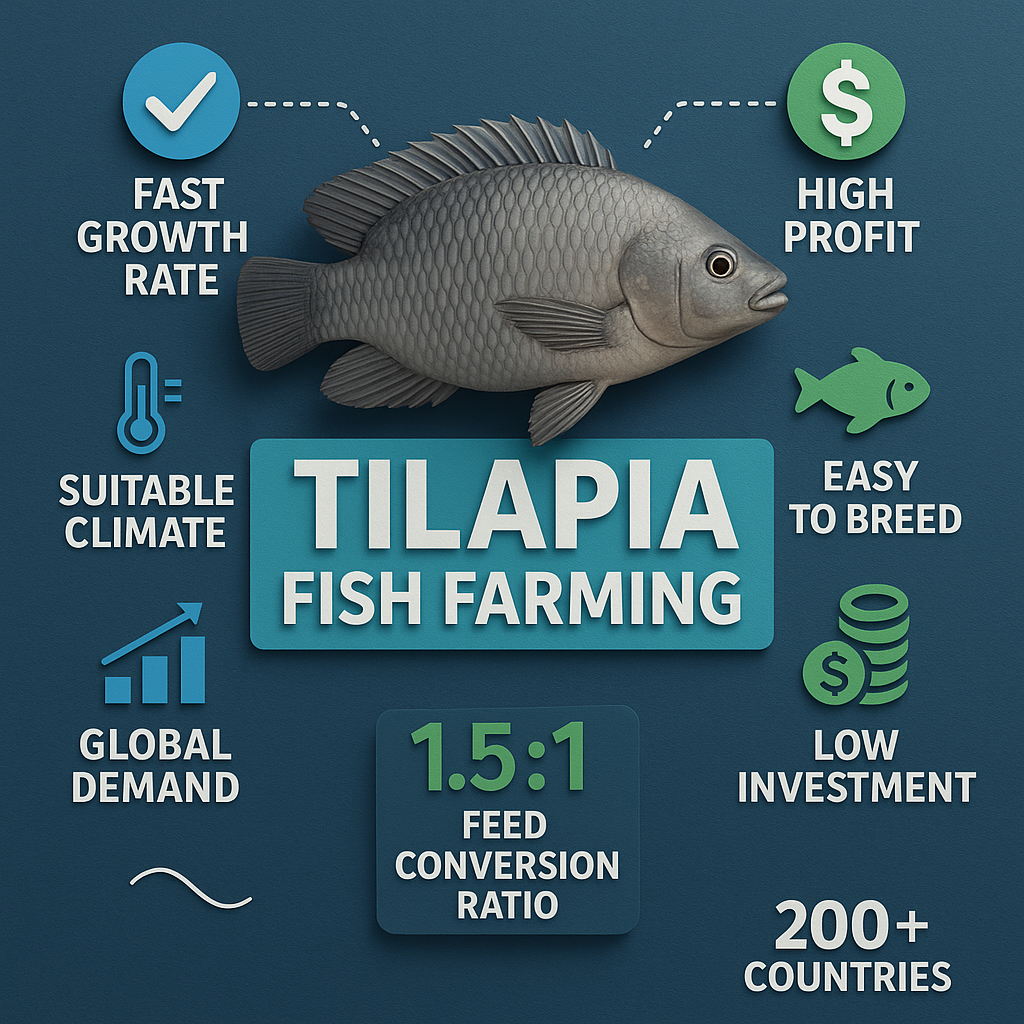
    Fast growth rate

    Low feed conversion ratio (1.5:1)

    Easy to breed

    Tolerant to varying water conditions

    Low investment, high return

    High market demand across 150+ countries


    Countries like China, Indonesia, Egypt, and the USA are the largest Tilapia producers and exporters.


    Suitable Climate & Water Conditions

    Tilapia thrives in tropical and subtropical climates.

    Temperature: 25–32°C

    pH Level: 6.5–8.5

    Dissolved Oxygen: Minimum 5 mg/L

    Salinity: Up to 15 ppt (can tolerate mild brackish water)


    Tilapia should not be farmed below 20°C as it reduces growth and can cause mortality.


    Farming Methods

    a) Pond Culture

    Most common and traditional method using natural or man-made ponds.

    b) Cage Culture

    Used in lakes or reservoirs; ideal for large-scale commercial production.

    c) Tank & RAS (Recirculatory Aquaculture System)

    Modern urban farming method; suitable for limited space with high stocking density.


    Breeding Process

    Tilapia breeds naturally and multiple times a year.

    Broodstock Ratio: 1 male : 3 females

    Spawning Temperature: 27–30°C

    Hatching Time: 3–5 days

    Fry to Fingerling Period: 3–4 weeks


    Farmers can use hormone-treated male monosex tilapia to increase yield and avoid unwanted breeding.


    Feeding & Management

    Feed Protein: 28–35%

    Feed Type: Floating pellets or farm-made feed

    Daily Feeding: 3–5% of body weight

    Water Change: 30–40% every 10–15 days


    Good feed and oxygenation ensure rapid growth and disease resistance.


    Cost Analysis & Investment

    Expense Estimated Cost (per 1000 fish)

    Pond/Tank Preparation $150–200
    Seed/Fingerlings $80–100
    Feed $250–300
    Labour & Maintenance $100
    Electricity/Water $70
    Miscellaneous $50
    Total Cost $650–750


    Market Price & Global Demand

    Tilapia sells in the international market at $2–$15 per kg depending on quality and country.

    Top importers: USA, Japan, EU, Middle East, Canada
    Top exporters: China, Indonesia, Egypt, Thailand, Philippines


    Profit Calculation

    Harvest: 1000 fish × 1.2 kg average = 1200 kg

    Selling Price: $4 per kg

    Total Revenue: $4800

    Total Cost: $750

    Net Profit: $4050 (≈ ₹3.3 lakh) per cycle (6–8 months)

    Health Benefits

    Rich in protein, omega-3, vitamin D & B12

    Supports brain and heart health

    Low in calories and fat

    Strengthens bones and immunity

    Improves muscle repair

    Nutrition Facts (per 100g)

    Nutrient Amount

    Energy 129 kcal
    Protein 26 g
    Fat 2.7 g
    Omega-3 200 mg
    Vitamin B12 2.5 µg
    Calcium 10 mg
    Iron 0.5 mg

    Medical & Industrial Uses

    Used in making protein supplements

    Fish collagen used in cosmetics and medicine

    Tilapia skin used in burn treatment and surgical bandages


    Risks & Disadvantages

    Sensitive to cold water

    Overbreeding can reduce pond oxygen

    Requires regular feed monitoring

    Overcrowding causes disease outbreaks

    Recipes & Eating Methods

    Popular dishes:

    Grilled Tilapia

    Tilapia Curry

    Fried Tilapia with spices

    Baked Tilapia with lemon butter

    Tilapia soup


    Marketing & Export Scope

    Tilapia is in high demand across hotels, restaurants, and supermarkets.
    Global Tilapia market value: $14.8 billion (2025) and growing 5–6% annually.

    Farmers can sell directly to exporters, online seafood platforms, or local distributors.


    Business Opportunities

    Integrated fish farming

    Fish feed manufacturing

    Fingerling hatchery

    Export packaging & logistics

    Fish processing & cold storage business


    FAQs

    Q1. How long does Tilapia take to grow?
    Around 6–8 months to reach 1 kg.

    Q2. What is the profit margin in Tilapia farming?
    60–80% profit per cycle.

    Q3. Which country is the largest producer?
    China, followed by Indonesia and Egypt.

    Q4. What is the average survival rate?
    85–90%.

    Q5. Is Tilapia safe to eat daily?
    Yes, it is safe and nutritious when farmed hygienically.

    Conclusion

    Tilapia farming is one of the most profitable and sustainable aquaculture businesses worldwide. With low cost, fast growth, and rising market demand, it offers huge potential for both small farmers and commercial investors. Whether for domestic sale or export, Tilapia ensures consistent income, employment, and nutritional value globally.


    tilapia fish farming, tilapia aquaculture, tilapia profit per kg, tilapia farming cost, tilapia health benefits, global fish market, tilapia business plan


    ✍️Farming Writers
    Love Farming Love Farmers

    Read A Next Post 👇

    https://farmingwriters.com/bighead-carp-fish-farming-complete-global-guide/

  • Follow Farming Writers on Pinterest Daily Farming Guides & Tips

    Farming Writers Pinterest

    Connect with Farming Writers on Pinterest for daily expert content: https://pin.it/1pYKrOFji

  • Farming Motivation  The Courage That Feeds the World

    World Farming Motivation

    Introduction: The Silent Strength of Those Who Feed the World

    In today’s world, where people chase luxury, speed, and convenience, the strength that keeps humanity alive remains hidden in the fields.
    Farmers wake before sunrise, work under the harsh sun, and rest only after giving life to millions.

    This is not just work.
    This is courage.
    This is purpose.
    This is farming.

    When the world sleeps, farmers prepare fields.
    When the world eats, farmers sacrifice meals.
    When the world complains, farmers keep moving.

    Farming is not just a profession; it is the bravery of the soul.


    1. Farming Is Built on Faith and Patience

    No other profession tests a person like farming.
    A farmer sows seeds with no guarantee — depending on rain, sun, soil, and time.

    He cannot rush growth.
    He cannot control nature.
    He can only trust.

    This trust is powerful.
    It teaches humanity that real success takes time.
    That growth is slow, silent, and steady.

    Farmers believe in tomorrow even when today is hard.
    This is the purest form of motivation.


    2. The Farmer’s Life Is a Lesson in Courage

    Most people fear failure.
    Farmers face failure every season — droughts, floods, pests, low prices — yet they rise again.

    Where others quit, farmers continue.
    Not because farming is easy,
    but because the world depends on them.

    Leadership is not loud; it is consistent.
    A farmer is the most consistent leader humanity has ever seen.


    3. Farming Teaches the World What Strength Really Means

    Strength is not lifting weights —
    strength is lifting a community.

    Strength is:

    Working despite uncertainty

    Feeding millions while staying hungry

    Smiling even when crops fail

    Hoping again when everything falls apart


    Farmers carry a strength that is deeper than achievements —
    it is the strength of survival.


    4. The Modern World Forgot the Roots That Feed It

    Today, society values actors, influencers, athletes —
    but forgets the farmer who keeps them alive.

    Countries celebrate technology, entertainment, and fashion —
    but hesitate to celebrate farming.

    This imbalance is dangerous.
    Because the world can live without gadgets,
    but it cannot live without food.

    True motivation is remembering the hands that make life possible.


    5. Young People Must Not Fear Farming — They Must Lead It

    Many youths think farming is old, outdated, or low-paying.
    This is a myth.

    Modern farming is a high-growth industry:

    Smart farming

    Hydroponics

    Vertical farming

    Organic farming

    Agri-tech startups

    Drone-technology

    Solar-powered irrigation


    The next global revolution will not come from apps —
    it will come from agriculture.

    Youth must return to soil — not as laborers,
    but as innovators, leaders, and creators.


    6. Farming Gives What Money Cannot Buy

    People chase money for comfort.
    But farming gives something greater:

    Peace

    Purpose

    Fresh air

    Healthy food

    Connection to nature

    Mental stability


    A farmer may not be rich in currency,
    but he is rich in life.

    Cities make people tired.
    Fields make people alive.


    7. Farmers Are the True Protectors of the Earth

    While industries pollute land, water, and air —
    farmers protect them.

    Sustainable farming practices heal the planet:

    Organic farming

    Crop rotation

    Natural fertilizers

    Water conservation

    Regenerative practices

    Soil restoration


    When a farmer works, the planet breathes.

    Farmers are not just food providers —
    they are Earth’s guardians.


    8. Farming Is the Ultimate Form of Hope

    Every seed is a message:
    “Tomorrow will be better.”

    Every harvest is a celebration:
    “Hard work pays off.”

    Every failure teaches:
    “Stand up again.”

    Farmers live life with hope —
    a hope that humanity desperately needs.


    9. The World Must Give Farmers the Respect They Deserve

    Farmers are not poor —
    they are made poor by society.

    They deserve:

    Better prices

    Government support

    Modern technology

    Insurance protection

    Global recognition

    Respect in media & education


    A nation grows when its farmers grow.


    10. Farming Is the Foundation of the Future

    In the next 20 years, the world will face:

    Food shortages

    Climate change

    Soil degradation

    Water scarcity

    Population growth


    The only solution is strong farming systems.

    Future leaders will not be those who control markets —
    but those who control food security.

    Farmers are the future.
    Farming is the future.


    Conclusion: Farming Is the Courage That Never Fails

    Farming Motivation is not only for farmers —
    it is for every person who wants to rise in life.

    Because farming teaches the truth:

    Believe

    Work

    Wait

    Rise

    Repeat


    Farmers live this cycle every day.
    Their courage feeds the world.
    Their strength holds the planet.
    Their hope shapes the future.

    To honor farmers is to honor life.

    farming motivation, courage of farmers, global agriculture inspiration, farmer life motivation

    ✍️Farming Writers

    Love farming Love farmers

    Read A Next Post 👇

    https://farmingwriters.com/youth-in-agriculture-next-generation-return-to-farming/

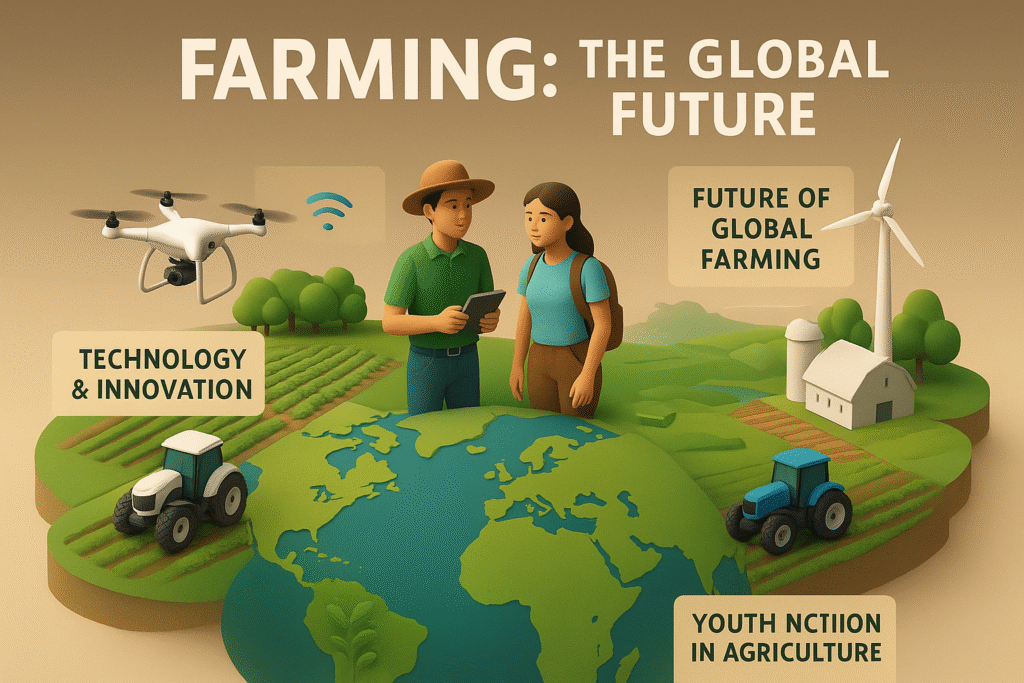
  • Farming Is the Future: Why the World Needs a New Generation of Farmers

    Farming writers

    Introduction: The World’s Silent Backbone

    When we think of innovation, we often imagine skyscrapers, satellites, and AI — but the true foundation of human survival remains farming. Every bite of food, every thread of cotton, every drop of milk — all come from the soil. Yet, today’s youth are drifting away from it.
    This post is a call — to the next generation — to see farming not as “old work,” but as the future’s most powerful profession.


    1. The Global Need for Farmers

    The United Nations predicts that by 2050, the world’s population will exceed 9.7 billion. Feeding this growing population requires at least 70% more food production than today.
    But here’s the crisis: the number of farmers is declining every year. In many countries, the average farmer’s age is above 55.
    Without young minds, agriculture risks collapsing under its own weight.

    The world doesn’t just need farmers.
    It needs educated, tech-driven, climate-aware farmers.
    It needs dreamers who grow food as a mission, not as a burden.


    2. Youth and the Power of Change

    Today’s generation holds something older farmers never had — technology, global awareness, and connection.
    A farmer with a smartphone can access:

    Real-time weather data

    Crop disease detection via AI

    Global market prices

    Organic certification systems


    Young people can blend ancient wisdom with modern tools — and make farming cool, sustainable, and profitable.


    3. Farming: The New Tech Frontier

    Agriculture is not just soil and seeds anymore  it’s drones, robotics, data analytics, hydroponics, and biotechnology.
    Countries like Japan and Israel are leading with innovation — turning deserts into green fields through technology.
    Meanwhile, in India, Africa, and South America, young entrepreneurs are proving that farming startups can be as exciting as tech startups.

    Imagine a youth from Kenya using drones to spray crops, or an Indian farmer using solar-powered irrigation.
    That’s the future — farming powered by innovation.


    4. Why the World Needs You — The New Farmer

    The modern farmer is not just a grower.
    He/She is a:

    Scientist – testing new seeds and soil methods

    Technologist – using IoT and AI for better yield

    Entrepreneur – building farm brands and exports

    Environmental hero – saving water, soil, and biodiversity


    When a youth becomes a farmer, the world gains not only food, but sustainability, employment, and balance.

    5. Reconnecting Humanity with Nature

    Urbanization has created a gap — between humans and the soil. The new generation must rebuild that bridge.
    Farming reconnects us to nature’s rhythm — sunrise, seasons, rain, and renewal.
    It teaches patience, gratitude, and teamwork with the planet.


    6. Farming as Freedom, Not Obligation

    In many parts of the world, farming was once seen as a burden — something people did because they had no choice.
    But today, farming is a lifestyle of freedom:

    Freedom to work with nature

    Freedom to create your own food

    Freedom to be self-reliant

    Freedom to innovate and lead sustainability


    Farming is not “backward.” It’s forward to roots.


    7. Global Examples of Young Farmers

    In Japan, young farmers use robots to harvest rice.

    In Brazil, agro-entrepreneurs grow organic coffee for world markets.

    In India, startups like KisanKonnect link farmers directly to urban consumers.

    In Africa, young women are turning wastelands into solar farms with crop cultivation.


    These stories show one truth farming belongs to the future, not the past.


    8. Conclusion: The Future Is in Your Hands

    The next 50 years will define whether humanity thrives or starves.
    We need youth who can feed the world  wisely, sustainably, and passionately.

    If you’re young and searching for meaning, look no further than the soil beneath your feet.
    Because the hands that touch the soil today will shape the future of the Earth tomorrow.

    Farming is not just work — it’s world-building.

    farming future, youth in agriculture, global farming, sustainable farming, modern agriculture, farmers motivation

    ✍️Farming Writers

    Love farming Love Farmers

    Read A next post 👇

    https://farmingwriters.com/farming-motivation-global-inspiration/

  • Farming  – Why the Future of the World Depends on Farmers

    Gobal Farming

    Introduction: The World That Forgot Its Roots

    In our era of skyscrapers, artificial intelligence, and digital currencies, humanity has achieved extraordinary progress — yet it stands on fragile ground.
    Because beneath all our advancements lies a truth we’ve quietly ignored: no technology can replace farming.

    Every meal we eat, every breath we take, every drop of clean water we consume — all trace back to the same origin: the farmer and the fertile earth.

    Yet across continents, the world’s farmers struggle with poverty, climate change, and neglect.
    We celebrate billionaires who build apps but overlook those who build life itself.

    Farming is not just about crops. It is about continuity — the heartbeat of the planet.
    Without farmers, humanity would starve not just physically but spiritually.

    1. The Universal Role of Farming in Human Survival

    From Africa to Asia, from America to Europe — farming is the one profession that unites all of humanity.
    Before technology, before trade, before money — there was agriculture.

    Every civilization in history, from Mesopotamia to the Mayans, began when humans learned to cultivate land.
    Farming created cities, trade, and culture.
    Without it, no civilization could have existed.

    Even today, while the world dreams of space travel, our survival still depends on soil, sunlight, and seeds.

    Farming is not a career choice — it is the foundation of existence.

    1. Food: The Real Currency of the Future

    People chase money, yet forget that money can’t be eaten.
    Every coin, every currency, every nation ultimately depends on food security.

    In the coming decades, global population is expected to cross 9.7 billion by 2050.
    To feed everyone, the world must increase food production by more than 70% — but with less land and less water.

    This means the future’s true billionaires won’t be tech giants — they’ll be farmers and agricultural innovators.

    As climate change disrupts rainfall and soil fertility, the world must turn back to the wisdom of farming — blending ancient practices with modern science.

    1. Farming and Global Economy: The Hidden Engine

    Agriculture is the world’s largest employer — supporting nearly one-third of the global workforce.
    In countries across Africa, Asia, and Latin America, it is the backbone of livelihoods.

    Even in developed economies, farming drives the food, textile, biofuel, and industrial sectors.
    Every loaf of bread, every cotton shirt, every drop of bio-ethanol — begins in the soil.

    Global GDP may measure technology, but the world economy rests quietly on agriculture’s shoulders.
    When farming suffers, inflation rises. When harvests fail, economies fall.

    Farming is not a background industry. It is the invisible power that feeds the global system.

    1. Farmers: The Most Undervalued Professionals on Earth

    Think about it — a farmer produces what every billionaire consumes.
    Yet he remains poor, invisible, and often hopeless.

    Across continents, millions of farmers face the same struggles:

    Unpredictable weather

    Debt and market instability

    Low recognition and poor income

    The irony is painful — the world that depends on farmers gives them the least reward.

    Respect for farmers is not charity; it’s justice.
    Because they give the world its most essential product — life itself.

    1. Modern Farming: Where Technology Meets Tradition

    Agriculture is no longer about ploughs and oxen.
    Modern farming combines tradition with innovation:

    Drones and satellite imagery monitor crops in real time.

    Artificial intelligence predicts diseases and rainfall.

    Vertical and hydroponic farms grow food in cities.

    Gene-edited crops resist drought and pests.

    Blockchain ensures fair trade and traceable food chains.

    In nations like the USA, Israel, the Netherlands, Japan, and Australia — smart farming has transformed agriculture into a billion-dollar technology industry.

    The world doesn’t need to abandon farming — it needs to redefine it.

    1. The Psychological Power of Farming

    While the corporate world runs on deadlines and stress, farmers live by nature’s rhythm — slow, honest, and peaceful.

    Psychologists now call this “eco-therapy” — reconnecting with soil to heal mental fatigue.
    Working with plants releases dopamine, reduces anxiety, and restores emotional balance.

    In many countries, hospitals and schools have started introducing therapeutic farming programs.
    Because soil doesn’t just grow crops — it grows calmness.

    The future of mental health may very well begin in the garden.

    1. Farming and Environmental Balance

    Climate change has become the biggest threat to humanity.
    Deforestation, pollution, and industrial waste are destroying natural balance — yet the solution lies in the same soil we damage.

    Farming done right — organic, regenerative, and sustainable — can:

    Restore soil fertility

    Absorb carbon dioxide

    Protect biodiversity

    Recycle natural water cycles

    Farmers are the frontline environmentalists of the planet.
    They don’t protest with banners — they protect by planting.

    1. Youth and the Future of Global Farming

    One of the world’s greatest challenges is the age gap in agriculture.
    In many countries, the average farmer is over 55 years old.
    Younger generations are leaving villages for cities, chasing digital dreams.

    But now, a new revolution is rising — Agri-Entrepreneurship.
    Young minds are combining farming with business, technology, and sustainability.

    They are creating startups in:

    Organic food production

    Agri-tech and drone farming

    Soil and water management

    Urban farming projects

    Farm-based tourism and education

    The youth are realizing that farming isn’t backward — it’s the foundation of the future economy.

    1. Global Food Crisis: A Warning to the World

    The world produces enough food for everyone — yet millions go hungry.
    Why? Because of inequality, waste, and poor planning.

    According to the UN, over 820 million people still face hunger every year, while nearly one-third of food is wasted globally.

    If this continues, food scarcity could spark wars, migration crises, and social collapse.

    The solution lies not in technology alone but in respecting and investing in agriculture again — fairly, sustainably, and locally.

    1. Farming as a Philosophy of Life

    Farming is more than work — it’s a philosophy.
    It teaches patience, gratitude, and faith.

    A seed doesn’t grow overnight; it grows with care, time, and trust — just like life.

    When humanity forgets farming, it forgets patience.
    When it forgets patience, it loses balance.

    In a world obsessed with instant results, farming reminds us that real growth takes time.

    1. The Moral Responsibility of Modern Society

    Every consumer today has a role in shaping the future of farming.
    Every time we choose imported, processed food over local produce, we weaken our farmers.

    Modern society must shift its values:

    Buy local, buy seasonal.

    Support fair trade.

    Reduce food waste.

    Encourage sustainable farming education.

    Respect for farmers must become a global culture, not a campaign.
    Without them, there will be no sustainable planet.

    1. Farming Is the Future, Not the Past

    The world often looks at farming as history — but in truth, it’s humanity’s only future.

    In the coming decades, agriculture will define:

    Global peace, through food stability.

    Economic security, through sustainable trade.

    Health and nutrition, through organic produce.

    Environmental recovery, through soil regeneration.

    The nations that protect farmers today will lead tomorrow.

    Conclusion: Back to the Soil, Back to Sanity

    Farming is not just about growing food — it’s about growing humanity.
    It is where science meets soul, economy meets ecology, and effort meets peace.

    If the world truly wants progress, it must start with the people who plant hope in the ground every morning — the farmers.

    They don’t just feed us — they keep the Earth alive.

    ✍️Farming Writers

    Love farming  Love farmers

    Read A Next Post 👇

    https://farmingwriters.com/the-power-of-never-giving-up/