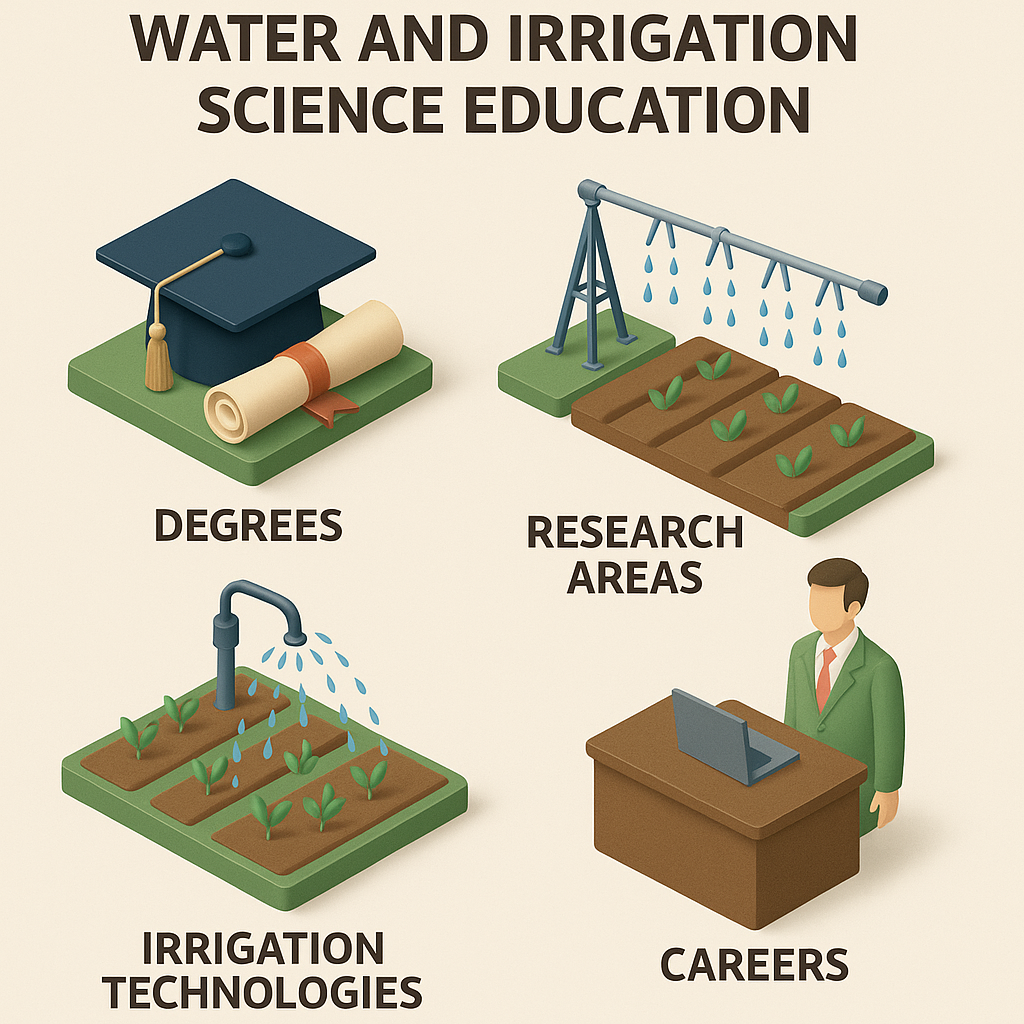
Water and irrigation science form one of the strongest pillars of agricultural education in the United States. As climate patterns change, water scarcity increases and sustainability becomes more important, American universities have built advanced programs focused on irrigation engineering, water resource management, hydrology, groundwater science and agricultural water technology.
This article provides a complete and deeply structured study of how water and irrigation science is taught, researched and practiced in the United States. It includes information on degree programs, research areas, universities, field labs, career options and salary expectations.
- Importance of Water and Irrigation Science in US Agriculture
The United States has highly diverse agricultural environments—from the dry western regions to the humid midwestern and southeastern states. Because of this, water management is one of the most critical components of American farming. Water and irrigation science supports:
Efficient irrigation design
Water conservation techniques
Climate-smart agriculture
Groundwater monitoring
Watershed management
Soil–water interactions
Crop water requirement calculations
Environmental protection
Precision irrigation technologies
Drought and flood management
Every major agricultural region in the USA depends on irrigation experts, water scientists and hydrologists.
- Structure of Water and Irrigation Science Education
Water and irrigation science in the United States is taught across multiple degree levels, from undergraduate to doctoral programs.
Undergraduate Programs (BS Irrigation Science / BS Irrigation Engineering / BS Water Science)
Common undergraduate subjects include:
Soil and water engineering
Irrigation systems design
Groundwater science
Surface irrigation
Drip and sprinkler technologies
Hydraulics and fluid mechanics
Watershed hydrology
Climate and water cycles
Water quality management
Environmental engineering basics
Farm water supply systems
Water conservation practices
Undergraduate students receive practical training in irrigation labs, field stations and hydrology units.
Graduate Programs (MS Irrigation Engineering / MS Water Resources / MS Hydrology)
Master’s programs focus on specialization such as:
Agricultural irrigation systems
Groundwater hydrology
Water harvesting systems
Climate-smart water solutions
Drip and micro-irrigation technologies
Water management for high-value crops
Remote sensing for water analysis
Canal system design
Flood control structures
Drought water management
Graduate students usually work on projects involving modeling, field testing or laboratory research.
Doctoral Programs (PhD Water Resources / PhD Irrigation Science)
PhD research areas include:
Water-use efficiency modeling
Drone-based irrigation assessment
Groundwater recharge systems
Water–climate interaction models
Soil moisture monitoring technology
Evapotranspiration measurement systems
Precision irrigation algorithms
Drought prediction modeling
Irrigation automation systems
Water distribution network design
PhD students often publish research papers and work with national institutes.
- Top Universities for Water and Irrigation Science in the USA
American universities offering strong irrigation and water science programs include:
Utah State University
Colorado State University
University of California, Davis
Texas A&M University
University of Arizona
North Carolina State University
University of Florida (IFAS)
Kansas State University
Washington State University
Oregon State University
These institutions maintain:
Hydraulics labs
Irrigation technology centers
Watershed modeling units
Soil–water interaction labs
Climate research facilities
Remote sensing centers
Field-scale irrigation demo plots
- Major Research Areas in Water & Irrigation Science
Research activities in the United States cover the full range of water-related challenges:
Irrigation Technology Development
Drip, sprinkler, micro-sprinkler, center pivot and sub-surface irrigation systems.
Groundwater Hydrology
Aquifer behavior, groundwater recharge, well design and pumping systems.
Climate-Smart Water Management
Water use efficiency, drought resilience, crop–climate models and water budgeting.
Remote Sensing in Irrigation
Use of satellite data, drones and sensors for moisture measurement.
Watershed Science
Stream flow modeling, flood control, water harvesting and watershed conservation.
Soil–Water Interactions
Infiltration, drainage, soil water holding capacity and root water uptake.
Irrigation Automation
Sensor-based systems, AI-controlled irrigation, mobile-controlled pumps.
Water Quality Studies
Pollution control, nutrient loading, runoff study, water purification systems.
These research fields support sustainable agriculture productivity.
- Laboratory and Field Training
Students receive extensive training, including:
Irrigation structure measurements
Flow rate testing
Pump performance evaluation
Canal cross-section analysis
Water distribution modeling
Soil moisture sensor calibration
Drone-based irrigation mapping
Water sampling
Surface and sub-surface irrigation design
Field trials for water efficiency
Field stations simulate real farm conditions for better learning.
- Careers in Water and Irrigation Science
Graduates can work in:
Irrigation companies
Precision agriculture firms
Water management authorities
Government irrigation departments
Environmental engineering firms
Hydrology agencies
Research institutions
Non-profit water conservation organizations
Agricultural supply companies
University extension offices
Common job roles:
Irrigation engineer
Hydrologist
Water resource specialist
Watershed manager
Soil–water scientist
Precision irrigation technician
Water conservation officer
Irrigation consultant
Water system designer
Climate–water analyst
- Salary Scope in the USA
Water and irrigation science professionals earn strong and stable salaries.
Common ranges (approximate patterns):
Irrigation engineer: moderate to high salary depending on experience
Hydrologist: competitive government and private sector pay
Water resource specialist: stable career with strong demand
Soil–water scientist: consistent earnings
Precision irrigation technician: high demand
The increasing need for efficient water management ensures long-term job growth.
- Opportunities for International Students
International students benefit from:
research grants
modern irrigation labs
advanced hydrology systems
strong internships
project-based learning
assistantships in MS/PhD
global recognition of US degrees
Many students from India, Africa and Asia pursue water-related studies in the USA because these skills are in high demand worldwide.
- Admission Requirements for International Students
Typical requirements:
High school science background (for BS)
Degree in agriculture/engineering/environment (for MS)
TOEFL/IELTS
Academic transcripts
Statement of Purpose
Letters of recommendation
Research interest (for PhD)
Some universities may require GRE for graduate admission.
- Why Water and Irrigation Science Education in the USA Is Highly Respected
The USA stands out because:
Universities have some of the world’s best irrigation labs
Strong funding supports water research
Students get hands-on experience
Precision irrigation technology is integrated into the curriculum
The US invests heavily in climate-smart farming
Research outcomes influence global water policy and irrigation systems
For these reasons, water and irrigation science education in the USA is internationally recognized for excellence.
(FAQs)
- What is the importance of irrigation science in the USA?
It supports sustainable crop production, water conservation and climate-resilient farming systems.
- Which degree is best for irrigation science?
BS Irrigation Engineering or BS Water Science, followed by MS in Water Resources or Irrigation Engineering.
- Do students get field experience?
Yes. Field demonstrations, irrigation design labs and hydrology experiments are mandatory.
- Which university is best for irrigation engineering?
Utah State University, Colorado State and UC Davis are considered top institutions.
- Can international students study irrigation in the USA?
Yes. Many universities accept international students and offer assistantships.
- What jobs are available in irrigation science?
Irrigation engineer, hydrologist, water resource specialist, watershed manager and precision irrigation technician.
- Is irrigation engineering a good career?
Yes. Water scarcity and climate challenges have increased the demand for irrigation experts.
- What subjects are included in the curriculum?
Soil–water interactions, hydraulics, irrigation systems, climate-water cycles and hydrology modeling.
- Are irrigation systems part of precision agriculture?
Yes. Many US farms use automated and sensor-based irrigation systems.
- Do irrigation professionals work in government agencies?
Yes. Many work in federal, state and local agencies responsible for water management.
Conclusion
Water and irrigation science is a critical discipline within the US agriculture education ecosystem. It combines engineering, hydrology, soil science, technology and climate studies to ensure sustainable water use in farming. Students gain strong theoretical understanding and hands-on technical competence, preparing them for careers that support global water and food security.
✍️Farming Writers Team
Love Farming Love Farmers
Read A Next Post 👇
https://farmingwriters.com/soil-science-education-in-the-usa/