Introduction: Why Tomato Needs Scientific Packaging
Tomato is one of the most sensitive vegetables in post-harvest handling. Its soft skin, high respiration rate and rapid moisture loss make it extremely vulnerable during transport. Traditional open crates cause:
15–35% damage
Pressure bruising
Over-ripening
Colour fade
Cracked skin
Fungal growth
Modern packaging is essential because it:
Extends shelf life
Reduces transport losses
Improves appearance
Helps farmers access supermarkets
Allows branding advantages
Enables direct selling with trust
This guide outlines every detail a farmer needs to build a profitable packaging system.
- Tomato Packaging Material System (Three-Layer Architecture)
Tomato packaging must follow a structured system to prevent damage.
2.1 Layer 1: Internal Protection Layer
Purpose: Cushion the tomato and prevent friction and bruising.
Best internal layers:
Soft paper liner
Anti-sweat breathable film
Molded paper trays (for premium tomatoes)
Foam mesh sleeves (for export-grade)
Functions:
Reduces impact
Absorbs moisture
Maintains firmness
2.2 Layer 2: Outer Structural Layer (Corrugated Box)
The main protection for transport.
Ideal box type:
5-ply corrugated fibreboard box
Ventilated design
Moisture-resistant coating
Smooth inner walls
Key box strength requirements:
Burst strength: 12–16 kg/cm²
Load capacity: 3 kg / 5 kg / 10 kg
Ventilation ratio: 7–10%
2.3 Layer 3: Branding & Labeling Layer
Branding helps tomatoes stand out and allows farmers to become suppliers instead of commodity sellers.
The outer layer should include:
Brand name
Grade name
Net weight
Variety (e.g., Arka Rakshak, Pusa Ruby)
Harvest date blank
QR code for traceability
Storage instructions
Matte printed minimal design
Tomato boxes must look clean, not flashy.
- Tomato Grading Standards
Tomatoes are always sold by grade, not just weight.
Grade A – Premium Retail Grade
Uniform colour
Firm texture
55–75 mm size
Smooth skin
No cracks
Grade B – General Retail Grade
Slight marks
Mixed size
Slight softness allowed
Grade C – Processing Grade
Overripe
Cracked skin
Shape irregularities
Important:
Never mix grades inside the same box.
- Box Sizes & Packaging Configurations
Use CaseBox SizeWeightPriorityRetail pack300 × 200 × 110 mm3 kgSupermarketsGeneral retail400 × 300 × 120 mm5 kgLocal storesTransport/Wholesale500 × 350 × 150 mm10 kgLong distancePremium display250 g – 1 kg traysRetailHigh visual appeal
Premium tomatoes require clamshell trays for uniform presentation.
- Scientific Storage System
Tomatoes are temperature-sensitive. Wrong storage conditions cause chilling injury.
Optimal Storage Conditions
Temperature: 12–15°C
Relative Humidity: 85–90%
Airflow: Light circulation
Do Not Store
Below 10°C (causes watery texture)
In sealed rooms without airflow
Under direct sunlight
Near ethylene-sensitive produce
- Transport Guidelines
Transport accounts for most post-harvest loss.
Transport Rules
Load tomatoes during cool hours (early morning or night)
Avoid heavy stacking pressure
Transport vehicles must have ventilation
Use anti-slip mats to stabilize boxes
Do not shake or tilt crates excessively
- Retail Rack Display Standards
Supermarkets follow specific display rules to prevent losses.
Placement
Eye-level shelf
Shallow layer arrangement
Keep ripe and semi-ripe tomatoes separate
Display in colour uniform blocks
Atmosphere
LED lighting
No heat lamps
Regular rotation to avoid overripe spots
Daily Practices
Remove soft tomatoes
Light misting to maintain crisp appearance
FIFO (First In First Out) stock rotation
- Tomato Branding System
Branding increases price, trust and customer recall.
Elements of Strong Branding
Minimal, clean logo
Natural colour palette (brown, green, white)
Grade marking
QR code for farm information
Harvest-date panel
Simple tagline (e.g., “Fresh from our fields”)
Why Branding Works
Customers believe packaged products are safer
Supermarkets prefer branded supplies
Traceability creates repeat orders
Clear packaging increases shelf appeal
- Direct Selling Strategy for Tomato Farmers
Direct selling increases income significantly.
9.1 WhatsApp Business Catalogue
Include:
Prices
Photos
Harvest information
Delivery areas
Subscription options
9.2 Weekly Vegetable Box Model
Tomato is an essential component of subscription boxes.
Example:
Family Box 1: 1 kg tomato + mixed vegetables
Family Box 2: 2 kg tomato + weekly greens
Premium Box: Graded tomatoes in punnets
9.3 Partnerships
Sell to:
Restaurants
Tiffin suppliers
Juice and salad bars
Housing societies
9.4 Direct-to-Store Selling
Present branded 3 kg or 5 kg boxes to:
Mini supermarkets
Organic stores
Kirana shops
- Packaging Cost & Economic Advantage
Packaging TypeCost3 kg printed box₹10–155 kg printed box₹15–25Clamshell tray₹3–7Inner liner₹0.50–1
Even minimal packaging increases selling price by 20–60%.
- (FAQ)
Q1. Which is the best packaging for tomatoes?
A 3–5 kg ventilated corrugated box is ideal for retail and small supermarkets.
Q2. What is the correct storage temperature?
12–15°C keeps tomatoes firm and fresh.
Q3. Does branding matter for tomatoes?
Yes. It increases supermarket acceptance and increases customer trust.
Q4. Why avoid temperatures below 10°C?
Tomatoes lose texture and flavour at low temperatures.
Q5. How to reduce damage during transport?
Use soft liners, avoid overloading and maintain ventilation.
- Conclusion
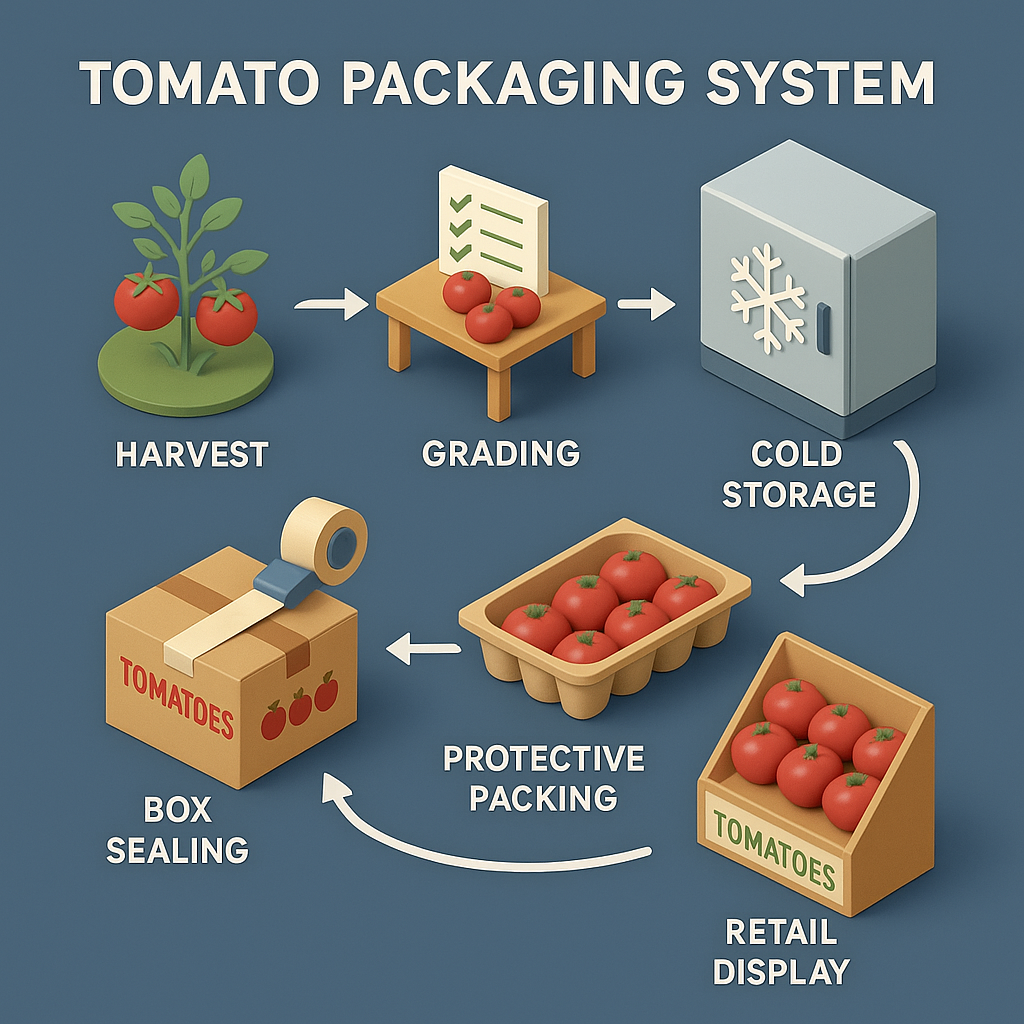
Tomato packaging is a complete system that extends beyond simple transport containers. It is a structured process involving grading, protection, branding, storage and marketing. Proper packaging reduces losses, improves shelf life and enhances visual appeal. Branding establishes trust and helps farmers enter organized retail markets. By following the scientific packaging and selling strategies outlined in this guide, farmers can convert tomatoes into a high-value, high-income crop with consistent profitability.
✍️Farming Writers Team
Love Farming Love Farmers
Read A Next Post 👇
https://farmingwriters.com/capsicum-packaging-branding-storage-direct-selling-guide/


Leave a ReplyShare your thoughts: We’d love to hear your farming ideas or experiences!