1. Introduction
Carrot (Daucus carota) is one of the most widely cultivated root vegetables in the world, known for its bright orange color and high nutritional value. Originating from Central Asia, carrot is now grown across Europe, Asia, and North America.
It is widely consumed in salads, juices, curries, pickles, soups, desserts, and snacks. Carrot is especially famous for being rich in beta-carotene, which supports eye health, immunity, and overall wellness. Its short maturity period and high market demand make it a profitable choice for farmers.
2. Nutritional Value (per 100 g raw carrot)
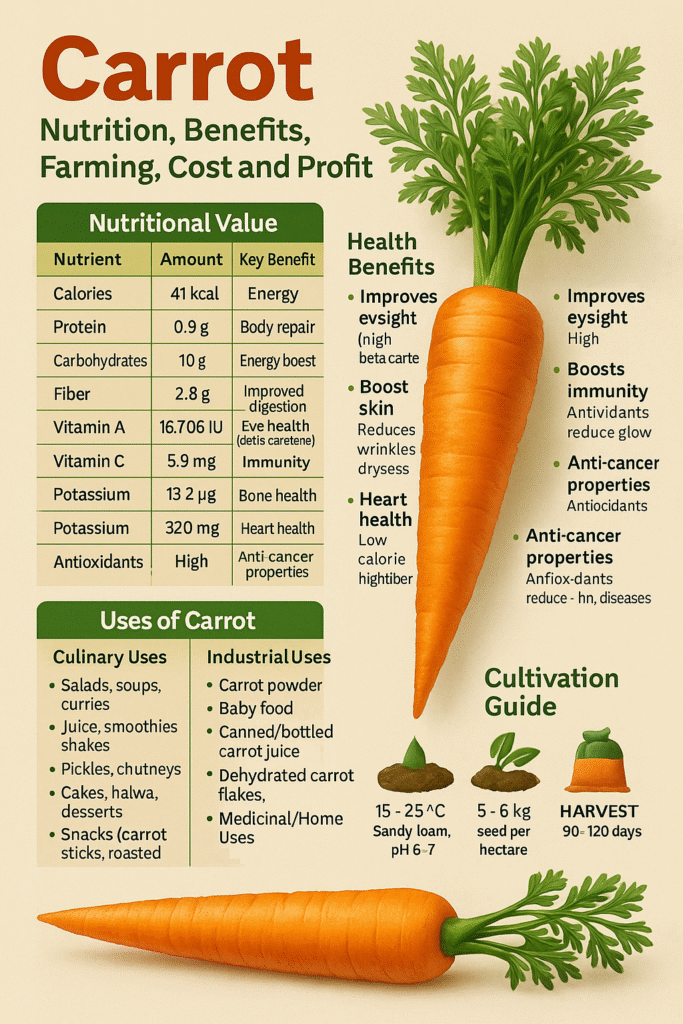
NutrientAmountKey BenefitCalories41 kcalEnergy & low-fat dietProtein0.9 gBody repairCarbohydrates10 gEnergy boostFiber2.8 gImproved digestionVitamin A16,706 IUEye health (beta-carotene)Vitamin C5.9 mgImmunityVitamin K13.2 µgBone healthPotassium320 mgHeart healthAntioxidantsHighAnti-aging & disease protection
3. Health Benefits of Carrot
Improves eyesight – Extremely rich in beta-carotene (Vitamin A).
Boosts immunity – Antioxidants and Vitamin C protect against infections.
Good for skin – Reduces wrinkles, dryness, and improves glow.
Heart health – Potassium regulates blood pressure.
Supports weight loss – Low-calorie, high-fiber vegetable.
Improves digestion – Fiber enhances bowel movement.
Controls diabetes – Low glycemic index helps stabilize blood sugar.
Anti-cancer properties – Antioxidants reduce risk of chronic diseases.
4. Uses of Carrot
Culinary Uses
Salads, soups, curries
Juice, smoothies, shakes
Pickles, chutneys
Cakes, halwa, desserts
Snacks (carrot sticks, roasted carrots)
Industrial Uses
Carrot powder
Baby food
Canned/bottled carrot juice
Dehydrated carrot flakes
Medicinal/Home Uses
Improves digestion
Natural skin cleanser
Strengthens vision
5. Cultivation Guide
Climate
Cool-season crop
Ideal temperature: 15–25°C
Soil
Deep sandy-loam soil
pH: 6–7
Soil must be stone-free for smooth carrot growth
Land Preparation
Fine tilth required
2–3 ploughings, followed by leveling
Seed Requirement
5–6 kg per hectare
Sowing Time
North India: October–December
South India: August–October
Irrigation
Light irrigation after sowing
Then every 7–10 days
Fertilizer Requirement
FYM: 15–20 tons/ha
NPK: 60:40:40 kg/ha
Harvest
90–120 days after sowing
Hand harvesting recommended
Average Yield
25–30 tons per hectare
6. Cost and Profit Analysis (INR & USD)
Cost of Cultivation (per hectare)
ItemCost (INR)Cost (USD approx.)Seeds₹6,000$72Fertilizers₹10,000$120Labor₹25,000$300Irrigation₹8,000$96Land preparation₹12,000$144Miscellaneous₹9,000$108Total Cost₹70,000$840
Yield and Revenue
Yield: 25,000–30,000 kg per hectare
Average Market Price:
India: ₹20–40 per kg
International: $1.2–2.0 per kg
Profit Calculation (India)
At ₹25 per kg:
Revenue = 25,000 kg × ₹25 = ₹6,25,000
Profit = ₹6,25,000 – ₹70,000 = ₹5,55,000 per hectare
Profit Calculation (Export)
At $1.5 per kg:
Revenue = 25,000 × $1.5 = $37,500
Profit = $37,500 – $840 = $36,660 per hectare
Carrot is one of the most profitable root vegetables for both domestic and export markets.
7. Global Market Overview
Major Producers
China
India
Uzbekistan
USA
Russia
Major Exporters
Netherlands
China
Spain
USA
Mexico
Demand Drivers
Health-conscious consumers
Juice and beverage industry
Baby food industry
Fast-growing salad market
Global carrot demand increases every year due to its nutritional value and culinary versatility.
8. Marketing and Selling Strategies
Sell fresh in local markets
Supply to restaurants & hotels
Packaging for supermarkets
Processing into juice/powder
Export to Middle East & Europe
Sell to online grocery chains (Blinkit, BigBasket, Amazon Fresh)
9. Frequently Asked Questions (FAQs)
Q1. Are carrots profitable to grow?
Yes, extremely profitable with up to ₹5.5 lakh profit per hectare.
Q2. How long does carrot take to mature?
About 90–120 days.
Q3. Which variety is best?
Pusa Rudhira
Nantes
Pusa Kesar
Imperator
Q4. What climate is best for carrots?
Cool climate with temperatures between 15°C–25°C.
Q5. Can carrots be exported?
Yes, India exports large quantities to UAE, Bangladesh, Sri Lanka, and Europe.
10. Conclusion
Carrot is a high-value vegetable that offers strong health benefits and excellent market potential. Its rich content of Vitamin A, fiber, and antioxidants makes it one of the most nutritious vegetables in the world.
For farmers, carrot farming is profitable due to its low cost, short duration, and strong market demand. Its global presence ensures farmers receive consistent income throughout the year.
Carrot farming is suitable for beginners and professionals alike, offering great returns in both local and export markets.
✍️Farming Writers
Love farming Love farmers
Read A Next Post 👇


Leave a ReplyShare your thoughts: We’d love to hear your farming ideas or experiences!