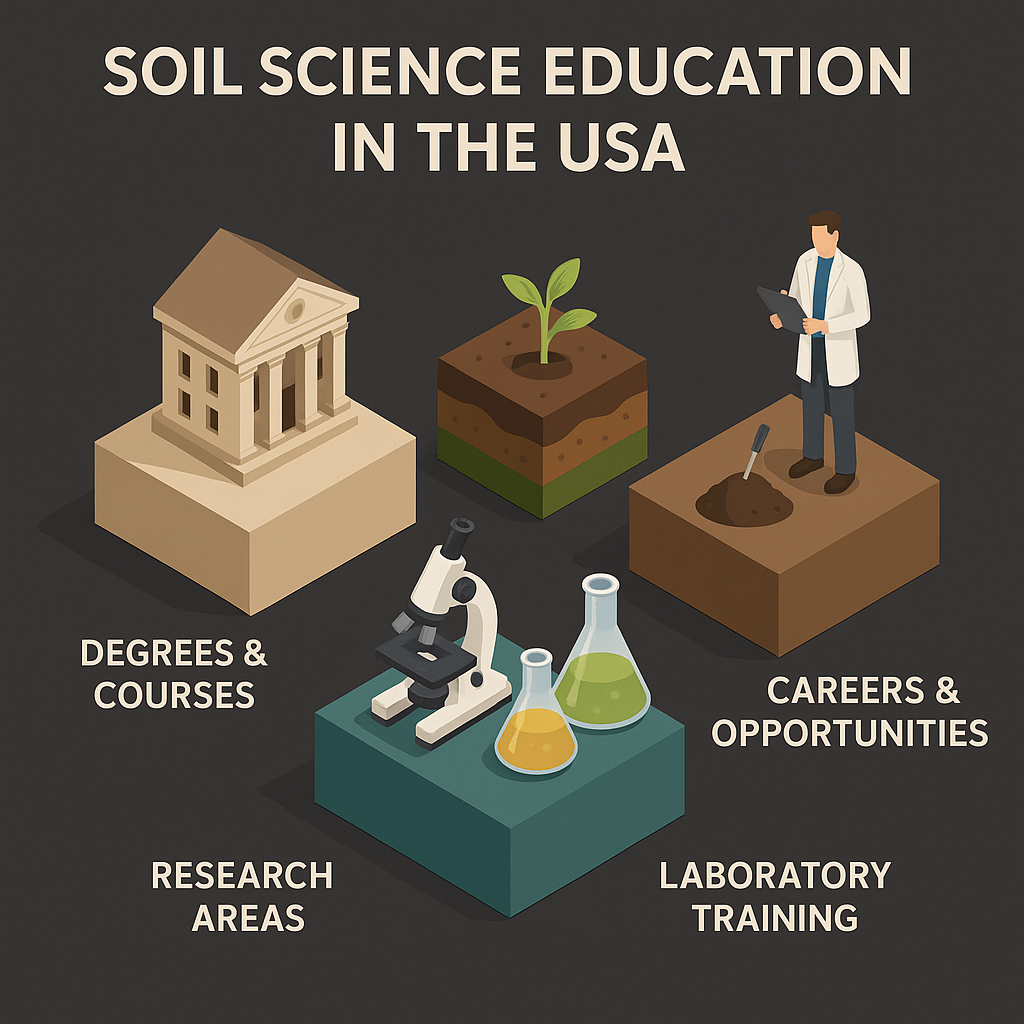
Soil science is one of the most essential disciplines in American agriculture education. It forms the scientific base for crop production, water management, climate-smart agriculture, soil fertility, environmental conservation and sustainable farming practices. In the United States, soil science is taught with a highly advanced, research-oriented and technology-integrated approach.
This article provides a complete and deeply structured overview of soil science education in the USA, including degree programs, fieldwork requirements, research areas, universities, career pathways, salaries and international student opportunities. The objective is to provide clear and original knowledge suitable for students, researchers, farmers and agriculture professionals worldwide.
- Importance of Soil Science in the United States
The United States has vast agricultural lands, highly diverse soil types and advanced crop production systems. Soil science plays a central role in:
Soil fertility management
Water and irrigation optimization
Soil conservation
Land-use planning
Climate impact studies
Nutrient management
Organic matter building
Soil microbiology
Sustainable farming systems
Environmental protection
Because American agriculture depends on scientific soil management, soil science is one of the strongest academic fields in US agriculture universities.
- Structure of Soil Science Education
Soil science programs in the United States are offered at undergraduate, graduate and doctoral levels. The structure includes theory, laboratory work, experimental field research and technology-based training.
Undergraduate Programs (BS Soil Science / BS Crop and Soil Sciences)
Undergraduate soil science degrees normally include the following subjects:
Fundamentals of soil science
Soil chemistry
Soil physics
Soil microbiology
Soil fertility and plant nutrition
Soil classification and mapping
Irrigation and drainage
Land-use planning
Crop production systems
Soil conservation and erosion control
Soil organic matter and carbon cycles
Environmental soil science
GIS, GPS and remote sensing
Students receive hands-on training in:
Soil sampling
Soil testing
Laboratory nutrient analysis
Field research plots
Soil mapping surveys
Graduate Programs (MS Soil Science / MS Environmental Soil Science)
Graduate-level soil science degrees emphasize specialization. Major focus areas include:
Soil fertility management
Soil biochemistry
Soil and water science
Soil carbon sequestration
Environmental soil chemistry
Soil-plant-water interactions
Pedology and soil classification
Soil physics modeling
Climate-smart soil practices
These degrees include thesis research and laboratory investigations.
Doctoral Programs (PhD Soil Science)
PhD programs in soil science involve research such as:
Soil carbon dynamics
Greenhouse gas emissions
Water infiltration modeling
Soil microbial ecology
Crop-soil interaction under climate change
Precision nutrient management
Soil contamination and remediation
Soil salinity management
Biochar applications
Soil-based climate adaptation models
PhD candidates often publish academic papers and work with research centers.
- Top Universities for Soil Science in the USA
Many US agricultural institutions are global leaders in soil science. Some of the strongest universities include:
Iowa State University
University of California, Davis
North Carolina State University
University of Florida (IFAS)
Texas A&M University
Kansas State University
Purdue University
Michigan State University
Ohio State University
Washington State University
These universities maintain advanced:
Soil physics labs
Soil chemistry labs
Climate-controlled greenhouses
Hydrology laboratories
Soil microbiology research centers
Experimental farms
Precision agriculture centers
- Major Research Areas in Soil Science in the USA
American soil science research covers a wide range of fields:
Soil Fertility and Plant Nutrition
Study of nutrient cycles, fertilizers, organic matter management and soil amendments.
Soil Chemistry
Chemical reactions in soils, nutrient availability, contamination, mineral interactions and pH management.
Soil Physics
Water movement, soil structure, compaction, infiltration and drainage modeling.
Soil Microbiology
Study of soil organisms, root–microbe interaction, nutrient cycling and biological soil fertility.
Pedology and Soil Classification
Study of soil formation, soil types, soil horizon classification and soil mapping.
Climate-Smart Soil Science
Soil carbon storage, climate adaptation, drought resilience and soil-based climate mitigation.
Precision Soil Management
Use of sensors, drones, satellite data and GPS to manage soil fertility and field variability.
Irrigation and Water Science
Soil moisture modeling, irrigation efficiency, water-saving technologies and watershed management.
These research areas contribute to high-yield and sustainable agriculture across the USA.
- Laboratory Training and Field Experience
Soil science students receive extensive lab and field exposure:
Soil texture, structure and color analysis
Microscopic examination of soil microbes
Chemical analysis of nitrogen, phosphorus, potassium
pH testing and nutrient deficiency analysis
Soil sample preparation and drying
Water infiltration tests
Hydrology measurements
Soil classification surveys
Field plot experiments
Soil moisture sensor training
This practical component is one of the strongest features of soil science education in the USA.
- Careers in Soil Science in the United States
Graduates with soil science degrees work in several sectors:
Agronomy companies
Soil testing labs
Fertilizer and nutrient firms
Environmental agencies
Government agriculture departments
US Department of Agriculture (USDA)
Soil conservation agencies
Water management authorities
Precision agriculture firms
Research institutions
Universities and extension services
Popular roles include:
Soil scientist
Soil conservationist
Soil fertility specialist
Environmental soil researcher
Hydrology technician
Precision agriculture specialist
Land-use planner
Soil testing laboratory analyst
Nutrient management consultant
- Salary Scope in Soil Science
Income levels depend on specialization, experience, state and industry.
Common salary patterns include:
Soil scientist: stable and competitive earnings
Environmental soil consultant: strong demand
Precision soil specialist: higher pay due to technology expertise
Soil lab technician: moderate income with growth potential
USDA soil conservationist: government-scale salary
Soil science is a strong and stable career sector due to the increasing focus on sustainability and soil restoration.
- International Students in Soil Science
International students prefer soil science in the USA because of:
advanced laboratory access
strong research opportunities
availability of assistantships
practical and field-based learning
high employment potential
global recognition of US degrees
Many graduates return to their countries to work in soil research, crop science, water management, climate mitigation and agricultural advisory roles.
- Admission Requirements for International Students
Common requirements:
High school or undergraduate background in science
TOEFL or IELTS scores
Academic transcripts
Statement of Purpose
Letters of recommendation
Research interest (for MS/PhD)
Some programs also require GRE scores depending on the university.
- Why Soil Science Education in the USA Is Globally Respected
American soil science education stands out because:
It integrates research with practical training
Universities have advanced labs and research farms
Students receive strong mentorship from global experts
Fieldwork is mandatory
Soil science is connected with climate research
The USA invests heavily in agricultural innovation
Industry partnerships are strong
For these reasons, soil science education in the USA is globally recognized as a scientific and practical model.
Fr
(FAQs)
- What makes soil science important in US agriculture?
It supports crop production, soil fertility, water management and sustainable farming systems.
- Which degree is best for soil science?
BS Soil Science or BS Crop and Soil Sciences, followed by MS or PhD for specialization.
- Do soil science students get field training?
Yes. Field plots, soil mapping, laboratory testing and hydrology measurements are regular components.
- Which US university is best for soil science?
Iowa State University, UC Davis and North Carolina State University are among the strongest.
- Is soil science a stable career in the USA?
Yes. Soil scientists are in demand in agriculture, environment, water management and climate research.
- Can international students study soil science in the USA?
Yes. Most top universities accept international students and offer assistantships.
- What subjects are taught in soil science?
Soil chemistry, physics, microbiology, fertility, water management and soil ecology.
- Are soil scientists hired by government agencies?
Yes. USDA, EPA and state agriculture departments employ soil professionals.
- Are there research opportunities in soil carbon and climate?
Yes. Climate-smart soil research is one of the fastest-growing fields.
- Do soil science graduates work in industry?
Many work in fertilizer companies, precision agriculture firms, soil labs and agritech organizations.
Conclusion
Soil science education in the United States is built on a strong scientific foundation and supported by advanced laboratories, research farms, experienced faculty and large-scale extension networks. It plays a critical role in shaping sustainable agriculture, environmental protection and climate resilience. Students who pursue soil science in the US gain a strong blend of theory, field experience and technological exposure, preparing them for meaningful careers in global agriculture.
✍️Farming Writers Team
Love Farming Love Farmers
Read A Next Post 👇
https://farmingwriters.com/agronomy-plant-science-education-usa/